CHAPTER 1 - MARKET SUMMARY
Market Overview
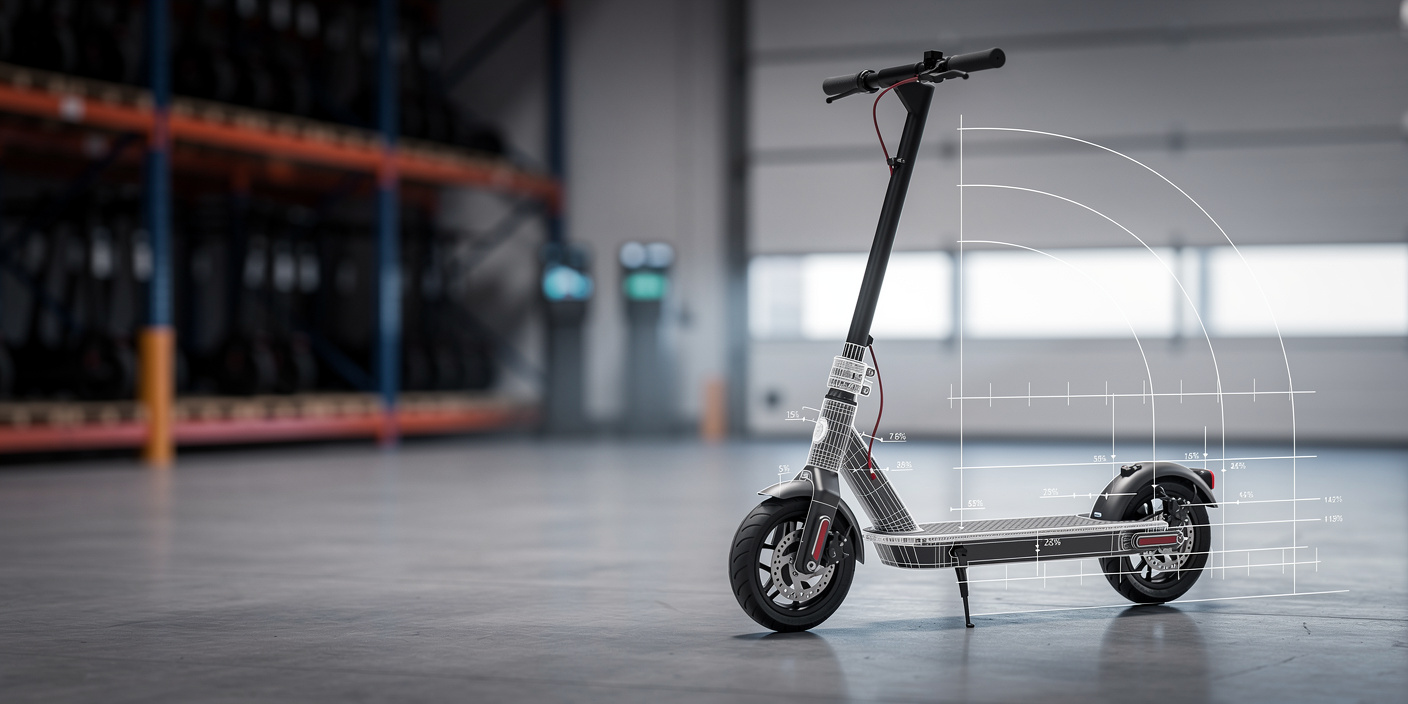
The USA E-Scooter Market operates through global manufacturers, domestic brands, online marketplaces, specialty dealers, mass retailers, fleet operators, and institutional buyers. In 2025, riders completed 58 million shared e-scooter trips across NACTO member cities, representing 29% annual growth. This trip intensity supports vehicle replacement, parts demand, fleet procurement, and consumer awareness while strengthening e-scooters as a first-mile and last-mile transport category.
The West is the largest commercial region, representing an estimated 31% of 2025 market revenue, supported by dense metropolitan corridors, favorable riding weather, technology-oriented consumers, and established shared-mobility programs. Nationally, 158 United States communities were served by shared e-scooters in 2022. Geographic concentration gives brands scale advantages in dealer support, spare-parts stocking, fleet servicing, and localized digital marketing.
Market Value
USD 1,185 million
2025
Dominant Region
West United States
2025
Dominant Segment
Shared Mobility Operators
fastest growing, 2026-2031
Total Number of Players
35
Future Outlook
The USA E-Scooter Market is projected to expand from USD 1,185 Mn in 2025 to USD 2,237 Mn by 2031, reflecting an 11.2% forecast CAGR. This compares with a 10.5% historical CAGR during 2020-2025. Growth will be led by replacement purchases, stronger commuter specifications, UL-certified portfolios, dual-motor premium products, fleet procurement, and improved urban infrastructure. Modeled new-unit demand increases from 1.44 million units in 2025 to 2.39 million units by 2031, while the market moves from novelty-led adoption toward structured personal and commercial mobility use cases.
Value growth is expected to exceed unit growth after 2026 as larger batteries, suspension systems, connected locks, navigation features, stronger frames, and extended warranties lift the blended product mix. The modeled average selling price advances from USD 823 in 2025 to USD 936 in 2031. Risks remain concentrated in battery incidents, inconsistent road-access rules, low-price imports, seasonal demand, and shared-operator economics. Suppliers with certified models, repair networks, replacement-parts availability, and disciplined channel pricing should capture disproportionate value as buyers prioritize lifecycle cost, safety documentation, and dependable after-sales support.
11.2%
Forecast CAGR
USD 2,237 Mn
2030 Projection
Base Year
2025
Historical Period
2020-2025
Forecast Period
2026-2031
Historical CAGR
10.5%
CHAPTER 2 - SCOPE OF REPORT
Scope of the Market
CHAPTER 3 - Key Stakeholders
Key Target Audience
Key stakeholders who can leverage from this market analysis for investment, strategy, and operational planning.
Investors
CAGR, unit economics, certification moat, consolidation, cash conversion
Corporates
product portfolio, channel margin, sourcing cost, warranty exposure
Government
road safety, battery compliance, infrastructure, equitable mobility access
Operators
fleet utilization, vehicle lifespan, maintenance, charging, permit cost
Financial institutions
inventory finance, residual value, covenants, demand stability
CHAPTER 4 - Market Size & Growth
Market Size, Growth Forecast and Trends
This section evaluates the historical market size, analyzes year-over-year growth dynamics, and presents forecast projections supported by modeled vehicle volumes, average selling prices, personal mobility demand, shared-fleet replacement, safety certification, and channel development.
Historical & Projected Market Size ($ Million)
Year-over-Year Growth Rate (%)
Market Value vs Volume Growth (%)
Historical Market Performance (2020-2025)
Market growth peaked at 26.4% in 2021 as households increased spending on individual transport, recreation, and contact-light mobility. Growth normalized to 8.8% in 2022 and reached its historical trough of 5.1% in 2023 as channel inventories, discounting, and shared-operator restructuring constrained value creation. Unit volumes nevertheless increased from approximately 0.77 million in 2020 to 1.44 million in 2025. Price competition reduced the modeled blended selling price from USD 935 to USD 823, while personal consumers remained the largest buyer group and online retail became the primary route to market.
Forecast Market Outlook (2026-2031)
Forecast growth accelerates to approximately 11.2% annually as replacement cycles, certified product conversion, higher-specification commuter models, and fleet modernization reinforce demand. Market value reaches USD 2,012 Mn in 2030 and USD 2,237 Mn in 2031. Unit demand is modeled to reach 2.39 million vehicles by 2031, representing an 8.8% CAGR from the 2025 base. Premium batteries, dual motors, suspension, connected security, and longer warranties lift the blended selling price to USD 936. Fleet buyers and professional users are expected to outgrow the personal-consumer segment, improving order visibility for manufacturers and distributors.
CHAPTER 5 - Market Data
Market Breakdown
The USA E-Scooter Market is transitioning from high-volume entry products toward a broader revenue mix spanning certified commuter scooters, premium performance products, institutional fleets, and connected shared-mobility vehicles. The operating KPI trajectory provides investors and strategy teams with a reconciled view of scale, pricing, and buyer-mix development.
Year | Market Size (USD Mn) | YoY Growth (%) | New Units Sold (000) | Blended ASP (USD) | Personal Buyer Revenue Share (%) | Period |
|---|---|---|---|---|---|---|
| 2020 | $720 Mn | +- | 770 | 935 | Forecast | |
| 2021 | $910 Mn | +26.4% | 1,020 | 892 | Forecast | |
| 2022 | $990 Mn | +8.8% | 1,100 | 900 | Forecast | |
| 2023 | $1,040 Mn | +5.1% | 1,160 | 897 | Forecast | |
| 2024 | $1,105 Mn | +6.2% | 1,280 | 863 | Forecast | |
| 2025 | $1,185 Mn | +7.2% | 1,440 | 823 | Forecast | |
| 2026 | $1,316 Mn | +11.1% | 1,580 | 833 | Forecast | |
| 2027 | $1,463 Mn | +11.2% | 1,720 | 851 | Forecast | |
| 2028 | $1,627 Mn | +11.2% | 1,880 | 865 | Forecast | |
| 2029 | $1,809 Mn | +11.2% | 2,040 | 887 | Forecast | |
| 2030 | $2,012 Mn | +11.2% | 2,210 | 910 | Forecast | |
| 2031 | $2,237 Mn | +11.2% | 2,390 | 936 | Forecast |
New Units Sold
1.44 million units, 2025, United States. Scale supports lower component procurement costs and wider repair coverage. Approximately 1.1 million e-scooters were sold nationally in 2022, almost four times the 2019 level.
Blended ASP
USD 823, 2025, United States. ASP recovery depends on larger batteries, suspension, dual motors, connectivity, and certification. The global electric kick-scooter market was valued at USD 5.9 Bn in 2024, supporting continued product development.
Personal Buyer Revenue Share
61%, 2025, United States. Personal demand remains dominant, but fleet and institutional procurement are expanding faster. Shared e-scooter trips increased 29% to 58 million across NACTO member cities in 2025.
CHAPTER 6 - Segmentation
Market Segmentation Framework
Comprehensive analysis across key dimensions providing insights into market structure, consumer preferences, vehicle architecture, purchase channels, use cases, pricing, and geographic demand patterns.
No of Segments
7
Dominant Segment
Vehicle Type
Fastest Growing Segment
Customer Type
Vehicle Type
Customer Type
Sales Channel
Powertrain
Usage Type
Price Tier
Geography
Key Segmentation Takeaways
Comprehensive analysis across all extracted segmentation dimensions providing insights into market structure, consumer preferences, distribution patterns, product architecture, and commercial priorities.
Vehicle Type
Vehicle architecture is the dominant segmentation dimension because frame configuration, speed, range, motor output, portability, and durability directly determine price and buyer eligibility. Standing Electric Kick Scooters accounted for an estimated 64% of 2025 revenue, followed by Seated Compact E-Scooters at 22% and Self-Balancing E-Scooters at 14%. Commercial fleet specifications command higher unit values and replacement intensity.
Customer Type
Customer Type is the fastest-growing dimension because shared operators, institutions, campuses, security teams, warehouses, and professional riders purchase vehicles using total-cost-of-ownership criteria rather than retail price alone. Shared Mobility Operators are expected to generate the strongest growth through multi-unit procurement, telematics integration, replaceable batteries, standardized components, and service contracts, while personal consumers remain the largest current revenue pool.
CHAPTER 7 - Regional Analysis
Regional Analysis
The United States ranks first among the selected mature e-scooter peer markets, supported by a large consumer base, extensive digital retail, 158 communities with shared e-scooter access in 2022, and expanding safety-oriented infrastructure. Market leadership is offset by fragmented road rules, import exposure, and city-level certification requirements.
Focus Country Ranking
1st
Focus Country Market Size
USD 1,185 Mn (2025)
Focus Country CAGR
11.2% (2026-2031)
Focus Country Ranking
1st
Focus Country Market Size
USD 1,185 Mn (2025)
Focus Country CAGR
11.2% (2026-2031)
Regional Analysis (Current Year)
Regional Analysis Comparison
| Metric | United States | Germany | United Kingdom | France | Canada | Australia |
|---|---|---|---|---|---|---|
| Market Size (USD Mn, 2025) | 1,185 | 1,030 | 885 | 775 | 460 | 390 |
| CAGR (2026-2031) | 11.2% | 9.4% | 10.1% | 10.8% | 12.0% | 11.5% |
| Urban Population Share (%, latest available) | 83.3% | 77.8% | 84.6% | 81.5% | 81.9% | 86.6% |
| Public-Road Access Regime | State and municipal rules, expanding UL certification | Federal approval, insurance, and 20 km/h framework | Rental trials permitted, private-device public-road restrictions | National access rules and 25 km/h speed limit | Provincial and municipal pilot frameworks | State and territory operating rules |
Market Position
The United States ranks first, with an estimated USD 1,185 Mn market and broad access through online retail, specialty dealers, mass merchants, and shared programs operating across major metropolitan areas.
Growth Advantage
The United States forecast CAGR of 11.2% exceeds Germany's 9.4% and the United Kingdom's 10.1%, while remaining slightly below Canada's 12.0%, positioning it as the largest scalable growth market.
Competitive Strengths
Strengths include 83.3% urbanization, 158 communities with shared e-scooter service in 2022, deep e-commerce penetration, established fleet operators, and emerging UL-based product-access standards.
CHAPTER 8 - INDUSTRY ANALYSIS
Growth Drivers, Challenges, Opportunities
Comprehensive analysis of key factors shaping the USA E-Scooter Market, including growth catalysts, operational challenges, and emerging opportunities across production, distribution, fleet deployment, and consumer segments.
Growth Drivers
Shared Ridership Recovery and Utilization
- Average utilization reached 2.9 trips per shared e-scooter per day in September 2025, improving revenue productivity for operators and strengthening demand for durable fleet-grade vehicles.
- Dockless e-scooter trips in the United States and Canada increased to 69 million in 2023, signaling renewed rider acceptance after the 2022 market correction.
- Total shared micromobility demand reached 150 million trips in NACTO member cities in 2025, expanding the addressable ecosystem for dealers, fleet suppliers, software platforms, and maintenance providers.
Expansion of Personal Ownership
- The modeled market expands to 1.44 million new units in 2025, enabling brands to spread certification, warranty, customer-acquisition, and spare-parts costs across a larger installed base.
- The United States electric kick-scooter category was independently estimated at USD 456.68 Mn in 2025, providing a lower-scope benchmark for the broader product-market estimate.
- Razor reports cumulative global sales of more than 15 million electric scooters since 2000, demonstrating long-term category familiarity across youth, recreation, and adult mobility applications.
Street-Safety and Active-Transport Investment
- Approximately USD 1 billion remained available for the 2026 funding round, giving cities resources for safety planning, demonstrations, and infrastructure implementation benefiting vulnerable road users.
- As of 2022, 158 United States communities had shared e-scooter service, creating a broad municipal base for lane design, parking corrals, speed management, and fleet procurement.
- Federal implementation grants finance projects identified in comprehensive safety action plans, reducing infrastructure risk for operators serving regional, local, and Tribal jurisdictions.
Market Challenges
Rider Injury and Fatality Exposure
- CPSC staff identified 206 e-scooter fatalities during 2017-2024, with motor-vehicle accidents and control issues representing leading hazards requiring stronger brakes, lighting, tires, and rider education.
- Rental e-scooters represented 35% of investigated e-scooter emergency visits in the 2024 special study, increasing pressure on shared operators to improve maintenance and rider controls.
- Approximately 54% of investigated injuries occurred on paved roads and 32% on paved sidewalks, demonstrating that infrastructure and operating behavior materially influence product risk.
Battery Safety and Certification Cost
- New York City requires e-scooters to meet UL 2272 and storage batteries to meet UL 2271, creating testing, labeling, documentation, and supplier-governance costs.
- By October 2024, authorities had completed 650 inspections and issued 275 violations, showing that certification requirements increasingly carry direct enforcement consequences for retailers.
- The regulation also generated 40 cease-and-desist letters and 25 online-retailer violations by October 2024, making product-page evidence and supply-chain documentation commercially necessary.
Fragmented Regulation and Operator Economics
- Local caps, permit fees, fleet redistribution requirements, and operating-hour rules create compliance complexity across more than 150 municipal markets, limiting standardized deployment economics.
- Bird filed for bankruptcy protection in December 2023, demonstrating that ridership growth does not automatically offset vehicle depreciation, charging, rebalancing, insurance, and city fees.
- Longer-lasting vehicles and operating scale helped Lime generate approximately USD 90 Mn of adjusted EBITDA in 2023, emphasizing the importance of fleet durability and utilization.
Market Opportunities
Certified Replacement and Premium Safety Products
- Brands can monetize certified batteries, compatible chargers, battery-management systems, fire-resistant enclosures, and traceable replacement parts across an installed base exceeding 1 million annual unit sales.
- Manufacturers, accredited laboratories, distributors, repair centers, insurers, and compliant retailers benefit as 275 violations from 650 inspections in 2024 accelerate channel screening.
- Opportunity realization requires standardized cells, locked charger compatibility, documented firmware controls, serial-number traceability, and certification coverage across complete electrical systems rather than batteries alone.
Fleet-Grade Hardware and Lifecycle Services
- Manufacturers can sell high-durability frames, swappable batteries, connected locks, telematics, replacement modules, and maintenance contracts against 2.9 daily trips per active vehicle.
- Fleet operators, contract manufacturers, parts suppliers, and service depots benefit as shared ridership increased 29% during 2025, improving the economic case for planned replacement cycles.
- Value capture requires predictable municipal permits, standardized parking, modular vehicle design, utilization analytics, and component lifespans capable of supporting thousands of commercial trips per vehicle.
Connected Security, Diagnostics, and Subscription Revenue
- Brands can monetize anti-theft tracking, remote diagnostics, ride analytics, navigation, software updates, insurance integration, and service subscriptions across a modeled 2.39 million annual-unit market by 2031.
- Consumers, fleet operators, insurers, dealers, and repair networks benefit because connected diagnostics reduce fault-identification time and improve utilization across 64% electric shared-mobility trips in 2023.
- Opportunity realization requires secure firmware, interoperable data standards, reliable cellular or Bluetooth connectivity, privacy governance, and dealer integration across hundreds of North American operating markets.
CHAPTER 9 - Competitive Landscape
Competitive Landscape Overview
The market is fragmented across global manufacturers, private-label brands, direct-to-consumer specialists, mass-retail suppliers, and performance-focused entrants. Competitive barriers include battery certification, channel access, warranty reserves, product reliability, repair coverage, digital acquisition costs, and consistent availability of compliant replacement components.
Market Share Distribution
Top 5 Players
Market Dynamics
8 new entrants in the past 5 years, indicating strong market attractiveness and growth potential.
Company Name | Market Share | Headquarters | Founding Year | Core Market Focus |
|---|---|---|---|---|
Segway-Ninebot | - | Beijing, China | 2012 | Commuter, performance, self-balancing, and commercial fleet vehicles |
NIU Technologies | - | Beijing, China | 2014 | Connected urban mobility and premium electric kick scooters |
Razor USA LLC | - | Cerritos, United States | 2000 | Youth, recreation, seated, and entry electric scooters |
GOTRAX | - | Carrollton, United States | 2017 | Mass-market commuter and recreational electric scooters |
OKAI | - | - | - | Shared-fleet hardware and consumer electric scooters |
InMotion Technologies | - | Shenzhen, China | 2012 | Performance scooters and self-balancing personal vehicles |
Apollo Scooters | - | Montreal, Canada | 2018 | Premium commuter and performance electric scooters |
Unagi | - | - | - | Lightweight premium scooters and subscription access |
Hiboy | - | - | - | Value and mid-market commuter electric scooters |
Kaabo | - | - | - | High-power, dual-motor, and ultra-performance scooters |
Cross Comparison Parameters
The report provides detailed cross-comparison of key players across 10 performance parameters to identify competitive strengths and weaknesses.
US Unit Shipments
UL-Certified Model Breadth
Average Selling Price
Revenue Growth
Analysis Covered
Market Share Analysis:
Estimates player scale across personal, fleet, and performance categories
Cross Comparison Matrix:
Benchmarks shipments, certification, pricing, growth, and distribution strength
SWOT Analysis:
Assesses portfolio strengths, sourcing vulnerabilities, opportunities, and execution risks
Pricing Strategy Analysis:
Compares entry, commuter, premium, performance, and fleet price architecture
Company Profiles:
Summarizes footprint, products, channels, capabilities, and strategic positioning nationally
CHAPTER 10 - REPORT TOC
Market Report Structure
Comprehensive coverage across three strategic phases — Market Assessment, Go-To-Market Strategy, and Survey — delivering end-to-end insights from market analysis and execution roadmap to customer demand validation.
Market Assessment Phase
Supply-side and competitive intelligence covering market sizing, segmentation, competitive dynamics, regulatory landscape, and future forecasts.
Go-To-Market Strategy Phase
15 chapters
Entry strategy evaluation, execution roadmap, partner recommendations, and profitability outlook.
Survey Phase
8 chapters
Demand-side primary research conducted through structured interviews and online surveys with end users across priority metros and Tier 2/3 cities to capture consumption behavior, unmet needs, and purchase drivers.
Complete Report Coverage
201+ detailed sections covering every aspect of the market
143
Assessment Sections
58
Strategy Sections
CHAPTER 11 - Our Approach
Research Methodology
Desk Research
- Reviewed federal micromobility safety datasets
- Mapped municipal access and certification rules
- Benchmarked scooter retail price ladders
- Analyzed shared fleet trip statistics
Primary Research
- Interviewed e-scooter product category directors
- Engaged shared mobility fleet managers
- Surveyed specialty mobility dealer principals
- Consulted battery certification laboratory engineers
Validation and Triangulation
- Triangulated estimates across 288 respondents
- Reconciled units against channel sales
- Cross-checked ASPs across product tiers
- Stress-tested imports and fleet replenishment
CHAPTER 12 - FAQ
FAQs
Still have questions?
Our research team is here to help you find the right solution
CHAPTER 13 - Related Research
Explore Related Reports
Expand your market intelligence with complementary research across regions and adjacent markets.
Regional/Country ReportsRelated market analysis across key regions
Related market analysis across key regions
No regional reports found.
Adjacent ReportsRelated markets and complementary research
Related markets and complementary research
- Europe Electric Vehicle Charging Station Market Outlook to 2030: Size, Share, Growth and Trends
- Philippines Lithium-Ion Battery Recycling Market Size, Share & Forecast, By Battery Chemistry, Source & Recycling Process, 2026–2032
- South Korea Portable Power Equipment Market
- Germany Motor Manufacturing Equipment Market
- Malaysia Vehicle Telematics Market
500+
Market Research Reports
50+
Countries Covered
15+
Industry Verticals