
USA Electric Trucks Market Outlook to 2030
Region:United States
Author(s):Meenakshi Bisht
Product Code:KROD4667
Region:United States
Author(s):Meenakshi Bisht
Product Code:KROD4667
December 2024
89
Listen to the audio summary
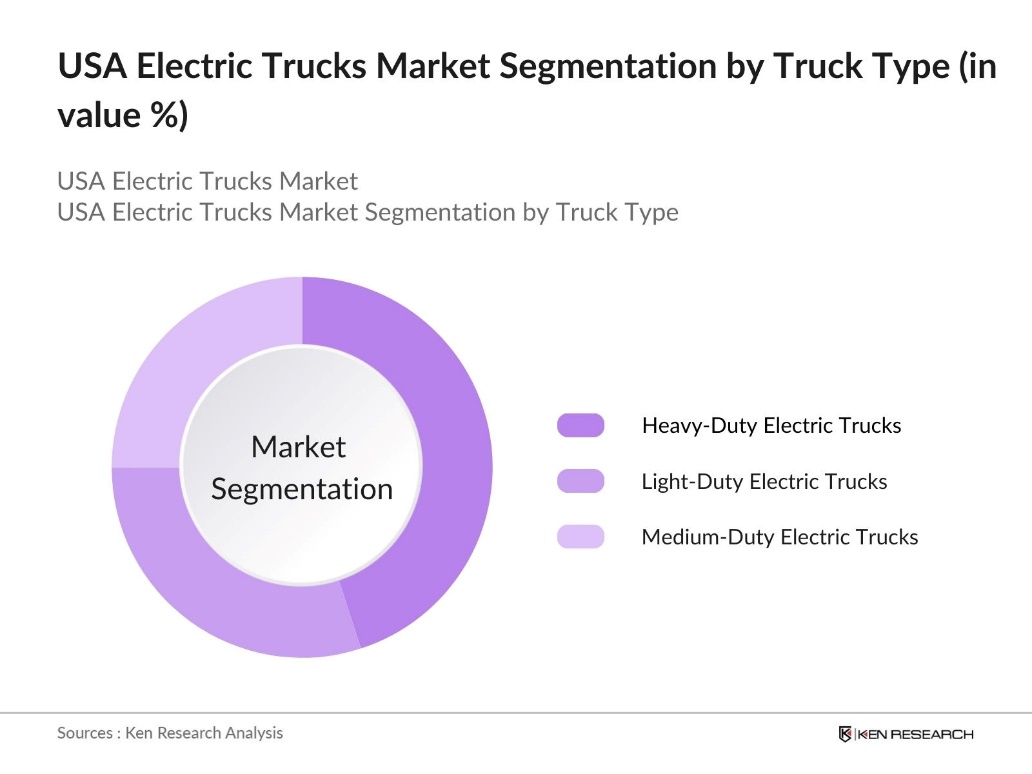
By Truck Type: The USA electric trucks market is segmented by truck type into light-duty electric trucks, medium-duty electric trucks, and heavy-duty electric trucks. Heavy-duty electric trucks currently dominate the market share due to the growing demand from logistics companies and the construction sector. These trucks are designed to cover long distances and haul large loads, making them ideal for interstate transport and industrial usage. Key companies like Tesla and Freightliner have introduced advanced heavy-duty models that offer improved range and performance, driving their popularity.
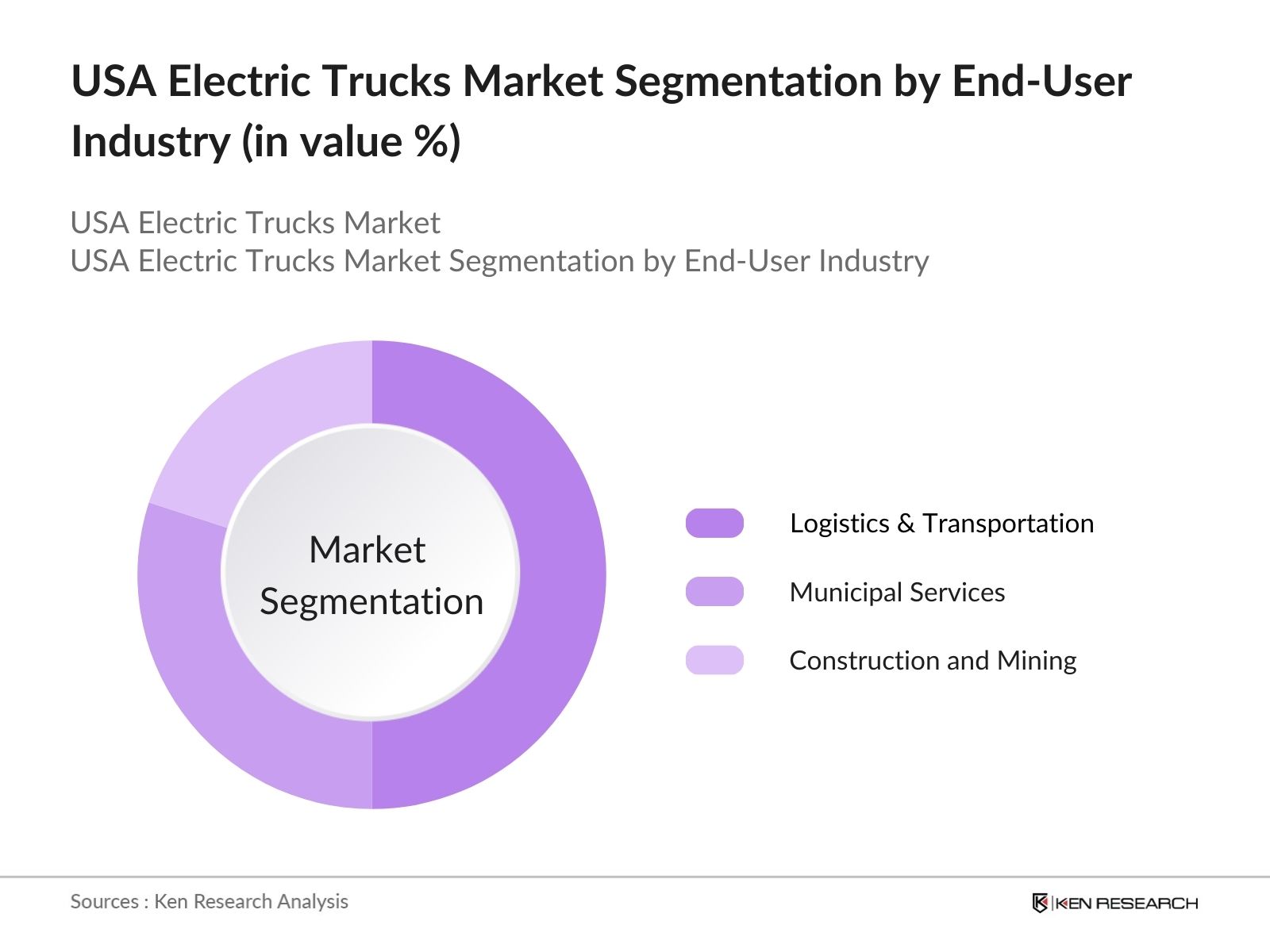
By End-User Industry: The electric trucks market in the USA is also segmented by end-user industries, including logistics & transportation, municipal services, and construction and mining. The logistics & transportation segment leads the market due to the rise in e-commerce and the need for sustainable last-mile delivery solutions. Companies like Amazon and UPS are heavily investing in electric delivery trucks to reduce their carbon footprint. Furthermore, urban delivery solutions require trucks with zero emissions to comply with city-level regulations, driving demand in this segment.
The market is dominated by a mix of established automotive giants and new entrants, both local and international. The market's competitive landscape is marked by innovation in battery technology, strategic partnerships, and collaborations with charging infrastructure companies. Leading companies are constantly improving their electric truck models in terms of range, payload capacity, and fast-charging capabilities to cater to the evolving needs of businesses.
|
Company |
Establishment Year |
Headquarters |
No. of Employees |
Battery Range |
Charging Time |
Revenue (USD Bn) |
Truck Models |
Production Capacity |
|
Tesla, Inc. |
2003 |
Palo Alto, CA |
||||||
|
Rivian Automotive |
2009 |
Irvine, CA |
||||||
|
Daimler Trucks |
1896 |
Portland, OR |
||||||
|
Volvo Group |
1927 |
Gothenburg, Sweden |
||||||
|
Ford Motor Company |
1903 |
Dearborn, MI |
The USA electric trucks market is poised for rapid growth in the coming years, driven by a combination of regulatory support and technological advancements. With state and federal governments offering various incentives and stringent emission regulations, the market is expected to continue its upward trajectory. Companies are investing heavily in research and development to produce trucks with extended ranges and quicker charging times, making them more practical for long-haul transport.
|
By Truck Type |
Light-Duty Electric Trucks Medium-Duty Electric Trucks Heavy-Duty Electric Trucks |
|
By End-User Industry |
Logistics & Transportation Municipal Services Construction and Mining |
|
By Propulsion Technology |
Battery Electric Vehicles (BEV) Plug-in Hybrid Electric Vehicles (PHEV) Hydrogen Fuel Cell Electric Vehicles |
|
By Range |
Less than 100 Miles 100-200 Miles Above 200 Miles |
|
By Region |
North-East West Coast Midwest Southern |
1.1. Definition and Scope
1.2. Market Taxonomy
1.3. Market Growth Rate
1.4. Market Segmentation Overview
2.1. Historical Market Size
2.2. Year-On-Year Growth Analysis
2.3. Key Market Developments and Milestones
3.1. Growth Drivers
3.1.1. Electrification of Fleet Services (Electric Truck Fleet Growth, Logistics Demand)
3.1.2. Government Incentives and Emission Regulations (EV Tax Credits, Zero Emission Targets)
3.1.3. Advances in Battery Technology (Range Efficiency, Fast Charging Development)
3.1.4. Expansion of EV Charging Infrastructure (Public Charging Networks, Private Investments)
3.2. Market Challenges
3.2.1. High Initial Investment Cost (Battery Cost, EV Manufacturing Cost)
3.2.2. Range Anxiety (Long-Haul Distance Feasibility)
3.2.3. Limited Charging Infrastructure in Rural Areas
3.2.4. Competition from Traditional Fuel Trucks (Price Competition, Transition Period)
3.3. Opportunities
3.3.1. Growth in E-commerce Sector (Delivery Fleet Electrification)
3.3.2. Technological Advancements in Autonomous Electric Trucks (Self-Driving Technology)
3.3.3. Increasing Demand for Sustainable Transport Solutions (Carbon-Neutral Logistics)
3.3.4. Expansion into Heavy-Duty Trucks Segment (Development of Heavy Electric Trucks)
3.4. Trends
3.4.1. Integration of AI and IoT for Fleet Management (Telematics, Predictive Maintenance)
3.4.2. Collaboration between Automakers and Technology Companies (Strategic Partnerships)
3.4.3. Rising Adoption of Hydrogen-Electric Trucks (Hydrogen Fuel Cells, Hybrid Electric Solutions)
3.4.4. Urban Delivery Solutions Focus (Last-Mile Electric Trucks)
3.5. Government Regulations
3.5.1. Federal EV Tax Incentives and Subsidies (Electric Vehicle Incentive Programs)
3.5.2. State-Level Emission Standards (California Zero-Emission Truck Mandates)
3.5.3. Infrastructure Investments (Funding for Charging Stations)
3.5.4. Green Logistics and Sustainability Policies (Government Initiatives for Emission Reduction)
3.6. SWOT Analysis (Electric Truck Market)
3.7. Stakeholder Ecosystem (Automakers, Logistics Providers, Charging Infrastructure Developers)
3.8. Porters Five Forces (Competition Dynamics, Supplier Influence, Buyer Power, Threat of Substitutes, Entry Barriers)
3.9. Competitive Landscape
4.1. By Truck Type (In Value %)
4.1.1. Light-Duty Electric Trucks
4.1.2. Medium-Duty Electric Trucks
4.1.3. Heavy-Duty Electric Trucks
4.2. By End-User Industry (In Value %)
4.2.1. Logistics & Transportation
4.2.2. Municipal Services (Waste Management, Public Transportation)
4.2.3. Construction and Mining
4.3. By Propulsion Technology (In Value %)
4.3.1. Battery Electric Vehicles (BEV)
4.3.2. Plug-in Hybrid Electric Vehicles (PHEV)
4.3.3. Hydrogen Fuel Cell Electric Vehicles
4.4. By Range (In Value %)
4.4.1. Less than 100 Miles
4.4.2. 100-200 Miles
4.4.3. Above 200 Miles
4.5. By Region (In Value %)
4.5.1. North-East USA
4.5.2. West Coast USA
4.5.3. Midwest USA
4.5.4. Southern USA
5.1. Detailed Profiles of Major Companies
5.1.1. Tesla, Inc.
5.1.2. Rivian Automotive, LLC
5.1.3. Nikola Corporation
5.1.4. Daimler Trucks North America LLC
5.1.5. Volvo Group
5.1.6. BYD Motors Inc.
5.1.7. Freightliner Trucks
5.1.8. Ford Motor Company
5.1.9. Workhorse Group Inc.
5.1.10. Peterbilt Motors Company
5.1.11. Kenworth Truck Company
5.1.12. Lordstown Motors Corp.
5.1.13. Lion Electric Company
5.1.14. Mack Trucks
5.1.15. Xos Trucks Inc.
5.2. Cross Comparison Parameters
(Revenue, Truck Units Sold, Range Capability, Battery Capacity, Charging Speed, Electric Powertrain Type, Production Capacity, Headquarters)
5.3. Market Share Analysis
5.4. Strategic Initiatives (Partnerships, Mergers, New Product Launches)
5.5. Mergers and Acquisitions (Recent Activities)
5.6. Investment Analysis (Private Funding, Government Grants, Public Offerings)
5.7. Government Grants and Incentives for EV Development
5.8. Private Equity and Venture Capital Funding
6.1. Federal Emission Standards and Regulations (EPA, CAFE Standards)
6.2. State-Specific EV Laws (CARB Zero-Emission Regulations)
6.3. Certification Processes (Vehicle Safety and Emission Compliance)
7.1. Future Market Size Projections
7.2. Key Factors Driving Future Market Growth
8.1. By Truck Type (In Value %)
8.2. By End-User Industry (In Value %)
8.3. By Propulsion Technology (In Value %)
8.4. By Range (In Value %)
8.5. By Region (In Value %)
9.1. Total Addressable Market (TAM) Analysis
9.2. Serviceable Addressable Market (SAM) Analysis
9.3. Market Penetration Strategies
9.4. New Market Entry Opportunities
The research process begins with constructing a comprehensive map of all major stakeholders within the USA Electric Trucks Market. Extensive desk research was conducted using secondary data from proprietary and public databases, ensuring that all critical factors influencing the market are identified and defined.
In this phase, we compile historical data on electric truck adoption and production volumes. Analyzing key metrics like truck range, battery capacity, and adoption rates, we assess market penetration and revenue generation. These insights form the foundation for projecting market trends.
We engage with industry experts through computer-assisted telephone interviews (CATIs), gathering insights directly from electric truck manufacturers, logistics providers, and battery technology companies. These consultations validate the hypotheses generated during the desk research phase, refining our market projections.
The final phase involves synthesizing the insights gained from primary and secondary research into a cohesive market analysis. This includes cross-verification of data through bottom-up approaches, ensuring the accuracy of market estimates and forecasts. Direct engagement with truck manufacturers provides further clarity on product innovations, market challenges, and growth opportunities.
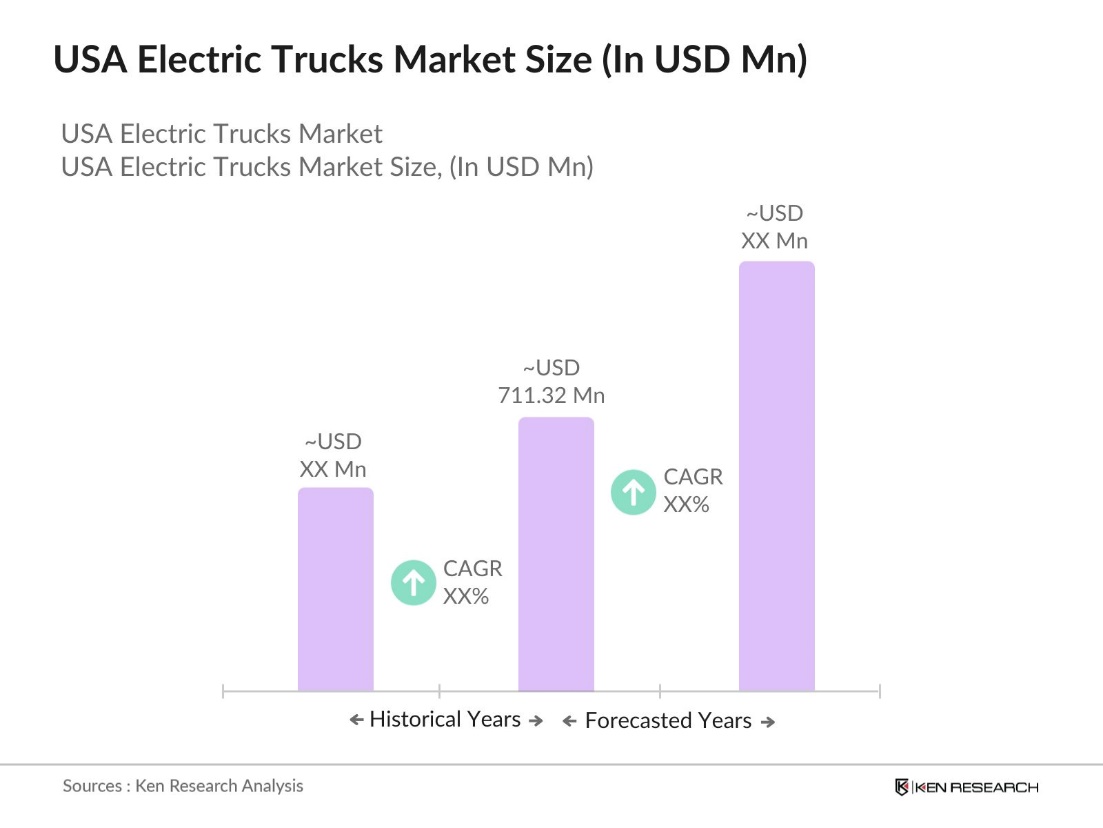
The USA Electric Trucks Market is valued at USD 711.32 million, driven by advancements in battery technology and increasing adoption among fleet operators.
Key challenges in USA Electric Trucks Market include the high initial cost of electric trucks, limited charging infrastructure in rural areas, and range limitations for long-haul transport.
Major players in USA Electric Trucks Market include Tesla, Inc., Rivian Automotive, Daimler Trucks North America, Volvo Group, and Ford Motor Company, all driving innovation in electric truck technology.
The USA Electric Trucks Market is driven by increasing demand for sustainable transportation, government incentives, and advancements in battery technology that extend truck range and reduce charging time.

What makes us stand out is that our consultants follows Robust, Refine and Result (RRR) methodology. i.e. Robust for clear definitions, approaches and sanity checking, Refine for differentiating respondents facts and opinions and Result for presenting data with story

We have set a benchmark in the industry by offering our clients with syndicated and customized market research reports featuring coverage of entire market as well as meticulous research and analyst insights.

While we don't replace traditional research, we flip the method upside down. Our dual approach of Top Bottom & Bottom Top ensures quality deliverable by not just verifying company fundamentals but also looking at the sector and macroeconomic factors.

With one step in the future, our research team constantly tries to show you the bigger picture. We help with some of the tough questions you may encounter along the way: How is the industry positioned? Best marketing channel? KPI's of competitors? By aligning every element, we help maximize success.

Our report gives you instant access to the answers and sources that other companies might choose to hide. We elaborate each steps of research methodology we have used and showcase you the sample size to earn your trust.

If you need any support, we are here! We pride ourselves on universe strength, data quality, and quick, friendly, and professional service.