
USA Electric Vehicle Market Outlook to 2030
Region:United States
Author(s):Mukul Soni
Product Code:KROD2421
Region:United States
Author(s):Mukul Soni
Product Code:KROD2421
December 2024
84
Listen to the audio summary
|
Company |
Establishment Year |
Headquarters |
|
Tesla |
2003 |
Palo Alto, CA |
|
General Motors |
1908 |
Detroit, MI |
|
Ford Motor Company |
1903 |
Dearborn, MI |
|
Rivian |
2009 |
Irvine, CA |
|
Lucid Motors |
2007 |
Newark, CA |
USA Electric Vehicle Market Growth Drivers
The USA Electric Vehicle market is expected to experience significant growth through 2028, driven by technological advancements, expanding infrastructure, and favorable government policies. The shift towards electrification of public and private transport fleets, coupled with declining battery costs, will further accelerate market growth.
Future Market Trends
|
By Vehicle Type |
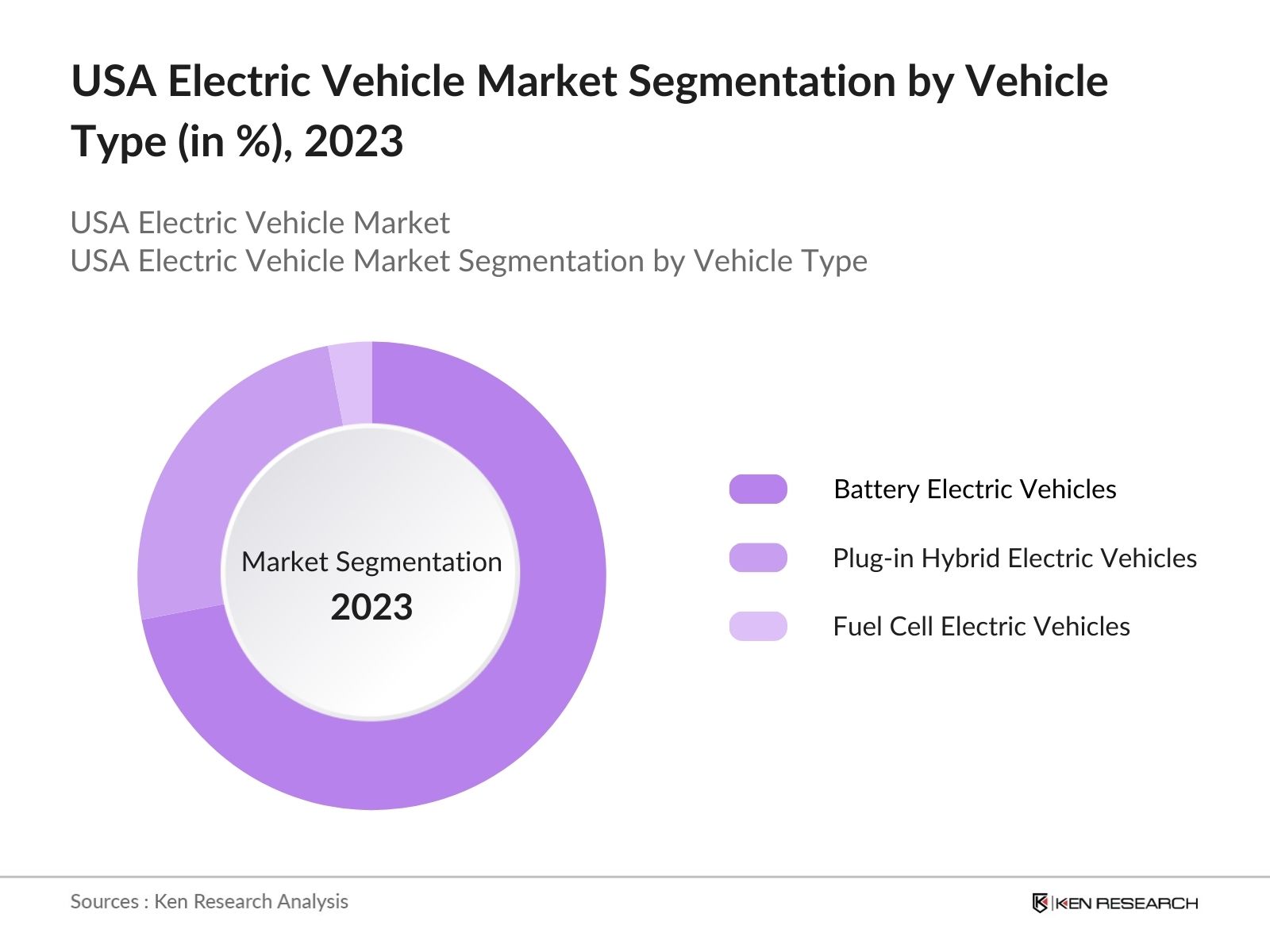
Battery Electric Vehicles (BEVs) Plug-in Hybrid Electric Vehicles (PHEVs) Fuel Cell Electric Vehicles (FCEVs) |
|
By Charging Infrastructure |
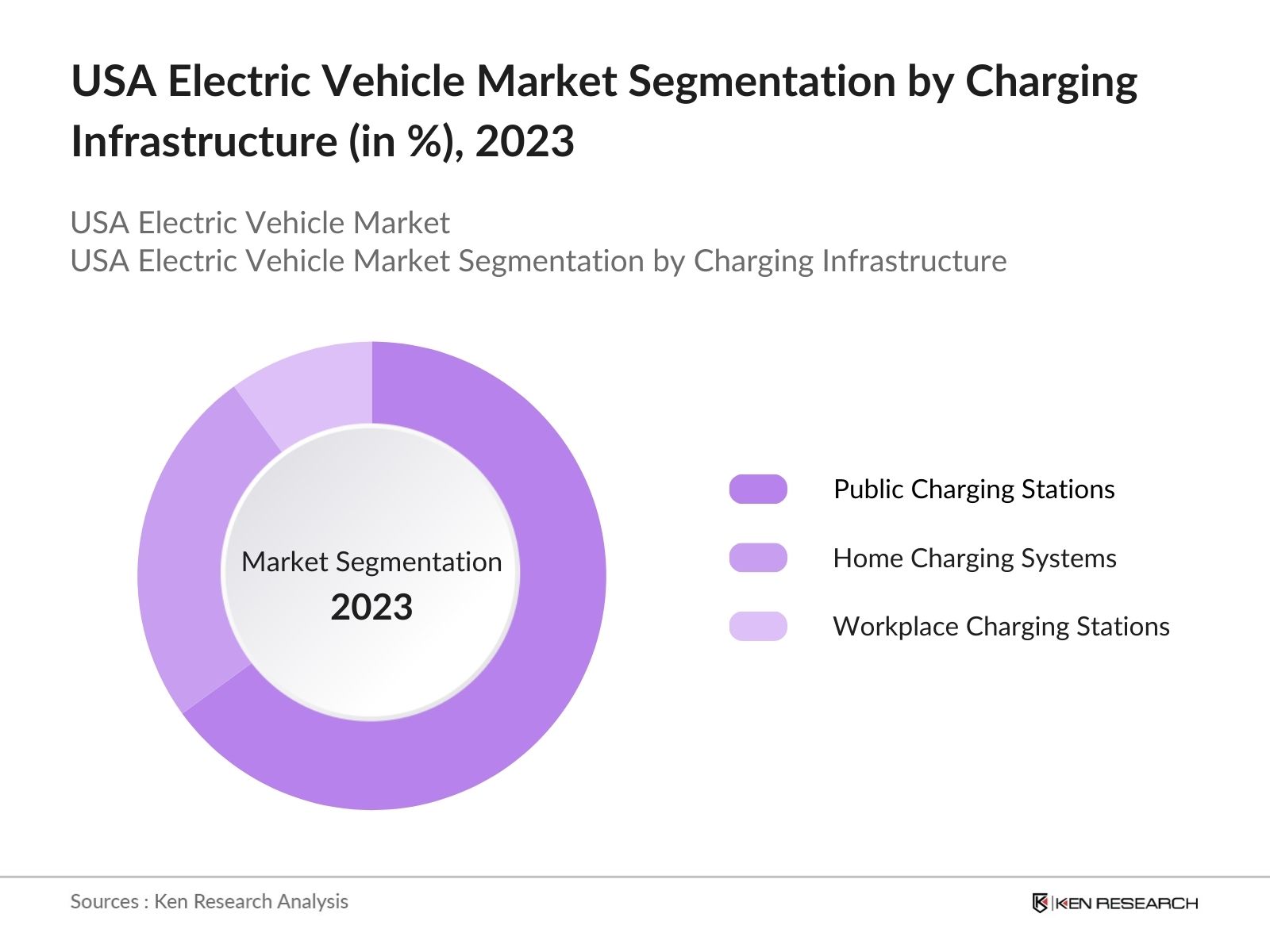
Public Charging Stations Home Charging Systems Workplace Charging Stations |
|
By Region |
West North East South |
1.1. Definition and Scope
1.2. Market Taxonomy
1.3. Market Growth Rate
1.4. Market Segmentation Overview
2.1. Historical Market Size
2.2. Year-on-Year Growth Analysis
2.3. Key Market Developments and Milestones
3.1. Growth Drivers
3.1.1. Investment in EV Charging Infrastructure
3.1.2. Increased Domestic Production of EV Batteries
3.1.3. Government Support and Incentives
3.2. Restraints
3.2.1. High Initial Purchase Costs
3.2.2. Supply Chain Disruptions
3.2.3. Limited Charging Infrastructure in Rural Areas
3.3. Opportunities
3.3.1. Development of Solid-State Batteries
3.3.2. Growth in Electric Commercial Vehicles
3.3.3. Expansion of EV Charging Infrastructure
3.4. Trends
3.4.1. Integration of Vehicle-to-Grid (V2G) Technology
3.4.2. Rise of Electric Commercial Vehicles
3.4.3. Technological Advancements in Battery Manufacturing
3.5. Government Regulation
3.5.1. Inflation Reduction Act (2022)
3.5.2. Bipartisan Infrastructure Law (2023)
3.5.3. NEVI Program (2023)
3.6. SWOT Analysis
3.7. Stake Ecosystem
3.8. Competition Ecosystem
4.1. By Vehicle Type (in Value %)
4.1.1. Battery Electric Vehicles (BEVs)
4.1.2. Plug-in Hybrid Electric Vehicles (PHEVs)
4.1.3. Fuel Cell Electric Vehicles (FCEVs)
4.2. By Charging Infrastructure (in Value %)
4.2.1. Public Charging Stations
4.2.2. Home Charging Systems
4.2.3. Workplace Charging Stations
4.3. By Region (in Value %)
4.3.1. West
4.3.2. North
4.3.3. East
4.3.4. South
5.1 Detailed Profiles of Major Companies
5.1.1. Tesla
5.1.2. General Motors
5.1.3. Ford Motor Company
5.1.4. Rivian
5.1.5. Lucid Motors
5.2 Cross Comparison Parameters (No. of Employees, Headquarters, Inception Year, Revenue)
6.1. Market Share Analysis
6.2. Strategic Initiatives
6.3. Mergers and Acquisitions
6.4. Investment Analysis
6.4.1. Venture Capital Funding
6.4.2. Government Grants
6.4.3. Private Equity Investments
7.1. Environmental Standards
7.2. Compliance Requirements
7.3. Certification Processes
8.1. Future Market Size Projections
8.2. Key Factors Driving Future Market Growth
9.1. By Vehicle Type (in Value %)
9.2. By Charging Infrastructure (in Value %)
9.3. By Region (in Value %)
10.1. TAM/SAM/SOM Analysis
10.2. Customer Cohort Analysis
10.3. Marketing Initiatives
10.4. White Space Opportunity Analysis
Disclaimer Contact UsEcosystem creation for all major entities involved in the USA Electric Vehicle market, including electric vehicle manufacturers, battery suppliers, and infrastructure developers. We referred to multiple secondary and proprietary databases to perform desk research and gather industry-level information, such as electric vehicle production volumes, charging infrastructure expansion, and consumer adoption trends.
Collating statistics on the USA Electric Vehicle market over the years, including production and sales data from key players like Tesla, General Motors, and Ford. This step involved analyzing electric vehicle adoption rates across different regions (North, South, East, and West) and vehicle types (BEVs, PHEVs, FCEVs) to compute revenue generation for the market.
Building market hypotheses based on initial research and conducting Computer-Assisted Telephone Interviews (CATIs) with industry experts, such as executives from EV manufacturers, charging infrastructure providers, and battery technology companies. These interviews helped validate statistics and gather detailed insights on the operational strategies and financial performances of key market players.
Our team engaged with electric vehicle manufacturers, industry associations, and government bodies to understand the evolving trends in consumer preferences, regulatory shifts, and technological advancements. Feedback from these entities allowed us to refine our research findings and validate data derived through a bottom-up approach.
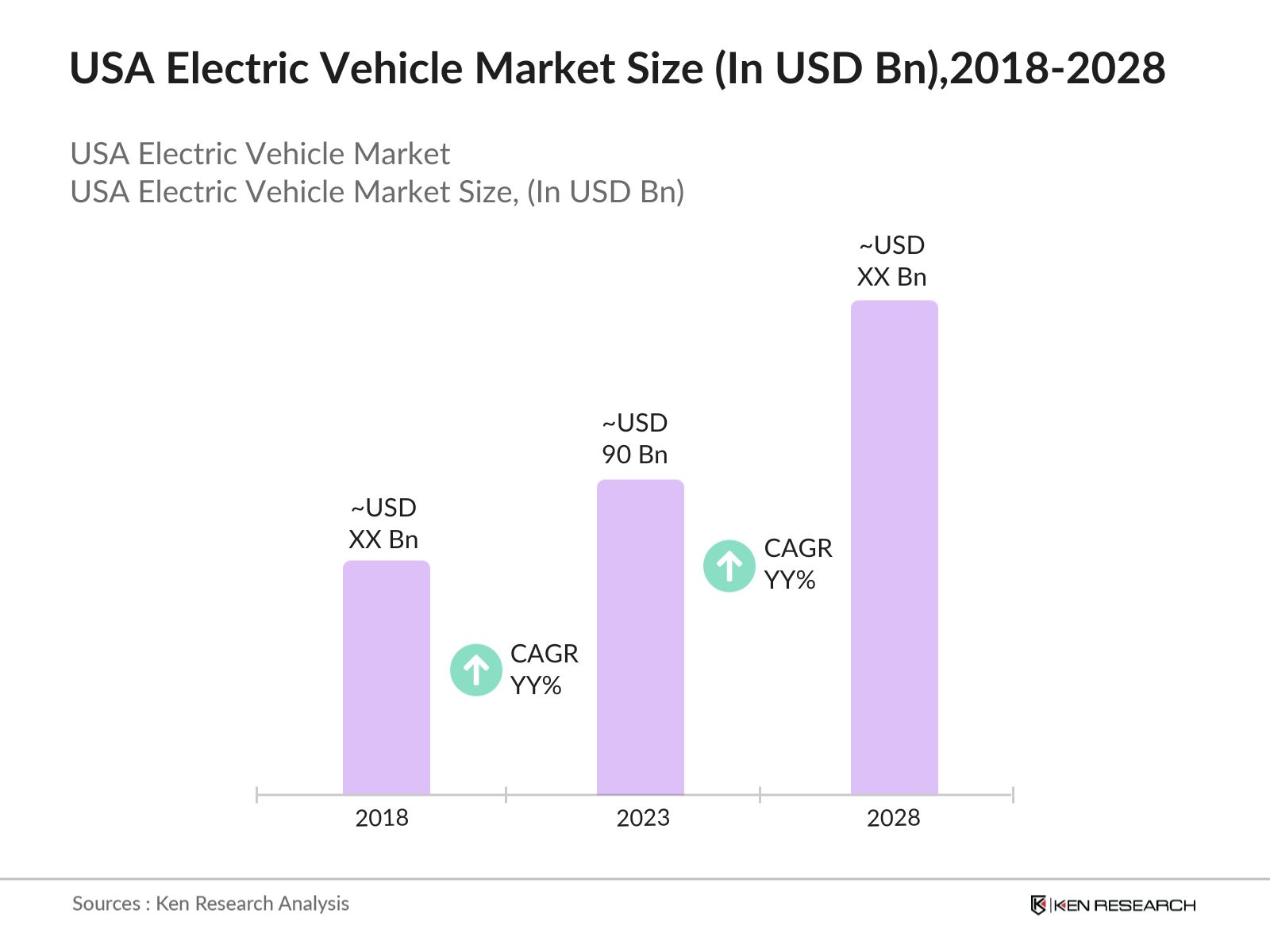
In 2023, the USA Electric Vehicle market reached a valuation of USD 90 billion, fueled by growing environmental concerns, robust government backing, and the transition toward sustainable transportation. The rising awareness of climate change and increasing consumer demand for zero-emission vehicles are significant drivers of the EV market's expansion.
The major challenges include high upfront costs of EVs, supply chain disruptions, particularly in semiconductor availability, and the limited availability of EV charging infrastructure in rural areas. These issues create barriers to broader adoption of electric vehicles across the country.
Key players in the market include Tesla, General Motors, Ford Motor Company, Rivian, and Lucid Motors. These companies lead due to their innovative technologies, extensive product lines, and substantial investments in manufacturing and infrastructure.
The market is primarily driven by government support through tax incentives, increased investments in EV charging infrastructure, and rising consumer demand for lower operating costs. Additionally, advancements in battery technology are further propelling market growth.

What makes us stand out is that our consultants follows Robust, Refine and Result (RRR) methodology. i.e. Robust for clear definitions, approaches and sanity checking, Refine for differentiating respondents facts and opinions and Result for presenting data with story

We have set a benchmark in the industry by offering our clients with syndicated and customized market research reports featuring coverage of entire market as well as meticulous research and analyst insights.

While we don't replace traditional research, we flip the method upside down. Our dual approach of Top Bottom & Bottom Top ensures quality deliverable by not just verifying company fundamentals but also looking at the sector and macroeconomic factors.

With one step in the future, our research team constantly tries to show you the bigger picture. We help with some of the tough questions you may encounter along the way: How is the industry positioned? Best marketing channel? KPI's of competitors? By aligning every element, we help maximize success.

Our report gives you instant access to the answers and sources that other companies might choose to hide. We elaborate each steps of research methodology we have used and showcase you the sample size to earn your trust.

If you need any support, we are here! We pride ourselves on universe strength, data quality, and quick, friendly, and professional service.