
USA Electric Vehicles Range Extender Market Outlook to 2030
Region:North America
Author(s):Shreya Garg
Product Code:KROD6751
Region:North America
Author(s):Shreya Garg
Product Code:KROD6751
December 2024
98
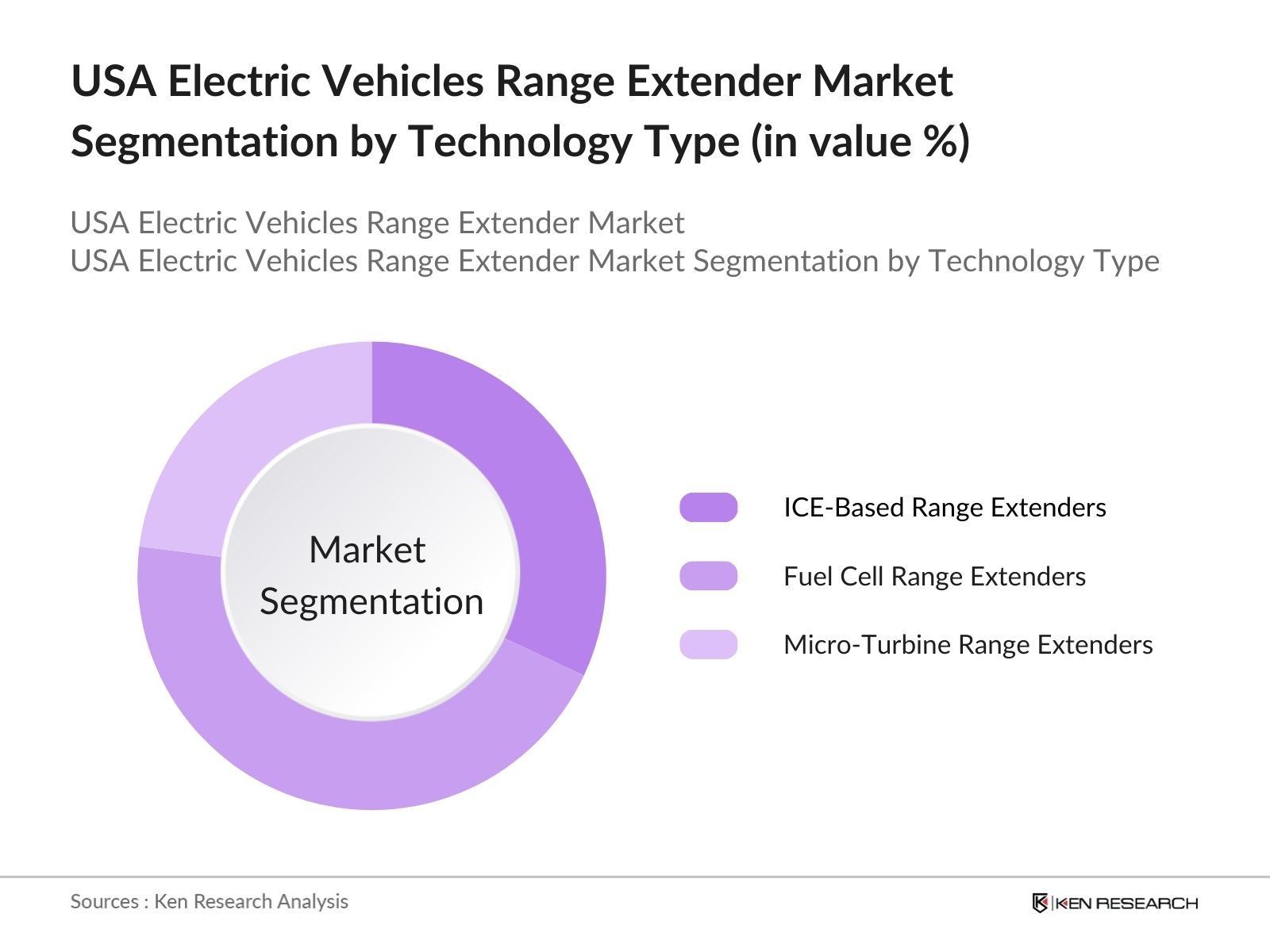
By Technology Type: The USA Electric Vehicles Range Extender market is segmented by technology type into ICE-based range extenders, fuel cell range extenders, and micro-turbine range extenders. Recently, fuel cell range extenders have gained a dominant market share in the USA under the technology type segment. This is primarily due to their ability to provide higher efficiency and lower emissions compared to traditional internal combustion engines. The focus on hydrogen infrastructure development in key states like California further supports the growth of this segment.
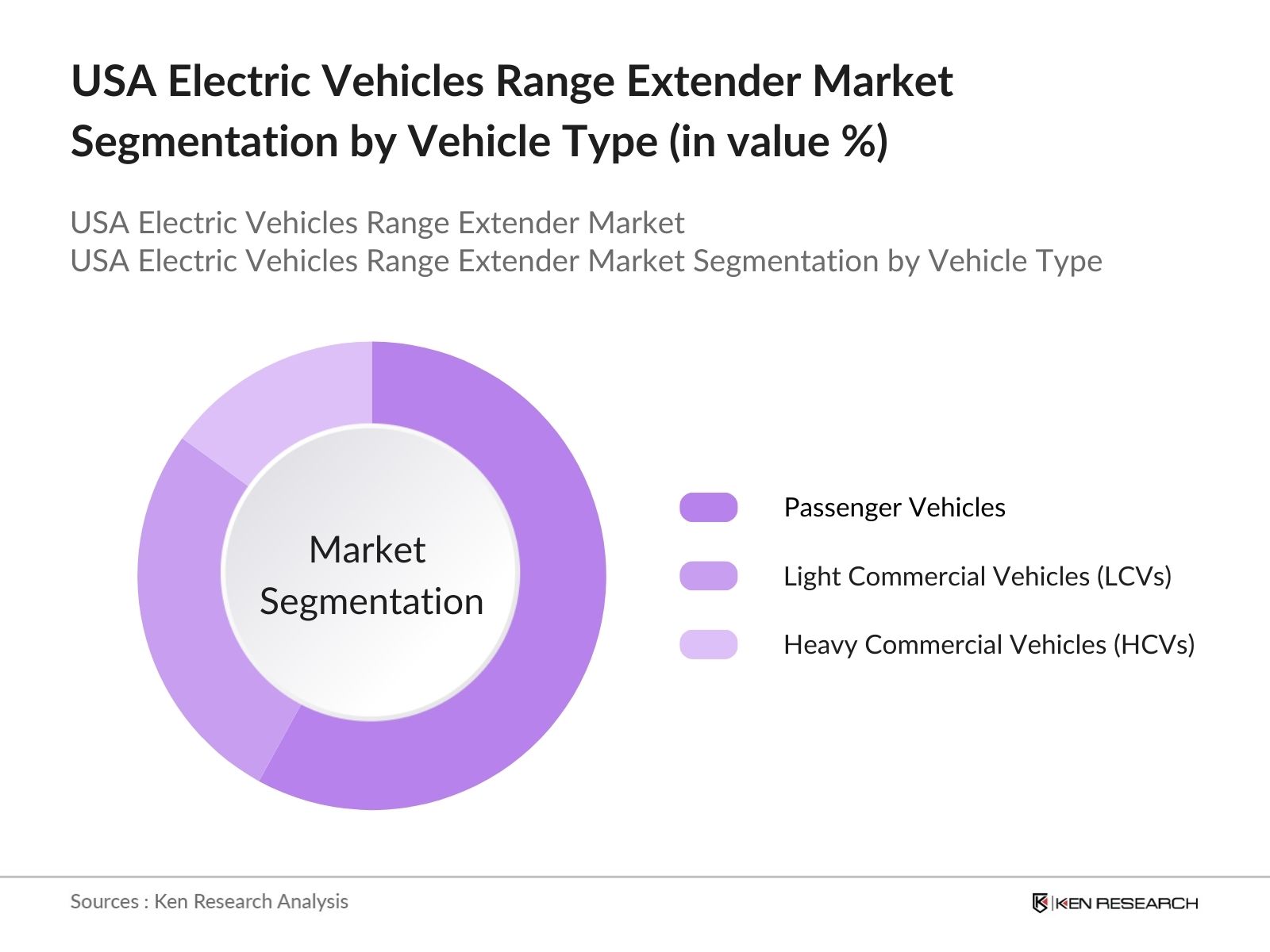
 By Vehicle Type: The market is segmented by vehicle type into passenger vehicles, light commercial vehicles (LCVs), and heavy commercial vehicles (HCVs). Passenger vehicles hold a dominant market share due to the increasing preference for electric cars among urban commuters seeking eco-friendly solutions for daily transportation. The rising availability of incentives for passenger EVs and extensive charging infrastructure make them the leading choice among vehicle types.
The USA Electric Vehicles Range Extender market is characterized by a mix of local and global players, all aiming to capitalize on the growing demand for extended-range electric vehicles. The competitive landscape features established automotive manufacturers and innovative tech firms that focus on integrating advanced range-extending technologies into their EV offerings.
|
Company |
Establishment Year |
Headquarters |
Key Technologies |
R&D Investment |
Partnerships |
Production Capacity |
Focus on Sustainability |
Recent Mergers |
EV Sales Growth |
|
General Motors |
1908 |
Detroit, USA |
|||||||
|
Ford Motor Company |
1903 |
Dearborn, USA |
|||||||
|
Tesla, Inc. |
2003 |
Palo Alto, USA |
|||||||
|
Ballard Power Systems |
1979 |
Burnaby, Canada |
|||||||
|
MAHLE GmbH |
1920 |
Stuttgart, Germany |
Over the next few years, the USA Electric Vehicles Range Extender market is poised to experience substantial growth. The market's trajectory is driven by continuous advancements in fuel cell technology, increasing investments in hydrogen infrastructure, and growing consumer demand for extended-range electric vehicles. The focus on reducing carbon emissions through alternative fuel solutions such as biofuels and hydrogen further supports market expansion. Additionally, collaborations between automakers and tech companies are expected to lead to innovations in lightweight, efficient range extenders.
|
Technology Type |
ICE-Based Range Extenders Fuel Cell Range Extenders Micro-Turbine Range Extenders |
|
Fuel Type |
Gasoline Diesel Hydrogen Biofuels |
|
Component |
Engine/Generator Battery Pack Power Electronics Thermal Management System |
|
Vehicle Type |
Passenger Vehicles Light Commercial Vehicles (LCVs) Heavy Commercial Vehicles (HCVs) |
|
Region |
Northeast USA Midwest USA Western USA Southern USA |
1.1. Definition and Scope
1.2. Market Taxonomy (Battery Chemistry, Fuel Type, Range Extender Type)
1.3. Market Dynamics Overview (Growth Rate, Demand Drivers)
1.4. Market Segmentation Overview
2.1. Historical Market Size
2.2. Year-On-Year Growth Analysis
2.3. Key Developments and Milestones
3.1. Growth Drivers
3.1.1. Increasing Adoption of Electric Vehicles (EV Penetration Rate)
3.1.2. Government Incentives and Subsidies (Tax Credits, Grants)
3.1.3. Advancements in Range Extender Technology (Fuel Cell, Micro-Turbines)
3.1.4. Rising Consumer Demand for Extended Range EVs (Consumer Preferences)
3.2. Market Challenges
3.2.1. High Initial Cost of Range Extenders (Price Sensitivity)
3.2.2. Regulatory Hurdles (Emissions Compliance)
3.2.3. Limited Awareness Among Consumers
3.2.4. Competition from Battery-Electric Vehicles (EV Range Improvement)
3.3. Opportunities
3.3.1. Technological Integration with Autonomous EVs
3.3.2. Collaboration with OEMs (Original Equipment Manufacturers)
3.3.3. Expansion into Urban Markets (City Electrification Initiatives)
3.3.4. Export Opportunities (North American Free Trade Opportunities)
3.4. Trends
3.4.1. Hybridization of EV and Range Extenders (Plug-in Hybrids)
3.4.2. Use of Renewable Fuels (Biofuels, Hydrogen)
3.4.3. Lightweight and Compact Range Extender Designs
3.4.4. Integration with IoT for Performance Monitoring
3.5. Government Regulations
3.5.1. CAFE Standards (Corporate Average Fuel Economy)
3.5.2. Zero Emission Vehicle (ZEV) Programs
3.5.3. Federal and State-Level EV Policies
3.5.4. Clean Energy Funding Programs
3.6. SWOT Analysis
3.7. Stakeholder Ecosystem (OEMs, Suppliers, Technology Providers)
3.8. Porters Five Forces Analysis
3.9. Competitive Landscape
4.1. By Technology Type (In Value %)
4.1.1. ICE-Based Range Extenders
4.1.2. Fuel Cell Range Extenders
4.1.3. Micro-Turbine Range Extenders
4.2. By Fuel Type (In Value %)
4.2.1. Gasoline
4.2.2. Diesel
4.2.3. Hydrogen
4.2.4. Biofuels
4.3. By Component (In Value %)
4.3.1. Engine/Generator
4.3.2. Battery Pack
4.3.3. Power Electronics
4.3.4. Thermal Management System
4.4. By Vehicle Type (In Value %)
4.4.1. Passenger Vehicles
4.4.2. Light Commercial Vehicles (LCVs)
4.4.3. Heavy Commercial Vehicles (HCVs)
4.5. By Region (In Value %)
4.5.1. Northeast USA
4.5.2. Midwest USA
4.5.3. Western USA
4.5.4. Southern USA
5.1. Detailed Profiles of Major Companies
5.1.1. General Motors
5.1.2. Ford Motor Company
5.1.3. Tesla, Inc.
5.1.4. BMW AG
5.1.5. Nissan Motor Corporation
5.1.6. Toyota Motor Corporation
5.1.7. Honda Motor Co., Ltd.
5.1.8. MAHLE GmbH
5.1.9. AVL List GmbH
5.1.10. Ballard Power Systems
5.1.11. Magna International Inc.
5.1.12. Plug Power Inc.
5.1.13. Cummins Inc.
5.1.14. Nikola Corporation
5.1.15. Ceres Power Holdings plc
5.2. Cross Comparison Parameters (Revenue, Market Penetration, Innovation Index, Partnerships, Fuel Type Focus, Range Improvement, Customer Reach, Sustainability Initiatives)
5.3. Market Share Analysis
5.4. Strategic Initiatives (Joint Ventures, Collaborations)
5.5. Mergers and Acquisitions
5.6. Investment Analysis
5.7. Venture Capital Funding Trends
5.8. Government Grants and Subsidies
5.9. Private Equity Investments
6.1. Emissions Standards Compliance
6.2. Certification Requirements (SAE, ISO Standards)
6.3. State-Level Regulations (California Air Resources Board - CARB)
6.4. EV Incentives and Rebate Programs
7.1. Future Market Size Insights
7.2. Key Factors Driving Market Growth
8.1. TAM/SAM/SOM Analysis
8.2. Customer Segmentation Analysis
8.3. Strategic Marketing Recommendations
8.4. White Space Opportunity Analysis
The initial phase involves constructing an ecosystem map that includes all major stakeholders within the USA Electric Vehicles Range Extender market. This is based on comprehensive desk research, utilizing secondary and proprietary databases to gather industry-level data. The main aim is to define the critical variables affecting market trends.
This phase compiles and analyzes historical data related to the USA Electric Vehicles Range Extender market. It involves assessing market penetration, the ratio of range extenders to conventional EVs, and revenue generation trends. Service quality metrics are also evaluated to ensure the reliability of revenue estimates.
Market hypotheses are developed and validated through interviews with industry experts using computer-assisted telephone interviews (CATI). These consultations provide insights from stakeholders and manufacturers, aiding in refining market data and trends.
In this final stage, direct engagements with EV manufacturers and technology providers help verify product segments, sales performance, and consumer preferences. This approach combines bottom-up data validation to deliver a comprehensive and accurate analysis of the USA Electric Vehicles Range Extender market.
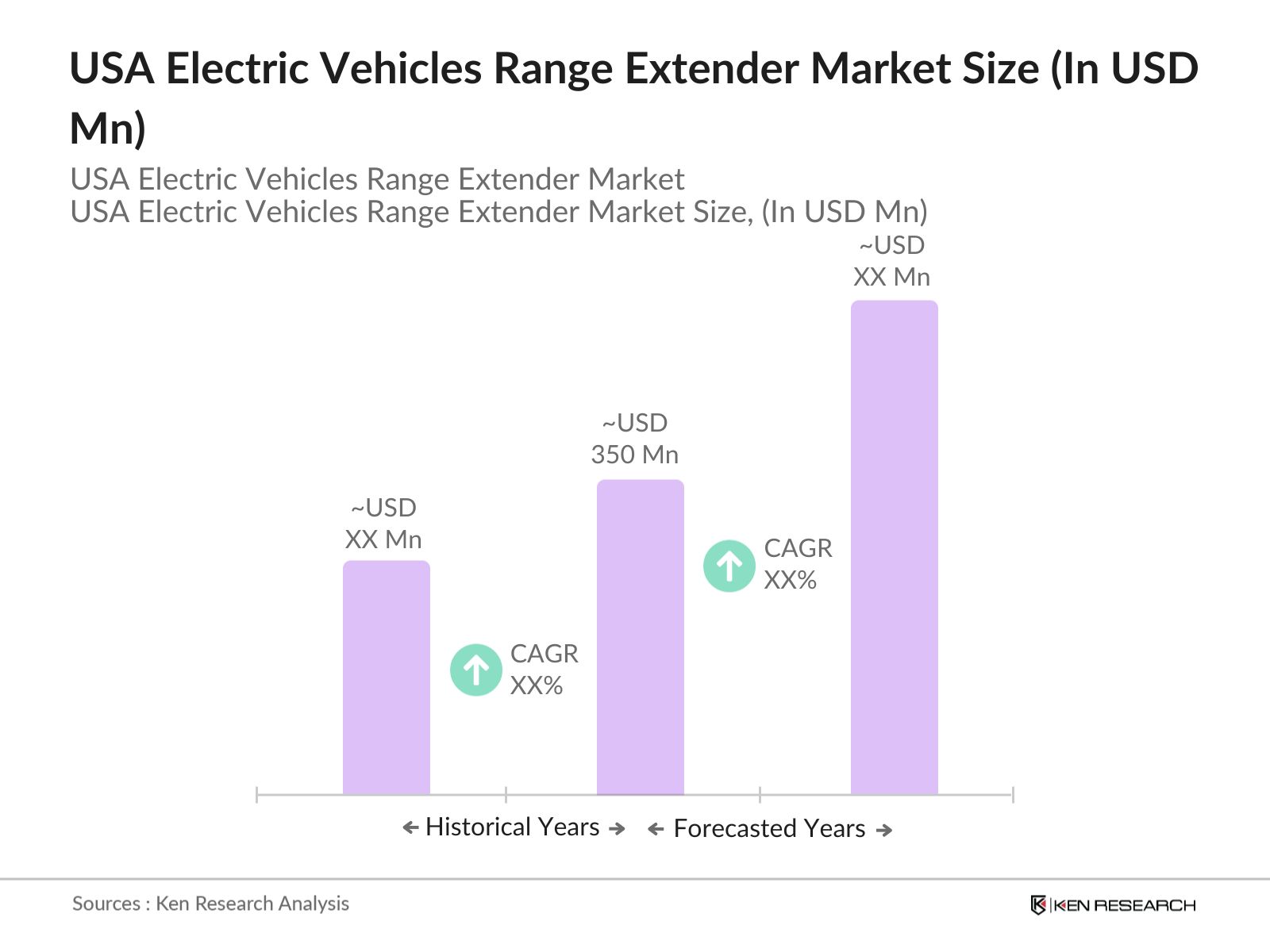
The USA Electric Vehicles Range Extender market is valued at USD 350 million, driven by technological advancements in range-extending solutions and increasing government support for sustainable transportation.
Challenges in the USA Electric Vehicles Range Extender market include high initial costs of range extender technologies, regulatory complexities surrounding emissions compliance, and competition from battery-only EVs, which continue to improve their driving range capabilities.
Key players in the USA Electric Vehicles Range Extender market include General Motors, Tesla, Ford Motor Company, Ballard Power Systems, and MAHLE GmbH, each with a significant role in advancing range-extending technologies and increasing production capacity.
The USA Electric Vehicles Range Extender market is driven by factors such as government subsidies, technological advancements in fuel cell and micro-turbine range extenders, and the rising consumer demand for vehicles that can travel longer distances without frequent recharging.
Fuel cell range extenders are preferred due to their high efficiency, zero-emission output, and alignment with hydrogen infrastructure initiatives in states like California, making them a sustainable choice for extending the driving range of EVs in the USA Electric Vehicles Range Extender market.

What makes us stand out is that our consultants follows Robust, Refine and Result (RRR) methodology. i.e. Robust for clear definitions, approaches and sanity checking, Refine for differentiating respondents facts and opinions and Result for presenting data with story

We have set a benchmark in the industry by offering our clients with syndicated and customized market research reports featuring coverage of entire market as well as meticulous research and analyst insights.

While we don't replace traditional research, we flip the method upside down. Our dual approach of Top Bottom & Bottom Top ensures quality deliverable by not just verifying company fundamentals but also looking at the sector and macroeconomic factors.

With one step in the future, our research team constantly tries to show you the bigger picture. We help with some of the tough questions you may encounter along the way: How is the industry positioned? Best marketing channel? KPI's of competitors? By aligning every element, we help maximize success.

Our report gives you instant access to the answers and sources that other companies might choose to hide. We elaborate each steps of research methodology we have used and showcase you the sample size to earn your trust.

If you need any support, we are here! We pride ourselves on universe strength, data quality, and quick, friendly, and professional service.