















USA Embedded Non-Volatile Memory (eNVM) Market Outlook to 2030
Region:North America
Author(s):Shubham
Product Code:KROD5797
November 2024
88
About the Report
USA Embedded Non-Volatile Memory Market Overview
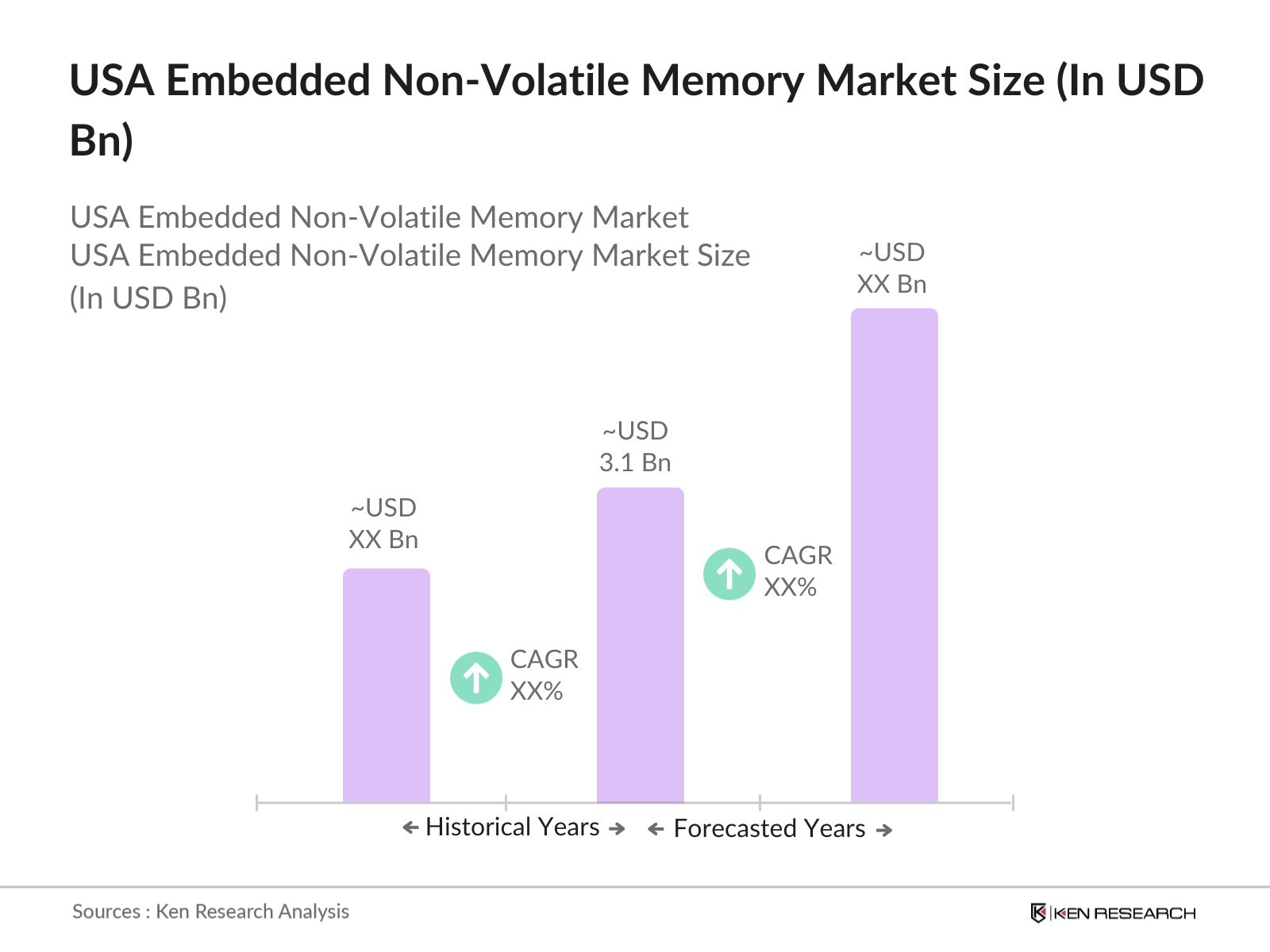
- The USA Embedded Non-Volatile Memory (eNVM) market is valued at USD 3.1 billion, driven by the increasing demand for reliable data storage solutions in high-growth sectors such as consumer electronics, automotive, and industrial automation. Growth in this market is primarily fueled by innovations in memory technologies, including MRAM, RRAM, and FRAM, which cater to the unique requirements of low-power and secure data retention. The rising adoption of these memory technologies in critical applications, where endurance and data integrity are essential, supports sustained market growth and strategic investment by major technology firms.
- Key regions, including Californias Silicon Valley and Texas Austin, play a vital role in the USA eNVM market. Silicon Valley serves as a hub for technological innovation, with many leading memory and semiconductor companies based in the area, fostering a strong R&D environment. Austin, Texas, is also a key location due to its growing semiconductor manufacturing ecosystem and the presence of numerous skilled tech professionals. The concentration of resources, talent, and significant investments in these regions ensures their dominance in the USA eNVM market.
- In 2024, notable advancements in memory technologies such as MRAM and FRAM were achieved, catering to industries requiring high endurance and low-power solutions. Additionally, strategic initiatives were launched by industry leaders to expand eNVM applications in automotive safety systems and IoT devices, which demand robust, non-volatile memory solutions. This focus on application-specific innovation continues to set new standards for eNVM technology within the U.S. market.
USA Embedded Non-Volatile Memory Market Segmentation
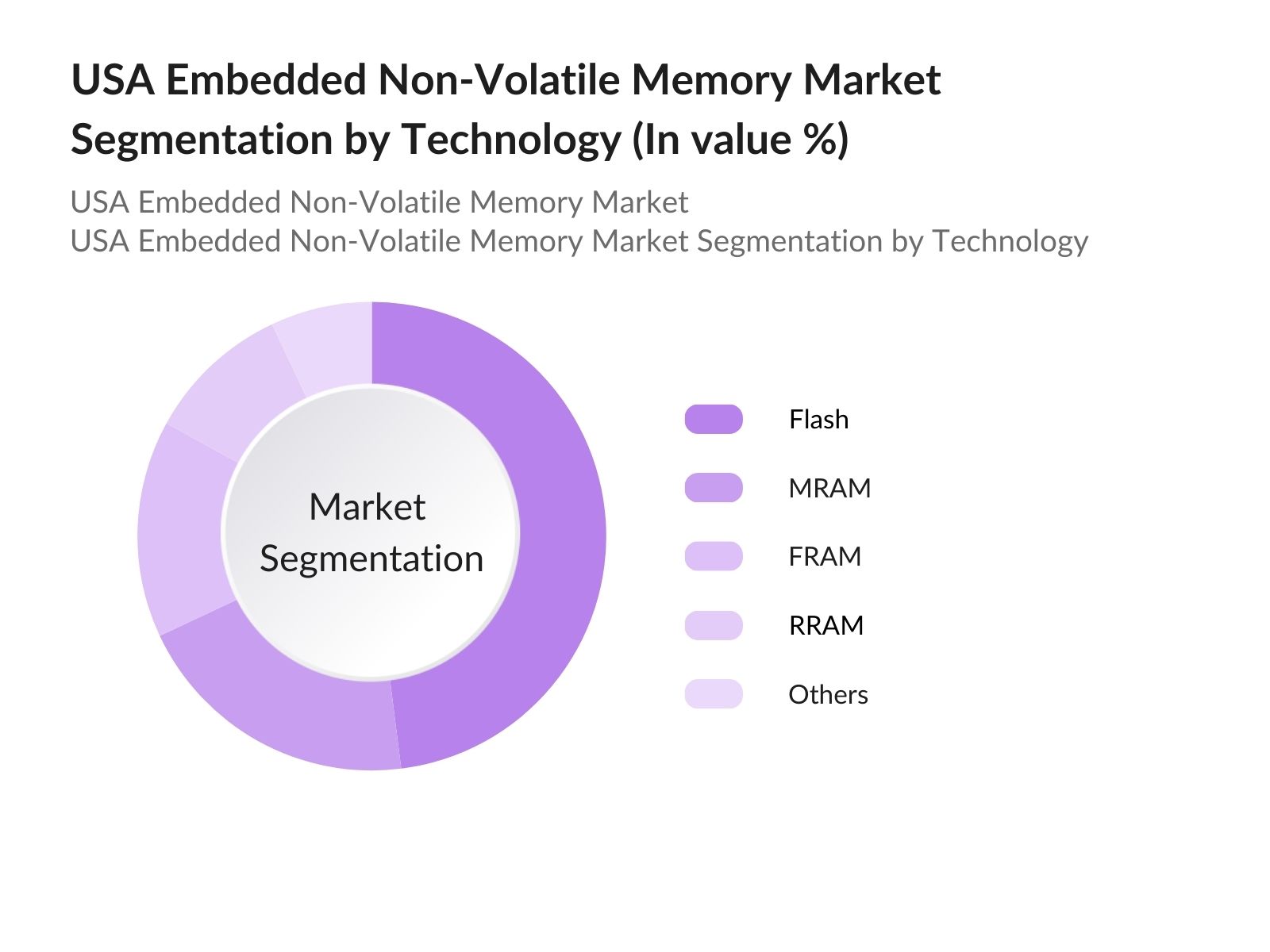
- By Technology Type: The market is segmented by technology type, including Flash, MRAM, FRAM, RRAM, and others. Flash memory maintains a dominant market share due to its broad application in consumer electronics and automotive sectors, which prioritize cost-effective and reliable storage solutions. Flash technologys adaptability and scalability support its extensive use in a variety of products, from smartphones to automotive systems, allowing it to retain its leading position in the market.
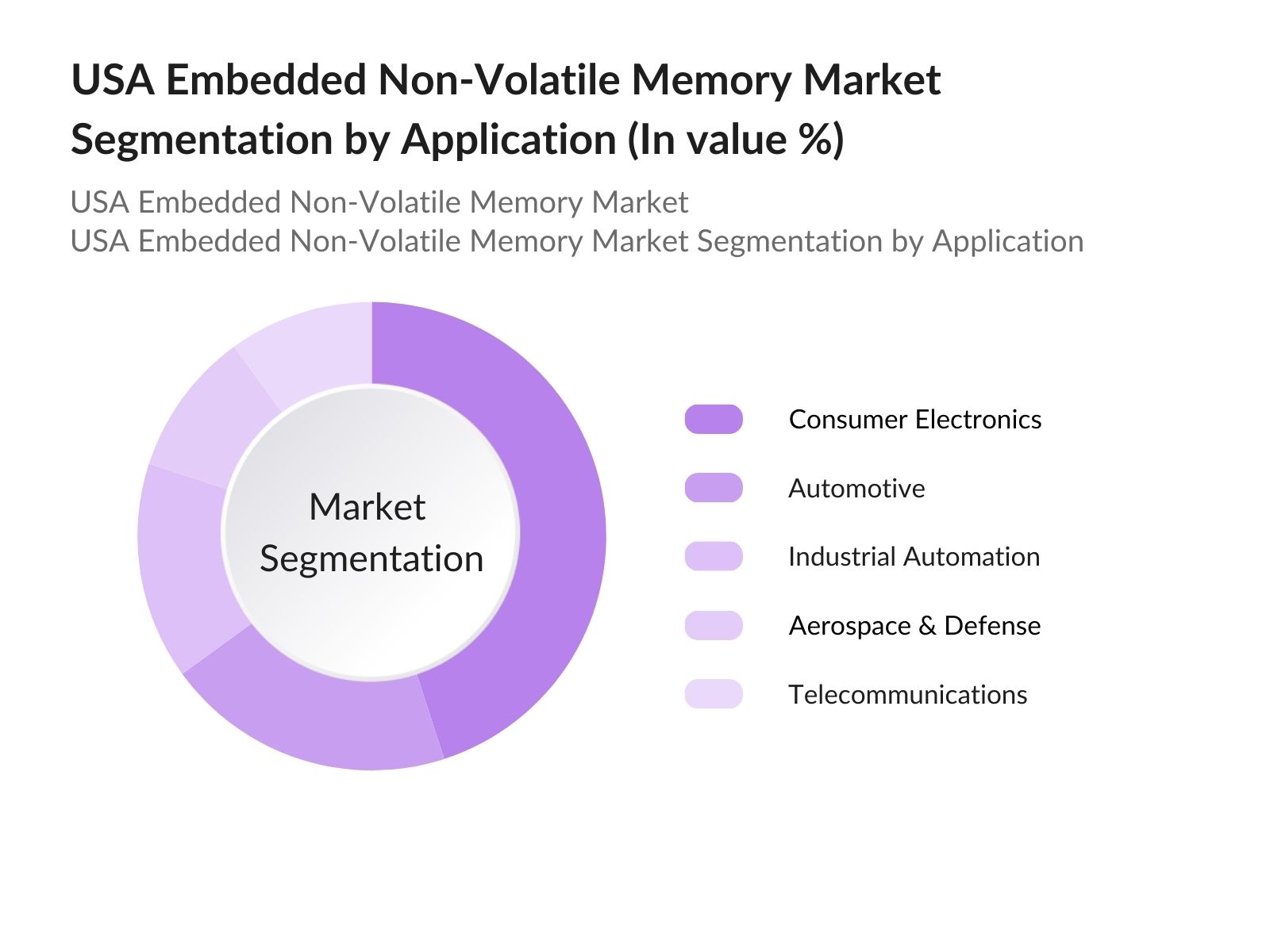
- By Application: The market is further segmented by application, including Consumer Electronics, Automotive, Industrial Automation, Aerospace & Defense, and Telecommunications. Consumer Electronics leads this segment, driven by increasing demand for reliable and high-density data storage in devices such as smartphones and wearables. The growth of connected devices and the need for fast, durable memory solutions in personal electronics boost the consumer electronics segments market share, establishing it as a primary driver of the eNVM market.
USA Embedded Non-Volatile Memory Market Competitive Landscape
The USA eNVM market is highly competitive, dominated by both local and international semiconductor companies that specialize in advanced memory technologies. These companies maintain a competitive edge through extensive R&D, strategic partnerships, and a focus on application-specific innovation.
These companies lead the market with their R&D focus, extensive portfolios, and strong ties to key end-users in consumer electronics, automotive, and industrial automation sectors. 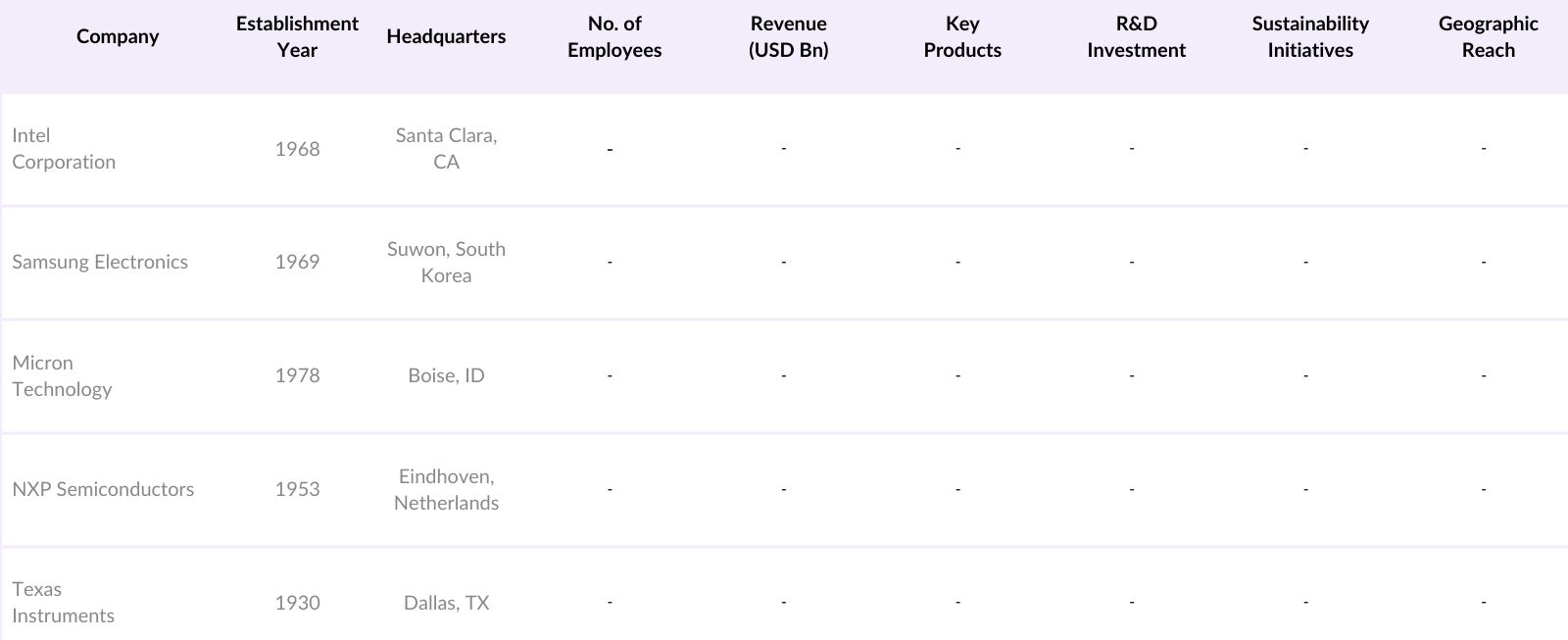
USA Embedded Non-Volatile Memory Market Analysis
Growth Drivers
- Increasing Demand for IoT and Smart Devices: The demand for IoT devices in the U.S. has surged, with over 4 billion active IoT connections reported as of 2024. Embedded Non-Volatile Memory (eNVM) plays a critical role in supporting these IoT networks by enabling quick data retrieval, storage, and secure data transfer between devices. According to the U.S. Census Bureau, there has been a noticeable rise in smart IoT-enabled devices across both consumer and industrial applications, such as smart thermostats and predictive maintenance systems in manufacturing. The steady expansion of IoT networks aligns with increased requirements for reliable, secure, and energy-efficient embedded memory solutions
- Proliferation of Smart Consumer Electronics: In 2024, the U.S. market recorded highest ever sales of of smart consumer electronics, spanning devices like smartphones, wearables, and tablets. eNVM technology is essential in this sector, providing high-performance memory solutions that support device functionalities such as voice commands and biometric authentication. The National Telecommunications and Information Administration (NTIA) has noted that increased internet connectivity and technological advancements are fueling demand for memory-dense devices. Embedded memory facilitates low-power consumption, aiding longer battery life in smart electronics a key feature for consumers prioritizing eco-friendly and efficient products.
- Automotive and Industrial Automation Adoption: The U.S. automotive industry has rapidly integrated advanced embedded memory solutions, particularly as automated driving and electric vehicle (EV) adoption has risen. The National Highway Traffic Safety Administration (NHTSA) reported that majority of newly manufactured vehicles in 2024 include automated or semi-automated features that rely on eNVM for data processing and storage. This technology is equally crucial in industrial automation, where thousands of factories in the U.S. utilize robotics requiring low-latency data processing, enabling streamlined operations and enhanced safety protocols.
Challenges
- Integration Complexity with CMOS Technology: The integration of eNVM with Complementary Metal-Oxide-Semiconductor (CMOS) technology faces technical challenges due to incompatibility issues at nanoscales. The U.S. Semiconductor Industry Association reports that CMOS technology, which powers most digital logic circuits, requires specific thermal and processing conditions that differ from those of many eNVM types, adding design complexities. Integration issues can also lead to lower yield rates, necessitating extensive testing phases and raising operational costs.
- Limited Scalability of Certain Memory Types: Scaling down memory to achieve higher density without losing performance is a persistent challenge in eNVM. Technologies like EEPROM have limited scalability at nanoscales, complicating their use in high-density applications. The International Technology Roadmap for Semiconductors (ITRS) has highlighted that while MRAM and FRAM offer promising alternatives, they still face limitations in widespread adoption due to manufacturing complexity, which increases as components are downsized.
USA Embedded Non-Volatile Memory Market Future Outlook
The USA Embedded Non-Volatile Memory market is expected to show steady growth through 2028, driven by continuous advancements in automotive electronics, IoT, and data-centric applications in industrial automation. Innovations in eNVM technologies, such as MRAM and RRAM, are anticipated to address challenges related to scalability, power consumption, and endurance, making these solutions increasingly viable for critical applications. Additionally, increased investment in semiconductor manufacturing infrastructure and memory technology by leading companies will likely enhance production capabilities and support the markets growth trajectory.
Future Market Opportunities
- Technological Innovations in eNVM Architectures: New advancements in eNVM, including emerging MRAM and ReRAM technologies, present substantial growth opportunities. For instance, the U.S. National Institute of Standards and Technology (NIST) has reported successful pilot programs integrating MRAM into IoT and edge devices for faster data access and power efficiency, proving favorable in energy-sensitive applications. As innovations proceed, these new memory architectures are expected to enable enhanced functionality, aligning with the increasing demands for reliable, scalable, and low-power memory solutions.
- Expansion in AI and Machine Learning Applications: Embedded memory is instrumental in supporting AI applications, which have seen rapid integration across U.S. industries, from finance to healthcare. The U.S. Bureau of Economic Analysis (BEA) reports that AI-driven platforms contributed around USD 100 billion to the U.S. economy in 2023. eNVM solutions enable efficient data processing in real-time, a key requirement for AI and machine learning algorithms that process large volumes of data. With AIs growing economic footprint, demand for memory architectures that facilitate high-speed processing is poised for further growth.
Scope of the Report
|
Technology Type |
Flash MRAM FRAM RRAM Others |
|
Application |
Consumer Electronics Automotive Industrial Automation Aerospace and Defense Telecommunications |
|
Density Range |
Up to 256KB 256KB to 1MB Above 1MB |
|
End-User Industry |
Semiconductor Manufacturing Automotive OEMs IoT and Edge Devices Consumer Electronics |
|
Region |
North East Mid-West Southern Western |
Products
Key Target Audience
Investors and Venture Capitalist Firms
Banks and Financial Institutions
U.S. Department of Commerce
Semiconductor Equipment Manufacturers
IoT Device Manufacturers
Automotive OEMs
Cloud and Data Center Service Providers
Industrial Equipment Manufacturers
Companies
Players Mentioned in the Report
Intel Corporation
Samsung Electronics
Micron Technology
NXP Semiconductors
Texas Instruments
GLOBALFOUNDRIES
Renesas Electronics
ON Semiconductor
Fujitsu Limited
Cypress Semiconductor
SK Hynix
Winbond Electronics Corporation
Infineon Technologies AG
TSMC (Taiwan Semiconductor Manufacturing Company)
Western Digital Corporation
Table of Contents
1. USA Embedded Non-Volatile Memory Market Overview
1.1 Definition and Scope
1.2 Market Taxonomy
1.3 Market Growth Rate
1.4 Market Segmentation Overview
2. USA Embedded Non-Volatile Memory Market Size (In USD Bn)
2.1 Historical Market Size
2.2 Year-On-Year Growth Analysis
2.3 Key Market Developments and Milestones
3. USA Embedded Non-Volatile Memory Market Analysis
3.1 Growth Drivers
Rising Demand for IoT Devices
Proliferation of Smart Consumer Electronics
Automotive and Industrial Automation Adoption
3.2 Market Challenges
High Development Costs
Integration Complexity with CMOS Technology
Limited Scalability of Certain Memory Types
3.3 Opportunities
Technological Innovations in eNVM Architectures
Expansion in AI and Machine Learning Applications
Growing Interest in Advanced Automotive Safety Features
3.4 Trends
Shift Toward Low-Power Memory Solutions
Adoption of MRAM, FRAM, and RRAM Technologies
Increased Focus on Data Security and Integrity in IoT Devices
3.5 Government Regulations
Data Security and Privacy Regulations (GDPR, CCPA Compliance)
Export Control Regulations
Subsidies and Incentives for Semiconductor Manufacturing
3.6 SWOT Analysis
3.7 Stakeholder Ecosystem
3.8 Porters Five Forces Analysis
3.9 Competition Ecosystem
4. USA Embedded Non-Volatile Memory Market Segmentation
4.1 By Technology Type (In Value %)
Flash
MRAM
FRAM
RRAM
Others
4.2 By Application (In Value %)
Consumer Electronics
Automotive
Industrial Automation
Aerospace and Defense
Telecommunications
4.3 By Density Range (In Value %)
Up to 256KB
256KB to 1MB
Above 1MB
4.4 By End-User Industry (In Value %)
Semiconductor Manufacturing
Automotive OEMs
IoT and Edge Devices
Consumer Electronics
4.5 By Region (In Value %)
North East USA
Mid-West USA
Southern USA
Western USA
5. USA Embedded Non-Volatile Memory Market Competitive Analysis
5.1 Detailed Profiles of Major Companies
Intel Corporation
Samsung Electronics Co., Ltd.
TSMC (Taiwan Semiconductor Manufacturing Company)
Micron Technology, Inc.
GLOBALFOUNDRIES
NXP Semiconductors
STMicroelectronics
Texas Instruments
ON Semiconductor
Renesas Electronics
SK Hynix
Cypress Semiconductor
Fujitsu Limited
Winbond Electronics Corporation
Infineon Technologies AG
5.2 Cross-Comparison Parameters (R&D Investments, Market Presence, Patent Portfolio, Revenue, Manufacturing Capacity, Technology Specialization, Regional Presence, Market Share)
5.3 Market Share Analysis
5.4 Strategic Initiatives
5.5 Mergers and Acquisitions
5.6 Investment Analysis
5.7 Venture Capital Funding
5.8 Government Grants
5.9 Private Equity Investments
6. USA Embedded Non-Volatile Memory Market Regulatory Framework
6.1 Data Compliance Standards
6.2 Export Regulations for Semiconductor Components
6.3 Certification Processes for eNVM in Safety-Critical Applications
7. USA Embedded Non-Volatile Memory Future Market Size (In USD Bn)
7.1 Future Market Size Projections
7.2 Key Factors Driving Future Market Growth
8. USA Embedded Non-Volatile Memory Future Market Segmentation
8.1 By Technology Type (In Value %)
8.2 By Application (In Value %)
8.3 By Density Range (In Value %)
8.4 By End-User Industry (In Value %)
8.5 By Region (In Value %)
9. USA Embedded Non-Volatile Memory Market Analysts Recommendations
9.1 TAM/SAM/SOM Analysis
9.2 Customer Cohort Analysis
9.3 Marketing Initiatives
9.4 White Space Opportunity Analysis
Research Methodology
Step 1: Identification of Key Variables
The research begins by identifying all primary stakeholders within the USA Embedded Non-Volatile Memory market. This step includes extensive desk research utilizing proprietary and public databases to map the key market drivers and influential variables.
Step 2: Market Analysis and Construction
We conduct a thorough analysis of historical data, assessing market penetration by technology type and application sector. This phase focuses on market data consistency, enabling reliable revenue projections for each segment.
Step 3: Hypothesis Validation and Expert Consultation
Our team engages with industry experts through CATIs to validate hypotheses regarding growth trends, emerging applications, and competitive dynamics. These consultations ensure that market insights are comprehensive and accurate.
Step 4: Research Synthesis and Final Output
The final phase involves synthesizing data from top eNVM manufacturers to gain insights into product performance, customer preferences, and industry developments, ensuring a validated and well-rounded market analysis.
Frequently Asked Questions
How big is the USA Embedded Non-Volatile Memory Market?
The USA Embedded Non-Volatile Memory market is valued at USD 3.1 billion, driven by high demand in consumer electronics, automotive, and industrial automation.
What are the challenges in the USA Embedded Non-Volatile Memory Market?
The major challenges in the USA Embedded Non-Volatile Memory market include high development costs, integration complexity with existing semiconductor technologies, and scalability concerns, which affect the widespread adoption of certain eNVM technologies.
Who are the major players in the USA Embedded Non-Volatile Memory Market?
Leading players in the USA Embedded Non-Volatile Memory market include Intel Corporation, Samsung Electronics, Micron Technology, NXP Semiconductors, and Texas Instruments, each known for their advanced technological capabilities and extensive product portfolios.
What are the growth drivers of the USA Embedded Non-Volatile Memory Market?
USA Embedded Non-Volatile Memory market growth is fueled by increasing demand for low-power memory in IoT devices, advancements in automotive electronics, and the shift toward data-intensive applications in industrial automation.
Why Buy From Us?

What makes us stand out is that our consultants follows Robust, Refine and Result (RRR) methodology. i.e. Robust for clear definitions, approaches and sanity checking, Refine for differentiating respondents facts and opinions and Result for presenting data with story

We have set a benchmark in the industry by offering our clients with syndicated and customized market research reports featuring coverage of entire market as well as meticulous research and analyst insights.

While we don't replace traditional research, we flip the method upside down. Our dual approach of Top Bottom & Bottom Top ensures quality deliverable by not just verifying company fundamentals but also looking at the sector and macroeconomic factors.

With one step in the future, our research team constantly tries to show you the bigger picture. We help with some of the tough questions you may encounter along the way: How is the industry positioned? Best marketing channel? KPI's of competitors? By aligning every element, we help maximize success.

Our report gives you instant access to the answers and sources that other companies might choose to hide. We elaborate each steps of research methodology we have used and showcase you the sample size to earn your trust.

If you need any support, we are here! We pride ourselves on universe strength, data quality, and quick, friendly, and professional service.