















USA EV Instrument Cluster Market Outlook to 2030
Region:North America
Author(s):Shivani Mehra
Product Code:KROD2590
December 2024
90
About the Report
USA EV Instrument Cluster Market Overview
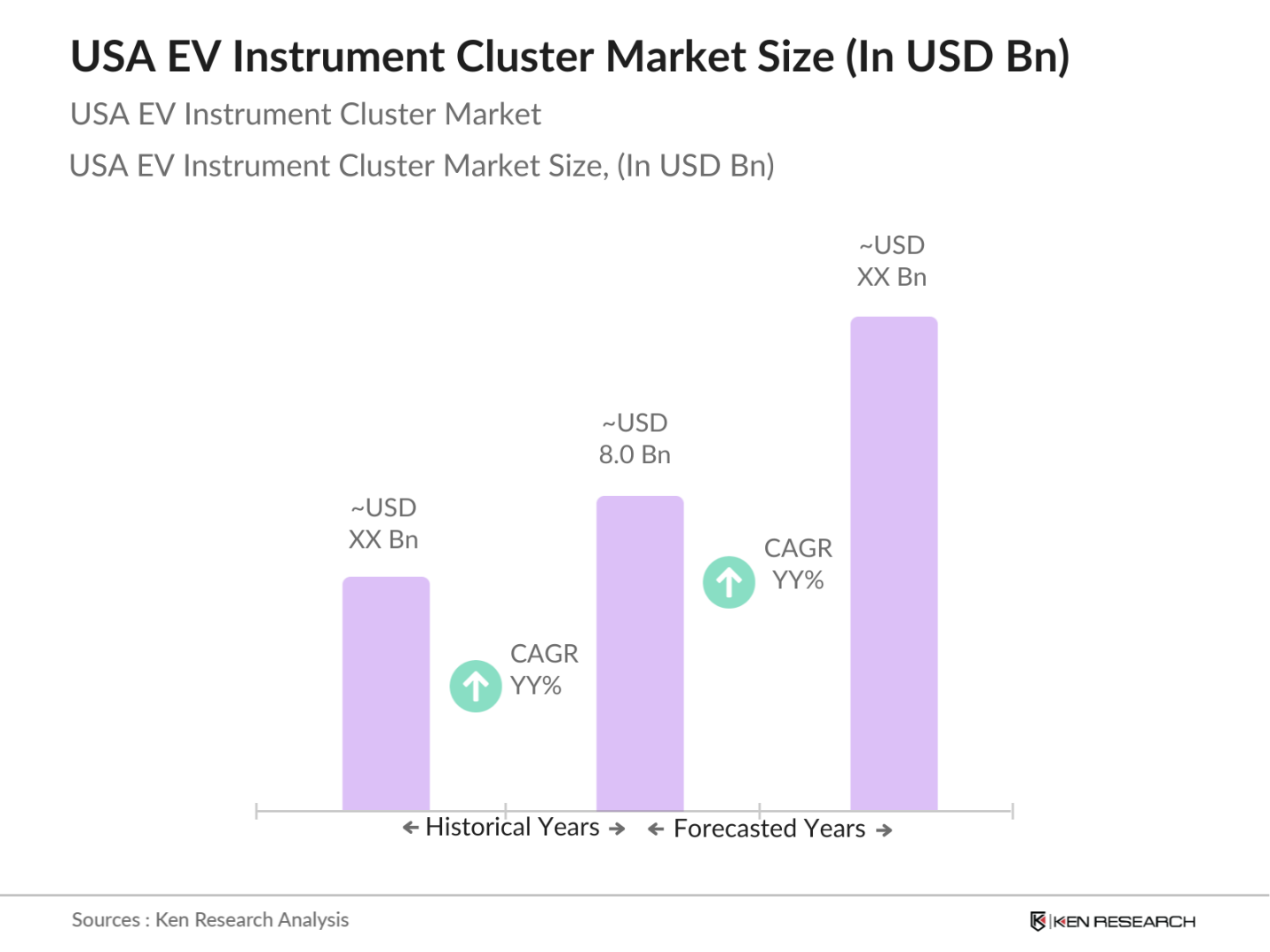
- The USA EV Instrument Cluster Market is valued at USD 8.0 billion, driven by the rapid increase in electric vehicle (EV) adoption and advancements in display technology that meet consumer demand for customizable, interactive dashboards. The market growth is propelled by manufacturers investing in innovative digital displays, augmented reality integration, and intuitive interface design, aiming to enhance user experience and align with sustainable transportation goals. Credible sources, such as Automotive News and the International Energy Agency, highlight the influence of technological advancements and government support in expanding this market.
- Leading cities in the USA dominate the EV instrument cluster market due to their high concentration of EVs and supportive infrastructure. For example, cities like Los Angeles and San Francisco have advanced EV charging networks and proactive government incentives, making them key hubs for EV-related technological adoption. Additionally, states like California and New York, with strict environmental policies and higher EV penetration, drive market demand for cutting-edge EV components.
- The U.S. federal government provides tax credits for EV purchases, offering up to $7,500 per vehicle for eligible buyers. This incentive reduces the overall cost of EVs, encouraging adoption and indirectly boosting demand for advanced technologies like digital instrument clusters. By lowering entry costs, the tax credit supports the growth of the EV market, leading to further technological advancements in display interfaces and instrumentation.
USA EV Instrument Cluster Market Segmentation
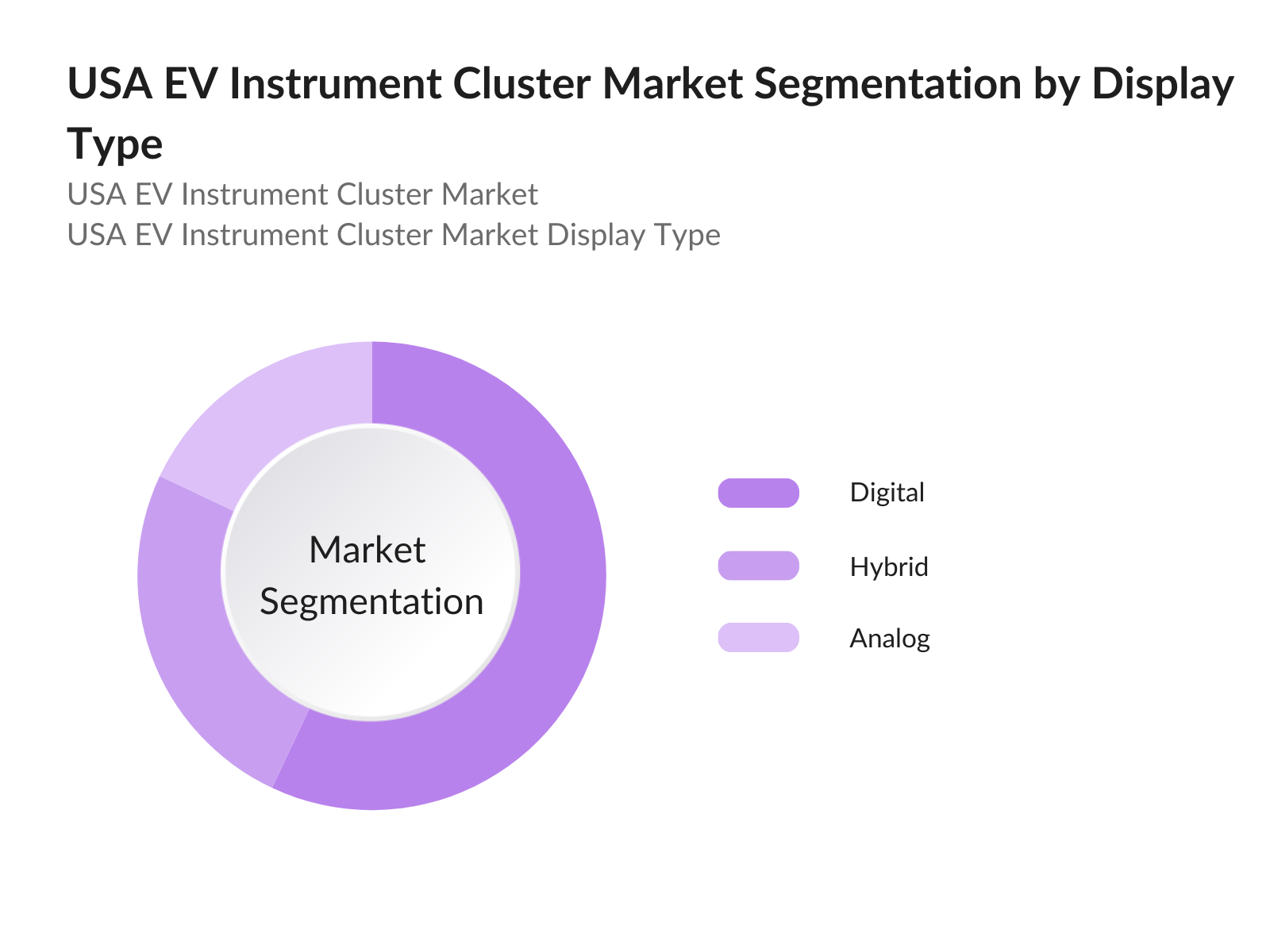
- By Display Type: The USA EV Instrument Cluster Market is segmented by display type into analog, digital, and hybrid. Digital displays hold the dominant market share due to their compatibility with EV systems and ability to offer customizable, interactive dashboards. This popularity is further boosted by the integration of OLED and TFT technologies, which enhance screen resolution, contrast, and energy efficiency, appealing to environmentally-conscious EV users who prioritize both performance and sustainability.
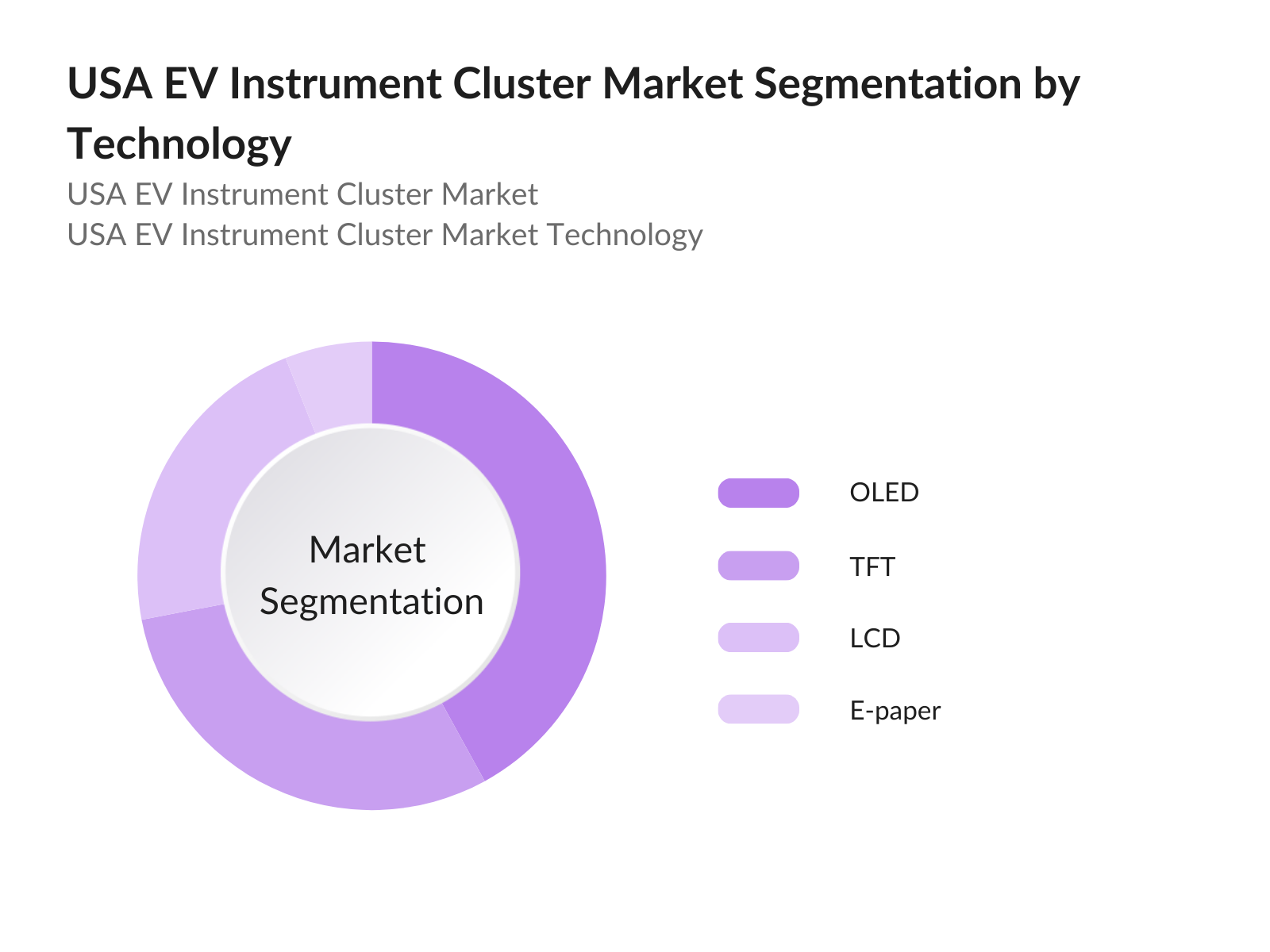
- By Technology: Segmentation by technology includes LCD (Liquid Crystal Display), TFT (Thin Film Transistor), OLED (Organic Light-Emitting Diode), and E-paper. OLED technology leads in market share due to its energy-efficient, high-contrast display, which aligns with the eco-friendly emphasis in EV design. OLED's thin profile and ability to produce vibrant, accurate colors make it ideal for high-end EV models, attracting premium EV manufacturers seeking to differentiate their products with superior displays.
USA EV Instrument Cluster Market Competitive Landscape
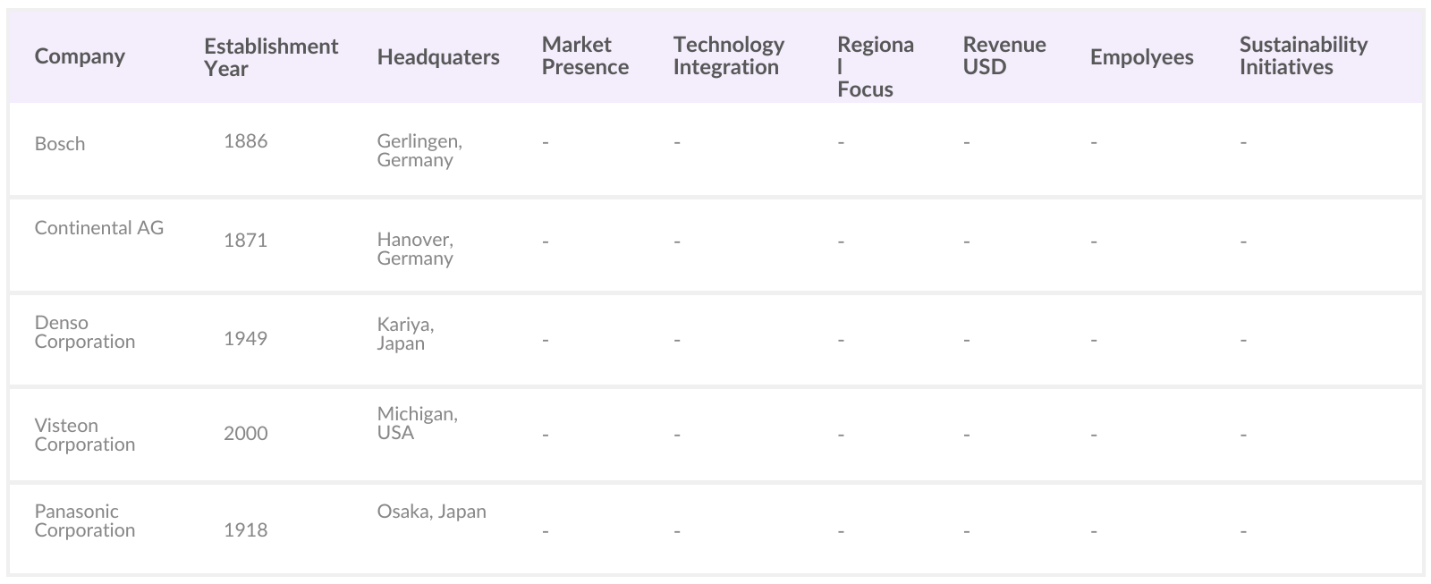
The USA EV Instrument Cluster Market is dominated by several major players with strong global and domestic presence. These companies have significant influence due to their innovation in display technology, extensive supply chains, and partnerships with leading automotive manufacturers.
USA EV Instrument Cluster Market Analysis
Market Growth Drivers
- EV Adoption Rate: The adoption of EVs in the United States is accelerating, spurred by rising energy efficiency goals and emission regulations. In 2023, the U.S. government plans to add nearly 500,000 EV chargers along national highways, enhancing EV accessibility. Federal programs, including tax incentives up to $7,500 per EV, have led to the registration of approximately 600,000 new EVs as of 2023. The emphasis on lowering carbon emissions aligns with international commitments to reduce greenhouse gases.
- Technological Advancements in Display Interfaces: Instrument clusters for EVs now incorporate advanced OLED and mini-LED technologies. In 2023, there is a growing demand for high-resolution screens due to their enhanced energy efficiency and improved readability. These technologies improve the visual and interactive appeal of digital clusters, meeting consumer preferences for vibrant, customizable displays that enhance the driving experience.
- Government Regulations and Incentives: The U.S. Federal government continues to promote EV integration through strict emissions standards, particularly targeting EV efficiency improvements. The new standards mandate that EVs sold in 2023 and beyond must achieve a significant reduction in energy consumption per mile, indirectly boosting the demand for efficient digital instrument clusters. These regulations have fueled investment in EV-compatible display technologies, providing manufacturers with strong incentives to innovate.
Market Challenges:
- High Initial Costs of Digital Instrument Clusters: The cost of advanced digital instrument clusters, often between $500-$1,200 per unit, remains a significant barrier to widespread adoption. These costs impact final vehicle prices, especially for entry-level EV models. Despite high production costs, manufacturers are investing in cost-cutting technologies to make digital displays more affordable.
- Limited Standardization Across Manufacturers: The lack of standardization in digital instrument clusters across various EV models complicates production processes and reduces compatibility across brands. Many EV models employ unique configurations, which adds complexity to aftermarket customization and repair services, as well as increases production costs for manufacturers.
USA EV Instrument Cluster Market Future Outlook
Over the next five years, the USA EV Instrument Cluster Market is expected to experience substantial growth, driven by ongoing technological advancements, rising EV adoption rates, and favorable government policies promoting sustainable transportation. Key trends include the increasing demand for high-resolution, energy-efficient displays and the integration of augmented reality and haptic feedback features, enhancing user experience. Major players in the industry are likely to invest in OLED technology, interactive interfaces, and personalized dashboard experiences, which will further drive market evolution.
Market Opportunities:
- Rise in Autonomous Vehicle Development: Autonomous vehicle (AV) development significantly influences the demand for interactive, data-rich instrument clusters. With over 80 AV projects in development across the U.S. as of 2023, the need for dynamic displays that integrate real-time navigation, sensor feeds, and environmental data is increasing, positioning instrument clusters as a vital component of AV technology.
- Growth in Connected Vehicle Technologies: Connected vehicle technology is on the rise, with over 50 million connected cars on U.S. roads in 2023. This connectivity fuels demand for instrument clusters that can display navigation, diagnostics, and real-time traffic updates. These clusters now represent a significant share of infotainment innovations, contributing to safer and more efficient driving experiences.
Scope of the Report
|
By Display Type |
Analog Digital Hybrid |
|
By Technology |
LCD (Liquid Crystal Display) TFT (Thin Film Transistor) OLED (Organic Light-Emitting Diode) E-paper |
|
By Display Size |
Small Size (Up to 5 inches) Medium Size (5 to 10 inches) Large Size (Above 10 inches) |
|
By End-User |
Speedometer |
|
By Region |
North-East Midwest West Coast Southern States |
Products
Key Target Audience
EV Manufacturers
Display Technology Providers
Automotive Component Suppliers
Battery Manufacturers
Government and Regulatory Bodies(Environmental Protection Agency)
Investments and Venture Capitalist Firms
Automotive R&D Institutes
Automotive Software Developers
Companies
Players mentioned in the report
Bosch
Continental AG
Denso Corporation
Visteon Corporation
Panasonic Corporation
Harman International
Qualcomm Technologies
Samsung Electronics
Delphi Automotive
Yazaki Corporation
Pioneer Corporation
Luxoft
Texas Instruments
Magneti Marelli
Nippon Seiki Co., Ltd.
Table of Contents
1. USA EV Instrument Cluster Market Overview
1.1. Definition and Scope
1.2. Market Taxonomy
1.3. Market Growth Rate
1.4. Market Segmentation Overview
2. USA EV Instrument Cluster Market Size (In USD Mn)
2.1. Historical Market Size
2.2. Year-On-Year Growth Analysis
2.3. Key Market Developments and Milestones
3. USA EV Instrument Cluster Market Analysis
3.1. Growth Drivers
3.1.1. EV Adoption Rate
3.1.2. Technological Advancements in Display Interfaces
3.1.3. Government Regulations and Incentives
3.1.4. Consumer Preference for Customizable Digital Displays
3.2. Market Challenges
3.2.1. High Initial Costs of Digital Instrument Clusters
3.2.2. Limited Standardization Across Manufacturers
3.2.3. Integration Challenges with EV Systems
3.3. Opportunities
3.3.1. Rise in Autonomous Vehicle Development
3.3.2. Demand for Augmented Reality Integration
3.3.3. Growth in Connected Vehicle Technologies
3.4. Trends
3.4.1. Increased Use of OLED and LED Displays
3.4.2. Integration of Haptic Feedback
3.4.3. Development of 3D Display Technology
3.5. Government Regulation
3.5.1. Federal EV Emission Standards
3.5.2. Safety Standards for Display Interfaces
3.5.3. Energy Efficiency Guidelines
3.6. SWOT Analysis
3.7. Stake Ecosystem
3.8. Porters Five Forces
3.9. Competition Ecosystem
4. USA EV Instrument Cluster Market Segmentation
4.1. By Display Type (In Value %)
4.1.1. Analog
4.1.2. Digital
4.1.3. Hybrid
4.2. By Technology (In Value %)
4.2.1. LCD (Liquid Crystal Display)
4.2.2. TFT (Thin Film Transistor)
4.2.3. OLED (Organic Light-Emitting Diode)
4.2.4. E-paper
4.3. By Vehicle Type (In Value %)
4.3.1. Passenger Vehicles
4.3.2. Commercial Vehicles
4.4. By Display Size (In Value %)
4.4.1. Small Size (Up to 5 inches)
4.4.2. Medium Size (5 to 10 inches)
4.4.3. Large Size (Above 10 inches)
4.5. By Region (In Value %)
4.5.1. Northeast USA
4.5.2. Midwest USA
4.5.3. Southern USA
4.5.4. Western USA
5. USA EV Instrument Cluster Market Competitive Analysis
5.1 Detailed Profiles of Major Companies
5.1.1. Bosch
5.1.2. Continental AG
5.1.3. Denso Corporation
5.1.4. Visteon Corporation
5.1.5. Magneti Marelli
5.1.6. Nippon Seiki Co., Ltd.
5.1.7. Panasonic Corporation
5.1.8. Yazaki Corporation
5.1.9. Delphi Automotive
5.1.10. Qualcomm Technologies
5.1.11. Samsung Electronics
5.1.12. Texas Instruments
5.1.13. Pioneer Corporation
5.1.14. Luxoft
5.1.15. Harman International
5.2 Cross Comparison Parameters (Revenue, Market Presence, Innovation Index, Employee Strength, Regional Presence, EV Display Technology Portfolio, M&A Activity, Product Customization Capabilities)
5.3 Market Share Analysis
5.4 Strategic Initiatives
5.5 Mergers And Acquisitions
5.6 Investment Analysis
5.7 Venture Capital Funding
5.8 Government Grants
5.9 Private Equity Investments
6. USA EV Instrument Cluster Market Regulatory Framework
6.1 Environmental Standards for Instrument Clusters
6.2 Compliance Requirements for EV Displays
6.3 Certification Processes for Display Technologies
7. USA EV Instrument Cluster Future Market Size (In USD Mn)
7.1 Future Market Size Projections
7.2 Key Factors Driving Future Market Growth
8. USA EV Instrument Cluster Future Market Segmentation
8.1. By Display Type (In Value %)
8.2. By Technology (In Value %)
8.3. By Vehicle Type (In Value %)
8.4. By Display Size (In Value %)
8.5. By Region (In Value %)
9. USA EV Instrument Cluster Market Analysts Recommendations
9.1 TAM/SAM/SOM Analysis
9.2 Customer Cohort Analysis
9.3 Marketing Initiatives
9.4 White Space Opportunity Analysis
Disclaimer Contact UsResearch Methodology
Step 1: Identification of Key Variables
This initial phase focuses on developing an ecosystem map of all stakeholders in the USA EV Instrument Cluster Market. Extensive desk research and secondary data analysis are utilized to outline the variables that influence market growth, including technological advancements, EV adoption rates, and policy developments.
Step 2: Market Analysis and Construction
This phase involves analyzing historical data on market trends, EV sales, and technology adoption rates. This step includes revenue generation assessment, service provider landscape analysis, and identifying EV user preferences for display technology, ensuring reliable market estimates.
Step 3: Hypothesis Validation and Expert Consultation
Market assumptions are validated through interviews with industry professionals representing leading companies. These consultations offer insights into market challenges, growth drivers, and emerging trends, further corroborating the gathered data and refining forecasts.
Step 4: Research Synthesis and Final Output
The final phase includes synthesizing research insights and engaging with key EV display manufacturers to gather detailed information on display technology trends, product performance, and user preferences. This interaction ensures a comprehensive and validated market analysis, providing business professionals with accurate data.
Frequently Asked Questions
01. How big is the USA EV Instrument Cluster Market?
The USA EV Instrument Cluster Market is valued at USD 8.0 billion, driven by increasing EV adoption and advanced digital displays that align with consumer demand for interactive, eco-friendly dashboards.
02. What are the challenges in the USA EV Instrument Cluster Market?
Challenges include the high cost of digital instrument clusters, limited standardization across brands, and integration challenges with various EV systems.
03. Who are the major players in the USA EV Instrument Cluster Market?
Key players include Bosch, Continental AG, Denso Corporation, Visteon Corporation, and Panasonic Corporation, dominating due to their technological expertise and extensive supply chains.
04. What are the growth drivers of the USA EV Instrument Cluster Market?
Growth drivers include increasing EV sales, advancements in display technology, and supportive government policies that encourage the use of eco-friendly transportation solutions.
05. Why is OLED technology leading in the USA EV Instrument Cluster Market?
OLED technology is favored for its energy efficiency and superior display quality, aligning with the sustainable focus of the EV industry and appealing to premium EV manufacturers.
Why Buy From Us?

What makes us stand out is that our consultants follows Robust, Refine and Result (RRR) methodology. i.e. Robust for clear definitions, approaches and sanity checking, Refine for differentiating respondents facts and opinions and Result for presenting data with story

We have set a benchmark in the industry by offering our clients with syndicated and customized market research reports featuring coverage of entire market as well as meticulous research and analyst insights.

While we don't replace traditional research, we flip the method upside down. Our dual approach of Top Bottom & Bottom Top ensures quality deliverable by not just verifying company fundamentals but also looking at the sector and macroeconomic factors.

With one step in the future, our research team constantly tries to show you the bigger picture. We help with some of the tough questions you may encounter along the way: How is the industry positioned? Best marketing channel? KPI's of competitors? By aligning every element, we help maximize success.

Our report gives you instant access to the answers and sources that other companies might choose to hide. We elaborate each steps of research methodology we have used and showcase you the sample size to earn your trust.

If you need any support, we are here! We pride ourselves on universe strength, data quality, and quick, friendly, and professional service.