















USA External Blinds Market Outlook to 2030
Region:North America
Author(s):Shreya
Product Code:KROD8570
November 2024
96
About the Report
USA External Blinds Market Overview
The USA External Blinds Market, valued at USD 3.4 billion based on a five-year historical analysis, has been driven by rising adoption in residential and commercial settings. The market growth reflects a shift towards energy efficiency and climate control in buildings. External blinds, used widely to reduce heat and enhance privacy, are also benefiting from a growing trend in sustainable and energy-saving home improvement. Key drivers include increased awareness of eco-friendly solutions, favorable government policies on building energy efficiency, and the rising need for advanced shading systems. 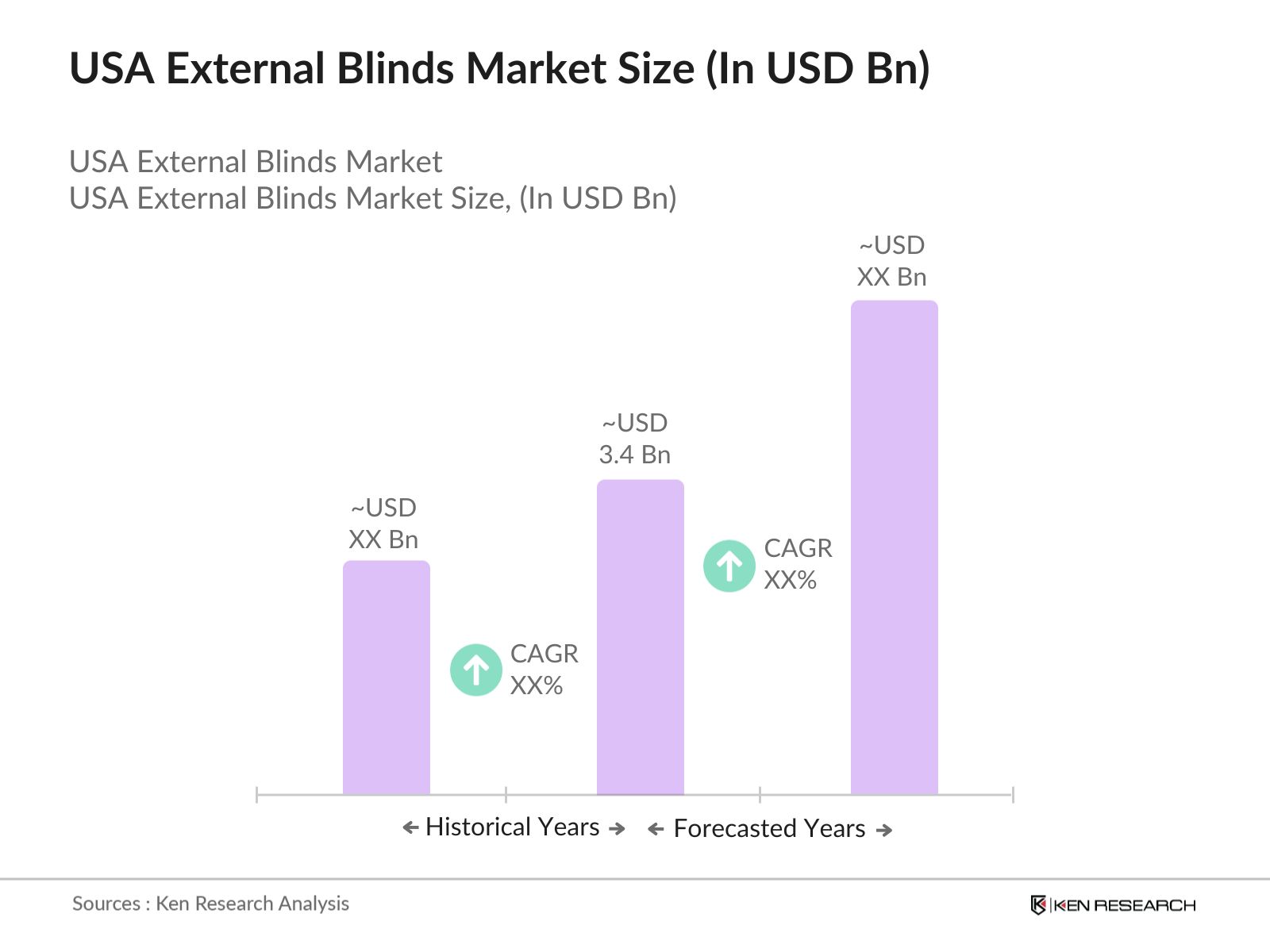
The USA market shows substantial dominance in regions like California, Texas, and Florida, largely due to their hot climates which increase the need for effective heat control solutions. These areas also have robust residential and commercial construction activities, further fueling demand for external blinds. In these states, adoption is accelerated by both individual homeowners and commercial entities who prioritize eco-conscious installations, as well as by state incentives aimed at reducing energy consumption in buildings.
Government regulations like the Energy Independence and Security Act (EISA) emphasize energy efficiency in buildings, which has driven the adoption of external blinds as a recognized energy-saving measure. The U.S. Department of Energy highlights that compliance with these standards can reduce annual energy costs by hundreds of dollars for large buildings, positioning external blinds as an effective compliance tool. These regulations have been particularly influential in states like California, where stringent energy efficiency requirements are enforced
USA External Blinds Market Segmentation
By Product Type: The Market is segmented by product type into fixed external blinds, retractable external blinds, motorized external blinds, roller shutters, and solar screens. Motorized external blinds are gaining traction and holding a dominant share in this segment, largely due to the increasing integration of smart home technology and the convenience of remote-control options. Motorized blinds provide efficient energy-saving solutions by adjusting shading based on sun intensity and temperature, appealing to both high-end residential and commercial users. 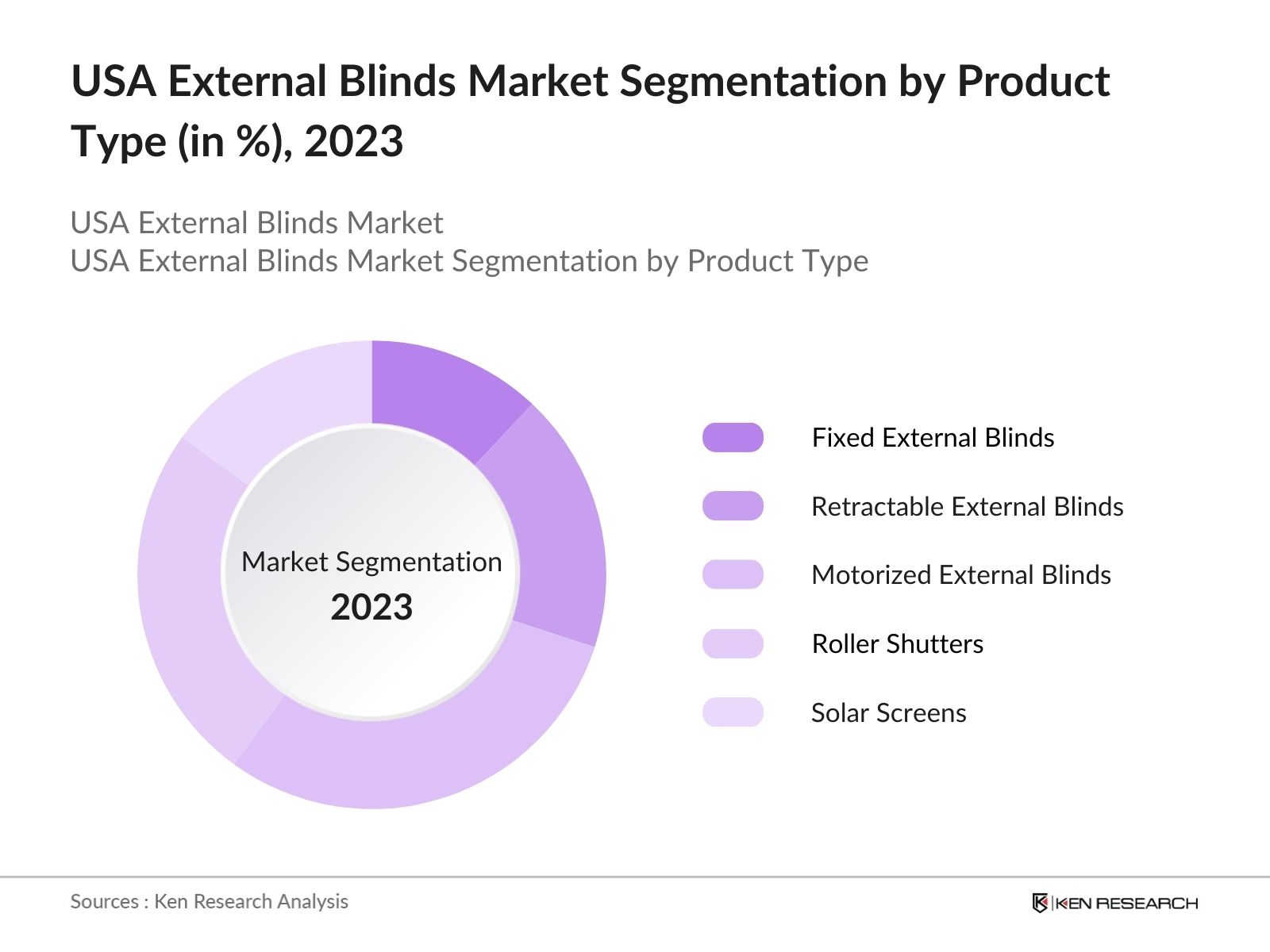
By Material Type: The market is further segmented by material type into metal blinds, fabric blinds, PVC blinds, wood blinds, and composite blinds. Metal blinds are leading this segment due to their durability and suitability for outdoor applications, especially in commercial settings. Metal blinds offer high resistance to weather changes and can last longer with minimal maintenance, making them a preferred choice in regions with varying climates. Their adaptability in modern architectural designs also contributes to their dominance. 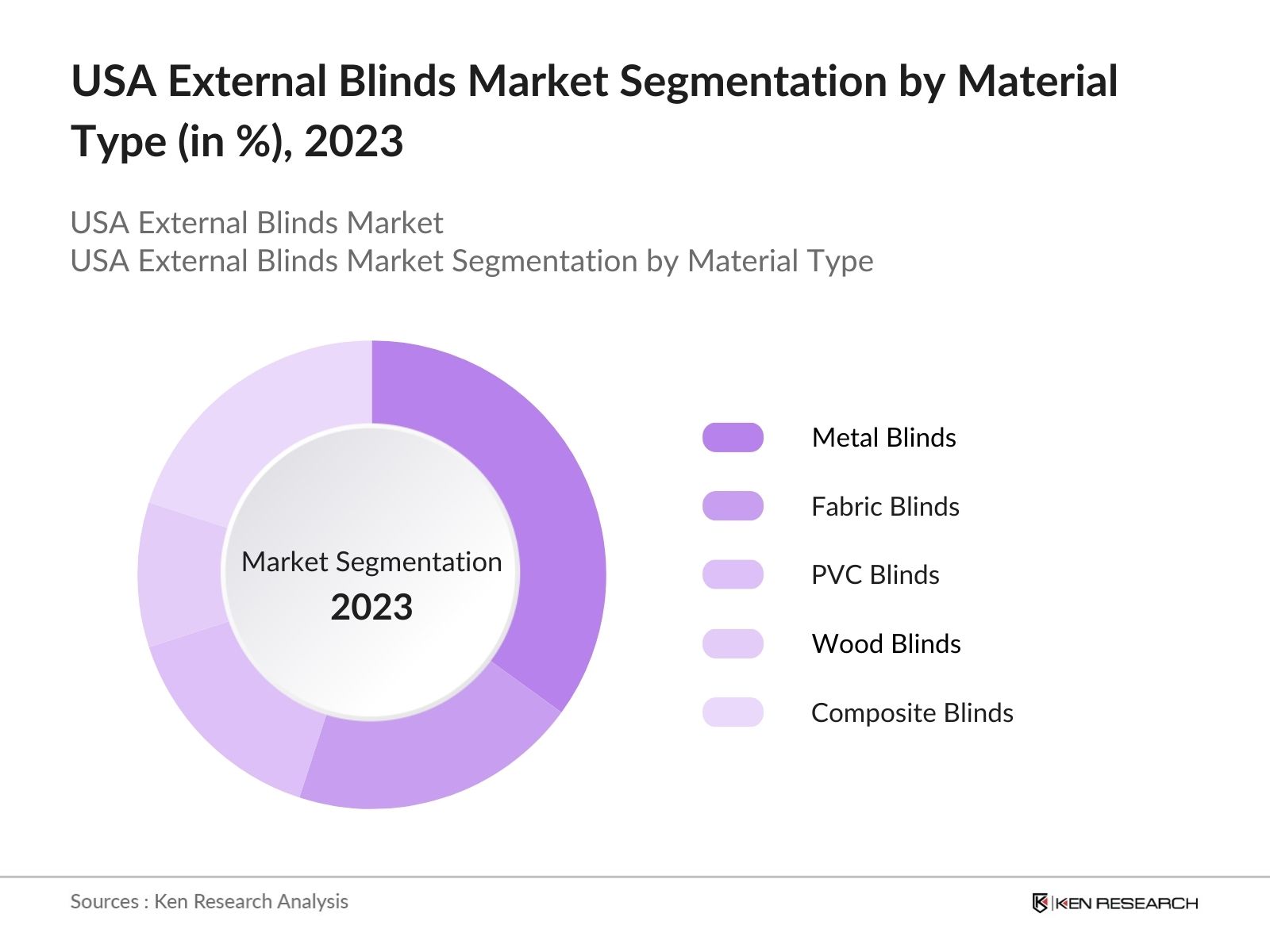
USA External Blinds Market Competitive Landscape
The USA External Blinds Market is dominated by several major players with robust product portfolios and innovative technology integration. This concentration of market share among top companies underscores their influence in shaping the industrys trends and standards.
|
Company |
Establishment Year |
Headquarters |
Product Range |
R&D Investment |
Revenue (USD) |
Regional Presence |
Employee Count |
Manufacturing Facilities |
|
Hunter Douglas |
1919 |
New York, USA |
||||||
|
Springs Window Fashions |
1939 |
Wisconsin, USA |
||||||
|
Somfy Systems |
1969 |
New Jersey, USA |
||||||
|
Lutron Electronics |
1961 |
Pennsylvania, USA |
||||||
|
Coolaroo USA |
1951 |
California, USA |
USA External Blinds Industry Analysis
Growth Drivers
Rising Residential and Commercial Construction: The demand for external blinds in the USA is supported by increasing residential and commercial construction activity. As of 2023, the U.S. Census Bureau reported that over 1.55 million new housing units were authorized, indicating continued expansion in the residential sector, which is a primary market for external blinds. Additionally, the Architectural Billings Index (ABI), a leading indicator of non-residential construction activity, showed a steady growth rate, reflecting increased construction of office spaces, commercial complexes, and mixed-use buildings that adopt external blinds for privacy, sun control, and aesthetic purposes.
Energy Efficiency Requirements: Energy efficiency has become a priority in both commercial and residential building regulations, fueling the adoption of external blinds. The U.S. Department of Energy notes that external blinds can reduce cooling energy consumption by 1030%, as they limit solar heat gain in summer and reduce heating needs in winter. As a result, states with warmer climates, such as California and Texas, are increasingly implementing these solutions in energy-conscious buildings. Building codes like ASHRAE 90.1, which mandates energy standards for buildings, further propel this trend as it emphasizes solar shading solutions.
Climate Control Demands: Climate control requirements have amplified the demand for external blinds, especially in regions with fluctuating weather. As of 2023, NOAA climate data revealed an increase in extreme temperature days, prompting consumers and commercial facilities to seek shading solutions that provide temperature regulation without escalating energy costs. External blinds can reduce interior temperatures by up to 15 degrees Fahrenheit, offering a reliable climate control solution, particularly in states like Florida and Arizona, where heatwaves are becoming more frequent.
Market Challenges
High Installation Costs: The installation costs of external blinds pose a significant barrier to widespread adoption. According to data from the U.S. Department of Labor, labor costs in construction-related trades rose by over $4 per hour from 2020 to 2023, impacting installation services for products like blinds. Additionally, material costs are a factor, with aluminum and motorized components adding to the price. This has particularly affected homeowners in mid-income neighborhoods where the cost-benefit ratio of external blinds is not as easily justified.
Limited Awareness in Residential Sector: Despite the benefits, awareness of external blinds among homeowners remains limited, especially in regions where blinds are viewed primarily as luxury items. A survey conducted by the U.S. Energy Information Administration in 2023 found that only 25% of residential respondents understood the energy savings that external shading systems can provide. This limited awareness restricts demand growth, especially in regions where homeowners prioritize affordability over energy efficiency improvements.
USA External Blinds Market Future Outlook
The USA External Blinds Market is projected to experience sustained growth, driven by the continued focus on energy efficiency, eco-friendly solutions, and advancements in smart home integration. Increasing urbanization and residential building renovations are expected to drive the demand for automated and customizable shading solutions across diverse applications. Additionally, governmental support and incentives for energy-saving upgrades in buildings will further contribute to the markets expansion.
Future Market Opportunities
Expansion in Smart Home Solutions: The rise of smart home technology has opened new opportunities for external blinds integrated with home automation systems. The U.S. Census Bureau reported that nearly 39 million households had at least one smart home device by 2023. External blinds that connect to smart hubs or mobile applications, allowing automated adjustments based on sunlight levels, appeal to this tech-savvy segment, especially in metropolitan areas like San Francisco and Seattle where smart home adoption rates are highest.
Green Building Standards: Growing adherence to green building standards is providing an opportunity for external blinds as an energy-efficient solution. LEED (Leadership in Energy and Environmental Design) certifications, which are increasingly being pursued by commercial properties, require energy-saving installations, with external blinds qualifying as sustainable shading solutions. According to the U.S. Green Building Council, over 100,000 commercial properties sought LEED certification in 2023, underscoring the potential for external blinds in this expanding market segment.
Scope of the Report
|
Segment |
Sub-Segments |
|
Product Type |
Fixed External Blinds |
|
Retractable External Blinds |
|
|
Motorized External Blinds |
|
|
Roller Shutters |
|
|
Solar Screens |
|
|
Material Type |
Metal Blinds |
|
Fabric Blinds |
|
|
PVC Blinds |
|
|
Wood Blinds |
|
|
Composite Blinds |
|
|
Operation Mechanism |
Manual |
|
Automated |
|
|
Application |
Residential |
|
Commercial |
|
|
Industrial |
|
|
Region |
Northeast |
|
Midwest |
|
|
South |
|
|
West |
Products
Key Target Audience
Investor and Venture Capitalist Firms
Government and Regulatory Bodies (U.S. Department of Energy, Environmental Protection Agency)
Real Estate Developers
Sustainable Construction Material Suppliers
Commercial Property Managers
Luxury Homeowners
Facility Management Companies
Outdoor Furnishing and Design Consultants
Companies
Major Players
Hunter Douglas
Springs Window Fashions
Somfy Systems
Lutron Electronics
Coolaroo USA
Warema Renkhoff SE
Insolroll Window Shading Systems
Griesser AG
Alulux GmbH
Levolux Ltd.
ABC Blinds and Awnings
Nice Group USA
Hella Sonnen- und Wetterschutztechnik GmbH
ShadeFX Canopies
Markilux USA
Table of Contents
1. USA External Blinds Market Overview
1.1. Definition and Scope
1.2. Market Taxonomy
1.3. Market Demand Dynamics
1.4. Market Segmentation Overview
2. USA External Blinds Market Size (In USD Bn)
2.1. Historical Market Size
2.2. Year-on-Year Growth Analysis
2.3. Key Market Developments and Milestones
3. USA External Blinds Market Analysis
3.1. Growth Drivers
3.1.1. Rising Residential and Commercial Construction
3.1.2. Energy Efficiency Requirements
3.1.3. Climate Control Demands
3.1.4. Aesthetic Preferences
3.2. Market Challenges
3.2.1. High Installation Costs
3.2.2. Limited Awareness in Residential Sector
3.2.3. Climatic and Durability Concerns
3.3. Opportunities
3.3.1. Expansion in Smart Home Solutions
3.3.2. Green Building Standards
3.3.3. Commercial Market Expansion
3.4. Market Trends
3.4.1. Adoption of Automated External Blinds
3.4.2. Integration of Smart Shading Solutions
3.4.3. Customizable and Modular Designs
3.5. Government Regulations
3.5.1. Energy Efficiency Standards
3.5.2. Sustainable Material Regulations
3.5.3. Building Codes and Compliance
3.6. SWOT Analysis
3.7. Stakeholder Ecosystem
3.8. Porters Five Forces Analysis
3.9. Competitive Ecosystem Analysis
4. USA External Blinds Market Segmentation
4.1. By Product Type (In Value %)
4.1.1. Fixed External Blinds
4.1.2. Retractable External Blinds
4.1.3. Motorized External Blinds
4.1.4. Roller Shutters
4.1.5. Solar Screens
4.2. By Material Type (In Value %)
4.2.1. Metal Blinds
4.2.2. Fabric Blinds
4.2.3. PVC Blinds
4.2.4. Wood Blinds
4.2.5. Composite Blinds
4.3. By Operation Mechanism (In Value %)
4.3.1. Manual
4.3.2. Automated
4.4. By Application (In Value %)
4.4.1. Residential
4.4.2. Commercial
4.4.3. Industrial
4.5. By Region (In Value %)
4.5.1. Northeast
4.5.2. Midwest
4.5.3. South
4.5.4. West
5. USA External Blinds Market Competitive Analysis
5.1. Detailed Profiles of Major Companies
5.1.1. Hunter Douglas
5.1.2. Springs Window Fashions
5.1.3. Somfy Systems
5.1.4. Lutron Electronics
5.1.5. Warema Renkhoff SE
5.1.6. Insolroll Window Shading Systems
5.1.7. Coolaroo USA
5.1.8. Griesser AG
5.1.9. Alulux GmbH
5.1.10. Levolux Ltd.
5.1.11. ABC Blinds and Awnings
5.1.12. Nice Group USA
5.1.13. Hella Sonnen- und Wetterschutztechnik GmbH
5.1.14. ShadeFX Canopies
5.1.15. Markilux USA
5.2. Cross Comparison Parameters (No. of Employees, Revenue, Headquarters, Inception Year, Product Portfolio, Regional Coverage, R&D Investment, Product Innovation Rate)
5.3. Market Share Analysis
5.4. Strategic Initiatives
5.5. Mergers and Acquisitions
5.6. Investment Analysis
5.7. Venture Capital Funding
5.8. Private Equity Investments
5.9. Government Grants
6. USA External Blinds Market Regulatory Framework
6.1. Energy Efficiency Standards
6.2. Sustainability Compliance
6.3. Building and Safety Regulations
6.4. Environmental Certification Requirements
7. USA External Blinds Future Market Size (In USD Bn)
7.1. Future Market Size Projections
7.2. Key Factors Driving Future Market Growth
8. USA External Blinds Future Market Segmentation
8.1. By Product Type (In Value %)
8.2. By Material Type (In Value %)
8.3. By Operation Mechanism (In Value %)
8.4. By Application (In Value %)
8.5. By Region (In Value %)
9. USA External Blinds Market Analysts Recommendations
9.1. TAM/SAM/SOM Analysis
9.2. Customer Cohort Analysis
9.3. Marketing Initiatives
9.4. White Space Opportunity Analysis
Disclaimer Contact UsResearch Methodology
Step 1: Identification of Key Variables
The initial phase involves mapping the ecosystem of the USA External Blinds Market, identifying major stakeholders, and defining key variables that drive market dynamics. Extensive desk research, leveraging government data sources and proprietary databases, supports this step.
Step 2: Market Analysis and Construction
Historical data for the USA External Blinds Market is gathered and analyzed, focusing on product penetration, market presence, and revenue generation trends. Comparative data from various segments is examined to validate the findings.
Step 3: Hypothesis Validation and Expert Consultation
Market hypotheses are formulated and validated through industry expert consultations. Interviews provide practical insights into market trends, which aid in refining our data.
Step 4: Research Synthesis and Final Output
The final phase entails a detailed synthesis of the findings, corroborating data from direct industry engagements to ensure a comprehensive analysis of the USA External Blinds Market.
Frequently Asked Questions
How big is the USA External Blinds Market?
The USA External Blinds Market is valued at USD 3.4 billion, with demand fueled by the construction sector and increasing awareness of energy efficiency.
What are the challenges in the USA External Blinds Market?
The USA External Blinds Market faces challenges like high installation costs, limited consumer awareness in certain areas, and the need for weather-resistant materials, impacting broader adoption.
Who are the major players in the USA External Blinds Market?
Key players in the USA External Blinds Market include Hunter Douglas, Springs Window Fashions, Somfy Systems, Lutron Electronics, and Coolaroo USA, who dominate due to their extensive product range and innovation.
What drives the demand in the USA External Blinds Market?
The demand in the USA External Blinds Market is driven by the construction boom, eco-friendly and energy-saving practices, and the integration of smart home technology that enhances convenience for end users.
What are the growth opportunities in the USA External Blinds Market?
Growth in the USA External Blinds Market opportunities include smart home integration, expansion in commercial applications, and increased adoption of sustainable and energy-efficient materials, appealing to both residential and commercial consumers.
Why Buy From Us?

What makes us stand out is that our consultants follows Robust, Refine and Result (RRR) methodology. i.e. Robust for clear definitions, approaches and sanity checking, Refine for differentiating respondents facts and opinions and Result for presenting data with story

We have set a benchmark in the industry by offering our clients with syndicated and customized market research reports featuring coverage of entire market as well as meticulous research and analyst insights.

While we don't replace traditional research, we flip the method upside down. Our dual approach of Top Bottom & Bottom Top ensures quality deliverable by not just verifying company fundamentals but also looking at the sector and macroeconomic factors.

With one step in the future, our research team constantly tries to show you the bigger picture. We help with some of the tough questions you may encounter along the way: How is the industry positioned? Best marketing channel? KPI's of competitors? By aligning every element, we help maximize success.

Our report gives you instant access to the answers and sources that other companies might choose to hide. We elaborate each steps of research methodology we have used and showcase you the sample size to earn your trust.

If you need any support, we are here! We pride ourselves on universe strength, data quality, and quick, friendly, and professional service.