
USA Face Recognition Software Market Outlook to 2030
Region:North America
Author(s):Mukul
Product Code:KROD8889
October 2024
81
About the Report
USA Face Recognition Software Market Overview
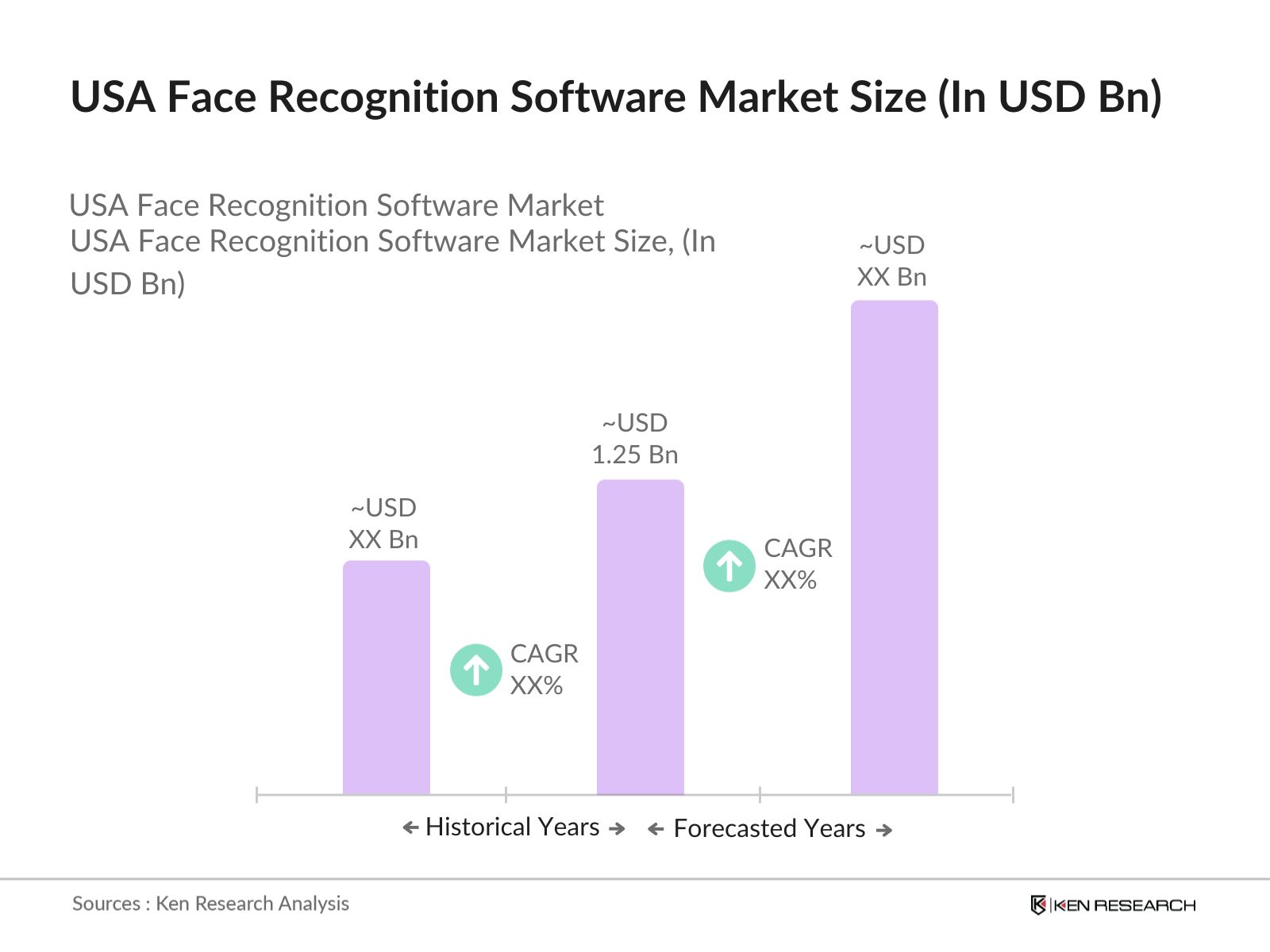
- The USA face recognition software market is valued at USD 1.25 billion, driven by growing adoption in law enforcement, retail, and banking sectors. The technology's integration with artificial intelligence and machine learning has significantly enhanced its application in real-time facial recognition, making it a valuable tool for security and authentication. Technological advancements have fueled its implementation in various industries, with government support boosting demand for biometric identification solutions.
- Major cities like New York, San Francisco, and Washington dominate the face recognition software market due to their higher adoption rates of surveillance technologies and security infrastructure. The presence of major tech companies, government projects, and the high number of installations in airports, public transport systems, and retail sectors contribute to the dominance of these regions.
- Data protection laws such as the CCPA and GDPR impose strict guidelines on how biometric data, including facial recognition information, is collected and used. In 2023, fines issued for non-compliance with data privacy laws in the U.S. amounted to over $200 million, a clear indication of the government's serious stance on protecting personal data. Companies using facial recognition technology must implement robust data management systems to comply with these regulations and avoid legal penalties.
USA Face Recognition Software Market Segmentation
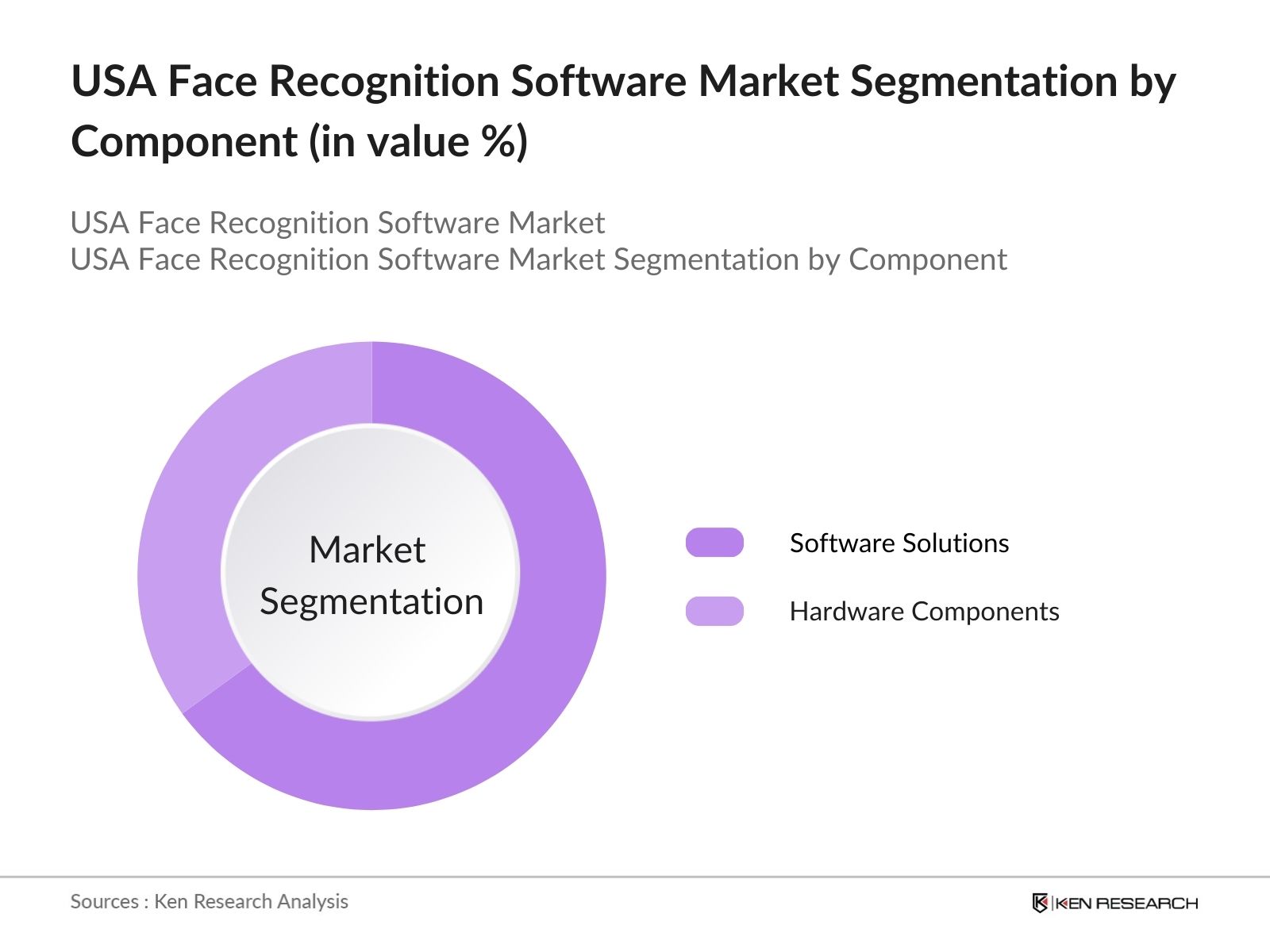
- By Component: The USA face recognition software market is segmented by component into software solutions and hardware components. Software solutions hold a dominant market share due to their ease of integration with existing systems and the growing demand for cloud-based biometric authentication platforms. Many companies opt for software solutions that allow scalability and real-time processing of facial data, leading to their significant market presence.
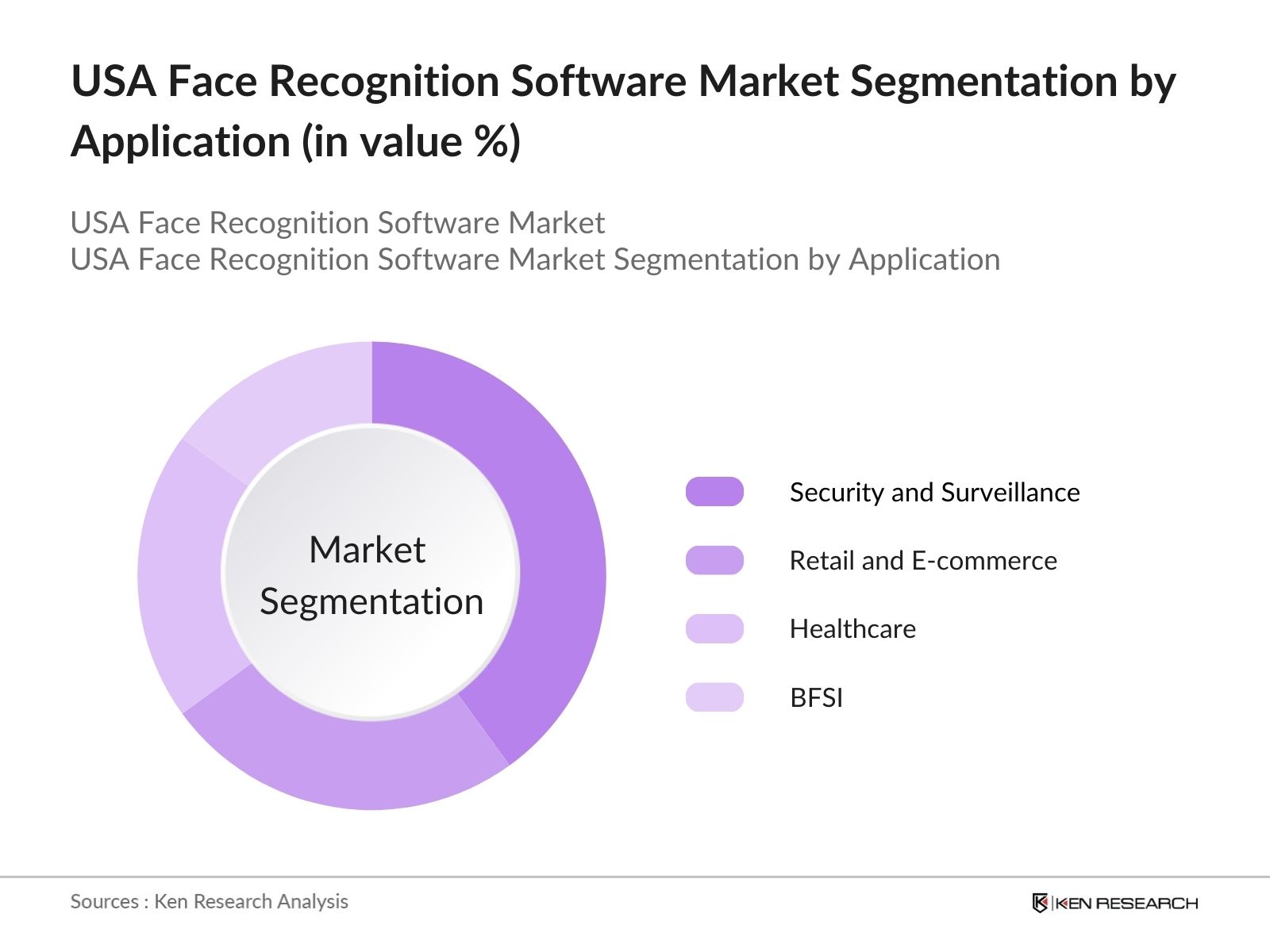
- By Application: The market is further segmented by application into security and surveillance, retail and e-commerce, healthcare, and BFSI (banking, financial services, and insurance). Security and surveillance is the dominant segment due to the increasing need for public safety and crime prevention. Government agencies, law enforcement, and public infrastructure heavily utilize facial recognition systems, boosting the demand for surveillance-based applications.
USA Face Recognition Software Market Competitive Landscape
The USA face recognition software market is dominated by several key players, with both domestic and international companies competing to innovate and expand their market presence. The consolidation of these players highlights their significant influence on the market. Companies such as NEC Corporation, Aware, Inc., and Cognitec Systems GmbH are leaders due to their extensive portfolios and advanced facial recognition solutions, which cater to law enforcement, retail, and banking.
|
Company Name |
Establishment Year |
Headquarters |
Revenue |
No. of Employees |
Technology Focus |
Partnerships |
R&D Investment |
Patent Portfolio |
|
NEC Corporation |
1899 |
Tokyo, Japan |
||||||
|
Aware, Inc. |
1986 |
Bedford, USA |
||||||
|
Cognitec Systems GmbH |
2002 |
Dresden, Germany |
||||||
|
FaceFirst |
2007 |
California, USA |
||||||
|
Gemalto (Thales Group) |
2006 |
Paris, France |
USA Face Recognition Software Industry Analysis
Growth Drivers
- Adoption in Government and Law Enforcement: The adoption of face recognition software in U.S. government and law enforcement agencies is driven by security demands, particularly in border control, public surveillance, and criminal identification. According to government data, by 2023, over 75% of U.S. airports had integrated biometric technology, significantly improving operational efficiency in identity verification processes. The U.S. Department of Homeland Security (DHS) has been actively using face recognition technology, processing more than 100 million travelers in 2023 alone. This large-scale implementation highlights the rising reliance on facial recognition for security and identification purposes.
- Demand from Retail and E-commerce: In 2024, the demand for facial recognition in retail and e-commerce continues to surge as companies seek to enhance customer experience and security. Major retailers have begun deploying face recognition for customer authentication and personalized marketing. According to U.S. government reports, theft in the retail sector amounted to over $62 billion in 2023, prompting retailers to invest in biometric solutions to prevent losses. This growing focus on security, coupled with the need to streamline checkout processes, has made face recognition a vital tool for improving operational efficiency.
- Integration with AI and Machine Learning: Facial recognition technologies increasingly rely on AI and machine learning to improve accuracy and speed. The U.S. AI market saw investments exceeding $21 billion in 2022, and facial recognition software is expected to gain further traction with advancements in these fields. AI-integrated facial recognition systems help detect and verify identities more precisely in real time. By 2023, 80% of U.S. companies adopting AI also integrated facial recognition as part of their digital transformation strategies, particularly in sectors such as banking, security, and healthcare.
Market Restraints
- Regulatory Challenges and Compliance Issues: Facial recognition technology faces challenges regarding data privacy and regulatory compliance. In the U.S., laws such as the California Consumer Privacy Act (CCPA) impose strict requirements on collecting and storing biometric data. In 2023, over 15 states had implemented regulations concerning the use of biometric data, highlighting growing government oversight. Legal challenges related to improper use of facial recognition in surveillance and unauthorized data collection led to over 120 lawsuits filed in the U.S. courts between 2022 and 2024.
- Public Concerns Regarding Data Privacy: Public concerns over the privacy of biometric data have intensified, with surveys from government bodies indicating that more than 65% of U.S. citizens expressed discomfort with facial recognition technology used by law enforcement. These concerns are often associated with the potential for surveillance misuse and data breaches. Governmental privacy reports indicate that nearly 500,000 biometric data theft incidents were recorded in 2023, driving ongoing debates regarding the balance between security benefits and individual privacy rights.
USA Face Recognition Software Market Future Outlook
Over the next few years, the USA face recognition software market is expected to experience continued growth driven by government regulations, advancements in AI technology, and increased security concerns across industries. The expanding use of face recognition technology in mobile devices, smart cities, and airport security is likely to fuel demand further. The integration of this technology with cloud-based solutions is also projected to enhance its accessibility, promoting adoption across various sectors.
Market Opportunities
- Expansion of Cloud-Based Solutions: Cloud-based facial recognition solutions are gaining popularity, particularly among companies looking for scalable and cost-effective biometric systems. According to U.S. federal data, cloud adoption across sectors increased by 24% between 2022 and 2024, with over 70% of businesses now utilizing cloud-based biometric solutions. This shift is driven by the need for remote and flexible access, and cloud platforms enable real-time processing and storage of biometric data at a reduced cost, supporting widespread adoption across industries.
- Rising Demand for Biometric Authentication in Mobile Devices: The use of facial recognition for biometric authentication in mobile devices continues to grow rapidly. In 2023, approximately 280 million U.S. mobile users were equipped with facial recognition authentication features, driven by demand for enhanced device security. The introduction of secure payment systems and mobile banking further accelerated this trend, with over 58% of mobile transactions in the U.S. now verified through biometric methods, predominantly facial recognition.
Scope of the Report
|
Segments |
Sub-segments |
|
By Component |
Software Solutions, Hardware Components |
|
By Application |
Security and Surveillance, Retail and E-Commerce, Healthcare, BFSI |
|
By Technology |
2D Recognition, 3D Recognition, Facial Analytics |
|
By End-User Industry |
Government and Law Enforcement, Retail, Healthcare, Banking |
|
By Deployment Mode |
Cloud-B |
Products
Key Target Audience
Law enforcement agencies (Federal Bureau of Investigation, Department of Homeland Security)
Retail companies
Banking and financial institutions
Healthcare providers
Smart city developers
Technology and IT firms
Investor and venture capitalist firms
Government and regulatory bodies (U.S. Department of Justice, Federal Trade Commission)
Companies
Players Mentioned in the Report:
NEC Corporation
Aware, Inc.
Cognitec Systems GmbH
FaceFirst
Gemalto (Thales Group)
Idemia
Animetrics, Inc.
Daon, Inc.
Stereovision Imaging, Inc.
Trueface
Face++ (Megvii Technology)
SenseTime
AnyVision
Cognex Corporation
Clearview AI
Table of Contents
1. USA Face Recognition Software Market Overview
1.1. Definition and Scope
1.2. Market Taxonomy
1.3. Market Growth Rate
1.4. Market Segmentation Overview
2. USA Face Recognition Software Market Size (In USD Bn)
2.1. Historical Market Size
2.2. Year-On-Year Growth Analysis
2.3. Key Market Developments and Milestones
3. USA Face Recognition Software Market Analysis
3.1. Growth Drivers (Security, Convenience, and Technological Advancements)
3.1.1. Adoption in Government and Law Enforcement
3.1.2. Demand from Retail and E-commerce
3.1.3. Integration with AI and Machine Learning
3.1.4. Increasing Applications in Banking and Healthcare
3.2. Market Challenges (Data Privacy, Accuracy, and Ethical Concerns)
3.2.1. Regulatory Challenges and Compliance Issues
3.2.2. Public Concerns Regarding Data Privacy
3.2.3. High Costs of Implementation
3.3. Opportunities (Technological Innovations and Emerging Markets)
3.3.1. Expansion of Cloud-Based Solutions
3.3.2. Rising Demand for Biometric Authentication in Mobile Devices
3.3.3. Growth in Smart City Projects
3.4. Trends (AI Integration, Edge Computing, and 3D Facial Recognition)
3.4.1. Increased Use of Edge Computing in Facial Recognition
3.4.2. Growth of 3D Face Recognition Solutions
3.4.3. Adoption of AI for Real-Time Analysis
3.5. Government Regulations (GDPR, CCPA, and National Security Laws)
3.5.1. Data Protection and Privacy Laws
3.5.2. Security and Surveillance Regulations
3.5.3. Government Initiatives in Smart Surveillance
3.6. SWOT Analysis
3.7. Stakeholder Ecosystem
3.8. Porters Five Forces Analysis
3.9. Competition Ecosystem
4. USA Face Recognition Software Market Segmentation
4.1. By Component (In Value %)
4.1.1. Software Solutions
4.1.2. Hardware Components
4.2. By Application (In Value %)
4.2.1. Security and Surveillance
4.2.2. Retail and E-Commerce
4.2.3. Healthcare
4.2.4. BFSI (Banking, Financial Services, and Insurance)
4.3. By Technology (In Value %)
4.3.1. 2D Recognition
4.3.2. 3D Recognition
4.3.3. Facial Analytics
4.4. By End-User Industry (In Value %)
4.4.1. Government and Law Enforcement
4.4.2. Retail and E-commerce
4.4.3. Healthcare
4.4.4. Banking and Financial Services
4.5. By Deployment Mode (In Value %)
4.5.1. Cloud-Based
4.5.2. On-Premise
5. USA Face Recognition Software Market Competitive Analysis
5.1. Detailed Profiles of Major Companies
5.1.1. NEC Corporation
5.1.2. Aware, Inc.
5.1.3. Cognitec Systems GmbH
5.1.4. FaceFirst
5.1.5. Gemalto (Thales Group)
5.1.6. Idemia
5.1.7. Animetrics, Inc.
5.1.8. Daon, Inc.
5.1.9. Stereovision Imaging, Inc.
5.1.10. Trueface
5.1.11. Face++ (Megvii Technology)
5.1.12. SenseTime
5.1.13. AnyVision
5.1.14. Cognex Corporation
5.1.15. Clearview AI
5.2. Cross Comparison Parameters (Revenue, Headquarters, No. of Employees, Inception Year, Market Presence, R&D Investment, Partnerships, Patent Portfolio)
5.3. Market Share Analysis
5.4. Strategic Initiatives
5.5. Mergers And Acquisitions
5.6. Investment Analysis
5.7. Venture Capital Funding
5.8. Government Grants
5.9. Private Equity Investments
6. USA Face Recognition Software Market Regulatory Framework
6.1. Data Protection and Privacy Regulations
6.2. Compliance Requirements in Different States
6.3. Certification Processes for Government Use
7. USA Face Recognition Software Future Market Size (In USD Bn)
7.1. Future Market Size Projections
7.2. Key Factors Driving Future Market Growth
8. USA Face Recognition Software Future Market Segmentation
8.1. By Component (In Value %)
8.2. By Application (In Value %)
8.3. By Technology (In Value %)
8.4. By End-User Industry (In Value %)
8.5. By Deployment Mode (In Value %)
9. USA Face Recognition Software Market Analysts Recommendations
9.1. TAM/SAM/SOM Analysis
9.2. Customer Cohort Analysis
9.3. Marketing Initiatives
9.4. White Space Opportunity Analysis
Disclaimer
Contact Us
Research Methodology
Step 1: Identification of Key Variables
The initial phase involves constructing an ecosystem map encompassing all major stakeholders within the USA face recognition software market. This step is underpinned by extensive desk research, utilizing secondary and proprietary databases to gather comprehensive industry-level information. The primary objective is to identify and define the critical variables that influence market dynamics.
Step 2: Market Analysis and Construction
In this phase, we will compile and analyze historical data pertaining to the USA face recognition software market. This includes assessing market penetration, the ratio of marketplaces to service providers, and revenue generation. Additionally, an evaluation of data accuracy and privacy statistics will be conducted to ensure the reliability of the revenue estimates.
Step 3: Hypothesis Validation and Expert Consultation
Market hypotheses will be developed and validated through expert consultations with industry professionals. These consultations provide operational insights directly from practitioners, ensuring refined and corroborated market data.
Step 4: Research Synthesis and Final Output
The final phase involves direct engagement with software providers and end-users to acquire detailed insights into product segments, sales performance, and consumer preferences. This interaction ensures a comprehensive, accurate, and validated analysis of the USA face recognition software market.
Frequently Asked Questions
1. How big is the USA face recognition software market?
The USA face recognition software market is valued at USD 1.25 billion, driven by increasing demand for biometric solutions across sectors like law enforcement, retail, and healthcare.
2. What are the challenges in the USA face recognition software market?
Challenges include data privacy concerns, regulatory hurdles, and high costs of implementation. Ensuring compliance with stringent laws like the GDPR and CCPA adds complexity for companies.
3. Who are the major players in the USA face recognition software market?
Key players in the market include NEC Corporation, Aware, Inc., Cognitec Systems GmbH, FaceFirst, and Gemalto (Thales Group). These companies lead the market due to their advanced technology solutions and established customer bases.
4. What are the growth drivers of the USA face recognition software market?
The market is propelled by increased adoption in security and surveillance, the growing use of biometric authentication in banking, and advancements in AI and machine learning technologies.
Why Buy From Us?

What makes us stand out is that our consultants follows Robust, Refine and Result (RRR) methodology. i.e. Robust for clear definitions, approaches and sanity checking, Refine for differentiating respondents facts and opinions and Result for presenting data with story

We have set a benchmark in the industry by offering our clients with syndicated and customized market research reports featuring coverage of entire market as well as meticulous research and analyst insights.

While we don't replace traditional research, we flip the method upside down. Our dual approach of Top Bottom & Bottom Top ensures quality deliverable by not just verifying company fundamentals but also looking at the sector and macroeconomic factors.

With one step in the future, our research team constantly tries to show you the bigger picture. We help with some of the tough questions you may encounter along the way: How is the industry positioned? Best marketing channel? KPI's of competitors? By aligning every element, we help maximize success.

Our report gives you instant access to the answers and sources that other companies might choose to hide. We elaborate each steps of research methodology we have used and showcase you the sample size to earn your trust.

If you need any support, we are here! We pride ourselves on universe strength, data quality, and quick, friendly, and professional service.