
USA Facial Recognition Market Outlook to 2030
Region:United States
Author(s):Shubham Kashyap
Product Code:KROD4117
Region:United States
Author(s):Shubham Kashyap
Product Code:KROD4117
December 2024
83
The USA facial recognition market is highly competitive, with leading tech companies and start-ups vying for dominance. Major players include NEC Corporation, Clearview AI, and Amazon Web Services (AWS), which are at the forefront of facial recognition technology development. These companies focus on enhancing the accuracy and speed of facial recognition systems, ensuring compliance with privacy regulations, and expanding their customer base across various industries.
|
Company Name |
Established |
Headquarters |
No. of Employees |
Revenue (2023) |
R&D Investment |
Key Customers |
Major Technology |
|
NEC Corporation |
1899 |
Japan |
|||||
|
Clearview AI |
2017 |
USA |
|||||
|
Amazon Web Services |
2006 |
USA |
|||||
|
Microsoft Azure |
2010 |
USA |
|||||
|
Cognitec Systems |
2002 |
Germany |
Growth Drivers
Market Challenges
The USA facial recognition market is expected to witness substantial growth, driven by advancements in AI, increasing adoption in security and surveillance applications, and the integration of facial recognition into smart city initiatives. The expansion of facial recognition technologies into retail, healthcare, and banking sectors is also expected to contribute to market growth. Additionally, continuous improvements in AI and deep learning algorithms will enhance the accuracy and reliability of facial recognition systems, making them more attractive to various industries.
Future Market Opportunities
|
Technology Type |
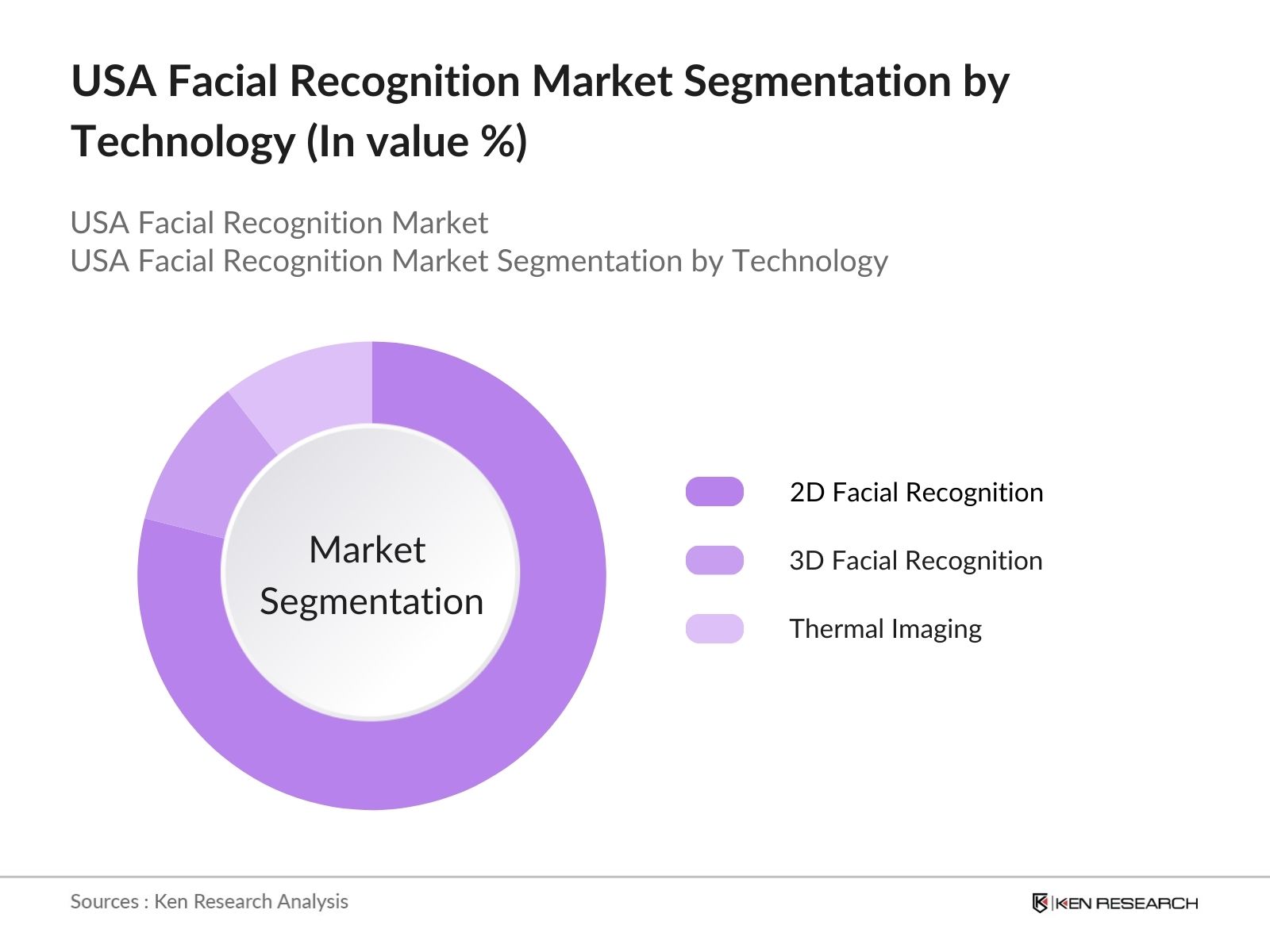
2D Facial Recognition 3D Facial Recognition Thermal Imaging |
|
End-User Application |
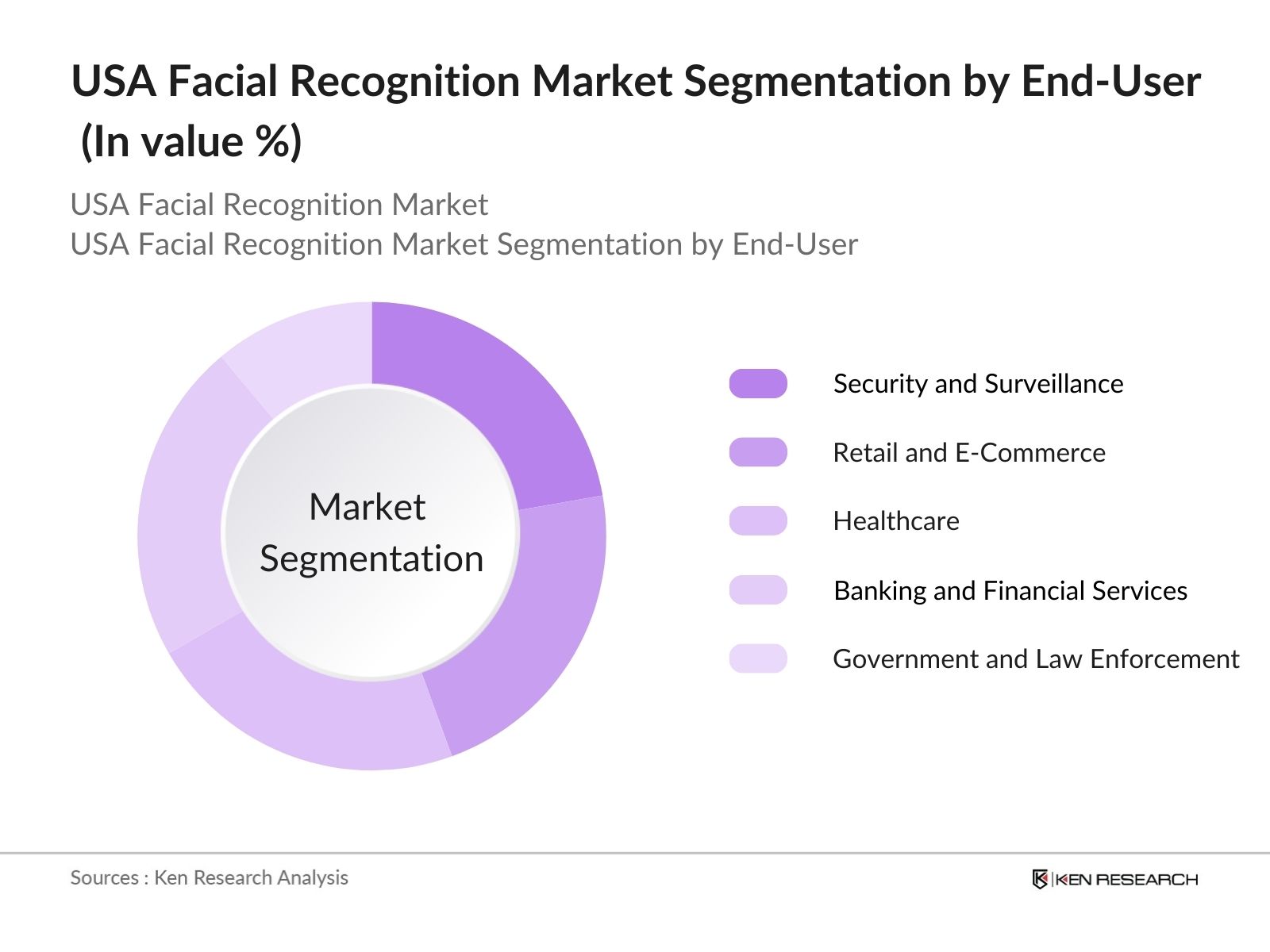
Security and Surveillance Retail and E-Commerce Healthcare Banking and Financial Services Government and Law Enforcement |
|
Component Type |
Hardware (Cameras, Sensors) Software (AI-based Algorithms) Services (Installation, Maintenance) |
|
Deployment Mode |
On-Premise Cloud-Based |
|
Region |
North-East West South Mid-West |
1.1. Definition and Scope
1.2. Market Taxonomy
1.3. Market Growth Rate
1.4. Market Segmentation Overview
2.1. Historical Market Size
2.2. Year-On-Year Growth Analysis
2.3. Key Market Developments and Milestones
3.1. Growth Drivers
3.1.1. Increasing Demand for Security and Surveillance (Key market driver)
3.1.2. Government Initiatives on Biometric Identification (Market regulation factor)
3.1.3. Rising Adoption in Retail and Healthcare (Key market applications)
3.1.4. Technological Advancements in AI and Machine Learning (Core market enabler)
3.2. Market Challenges
3.2.1. Privacy and Data Security Concerns (Legal and ethical challenges)
3.2.2. High Implementation Costs (Economic constraints)
3.2.3. Regulatory Scrutiny and State Regulations (Impact on market expansion)
3.3. Opportunities
3.3.1. Expansion in Smart City Initiatives (Urbanization-driven demand)
3.3.2. Growth in Healthcare Applications (Market potential in non-traditional sectors)
3.3.3. Integration with Augmented Reality and Virtual Reality (New market application)
3.4. Trends
3.4.1. Cloud-Based Facial Recognition Solutions (Technological trend)
3.4.2. Contactless Payment Integration (Cross-sector applications)
3.4.3. Use of Facial Recognition for Identity Verification in Banking (Sectoral innovation)
3.5. Government Regulations
3.5.1. Federal and State Privacy Laws (Legislative framework)
3.5.2. Guidelines on AI and Biometric Data Usage (Regulatory compliance)
3.5.3. FTC Guidelines on Facial Recognition (Legal landscape)
3.5.4. Industry-Specific Compliance Requirements (Sector-based regulations)
3.6. SWOT Analysis (Strategic assessment of market dynamics)
3.7. Stake Ecosystem (Market participants and supply chain analysis)
3.8. Porters Five Forces (Market competition and entry barriers)
3.9. Competition Ecosystem (Market share and competitive positioning)
4.1. By Technology Type (In Value %)
4.1.1. 2D Facial Recognition
4.1.2. 3D Facial Recognition
4.1.3. Thermal Imaging
4.2. By End-User Application (In Value %)
4.2.1. Security and Surveillance
4.2.2. Retail and E-Commerce
4.2.3. Healthcare
4.2.4. Banking and Financial Services
4.2.5. Government and Law Enforcement
4.3. By Component Type (In Value %)
4.3.1. Hardware (Cameras, Sensors)
4.3.2. Software (AI-based Algorithms)
4.3.3. Services (Installation, Maintenance)
4.4. By Deployment Mode (In Value %)
4.4.1. On-Premise
4.4.2. Cloud-Based
4.5. By Region (In Value %)
4.5.1. North-East USA
4.5.2. West USA
4.5.3. South USA
4.5.4. Mid-West USA
5.1. Detailed Profiles of Major Companies
5.1.1. NEC Corporation
5.1.2. Clearview AI
5.1.3. Amazon Web Services (AWS)
5.1.4. Microsoft Azure
5.1.5. Cognitec Systems
5.1.6. IBM Corporation
5.1.7. Apple Inc.
5.1.8. Facebook Inc.
5.1.9. FaceFirst Inc.
5.1.10. Ayonix Corporation
5.1.11. Stereovision Imaging Inc.
5.1.12. IDEMIA
5.1.13. Tech5
5.1.14. Ever AI
5.1.15. Aware Inc.
5.2. Cross Comparison Parameters (Revenue, Number of Employees, Headquarters, Market Penetration, R&D Investment, Product Portfolio, Regional Presence, Strategic Partnerships)
5.3. Market Share Analysis
5.4. Strategic Initiatives
5.5. Mergers and Acquisitions
5.6. Investment Analysis
5.7. Venture Capital Funding
5.8. Government Grants
5.9. Private Equity Investments
6. USA Facial Recognition Market Regulatory Framework
6.1. Data Privacy Laws
6.2. Ethical Guidelines for AI and Biometrics
6.3. Certification Processes for Security Applications
6.4. Compliance with Federal Trade Commission (FTC) Guidelines
7.1. Future Market Size Projections
7.2. Key Factors Driving Future Market Growth
8.1. By Technology Type (In Value %)
8.2. By End-User Application (In Value %)
8.3. By Component Type (In Value %)
8.4. By Deployment Mode (In Value %)
8.5. By Region (In Value %)
9.1. TAM/SAM/SOM Analysis
9.2. Customer Cohort Analysis
9.3. Marketing Initiatives
9.4. White Space Opportunity Analysis
In the initial stage, an extensive ecosystem map was constructed to capture all key stakeholders in the USA facial recognition market. This included a combination of desk research, secondary sources, and proprietary databases to gather detailed industry-level information. The goal was to identify key market drivers, challenges, and opportunities.
During this phase, we conducted historical data analysis on the USA facial recognition market, examining penetration levels in various sectors, revenue generation patterns, and market growth rates. Data validation involved assessing the quality and reliability of the gathered information, ensuring that all estimates were accurate.
In this phase, we engaged in consultations with industry experts through computer-assisted telephone interviews (CATI). These interviews helped validate the hypotheses about market trends, consumer preferences, and technological advancements. Insights from these interviews were incorporated into the analysis to refine market dynamics.
The final phase involved engaging directly with facial recognition companies and end-users to gather insights into their operations. This step ensured the accuracy of the final market estimates, providing a comprehensive view of the USA facial recognition market.
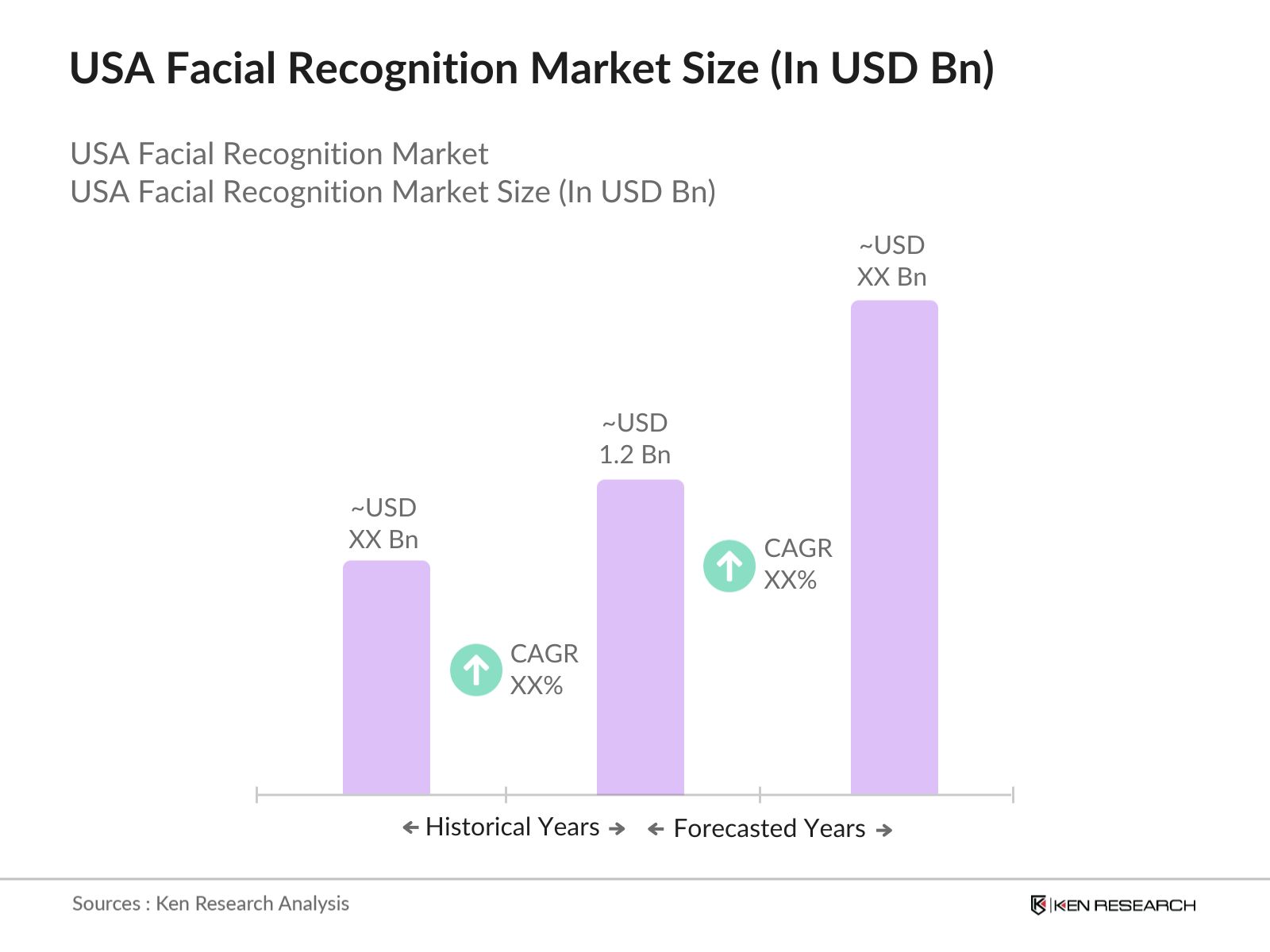
The USA facial recognition market is valued at USD 1.2 billion, driven by the growing need for security and surveillance solutions across various sectors, including government, retail, and healthcare.
Challenges in the USA facial recognition market include privacy concerns, high implementation costs, and regulatory scrutiny. Ensuring data security and compliance with privacy laws remain critical barriers to the market's widespread adoption.
Key players in the USA facial recognition market include NEC Corporation, Clearview AI, Amazon Web Services, Microsoft Azure, and Cognitec Systems. These companies dominate due to their innovative technologies and partnerships with key government and commercial sectors.
The growth drivers of the USA facial recognition market include increasing demand for enhanced security systems, advancements in AI and machine learning, and the rising adoption of biometric solutions in the retail and healthcare sectors.

What makes us stand out is that our consultants follows Robust, Refine and Result (RRR) methodology. i.e. Robust for clear definitions, approaches and sanity checking, Refine for differentiating respondents facts and opinions and Result for presenting data with story

We have set a benchmark in the industry by offering our clients with syndicated and customized market research reports featuring coverage of entire market as well as meticulous research and analyst insights.

While we don't replace traditional research, we flip the method upside down. Our dual approach of Top Bottom & Bottom Top ensures quality deliverable by not just verifying company fundamentals but also looking at the sector and macroeconomic factors.

With one step in the future, our research team constantly tries to show you the bigger picture. We help with some of the tough questions you may encounter along the way: How is the industry positioned? Best marketing channel? KPI's of competitors? By aligning every element, we help maximize success.

Our report gives you instant access to the answers and sources that other companies might choose to hide. We elaborate each steps of research methodology we have used and showcase you the sample size to earn your trust.

If you need any support, we are here! We pride ourselves on universe strength, data quality, and quick, friendly, and professional service.