
USA Fish Farming Market Outlook to 2030
Region:North America
Author(s):Shreya Garg
Product Code:KROD10142
November 2024
96
About the Report
USA Fish Farming Market Overview
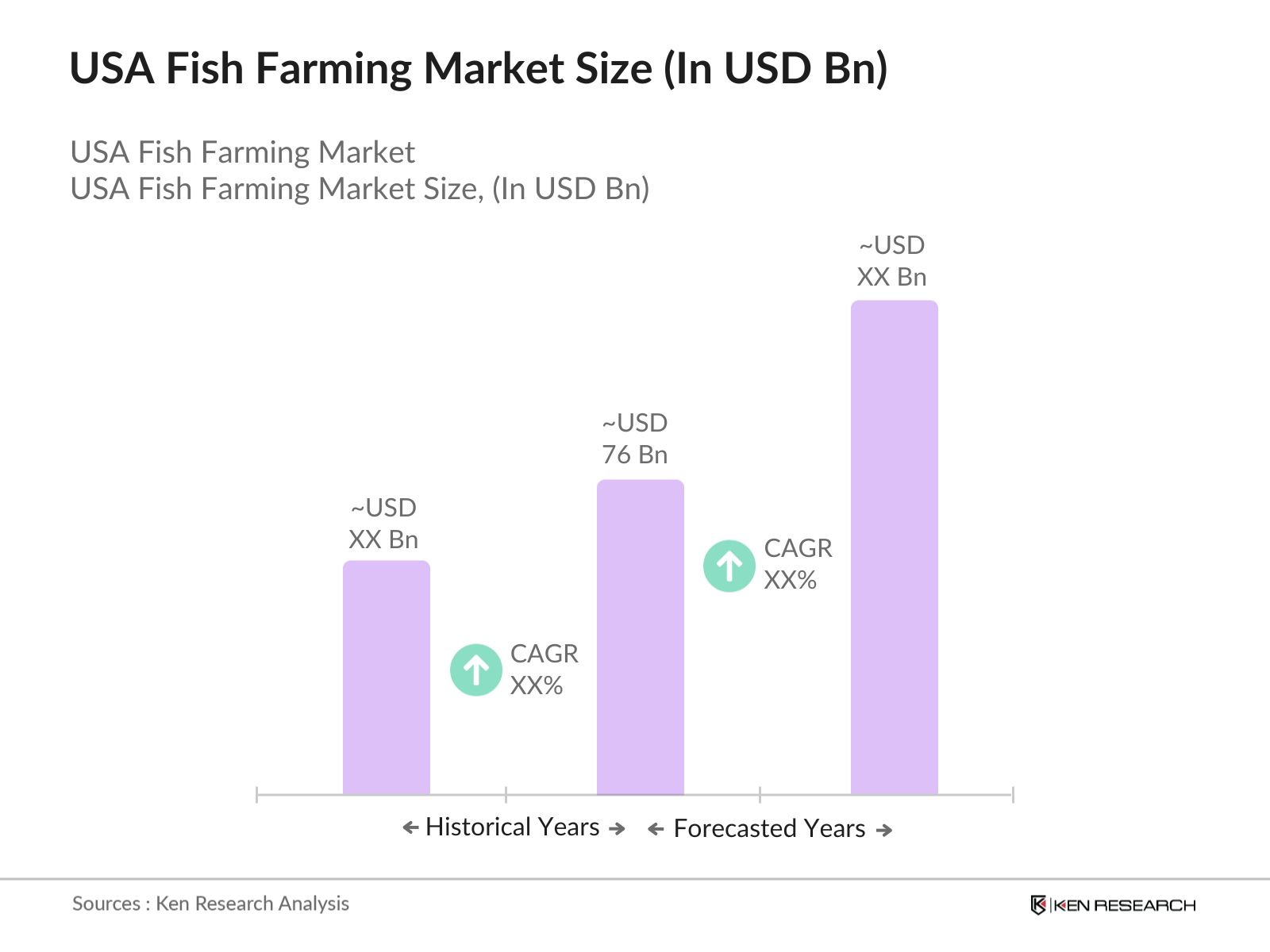
- The USA fish farming market is valued at USD 76 billion based on a five-year historical analysis. The market is primarily driven by the increasing demand for sustainable seafood production and growing technological advancements in aquaculture systems. The adoption of Recirculating Aquaculture Systems (RAS), combined with heightened consumer demand for organic and sustainable fish products, has fueled the expansion of fish farming across the country. Government incentives and policies aimed at reducing the country's reliance on imported seafood have also provided a significant boost to the domestic fish farming industry.
- The dominant regions for fish farming in the United States include the Northeast, Southern, and West Coast regions. The Southern states, such as Mississippi and Alabama, dominate the market due to their favorable climate, abundant water resources, and long-standing aquaculture traditions. These regions benefit from lower operational costs and proximity to key consumer markets. Additionally, the West Coast states, particularly Washington and California, lead in technological advancements and sustainability-focused fish farming practices, further cementing their dominance in the industry.
- The U.S. government enforces stringent federal aquaculture policies to regulate the industry. In 2024, NOAA introduced new regulations to improve the sustainability and traceability of aquaculture operations. The U.S. Department of Agriculture's Aquaculture Act provides guidelines for fish health, environmental protection, and farm operations. These policies aim to strengthen domestic aquaculture production and reduce reliance on imports. Additionally, the governments National Aquaculture Development Plan allocates over $20 million for expanding U.S. aquaculture in compliance with environmental standards.
USA Fish Farming Market Segmentation
By Fish Type: The market is segmented by fish type into salmon, tilapia, catfish, trout, and others. Currently, the salmon segment holds a dominant market share due to its high demand both domestically and internationally. Salmon farming is favored because of the fish's rich omega-3 content, which appeals to health-conscious consumers. The established export markets for U.S.-farmed salmon, particularly in Europe and Asia, also contribute to its market dominance. Technological advancements in salmon farming, such as improved feed efficiency and disease control measures, have further solidified its leading position in the market. 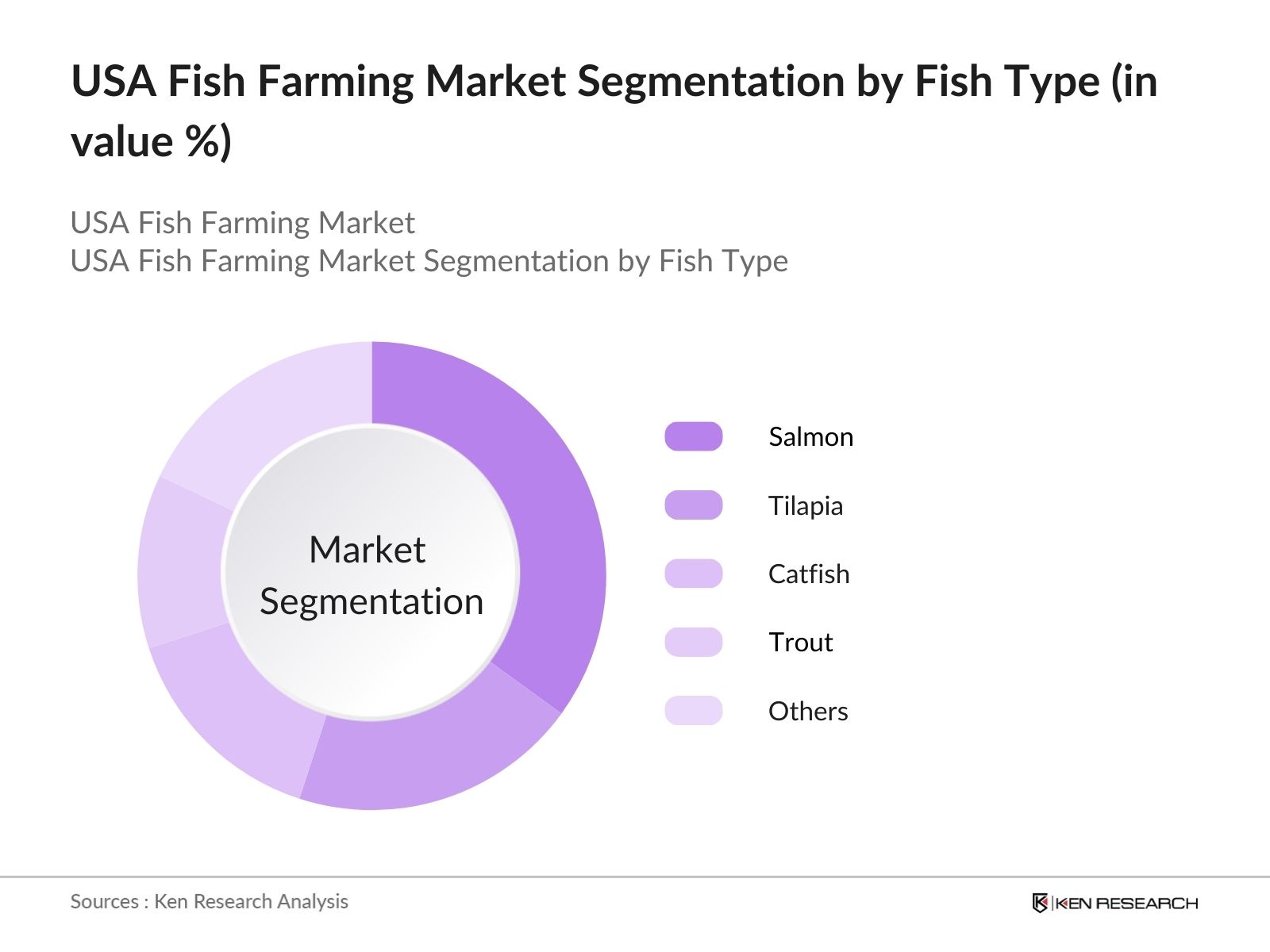
By Farming System: The market is also segmented by farming systems, including open pond systems, recirculating aquaculture systems (RAS), cage systems, and integrated multi-trophic aquaculture (IMTA). Among these, RAS dominates the market due to its ability to produce fish in a controlled, sustainable environment with minimal water usage. The systems closed-loop nature reduces environmental impact, making it an increasingly popular choice in areas where water resources are limited. Additionally, RAS facilities are located closer to urban centers, reducing transportation costs and ensuring fresher fish for consumers. 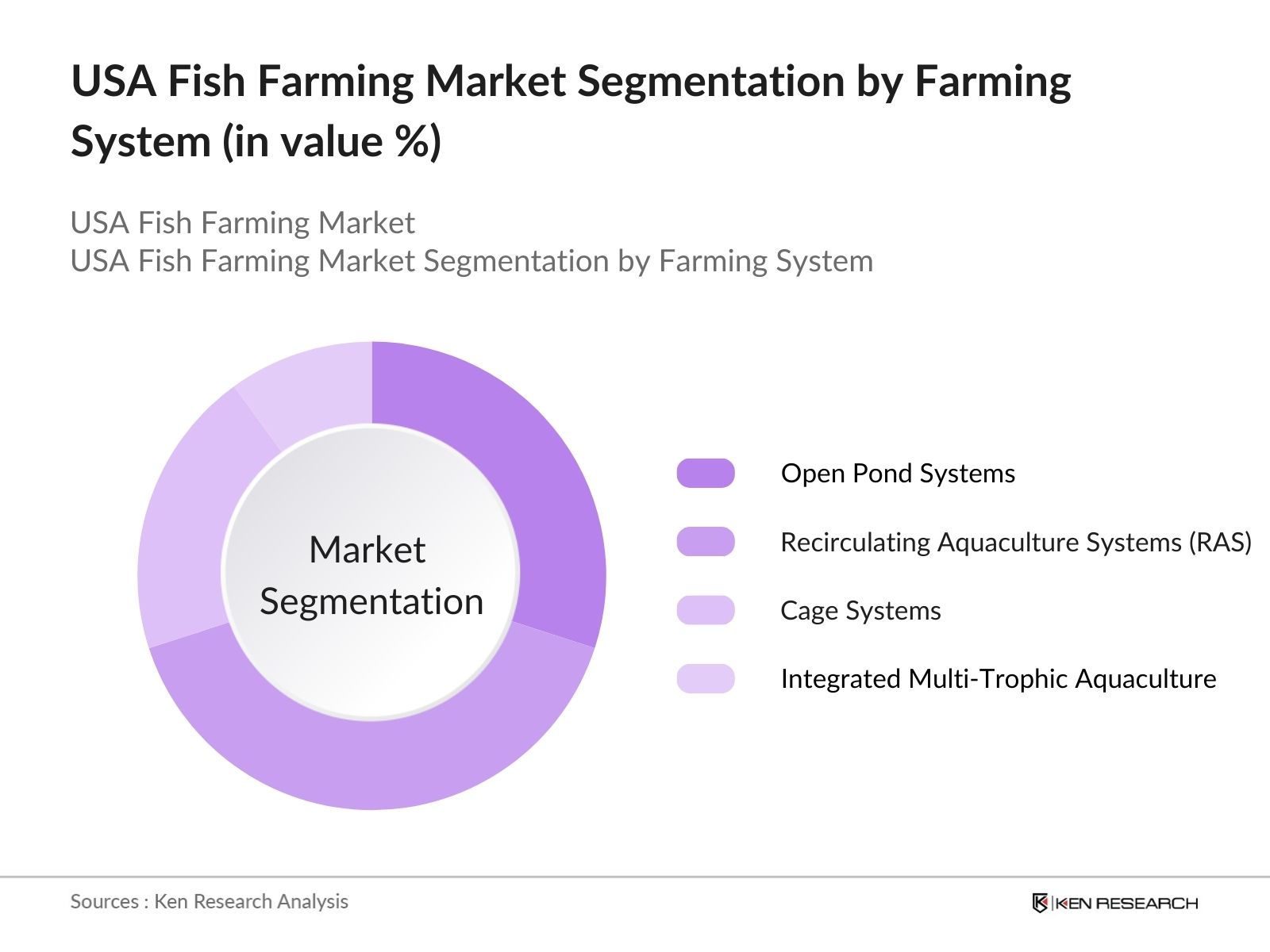
USA Fish Farming Market Competitive Landscape
The USA fish farming market is characterized by several major players who lead the industry in terms of production capacity, innovation, and sustainability initiatives. These companies are involved in various segments of the market, from feed production to disease management, contributing to the overall growth and competitiveness of the industry. The U.S. fish farming market is dominated by a few key players such as Cooke Aquaculture, Blue Ridge Aquaculture, and AquaBounty Technologies.
|
Company Name |
Establishment Year |
Headquarters |
Market Focus |
Technology Used |
Production Volume |
Sustainability Efforts |
Certifications |
Export Markets |
|
American Seafoods |
1987 |
Seattle, WA |
||||||
|
Cooke Aquaculture |
1985 |
Blacks Harbour, NB |
||||||
|
Blue Ridge Aquaculture |
1993 |
Martinsville, VA |
||||||
|
Regal Springs Tilapia |
1988 |
Homestead, FL |
||||||
|
Troutlodge Inc. |
1945 |
Sumner, WA |
USA Fish Farming Industry Analysis
Growth Drivers
- Increasing Demand for Sustainable Seafood: The growing emphasis on sustainability in food production is driving demand for sustainable seafood, particularly in the U.S. fish farming industry. As of 2024, the U.S. government has significantly expanded initiatives promoting sustainable aquaculture, with federal programs supporting practices that minimize environmental impacts. For instance, over 2 million metric tons of fish are produced annually through sustainable aquaculture practices, contributing to reducing reliance on wild catch. NOAAs sustainable seafood initiative continues to foster the growth of domestic fish farming, ensuring that aquaculture products meet rising consumer expectations for sustainability.
- Advancements in Recirculating Aquaculture Systems: Recirculating Aquaculture Systems (RAS) are gaining traction in the USA, providing more efficient and controlled environments for fish farming. In 2023, nearly 150 RAS facilities were operational across the U.S., accounting for a substantial part of domestic fish production. These systems conserve water and reduce the risk of environmental contamination, a critical factor as states like California and Florida experience increased pressure on freshwater resources. Government data shows that RAS technologies have cut water usage by up to 90%, making it an integral part of sustainable fish farming practices.
- Government Incentives for Domestic Fish Farming: In 2023, the U.S. federal government continued to support domestic aquaculture through financial incentives and policy frameworks aimed at reducing the seafood trade deficit, which exceeded $14 billion annually. These incentives include tax credits and grants for aquaculture innovation, with nearly $20 million allocated to new projects in 2022 alone. Additionally, the U.S. Department of Agriculture has launched programs to simplify licensing and streamline regulatory processes, further encouraging investment in domestic fish farming operations.
Market Challenges
- High Operational Costs: The operational costs for fish farming in the U.S. remain a significant challenge. Feed prices, which account for more than 50% of operational costs, have seen a steep increase due to global supply chain disruptions. As of 2023, the average cost of feed was $600 per metric ton, up from $500 in 2021. Labor shortages are also impacting the industry, with wages for skilled aquaculture workers rising by 15% between 2021 and 2023. This combination of rising feed and labor costs is pressuring profit margins for fish farms, particularly smaller operators.
- Environmental Sustainability Concerns: Managing environmental sustainability, especially water resources, is a critical challenge for U.S. fish farming. In 2023, California and other western states reported record levels of water scarcity, impacting aquaculture operations dependent on freshwater resources. Farms using traditional pond-based systems require up to 10,000 liters of water per ton of fish produced, which is becoming unsustainable in drought-prone areas. This has prompted stricter regulations on water usage in aquaculture, putting pressure on farms to adopt more water-efficient technologies, such as Recirculating Aquaculture Systems (RAS).
USA Fish Farming Market Future Outlook
Over the next five years, the USA fish farming market is expected to witness significant growth, driven by the continuous development of sustainable aquaculture practices, technological advancements in farming systems, and growing consumer demand for organic and locally-sourced fish. The introduction of IoT and AI-driven solutions for monitoring water quality and feed optimization is set to revolutionize the industry. Additionally, government initiatives aimed at promoting domestic fish production and reducing reliance on imports will further fuel market expansion. The increasing popularity of alternative protein sources and the rise of urban aquaculture will also contribute to the sector's growth.
Future Market Opportunities
- Expansion into Inland and Urban Fish Farming: Inland and urban fish farming represent a burgeoning opportunity for the U.S. aquaculture sector. With an increasing number of land-based aquaculture facilities in states like Texas and New York, fish farming is expanding beyond traditional coastal operations. These facilities produced over 100,000 metric tons of fish in 2023, taking advantage of proximity to urban markets and reducing transportation costs. As urban populations grow, inland fish farms offer the potential to supply fresh fish directly to local markets, further driving growth in the sector.
- Export Opportunities to International Markets: With the global seafood deficit growing, the U.S. fish farming industry has a significant opportunity to expand exports. In 2023, the U.S. exported over $6 billion worth of aquaculture products, with strong demand from seafood-deficit countries such as Japan and South Korea. These markets have shown increasing interest in sustainably farmed fish from the U.S., which is known for its high-quality production standards. Expanding into international markets offers a lucrative path for U.S. fish farms looking to grow beyond domestic consumption.
Scope of the Report
|
Fish Type |
Salmon Tilapia Catfish Trout Others |
|
Environment |
Freshwater Saltwater Brackish Water |
|
Farming System |
Open Pond Systems RAS Cage Systems IMTA |
|
End-User |
Retail Consumers Restaurants Processed Food Industry Exporters |
|
Region |
North Midwest West Coast South |
Products
Key Target Audience
Government and Regulatory Bodies (NOAA, USDA)
Fish Farming Equipment Manufacturers
Aquaculture Feed Suppliers
Fish Processors and Exporters
Retail Chains and Supermarkets
Restaurants and Hospitality Groups
Investor and Venture Capitalist Firms
Technology Providers for Aquaculture Systems
Companies
Major Players
Cooke Aquaculture
Blue Ridge Aquaculture
AquaBounty Technologies
Regal Springs Tilapia
Clear Springs Foods
Zeigler Bros.
Pentair Aquatic Eco-Systems
Marine Harvest USA
Taylor Shellfish Farms
Cargill Aqua Nutrition
Hendrix Genetics
Grieg Seafood USA
American Seafoods
Skretting USA
Troutlodge Inc.
Table of Contents
USA Fish Farming Market Overview
1.1. Definition and Scope
1.2. Market Taxonomy
1.3. Market Growth Rate
1.4. Market Segmentation Overview
USA Fish Farming Market Size (In USD Bn)
2.1. Historical Market Size
2.2. Year-On-Year Growth Analysis
2.3. Key Market Developments and Milestones
USA Fish Farming Market Analysis
3.1. Growth Drivers
3.1.1. Increasing Demand for Sustainable Seafood (Market-Specific: Sustainable Aquaculture Initiatives)
3.1.2. Advancements in Recirculating Aquaculture Systems (RAS) (Market-Specific: Technology-driven Farming Techniques)
3.1.3. Government Incentives for Domestic Fish Farming (Market-Specific: Regulatory Support for Aquaculture)
3.1.4. Rising Consumer Awareness for Organic Fish Products (Market-Specific: Organic Certification in Aquaculture)
3.2. Market Challenges
3.2.1. High Operational Costs (Market-Specific: Cost of Feed and Labor)
3.2.2. Environmental Sustainability Concerns (Market-Specific: Water Resource Management)
3.2.3. Disease Management in Fish Farming (Market-Specific: Disease Outbreak Prevention Techniques)
3.3. Opportunities
3.3.1. Expansion into Inland and Urban Fish Farming (Market-Specific: Land-based Aquaculture)
3.3.2. Export Opportunities to International Markets (Market-Specific: Export to Seafood-Deficit Countries)
3.3.3. Adoption of IoT in Fish Farming (Market-Specific: IoT for Aquaculture Efficiency)
3.4. Trends
3.4.1. Adoption of Blockchain for Traceability (Market-Specific: Blockchain in Seafood Supply Chain)
3.4.2. Hybrid Systems Combining RAS and Traditional Methods (Market-Specific: Technological Hybridization)
3.4.3. Increasing Focus on Fish Feed Innovation (Market-Specific: Alternative Protein Sources for Fish Feed)
3.5. Government Regulation
3.5.1. Federal Aquaculture Policies (Market-Specific: NOAA and U.S. Department of Agriculture Regulations)
3.5.2. Aquaculture Licensing Procedures (Market-Specific: Regional Licensing Requirements)
3.5.3. Environmental Impact Assessments for New Farms (Market-Specific: Permitting for Environmental Protection)
3.6. SWOT Analysis
3.7. Stakeholder Ecosystem (Market-Specific: Producers, Technology Providers, Feed Suppliers)
3.8. Porters Five Forces (Market-Specific: Competitive Intensity in U.S. Fish Farming)
3.9. Competition Ecosystem (Market-Specific: Competitive Landscape in Domestic Fish Farming)
USA Fish Farming Market Segmentation
4.1. By Fish Type (In Value %)
4.1.1. Salmon
4.1.2. Tilapia
4.1.3. Catfish
4.1.4. Trout
4.1.5. Others
4.2. By Environment (In Value %)
4.2.1. Freshwater
4.2.2. Saltwater
4.2.3. Brackish Water
4.3. By Farming System (In Value %)
4.3.1. Open Pond Systems
4.3.2. Recirculating Aquaculture Systems (RAS)
4.3.3. Cage Systems
4.3.4. Integrated Multi-Trophic Aquaculture (IMTA)
4.4. By End-User (In Value %)
4.4.1. Retail Consumers
4.4.2. Restaurants and Hotels
4.4.3. Processed Food Industry
4.4.4. Exporters
4.5. By Region (In Value %)
4.5.1. Northeast USA
4.5.2. Midwest USA
4.5.3. West Coast USA
4.5.4. Southern USA
USA Fish Farming Market Competitive Analysis
5.1 Detailed Profiles of Major Companies
5.1.1. American Seafoods
5.1.2. Cooke Aquaculture
5.1.3. Blue Ridge Aquaculture
5.1.4. Troutlodge Inc.
5.1.5. Regal Springs Tilapia
5.1.6. Taylor Shellfish Farms
5.1.7. Zeigler Bros.
5.1.8. Pentair Aquatic Eco-Systems
5.1.9. Marine Harvest USA
5.1.10. AquaBounty Technologies
5.1.11. Cargill Aqua Nutrition
5.1.12. Skretting USA
5.1.13. Grieg Seafood USA
5.1.14. Hendrix Genetics
5.1.15. Clear Springs Foods
5.2 Cross Comparison Parameters (No. of Employees, Farm Location, Revenue, Technology Used, Fish Production Volume, Sustainability Initiatives, Market Share, Export Markets)
5.3. Market Share Analysis
5.4. Strategic Initiatives
5.5. Mergers and Acquisitions
5.6. Investment Analysis
5.7 Venture Capital Funding
5.8. Government Grants
5.9. Private Equity Investments
USA Fish Farming Market Regulatory Framework
6.1. Environmental Standards
6.2. Compliance Requirements
6.3. Certification Processes
USA Fish Farming Future Market Size (In USD Bn)
7.1. Future Market Size Projections
7.2. Key Factors Driving Future Market Growth
USA Fish Farming Future Market Segmentation
8.1. By Fish Type (In Value %)
8.2. By Environment (In Value %)
8.3. By Farming System (In Value %)
8.4. By End-User (In Value %)
8.5. By Region (In Value %)
USA Fish Farming Market Analysts Recommendations
9.1. TAM/SAM/SOM Analysis
9.2. Customer Cohort Analysis
9.3. Marketing Initiatives
9.4. White Space Opportunity Analysis
Disclaimer
Contact Us
Research Methodology
Step 1: Identification of Key Variables
The initial phase involves constructing a comprehensive map of all stakeholders in the USA Fish Farming Market. Secondary research using proprietary databases, industry reports, and government publications helps identify the critical factors influencing market dynamics, including feed supply chains, disease management systems, and regulatory frameworks.
Step 2: Market Analysis and Construction
In this phase, historical data on market production, aquaculture systems, and revenue generation is compiled and analyzed. Additionally, the geographic distribution of fish farms and market trends such as the adoption of new farming systems are assessed to estimate market size accurately.
Step 3: Hypothesis Validation and Expert Consultation
Consultations with industry experts, including fish farmers, equipment suppliers, and regulatory authorities, provide valuable insights into operational challenges and opportunities. These interviews validate key market assumptions and enrich the final analysis.
Step 4: Research Synthesis and Final Output
Engagement with major industry players, including Cooke Aquaculture and AquaBounty Technologies, provides in-depth knowledge on production practices, export strategies, and consumer demand trends. This ensures that the market analysis is comprehensive, accurate, and validated.
Frequently Asked Questions
01. How big is the USA Fish Farming Market?
The USA fish farming market is valued at USD 76 billion, primarily driven by the growing demand for sustainable seafood and technological advancements in aquaculture systems such as Recirculating Aquaculture Systems (RAS).
02. What are the challenges in the USA Fish Farming Market?
The USA fish farming market faces challenges such as high operational costs, environmental sustainability concerns, and the risk of disease outbreaks, which require advanced disease management systems and strict regulatory compliance.
03. Who are the major players in the USA Fish Farming Market?
Key players in the USA fish farming market include Cooke Aquaculture, Blue Ridge Aquaculture, AquaBounty Technologies, Regal Springs Tilapia, and Clear Springs Foods, all of whom dominate due to their technological innovations and sustainability efforts.
04. What are the growth drivers of the USA Fish Farming Market?
The USA fish farming market is driven by factors such as increasing demand for organic and sustainable seafood, government incentives to promote domestic production, and advancements in aquaculture technology, including IoT-based monitoring systems.
05. What are the trends in the USA Fish Farming Market?
The major trends in the USA fish farming market include the adoption of IoT and AI solutions in fish farming, the rise of urban aquaculture systems, and the growing demand for organic-certified seafood products.
Why Buy From Us?

What makes us stand out is that our consultants follows Robust, Refine and Result (RRR) methodology. i.e. Robust for clear definitions, approaches and sanity checking, Refine for differentiating respondents facts and opinions and Result for presenting data with story

We have set a benchmark in the industry by offering our clients with syndicated and customized market research reports featuring coverage of entire market as well as meticulous research and analyst insights.

While we don't replace traditional research, we flip the method upside down. Our dual approach of Top Bottom & Bottom Top ensures quality deliverable by not just verifying company fundamentals but also looking at the sector and macroeconomic factors.

With one step in the future, our research team constantly tries to show you the bigger picture. We help with some of the tough questions you may encounter along the way: How is the industry positioned? Best marketing channel? KPI's of competitors? By aligning every element, we help maximize success.

Our report gives you instant access to the answers and sources that other companies might choose to hide. We elaborate each steps of research methodology we have used and showcase you the sample size to earn your trust.

If you need any support, we are here! We pride ourselves on universe strength, data quality, and quick, friendly, and professional service.