















USA Fitness Tracker Market Outlook to 2030
Region:North America
Author(s):Vijay Kumar
Product Code:KROD4167
December 2024
81
About the Report
USA Fitness Tracker Market Overview
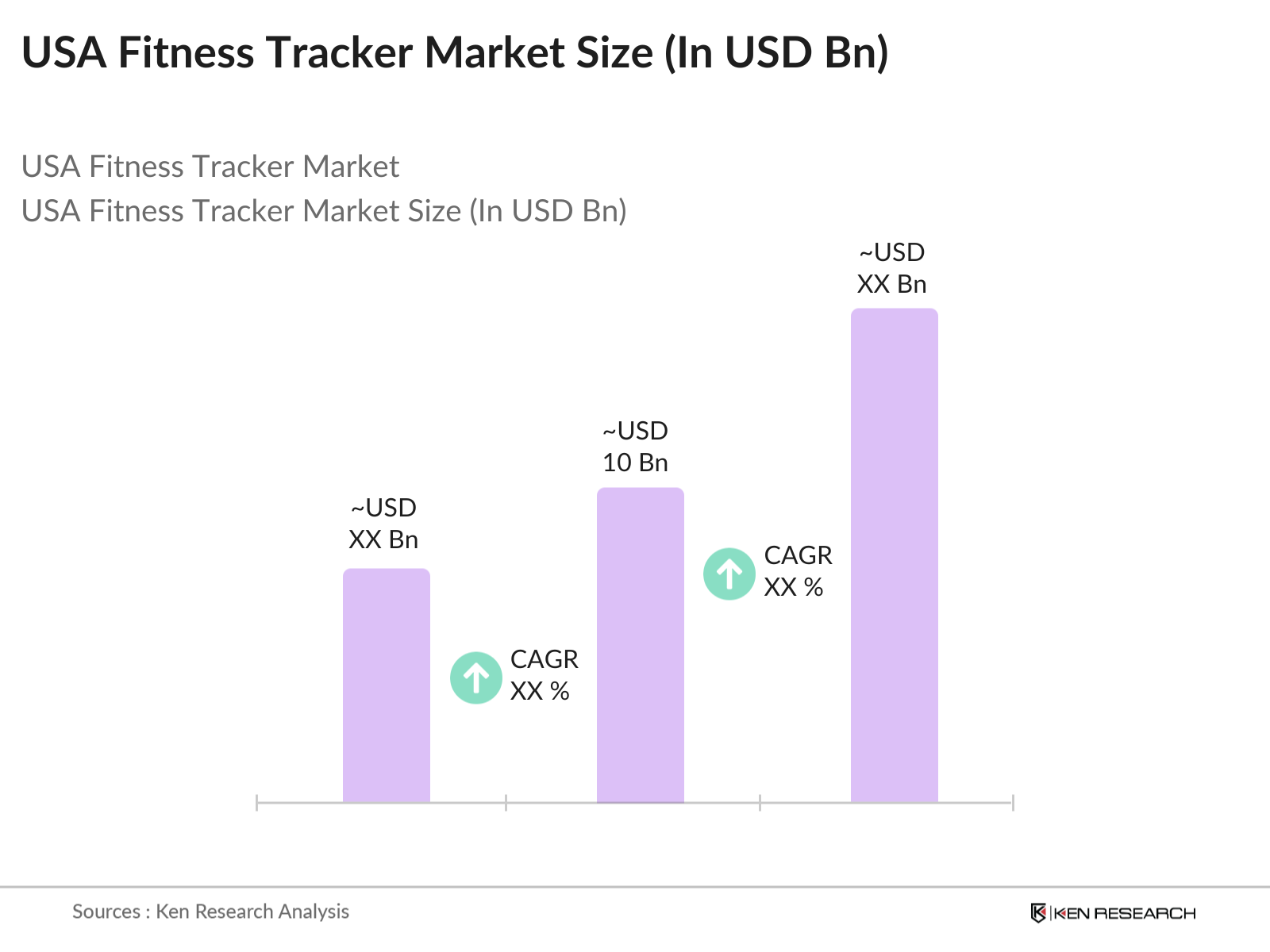
- The USA Fitness Tracker market is valued at USD 10 billion, based on a five-year historical analysis. The markets growth is primarily driven by the increasing health consciousness among consumers and the rising adoption of advanced wearable technologies. The integration of features such as heart rate monitoring, sleep tracking, and GPS functionality has boosted demand, particularly among fitness enthusiasts and tech-savvy consumers. Major players like Apple, Fitbit, and Garmin have been instrumental in introducing innovations that enhance user experience and drive market expansion.
- The dominant regions in the USA market include metropolitan areas such as New York, California, and Texas, where there is a higher concentration of tech-savvy consumers with greater disposable incomes. These cities have a large consumer base interested in fitness and wellness products, and they offer a conducive environment for launching innovative health devices. Furthermore, the presence of leading fitness tracker companies and a well-established retail network in these areas solidifies their dominance in the market.
- Fitness trackers in the U.S. must comply with health data security regulations such as HIPAA and, where applicable, the General Data Protection Regulation (GDPR) for international users. These regulations mandate strict data handling and sharing practices to protect consumer privacy. Compliance with these regulations is critical for maintaining consumer trust and market viability.
USA Fitness Tracker Market Segmentation
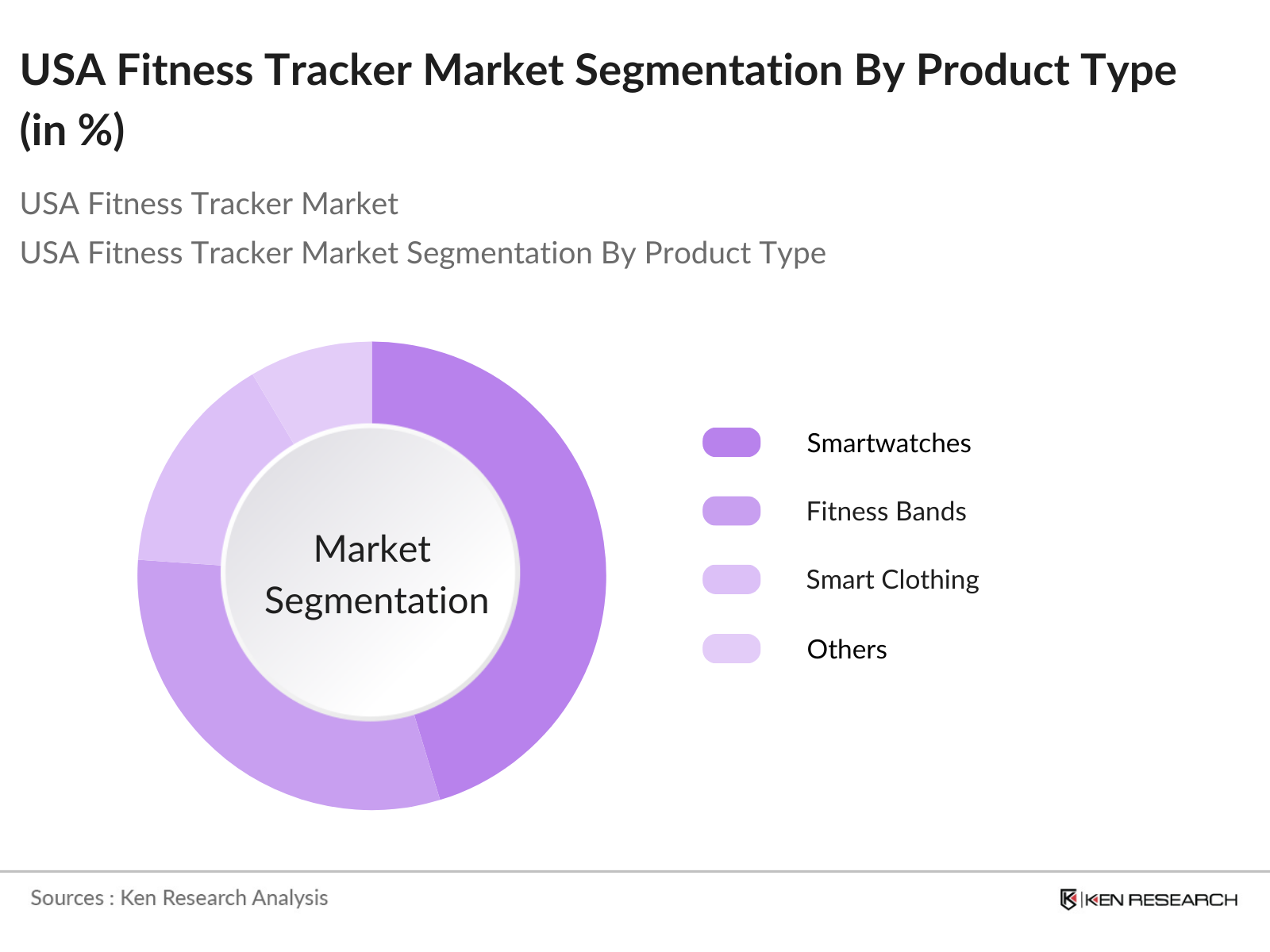
By Product Type: The market is segmented by product type into smartwatches, fitness bands, smart clothing, and others. Smartwatches currently dominate this segment with a 45.3% market share in 2023. The popularity of smartwatches is attributed to their versatility, offering fitness tracking alongside other functionalities like notifications, music control, and contactless payments. They are increasingly preferred by consumers due to their multi-functionality and seamless integration with smartphone applications.
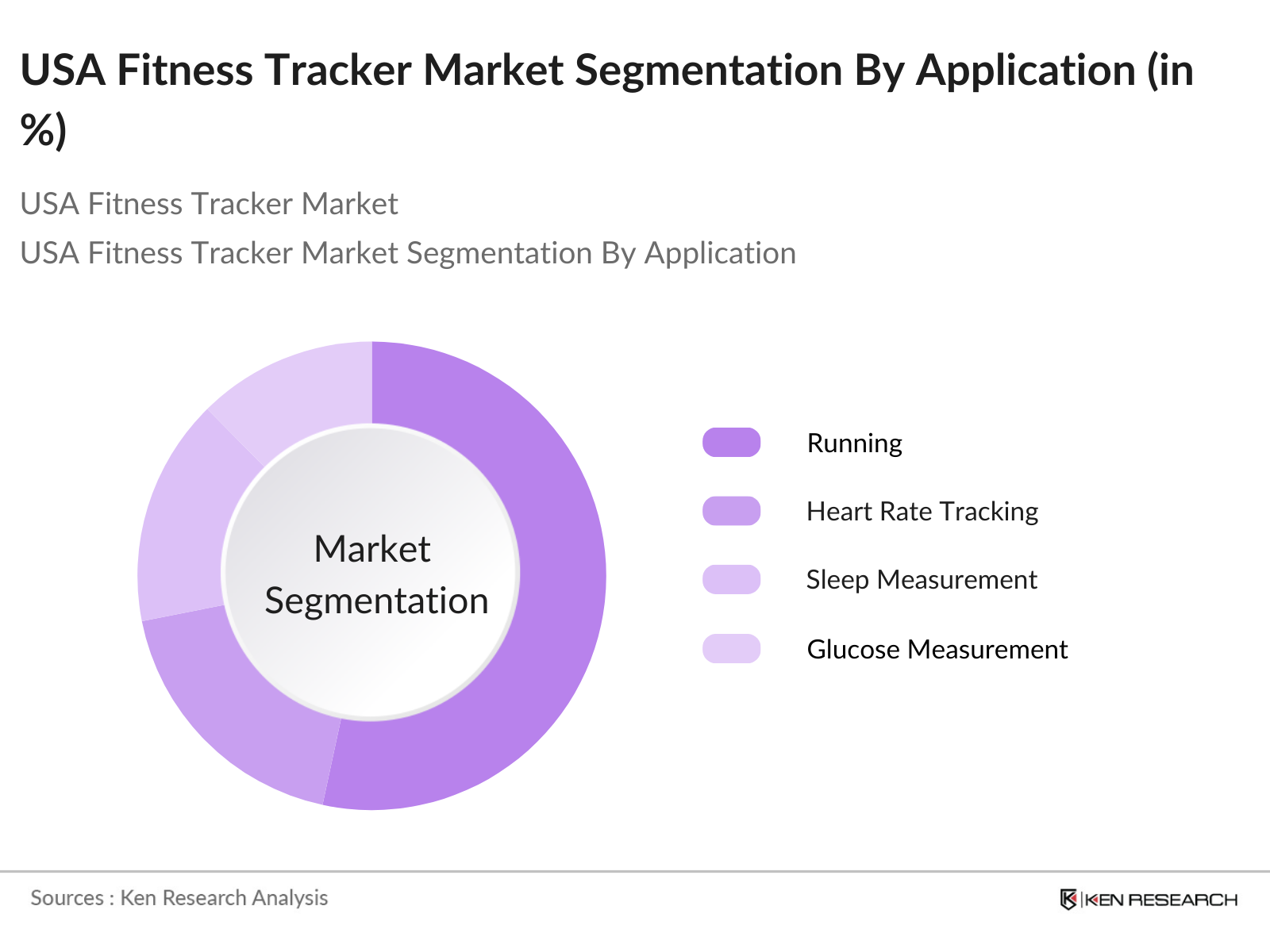
By Application: Based on application, the market is segmented into heart rate tracking, sleep measurement, glucose measurement, sports, running, and cycling tracking. The running segment held the largest share, accounting for 22.8% of the market in 2023. This dominance is due to the high demand for fitness trackers equipped with advanced running-specific features such as GPS tracking, heart rate monitoring, and performance analytics, making them a preferred choice for athletes and fitness enthusiasts.
USA Fitness Tracker Market Competitive Landscape
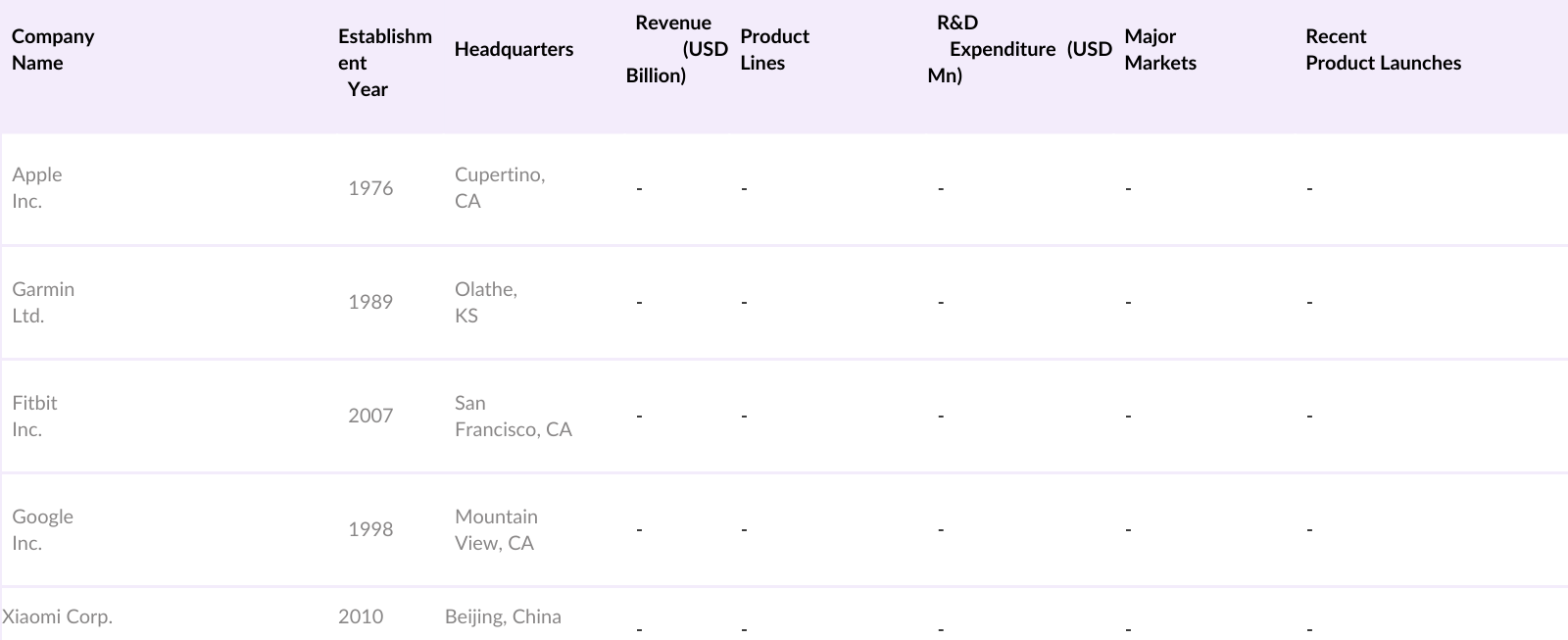
The USA fitness tracker market is characterized by the presence of several key players who dominate the competitive landscape through continuous innovation and strategic initiatives. Major companies such as Apple Inc., Fitbit Inc., Garmin Ltd., and Google Inc. lead the market, leveraging their strong product portfolios and extensive distribution networks. This consolidation indicates a high degree of competition, with these companies focusing on product differentiation through advanced health monitoring features and wearable technology integration.
USA Fitness Tracker Industry Analysis
Growth Drivers
- Increasing Adoption of Health and Wellness Trends: The adoption of fitness trackers in the United States has been fueled by rising health awareness. In 2020, approximately 24.2% of U.S. adults met the recommended guidelines for both aerobic and muscle-strengthening activities, with a significant uptake observed among those aged 18-34 years (41.3% of men and 28.7% of women). This trend is supported by growing public health initiatives aimed at promoting physical activity, which is expected to increase the demand for fitness tracking devices that can monitor and encourage a healthier lifestyle.
- Technological Advancements in Wearable Sensors: Technological innovations have significantly enhanced the functionality and accuracy of wearable fitness trackers. Newer models incorporate advanced sensors for continuous monitoring of health metrics such as heart rate variability, sleep patterns, and stress levels. These advancements, driven by increasing R&D investments in the tech sector, have contributed to a higher adoption rate, particularly among tech-savvy younger consumers. The integration of AI and machine learning also enables personalized fitness recommendations, making these devices more appealing.
- Integration with Health Monitoring Systems: Fitness trackers are now being integrated into broader health monitoring systems, including electronic health records (EHRs) and telehealth platforms. The CDCs National Health Interview Survey has indicated a correlation between physical activity tracking and improved health outcomes. As more healthcare providers partner with tech companies to utilize wearable data for patient monitoring, fitness trackers will become a crucial tool in preventive healthcare management.
Market Challenges
- High Device Costs: Despite the growing adoption of fitness trackers, their high cost remains a barrier for widespread usage. This is particularly evident among lower-income households. For instance, only 16.2% of men and 9.9% of women in families earning below 100% of the federal poverty level met the recommended physical activity guidelines, compared to 32.4% of men and 25.9% of women in families earning over 200% of the federal poverty level.
- Data Privacy Concerns: Data privacy is a major issue, as fitness trackers collect sensitive health data. There are growing concerns over how this information is stored and shared, especially in light of stringent regulations such as the Health Insurance Portability and Accountability Act (HIPAA) in the U.S. Compliance with these regulations adds complexity and cost to the development of new devices.
USA Fitness Tracker Market Future Outlook
Over the next five years, the USA fitness tracker market is poised to witness substantial growth due to rising consumer health awareness, the continuous launch of innovative products, and greater adoption of fitness devices in mainstream healthcare settings. The integration of advanced technologies such as AI for personalized health insights and the growing preference for wearable devices among millennials will further propel market expansion. The shift towards data-driven wellness and the increasing use of fitness trackers in remote patient monitoring are expected to shape the market's future trajectory.
Market Opportunities
- Expansion of IoT-Enabled Fitness Ecosystem: The growing Internet of Things (IoT) ecosystem presents an opportunity for the expansion of fitness trackers beyond standalone devices. Integration with smart home devices, connected gym equipment, and health monitoring systems can provide a holistic view of an individual's health. As more U.S. households adopt IoT technology, the fitness tracker market can capitalize on this trend by offering seamless integration and improved user experiences.
- Development of New Value-Added Services: Fitness trackers can serve as a platform for value-added services such as virtual fitness coaching, health analytics, and subscription-based workout programs. The availability of personalized health insights and coaching services can increase the utility and appeal of fitness trackers. This aligns with the broader trend of consumers seeking comprehensive health solutions that go beyond step counting and heart rate monitoring.
Scope of the Report
|
Product Type |
Smart Bands Smart Watches Clip-on Devices Smart Rings |
|
Technology |
Continuous Heart Rate Monitoring ECG Blood Oxygen (SpO2) Measurement GPS Functionality |
|
Distribution Channel |
Online Retail Offline Retail Specialty Stores Direct Sales |
|
Application |
General Health Monitoring Sports & Fitness Sleep Tracking Stress Management |
|
Region |
North-East South Midwest West |
Products
Key Target Audience
Fitness Device Manufacturers
Technology Providers
Retail and E-commerce Companies
Healthcare Providers
Government and Regulatory Bodies (e.g., FDA)
Insurance Companies
Investments and Venture Capital Firms
Corporate Wellness Program Providers
Companies
Players Mentioned in the Report
Apple Inc.
Garmin Ltd.
Fitbit Inc.
Google Inc.
Xiaomi Corp.
Huawei Technologies Co., Ltd.
Polar Electro Oy
Suunto Oy
Fossil Group Inc.
Amazfit (Zepp Health Corporation)
Table of Contents
1. USA Fitness Tracker Market Overview
1.1. Definition and Scope
1.2. Market Taxonomy (Product Type, Technology, Distribution Channel)
1.3. Market Growth Rate
1.4. Market Segmentation Overview
2. USA Fitness Tracker Market Size (in USD Mn)
2.1. Historical Market Size
2.2. Year-On-Year Growth Analysis
2.3. Key Market Developments and Milestones
3. USA Fitness Tracker Market Analysis
3.1. Growth Drivers
3.1.1. Increasing Adoption of Health and Wellness Trends
3.1.2. Technological Advancements in Wearable Sensors
3.1.3. Integration with Health Monitoring Systems
3.1.4. Rising Prevalence of Lifestyle-Related Health Conditions
3.2. Market Challenges
3.2.1. High Device Costs
3.2.2. Data Privacy Concerns
3.2.3. Short Product Lifecycles
3.3. Opportunities
3.3.1. Expansion of IoT-Enabled Fitness Ecosystem
3.3.2. Development of New Value-Added Services
3.3.3. Partnerships with Healthcare Providers
3.4. Trends
3.4.1. Increasing Use of AI for Personalization
3.4.2. Shift Towards Hybrid Smartwatches
3.4.3. Emphasis on Data-Driven Wellness Programs
3.5. Government Regulations
3.5.1. Health Data Security Regulations
3.5.2. FDA Approvals for Wearable Health Devices
3.5.3. Compliance with GDPR and CCPA
3.6. SWOT Analysis
3.7. Stakeholder Ecosystem
3.8. Porters Five Forces Analysis
3.9. Competitive Ecosystem
4. USA Fitness Tracker Market Segmentation
4.1. By Product Type (in Value %)
4.1.1. Smart Bands
4.1.2. Smart Watches
4.1.3. Clip-on Devices
4.1.4. Smart Rings
4.2. By Technology (in Value %)
4.2.1. Continuous Heart Rate Monitoring
4.2.2. Electrocardiography (ECG)
4.2.3. Blood Oxygen (SpO2) Measurement
4.2.4. GPS Functionality
4.3. By Distribution Channel (in Value %)
4.3.1. Online Retail
4.3.2. Offline Retail
4.3.3. Specialty Stores
4.3.4. Direct Sales
4.4. By Application (in Value %)
4.4.1. General Health Monitoring
4.4.2. Sports & Fitness
4.4.3. Sleep Tracking
4.4.4. Stress Management
4.5. By Region (in Value %)
4.5.1. North-East
4.5.2. South
4.5.3. Midwest
4.5.4. West
5. USA Fitness Tracker Market Competitive Analysis
5.1. Detailed Profiles of Major Companies
5.1.1. Apple Inc.
5.1.2. Fitbit Inc.
5.1.3. Garmin Ltd.
5.1.4. Samsung Electronics Co., Ltd.
5.1.5. Xiaomi Corporation
5.1.6. Huawei Technologies Co., Ltd.
5.1.7. WHOOP Inc.
5.1.8. Polar Electro Oy
5.1.9. Fossil Group, Inc.
5.1.10. Suunto Oy
5.1.11. Withings SA
5.1.12. Oura Health Ltd.
5.1.13. Amazfit (Zepp Health Corporation)
5.1.14. Mobvoi Information Technology Company Limited
5.1.15. Realme (OPPO)
5.2. Cross Comparison Parameters (Revenue, Market Share, Product Portfolio, Pricing Strategy, Innovation)
5.3. Market Share Analysis
5.4. Strategic Initiatives
5.5. Mergers and Acquisitions
5.6. Investment Analysis
5.7. Venture Capital Funding
5.8. Government Grants
5.9. Private Equity Investments
6. USA Fitness Tracker Market Regulatory Framework
6.1. Health Data Protection Laws
6.2. Compliance Requirements
6.3. Certification Processes for Health Monitoring Devices
7. USA Fitness Tracker Future Market Size (in USD Mn)
7.1. Future Market Size Projections
7.2. Key Factors Driving Future Market Growth
8. USA Fitness Tracker Market Future Segmentation
8.1. By Product Type (in Value %)
8.2. By Technology (in Value %)
8.3. By Distribution Channel (in Value %)
8.4. By Application (in Value %)
8.5. By Region (in Value %)
9. USA Fitness Tracker Market Analysts Recommendations
9.1. Total Addressable Market (TAM) Analysis
9.2. Serviceable Available Market (SAM) Analysis
9.3. Opportunity Identification
9.4. Go-To-Market Strategies
Disclaimer Contact UsResearch Methodology
Step 1: Identification of Key Variables
The research process began by mapping the ecosystem of the USA Fitness Tracker Market, identifying key stakeholders and market variables. Extensive desk research was conducted to collect data from proprietary databases and industry reports, focusing on market size, growth drivers, and challenges.
Step 2: Market Analysis and Construction
The second step involved analyzing historical data, assessing market penetration, and estimating the revenue generated by key segments. Further analysis of consumer behavior and demand patterns was carried out to understand segmental performance.
Step 3: Hypothesis Validation and Expert Consultation
Market hypotheses were formulated and validated through consultations with industry experts, providing critical insights into operational and financial aspects of the market.
Step 4: Research Synthesis and Final Output
The final stage involved synthesizing the gathered data, ensuring accuracy, and cross-verifying with industry benchmarks. The final report was constructed to provide a comprehensive and validated analysis of the USA fitness tracker market.
Frequently Asked Questions
01. How big is the USA Fitness Tracker Market?
The USA Fitness Tracker market is valued at USD 10 billion, based on a five-year historical analysis. The markets growth is primarily driven by the increasing health consciousness among consumers and the rising adoption of advanced wearable technologies.
02. What are the challenges in the USA Fitness Tracker Market?
Key challenges include data privacy concerns, high costs of advanced devices, and the short lifecycle of fitness trackers.
03. Who are the major players in the USA Fitness Tracker Market?
Key players include Apple Inc., Garmin Ltd., Fitbit Inc., Google Inc., and Xiaomi Corp., dominating due to their strong product portfolios and innovative product offerings.
04. What are the growth drivers of the USA Fitness Tracker Market?
Growth drivers include increased adoption of health and fitness trends, integration with smartphones, and the growing popularity of fitness tracking apps.
Why Buy From Us?

What makes us stand out is that our consultants follows Robust, Refine and Result (RRR) methodology. i.e. Robust for clear definitions, approaches and sanity checking, Refine for differentiating respondents facts and opinions and Result for presenting data with story

We have set a benchmark in the industry by offering our clients with syndicated and customized market research reports featuring coverage of entire market as well as meticulous research and analyst insights.

While we don't replace traditional research, we flip the method upside down. Our dual approach of Top Bottom & Bottom Top ensures quality deliverable by not just verifying company fundamentals but also looking at the sector and macroeconomic factors.

With one step in the future, our research team constantly tries to show you the bigger picture. We help with some of the tough questions you may encounter along the way: How is the industry positioned? Best marketing channel? KPI's of competitors? By aligning every element, we help maximize success.

Our report gives you instant access to the answers and sources that other companies might choose to hide. We elaborate each steps of research methodology we have used and showcase you the sample size to earn your trust.

If you need any support, we are here! We pride ourselves on universe strength, data quality, and quick, friendly, and professional service.