
USA Fitness Trackers Market Outlook to 2030
Region:United States
Author(s):Vijay Kumar
Product Code:KROD6467
Region:United States
Author(s):Vijay Kumar
Product Code:KROD6467
December 2024
86
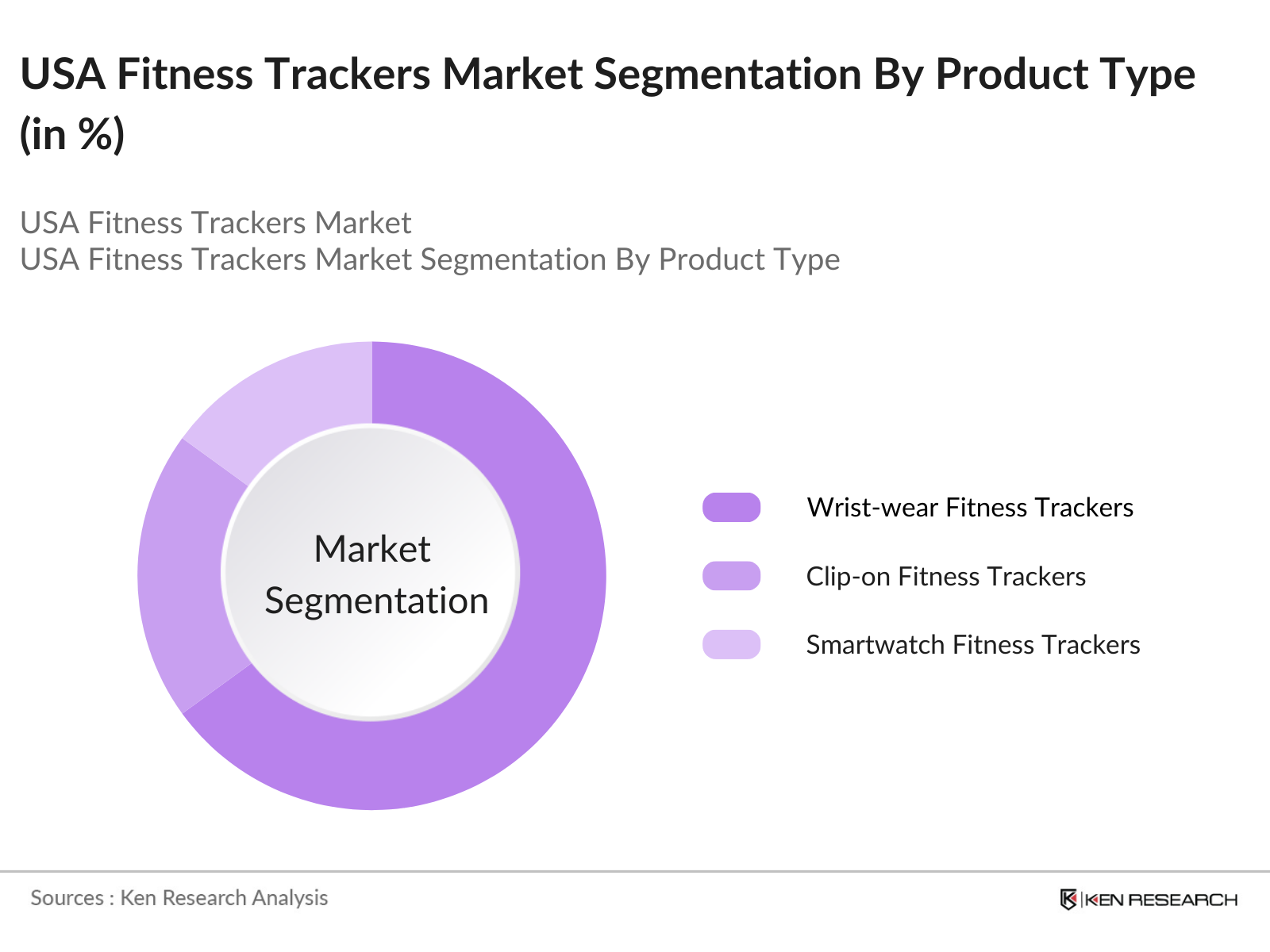
By Product Type: The USA fitness trackers market is segmented by product type into wrist-wear fitness trackers, clip-on fitness trackers, and smartwatch fitness trackers. Recently, wrist-wear fitness trackers have dominated the market under the product type segmentation. This dominance is attributed to their comfort, ease of use, and multifunctionality. Many wrist-wear devices are equipped with advanced health metrics such as heart rate monitoring, sleep tracking, and activity analysis, making them highly preferred among users.
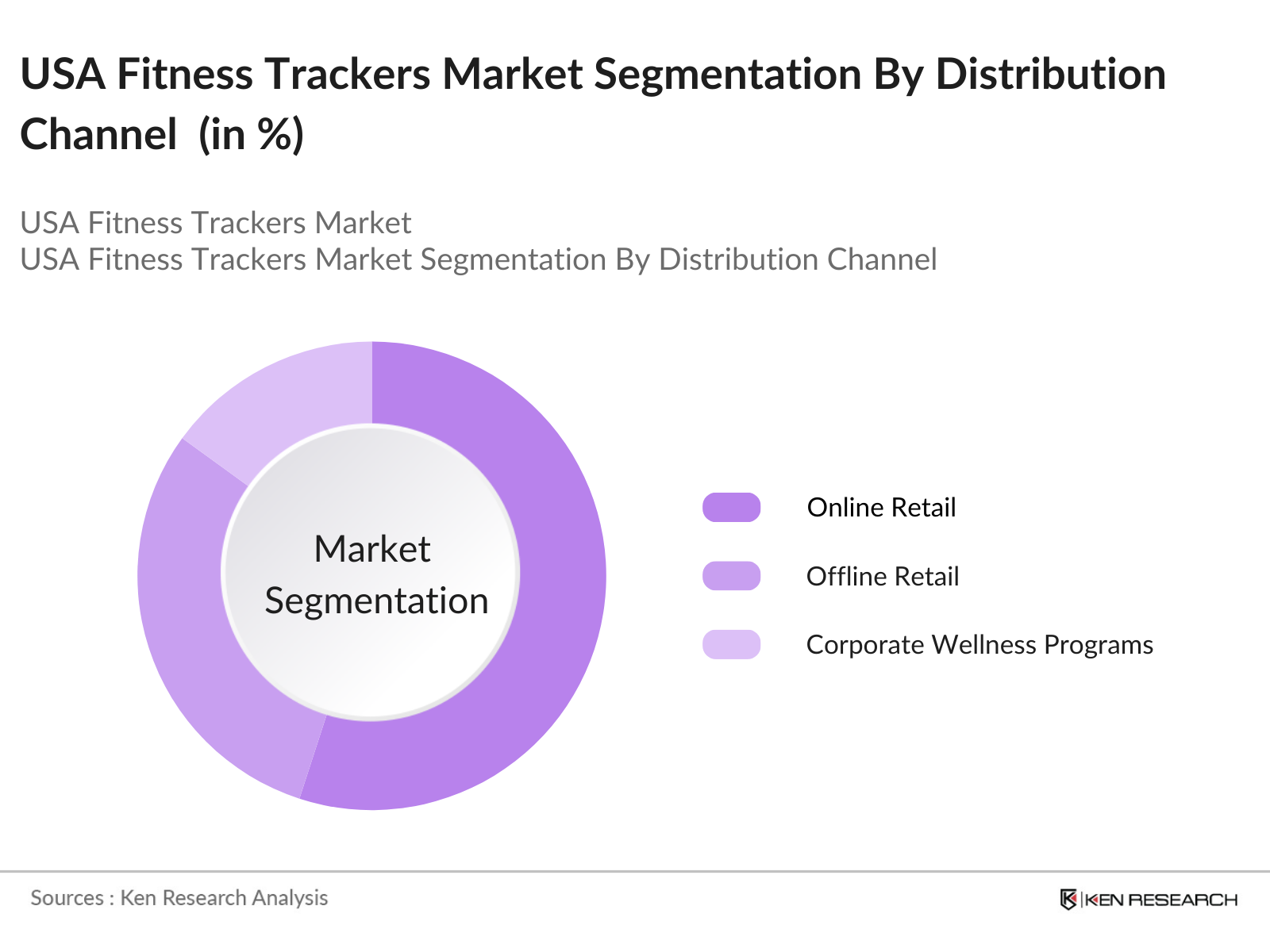
By Distribution Channel: The market is segmented by distribution channel into online retail, offline retail, and corporate wellness programs. Online retail has emerged as the dominant distribution channel due to the convenience of shopping, greater product variety, and competitive pricing. Consumers increasingly prefer purchasing fitness trackers from e-commerce platforms such as Amazon and Best Buy, where they can easily compare features and prices.
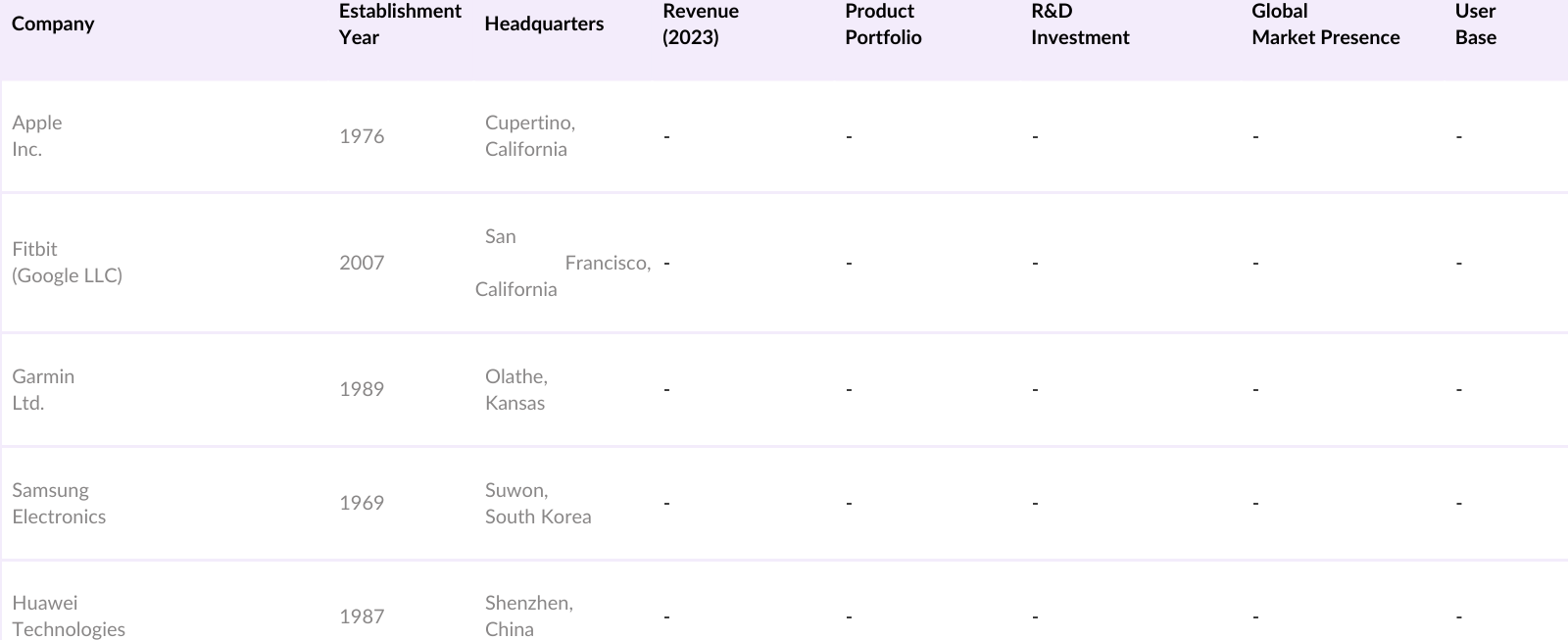
The USA fitness trackers market is dominated by a few major players, including global brands such as Apple Inc., Fitbit (owned by Google LLC), and Garmin Ltd. These companies have a strong foothold in the market due to their innovation, product reliability, and extensive marketing efforts. The market is highly competitive, with frequent product launches, technological advancements, and strategic partnerships shaping the landscape. Many of these companies are also investing in AI and machine learning to enhance the functionality of their fitness trackers, providing more accurate health data and personalized fitness insights.
Over the next five years, the USA fitness trackers market is expected to show significant growth driven by the increasing adoption of wearable technology for health monitoring, the rise of corporate wellness programs, and the integration of AI and machine learning into fitness devices. Additionally, the growing interest in preventative healthcare, coupled with advancements in sensor technology, is expected to further fuel the market.
|
By Product Type |
Wrist-wear Fitness Trackers Clip-on Fitness Trackers Smartwatch Fitness Trackers |
|
By Distribution Channel |
Online Retail Offline Retail (Department Stores, Specialty Stores) Corporate Wellness Programs |
|
By Sensor Type |
Optical Sensors Motion Sensors Bio-Impedance Sensors |
|
By End-User |
Adults Kids Elderly |
|
By Region |
North-East USA Western USA Southern USA Midwest USA |
1.1. Definition and Scope
1.2. Market Taxonomy
1.3. Market Growth Rate
1.4. Market Segmentation Overview
2.1. Historical Market Size
2.2. Year-on-Year Growth Analysis
2.3. Key Market Developments and Milestones
3.1. Growth Drivers
3.1.1. Rising Health Awareness (Health-Conscious Consumer Growth)
3.1.2. Technological Integration (Wearable Technology)
3.1.3. Increasing Disposable Income (Economic Drivers)
3.1.4. Corporate Wellness Programs (Workplace Health Trends)
3.2. Market Challenges
3.2.1. Data Privacy Concerns (User Data Security)
3.2.2. High Competition (Market Saturation)
3.2.3. Battery Life and Durability Issues (Product Longevity)
3.3. Opportunities
3.3.1. Innovation in Sensor Technology (Bio-Sensing Capabilities)
3.3.2. Expansion into Niche Segments (Kids and Elderly Users)
3.3.3. Integration with Medical Devices (Healthcare Connectivity)
3.4. Trends
3.4.1. AI and Machine Learning in Fitness Trackers
3.4.2. Advanced Health Metrics (Heart Rate Variability, Oxygen Levels)
3.4.3. Wearable Payments and Contactless Features
3.4.4. Customized Fitness Plans through Fitness Trackers (AI-based Coaching)
3.5. Regulatory Environment
3.5.1. FDA Regulations on Health Wearables
3.5.2. Data Protection Acts (HIPAA Compliance)
3.5.3. Consumer Electronics Safety Standards
3.6. SWOT Analysis
3.7. Stakeholder Ecosystem
3.8. Porters Five Forces Analysis
3.9. Competitive Ecosystem
4. USA Fitness Trackers Market Segmentation
4.1. By Product Type (In Value %)
4.1.1. Wrist-wear Fitness Trackers
4.1.2. Clip-on Fitness Trackers
4.1.3. Smartwatch Fitness Trackers
4.2. By Distribution Channel (In Value %)
4.2.1. Online Retail
4.2.2. Offline Retail (Department Stores, Specialty Stores)
4.2.3. Corporate Wellness Programs
4.3. By Sensor Type (In Value %)
4.3.1. Optical Sensors
4.3.2. Motion Sensors
4.3.3. Bio-Impedance Sensors
4.4. By End-User (In Value %)
4.4.1. Adults
4.4.2. Kids
4.4.3. Elderly
4.5. By Region (In Value %)
4.5.1. North-East USA
4.5.2. Western USA
4.5.3. Southern USA
4.5.4. Midwest USA
5.1. Detailed Profiles of Major Companies
5.1.1. Apple Inc.
5.1.2. Fitbit (Google LLC)
5.1.3. Garmin Ltd.
5.1.4. Samsung Electronics Co. Ltd.
5.1.5. Huawei Technologies Co. Ltd.
5.1.6. Xiaomi Corporation
5.1.7. Whoop, Inc.
5.1.8. Oura Health Oy
5.1.9. Polar Electro Oy
5.1.10. Amazfit (Zepp Health Corporation)
5.1.11. Withings
5.1.12. Honor Band
5.1.13. Fossil Group, Inc.
5.1.14. Jawbone (Inactive but influential in market history)
5.1.15. Moov Inc.
5.2. Cross Comparison Parameters (Product Innovation, Market Share, Price Range, Battery Life, Health Data Accuracy, Design, Software Integration, Customer Satisfaction)
5.3. Market Share Analysis
5.4. Strategic Initiatives
5.5. Mergers and Acquisitions
5.6. Investment Analysis
5.7. Venture Capital Funding
5.8. Private Equity Investments
6.1. Data Privacy Regulations (GDPR, HIPAA Compliance)
6.2. Safety and Compliance Certifications (FCC, UL Certifications)
6.3. Compliance with Consumer Electronics Safety Standards
7.1. Future Market Size Projections
7.2. Key Factors Driving Future Market Growth
8.1. By Product Type (In Value %)
8.2. By Distribution Channel (In Value %)
8.3. By Sensor Type (In Value %)
8.4. By End-User (In Value %)
8.5. By Region (In Value %)
9.1. TAM/SAM/SOM Analysis
9.2. Customer Cohort Analysis
9.3. Marketing Initiatives
9.4. White Space Opportunity Analysis
The initial phase involved constructing an ecosystem map encompassing all major stakeholders within the USA fitness trackers market. This step was supported by extensive desk research utilizing both secondary and proprietary databases to gather comprehensive industry-level information. The primary goal was to identify and define the key variables influencing market dynamics.
During this phase, historical data on market penetration and revenue generation in the USA fitness trackers market was compiled and analyzed. Additionally, a detailed assessment of consumer preferences and technological advancements in the fitness tracker industry was conducted to ensure the reliability and accuracy of market estimates.
Market hypotheses were developed and validated through expert consultations with industry professionals. These consultations were conducted via computer-assisted telephone interviews (CATIs) with key stakeholders to provide insights into market performance, operational challenges, and opportunities for growth.
In the final phase, the research was synthesized by directly engaging with multiple fitness tracker manufacturers and distributors. This step ensured that the findings from both the top-down and bottom-up approaches were corroborated, providing an accurate and validated analysis of the USA fitness trackers market.
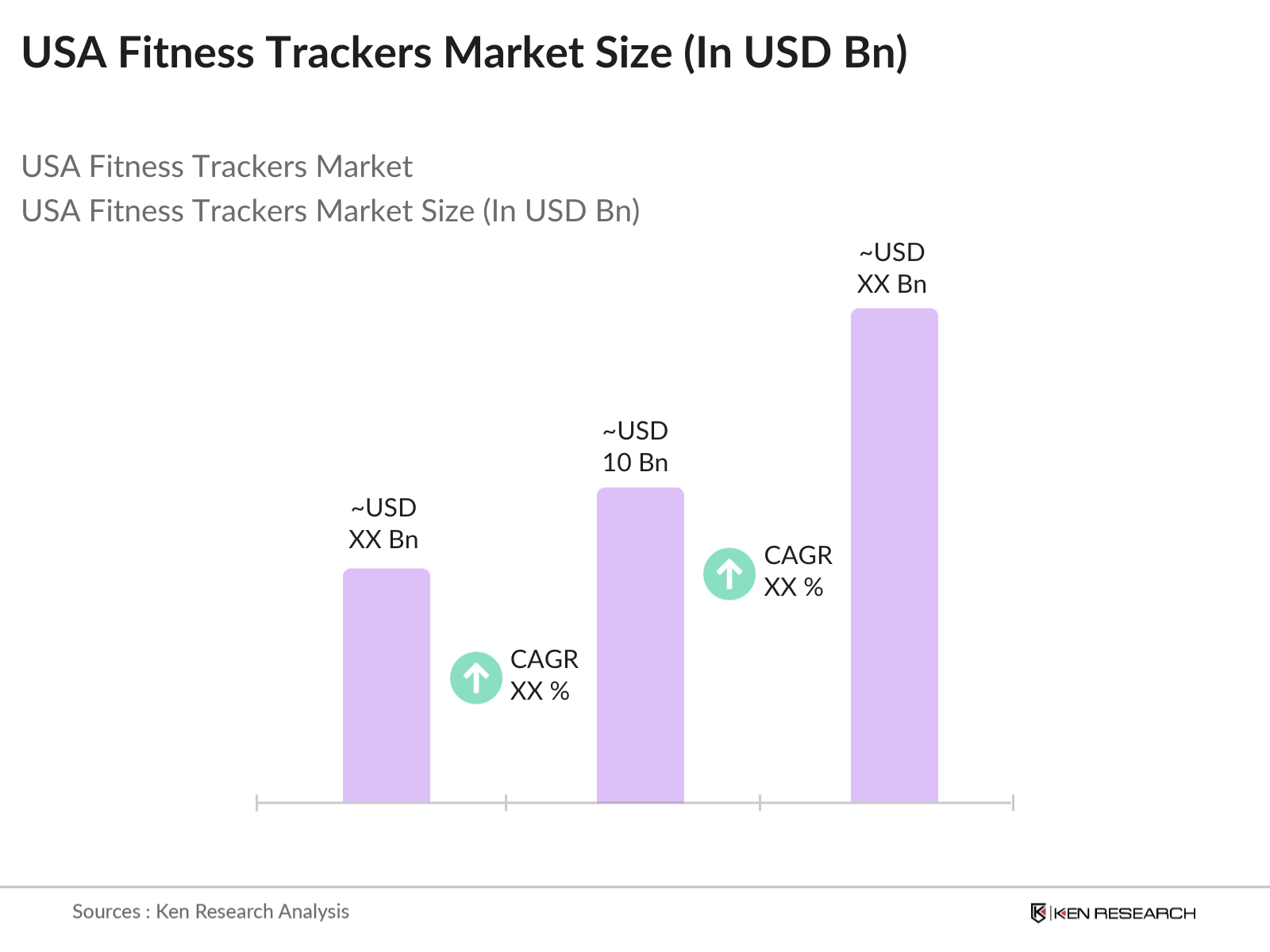
The USA fitness trackers market is valued at USD 10 billion, based on a five-year historical analysis. This market size is driven by the increasing adoption of health-focused technologies, heightened awareness of personal fitness, and the growing trend of health and wellness monitoring.
Challenges include intense competition among key players, concerns over data privacy and security, and technological issues such as battery life and durability of devices.
Key players in the market include Apple Inc., Fitbit (Google LLC), Garmin Ltd., Samsung Electronics, and Huawei Technologies, all of which are recognized for their innovation and market leadership.
Growth drivers include the rising trend of health and wellness monitoring, increasing adoption of AI and machine learning in wearables, and the expansion of corporate wellness programs that incorporate fitness trackers.

What makes us stand out is that our consultants follows Robust, Refine and Result (RRR) methodology. i.e. Robust for clear definitions, approaches and sanity checking, Refine for differentiating respondents facts and opinions and Result for presenting data with story

We have set a benchmark in the industry by offering our clients with syndicated and customized market research reports featuring coverage of entire market as well as meticulous research and analyst insights.

While we don't replace traditional research, we flip the method upside down. Our dual approach of Top Bottom & Bottom Top ensures quality deliverable by not just verifying company fundamentals but also looking at the sector and macroeconomic factors.

With one step in the future, our research team constantly tries to show you the bigger picture. We help with some of the tough questions you may encounter along the way: How is the industry positioned? Best marketing channel? KPI's of competitors? By aligning every element, we help maximize success.

Our report gives you instant access to the answers and sources that other companies might choose to hide. We elaborate each steps of research methodology we have used and showcase you the sample size to earn your trust.

If you need any support, we are here! We pride ourselves on universe strength, data quality, and quick, friendly, and professional service.