
USA Flavor and Fragrance Market Outlook to 2030
Region:North America
Author(s):Yogita Sahu
Product Code:KROD3328
Region:North America
Author(s):Yogita Sahu
Product Code:KROD3328
October 2024
89
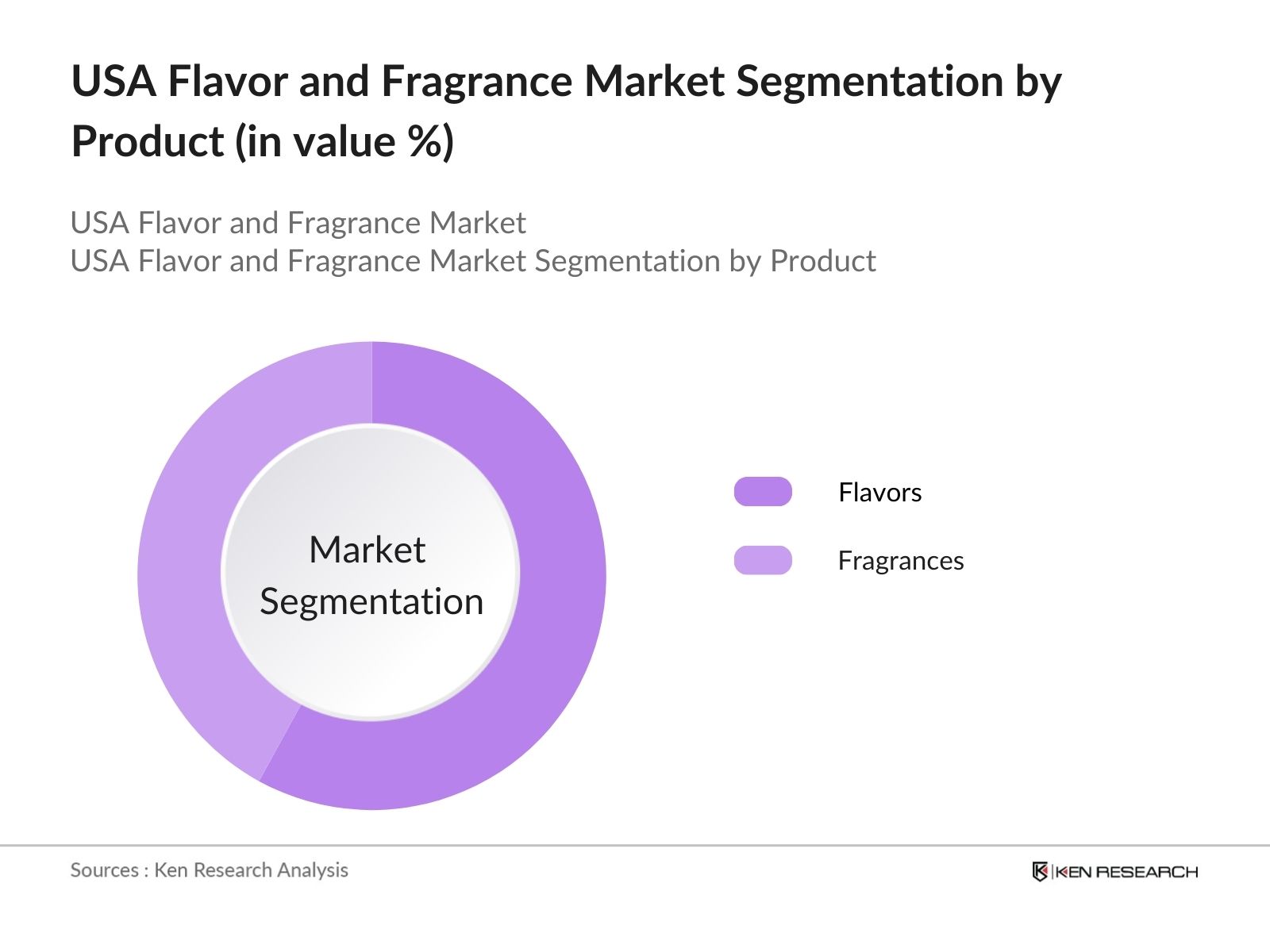
By Product Type: The market is segmented by product type into Flavors and Fragrances. Flavors have a dominant market share within this segmentation due to the expansive applications in the food and beverage industry. Increasing consumer demand for innovative and exotic tastes in food products, coupled with the growth of the processed food sector, has bolstered the flavors segment.
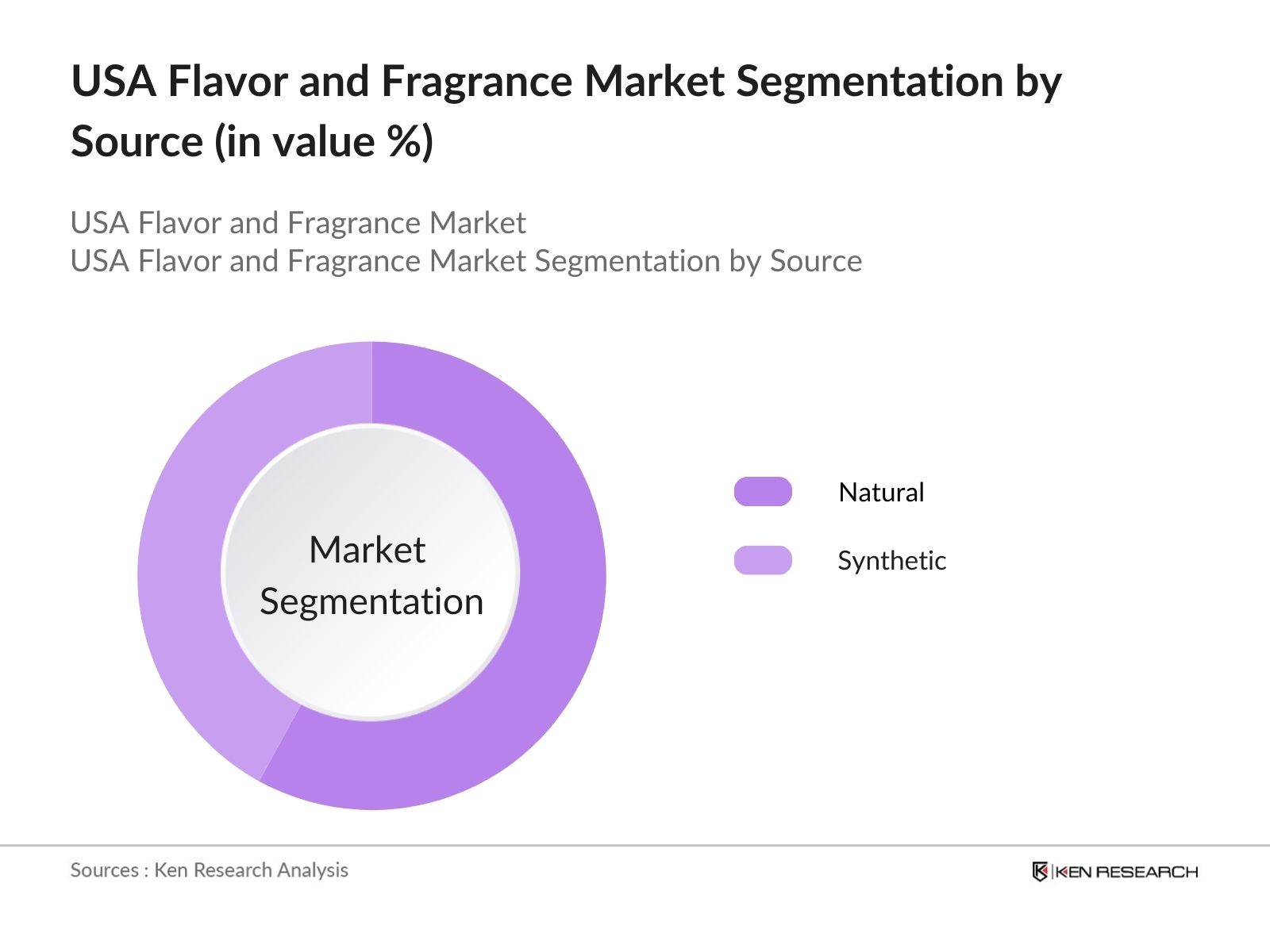
By Source: The market is also segmented by source into Natural and Synthetic. Natural ingredients dominate this segment due to growing consumer preferences for products free from artificial additives and chemicals. Consumers are increasingly demanding clean-label and sustainably sourced flavors and fragrances, which has led manufacturers to shift towards natural alternatives.
The market is dominated by several key players, with market consolidation. Large multinational companies such as Givaudan, Firmenich, and International Flavors & Fragrances (IFF) have maintained their leading positions through strategic mergers and acquisitions, technological advancements, and sustainable production practices.
|
Company Name |
Establishment Year |
Headquarters |
Revenue (2023) |
R&D Expenditure |
Number of Patents |
Global Presence |
Employee Strength |
Production Facilities |
|
Givaudan |
1895 |
Switzerland |
||||||
|
Firmenich |
1895 |
Switzerland |
||||||
|
International Flavors & Fragrances (IFF) |
1889 |
USA |
||||||
|
Symrise |
1874 |
Germany |
||||||
|
Sensient Technologies |
1882 |
USA |
Over the next five years, the USA flavor and fragrance industry is expected to grow, driven by the rise of natural and sustainable ingredients, increasing consumer demand for clean-label products, and advancements in biotechnological processes. The shift towards plant-based diets and organic personal care products will further augment the demand for natural flavors and fragrances.
|
By Product Type |
Flavors Fragrances |
|
By Application |
Food & Beverages Personal Care & Cosmetics Pharmaceuticals |
|
By Source |
Natural Synthetic |
|
By Technology |
Solvent Extraction Distillation Biotechnological Processes |
|
By Region |
North East West South |
1.1. Definition and Scope
1.2. Market Taxonomy
1.3. Market Growth Rate
1.4. Market Segmentation Overview
2.1. Historical Market Size
2.2. Year-On-Year Growth Analysis
2.3. Key Market Developments and Milestones
3.1. Growth Drivers
3.1.1. Increasing Demand for Natural Ingredients
3.1.2. Rising Consumption of Processed Foods
3.1.3. Expansion in the Cosmetics and Personal Care Sector
3.1.4. Regulatory Push for Sustainable Production
3.2. Market Challenges
3.2.1. High R&D Costs
3.2.2. Fluctuating Raw Material Prices
3.2.3. Stringent Regulations on Synthetic Chemicals
3.3. Opportunities
3.3.1. Growth in Organic and Natural Product Segments
3.3.2. Expanding Flavors and Fragrance Applications in Emerging Markets
3.3.3. Innovations in Extraction Technologies
3.4. Trends
3.4.1. Customization and Personalization of Fragrances
3.4.2. Increasing Popularity of Clean Label Products
3.4.3. Use of Artificial Intelligence in Flavor and Fragrance Creation
3.5. Government Regulations
3.5.1. FDA Guidelines on Flavorings in Foods
3.5.2. Restrictions on Allergenic Fragrance Ingredients
3.5.3. US EPA Regulations on Chemical Emissions
3.6. SWOT Analysis
3.7. Stakeholder Ecosystem
3.8. Porters Five Forces Analysis
3.9. Competitive Ecosystem
4.1. By Product Type (In Value %)
4.1.1. Flavors
4.1.2. Fragrances
4.2. By Application (In Value %)
4.2.1. Food & Beverages
4.2.2. Personal Care & Cosmetics
4.2.3. Pharmaceuticals
4.3. By Source (In Value %)
4.3.1. Natural
4.3.2. Synthetic
4.4. By Technology (In Value %)
4.4.1. Solvent Extraction
4.4.2. Distillation
4.4.3. Biotechnological Processes
4.5. By Region (In Value %)
4.5.1. North
4.5.2. South
4.5.3. East
4.5.4. West
5.1. Detailed Profiles of Major Companies
5.1.1. Givaudan
5.1.2. Firmenich
5.1.3. International Flavors & Fragrances (IFF)
5.1.4. Symrise
5.1.5. Takasago
5.1.6. Mane SA
5.1.7. Sensient Technologies
5.1.8. Robertet
5.1.9. Kerry Group
5.1.10. T. Hasegawa
5.1.11. Bell Flavors & Fragrances
5.1.12. Archer Daniels Midland (ADM)
5.1.13. Naturex (Givaudan)
5.1.14. Frutarom
5.1.15. Bedoukian Research, Inc.
5.2. Cross Comparison Parameters (Revenue, Market Share, Number of Patents, Employee Strength, Headquarters, R&D Expenditure, Manufacturing Plants, Global Presence)
5.3. Market Share Analysis
5.4. Strategic Initiatives
5.5. Mergers and Acquisitions
5.6. Investment Analysis
5.7. Government Grants
5.8. Venture Capital Funding
6.1. Compliance Requirements for Natural Flavors
6.2. Certification Standards for Organic Fragrances
6.3. FDA and EPA Approvals for Fragrance Compounds
7.1. Future Market Size Projections
7.2. Key Factors Driving Future Market Growth
8.1. By Product Type (In Value %)
8.2. By Application (In Value %)
8.3. By Source (In Value %)
8.4. By Technology (In Value %)
8.5. By Region (In Value %)
9.1. Total Addressable Market (TAM)/Serviceable Addressable Market (SAM) Analysis
9.2. Emerging Customer Cohorts Analysis
9.3. White Space Opportunity Identification
9.4. Strategic Marketing Initiatives
The initial phase of the research involves mapping key stakeholders across the USA flavor and fragrance market. Through desk research and proprietary databases, critical variables such as consumer trends, ingredient sourcing, and technological innovations are identified. This step sets the foundation for understanding market dynamics and key drivers.
In this phase, historical data and market trends related to flavor and fragrance applications are compiled and analyzed. This involves assessing market penetration in sectors such as food and beverages, personal care, and pharmaceuticals, and revenue trends from key product types and ingredients.
Hypotheses related to market growth and consumer demand are validated through consultations with industry experts. These insights from companies across the value chain help refine the market data and ensure accuracy. Primary research methods such as computer-assisted telephone interviews (CATIs) are utilized.
This phase consolidates all findings through detailed engagements with flavor and fragrance manufacturers. Insights on production, sales performance, and consumer preferences are gathered to validate the analysis. The research synthesis ensures that all data points are cross-verified and presented comprehensively.
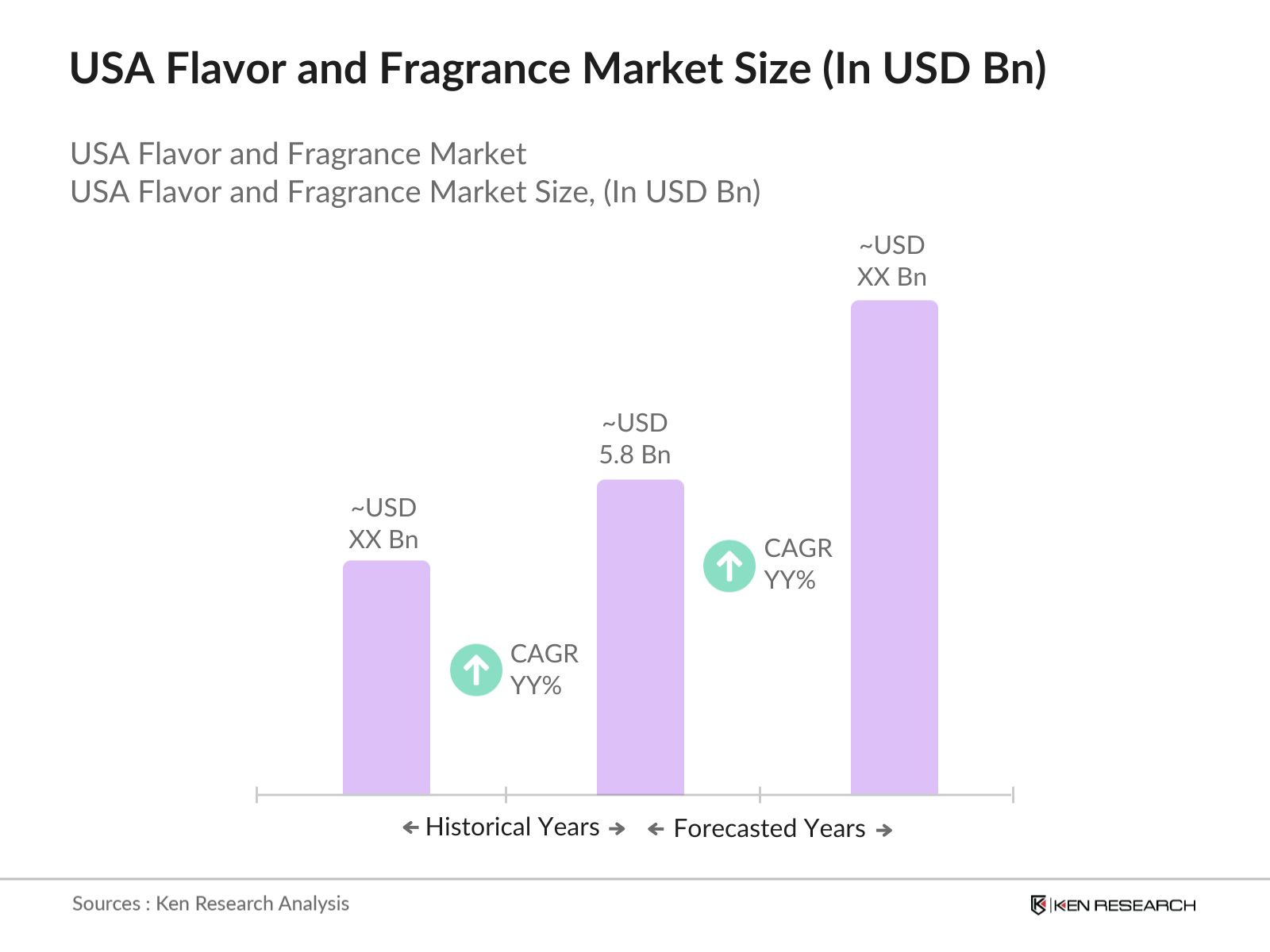
The USA flavor and fragrance market is valued at USD 5.8 billion, driven by demand for natural ingredients and the growing food and beverage industry.
Challenges in the USA flavor and fragrance market include high research and development costs, fluctuations in raw material prices, and stringent regulations on synthetic ingredients.
Key players in the USA flavor and fragrance market include Givaudan, Firmenich, International Flavors & Fragrances (IFF), Symrise, and Sensient Technologies.
Growth drivers in the USA flavor and fragrance market include increasing consumer preference for natural and clean-label ingredients, the rise of plant-based diets, and technological advancements in flavor extraction.
The USA flavor and fragrance market is expected to see growth, driven by sustainability trends, regulatory pressures, and innovation in natural and organic products.

What makes us stand out is that our consultants follows Robust, Refine and Result (RRR) methodology. i.e. Robust for clear definitions, approaches and sanity checking, Refine for differentiating respondents facts and opinions and Result for presenting data with story

We have set a benchmark in the industry by offering our clients with syndicated and customized market research reports featuring coverage of entire market as well as meticulous research and analyst insights.

While we don't replace traditional research, we flip the method upside down. Our dual approach of Top Bottom & Bottom Top ensures quality deliverable by not just verifying company fundamentals but also looking at the sector and macroeconomic factors.

With one step in the future, our research team constantly tries to show you the bigger picture. We help with some of the tough questions you may encounter along the way: How is the industry positioned? Best marketing channel? KPI's of competitors? By aligning every element, we help maximize success.

Our report gives you instant access to the answers and sources that other companies might choose to hide. We elaborate each steps of research methodology we have used and showcase you the sample size to earn your trust.

If you need any support, we are here! We pride ourselves on universe strength, data quality, and quick, friendly, and professional service.