
USA Flex Fuel Vehicle Market Outlook to 2030
Region:North America
Author(s):Shubham
Product Code:KROD5643
November 2024
81
About the Report
USA Flex Fuel Vehicle Market Overview
- The USA Flex Fuel Vehicle market is valued at USD 4.7 billion, driven by increasing production of ethanol and biofuels, along with government policies that support the adoption of alternative fuel vehicles. Federal programs such as the Renewable Fuel Standard (RFS) have set mandates for the use of renewable fuels like ethanol, promoting the market's expansion. Additionally, the rising consumer awareness about the environmental benefits of using flex fuel vehicles is driving the demand for these vehicles across the country.
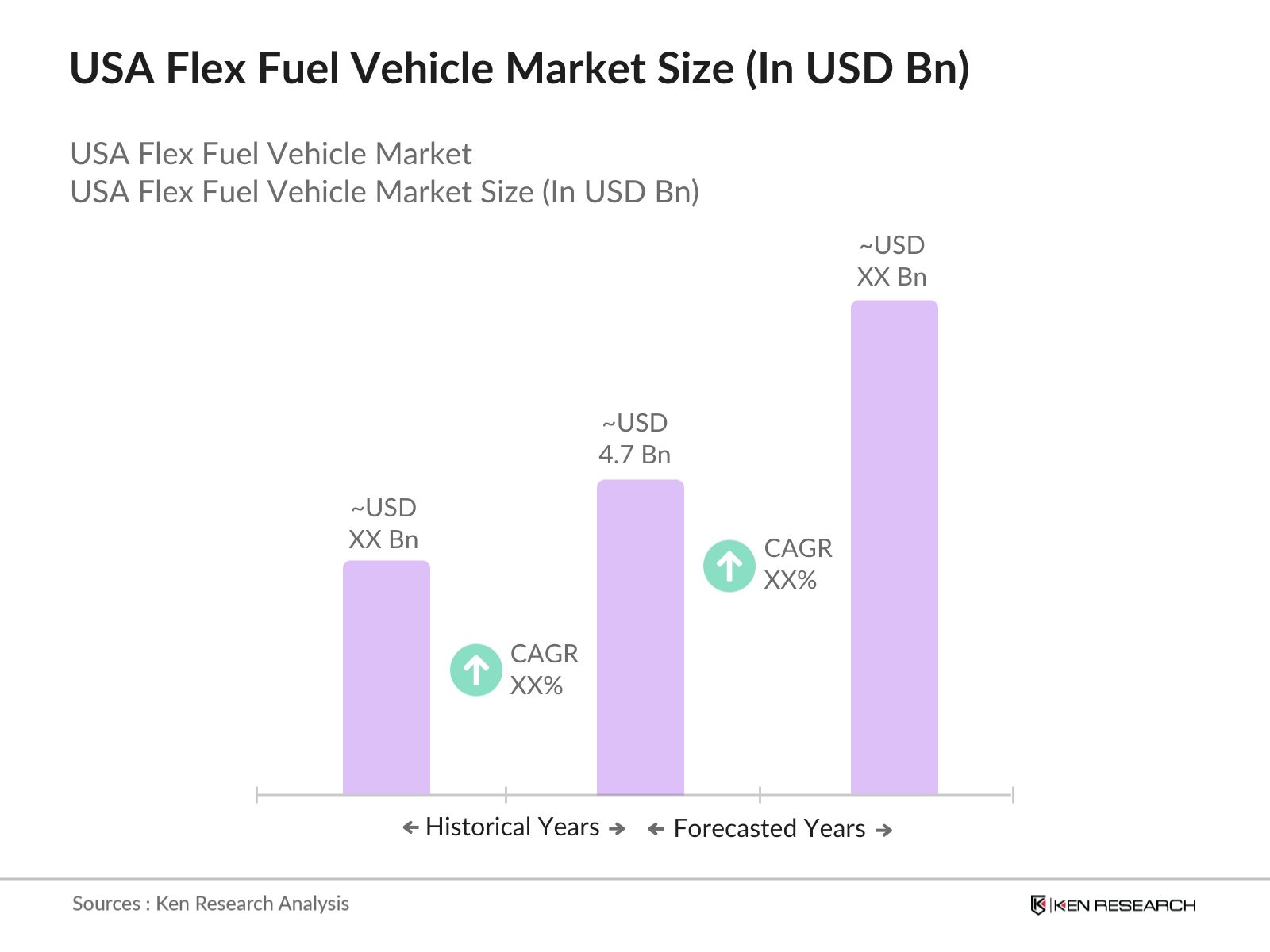
- Major cities such as Detroit, Chicago, and Houston are key hubs for the USA Flex Fuel Vehicle market due to their proximity to ethanol production facilities and a high concentration of automotive manufacturing. The availability of E85 fuel stations is higher in these regions, further facilitating the adoption of flex fuel vehicles. Moreover, the Midwest region benefits from its robust agricultural sector, which produces the corn used to manufacture ethanol, making it a dominant force in this market.
- The Renewable Fuel Standard (RFS) mandates the blending of renewable fuels, including ethanol, into the U.S. fuel supply, with a target of 36 billion gallons by 2024. This policy directly supports the growth of the flex-fuel vehicle market, as FFVs are designed to run on ethanol blends up to E85. In 2023, over 21 billion gallons of renewable fuel were blended into the U.S. gasoline supply, underscoring the importance of RFS mandates in driving the adoption of FFVs.
USA Flex Fuel Vehicle Market Segmentation
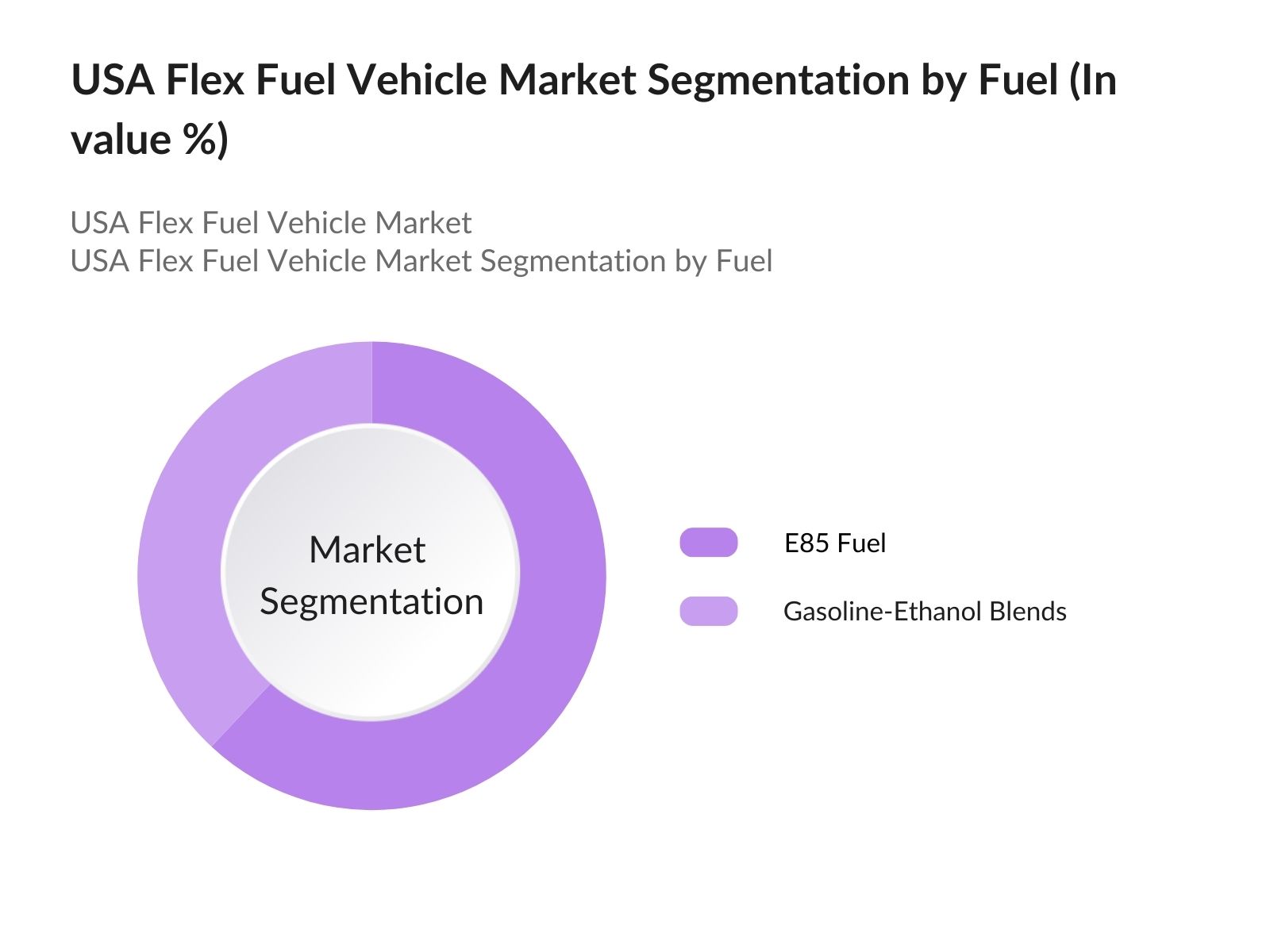
- By Fuel Type: The market is segmented by fuel type into E85 Fuel and Gasoline-Ethanol blends (E20, E50). E85 fuel holds a dominant market share in 2023 due to its widespread availability and lower cost compared to regular gasoline. The ability of E85 to reduce greenhouse gas emissions by utilizing a higher ethanol content has made it a favored option for eco-conscious consumers. This fuel type is particularly popular in the Midwest, where ethanol production is a significant part of the economy, and E85 fueling infrastructure is well-established.
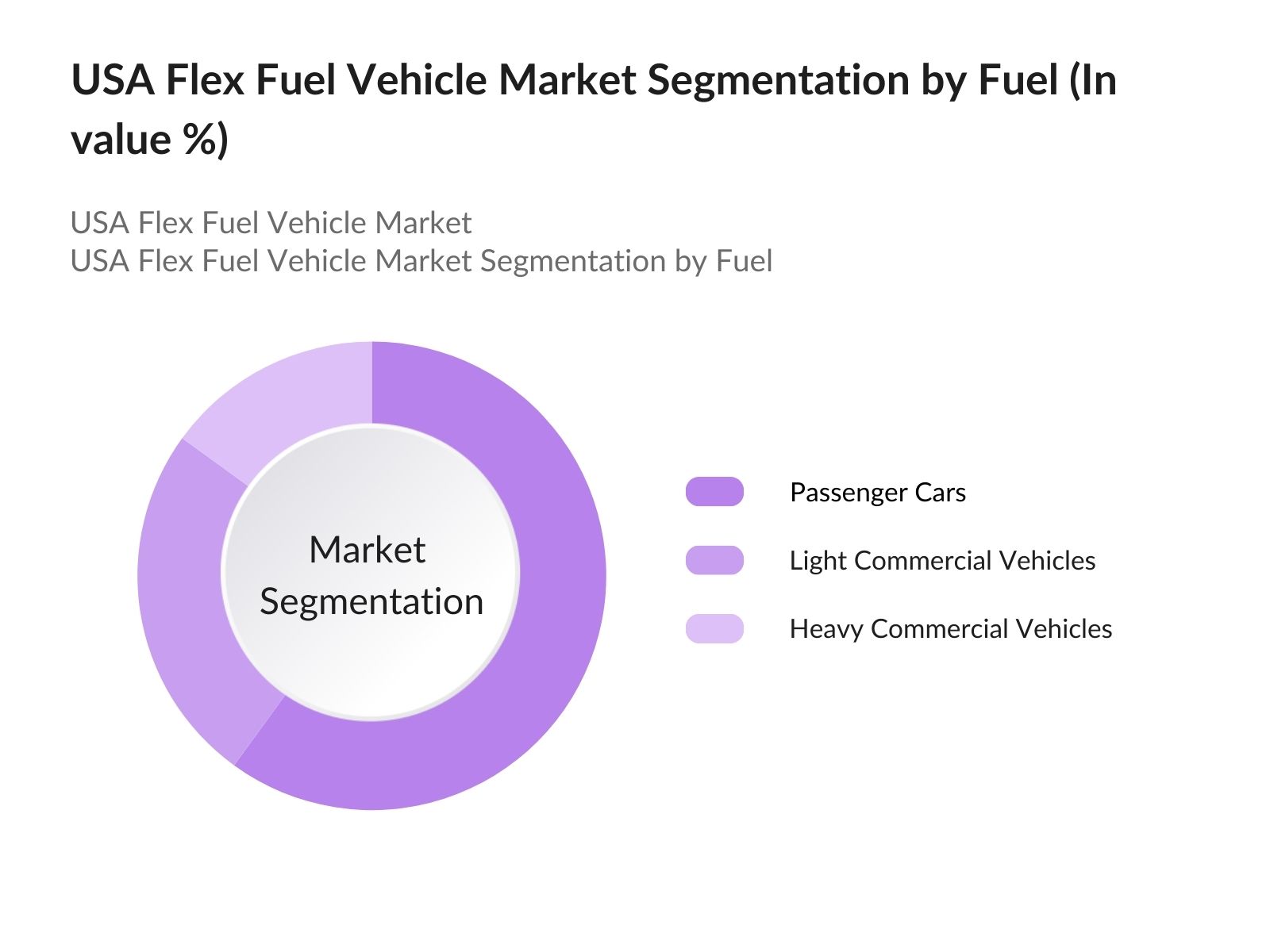
- By Vehicle Type: The market is also segmented by vehicle type into passenger cars, light commercial vehicles, and heavy commercial vehicles. Passenger cars represent the largest segment in 2023, as they are the most common type of flex fuel vehicle on the road. The demand for flex fuel passenger cars is driven by both individual consumers and government initiatives that provide incentives for purchasing eco-friendly vehicles. These cars are preferred for their ability to run on multiple fuel types, providing flexibility to consumers who want to reduce their carbon footprint without the limitations of electric vehicles.
USA Flex Fuel Vehicle Competitive Landscape
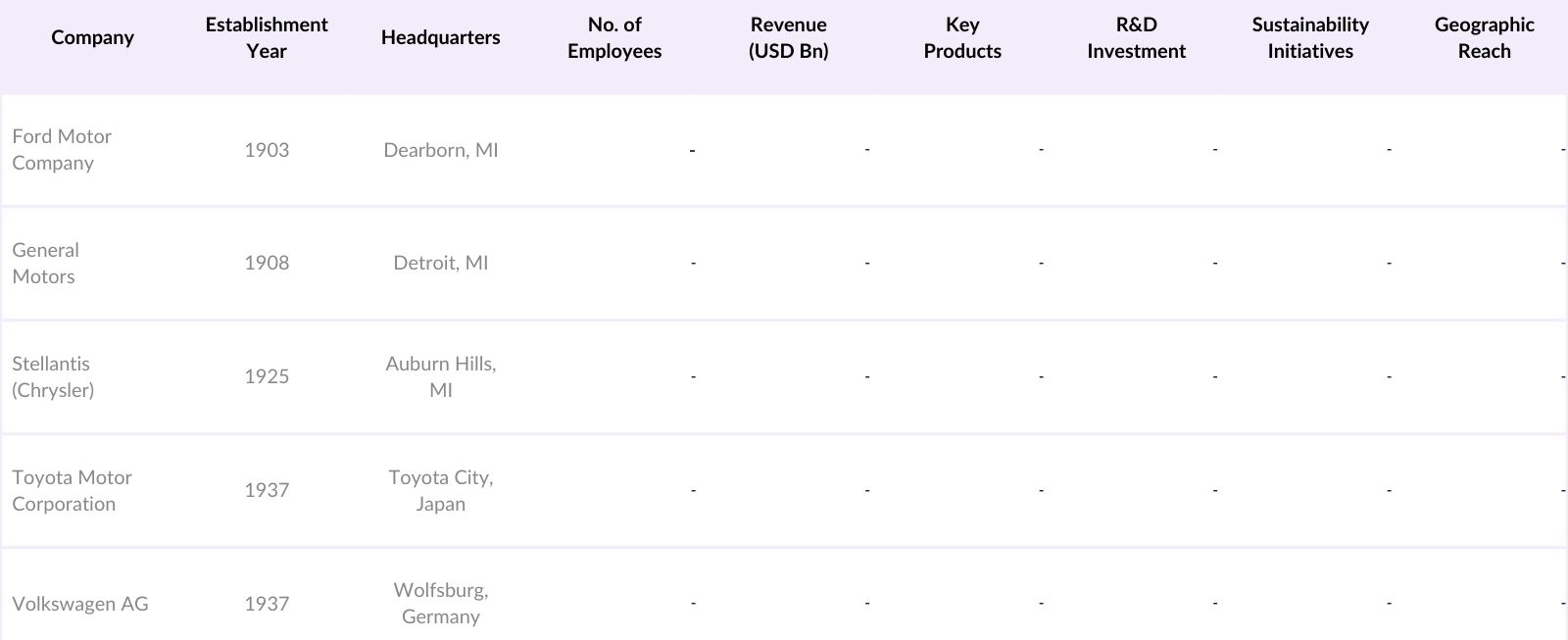
The USA Flex Fuel Vehicle market is characterized by the presence of key automotive manufacturers who dominate through innovation and partnerships with biofuel producers. Major players in the market focus on expanding their flex fuel model portfolios and collaborating with ethanol producers to ensure consistent fuel availability. Additionally, government policies and incentives further encourage automakers to produce more flex fuel vehicle models, particularly for the consumer market.
USA Flex Fuel Vehicle Market Analysis
Growth Drivers:
- Government Emissions Policies: Government regulations such as the Corporate Average Fuel Economy (CAF) standards and the Energy Independence and Security Act (EISA) have been driving the adoption of Flex Fuel Vehicles (FFVs) in the U.S. The CAF standards mandate a minimum fuel efficiency of 54.5 miles per gallon by 2026, pushing automakers to consider fuel alternatives like ethanol. EISA also promotes the use of renewable fuels, aiming for 36 billion gallons of biofuel production by 2022. These regulatory frameworks have facilitated the increase in FFV production to meet emissions targets.
- Expansion of Ethanol and Biofuel Production: The expansion of biofuel production, particularly ethanol, has been a significant growth driver for FFVs. In 2023, the U.S. produced 15.1 billion gallons of ethanol, with majority of gasoline sold in the U.S. containing ethanol. The Renewable Fuel Standard (RFS) has mandated the blending of renewable fuels into the gasoline pool, increasing demand for vehicles that can run on higher ethanol blends like E85. Ethanol production growth is supported by favorable government policies aimed at reducing greenhouse gas emissions.
- Consumer Demand for Sustainable Mobility: Growing consumer demand for sustainable mobility solutions is fueling the FFV market. According to a 2024 survey by the U.S. Department of Transportation, a significant portion of American consumers are inclined to opt for environmentally friendly vehicles, including those powered by alternative fuels like ethanol. This shift in consumer preference, backed by increasing awareness of climate change and government incentives, has led to a surge in the sales of FFVs in the U.S.
Market Challenges:
- Lack of E85 Fueling Infrastructure: The availability of E85 fueling stations in the U.S. is limited, making it difficult for consumers, especially in rural and underserved areas, to access ethanol-based fuels. This lack of infrastructure is a significant barrier to the widespread adoption of flex-fuel vehicles. Despite government programs aimed at improving the accessibility of E85 fuel, the expansion of E85 stations has been slow. The installation of fueling infrastructure remains costly, creating a challenge for investors and fuel providers to scale up the number of stations.
- High Production Costs for Manufacturers: The production of flex-fuel vehicles requires additional components, such as ethanol-compatible fuel sensors and injectors, which increases manufacturing costs. These costs pose challenges for automakers as they attempt to balance the affordability of FFVs with the need to remain competitive in a rapidly evolving market. The growing popularity of electric vehicles further compounds this challenge, as manufacturers must allocate resources to both emerging technologies while maintaining production efficiency for flex-fuel models. This creates a complex cost-benefit dynamic for automakers in the current market environment.
USA Flex Fuel Vehicle Future Outlook
The USA Flex Fuel Vehicle market is expected to see continued growth, driven by increasing ethanol production, favorable government policies, and advancements in vehicle technology. Automakers are likely to expand their flex fuel offerings, especially as biofuel production becomes more efficient and cost-effective. The market is also expected to benefit from improvements in fuel infrastructure and consumer demand for sustainable transportation options.
Future Market Opportunities
- Integration with Advanced Automotive Technologies: The integration of flex-fuel vehicles with connected car technologies offers significant opportunities for market growth. By 2023, majority of vehicles in the U.S. were equipped with telematics systems, providing real-time data on fuel consumption and optimizing driving efficiency for FFVs. The ability to track and adjust fuel mixes through digital ecosystems can enhance the performance of flex-fuel vehicles, offering consumers a more seamless and optimized driving experience. These advancements are expected to bolster FFV adoption as more connected vehicles enter the market.
- Expansion of Biofuel Usage: Second-generation biofuels, made from non-food sources such as agricultural waste and algae, present an emerging opportunity for the flex-fuel vehicle market. The U.S. Department of Energy allocated USD 250 million in 2022 for the development of second-generation biofuel technologies. These biofuels offer a more sustainable alternative to conventional ethanol, reducing greenhouse gas emissions substantially. As second-generation biofuels become more widely available, they are expected to drive increased FFV adoption, particularly among environmentally conscious consumers.
Scope of the Report
Market Segmentation Table:
|
Fuel Type |
E85 Fuel Gasoline & Ethanol Blends (E20, E50) |
|
Vehicle Type |
Passenger Cars Light Commercial Vehicles Heavy Commercial Vehicles |
|
End-User |
Individual Consumers Government/Public Institutions Fleets (Commercial, Municipal) |
|
Engine Type |
Turbocharged Engines Naturally Aspirated Engines |
|
Region |
Northeast Midwest South West |
Products
Key Target Audience
Flex Fuel Vehicle Manufacturers
Automotive OEMs
Biofuel Producers
Automotive Associations (Alliance for Automotive Innovation)
Government and Regulatory Bodies (Environmental Protection Agency - EPA)
Investors and Venture Capitalist Firms
Banks and Financial Institutions
Ethanol Producers and Distributors
Companies
Players Mentioned in the Report
Ford Motor Company
General Motors
Stellantis (Chrysler)
Toyota Motor Corporation
Volkswagen AG
Nissan Motor Co., Ltd.
Honda Motor Co., Ltd.
Kia Corporation
BMW Group
Mercedes-Benz AG
Subaru Corporation
Fiat Chrysler Automobiles (FCA)
Hyundai Motor Company
Mazda Motor Corporation
Tesla, Inc.
Table of Contents
1. USA Flex Fuel Vehicle Market Overview
1.1. Definition and Scope
1.2. Market Taxonomy
1.3. Market Growth Rate
1.4. Market Segmentation Overview
2. USA Flex Fuel Vehicle Market Size (In USD Mn)
2.1. Historical Market Size
2.2. Year-on-Year Growth Analysis
2.3. Key Market Developments and Milestones
3. USA Flex Fuel Vehicle Market Analysis
3.1. Growth Drivers
3.1.1. Government Emissions Policies (CAF Standards, EISA)
3.1.2. Expansion of Ethanol and Biofuel Production
3.1.3. Consumer Demand for Sustainable Mobility
3.1.4. Flex Fuel Vehicle Incentives and Tax Benefits
3.2. Market Challenges
3.2.1. Lack of Infrastructure (Limited E85 Fuel Stations)
3.2.2. High Production Costs for Manufacturers
3.2.3. Competition with Electric Vehicles
3.2.4. Consumer Awareness and Misconceptions
3.3. Opportunities
3.3.1. Integration with Advanced Automotive Technologies (Connected Cars)
3.3.2. Expansion of Biofuel Usage (Second-Generation Biofuels)
3.3.3. Partnerships with Biofuel Producers
3.3.4. Export Potential to Emerging Markets
3.4. Trends
3.4.1. Rise of Hybrid Flex Fuel Vehicles
3.4.2. Adoption of Circular Economy in Vehicle Manufacturing
3.4.3. Transition Toward Higher Ethanol Blends
3.4.4. Integration of Digital Ecosystems for Fuel Optimization
3.5. Government Regulation
3.5.1. U.S. Renewable Fuel Standard (RFS) Mandates
3.5.2. Low Carbon Fuel Standards (LCFS) Regulations
3.5.3. Incentives for Flex Fuel Vehicles
3.5.4. State-Level Ethanol Production Policies
3.6. SWOT Analysis
3.7. Stakeholder Ecosystem (OEMs, Fuel Suppliers, Regulatory Bodies, Consumers)
3.8. Porters Five Forces Analysis
3.9. Competitive Landscape Overview
4. USA Flex Fuel Vehicle Market Segmentation
4.1. By Fuel Type (In Value %)
4.1.1. E85 Fuel
4.1.2. Gasoline and Ethanol Blends (E20, E50)
4.2. By Vehicle Type (In Value %)
4.2.1. Passenger Cars
4.2.2. Light Commercial Vehicles
4.2.3. Heavy Commercial Vehicles
4.3. By End-User (In Value %)
4.3.1. Individual Consumers
4.3.2. Government and Public Institutions
4.3.3. Fleets (Commercial and Municipal)
4.4. By Engine Type (In Value %)
4.4.1. Turbocharged Engines
4.4.2. Naturally Aspirated Engines
4.5. By Region (In Value %)
4.5.1. Northeast
4.5.2. Midwest
4.5.3. South
4.5.4. West
5. USA Flex Fuel Vehicle Competitive Analysis
5.1. Detailed Profiles of Major Companies
5.1.1. Ford Motor Company
5.1.2. General Motors
5.1.3. Stellantis (Chrysler)
5.1.4. Toyota Motor Corporation
5.1.5. Volkswagen AG
5.1.6. Nissan Motor Co., Ltd.
5.1.7. Honda Motor Co., Ltd.
5.1.8. Kia Corporation
5.1.9. BMW Group
5.1.10. Mercedes-Benz AG
5.1.11. Subaru Corporation
5.1.12. Fiat Chrysler Automobiles (FCA)
5.1.13. Hyundai Motor Company
5.1.14. Mazda Motor Corporation
5.1.15. Tesla, Inc. (for comparative analysis with EVs)
5.2. Cross Comparison Parameters (Inception Year, Revenue, Headquarters, No. of Flex-Fuel Models, E85 Compatibility, Global Production, R&D Investments, Market Share in USA)
5.3. Market Share Analysis (Based on Vehicle Registrations)
5.4. Strategic Initiatives (Collaborations with Biofuel Providers, Product Launches)
5.5. Mergers and Acquisitions
5.6. Investment Analysis (Major Investments in R&D for Flex Fuel Vehicles)
5.7. Venture Capital Funding (Emerging Players in Biofuel Tech)
5.8. Government Grants (For Biofuel Infrastructure)
5.9. Private Equity Investments
6. USA Flex Fuel Vehicle Market Regulatory Framework
6.1. Compliance with Federal Emission Standards
6.2. Fuel Economy Standards (CAF)
6.3. Incentive Schemes for Manufacturers and Consumers
6.4. Certification and Testing Requirements
7. USA Flex Fuel Vehicle Future Market Size (In USD Mn)
7.1. Future Market Size Projections
7.2. Key Factors Driving Future Market Growth
8. USA Flex Fuel Vehicle Future Market Segmentation
8.1. By Fuel Type (In Value %)
8.2. By Vehicle Type (In Value %)
8.3. By End-User (In Value %)
8.4. By Engine Type (In Value %)
8.5. By Region (In Value %)
9. USA Flex Fuel Vehicle Market Analysts' Recommendations
9.1. TAM/SAM/SOM Analysis
9.2. Customer Cohort Analysis
9.3. Marketing Initiatives
9.4. White Space Opportunity Analysis
Disclaimer Contact UsResearch Methodology
Step 1: Identification of Key Variables
The initial phase involves constructing an ecosystem map encompassing all major stakeholders within the USA Flex Fuel Vehicle Market. This is underpinned by extensive desk research, utilizing both secondary data and proprietary databases to gather comprehensive market insights.
Step 2: Market Analysis and Construction
In this phase, historical data related to the USA Flex Fuel Vehicle Market is compiled and analyzed. This includes market penetration rates, key revenue drivers, and an assessment of the ratio of flex fuel vehicles to fueling stations. Additionally, revenue performance will be evaluated to ensure accurate market estimates.
Step 3: Hypothesis Validation and Expert Consultation
Market hypotheses will be validated through interviews with industry experts, including automotive manufacturers and ethanol producers. These consultations will provide operational and financial insights that will further refine the data and ensure its reliability.
Step 4: Research Synthesis and Final Output
The final phase involves synthesizing the collected data and engaging directly with automotive stakeholders to verify and complement statistics derived from a bottom-up approach. This process ensures that the analysis is accurate and fully validated.
Frequently Asked Questions
01. How big is the USA Flex Fuel Vehicle Market?
The USA Flex Fuel Vehicle market is valued at USD 4.7 billion, driven by the production of biofuels and favorable government regulations supporting renewable fuel adoption.
02. What are the challenges in the USA Flex Fuel Vehicle Market?
Key challenges in the USA Flex Fuel Vehicle market include the lack of E85 fueling infrastructure in certain regions and competition from electric vehicles, which are gaining market share due to advancements in charging technology.
03. Who are the major players in the USA Flex Fuel Vehicle Market?
Major players in the USA Flex Fuel Vehicle market include Ford Motor Company, General Motors, Stellantis (Chrysler), Toyota Motor Corporation, and Volkswagen AG, among others.
04. What are the growth drivers of the USA Flex Fuel Vehicle Market?
Growth drivers in the USA Flex Fuel Vehicle market include favorable government policies, such as the Renewable Fuel Standard, which mandates the increased use of renewable fuels like ethanol, and the rising production of biofuels across the country.
Why Buy From Us?

What makes us stand out is that our consultants follows Robust, Refine and Result (RRR) methodology. i.e. Robust for clear definitions, approaches and sanity checking, Refine for differentiating respondents facts and opinions and Result for presenting data with story

We have set a benchmark in the industry by offering our clients with syndicated and customized market research reports featuring coverage of entire market as well as meticulous research and analyst insights.

While we don't replace traditional research, we flip the method upside down. Our dual approach of Top Bottom & Bottom Top ensures quality deliverable by not just verifying company fundamentals but also looking at the sector and macroeconomic factors.

With one step in the future, our research team constantly tries to show you the bigger picture. We help with some of the tough questions you may encounter along the way: How is the industry positioned? Best marketing channel? KPI's of competitors? By aligning every element, we help maximize success.

Our report gives you instant access to the answers and sources that other companies might choose to hide. We elaborate each steps of research methodology we have used and showcase you the sample size to earn your trust.

If you need any support, we are here! We pride ourselves on universe strength, data quality, and quick, friendly, and professional service.