
USA Flex Fuel Vehicles Market Outlook to 2030
Region:North America
Author(s):Shreya Garg
Product Code:KROD5295
November 2024
82
About the Report
USA Flex Fuel Vehicles Market Overview
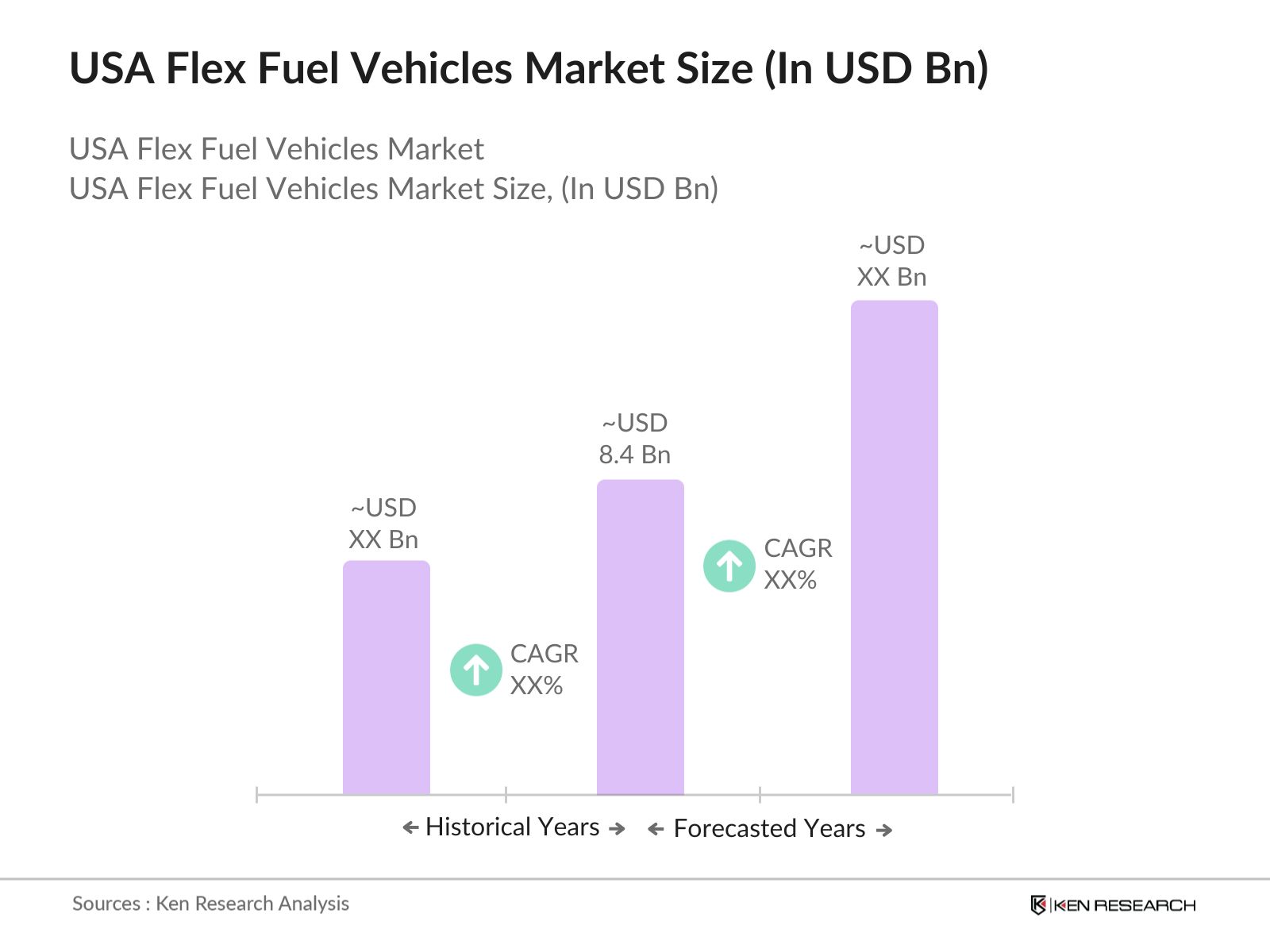
- The USA Flex Fuel Vehicles (FFV) market is valued at USD 8.4 billion, reflecting the demand driven by increasing government support for renewable fuels. Key drivers for the market include federal incentives, such as the Renewable Fuel Standard (RFS), which mandates the blending of ethanol with gasoline. Additionally, the growing consumer preference for cleaner, more sustainable fuel options has contributed significantly to the markets expansion. Ethanol's cost-effectiveness and lower carbon emissions, compared to conventional gasoline, also fuel its adoption.
- Cities like Los Angeles, Houston, and Chicago dominate the flex fuel vehicle market, primarily due to their established infrastructure for ethanol refueling and significant consumer demand for alternative energy vehicles. These cities benefit from state-level policies supporting biofuel usage, alongside proactive investments in ethanol distribution networks. The high population density and the presence of large urban centers in these regions further promote the adoption of flex fuel vehicles, making them the dominant players in this market.
- The Renewable Fuel Standard (RFS) is a crucial regulatory framework driving the flex fuel vehicle market. By 2023, the RFS mandated the blending of over 15 billion gallons of ethanol into gasoline, with a goal to significantly reduce greenhouse gas emissions. The Environmental Protection Agency (EPA) monitors compliance with these standards, ensuring that both fuel producers and vehicle manufacturers adhere to the policy. These mandates support the growth of flex fuel vehicles by guaranteeing a consistent demand for biofuels across the U.S.
USA Flex Fuel Vehicles Market Segmentation
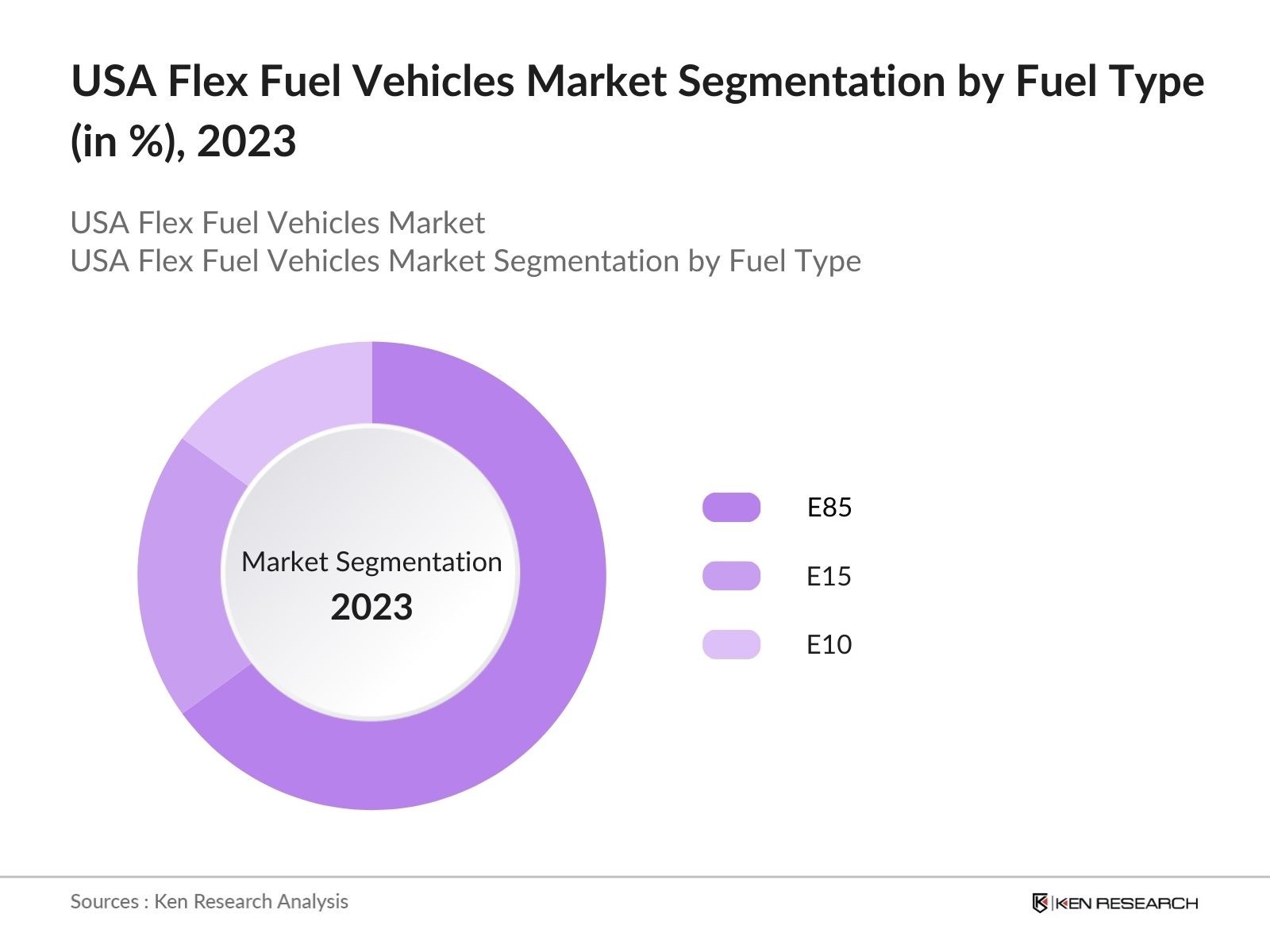
By Fuel Type: The market is segmented by fuel type into E85, E15, and E10. Among these, E85 fuel dominates due to its high ethanol content, providing significant environmental benefits. E85 has gained popularity as it offers a greener fuel option, significantly reducing greenhouse gas emissions. Additionally, the higher fuel efficiency associated with E85 in flex fuel vehicles has made it the preferred choice among environmentally conscious consumers and commercial fleet operators.
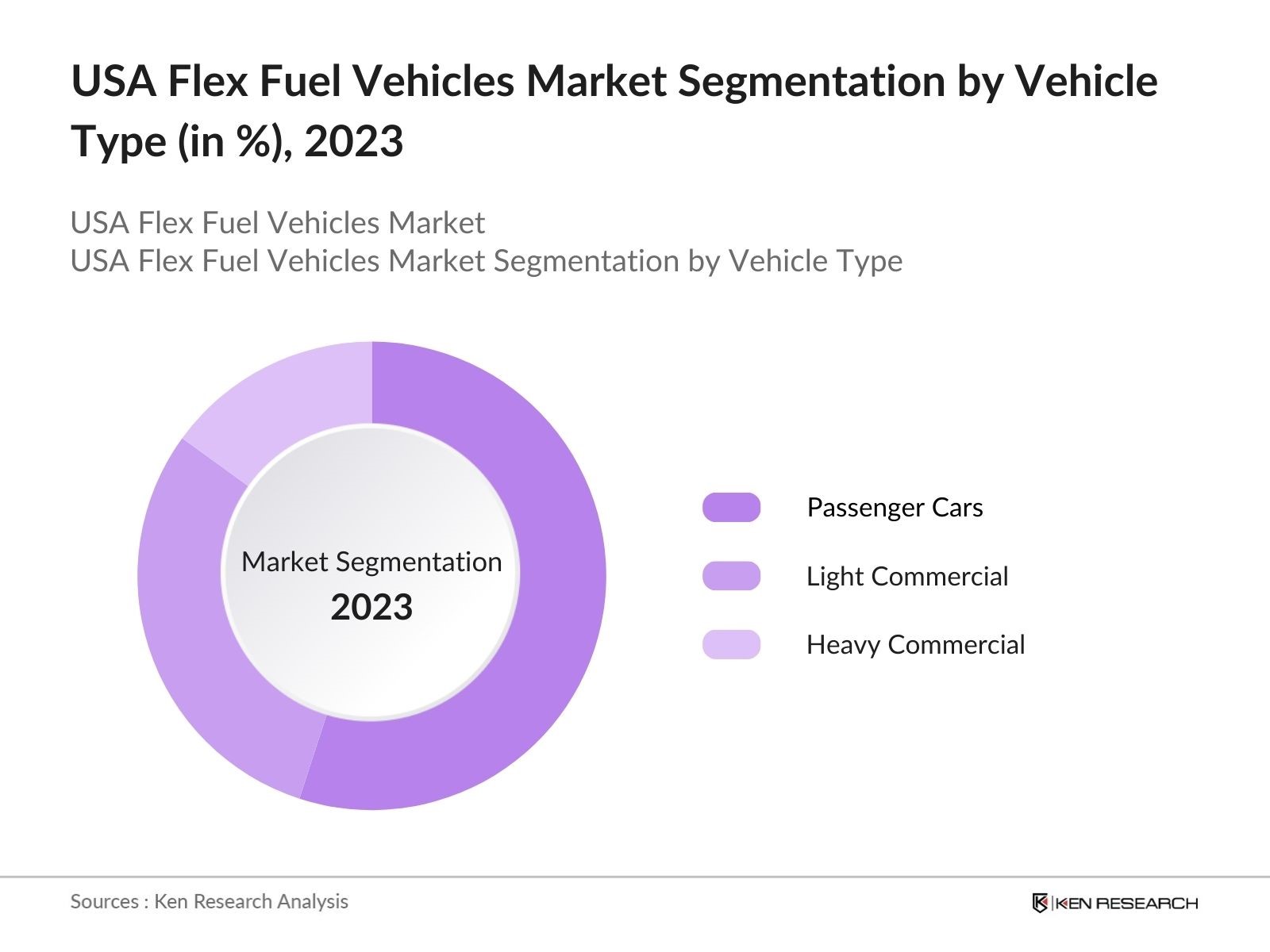
By Vehicle Type: The market is also segmented by vehicle type into Passenger Cars, Light Commercial Vehicles, and Heavy Commercial Vehicles. Passenger cars hold the dominant market share in this segment due to the rising preference for fuel-efficient and environmentally friendly cars. Flex fuel passenger cars are increasingly favored in urban areas where governments offer incentives and subsidies to promote ethanol fuel use. Furthermore, the affordability and availability of passenger cars make them the dominant sub-segment in the USA Flex Fuel Vehicles market.
USA Flex Fuel Vehicles Market Competitive Landscape
The USA Flex Fuel Vehicles market is highly competitive, with key players focusing on innovation, expanding vehicle portfolios, and increasing ethanol compatibility. The consolidation of a few dominant manufacturers highlights their significant influence in shaping the market dynamics. Major players include both domestic and international automotive manufacturers with a strong presence in the North American market.
|
Company |
Establishment Year |
Headquarters |
Number of Vehicles Sold |
R&D Investment |
Ethanol Compatibility |
Revenue (2023) |
Strategic Partnerships |
Emission Standards Compliance |
|
Ford Motor Company |
1903 |
Dearborn, MI |
||||||
|
General Motors |
1908 |
Detroit, MI |
||||||
|
Stellantis (Chrysler) |
1925 |
Auburn Hills, MI |
||||||
|
Toyota Motor Corporation |
1937 |
Plano, TX |
||||||
|
Nissan Motor Co., Ltd. |
1933 |
Franklin, TN |
USA Flex Fuel Vehicles Industry Analysis
Growth Drivers
- Increasing Government Support for Biofuels: The U.S. government has been actively promoting biofuels through policies like the Renewable Fuel Standard (RFS), which mandates the blending of renewable fuels into gasoline. In 2023, this policy aimed for over 15 billion gallons of ethanol production, enhancing the domestic biofuel market. The U.S. Department of Energy (DOE) has also provided significant funding, exceeding $100 million in grants, for advanced biofuel research and production projects in recent years. This push aligns with the Biden administration's commitment to reducing carbon emissions and supporting renewable energy sources.
- Rising Demand for Sustainable Mobility: The increasing focus on reducing greenhouse gas emissions has fueled the demand for flex fuel vehicles, which are designed to run on gasoline and ethanol blends. The U.S. produced over 20 million metric tons of ethanol in 2023, contributing to lower emissions compared to traditional fossil fuels. Flex fuel vehicles (FFVs) play a critical role in meeting the targets of sustainable mobility as the transportation sector accounted for 27% of total U.S. emissions in 2022, according to the Environmental Protection Agency (EPA).
- Expanding Flex Fuel Vehicle Fleet: The U.S. flex fuel vehicle market is steadily growing, with over 21 million FFVs on the road by 2023, according to the U.S. Department of Energy. This represents approximately 9% of the total U.S. light-duty vehicle fleet, up from 7.6% in 2022. The availability of flexible fueling options across various states and increasing domestic production of biofuels, such as ethanol, has been instrumental in enhancing the adoption of FFVs, particularly in states like Iowa and Nebraska.
Market Challenges
- High Cost of Flex Fuel Vehicle Production: The production of flex fuel vehicles (FFVs) involves specialized manufacturing processes, leading to higher costs compared to conventional vehicles. According to the National Renewable Energy Laboratory (NREL), production costs for FFVs can be up to 20% higher due to the need for enhanced fuel systems, such as ethanol-compatible engine components. Despite government incentives, automakers face challenges in balancing these higher production costs with competitive market pricing, limiting the mass adoption of FFVs in certain market segments.
- Limited Ethanol Refueling Infrastructure: The availability of ethanol refueling stations remains limited, posing a significant challenge for the widespread adoption of flex fuel vehicles. As of 2023, there were only around 3,000 E85 (ethanol fuel blend) stations across the U.S., predominantly concentrated in the Midwest. This limited infrastructure creates refueling challenges for FFV owners in regions such as the Northeast and the West Coast. According to the U.S. Department of Energy, this gap in infrastructure coverage has slowed the growth of the FFV market.
USA Flex Fuel Vehicles Market Future Outlook
Over the next five years, the USA Flex Fuel Vehicles market is expected to experience steady growth, driven by increasing government mandates for ethanol blending and rising consumer demand for eco-friendly fuel alternatives. Flex fuel technology advancements, coupled with the expansion of ethanol refueling infrastructure, will further propel market growth. Additionally, continued support from state and federal agencies for renewable energy initiatives will play a critical role in expanding the markets footprint, particularly in rural areas with untapped potential for biofuel usage.
Future Market Opportunities
- Expansion in Rural Areas: Rural areas present a growth opportunity for the flex fuel vehicle market, where ethanol production is more prevalent, and consumers rely heavily on agriculture. The U.S. Department of Agriculture (USDA) has reported that rural America accounts for nearly 90% of the country's ethanol plants. By expanding FFV sales and biofuel infrastructure in these regions, automakers and fuel suppliers can tap into a vast, relatively untapped market. This also aligns with federal rural development programs aimed at promoting sustainable agriculture and energy independence.
- Technological Advancements in Flex Fuel Engines: Ongoing research and development in flex fuel engines are creating opportunities for improved efficiency and performance. The U.S. Department of Energy (DOE) has invested millions in advanced flex fuel engine technologies, focusing on enhancing ethanol combustion efficiency and reducing wear on engine components. In 2023, advancements in ethanol-compatible materials and fuel injection systems led to significant reductions in emissions and increased fuel economy, providing further incentives for both manufacturers and consumers to adopt FFVs.
Scope of the Report
|
Fuel Type |
E85 E15 E10 |
|
Vehicle Type |
Passenger Cars Light Commercial Heavy Commercial |
|
Engine Capacity |
Below 2.0L 2.0L 4.0L Above 4.0L |
|
Distribution Channel |
OEM Dealerships Independent Dealers Online Sales |
|
Region |
North-East Midwest South West |
Products
Key Target Audience
Government and Regulatory Bodies (EPA, Department of Energy)
Ethanol Producers and Distributors
Vehicle Manufacturers
Flex Fuel Engine Technology Providers
Fleet Operators and Managers
Environmental Advocacy Groups
Banks and Financial Institutes
Investor and Venture Capitalist Firms
State-Level Biofuel Associations
Companies
Major Players
Ford Motor Company
General Motors
Stellantis (Chrysler)
Toyota Motor Corporation
Nissan Motor Co., Ltd.
Honda Motor Co., Ltd.
Volkswagen Group of America
BMW North America
Kia Motors America
Hyundai Motor America
Fiat Chrysler Automobiles (FCA)
Mazda North America
Tesla, Inc.
Subaru of America
Mitsubishi Motors North America
Table of Contents
USA Flex Fuel Vehicles Market Overview
1.1. Definition and Scope
1.2. Market Taxonomy
1.3. Market Growth Rate
1.4. Market Segmentation Overview
USA Flex Fuel Vehicles Market Size (In USD Bn)
2.1. Historical Market Size
2.2. Year-On-Year Growth Analysis
2.3. Key Market Developments and Milestones
USA Flex Fuel Vehicles Market Analysis
3.1. Growth Drivers
3.1.1. Increasing Government Support for Biofuels (Policy Incentives)
3.1.2. Rising Demand for Sustainable Mobility (Environmental Concerns)
3.1.3. Expanding Flex Fuel Vehicle Fleet (Domestic Market Penetration)
3.1.4. Fuel Diversification Benefits (Energy Security)
3.2. Market Challenges
3.2.1. High Cost of Flex Fuel Vehicle Production (Cost Implications)
3.2.2. Limited Ethanol Refueling Infrastructure (Logistical Barriers)
3.2.3. Competition from Electric Vehicles (EV Market Impact)
3.2.4. Consumer Awareness and Adoption (Market Education)
3.3. Opportunities
3.3.1. Expansion in Rural Areas (Untapped Market Potential)
3.3.2. Technological Advancements in Flex Fuel Engines (R&D Progress)
3.3.3. Increasing Partnerships with Biofuel Providers (Strategic Collaborations)
3.3.4. Favorable Environmental Policies (Regulatory Tailwinds)
3.4. Trends
3.4.1. Adoption of Hybrid Flex Fuel Technology (Technological Integration)
3.4.2. Flex Fuel-Compatible Engine Innovation (Efficiency Enhancement)
3.4.3. Market Shift Toward Sustainable Transport (Green Mobility)
3.4.4. Development of Second-Generation Biofuels (Renewable Energy)
3.5. Government Regulation
3.5.1. Renewable Fuel Standard (RFS) Compliance (Policy Framework)
3.5.2. Tax Credits and Subsidies for Flex Fuel Vehicles (Economic Incentives)
3.5.3. Environmental Protection Agency (EPA) Guidelines (Emission Standards)
3.5.4. State-Level Ethanol Mandates (Regional Policies)
3.6. SWOT Analysis
3.7. Stakeholder Ecosystem
3.8. Porters Five Forces Analysis
3.9. Competitive Ecosystem
USA Flex Fuel Vehicles Market Segmentation
4.1. By Fuel Type (In Value %)
4.1.1. E85
4.1.2. E15
4.1.3. E10
4.2. By Vehicle Type (In Value %)
4.2.1. Passenger Cars
4.2.2. Light Commercial Vehicles
4.2.3. Heavy Commercial Vehicles
4.3. By Engine Capacity (In Value %)
4.3.1. Below 2.0L
4.3.2. 2.0L 4.0L
4.3.3. Above 4.0L
4.4. By Distribution Channel (In Value %)
4.4.1. OEM Dealerships
4.4.2. Independent Dealers
4.4.3. Online Sales
4.5. By Region (In Value %)
4.5.1. North-East
4.5.2. Midwest
4.5.3. South
4.5.4. West
USA Flex Fuel Vehicles Market Competitive Analysis
5.1. Detailed Profiles of Major Companies
5.1.1. Ford Motor Company
5.1.2. General Motors (Chevrolet, Buick)
5.1.3. Stellantis (Chrysler, Jeep, Dodge)
5.1.4. Toyota Motor Corporation
5.1.5. Nissan Motor Co., Ltd.
5.1.6. Honda Motor Co., Ltd.
5.1.7. Volkswagen Group of America
5.1.8. BMW North America
5.1.9. Kia Motors America
5.1.10. Hyundai Motor America
5.1.11. Fiat Chrysler Automobiles (FCA)
5.1.12. Mazda North America
5.1.13. Tesla, Inc.
5.1.14. Subaru of America
5.1.15. Mitsubishi Motors North America
5.2. Cross Comparison Parameters (Number of Vehicles Sold, Market Share, Headquarters, Revenue, R&D Investment, Ethanol Integration Rate, Emission Standards Compliance, Strategic Partnerships)
5.3. Market Share Analysis
5.4. Strategic Initiatives
5.5. Mergers and Acquisitions
5.6. Investment Analysis
5.7. Venture Capital Funding
5.8. Government Grants and Subsidies
5.9. Private Equity Investments
USA Flex Fuel Vehicles Market Regulatory Framework
6.1. Federal and State-Level Fuel Regulations
6.2. Compliance Requirements
6.3. Certification and Licensing Processes
USA Flex Fuel Vehicles Future Market Size (In USD Bn)
7.1. Future Market Size Projections
7.2. Key Factors Driving Future Market Growth
USA Flex Fuel Vehicles Future Market Segmentation
8.1. By Fuel Type (In Value %)
8.2. By Vehicle Type (In Value %)
8.3. By Engine Capacity (In Value %)
8.4. By Distribution Channel (In Value %)
8.5. By Region (In Value %)
USA Flex Fuel Vehicles Market Analysts Recommendations
9.1. TAM/SAM/SOM Analysis
9.2. Customer Cohort Analysis
9.3. Marketing Initiatives
9.4. White Space Opportunity Analysis
Disclaimer
Contact Us
Research Methodology
Step 1: Identification of Key Variables
The first step involves defining key variables within the USA Flex Fuel Vehicles market, such as vehicle sales, fuel consumption, and regulatory influences. This is done through a combination of secondary research and leveraging proprietary databases to gather historical data on the market.
Step 2: Market Analysis and Construction
The second step focuses on analyzing the historical data and constructing market estimates based on key market drivers and constraints. Special attention is given to fuel efficiency statistics, the geographical distribution of ethanol refueling stations, and market penetration rates.
Step 3: Hypothesis Validation and Expert Consultation
Industry experts are consulted through interviews to validate the research findings. These interviews provide insights into current market trends and the operational dynamics of the flex fuel vehicle ecosystem, ensuring data accuracy.
Step 4: Research Synthesis and Final Output
The final step consolidates the research and findings from expert consultations. This synthesis includes detailed analysis on vehicle sales trends, market growth drivers, and competitive strategies employed by key players, culminating in a comprehensive market report.
Frequently Asked Questions
01 How big is the USA Flex Fuel Vehicles Market?
The USA Flex Fuel Vehicles market is valued at USD 8.4 billion, reflecting significant consumer demand for alternative fuel vehicles and strong government support for biofuel adoption.
02 What are the challenges in the USA Flex Fuel Vehicles Market?
Key challenges in the USA Flex Fuel Vehicles market include limited ethanol refueling infrastructure, competition from electric vehicles, and high production costs for flex fuel vehicles.
03 Who are the major players in the USA Flex Fuel Vehicles Market?
Major players in the USA Flex Fuel Vehicles market include Ford Motor Company, General Motors, Stellantis, Toyota Motor Corporation, and Nissan Motor Co., Ltd. These companies dominate due to their extensive vehicle offerings and strategic investments in flex fuel technologies.
04 What are the growth drivers for the USA Flex Fuel Vehicles Market?
Growth drivers in the USA Flex Fuel Vehicles market include federal and state-level biofuel mandates, rising consumer awareness of sustainable fuel alternatives, and ongoing advancements in flex fuel vehicle technology.
05 Which regions dominate the USA Flex Fuel Vehicles Market?
Regions like Los Angeles, Houston, and Chicago dominate due to their established ethanol infrastructure, state-level policies, and high urban population density, making them key markets for flex fuel vehicles in the USA Flex Fuel Vehicles market.
Why Buy From Us?

What makes us stand out is that our consultants follows Robust, Refine and Result (RRR) methodology. i.e. Robust for clear definitions, approaches and sanity checking, Refine for differentiating respondents facts and opinions and Result for presenting data with story

We have set a benchmark in the industry by offering our clients with syndicated and customized market research reports featuring coverage of entire market as well as meticulous research and analyst insights.

While we don't replace traditional research, we flip the method upside down. Our dual approach of Top Bottom & Bottom Top ensures quality deliverable by not just verifying company fundamentals but also looking at the sector and macroeconomic factors.

With one step in the future, our research team constantly tries to show you the bigger picture. We help with some of the tough questions you may encounter along the way: How is the industry positioned? Best marketing channel? KPI's of competitors? By aligning every element, we help maximize success.

Our report gives you instant access to the answers and sources that other companies might choose to hide. We elaborate each steps of research methodology we have used and showcase you the sample size to earn your trust.

If you need any support, we are here! We pride ourselves on universe strength, data quality, and quick, friendly, and professional service.