
USA Food Truck Services Market Outlook to 2030
Region:North America
Author(s):Vijay Kumar
Product Code:KROD4082
December 2024
86
About the Report
USA Food Truck Services Market Overview
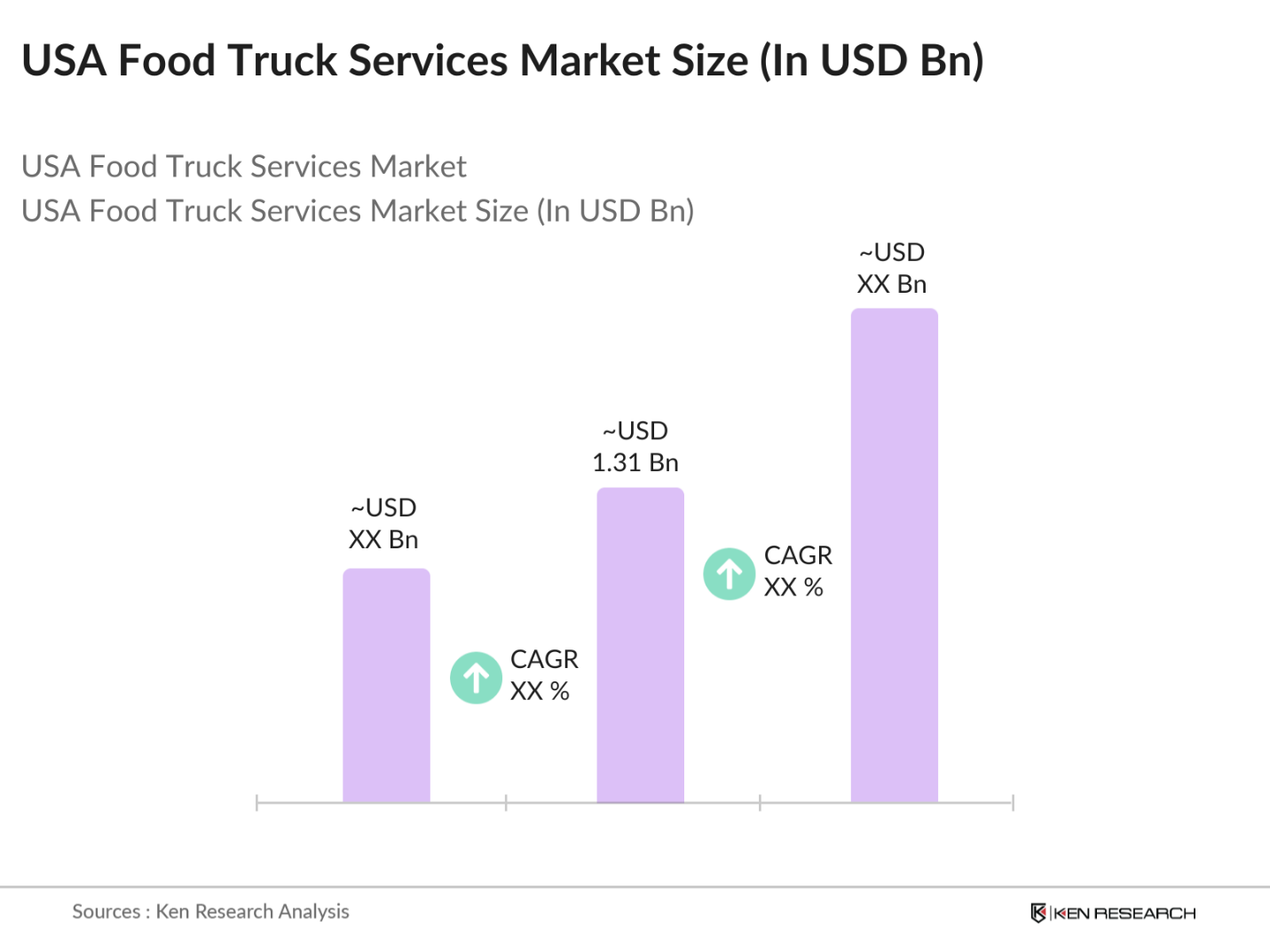
- The USA Food Truck Services market is valued at USD 1.31 billion, based on a five-year historical analysis. This market is primarily driven by the growing demand for convenient, affordable, and diverse food options among urban populations, along with the flexibility food trucks offer in terms of mobility and low overhead costs compared to traditional restaurants. Increased interest in unique culinary experiences, coupled with rising consumer preferences for accessible, quick-service food options, has positioned food trucks as a popular choice for both daily meals and event-based dining, particularly in cities with vibrant street food cultures.
- Major cities such as Los Angeles, New York, and Austin dominate the market due to their vibrant street food culture, high population density, and favorable regulations that support mobile food vendors. These urban centers provide ample opportunities for food trucks to thrive, catering to a diverse and dynamic customer base.
- Food trucks must adhere to stringent health and safety regulations established by state and local authorities. In 2024, the U.S. Department of Health and Human Services (HHS) has enforced detailed food safety guidelines, such as requiring food trucks to have proper refrigeration and sanitation facilities, to prevent foodborne illnesses. Non-compliance with these standards can lead to costly fines or business suspension. These regulations ensure the protection of public health but require food truck operators to invest in adequate facilities, which can be financially challenging for some businesses.
USA Food Truck Services Market Segmentation
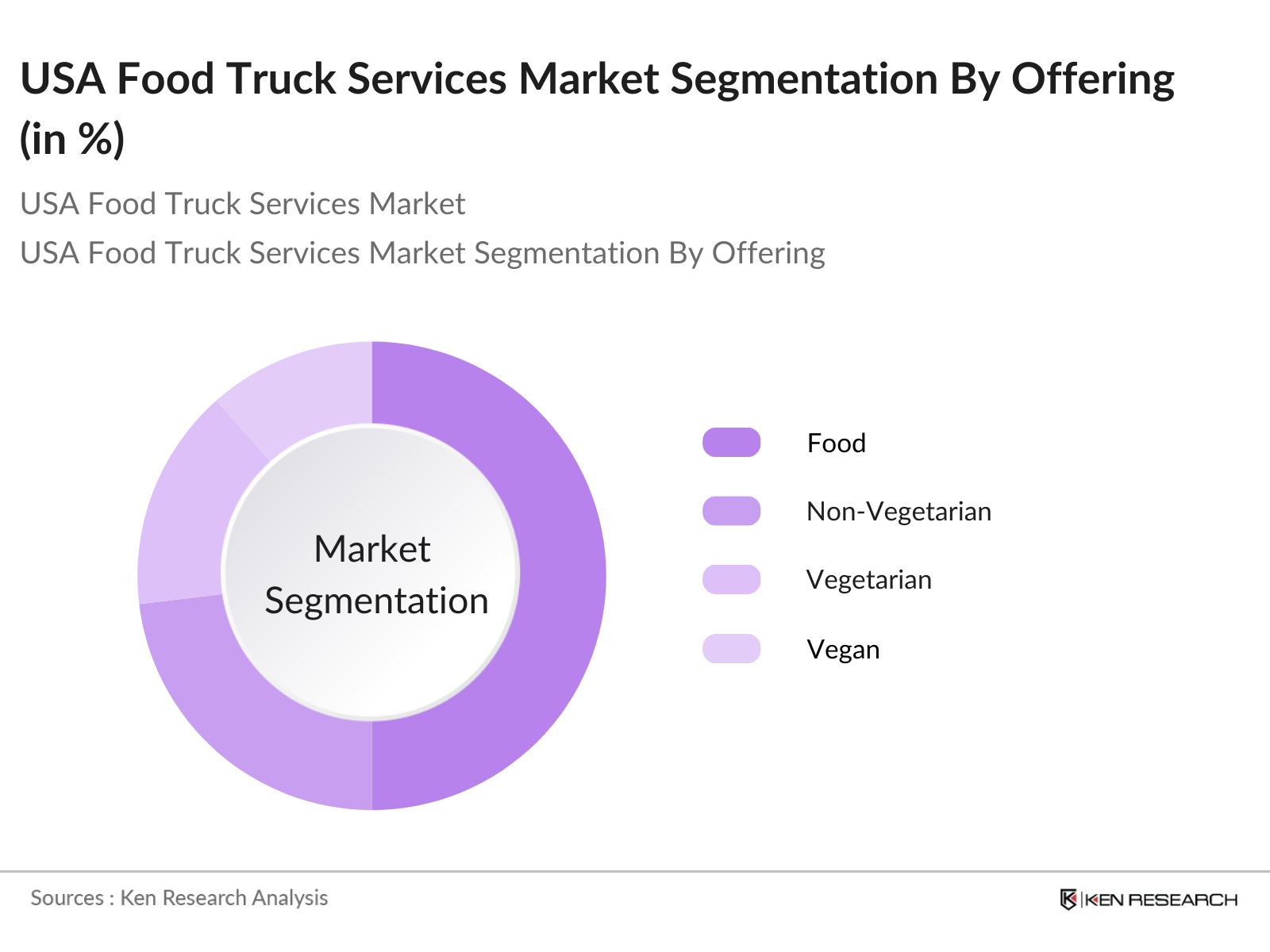
By Offering: The market is segmented by offering into food, beverages, and desserts and ice creams. The food segment holds a dominant market share, primarily due to the popularity of fast-food options like tacos, burgers, and sandwiches. These items are favored for their quick preparation and wide appeal among consumers seeking convenient meal options.
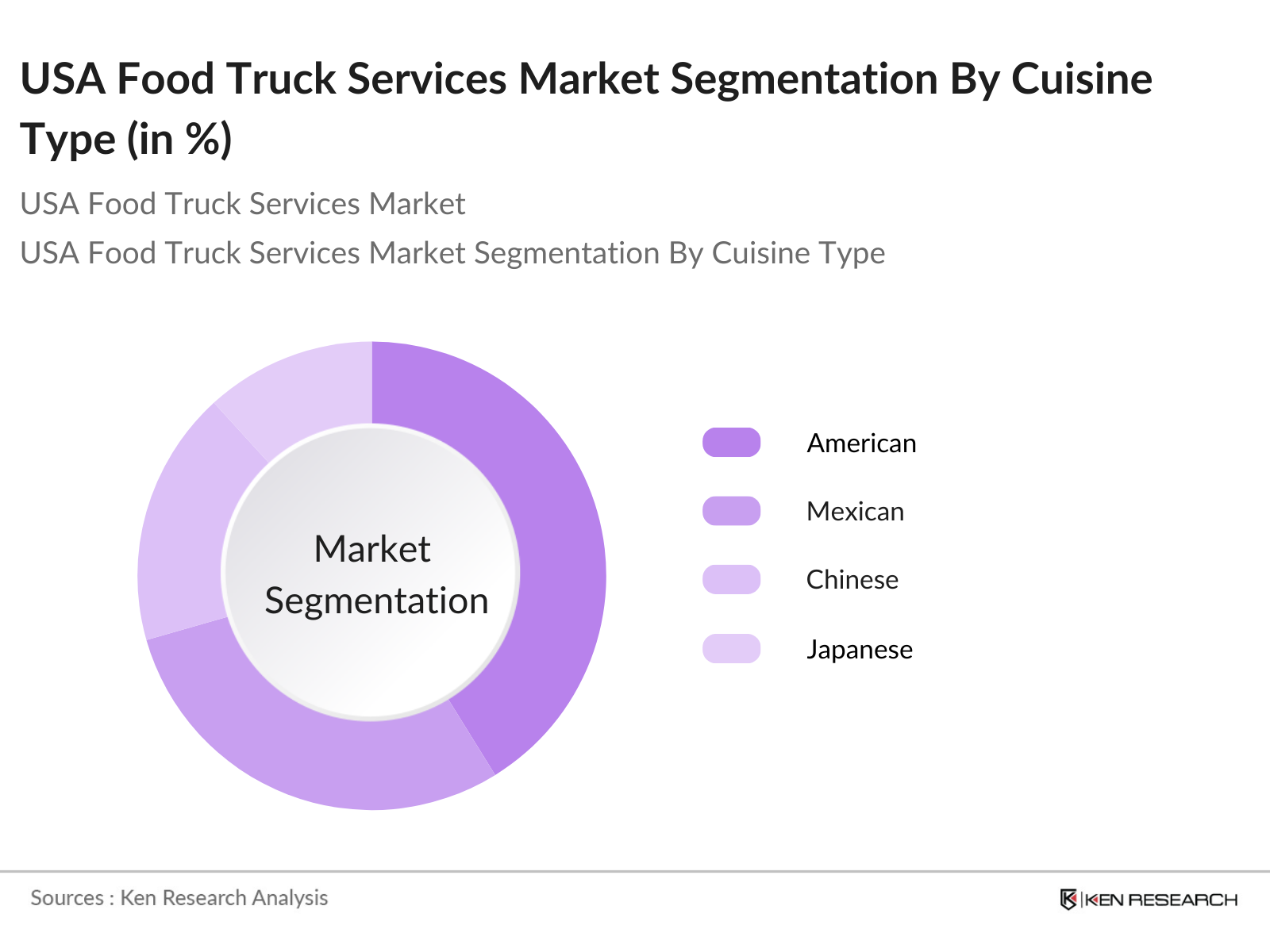
By Cuisine Type: The market is also segmented by cuisine type into American, Mexican, Chinese, Japanese, Italian, and others. American cuisine leads the market share, attributed to the strong preference for traditional comfort foods such as burgers, hot dogs, and barbecue. The familiarity and widespread appeal of these dishes contribute to their dominance in the food truck industry.
USA Food Truck Services Competitive Landscape
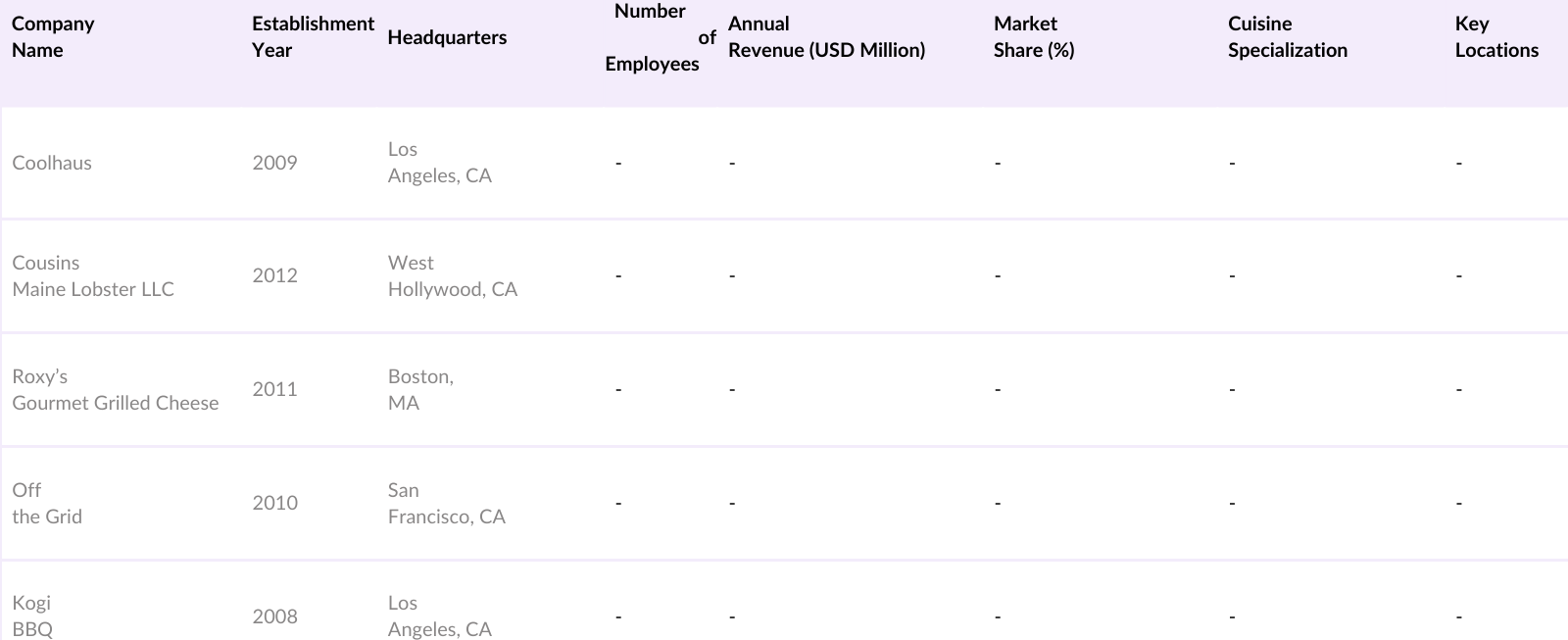
The USA food truck services market is characterized by a mix of established players and numerous small operators, leading to a fragmented and highly competitive environment. Major companies include Stoked Wood Fired Pizza, Tenoch Mexican, Roxys Gourmet Grilled Cheese, Vibe Food Truck, and Slide by Food Truck. These players differentiate themselves through unique culinary offerings, strategic location choices, and strong brand identities.
USA Food Truck Services Industry Analysis
Growth Drivers
- Urbanization and Changing Consumer Preferences: As of 2024, the United States has an urbanization rate of approximately 83%, with over 275 million people residing in urban areas. This urban concentration fosters a demand for quick, accessible dining options, aligning with the convenience offered by food trucks. Additionally, the median age in the U.S. is around 38 years, indicating a significant portion of the population comprises working-age individuals seeking diverse and convenient meal choices. These demographic factors contribute to the growing popularity of food trucks in urban settings.
- Demand for Diverse and Gourmet Cuisines: The U.S. Census Bureau reports that the foreign-born population in the United States is approximately 45 million, accounting for about 13.7% of the total population. This cultural diversity has led to an increased appetite for a variety of culinary experiences. Food trucks have capitalized on this trend by offering gourmet and international cuisines, catering to consumers' evolving tastes and preferences.
- Technological Advancements in Ordering and Payment Systems: The adoption of mobile payment solutions has surged, with over 80% of U.S. consumers using digital payment methods as of 2024. Food trucks have embraced technologies such as mobile point-of-sale (POS) systems and online ordering platforms, enhancing customer convenience and streamlining operations. This technological integration has improved transaction efficiency and customer satisfaction, driving growth in the food truck sector.
Market Challenges
- Regulatory Hurdles and Licensing Issues: Food truck operators often face complex regulatory environments, with requirements varying significantly across municipalities. For instance, in New York City, obtaining a mobile food vending license can involve a waiting period of up to 10 years due to a cap on the number of permits issued. These regulatory challenges can impede new entrants and limit operational flexibility for existing food truck businesses.
- Intense Competition and Market Saturation: With over 58,000 food truck businesses operating in the United States, the market has become increasingly competitive. This saturation, particularly in major urban centers, makes it challenging for new entrants to establish a foothold and for existing operators to maintain profitability. The high density of food trucks necessitates innovative offerings and strategic location choices to attract and retain customers.
USA Food Truck Services Future Outlook
Over the next five years, the USA food truck services market is expected to experience significant growth, driven by the increasing demand for diverse and convenient dining options, technological advancements in mobile food service operations, and the expansion of food truck services into suburban and rural areas. Additionally, the integration of online delivery platforms and the adoption of sustainable practices are anticipated to further propel market growth.
Market Opportunities
- Expansion into Suburban and Rural Areas: While food trucks have traditionally thrived in urban environments, suburban and rural areas present untapped markets. Approximately 60 million Americans reside in rural regions, where dining options may be limited. By targeting these areas, food truck operators can access new customer bases and reduce competition, fostering business growth.
- Collaboration with Events and Festivals: Participating in local events and festivals offers food trucks access to large, diverse audiences. The U.S. hosts over 4,000 food festivals annually, attracting millions of attendees. Collaborations with such events can significantly boost visibility and sales for food truck operators, providing opportunities to showcase unique offerings and build brand recognition.
Scope of the Report
|
Offering |
Food |
|
Cuisine Type |
American |
|
Platform |
Mobile Vending |
|
Vehicle Type |
Vans |
|
Region |
Northeast |
Products
Key Target Audience
Food Truck Operators
Restaurant Chains
Event Organizers
Municipal Regulatory Bodies
Food and Beverage Suppliers
Mobile Kitchen Equipment Manufacturers
Investors and Venture Capitalist Firms
Government and Regulatory Bodies (e.g., USA Food and Drug Administration)
Companies
Players Mentioned in the Report
Stoked Wood Fired Pizza
Tenoch Mexican
Roxys Gourmet Grilled Cheese
Vibe Food Truck
Slide by Food Truck
Rocket Fine Street Food
Noble Knots Food Truck and Catering
Dees Deli Food Truck & Catering
Twisted Ts Food Truck
Gastros
Table of Contents
1. Market Overview
1.1 Definition and Scope
1.2 Market Taxonomy
1.3 Market Growth Rate
1.4 Market Segmentation Overview
2. Market Size (USD Billion)
2.1 Historical Market Size
2.2 Year-On-Year Growth Analysis
2.3 Key Market Developments and Milestones
3. Market Analysis
3.1 Growth Drivers
3.1.1 Urbanization and Changing Consumer Preferences
3.1.2 Demand for Diverse and Gourmet Cuisines
3.1.3 Lower Operational Costs Compared to Traditional Restaurants
3.1.4 Technological Advancements in Ordering and Payment Systems
3.2 Market Challenges
3.2.1 Regulatory Hurdles and Licensing Issues
3.2.2 Intense Competition and Market Saturation
3.2.3 Seasonal Variations in Demand
3.3 Opportunities
3.3.1 Expansion into Suburban and Rural Areas
3.3.2 Collaboration with Events and Festivals
3.3.3 Introduction of Health-Conscious and Allergen-Free Menus
3.4 Trends
3.4.1 Integration with Online Delivery Platforms
3.4.2 Adoption of Sustainable and Eco-Friendly Practices
3.4.3 Utilization of Social Media for Marketing and Customer Engagement
3.5 Government Regulations
3.5.1 Health and Safety Standards
3.5.2 Zoning Laws and Parking Restrictions
3.5.3 Permitting and Licensing Requirements
3.6 SWOT Analysis
3.7 Stakeholder Ecosystem
3.8 Porters Five Forces Analysis
3.9 Competitive Landscape
4. Market Segmentation
4.1 By Offering (Value %)
4.1.1 Food
4.1.1.1 Non-Vegetarian
4.1.1.2 Vegetarian
4.1.1.3 Vegan
4.1.2 Beverages
4.1.2.1 Alcoholic Beverages
4.1.2.2 Non-Alcoholic Beverages
4.1.3 Desserts and Ice Creams
4.2 By Cuisine Type (Value %)
4.2.1 American
4.2.2 Mexican
4.2.3 Chinese
4.2.4 Japanese
4.2.5 Italian
4.2.6 Others
4.3 By Platform (Value %)
4.3.1 Mobile Vending
4.3.2 Online Delivery
4.4 By Vehicle Type (Value %)
4.4.1 Vans
4.4.2 Trailers
4.4.3 Customized Trucks
4.4.4 Others
4.5 By Region (Value %)
4.5.1 Northeast
4.5.2 Midwest
4.5.3 South
4.5.4 West
5. Competitive Analysis
5.1 Detailed Profiles of Major Companies
5.1.1 Coolhaus
5.1.2 Cousins Maine Lobster LLC
5.1.3 Curbside Kitchen
5.1.4 Frios Gourmet Pops
5.1.5 GASTROTRUCK
5.1.6 Gorilla Cheese NYC
5.1.7 Kogi BBQ
5.1.8 Ms Cheezious
5.1.9 Nationwide Transport Services LLC
5.1.10 Off the Grid
5.1.11 Roaming Hunger LLC
5.1.12 Rocket Fine Street Food
5.1.13 Roxys Grilled Cheese
5.1.14 Seabirds Kitchen
5.1.15 Slide On By
5.2 Cross-Comparison Parameters
5.2.1 Number of Employees
5.2.2 Headquarters Location
5.2.3 Year of Establishment
5.2.4 Revenue
5.2.5 Number of Food Trucks Operated
5.2.6 Geographic Presence
5.2.7 Cuisine Specialization
5.2.8 Online Delivery Partnerships
5.3 Market Share Analysis
5.4 Strategic Initiatives
5.5 Mergers and Acquisitions
5.6 Investment Analysis
5.6.1 Venture Capital Funding
5.6.2 Government Grants
5.6.3 Private Equity Investments
6. Regulatory Framework
6.1 Health and Safety Standards
6.2 Compliance Requirements
6.3 Certification Processes
7. Future Market Size (USD Billion)
7.1 Future Market Size Projections
7.2 Key Factors Driving Future Market Growth
8. Future Market Segmentation
8.1 By Offering (Value %)
8.2 By Cuisine Type (Value %)
8.3 By Platform (Value %)
8.4 By Vehicle Type (Value %)
8.5 By Region (Value %)
9. Market Analysts Recommendations
9.1 Total Addressable Market (TAM), Serviceable Available Market (SAM), and Serviceable Obtainable Market (SOM) Analysis
9.2 Customer Cohort Analysis
9.3 Marketing Initiatives
9.4 White Space Opportunity Analysis
Disclaimer Contact UsResearch Methodology
Step 1: Identification of Key Variables
The initial phase involves constructing an ecosystem map encompassing all major stakeholders within the USA food truck services market. This step is underpinned by extensive desk research, utilizing a combination of secondary and proprietary databases to gather comprehensive industry-level information. The primary objective is to identify and define the critical variables that influence market dynamics.
Step 2: Market Analysis and Construction
In this phase, we compile and analyze historical data pertaining to the USA food truck services market. This includes assessing market penetration, the ratio of marketplaces to service providers, and the resultant revenue generation. Furthermore, an evaluation of service quality statistics is conducted to ensure the reliability and accuracy of the revenue estimates.
Step 3: Hypothesis Validation and Expert Consultation
Market hypotheses are developed and subsequently validated through computer-assisted telephone interviews (CATIs) with industry experts representing a diverse array of companies. These consultations provide valuable operational and financial insights directly from industry practitioners, which are instrumental in refining and corroborating the market data.
Step 4: Research Synthesis and Final Output
The final phase involves direct engagement with multiple food truck operators to acquire detailed insights into product segments, sales performance, consumer preferences, and other pertinent factors. This interaction serves to verify and complement the statistics derived from the bottom-up approach, thereby ensuring a comprehensive, accurate, and validated analysis of the USA food truck services market.
Frequently Asked Questions
1. How big is the USA food truck services market?
The USA Food Truck Services market is valued at USD 1.31 billion, based on a five-year historical analysis. This market is primarily driven by the growing demand for convenient, affordable, and diverse food options among urban populations, along with the flexibility food trucks offer in terms of mobility and low overhead costs compared to traditional restaurants.
2. What are the challenges in the USA food truck services market?
Challenges include regulatory hurdles and licensing issues, intense competition leading to market saturation, and seasonal variations in demand that can affect revenue stability.
3. Who are the major players in the USA food truck services market?
Key players include Stoked Wood Fired Pizza, Tenoch Mexican, Roxys Gourmet Grilled Cheese, Vibe Food Truck, and Slide by Food Truck, among others.
4. What are the growth drivers of the USA food truck services market?
Growth drivers encompass urbanization and changing consumer preferences, demand for diverse and gourmet cuisines, lower operational costs compared to traditional restaurants, and technological advancements in ordering and payment systems.
Why Buy From Us?

What makes us stand out is that our consultants follows Robust, Refine and Result (RRR) methodology. i.e. Robust for clear definitions, approaches and sanity checking, Refine for differentiating respondents facts and opinions and Result for presenting data with story

We have set a benchmark in the industry by offering our clients with syndicated and customized market research reports featuring coverage of entire market as well as meticulous research and analyst insights.

While we don't replace traditional research, we flip the method upside down. Our dual approach of Top Bottom & Bottom Top ensures quality deliverable by not just verifying company fundamentals but also looking at the sector and macroeconomic factors.

With one step in the future, our research team constantly tries to show you the bigger picture. We help with some of the tough questions you may encounter along the way: How is the industry positioned? Best marketing channel? KPI's of competitors? By aligning every element, we help maximize success.

Our report gives you instant access to the answers and sources that other companies might choose to hide. We elaborate each steps of research methodology we have used and showcase you the sample size to earn your trust.

If you need any support, we are here! We pride ourselves on universe strength, data quality, and quick, friendly, and professional service.