
USA Football Shoes Market Outlook to 2030
Region:North America
Author(s):Vijay Kumar
Product Code:KROD6943
Region:North America
Author(s):Vijay Kumar
Product Code:KROD6943
November 2024
87
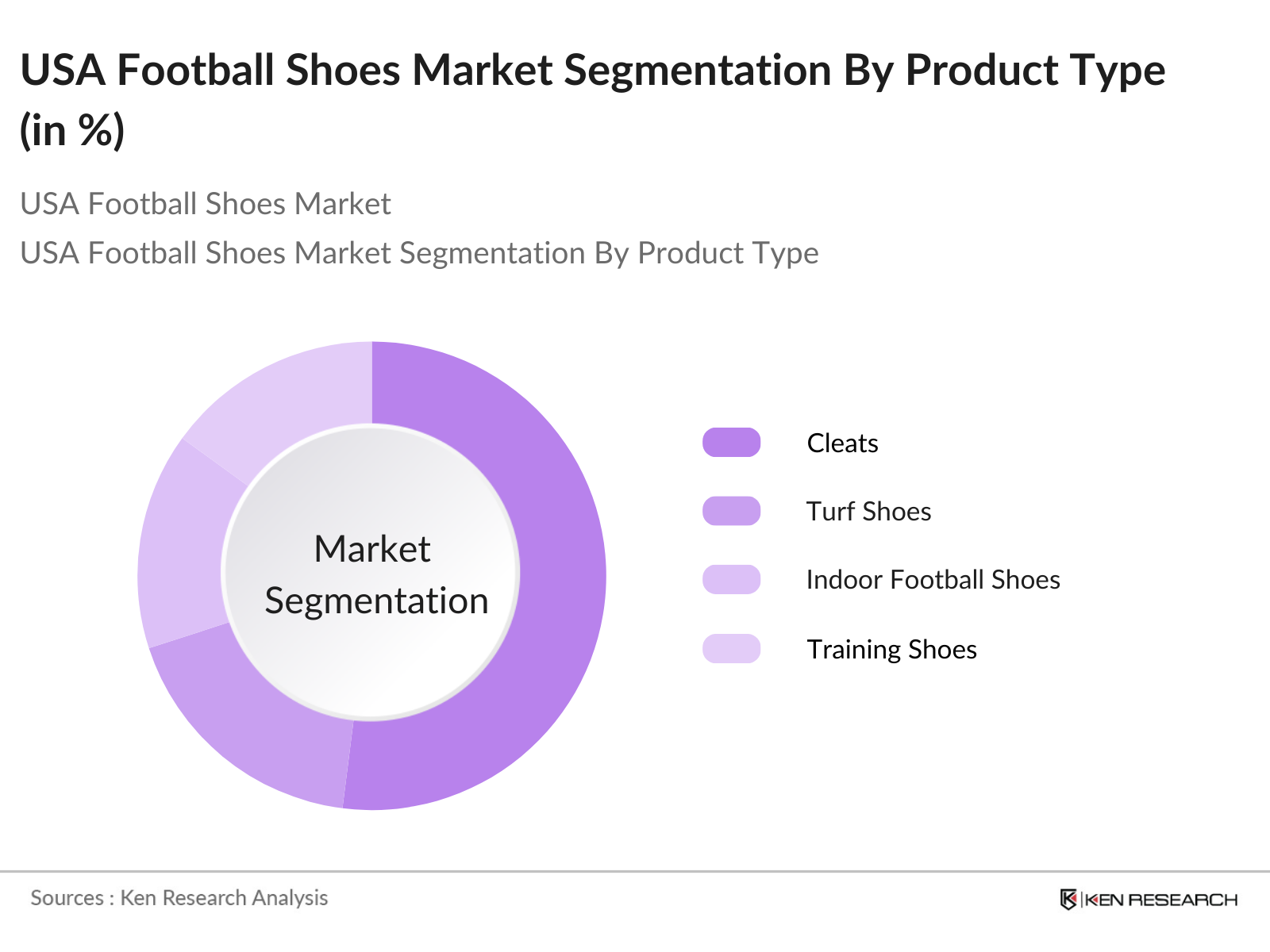
By Product Type: The USA Football Shoes market is segmented by product type into cleats, turf shoes, indoor football shoes, and training shoes. Recently, cleats have dominated the market due to their integral role in competitive American football. Cleats provide the necessary grip and traction on grass fields, which is critical for performance, speed, and agility. The demand for cleats is highest among professional athletes and organized teams, contributing to their dominant market share.
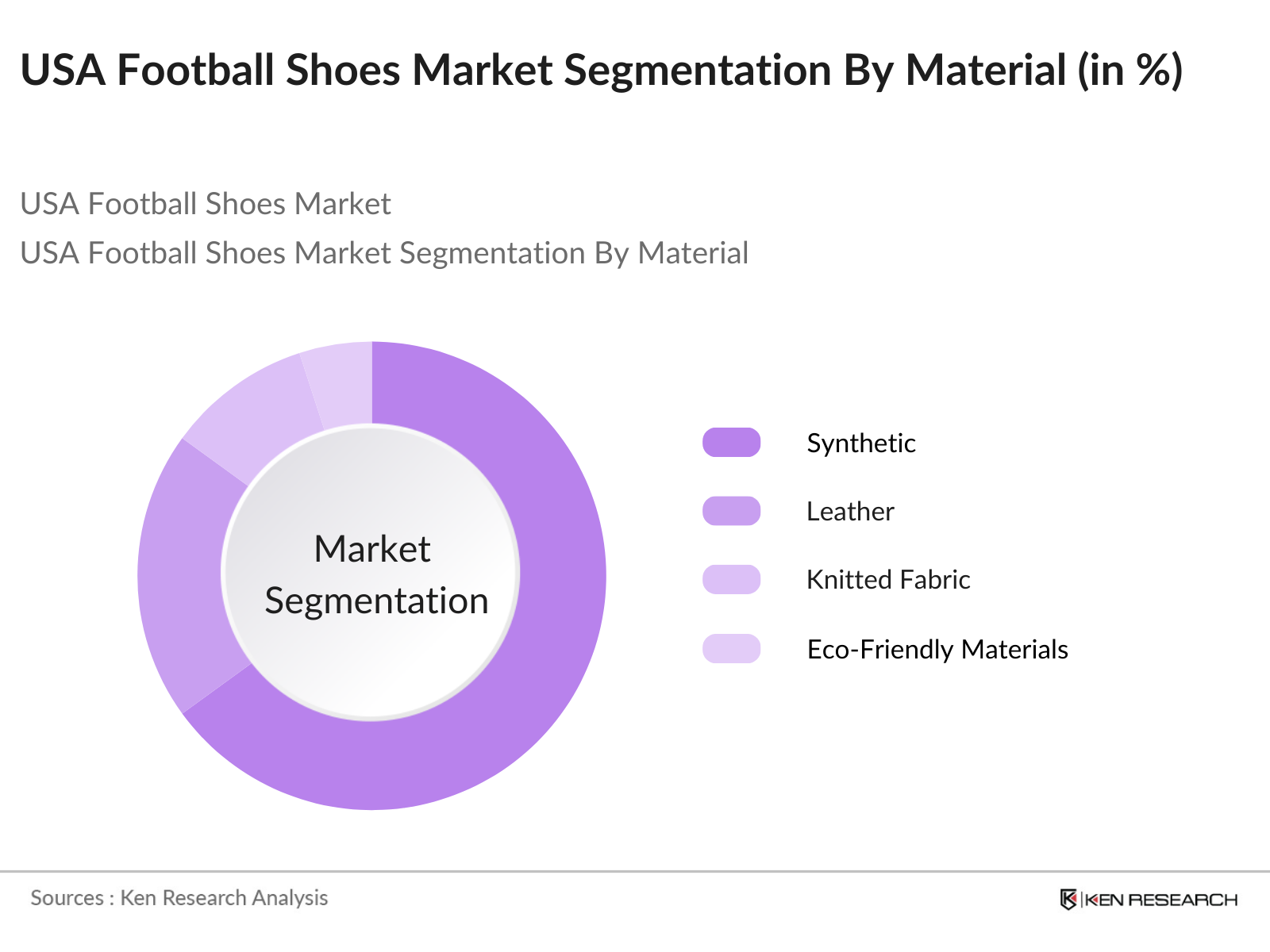
By Material: The USA Football Shoes market is also segmented by material into synthetic, leather, knitted fabric, and eco-friendly materials. Synthetic materials dominate the market due to their durability and flexibility. These materials are lightweight, providing the necessary balance between comfort and performance, which is critical for athletes. Synthetic shoes are also more cost-effective compared to leather, making them popular among amateur players and young athletes.
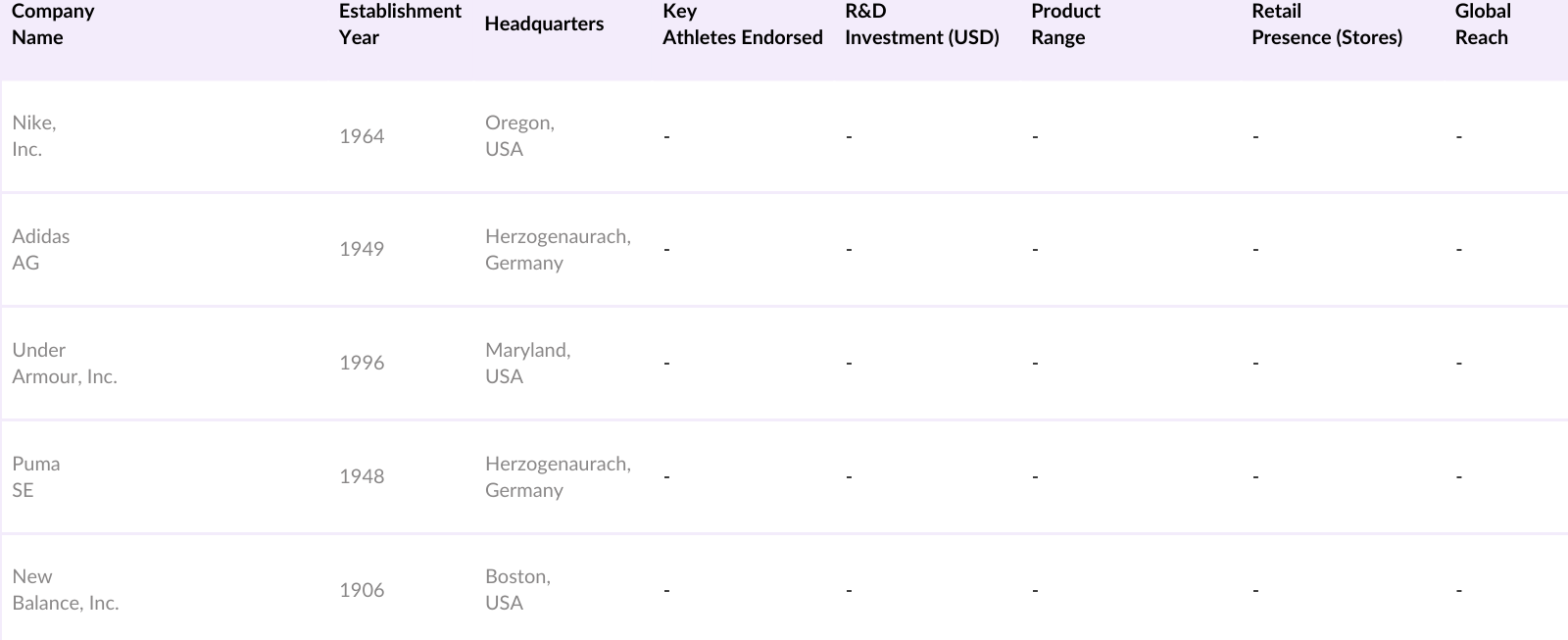
The USA Football Shoes market is dominated by several key players that have a strong presence both domestically and internationally. Brands such as Nike, Adidas, and Under Armour lead the market due to their extensive product lines, significant investments in research and development, and partnerships with professional athletes. These companies have a strong retail and e-commerce presence, allowing them to reach a wide audience.
Over the next five years, the USA Football Shoes market is expected to show significant growth driven by continued advancements in shoe technology and rising participation in sports leagues across all age groups. As football remains one of the most popular sports in the country, the demand for high-performance footwear tailored to the needs of players will increase.
|
By Product Type |
Cleats Turf Shoes Indoor Football Shoes Training Shoes |
|
By Material |
Synthetic Leather Knitted Fabric Eco-Friendly Materials |
|
By Technology |
Cushioning Technology Water-Resistant Technology Custom-Fit (3D Printed) Traction Control Innovations |
|
By Sales Channel |
Specialty Sports Stores E-commerce Platforms Hypermarkets and Department Stores Brand-Owned Stores |
|
By Region |
Northeast USA Midwest USA Southern USA Western USA |
1.1. Definition and Scope
1.2. Market Taxonomy
1.3. Market Growth Rate (Influence of Player Demand, Youth Participation)
1.4. Market Segmentation Overview
2.1. Historical Market Size (Changes in Athletic Footwear Preferences, Material Innovations)
2.2. Year-On-Year Growth Analysis (Growth of High-Performance Gear)
2.3. Key Market Developments and Milestones (Evolution in Design, Major Endorsements)
3.1. Growth Drivers
3.1.1. Increased Youth Participation in Sports Leagues
3.1.2. Demand for Lightweight, Performance-Enhancing Shoes
3.1.3. Growth in Athleisure Fashion Trends
3.1.4. Technological Innovation in Materials and Manufacturing
3.2. Market Challenges
3.2.1. Rising Production Costs
3.2.2. Intense Competition Among Global Players
3.2.3. Counterfeit Products Impacting Sales
3.2.4. Environmental Concerns Regarding Synthetic Materials
3.3. Opportunities
3.3.1. Expansion into Female Sports Participation
3.3.2. Growth in Customization and 3D Printed Shoes
3.3.3. Increasing E-commerce Adoption for Direct-to-Consumer Sales
3.4. Trends
3.4.1. Eco-Friendly and Sustainable Shoe Designs
3.4.2. Collaborations Between Brands and Professional Athletes
3.4.3. Shift Toward Shoes Designed for Artificial Turf
3.4.4. Increasing Use of Digital Tools for Shoe Design
3.5. Government Regulation
3.5.1. U.S. Trade Policies Affecting Import Costs of Football Shoes
3.5.2. Regulations on Sustainable Materials in Footwear Manufacturing
3.5.3. Safety Standards for Football Equipment
3.6. SWOT Analysis (Strengths, Weaknesses, Opportunities, Threats Specific to USA Football Shoes Market)
3.7. Stake Ecosystem (Suppliers, Manufacturers, Retailers, Distributors)
3.8. Porters Five Forces (Buyer Power, Supplier Power, Competition, New Entrants, Substitution)
3.9. Competition Ecosystem (Domestic vs. International Brands, Influence of Athletes)
4.1. By Product Type (In Value %)
4.1.1. Cleats
4.1.2. Turf Shoes
4.1.3. Indoor Football Shoes
4.1.4. Training Shoes
4.2. By Material (In Value %)
4.2.1. Synthetic
4.2.2. Leather
4.2.3. Knitted Fabric
4.2.4. Eco-Friendly Materials
4.3. By Technology (In Value %)
4.3.1. Cushioning Technology
4.3.2. Water-Resistant Technology
4.3.3. Custom-Fit (3D Printed)
4.3.4. Traction Control Innovations
4.4. By Sales Channel (In Value %)
4.4.1. Specialty Sports Stores
4.4.2. E-commerce Platforms
4.4.3. Hypermarkets and Department Stores
4.4.4. Brand-Owned Stores
4.5. By Region (In Value %)
4.5.1. Northeast USA
4.5.2. Midwest USA
4.5.3. Southern USA
4.5.4. Western USA
5.1 Detailed Profiles of Major Companies
5.1.1. Nike, Inc.
5.1.2. Adidas AG
5.1.3. Puma SE
5.1.4. Under Armour, Inc.
5.1.5. New Balance, Inc.
5.1.6. Asics Corporation
5.1.7. Reebok International Ltd.
5.1.8. Skechers USA, Inc.
5.1.9. Mizuno Corporation
5.1.10. Umbro Ltd.
5.1.11. Diadora Sportswear
5.1.12. Lotto Sport Italia
5.1.13. Joma Sport
5.1.14. Warrior Sports
5.1.15. Brooks Sports
5.2 Cross Comparison Parameters (Headquarters, Inception Year, Revenue, Market Share, Key Athletes Endorsed, R&D Investment, Product Innovations, Global Reach)
5.3. Market Share Analysis (Breakdown by Key Players)
5.4. Strategic Initiatives (Collaborations, Partnerships with Football Clubs)
5.5. Mergers and Acquisitions (Impact on Market Competition)
5.6. Investment Analysis (Private Equity, Venture Capital Funding)
5.7. Government Grants (Support for Sustainable Manufacturing)
5.8. Private Equity Investments (In Football Footwear Startups)
6.1. Environmental Standards (Eco-Friendly Manufacturing)
6.2. Compliance Requirements (Safety Standards, Manufacturing Regulations)
6.3. Certification Processes (Required Certifications for Football Shoes in USA)
7.1. Future Market Size Projections
7.2. Key Factors Driving Future Market Growth (Innovations, Growing Youth Participation)
8.1. By Product Type (In Value %)
8.2. By Material (In Value %)
8.3. By Technology (In Value %)
8.4. By Sales Channel (In Value %)
8.5. By Region (In Value %)
9.1. TAM/SAM/SOM Analysis
9.2. Customer Cohort Analysis (Targeted Segments: Youth, Athletes, Enthusiasts)
9.3. Marketing Initiatives (Endorsements, Digital Campaigns)
9.4. White Space Opportunity Analysis (Emerging Trends in Sustainable Football Shoes)
In the first step, we mapped the ecosystem for the USA Football Shoes market by identifying key stakeholders, including manufacturers, distributors, and retailers. This was done through comprehensive secondary research using proprietary databases to analyze the impact of these stakeholders on the market.
This phase involved the collection and analysis of historical data from the USA Football Shoes market. By examining sales figures, consumer preferences, and technological innovations, we estimated the market size and determined the share of each market segment.
We then validated market hypotheses by conducting interviews with industry experts. These consultations provided firsthand insights into market trends, allowing us to refine our data and improve the accuracy of the market forecast.
In the final step, we synthesized the data gathered through research and consultations, culminating in an accurate and comprehensive report. This step included cross-verifying insights with primary manufacturers to ensure that the findings reflected current market conditions.
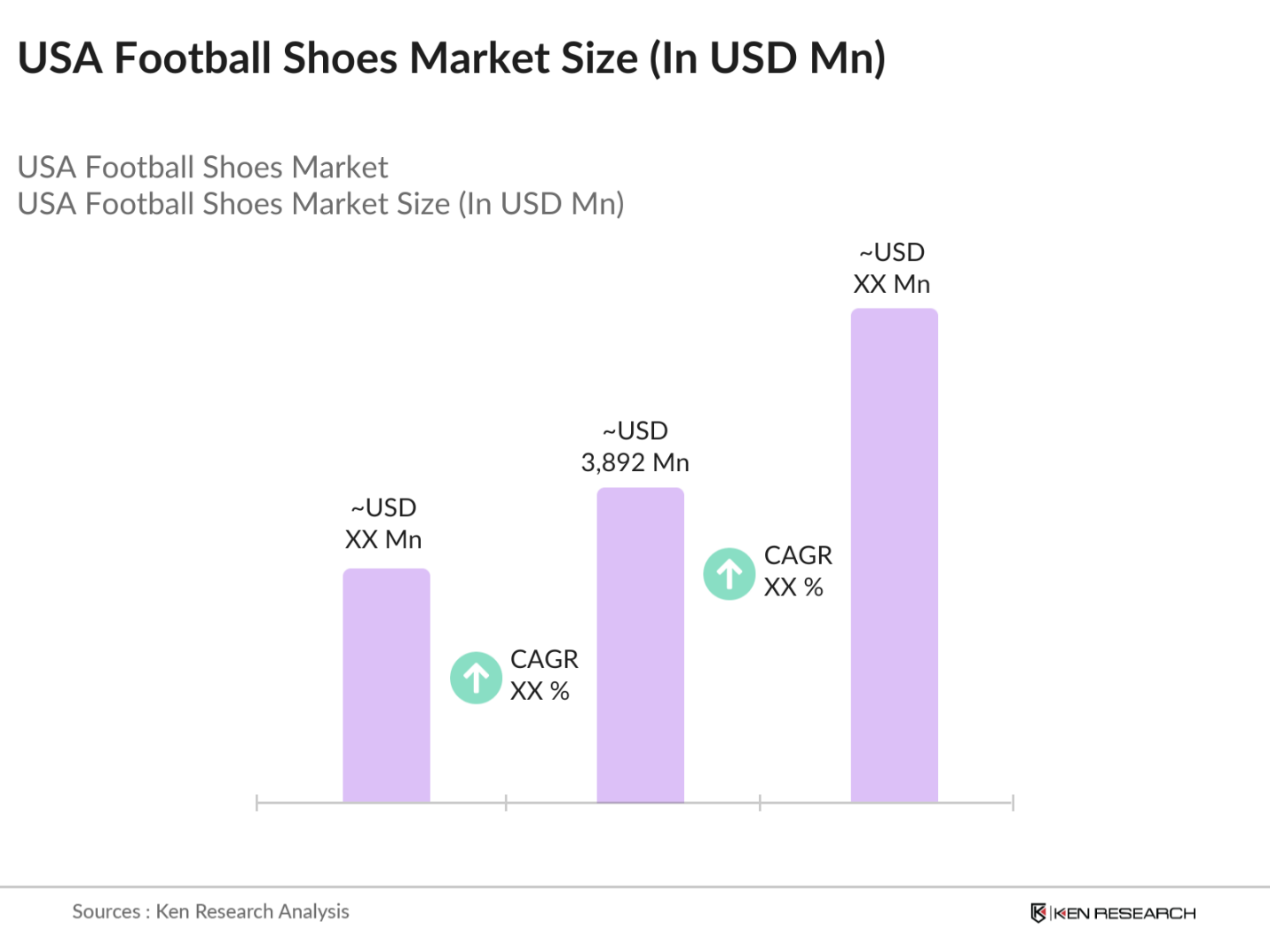
The USA Football Shoes market is valued at USD 3,892 million based on a five-year historical analysis. The growth of the market is driven by the increasing participation in sports, particularly American football, which has expanded from high schools and colleges to professional leagues.
The USA Football Shoes market faces challenges such as rising production costs, competition from counterfeit products, and environmental concerns over synthetic materials.
Key players include Nike, Adidas, Under Armour, Puma, and New Balance, known for their innovation, global reach, and partnerships with athletes.
The market is driven by the increasing demand for lightweight, performance-enhancing shoes, growing youth participation in football, and advancements in material technology.

What makes us stand out is that our consultants follows Robust, Refine and Result (RRR) methodology. i.e. Robust for clear definitions, approaches and sanity checking, Refine for differentiating respondents facts and opinions and Result for presenting data with story

We have set a benchmark in the industry by offering our clients with syndicated and customized market research reports featuring coverage of entire market as well as meticulous research and analyst insights.

While we don't replace traditional research, we flip the method upside down. Our dual approach of Top Bottom & Bottom Top ensures quality deliverable by not just verifying company fundamentals but also looking at the sector and macroeconomic factors.

With one step in the future, our research team constantly tries to show you the bigger picture. We help with some of the tough questions you may encounter along the way: How is the industry positioned? Best marketing channel? KPI's of competitors? By aligning every element, we help maximize success.

Our report gives you instant access to the answers and sources that other companies might choose to hide. We elaborate each steps of research methodology we have used and showcase you the sample size to earn your trust.

If you need any support, we are here! We pride ourselves on universe strength, data quality, and quick, friendly, and professional service.