















USA Freeze Dried Food Equipment Market Outlook to 2030
Region:North America
Author(s):Shreya Garg
Product Code:KROD8902
December 2024
85
About the Report
USA Freeze Dried Food Equipment Market Overview
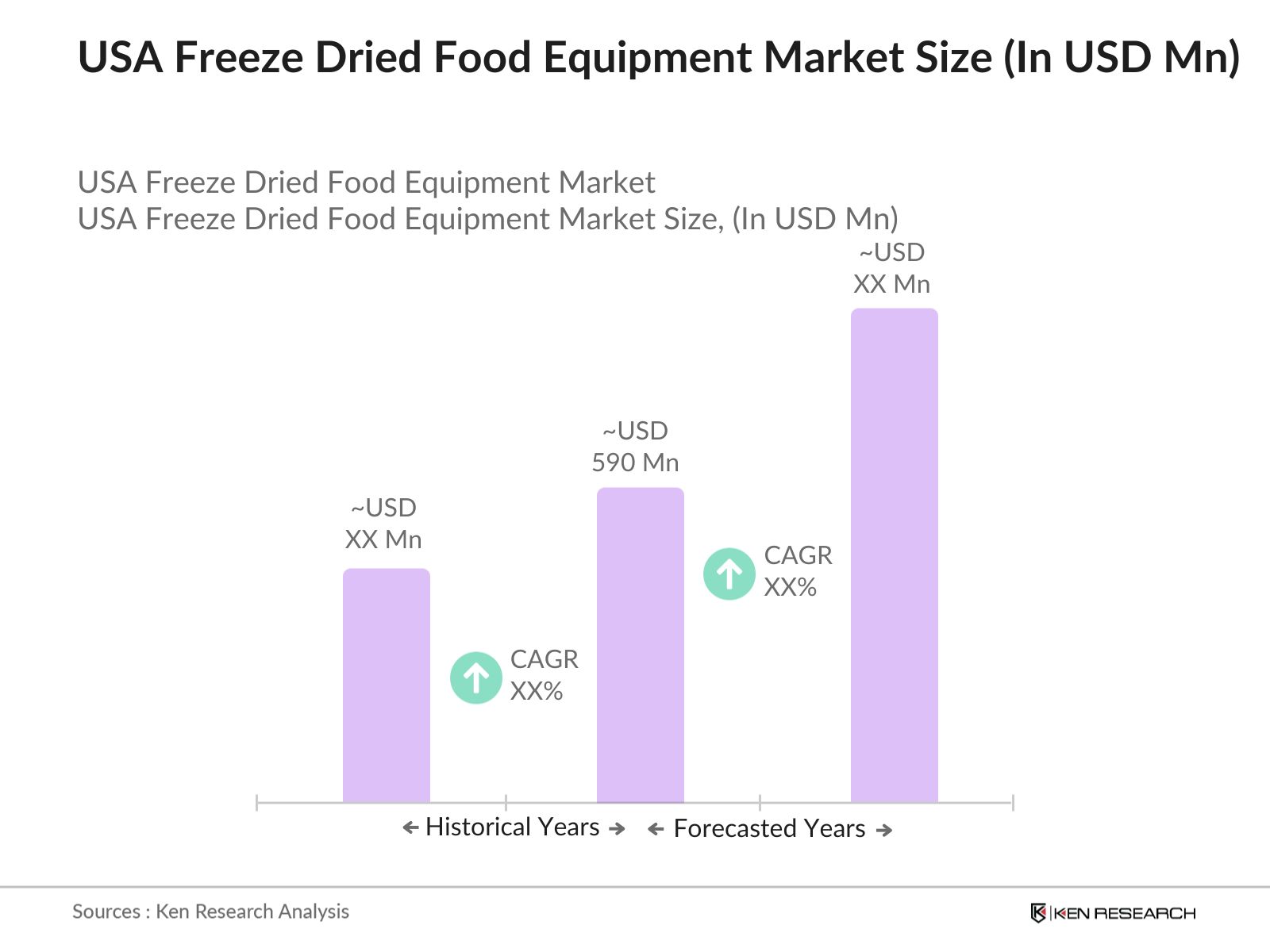
- The USA Freeze Dried Food Equipment market is valued at USD 590 million, based on a five-year historical analysis. This market is driven by the increasing demand for long-lasting, shelf-stable food products due to changing consumer lifestyles and preferences. Freeze-dried food products are highly popular because they retain more nutrients and flavor compared to other preservation methods. The food industrys adoption of freeze-drying technology for producing high-quality, lightweight products for various sectors, including outdoor activities and emergency supplies, also plays a crucial role in driving this market forward.
- Cities like Los Angeles, New York, and Chicago, along with states such as California, Texas, and Florida, dominate the USA Freeze Dried Food Equipment market. The dominance of these regions can be attributed to the presence of a large food processing industry and high consumer demand for packaged and preserved foods. Additionally, the proximity of these cities to significant agricultural production zones and food processing hubs enhances their contribution to the market. The demand for advanced food preservation equipment in these regions is further supported by technological innovation and investment in the food industry.
- The U.S. Food and Drug Administration (FDA) enforces strict regulations on food processing equipment, including freeze-drying systems. In 2023, the FDA updated its guidelines to include new safety and hygiene standards for equipment used in food preservation. Compliance with these regulations is mandatory for all food processing facilities in the U.S., and failure to meet these standards can result in penalties, product recalls, and business closures. The FDAs role in ensuring food safety drives demand for advanced freeze-drying equipment that meets regulatory standards.
USA Freeze Dried Food Equipment Market Segmentation
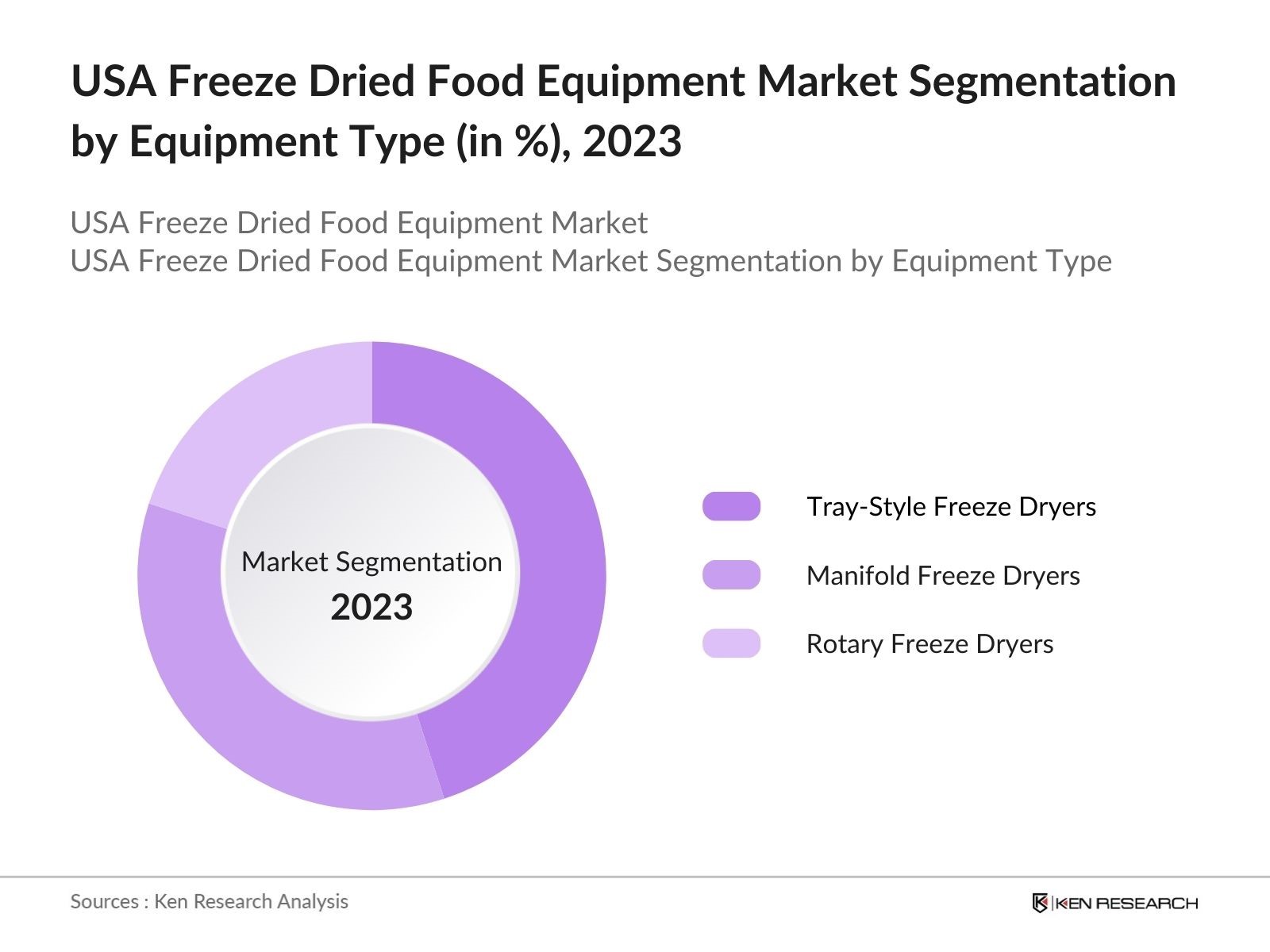
By Equipment Type: The market is segmented by equipment type into tray-style freeze dryers, manifold freeze dryers, and rotary freeze dryers. Tray-style freeze dryers hold a dominant position in the market due to their widespread use in the commercial food processing industry. These freeze dryers are favored for their efficiency and ability to handle large quantities of food products, making them suitable for industries processing fruits, vegetables, and other food items. Their design ensures uniform drying, preserving the flavor and nutritional content of products, which is a critical factor in the food industry.
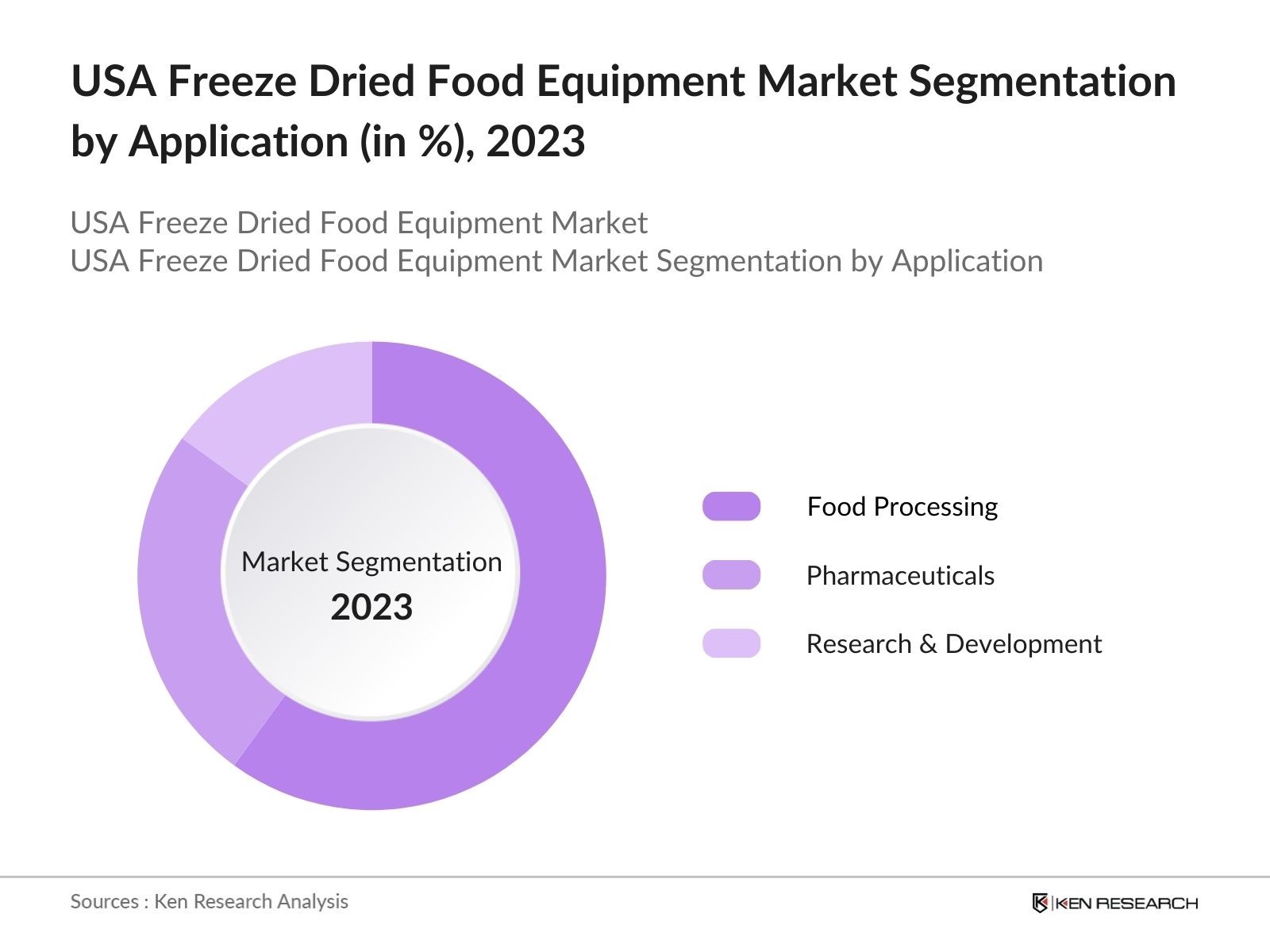
By Application: The market is further segmented by application into food processing, pharmaceuticals, and research and development laboratories. The food processing segment is leading the market due to the growing demand for freeze-dried products, such as fruits, vegetables, and ready-to-eat meals. This segment dominates because of its critical role in preserving food products for a longer shelf life while maintaining their nutritional value and taste. The rising consumer demand for high-quality, lightweight food products in sectors like camping, hiking, and emergency supplies is also driving this sub-segment.
USA Freeze Dried Food Equipment Market Competitive Landscape
The USA freeze dried food equipment market is competitive, with both global and domestic players vying for market share. The landscape is dominated by established companies that have built a strong presence over the years, offering cutting-edge technology and tailored solutions for various industries. These players are engaged in significant R&D efforts to improve equipment efficiency, reduce energy consumption, and enhance the freeze-drying process. The consolidation of these players underscores the importance of innovation and technological expertise in this market.
|
Company Name |
Year Established |
Headquarters |
Market Share |
Product Range |
R&D Investment |
Patents Held |
Production Capacity |
Global Reach |
|
GEA Group |
1881 |
Dsseldorf, Germany |
||||||
|
Millrock Technology Inc. |
1997 |
Kingston, NY |
||||||
|
SP Industries |
1978 |
Warminster, PA |
||||||
|
Telstar |
1963 |
Barcelona, Spain |
||||||
|
Tofflon Science and Technology |
1993 |
Shanghai, China |
USA Freeze Dried Food Equipment Industry Analysis
Growth Drivers
- Rising Demand for Shelf-Stable Food: The freeze-dried food equipment market in the USA is being driven by the increasing demand for shelf-stable food. In 2023, the U.S. food processing industry reported a rise in processed food consumption, with shelf-stable food sales growing by over 15 million tons. This demand is largely driven by consumers looking for long-lasting, nutritious, and easily transportable food options. The World Banks 2022 data on global food demand supports this trend, with the U.S. showing a continued increase in processed food consumption across various demographics.
- Expansion of Food Processing Industry: The U.S. food processing industry has witnessed substantial growth, contributing to the rising demand for freeze-dried equipment. As of 2023, the food processing sector was valued at over $1.9 trillion, supporting nearly 14 million jobs. This expansion is expected to drive further investments in advanced food preservation technologies like freeze drying. Data from the U.S. Department of Agriculture indicates a significant increase in processed food exports, which reached $55 billion in 2023, demonstrating the industry's growing capacity and need for preservation technologies.
- Technological Advancements in Freeze Drying: Technological advancements in freeze-drying equipment have significantly contributed to the markets growth. Innovations such as continuous freeze-drying systems have increased the efficiency of food processing operations by up to 40% in recent years. The integration of automation and AI for precise temperature control has further optimized the freeze-drying process. The U.S. Bureau of Labor Statistics reported a 10% increase in food preservation technology-related patents filed between 2022 and 2023, highlighting the rapid development in the sector.
Market Challenges
- High Initial Investment Costs: One of the main challenges facing the freeze-dried food equipment market is the high initial investment costs. The cost of installing industrial freeze-drying machines can range from $200,000 to over $2 million, depending on the size and capacity. This high capital expenditure often limits smaller food processing companies from adopting the technology. According to data from the U.S. Small Business Administration, over 60% of small food manufacturers cite high equipment costs as a major barrier to expanding their product lines.
- Energy Consumption and Environmental Impact: Freeze-drying is a highly energy-intensive process, with energy consumption rates ranging from 1,500 to 2,000 kWh per ton of product. This leads to substantial operational costs and a larger carbon footprint. According to the U.S. Environmental Protection Agency, the food processing sector contributed approximately 8% of the total industrial energy consumption in 2023. This has sparked concerns regarding the environmental impact of freeze-drying, driving manufacturers to explore energy-efficient alternatives.
USA Freeze Dried Food Equipment Market Future Outlook
Over the next few years, the USA Freeze Dried Food Equipment market is expected to witness substantial growth driven by increasing demand for high-quality food preservation methods and advancements in freeze-drying technology. The demand for freeze-dried products in industries like pharmaceuticals and research is also set to rise, further fueling market expansion. In addition, technological innovations aimed at reducing energy consumption and improving operational efficiency are likely to play a key role in shaping the future of the market.
Future Market Opportunities
- Growth in Ready-to-Eat Meals: The increasing demand for ready-to-eat meals presents a significant opportunity for the freeze-dried food equipment market. According to the U.S. Census Bureau, ready-to-eat meal sales reached $75 billion in 2023, driven by the rise of convenient food products that require minimal preparation. Freeze-dried technology is increasingly being used to preserve these meals, offering longer shelf life without compromising taste and nutrition, which caters to the growing consumer demand.
- Increasing Demand for Organic and Clean-Label Products: With the growing consumer preference for organic and clean-label products, the freeze-dried food sector is poised for expansion. The U.S. organic food market surpassed $62 billion in 2023, with freeze-drying methods being preferred for preserving organic produce without the use of synthetic preservatives. Clean-label products, which emphasize transparency in ingredient sourcing and processing, are also gaining traction. Data from the U.S. Organic Trade Association reflects an upward trend in demand for organic freeze-dried snacks and meals.
Scope of the Report
|
Equipment Type |
Tray Style Freeze Dryers Manifold Freeze Dryers Rotary Freeze Dryers |
|
Application |
Fruits and Vegetables Meat and Poultry Dairy Products Pharmaceuticals |
|
Automation Level |
Fully Automated Semi-Automated Manual |
|
End-User |
Food Processing Companies Pharmaceutical Manufacturers R&D Laboratories |
|
Region |
North-East Mid-West South West |
Products
Key Target Audience
Food Processing Companies
Pharmaceutical Manufacturers
Research & Development Laboratories
Freeze Drying Equipment Manufacturers
Government and Regulatory Bodies (USDA, FDA)
Investors and Venture Capitalist Firms
Agricultural Associations
Exporters of Freeze-Dried Products
Banks and Financial Institutions
Companies
Major Players
GEA Group
SP Industries
Telstar
Millrock Technology Inc.
Cuddon Freeze Dry
Hosokawa Micron Group
IMA Industria Macchine Automatiche
OPTIMA Packaging Group
Labconco Corporation
Tofflon Science and Technology
HOF Sonderanlagenbau
Freeze Dry Co.
MechaTech Systems
Azbil Corporation
Martin Christ Gefriertrocknungsanlagen GmbH
Table of Contents
1. USA Freeze Dried Food Equipment Market Overview
1.1. Definition and Scope
1.2. Market Taxonomy
1.3. Market Growth Rate
1.4. Market Segmentation Overview
2. USA Freeze Dried Food Equipment Market Size (In USD Bn)
2.1. Historical Market Size
2.2. Year-On-Year Growth Analysis
2.3. Key Market Developments and Milestones
3. USA Freeze Dried Food Equipment Market Analysis
3.1. Growth Drivers
3.1.1. Rising Demand for Shelf-Stable Food
3.1.2. Expansion of Food Processing Industry
3.1.3. Technological Advancements in Freeze Drying
3.1.4. Government Support for Food Preservation
3.2. Market Challenges
3.2.1. High Initial Investment Costs
3.2.2. Energy Consumption and Environmental Impact
3.2.3. Complexity of Equipment Operation
3.3. Opportunities
3.3.1. Growth in Ready-to-Eat Meals
3.3.2. Increasing Demand for Organic and Clean-Label Products
3.3.3. Adoption of Freeze Drying in New Food Categories
3.4. Trends
3.4.1. Automation in Freeze Dried Equipment
3.4.2. Sustainable and Energy-Efficient Solutions
3.4.3. Integration with IoT and AI for Process Optimization
3.5. Government Regulation
3.5.1. FDA Regulations on Food Processing Equipment
3.5.2. Energy Efficiency Standards
3.5.3. Compliance with Environmental Policies
3.6. SWOT Analysis
3.7. Stakeholder Ecosystem
3.8. Porters Five Forces Analysis
3.9. Competitive Landscape
4. USA Freeze Dried Food Equipment Market Segmentation
4.1. By Equipment Type (In Value %)
4.1.1. Tray Style Freeze Dryers
4.1.2. Manifold Freeze Dryers
4.1.3. Rotary Freeze Dryers
4.2. By Application (In Value %)
4.2.1. Fruits and Vegetables
4.2.2. Meat and Poultry
4.2.3. Dairy Products
4.2.4. Pharmaceuticals
4.3. By Automation Level (In Value %)
4.3.1. Fully Automated
4.3.2. Semi-Automated
4.3.3. Manual
4.4. By End-User (In Value %)
4.4.1. Food Processing Companies
4.4.2. Pharmaceutical Manufacturers
4.4.3. R&D Laboratories
4.5. By Region (In Value %)
4.5.1. North-East
4.5.2. Mid-West
4.5.3. South
4.5.4. West
5. USA Freeze Dried Food Equipment Market Competitive Analysis
5.1. Detailed Profiles of Major Companies
5.1.1. GEA Group
5.1.2. Millrock Technology Inc.
5.1.3. SP Industries
5.1.4. Labconco Corporation
5.1.5. Telstar
5.1.6. Tofflon Science and Technology
5.1.7. Hosokawa Micron Group
5.1.8. Azbil Corporation
5.1.9. OPTIMA Packaging Group
5.1.10. HOF Sonderanlagenbau
5.1.11. Freeze Dry Co.
5.1.12. MechaTech Systems
5.1.13. IMA Industria Macchine Automatiche
5.1.14. Cuddon Freeze Dry
5.1.15. Martin Christ Gefriertrocknungsanlagen GmbH
5.2. Cross Comparison Parameters (Revenue, Market Share, No. of Patents, Manufacturing Capacity, Global Reach, Employee Strength, Production Facilities, Research & Development Capabilities)
5.3. Market Share Analysis
5.4. Strategic Initiatives
5.5. Mergers and Acquisitions
5.6. Investment Analysis
5.7. Government Grants and Funding
5.8. Venture Capital Funding
6. USA Freeze Dried Food Equipment Market Regulatory Framework
6.1. Compliance with Food Safety Modernization Act (FSMA)
6.2. Certification Requirements (ISO, HACCP)
6.3. Environmental Regulations on Energy Usage
6.4. Equipment Sanitation Standards
7. USA Freeze Dried Food Equipment Future Market Size (In USD Bn)
7.1. Future Market Size Projections
7.2. Key Factors Driving Future Growth
8. USA Freeze Dried Food Equipment Future Market Segmentation
8.1. By Equipment Type (In Value %)
8.2. By Application (In Value %)
8.3. By Automation Level (In Value %)
8.4. By End-User (In Value %)
8.5. By Region (In Value %)
9. USA Freeze Dried Food Equipment Market Analysts Recommendations
9.1. TAM/SAM/SOM Analysis
9.2. Customer Cohort Analysis
9.3. Product Innovation Opportunities
9.4. White Space Opportunity Analysis
Research Methodology
Step 1: Identification of Key Variables
The initial phase of research involves mapping the ecosystem of the USA Freeze Dried Food Equipment Market. This includes extensive desk research and analysis of government and proprietary databases to identify key variables such as market drivers, challenges, and technological advancements.
Step 2: Market Analysis and Construction
In this phase, historical data related to market size, growth rate, and segmentation are analyzed. Data sources include industry reports, market penetration data, and sales revenue statistics, ensuring accuracy in market assessment.
Step 3: Hypothesis Validation and Expert Consultation
To validate our findings, we conduct interviews with industry experts and practitioners. These consultations provide real-world insights into market trends, consumer preferences, and technological innovations in freeze-drying equipment.
Step 4: Research Synthesis and Final Output
The final step involves synthesizing all the collected data and insights into a comprehensive market report. This includes verifying data through a bottom-up approach and finalizing market projections based on validated information.
Frequently Asked Questions
01. How big is the USA Freeze Dried Food Equipment Market?
The USA Freeze Dried Food Equipment market is valued at USD 590 million, driven by increasing demand for long-lasting and nutrient-preserving food products, and expanding food processing industries.
02. What are the challenges in the USA Freeze Dried Food Equipment Market?
Challenges in the USA Freeze Dried Food Equipment market include the high initial cost of freeze-drying equipment, energy consumption concerns, and the need for skilled labor to operate complex machinery.
03. Who are the major players in the USA Freeze Dried Food Equipment Market?
Key players in the USA Freeze Dried Food Equipment market include GEA Group, SP Industries, Telstar, Millrock Technology Inc., and Cuddon Freeze Dry. These companies dominate due to their strong technological innovation, global reach, and extensive product portfolios.
04. What are the growth drivers of the USA Freeze Dried Food Equipment Market?
The USA Freeze Dried Food Equipment market is propelled by the rising consumer demand for shelf-stable, nutritious food products, technological advancements in freeze-drying, and increasing application in the pharmaceutical and research sectors.
05. Which cities dominate the USA Freeze Dried Food Equipment Market?
Cities like Los Angeles, New York, and Chicago dominate due to their strong presence of food processing industries and high consumer demand for packaged food products. These regions also benefit from proximity to agricultural hubs and technological advancements in food processing in the USA Freeze Dried Food Equipment market.
Why Buy From Us?

What makes us stand out is that our consultants follows Robust, Refine and Result (RRR) methodology. i.e. Robust for clear definitions, approaches and sanity checking, Refine for differentiating respondents facts and opinions and Result for presenting data with story

We have set a benchmark in the industry by offering our clients with syndicated and customized market research reports featuring coverage of entire market as well as meticulous research and analyst insights.

While we don't replace traditional research, we flip the method upside down. Our dual approach of Top Bottom & Bottom Top ensures quality deliverable by not just verifying company fundamentals but also looking at the sector and macroeconomic factors.

With one step in the future, our research team constantly tries to show you the bigger picture. We help with some of the tough questions you may encounter along the way: How is the industry positioned? Best marketing channel? KPI's of competitors? By aligning every element, we help maximize success.

Our report gives you instant access to the answers and sources that other companies might choose to hide. We elaborate each steps of research methodology we have used and showcase you the sample size to earn your trust.

If you need any support, we are here! We pride ourselves on universe strength, data quality, and quick, friendly, and professional service.