
USA Fruit and Vegetables Market Outlook to 2030
Region:United States
Author(s):Yogita Sahu
Product Code:KROD7402
Region:United States
Author(s):Yogita Sahu
Product Code:KROD7402
November 2024
94
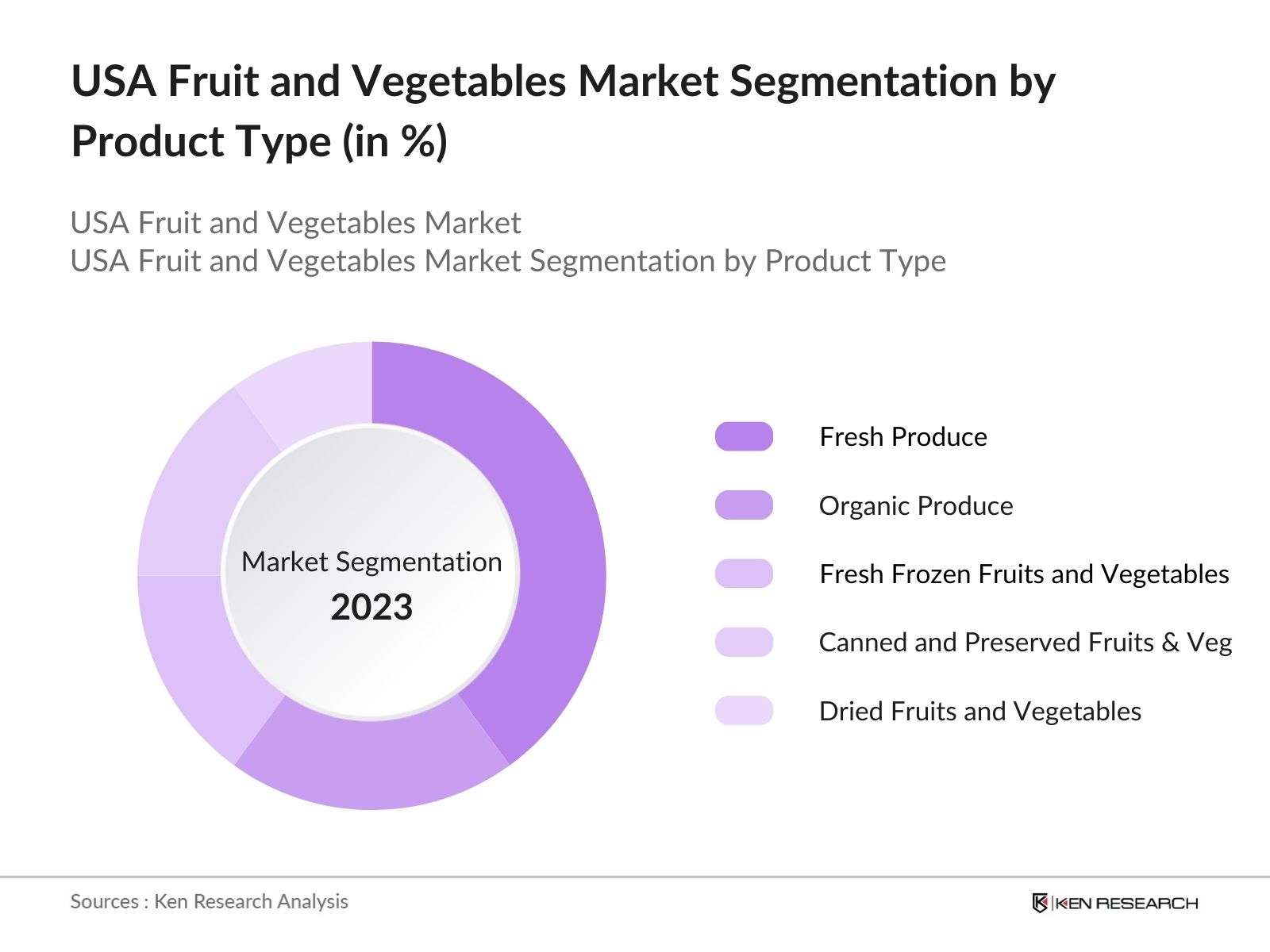
By Product Type: The market is segmented by product type into fresh produce, organic produce, frozen fruits and vegetables, canned and preserved fruits and vegetables, and dried fruits and vegetables. Recently, fresh produce holds a dominant share due to consumer preferences for natural and less-processed food options. Fresh fruits like berries and vegetables like leafy greens are increasingly popular, attributed to their perceived health benefits.
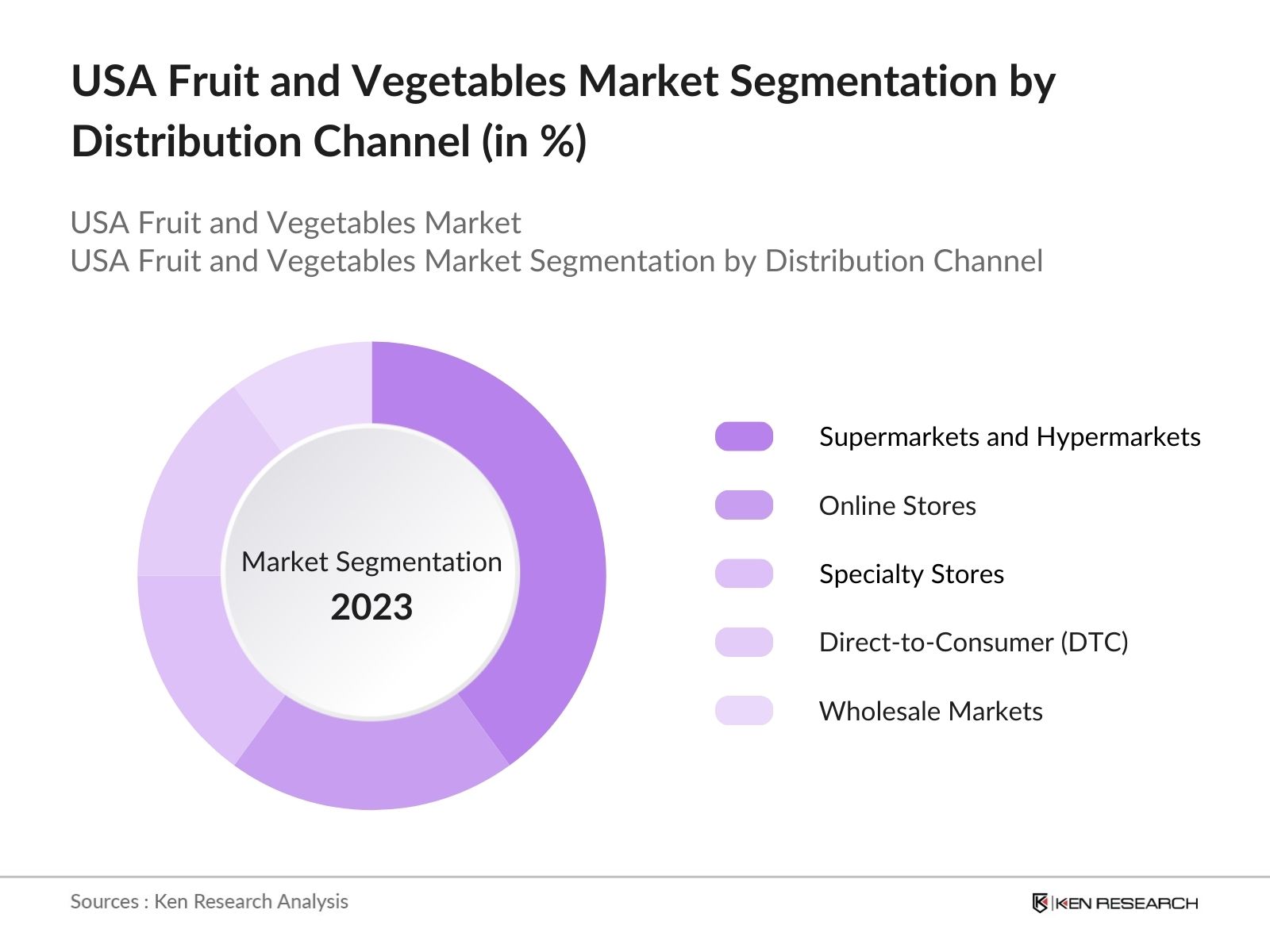
By Distribution Channel: The market is also segmented by distribution channel into supermarkets and hypermarkets, online stores, specialty stores, direct-to-consumer (DTC) channels, and wholesale markets. Supermarkets and hypermarkets dominate this segment due to their widespread availability, affordability, and the variety of fruits and vegetables offered. These retail giants have optimized supply chains to ensure the freshness of produce, which attracts consumers seeking convenience and competitive pricing.
The market is highly competitive, with a mix of local and global players operating within the market. The presence of large-scale producers and distributors consolidates the market, with companies often leveraging technological innovations to maintain their competitive edge.
|
Company Name |
Establishment Year |
Headquarters |
Product Variety |
Organic Certification |
Revenue (USD) |
Distribution Network |
Sustainability Initiatives |
Cold Chain Solutions |
|
Dole Food Company |
1851 |
Charlotte, NC |
||||||
|
Fresh Del Monte Produce |
1886 |
Coral Gables, FL |
||||||
|
Chiquita Brands International |
1870 |
Fort Lauderdale, FL |
||||||
|
Taylor Farms |
1995 |
Salinas, CA |
||||||
|
Driscoll's |
1904 |
Watsonville, CA |
Over the next five years, the USA Fruit and Vegetables industry is expected to witness growth, driven by the expansion of e-commerce platforms, advancements in agricultural technologies, and increasing consumer preference for organic and fresh produce.
|
Product Type |
Fresh Produce Organic Produce Frozen Fruits and Vegetables Canned and Preserved Fruits and Vegetables Dried Fruits and Vegetables |
|
Distribution Channel |
Supermarkets and Hypermarkets Online Stores Specialty Stores Direct-to-Consumer (DTC) Channels Wholesale Markets |
|
End-User |
Households Food Processing Industry HoReCa Institutional Buyers |
|
Packaging Type |
Plastic Paper and Cardboard Sustainable Packaging Loose/Bulk |
|
Region |
North East West South |
1.1. Definition and Scope
1.2. Market Taxonomy
1.3. Market Growth Rate
1.4. Market Segmentation Overview
2.1. Historical Market Size
2.2. Year-On-Year Growth Analysis
2.3. Key Market Developments and Milestones
3.1. Growth Drivers
3.1.1. Government Support for Sustainable Agriculture
3.1.2. Shift towards Organic Produce
3.1.3. Rising Demand for Locally Sourced Produce
3.1.4. Increased Consumer Awareness of Health Benefits
3.2. Market Challenges
3.2.1. Fluctuating Weather Conditions (Climate Variability)
3.2.2. Supply Chain Disruptions
3.2.3. Labor Shortages in Agricultural Sector
3.2.4. Perishable Nature of Produce
3.3. Opportunities
3.3.1. Expansion of E-commerce Platforms for Grocery Delivery
3.3.2. Growing Popularity of Plant-based Diets
3.3.3. Innovations in Cold Storage Technologies
3.3.4. Investment in Vertical and Urban Farming
3.4. Trends
3.4.1. Increasing Adoption of Precision Farming
3.4.2. Growing Demand for Sustainable Packaging
3.4.3. Rise in Organic and Non-GMO Produce Demand
3.4.4. Integration of Smart Agricultural Practices
3.5. Government Regulations
3.5.1. USDA Regulations for Organic Certification
3.5.2. Food Safety Modernization Act (FSMA) Implementation
3.5.3. Support for Farm-to-School Programs
3.5.4. Initiatives to Reduce Food Waste
3.6. SWOT Analysis
3.7. Stakeholder Ecosystem
3.8. Porters Five Forces Analysis
3.9. Competition Ecosystem
4.1. By Product Type (In Value %)
4.1.1. Fresh Produce
4.1.2. Organic Produce
4.1.3. Frozen Fruits and Vegetables
4.1.4. Canned and Preserved Fruits and Vegetables
4.1.5. Dried Fruits and Vegetables
4.2. By Distribution Channel (In Value %)
4.2.1. Supermarkets and Hypermarkets
4.2.2. Online Stores
4.2.3. Specialty Stores
4.2.4. Direct-to-Consumer (DTC) Channels
4.2.5. Wholesale Markets
4.3. By End-User (In Value %)
4.3.1. Households
4.3.2. Food Processing Industry
4.3.3. HoReCa (Hotels, Restaurants, and Catering)
4.3.4. Institutional Buyers
4.4. By Packaging Type (In Value %)
4.4.1. Plastic
4.4.2. Paper and Cardboard
4.4.3. Sustainable Packaging
4.4.4. Loose/Bulk
4.5. By Region (In Value %)
4.5.1. North
4.5.2. East
4.5.3. South
4.5.4. West
5.1 Detailed Profiles of Major Companies
5.1.1. Dole Food Company
5.1.2. Fresh Del Monte Produce
5.1.3. Chiquita Brands International
5.1.4. Taylor Farms
5.1.5. Driscoll's
5.1.6. Grimmway Farms
5.1.7. Calavo Growers, Inc.
5.1.8. Sunkist Growers, Inc.
5.1.9. Bolthouse Farms
5.1.10. Stemilt Growers
5.1.11. Bonduelle
5.1.12. The Wonderful Company
5.1.13. Ocean Spray Cranberries, Inc.
5.1.14. Earthbound Farm
5.1.15. NatureSweet Tomatoes
5.2 Cross Comparison Parameters (Revenue, Product Portfolio, Supply Chain Strength, Organic Certification, Geographical Reach, Production Capacity, Technological Advancements, Sustainability Initiatives)
5.3. Market Share Analysis
5.4. Strategic Initiatives
5.5. Mergers and Acquisitions
5.6. Investment Analysis
5.7. Venture Capital Funding
5.8. Government Grants
5.9. Private Equity Investments
6.1. USDA Guidelines on Food Safety
6.2. Regulations on Import and Export of Fresh Produce
6.3. Compliance with Organic Farming Standards
6.4. Sustainable Agricultural Practices Mandates
7.1. Future Market Size Projections
7.2. Key Factors Driving Future Market Growth
8.1. By Product Type (In Value %)
8.2. By Distribution Channel (In Value %)
8.3. By End-User (In Value %)
8.4. By Packaging Type (In Value %)
8.5. By Region (In Value %)
9.1. TAM/SAM/SOM Analysis
9.2. Consumer Buying Behavior Insights
9.3. Marketing Strategies for Organic Produce
9.4. White Space Opportunities
In the initial stage, we identify the essential stakeholders within the USA Fruit and Vegetables market. This involves extensive desk research to map out industry variables, including production rates, distribution channels, and regulatory factors.
We analyze historical data on the market to understand key growth patterns and trends. This includes an assessment of revenue generation, product demand, and distribution statistics to ensure an accurate representation of market dynamics.
Hypotheses regarding market performance and growth drivers are validated through consultations with industry experts. These interviews provide valuable insights into market operations and help refine our analysis.
The final phase involves compiling data from multiple sources to generate a comprehensive report. This includes gathering input from fruit and vegetable producers, distributors, and retailers to ensure the data is accurate and reflective of industry trends.
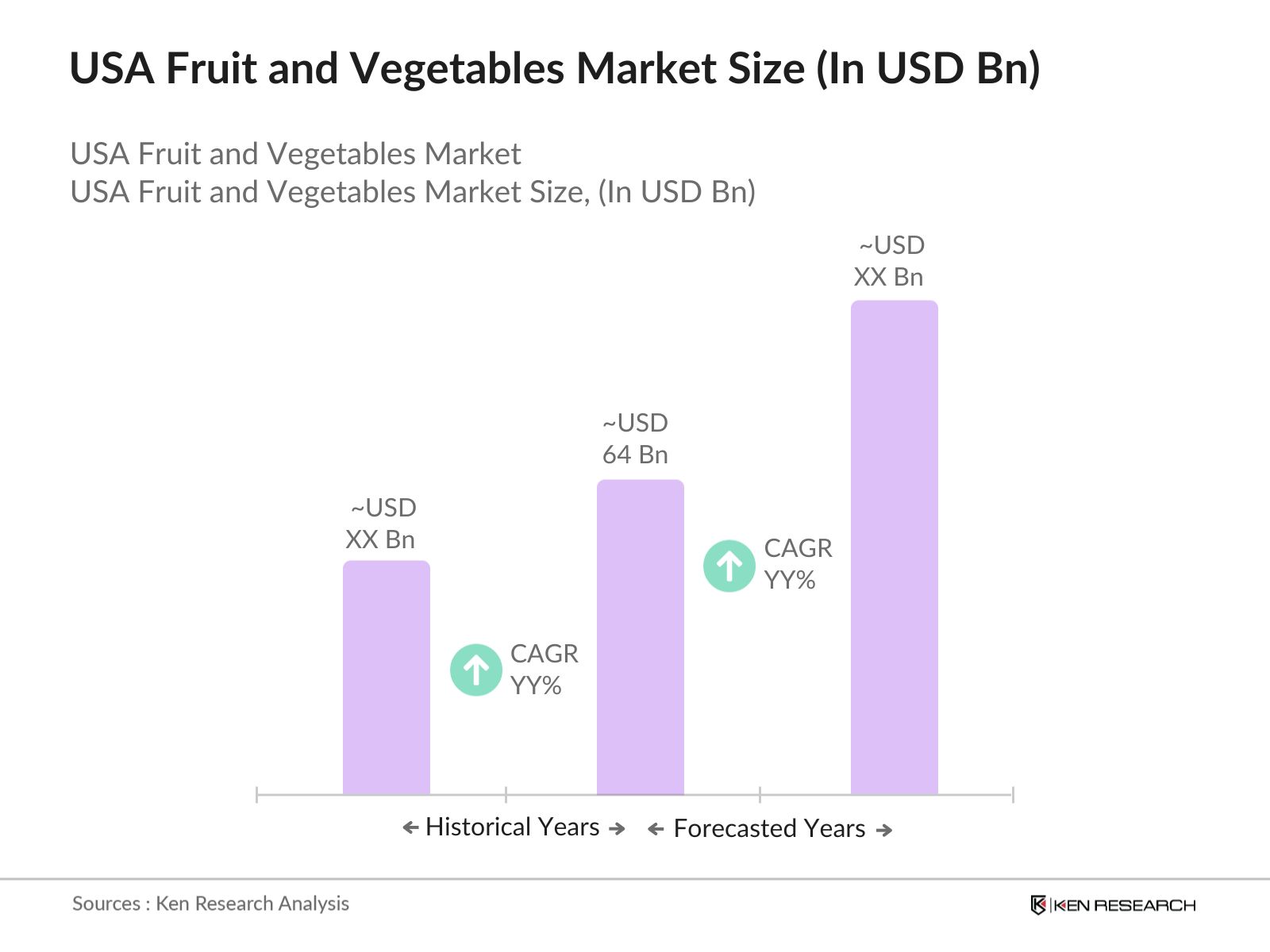
The USA Fruit and Vegetables market was valued at USD 64 billion, driven by increasing consumer demand for healthy and organic produce.
Challenges in the USA Fruit and Vegetables market include fluctuating weather conditions, supply chain disruptions, and labor shortages in the agricultural sector.
Key players in the USA Fruit and Vegetables market include Dole Food Company, Fresh Del Monte Produce, Chiquita Brands International, Taylor Farms, and Driscoll's.
The USA Fruit and Vegetables market is propelled by rising demand for fresh and organic produce, government support for sustainable farming, and innovations in cold chain logistics.
Key trends in the USA Fruit and Vegetables market include the growing popularity of plant-based diets, increased demand for sustainable packaging, and the adoption of precision farming techniques.

What makes us stand out is that our consultants follows Robust, Refine and Result (RRR) methodology. i.e. Robust for clear definitions, approaches and sanity checking, Refine for differentiating respondents facts and opinions and Result for presenting data with story

We have set a benchmark in the industry by offering our clients with syndicated and customized market research reports featuring coverage of entire market as well as meticulous research and analyst insights.

While we don't replace traditional research, we flip the method upside down. Our dual approach of Top Bottom & Bottom Top ensures quality deliverable by not just verifying company fundamentals but also looking at the sector and macroeconomic factors.

With one step in the future, our research team constantly tries to show you the bigger picture. We help with some of the tough questions you may encounter along the way: How is the industry positioned? Best marketing channel? KPI's of competitors? By aligning every element, we help maximize success.

Our report gives you instant access to the answers and sources that other companies might choose to hide. We elaborate each steps of research methodology we have used and showcase you the sample size to earn your trust.

If you need any support, we are here! We pride ourselves on universe strength, data quality, and quick, friendly, and professional service.