
USA Furniture Market Outlook to 2030
Region:North America
Author(s):Shubham Kashyap
Product Code:KROD4691
October 2024
92
About the Report
USA Furniture Market Overview
-
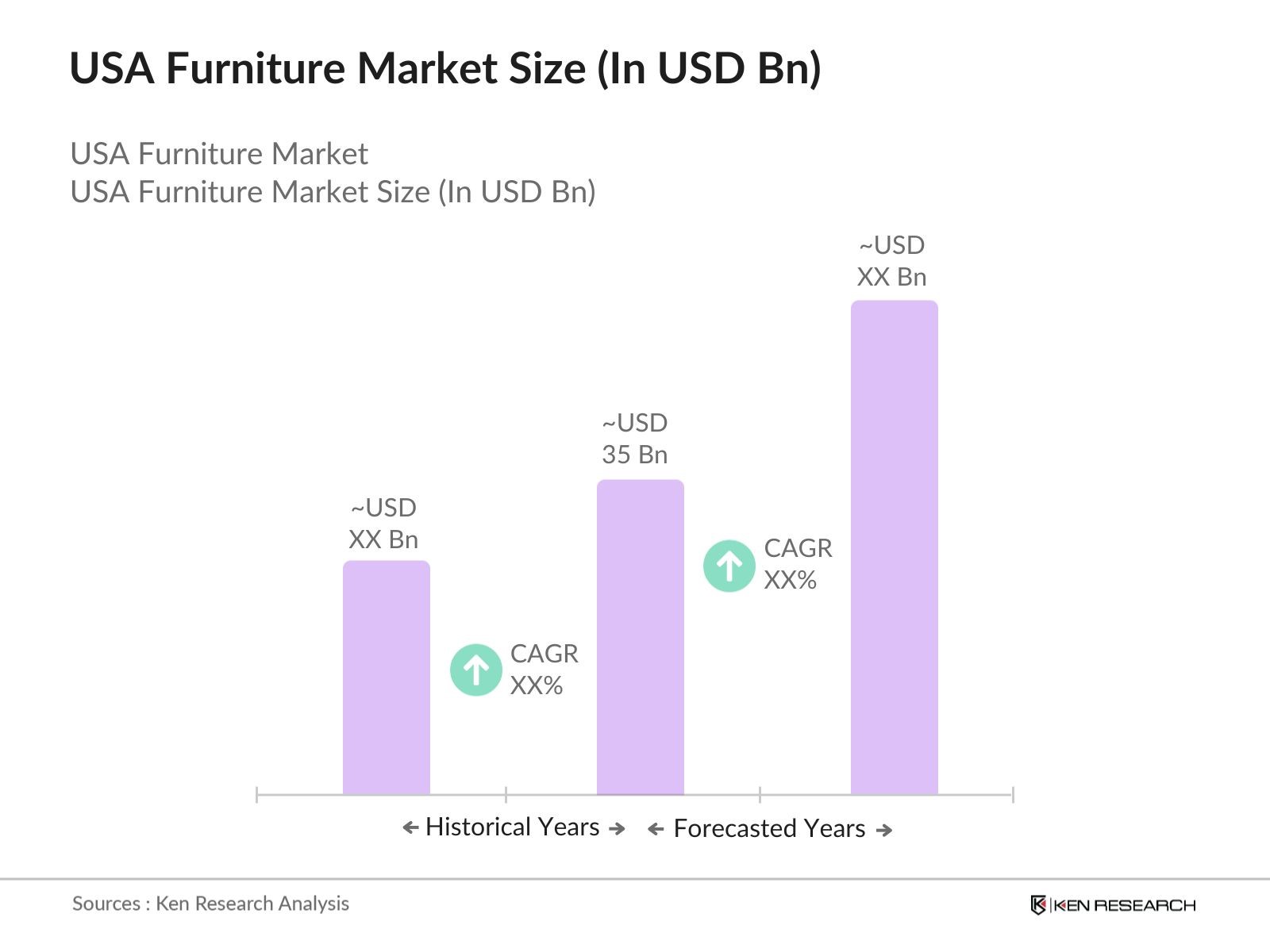
The USA furniture market is valued at USD 35 billion, based on a five-year historical analysis. This market is primarily driven by the rising demand for home improvement, increasing urbanization, and consumer preference for multifunctional furniture. Additionally, factors such as the growth of e-commerce, rising disposable incomes, and a surge in housing starts are expected to boost the furniture market. Consumers are increasingly focusing on sustainability, driving demand for eco-friendly and customizable furniture options.
-
The market dominance is largely concentrated in metropolitan areas like New York, Los Angeles, and Chicago due to high residential construction and renovation activities. These regions also benefit from strong retail infrastructure and high consumer purchasing power. E-commerce platforms such as Amazon and Wayfair have also contributed to the accessibility and growth of furniture products across the USA. Moreover, the introduction of modular and space-saving furniture designs is gaining traction, especially in urban homes with limited space.
-
The U.S. Consumer Product Safety Commission (CPSC) has implemented regulations to ensure the safety of furniture products. These guidelines include flammability standards and requirements for labeling and structural stability. In 2023, new regulations were introduced to address the safety of furniture in children’s rooms, focusing on preventing tip-over incidents and ensuring non-toxic materials. Compliance with these guidelines is crucial for manufacturers to maintain consumer trust and avoid legal issues.
USA Furniture Market Segmentation
-
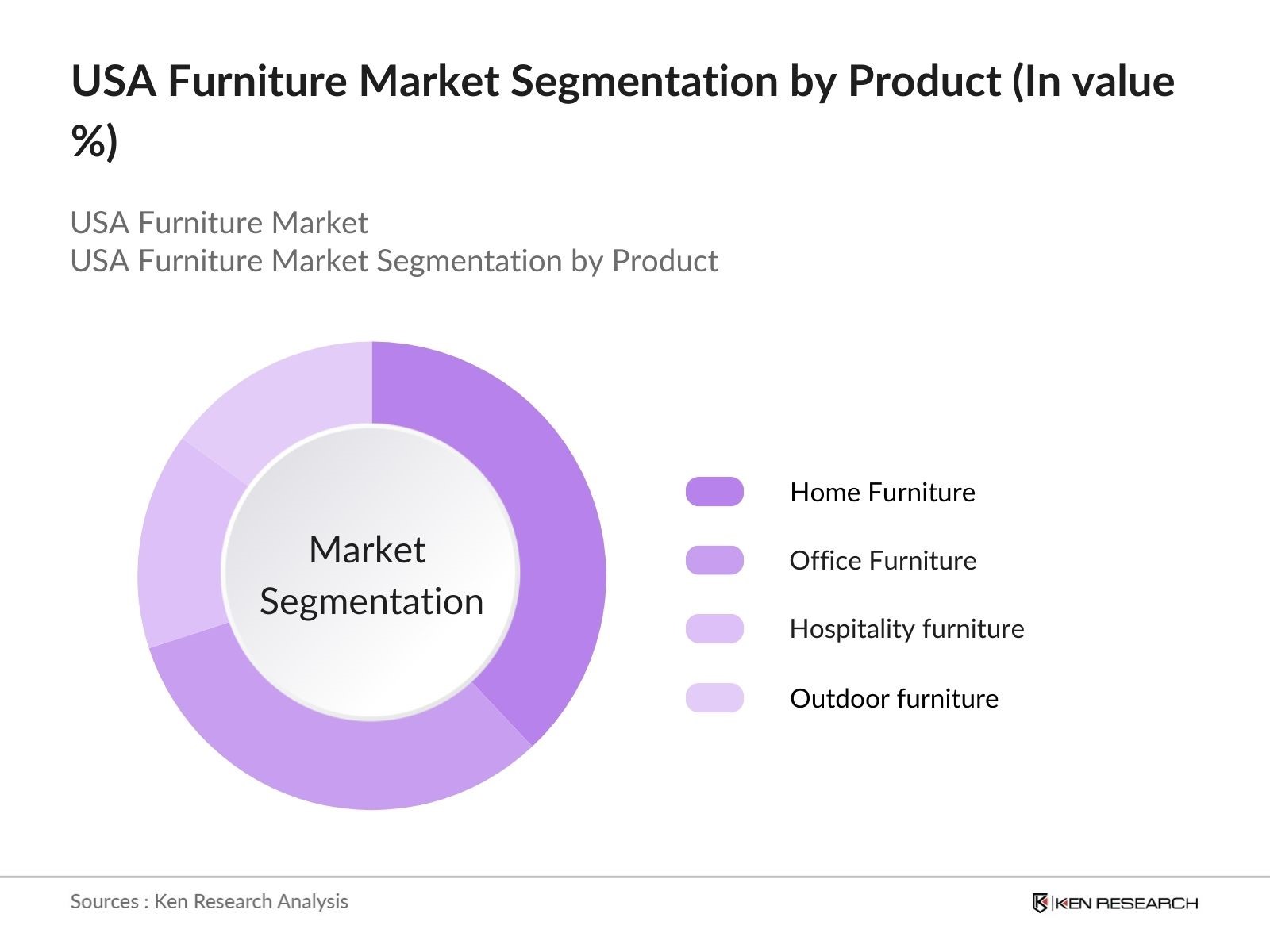
By Product Type: The market is segmented by product type into home furniture, office furniture, hospitality furniture, and outdoor furniture. Recently, home furniture had a dominant market share under the segmentation product type, driven by growing demand for residential furniture due to rising housing starts and consumer preferences for interior design improvements. Companies like IKEA and Ashley Furniture have capitalized on this demand with an extensive product range catering to various home furniture needs, including living room, bedroom, and dining room sets.
-
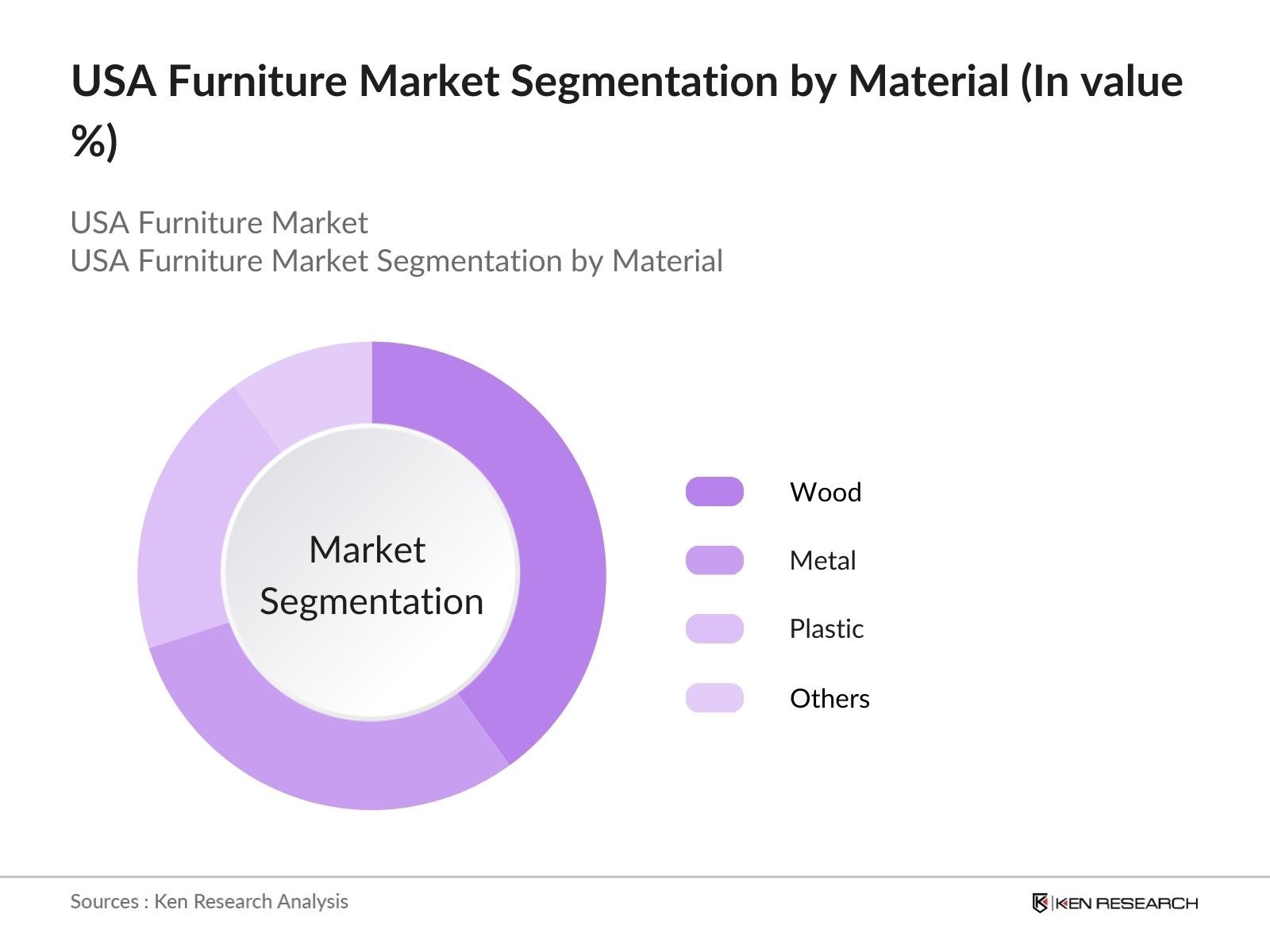
By Material: The market is segmented by material type into wood, metal, plastic, and others. Wooden furniture continues to dominate the USA market due to its durability, aesthetic appeal, and environmental benefits. Consumers increasingly prefer high-quality wooden products for both home and office settings. Major players, including La-Z-Boy and Restoration Hardware, have responded to this trend by offering a wide range of premium and eco-friendly wooden furniture options.
USA Furniture Market Competitive Landscape
The market is highly competitive, with key players focusing on product innovation, sustainability, and omnichannel retail strategies to gain market share. Leading players such as Ashley Furniture, IKEA, and La-Z-Boy are leveraging both physical stores and e-commerce platforms to cater to a wide range of consumer preferences. The companies are also increasingly focusing on offering customizable and eco-friendly furniture to meet the changing demands of modern consumers.
|
Company Name |
Establishment Year |
Headquarters |
Revenue (2023) |
Employees |
Key Product |
R&D Investment |
Key Clients |
Partnerships |
|
Ashley Furniture |
1945 |
USA |
- |
- |
- |
- |
- |
- |
|
IKEA |
1943 |
Sweden |
- |
- |
- |
- |
- |
- |
|
La-Z-Boy |
1927 |
USA |
- |
- |
- |
- |
- |
- |
|
Williams-Sonoma |
1956 |
USA |
- |
- |
- |
- |
- |
- |
|
Herman Miller |
1905 |
USA |
- |
- |
- |
- |
- |
- |
USA Furniture Industry Analysis
Growth Drivers
- Urbanization and Housing Growth: The demand for furniture in the U.S. is significantly driven by increasing urbanization and housing construction activities. In 2024, the U.S. Department of Housing and Urban Development reported that the total number of housings starts reached 1.36 million units, reflecting a steady construction boom in both residential and commercial sectors. Urbanization rates also continue to rise, with over 83% of the U.S. population living in urban areas, which creates a higher demand for furniture in cities. This urban expansion is backed by the construction of new office spaces, hotels, and retail stores.
- E-Commerce Expansion: The expansion of e-commerce platforms has accelerated furniture sales in the U.S. as more consumers prefer online shopping for home and office furniture. In 2023, U.S. e-commerce furniture sales, with platforms like Amazon, Wayfair, and Walmart seeing substantial growth. The convenience of online retailing, coupled with fast delivery options, has transformed consumer behavior, making it easier to access diverse furniture options. This shift is expected to continue, supported by over 331 million internet users in the U.S., representing about 97% of the population.
- Increasing Focus on Sustainability: Consumers in the U.S. are increasingly leaning towards sustainable, eco-friendly furniture options, driven by growing environmental awareness. According to the U.S. Environmental Protection Agency (EPA), nearly 12 million tons of furniture waste are generated annually. In response, manufacturers are introducing sustainable materials like bamboo and recycled metals to reduce this impact. In 2024, the U.S. Green Building Council reported that over 40,000 LEED-certified buildings in the country prioritize sustainable interior design, including furniture. This trend is driving demand for furniture brands that adhere to eco-friendly production processes.
Market Challenges
-
Supply Chain Disruptions: The U.S. furniture industry continues to grapple with significant supply chain disruptions, particularly in sourcing essential materials such as lumber, steel, and textiles. These shortages have been exacerbated by the global supply chain crisis that emerged in 2020, with major U.S. ports experiencing severe backlogs, leading to extended shipping times and delays. Many furniture manufacturers are facing difficulties in securing raw materials in a timely manner, affecting production schedules and delivery commitments. This has forced companies to reevaluate their logistics strategies to maintain operational continuity and meet growing consumer demand.
-
Intense Market Competition: The U.S. furniture market is marked by intense competition, both from domestic manufacturers and international imports. As companies from countries such as China, Vietnam, and Mexico increase their presence, U.S. manufacturers face significant pricing pressures. International players often benefit from lower labor and production costs, making it difficult for domestic companies to compete on price without compromising profit margins. This competitive landscape drives manufacturers to focus on innovation, quality, and sustainability to differentiate their products, but it also challenges them to maintain competitiveness in an increasingly saturated market.
USA Furniture Market Future Outlook
The USA furniture market is expected to continue its upward growth over the next five years, with a compound annual growth rate (CAGR) of 4.3%. This growth will be driven by increasing demand for sustainable and customizable furniture, the rise of e-commerce, and evolving consumer preferences towards multifunctional and space-saving designs. Moreover, the growing adoption of smart furniture, integrated with technology, is anticipated to reshape the future of the industry.
Future Market Opportunities
- Smart Furniture Innovations: The rise of IoT and smart devices presents a significant opportunity for growth in the U.S. furniture market. In 2023, the U.S. IoT market grew exceptionally, and the furniture sector is beginning to capitalize on this. Products such as smart sofas with built-in charging ports and adjustable lighting are gaining popularity among tech-oriented consumers. The growing adoption of IoT devices in homes, projected to exceed 5.4 million connected devices by the end of 2024, underscores the potential for furniture manufacturers to integrate technology and enhance product offerings.
- Growth in the Commercial Sector: The demand for commercial furniture, particularly in the office and hospitality sectors, continues to rise in the U.S. as businesses seek to upgrade workspaces and accommodate hybrid work environments. In 2023, commercial construction spending in the U.S. reached USD 698 billion, with a significant portion allocated to office and hotel refurbishments. The U.S. General Services Administration (GSA) indicated that government contracts for office furniture rose by 12% in 2023, signaling a resurgence in corporate spending on office environments, further driving demand for commercial-grade furniture.
Scope of the Report
|
By Product |
Home Furniture Office Furniture Hospitality Furniture Outdoor Furniture |
|
By Material |
Wood Metal Plastic Others (Bamboo, Rattan, Composite) |
|
By Distribution Channel |
Online Offline (Retail, Showrooms, Specialty Stores) |
|
By Application |
Residential Commercial (Offices, Hotels, Restaurants) Institutional (Hospitals, Schools, Universities) |
|
By Region |
North-East Midwest West Coast Southern States |
Products
Key Target Audience
- Furniture Manufacturers
- Online Furniture Platforms
- Corporate Buyers (Office and Commercial Spaces)
- Government and Regulatory Bodies (U.S. Consumer Product Safety Commission)
- Interior Designers and Architects
- Real Estate Developers
- Banks and Financial Institutes
- Investment and Venture Capitalist Firms
Companies
- Ashley Furniture Industries
- IKEA
- La-Z-Boy
- Williams-Sonoma
- Herman Miller
- Restoration Hardware
- Wayfair
- Flexsteel Industries
- Hooker Furniture
- Ethan Allen
- Bassett Furniture
- Knoll, Inc.
- Steelcase
- Kimball International
- Haworth Inc.
Table of Contents
1. USA Furniture Market Overview
1.1. Definition and Scope
1.2. Market Taxonomy
1.3. Market Growth Rate
1.4. Market Segmentation Overview
2. USA Furniture Market Size (In USD Bn)
2.1. Historical Market Size
2.2. Year-On-Year Growth Analysis
2.3. Key Market Developments and Milestones
3. USA Furniture Market Analysis
3.1. Growth Drivers
3.1.1. Urbanization and Housing Growth (Residential and commercial construction demand)
3.1.2. E-Commerce Expansion (Rise of online retail)
3.1.3. Increasing Focus on Sustainability (Consumer preference for eco-friendly furniture)
3.1.4. Technological Advancements (Smart furniture and connected devices)
3.2. Market Challenges
3.2.1. Supply Chain Disruptions (Raw material shortages and shipping delays)
3.2.2. Intense Market Competition (Pricing pressure from domestic and international players)
3.2.3. High Production Costs (Rising raw material and labor costs)
3.3. Opportunities
3.3.1. Smart Furniture Innovations (Growth in IoT-integrated products)
3.3.2. Growth in the Commercial Sector (Office and hospitality furniture demand)
3.3.3. Expansion into Rural and Small Towns (Untapped markets in non-metropolitan areas)
3.4. Trends
3.4.1. Customizable Furniture (Modular and space-saving designs)
3.4.2. Subscription-Based Models (Furniture as a service)
3.4.3. Augmented Reality for Shopping (Enhanced consumer shopping experiences via AR)
3.5. Government Regulation
3.5.1. Furniture Safety Standards (Compliance with the U.S. Consumer Product Safety Commission)
3.5.2. Environmental Regulations (Sustainability certifications and eco-friendly practices)
3.5.3. Tax Incentives (Tax breaks for sustainable furniture production)
3.6. SWOT Analysis
3.7. Stake Ecosystem
3.8. Porter’s Five Forces
3.9. Competition Ecosystem
4. USA Furniture Market Segmentation
4.1. By Product Type (In Value %)
4.1.1. Home Furniture (Living room, Bedroom, Kitchen)
4.1.2. Office Furniture (Workstations, Ergonomic chairs, Conference tables)
4.1.3. Hospitality Furniture (Hotel, Restaurant, Resort)
4.1.4. Outdoor Furniture (Garden, Patio, Balcony)
4.2. By Material (In Value %)
4.2.1. Wood
4.2.2. Metal
4.2.3. Plastic
4.2.4. Others (Bamboo, Rattan, Composite materials)
4.3. By Distribution Channel (In Value %)
4.3.1. Online
4.3.2. Offline (Retail, Showrooms, Specialty Stores)
4.4. By Application (In Value %)
4.4.1. Residential
4.4.2. Commercial (Offices, Hotels, Restaurants)
4.4.3. Institutional (Hospitals, Schools, Universities)
4.5. By Region (In Value %)
4.5.1. Northeast
4.5.2. Midwest
4.5.3. South
4.5.4. West
5. USA Furniture Market Competitive Analysis
5.1 Detailed Profiles of Major Companies
5.1.1. Ashley Furniture Industries
5.1.2. IKEA
5.1.3. La-Z-Boy
5.1.4. Williams-Sonoma
5.1.5. Herman Miller
5.1.6. Steelcase
5.1.7. Wayfair
5.1.8. Bassett Furniture Industries
5.1.9. Restoration Hardware
5.1.10. Hooker Furniture
5.1.11. Ethan Allen
5.1.12. Flexsteel Industries
5.1.13. Knoll, Inc.
5.1.14. Kimball International
5.1.15. Haworth Inc.
5.2 Cross Comparison Parameters (Revenue, Headquarters, Inception Year, Key Products, Employees, Market Share, Sustainability Initiatives, Technology Integration)
5.3 Market Share Analysis
5.4 Strategic Initiatives
5.5 Mergers And Acquisitions
5.6 Investment Analysis
5.7 Venture Capital Funding
5.8 Government Grants
5.9 Private Equity Investments
6. USA Furniture Market Regulatory Framework
6.1. Consumer Safety Standards (Flammability, Tip-over prevention)
6.2. Environmental Standards (LEED certification, FSC certification)
6.3. Compliance Requirements (Manufacturing and labeling guidelines)
7. USA Furniture Market Future Size (In USD Bn)
7.1. Future Market Size Projections
7.2. Key Factors Driving Future Market Growth
8. USA Furniture Market Future Segmentation
8.1. By Product Type (In Value %)
8.2. By Material (In Value %)
8.3. By Distribution Channel (In Value %)
8.4. By Application (In Value %)
8.5. By Region (In Value %)
9. USA Furniture Market Analyst’s Recommendations
9.1. TAM/SAM/SOM Analysis
9.2. Customer Cohort Analysis
9.3. Marketing Initiatives
9.4. White Space Opportunity Analysis
Disclaimer
Contact Us
Research Methodology
Step 1: Identification of Key Variables
The first phase involves constructing a comprehensive ecosystem of the USA Furniture Market, identifying major stakeholders and influences. This is achieved through extensive desk research, secondary data sources, and proprietary databases to gather a detailed view of market dynamics.
Step 2: Market Analysis and Construction
In this phase, historical data on market penetration, revenue generation, and market share segmentation are compiled. The data is validated against reliable financial statistics from major companies, ensuring an accurate market estimate for the forecast period.
Step 3: Hypothesis Validation and Expert Consultation
Key market assumptions are tested through computer-assisted telephone interviews (CATI) with industry professionals, including manufacturers, retailers, and suppliers. These insights help refine market forecasts and validate primary data obtained from research.
Step 4: Research Synthesis and Final Output
Finally, we engage directly with furniture manufacturers and industry leaders to ensure the accuracy of the final report. The findings from these interactions are incorporated into a bottom-up analysis, providing a robust and reliable market outlook.
Frequently Asked Questions
How big is the USA Furniture Market?
The US furniture market is valued at USD 35 billion, driven by factors such as rising disposable incomes, housing growth, and increasing consumer demand for eco-friendly furniture options.
What are the challenges in the USA Furniture Market?
The USA furniture market faces challenges such as supply chain disruptions, rising production costs, and intense competition among both domestic and international players, particularly in the e-commerce space.
Who are the major players in the USA Furniture Market?
Major players in the USA furniture market include Ashley Furniture, IKEA, La-Z-Boy, Williams-Sonoma, and Restoration Hardware, all of which have a strong market presence due to extensive product ranges and strong retail distribution.
What are the growth drivers of the USA Furniture Market?
Key growth drivers in the USA furniture market include the rise of e-commerce, increasing demand for sustainable and eco-friendly furniture, and advancements in smart furniture technologies that cater to modern consumers.
Why Buy From Us?

What makes us stand out is that our consultants follows Robust, Refine and Result (RRR) methodology. i.e. Robust for clear definitions, approaches and sanity checking, Refine for differentiating respondents facts and opinions and Result for presenting data with story

We have set a benchmark in the industry by offering our clients with syndicated and customized market research reports featuring coverage of entire market as well as meticulous research and analyst insights.

While we don't replace traditional research, we flip the method upside down. Our dual approach of Top Bottom & Bottom Top ensures quality deliverable by not just verifying company fundamentals but also looking at the sector and macroeconomic factors.

With one step in the future, our research team constantly tries to show you the bigger picture. We help with some of the tough questions you may encounter along the way: How is the industry positioned? Best marketing channel? KPI's of competitors? By aligning every element, we help maximize success.

Our report gives you instant access to the answers and sources that other companies might choose to hide. We elaborate each steps of research methodology we have used and showcase you the sample size to earn your trust.

If you need any support, we are here! We pride ourselves on universe strength, data quality, and quick, friendly, and professional service.