
USA Garden Planter Market Outlook to 2030
Region:North America
Author(s):Naman Rohilla
Product Code:KROD6228
December 2024
96
About the Report
USA Garden Planter Market Overview
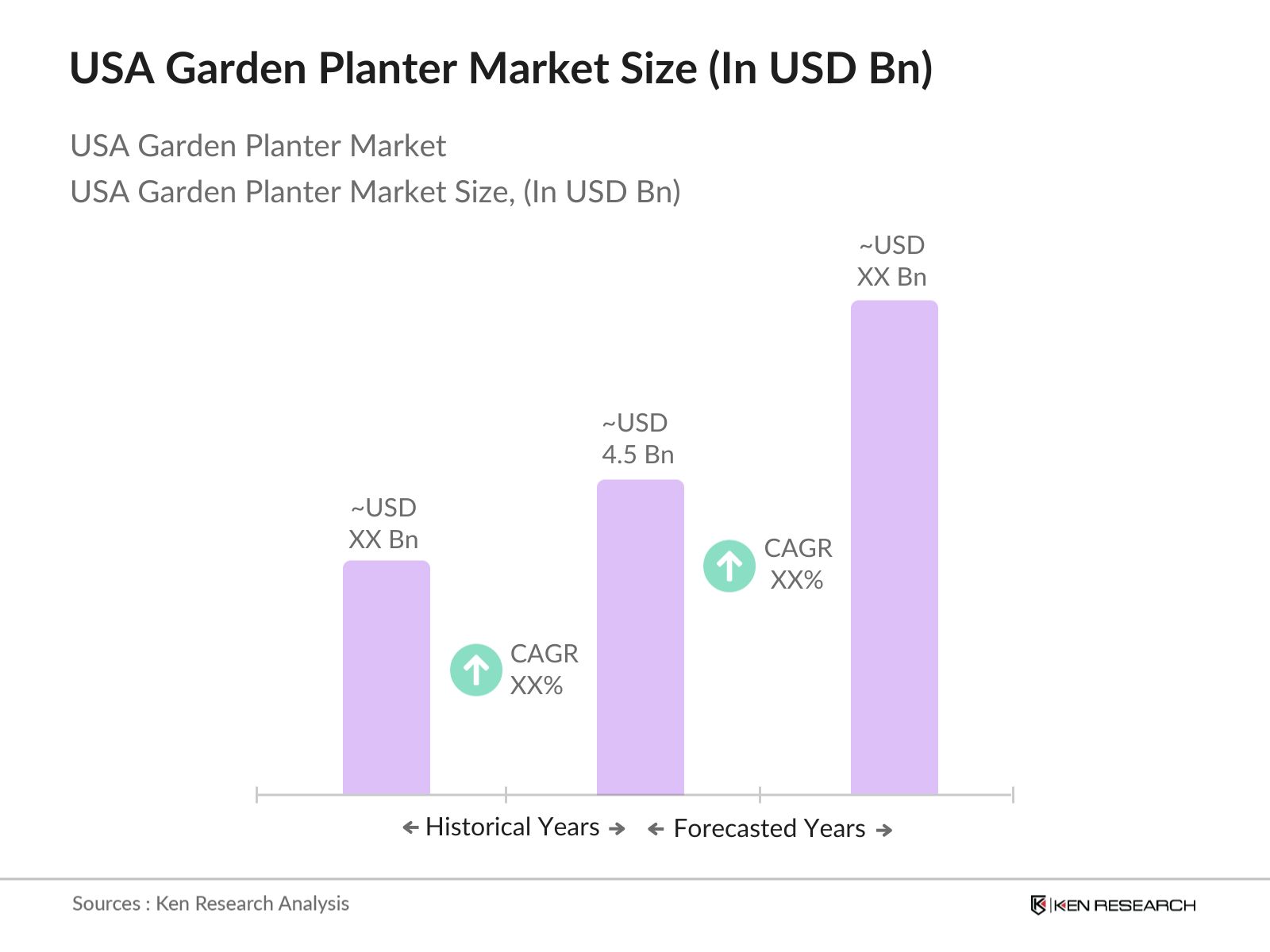
- The USA Garden Planter market is valued at USD 4.5 billion, based on a comprehensive analysis of the past five years. The market is driven by the increasing popularity of gardening as a leisure activity, particularly during the pandemic period. Additionally, urban gardening, such as the use of raised garden beds and vertical planters, has gained traction due to limited space in urban areas. The rising preference for sustainable, eco-friendly materials, such as biodegradable and recycled planters, is also fueling the market's growth.
- The dominant regions in the USA Garden Planter market are California, Texas, and Florida, driven by the favorable climate for gardening, along with strong consumer interest in home improvement and outdoor spaces. These states have robust markets for garden products due to their large populations, and a strong emphasis on sustainable living and landscaping aesthetics, which further enhances the demand for planters in residential and commercial settings.
- In 2024, the U.S. government imposed stricter import restrictions on certain raw materials used in planter manufacturing, such as certain types of clay and ceramic products. These restrictions are part of broader environmental and trade policies aimed at reducing the import of non-renewable resources. The restrictions have affected about 15% of the total imports of garden planter raw materials, according to U.S. Customs and Border Protection, pushing manufacturers to explore alternative, locally sourced materials.
USA Garden Planter Market Segmentation
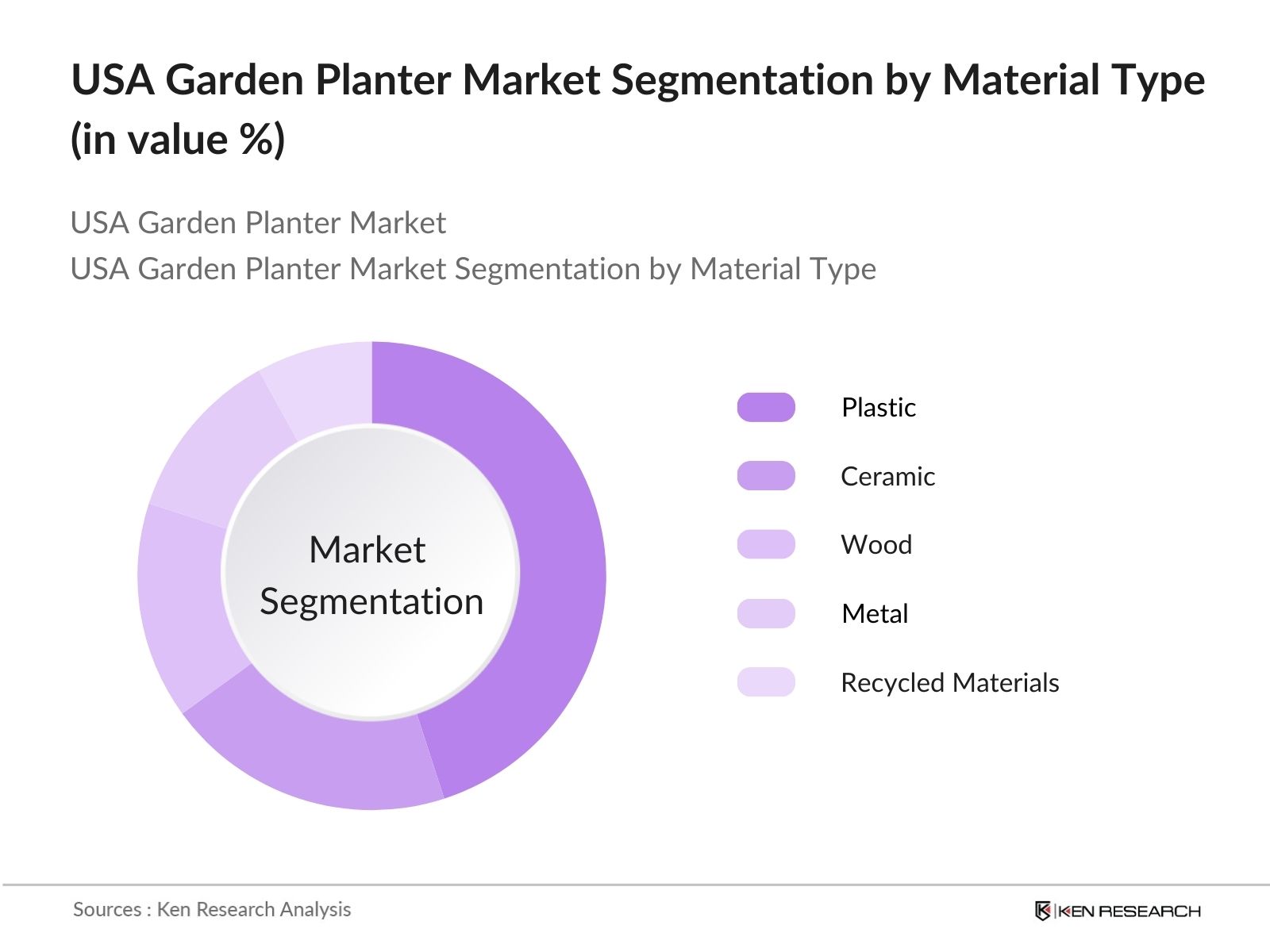
- By Material Type: The USA Garden Planter market is segmented by material type into plastic, ceramic, wood, metal, and recycled materials. Among these, plastic planters hold the dominant market share, driven by their affordability, lightweight nature, and durability. Consumers are attracted to plastic planters due to the wide variety of designs, colors, and sizes available, making them suitable for both indoor and outdoor use. Plastic's resistance to environmental conditions also makes it a popular choice among homeowners who want low-maintenance gardening options.
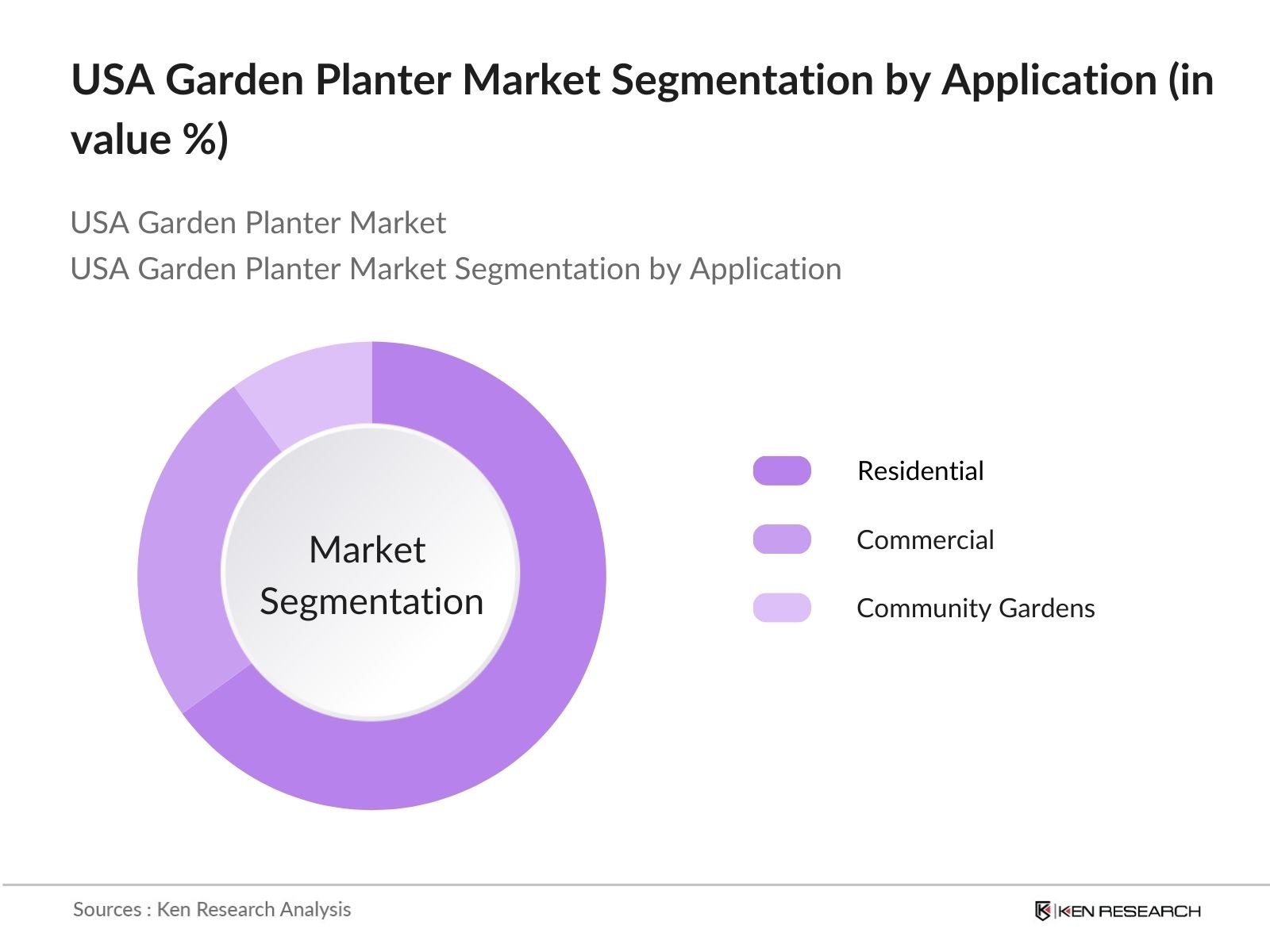
- By Application: The market is also segmented by application into residential, commercial (hotels, offices), and community gardens. The residential segment dominates the USA Garden Planter market, accounting for the highest market share. This is primarily due to the increasing trend of home gardening and landscaping, as consumers are more inclined toward enhancing the aesthetics of their outdoor spaces. The rise of DIY gardening kits and solutions further promotes the usage of planters in residential areas. The commercial segment is also growing, especially in hospitality and office spaces where planters are used for decor and sustainability purposes.
USA Garden Planter Market Competitive Landscape
The USA Garden Planter market is dominated by both established brands and new entrants focused on innovation and sustainability. Key players in the market have been actively expanding their product lines to include environmentally friendly materials and smart planter technologies. The consolidation of market players is creating a competitive landscape where companies compete on design, material innovation, and sustainable practices.
Company | Establishment Year | Headquarters | Product Range | Sustainability Initiatives | Distribution Network | Revenue (USD Mn) | Market Presence | Innovation Index |
The HC Companies | 1989 | Twinsburg, Ohio | - | - | - | - | - | - |
Bloem, LLC | 2004 | Hudsonville, Michigan | - | - | - | - | - | - |
Crescent Garden | 1996 | Miami, Florida | - | - | - | - | - | - |
Akro-Mils Lawn & Garden Products | 1980 | Akron, Ohio | - | - | - | - | - | - |
Lechuza | 2000 | Allgu, Germany | - | - | - | - | - | - |
USA Garden Planter Market Analysis
USA Garden Planter Market Growth Drivers
- Rise in Urban Gardening: Urban gardening has seen a substantial rise, with over 35 million U.S. households participating in some form of gardening in 2024, according to data from the USDA. This trend is particularly strong in densely populated areas where space is a premium, leading to the adoption of vertical gardening and community gardening practices. Urban centers like New York and Los Angeles are experiencing a boom in community gardening projects, supported by local government initiatives aimed at promoting green spaces in urban environments. This trend fuels demand for compact and space-saving planters.
- Increased Interest in Sustainable Living: Sustainable living has become a focal point for many consumers in the USA, with 45% of households opting for eco-friendly products in 2024, driven by environmental concerns and government policies on sustainability. The demand for recycled and biodegradable planters is growing, supported by federal initiatives like the EPA's Recycling Education and Outreach Grant. This market segment benefits from the increasing consumer interest in reducing carbon footprints and promoting a circular economy, emphasizing eco-conscious purchasing decisions.
- Expansion of DIY Garden Activities: DIY gardening activities surged in 2024, with over 55% of homeowners engaging in home gardening and landscape improvements, according to the U.S. Census Bureaus Annual Housing Survey. The growing popularity of social media platforms that promote home gardening tutorials has driven this trend. Many consumers now prefer customizable and easy-to-assemble planter kits, fueling growth in the garden planter market. This trend aligns with the rising interest in self-sufficiency, where homeowners seek to grow their own herbs and plants at home.
USA Garden Planter Market Challenges
- Availability of Low-Cost Alternatives: The garden planter market faces challenges from the wide availability of low-cost alternatives, particularly plastic planters, which account for 60% of the market in 2024, according to the U.S. International Trade Commission (USITC). Plastic planters, which are cheaper than ceramic or terracotta options, have a strong presence in the market. Despite their lower durability, they are preferred by budget-conscious consumers, creating a challenge for premium garden planter manufacturers. This price sensitivity limits the growth of higher-end, sustainable planter products.
- Transportation Costs: Transportation costs have become a major challenge for manufacturers, especially for heavy planters made of ceramic or stone, as fuel prices in the U.S. have reached an average of $3.50 per gallon in 2024. This increase in logistics expenses adds to the cost burden on both importers and domestic manufacturers. Additionally, import duties on certain materials, including clay and ceramics, have risen by 5% in 2024 due to the ongoing tariff war between the U.S. and several foreign suppliers.
USA Garden Planter Market Future Outlook
The USA Garden Planter market is expected to experience steady growth over the next five years, driven by increasing consumer interest in sustainable and eco-friendly gardening solutions. The growing trend of urbanization has spurred the demand for compact gardening solutions like vertical gardens and balcony planters. Additionally, the integration of smart technologies into planters, such as self-watering systems, will likely continue to shape the future market landscape. The market is also expected to benefit from government incentives promoting green living, especially in urban areas where space is limited.
USA Garden Planter Market Opportunities
- Rising Popularity of Indoor Gardening: Indoor gardening is gaining traction, particularly in urban areas where 30% of households live in apartments with limited outdoor space, according to the U.S. Census Bureaus 2024 housing report. The demand for compact, stylish, and apartment-friendly planters has risen accordingly. This segment has seen innovations like wall-mounted and self-watering planters that cater to urban dwellers who want to bring greenery indoors. This shift towards indoor gardening offers substantial opportunities for manufacturers to introduce new designs and space-efficient solutions.
- Innovations in Materials: Innovations in gardening technology, such as self-watering and smart planters, are transforming the U.S. garden planter market. In 2024, around 12% of U.S. households have adopted some form of smart garden technology, according to data from the National Gardening Association. Self-watering planters, equipped with sensors that monitor moisture levels, are gaining popularity due to their convenience and efficiency. This trend is driven by busy consumers who seek low-maintenance gardening solutions, presenting a lucrative opportunity for tech-integrated planter products.
Scope of the Report
Material Type | Plastic Ceramic Wood Metal Recycled Materials |
Application | Residential Commercial Community Gardens |
Distribution Channel | Online Retail Specialty Stores Home Improvement Stores Garden Centers |
Planter Type | Self-Watering Hanging Planters Raised Bed Planters Window Boxes Decorative Planters |
Region | Northeast Midwest South West |
Products
Key Target Audience
Home Improvement Retailers
Garden Centers and Nurseries
DIY Gardening Enthusiasts
Banks and Financial Institutions
Landscape Architects and Designers
Urban Gardening Groups
Investor and Venture Capitalist Firms
Government and Regulatory Bodies (EPA, USDA)
Hospitality Sector (Hotels, Resorts)
Companies
Players Mentioned in the Report
The HC Companies
Bloem, LLC
Crescent Garden
Akro-Mils Lawn & Garden Products
Classic Home & Garden
Lechuza
Deroma Group
Tupperware Brands Corporation
Novelty Manufacturing Co.
Fiskars Group
Table of Contents
1. USA Garden Planter Market Overview
1.1. Definition and Scope
1.2. Market Taxonomy
1.3. Market Growth Rate
1.4. Market Segmentation Overview
2. USA Garden Planter Market Size (In USD Mn)
2.1. Historical Market Size
2.2. Year-On-Year Growth Analysis
2.3. Key Market Developments and Milestones
3. USA Garden Planter Market Analysis
3.1. Growth Drivers
3.1.1. Rise in Urban Gardening (Community Gardening, Vertical Gardening)
3.1.2. Increased Interest in Sustainable Living (Recycled Planters, Eco-Friendly Products)
3.1.3. Expansion of DIY Garden Activities
3.2. Market Challenges
3.2.1. Availability of Low-Cost Alternatives (Plastic vs. Ceramic)
3.2.2. Transportation Costs (Heavy Planters, Import Duties)
3.2.3. Seasonal Demand Fluctuations
3.3. Opportunities
3.3.1. Rising Popularity of Indoor Gardening (Apartment-Friendly Planters)
3.3.2. Innovations in Materials (Self-Watering, Smart Planters)
3.3.3. Increasing Home Renovation Trends
3.4. Trends
3.4.1. Sustainable and Biodegradable Planters
3.4.2. Integration with Smart Home Devices
3.4.3. Customized and Decorative Planters for Aesthetic Appeal
3.5. Government Regulation
3.5.1. Import Restrictions on Certain Raw Materials
3.5.2. Environmental Regulations for Manufacturing
3.5.3. Tariff and Trade Policies
3.6. SWOT Analysis
3.7. Stake Ecosystem
3.8. Porters Five Forces
3.9. Competition Ecosystem
4. USA Garden Planter Market Segmentation
4.1. By Material Type (In Value %)
4.1.1. Plastic
4.1.2. Ceramic
4.1.3. Wood
4.1.4. Metal
4.1.5. Recycled Materials
4.2. By Application (In Value %)
4.2.1. Residential
4.2.2. Commercial (Hotels, Offices)
4.2.3. Community Gardens
4.3. By Distribution Channel (In Value %)
4.3.1. Online Retail
4.3.2. Specialty Stores
4.3.3. Home Improvement Stores
4.3.4. Garden Centers
4.4. By Planter Type (In Value %)
4.4.1. Self-Watering Planters
4.4.2. Hanging Planters
4.4.3. Raised Bed Planters
4.4.4. Window Boxes
4.4.5. Decorative Planters
4.5. By Region (In Value %)
4.5.1. Northeast
4.5.2. Midwest
4.5.3. South
4.5.4. West
5. USA Garden Planter Market Competitive Analysis
5.1. Detailed Profiles of Major Companies
5.1.1. The HC Companies
5.1.2. Bloem, LLC
5.1.3. Crescent Garden
5.1.4. Akro-Mils Lawn & Garden Products
5.1.5. Classic Home & Garden
5.1.6. Lechuza
5.1.7. Deroma Group
5.1.8. Tupperware Brands Corporation
5.1.9. Novelty Manufacturing Co.
5.1.10. Fiskars Group
5.1.11. Southern Patio
5.1.12. Elho
5.1.13. Algreen Products Inc.
5.1.14. Gardeners Supply Company
5.1.15. BFG Supply Co.
5.2. Cross Comparison Parameters (Annual Revenue, Product Range, Distribution Network, Innovation Index, Sustainability Initiatives, Market Share, Employee Count, Headquarters)
5.3. Market Share Analysis
5.4. Strategic Initiatives
5.5. Mergers and Acquisitions
5.6. Investment Analysis
5.7. Venture Capital Funding
5.8. Government Grants
5.9. Private Equity Investments
6. USA Garden Planter Market Regulatory Framework
6.1. Environmental Standards for Planter Materials
6.2. Compliance Requirements for Retailers
6.3. Certification Processes for Sustainable Products
7. USA Garden Planter Future Market Size (In USD Mn)
7.1. Future Market Size Projections
7.2. Key Factors Driving Future Market Growth
8. USA Garden Planter Future Market Segmentation
8.1. By Material Type (In Value %)
8.2. By Application (In Value %)
8.3. By Distribution Channel (In Value %)
8.4. By Planter Type (In Value %)
8.5. By Region (In Value %)
9. USA Garden Planter Market Analysts Recommendations
9.1. TAM/SAM/SOM Analysis
9.2. Customer Cohort Analysis
9.3. Marketing Initiatives
9.4. White Space Opportunity Analysis
Research Methodology
Step 1: Identification of Key Variables
The initial phase involves creating an ecosystem map encompassing all major stakeholders within the USA Garden Planter market. This step is supported by extensive desk research, utilizing a combination of secondary and proprietary databases to gather comprehensive industry-level information. The primary goal is to identify and define the critical variables that influence market dynamics.
Step 2: Market Analysis and Construction
In this phase, we compile and analyze historical data related to the USA Garden Planter market. This includes assessing market penetration, the ratio of residential to commercial usage, and revenue generation across various distribution channels. An evaluation of product quality and durability will be conducted to ensure the reliability and accuracy of revenue estimates.
Step 3: Hypothesis Validation and Expert Consultation
Market hypotheses will be developed and validated through computer-assisted telephone interviews (CATIs) with industry experts representing key companies. These consultations will provide valuable operational and financial insights, helping refine and corroborate the market data.
Step 4: Research Synthesis and Final Output
The final phase involves engaging with multiple planter manufacturers to gain detailed insights into product segments, sales performance, and consumer preferences. This interaction will serve to verify and complement the statistics derived from the bottom-up approach, ensuring a comprehensive, accurate, and validated analysis of the USA Garden Planter market.
Frequently Asked Questions
How big is the USA Garden Planter Market?
The USA Garden Planter market is valued at USD 4.5 billion, driven by rising consumer interest in home gardening, urban gardening trends, and sustainable materials.
What are the challenges in the USA Garden Planter Market?
Challenges in the USA Garden Planter market include high transportation costs for heavy planters, seasonal demand fluctuations, and competition from low-cost alternatives like plastic planters, which may limit growth in other material segments.
Who are the major players in the USA Garden Planter Market?
Key players in the USA Garden Planter market include The HC Companies, Bloem, LLC, Crescent Garden, Akro-Mils Lawn & Garden Products, and Lechuza. These companies dominate the market due to their innovative product offerings and strong distribution networks.
What are the growth drivers of the USA Garden Planter Market?
The USA Garden Planter market is driven by the increasing popularity of home gardening, growing awareness of eco-friendly living, and rising demand for durable and aesthetically appealing outdoor planters. Technological advancements, such as self-watering and smart planters, are also key growth drivers.
Why Buy From Us?

What makes us stand out is that our consultants follows Robust, Refine and Result (RRR) methodology. i.e. Robust for clear definitions, approaches and sanity checking, Refine for differentiating respondents facts and opinions and Result for presenting data with story

We have set a benchmark in the industry by offering our clients with syndicated and customized market research reports featuring coverage of entire market as well as meticulous research and analyst insights.

While we don't replace traditional research, we flip the method upside down. Our dual approach of Top Bottom & Bottom Top ensures quality deliverable by not just verifying company fundamentals but also looking at the sector and macroeconomic factors.

With one step in the future, our research team constantly tries to show you the bigger picture. We help with some of the tough questions you may encounter along the way: How is the industry positioned? Best marketing channel? KPI's of competitors? By aligning every element, we help maximize success.

Our report gives you instant access to the answers and sources that other companies might choose to hide. We elaborate each steps of research methodology we have used and showcase you the sample size to earn your trust.

If you need any support, we are here! We pride ourselves on universe strength, data quality, and quick, friendly, and professional service.