
USA Geotextiles Market Outlook to 2030
Region:United States
Author(s):Shambhavi Awasthi
Product Code:KROD8919
Region:United States
Author(s):Shambhavi Awasthi
Product Code:KROD8919
January 2025
88
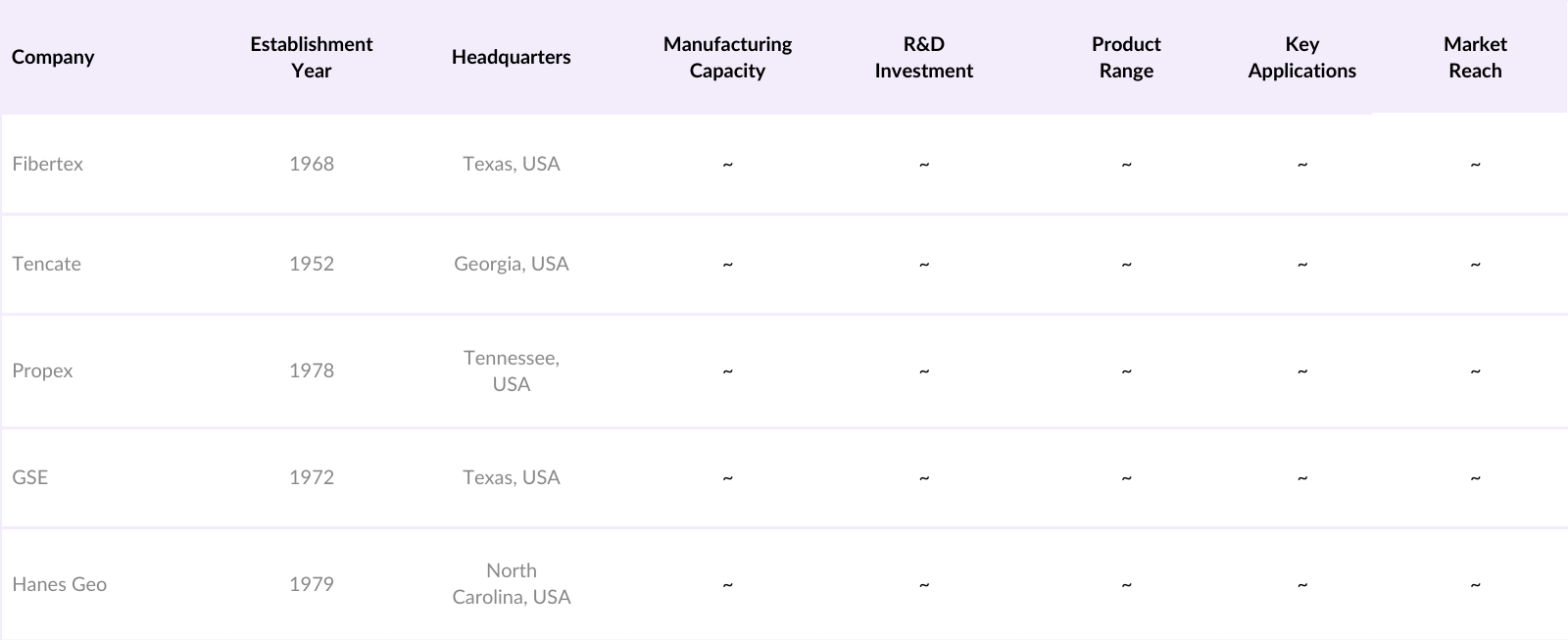
The USA geotextiles market is led by a few prominent players who have established a significant market presence through extensive R&D and high-quality product offerings. These companies include national leaders and key global players, enabling a consolidated and competitive market environment.
Market Challenges
The USA geotextiles market is expected to experience steady growth over the next five years due to increasing government support for sustainable infrastructure and continued advancements in geotextile materials. As environmental regulations tighten, demand for eco-friendly and durable solutions in infrastructure projects will likely boost market expansion. Additionally, advancements in geotextile technology, such as biodegradable materials, are expected to increase their application across varied industries.
Market Opportunities
|
Segment |
Sub-Segment |
|
Product Type |
Nonwoven Geotextiles |
|
Woven Geotextiles |
|
|
Knitted Geotextiles |
|
|
Material Type |
Polypropylene |
|
Polyester |
|
|
Polyethylene |
|
|
Natural Fibers |
|
|
Application |
Road and Pavement Construction |
|
Drainage Systems |
|
|
Soil Reinforcement |
|
|
Waste Management |
|
|
Erosion Control |
|
|
End-User |
Construction |
|
Agriculture |
|
|
Mining |
|
|
Oil & Gas |
|
|
Region |
Northeast USA |
|
Midwest USA |
|
|
South USA |
|
|
West USA |
1.1 Definition and Scope
1.2 Market Taxonomy
1.3 Market Growth Rate
1.4 Market Segmentation Overview
2.1 Historical Market Size
2.2 Year-on-Year Growth Analysis
2.3 Key Market Developments and Milestones
3.1 Growth Drivers (Market-specific parameters)
3.1.1 Infrastructure Development Surge
3.1.2 Environmental Regulations Promoting Sustainable Construction
3.1.3 Rising Demand in Erosion Control Applications
3.1.4 Increasing Adoption in Waste Management Projects
3.2 Market Challenges (Market-specific parameters)
3.2.1 High Raw Material Prices
3.2.2 Limited Awareness in Emerging Sectors
3.2.3 Environmental Impact of Synthetic Geotextiles
3.3 Opportunities (Market-specific parameters)
3.3.1 Advancements in Biodegradable Geotextiles
3.3.2 Growth in Road Construction Projects
3.3.3 Adoption of Geotextiles in Urban Flood Control Systems
3.4 Trends (Market-specific parameters)
3.4.1 Shift Toward Eco-friendly Geotextiles
3.4.2 Increase in Nonwoven Geotextile Demand
3.4.3 Integration with Green Building Standards
3.5 Government Regulations (Market-specific parameters)
3.5.1 Standards for Geotextile Use in Construction
3.5.2 Environmental Compliance in Geosynthetics Production
3.5.3 Mandates for Erosion Control in Infrastructure Projects
3.6 SWOT Analysis
3.7 Value Chain and Stakeholder Ecosystem
3.8 Porters Five Forces Analysis
3.9 Competitive Landscape
4.1 By Product Type
4.1.1 Nonwoven Geotextiles
4.1.2 Woven Geotextiles
4.1.3 Knitted Geotextiles
4.2 By Material Type
4.2.1 Polypropylene
4.2.2 Polyester
4.2.3 Polyethylene
4.2.4 Natural Fibers
4.3 By Application
4.3.1 Road and Pavement Construction
4.3.2 Drainage Systems
4.3.3 Soil Reinforcement
4.3.4 Waste Management
4.3.5 Erosion Control
4.4 By End-User
4.4.1 Construction
4.4.2 Agriculture
4.4.3 Mining
4.4.4 Oil & Gas
4.5 By Region
4.5.1 Northeast USA
4.5.2 Midwest USA
4.5.3 South USA
4.5.4 West USA
5.1 Detailed Profiles of Major Companies
5.1.1 Fibertex Nonwovens A/S
5.1.2 Tencate Geosynthetics
5.1.3 GSE Environmental LLC
5.1.4 Propex Operating Company LLC
5.1.5 Huesker Inc.
5.1.6 NAUE GmbH & Co. KG
5.1.7 Officine Maccaferri SpA
5.1.8 Geofabrics Australasia Pty Ltd
5.1.9 Berry Global, Inc.
5.1.10 Low & Bonar PLC
5.1.11 Leggett & Platt Incorporated
5.1.12 Thrace Group
5.1.13 Royal TenCate
5.1.14 Hanes Geo Components
5.1.15 Contech Engineered Solutions LLC
5.2 Cross Comparison Parameters (Employee Count, Headquarters Location, Foundation Year, Revenue, Product Range, Market Presence, R&D Investment, Strategic Initiatives)
5.3 Market Share Analysis
5.4 Strategic Partnerships and Collaborations
5.5 Mergers and Acquisitions
5.6 Investment Analysis
5.7 Venture Capital Involvement
5.8 Government Grants and Subsidies
5.9 Private Equity Activity
6.1 Standards for Manufacturing and Application
6.2 Environmental Compliance Requirements
6.3 Certification and Licensing Processes
7.1 Projections for Future Market Growth
7.2 Key Factors Driving Future Demand
8.1 By Product Type
8.2 By Material Type
8.3 By Application
8.4 By End-User
8.5 By Region
9.1 TAM/SAM/SOM Analysis
9.2 Customer Cohort Analysis
9.3 Strategic Marketing Initiatives
9.4 White Space and Opportunity Mapping
Disclaimer Contact UsThe research begins with a comprehensive mapping of the USA geotextiles market ecosystem, identifying critical stakeholders. Secondary databases and industry reports are used to collect fundamental information on market dynamics and influential variables.
Historical data on production, consumption, and import/export trends for geotextiles are compiled and analyzed. This stage assesses the markets depth across applications, from road construction to agriculture, to produce accurate projections.
Market assumptions are validated through interviews with industry experts, including manufacturers and distributors, who provide insights into operational trends and financial performance, strengthening the datasets credibility.
The final phase involves synthesizing the gathered data to provide a holistic view of the market. This step includes cross-referencing data from multiple sources and summarizing key findings in a validated and coherent report.
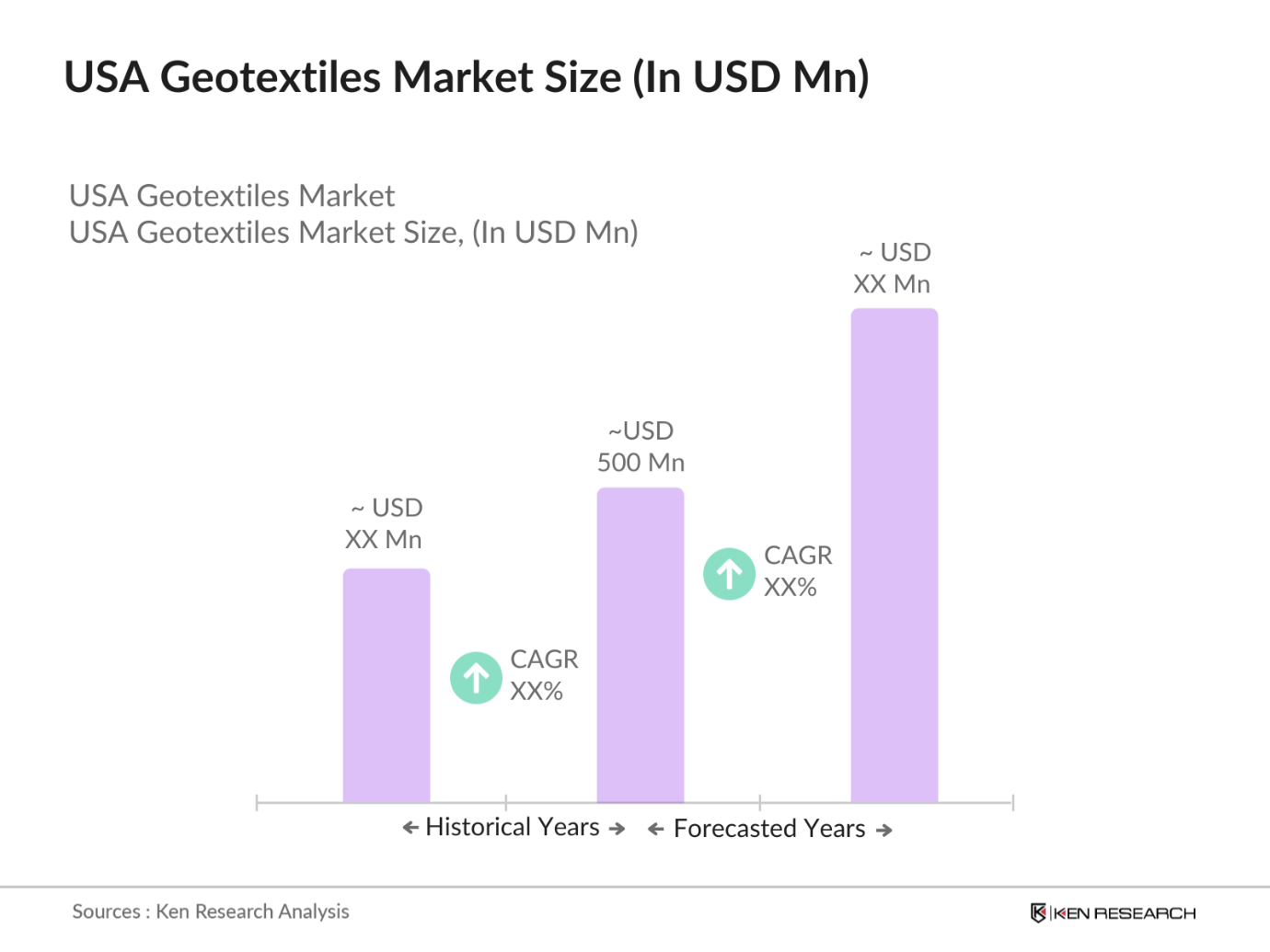
The USA geotextiles market is valued at approximately USD 500 million, supported by the rise in infrastructural projects and environmental measures for soil stabilization.
Key growth drivers include increasing demand for sustainable infrastructure solutions, government regulations supporting eco-friendly practices, and advancements in geotextile technology for diverse applications.
The market includes major players such as Fibertex, Tencate, Propex, GSE Environmental, and Hanes Geo, which dominate due to their high R&D investments and extensive product portfolios.
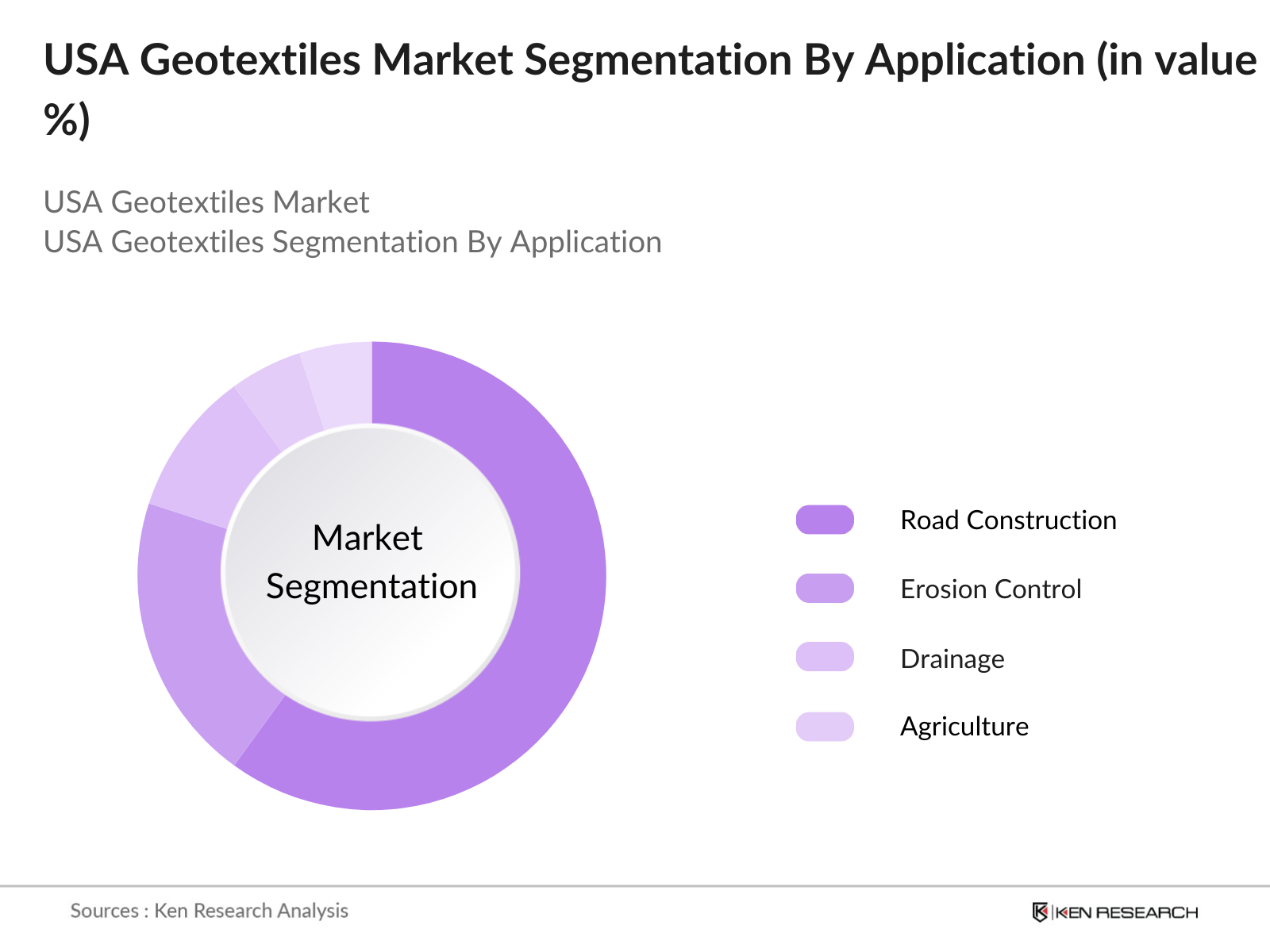
Primary applications include road construction, erosion control, and drainage systems, with road construction leading due to its critical role in infrastructure development.
Challenges include fluctuating raw material costs, regulatory compliance requirements, and competition from alternative materials, which may impact market growth and profitability.

What makes us stand out is that our consultants follows Robust, Refine and Result (RRR) methodology. i.e. Robust for clear definitions, approaches and sanity checking, Refine for differentiating respondents facts and opinions and Result for presenting data with story

We have set a benchmark in the industry by offering our clients with syndicated and customized market research reports featuring coverage of entire market as well as meticulous research and analyst insights.

While we don't replace traditional research, we flip the method upside down. Our dual approach of Top Bottom & Bottom Top ensures quality deliverable by not just verifying company fundamentals but also looking at the sector and macroeconomic factors.

With one step in the future, our research team constantly tries to show you the bigger picture. We help with some of the tough questions you may encounter along the way: How is the industry positioned? Best marketing channel? KPI's of competitors? By aligning every element, we help maximize success.

Our report gives you instant access to the answers and sources that other companies might choose to hide. We elaborate each steps of research methodology we have used and showcase you the sample size to earn your trust.

If you need any support, we are here! We pride ourselves on universe strength, data quality, and quick, friendly, and professional service.