
USA Grocery & Food Market Outlook to 2030
Region:United States
Author(s):Sanjna
Product Code:KROD11254
Region:United States
Author(s):Sanjna
Product Code:KROD11254
November 2024
86
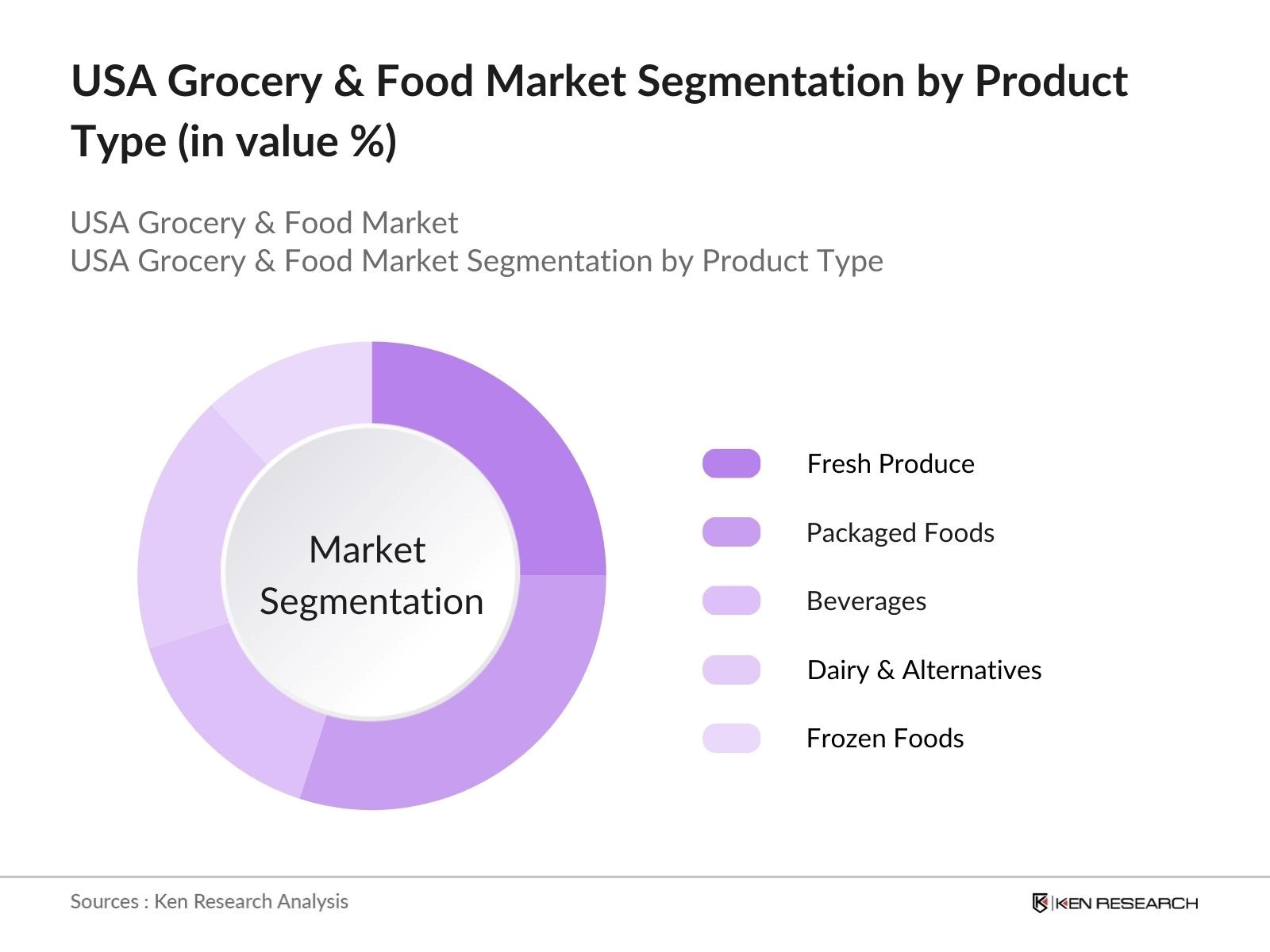
By Product Type: The USA Grocery & Food Market is segmented by product type into fresh produce, packaged foods, beverages, dairy and dairy alternatives, and frozen foods. Packaged foods currently lead the market share due to their convenience, longer shelf life, and versatility across a wide range of consumer segments. The robust demand for ready-to-eat meals, snack foods, and pantry staples has cemented the position of packaged foods as a dominant product type, with established brands driving consumer trust and loyalty.
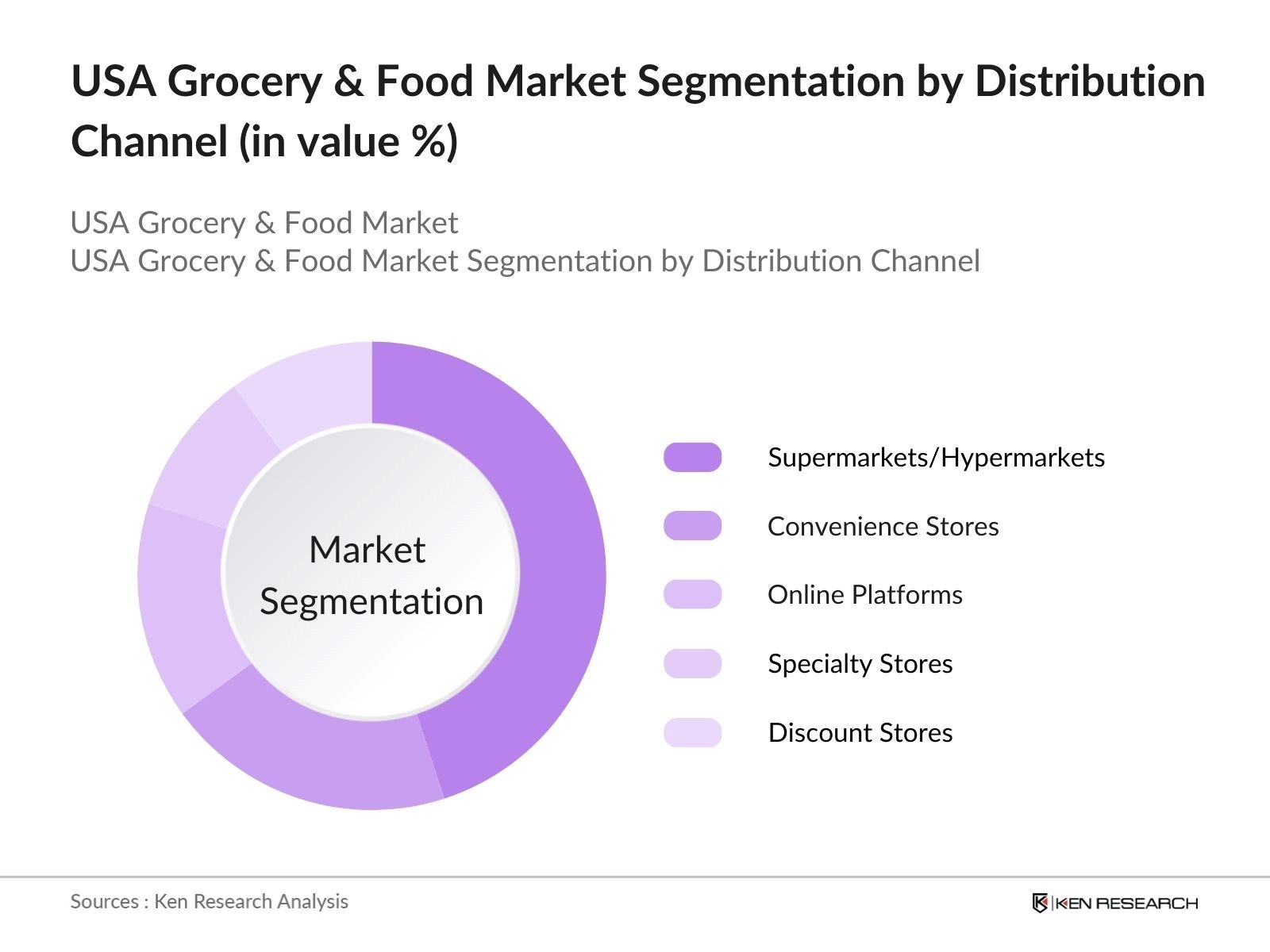
By Distribution Channel: Distribution channels in the USA Grocery & Food Market include supermarkets/hypermarkets, convenience stores, online platforms, specialty stores, and discount stores. Supermarkets and hypermarkets hold a significant share as the primary shopping destination for consumers, given their extensive selection, competitive pricing, and frequent promotional offers. Additionally, the large-scale and established presence of supermarket chains across the U.S. contributes to their dominance within the market.
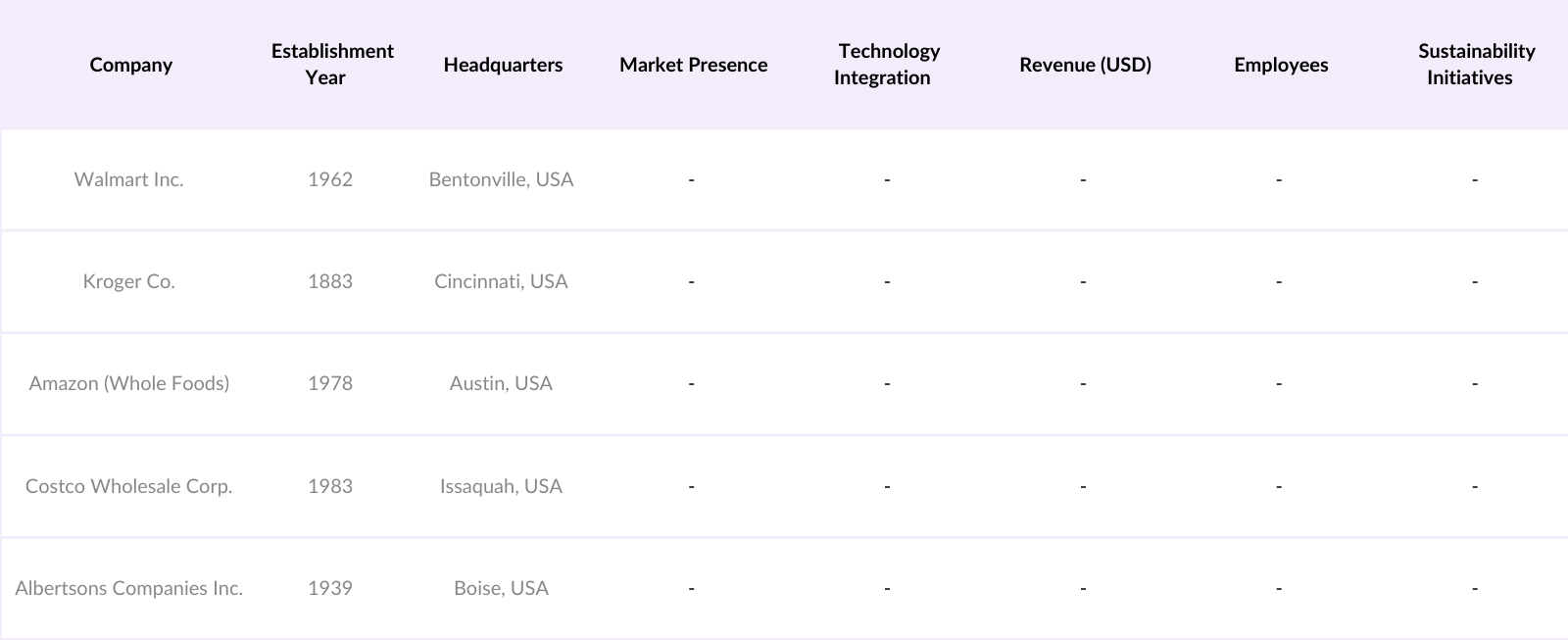
The USA Grocery & Food Market is shaped by both domestic and international companies, many of which have an extensive distribution network, wide product portfolio, and high consumer trust. Major players include Walmart, Kroger, and Amazon (Whole Foods), which highlight the consolidated market power among key players.
Over the next five years, the USA Grocery & Food Market is projected to grow steadily, supported by a combination of consumer preferences for convenience, innovation in food and beverage options, and an increasing focus on sustainability. This period is expected to witness further digital transformation within the grocery sector, including the adoption of AI-driven personalized shopping experiences and the expansion of e-commerce platforms to meet changing consumer needs.
|
Segment |
Sub-Segments |
|
By Product Type |
Fresh Produce |
|
By Distribution Channel |
Supermarkets/Hypermarkets |
|
By Consumer Demographics |
Age Groups |
|
By Dietary Preferences |
Organic |
|
By Region |
Northeast |
1.1. Definition and Scope
1.2. Market Taxonomy
1.3. Market Growth Rate
1.4. Market Segmentation Overview
2.1. Historical Market Size
2.2. Year-On-Year Growth Analysis
2.3. Key Market Developments and Milestones
3.1. Growth Drivers
3.1.1. Rise of E-commerce in Grocery
3.1.2. Demand for Organic & Clean Label Foods
3.1.3. Health and Wellness Trends
3.1.4. Technological Integration in Retail
3.2. Market Challenges
3.2.1. Logistic and Supply Chain Constraints
3.2.2. Price Competition and Cost Inflation
3.2.3. Regulatory Compliance Challenges
3.3. Opportunities
3.3.1. Growth in Plant-Based and Alternative Proteins
3.3.2. Sustainable and Eco-Friendly Initiatives
3.3.3. Private Label Expansion in Grocery Chains
3.4. Trends
3.4.1. Rise of Subscription Services in Food Retail
3.4.2. Increasing Demand for Ready-to-Eat Meals
3.4.3. Omnichannel and Hybrid Retail Models
3.5. Government Regulations
3.5.1. FDA Regulations on Food Safety
3.5.2. USDA Standards for Organic Certification
3.5.3. Labeling and Nutritional Transparency
3.6. SWOT Analysis
3.7. Stake Ecosystem (Retailers, Distributors, Suppliers, Regulatory Bodies)
3.8. Porter’s Five Forces
3.9. Competition Ecosystem
4.1. By Product Type
4.1.1. Fresh Produce
4.1.2. Packaged Foods
4.1.3. Beverages
4.1.4. Dairy and Dairy Alternatives
4.1.5. Frozen Foods
4.2. By Distribution Channel
4.2.1. Supermarkets/Hypermarkets
4.2.2. Convenience Stores
4.2.3. Online Platforms
4.2.4. Specialty Stores
4.2.5. Discount Stores
4.3. By Consumer Demographics
4.3.1. Age Groups
4.3.2. Income Levels
4.3.3. Family Size
4.4. By Dietary Preferences
4.4.1. Organic
4.4.2. Plant-Based
4.4.3. Gluten-Free
4.4.4. Keto and Low-Carb
4.5. By Region
4.5.1. Northeast
4.5.2. Midwest
4.5.3. South
4.5.4. West
5.1. Detailed Profiles of Major Companies
5.1.1. Walmart Inc.
5.1.2. Kroger Co.
5.1.3. Amazon (Whole Foods Market)
5.1.4. Costco Wholesale Corporation
5.1.5. Albertsons Companies Inc.
5.1.6. Ahold Delhaize USA
5.1.7. Target Corporation
5.1.8. Publix Super Markets, Inc.
5.1.9. Sprouts Farmers Market, Inc.
5.1.10. Trader Joe's Company
5.2. Cross Comparison Parameters
5.3. Market Share Analysis
5.4. Strategic Initiatives
5.5. Mergers and Acquisitions
5.6. Investment Analysis
5.7. Private Equity and Venture Capital Investments
5.8. Government Grants and Subsidies
5.9. Technological Innovations and Partnerships
6.1. Food Safety Standards
6.2. Labeling and Nutritional Information Requirements
6.3. Import and Export Regulations
6.4. Certifications and Compliance Requirements
7.1. Market Size Projections
7.2. Key Factors Driving Future Market Growth
8.1. By Product Type
8.2. By Distribution Channel
8.3. By Dietary Preferences
8.4. By Consumer Demographics
8.5. By Region
9.1. TAM/SAM/SOM Analysis
9.2. Customer Cohort Analysis
9.3. Marketing Initiatives
9.4. White Space Opportunity Analysis
This phase involves constructing an ecosystem map, identifying all critical players in the USA Grocery & Food Market. Comprehensive desk research, drawing on secondary and proprietary databases, helps establish a foundation of market-relevant data.
Historical data is compiled, focusing on market size, revenue growth, and distribution channels. Comparative analysis within these parameters ensures accurate estimates and trends that inform future projections.
Hypotheses based on initial findings are validated through expert interviews, conducted with industry insiders who provide direct insights on competitive dynamics, consumer preferences, and technological advances.
The last phase incorporates insights gathered, merging qualitative and quantitative findings to produce a well-rounded, accurate picture of the USA Grocery & Food Market. This approach assures a reliable, data-backed analysis.
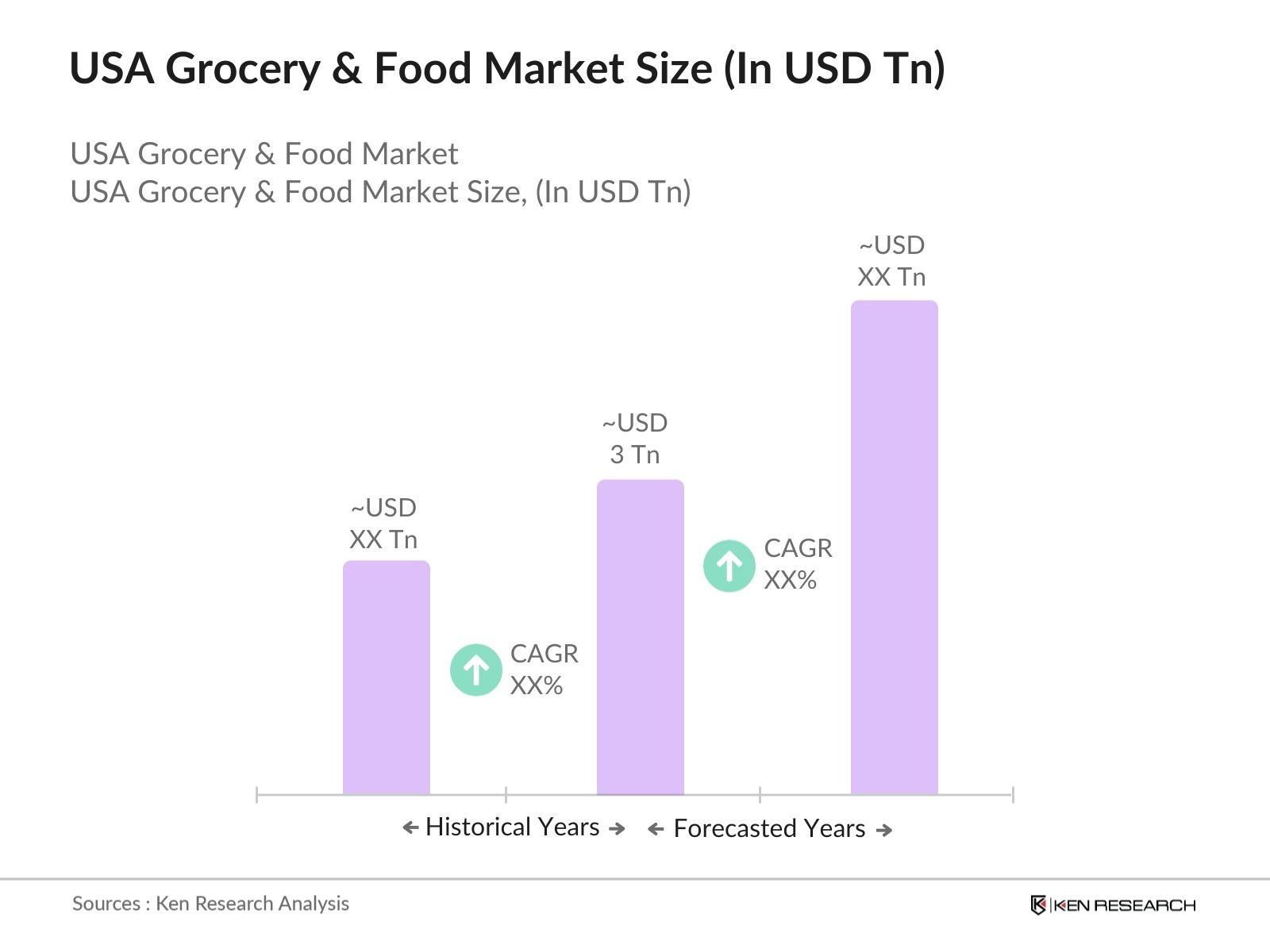
The USA Grocery & Food Market is valued at USD 3 trillion, with steady growth attributed to consumer demand for diverse, fresh, and health-conscious options, as well as the rapid growth of e-commerce grocery services.
Key challenges in USA Grocery & Food Market include logistics and supply chain disruptions, regulatory compliance costs, and intense price competition, which pressure companies to innovate and optimize their operations.
Leading companies in USA Grocery & Food Market include Walmart, Kroger, and Amazon (Whole Foods Market), which maintain dominance through extensive distribution networks and robust brand loyalty.
USA Grocery & Food Market growth is propelled by consumer preferences for healthier, organic, and ready-to-eat options, coupled with the rise of digital grocery shopping platforms and convenient delivery options.

What makes us stand out is that our consultants follows Robust, Refine and Result (RRR) methodology. i.e. Robust for clear definitions, approaches and sanity checking, Refine for differentiating respondents facts and opinions and Result for presenting data with story

We have set a benchmark in the industry by offering our clients with syndicated and customized market research reports featuring coverage of entire market as well as meticulous research and analyst insights.

While we don't replace traditional research, we flip the method upside down. Our dual approach of Top Bottom & Bottom Top ensures quality deliverable by not just verifying company fundamentals but also looking at the sector and macroeconomic factors.

With one step in the future, our research team constantly tries to show you the bigger picture. We help with some of the tough questions you may encounter along the way: How is the industry positioned? Best marketing channel? KPI's of competitors? By aligning every element, we help maximize success.

Our report gives you instant access to the answers and sources that other companies might choose to hide. We elaborate each steps of research methodology we have used and showcase you the sample size to earn your trust.

If you need any support, we are here! We pride ourselves on universe strength, data quality, and quick, friendly, and professional service.