















USA Home Healthcare Market Outlook to 2030
Region:North America
Author(s):Sanjna
Product Code:KROD5013
November 2024
91
About the Report
USA Home Healthcare Market Overview
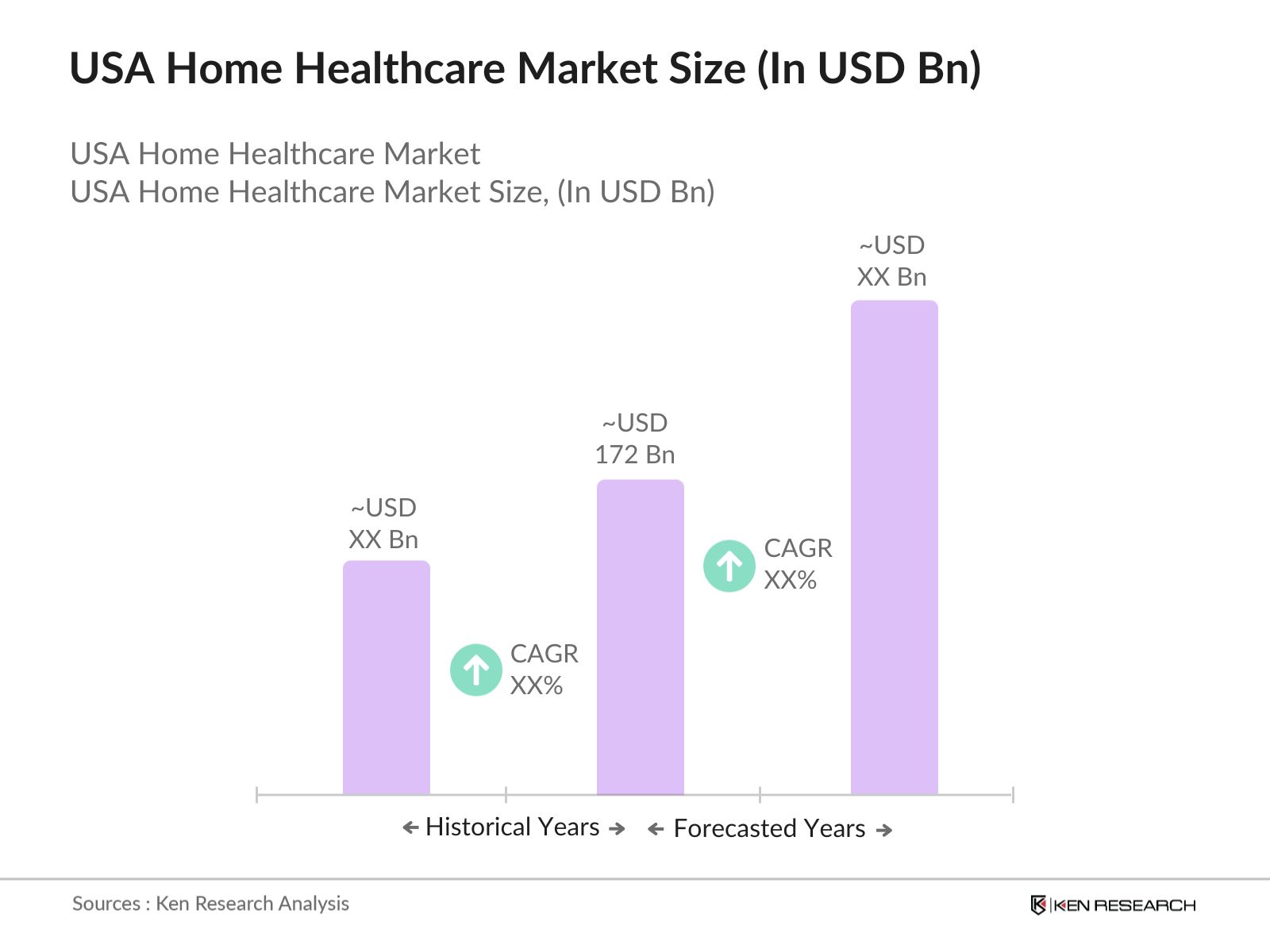
- The USA home healthcare market is valued at USD 172 billion, driven by several key factors. One of the main drivers is the aging population in the U.S., which demands more accessible and cost-effective care solutions for managing chronic illnesses and age-related health conditions. Additionally, the increased adoption of technological advancements such as telemedicine and AI-driven healthcare devices has significantly boosted the market's growth. The demand for home-based care, which is less expensive than hospitalization, also contributes to the market's expansion.
- Dominant cities in this market include New York, Los Angeles, and Chicago. These cities have a high population density, a significant aging demographic, and a well-established healthcare infrastructure, making them primary markets for home healthcare services. Furthermore, regions such as the Northeast and Midwest have seen substantial growth due to increased investments in healthcare infrastructure and higher disposable incomes, allowing for more extensive use of home-based medical services.
- Home healthcare providers in the USA are required to comply with the Health Insurance Portability and Accountability Act (HIPAA) to protect patient privacy. In 2024, HIPAA continues to enforce strict guidelines on the handling of patient health information, including electronic health records (EHR). Providers must ensure that all telemedicine platforms, data storage systems, and communication methods are secure to avoid costly violations and penalties, which can exceed $50,000 per breach.
USA Home Healthcare Market Segmentation
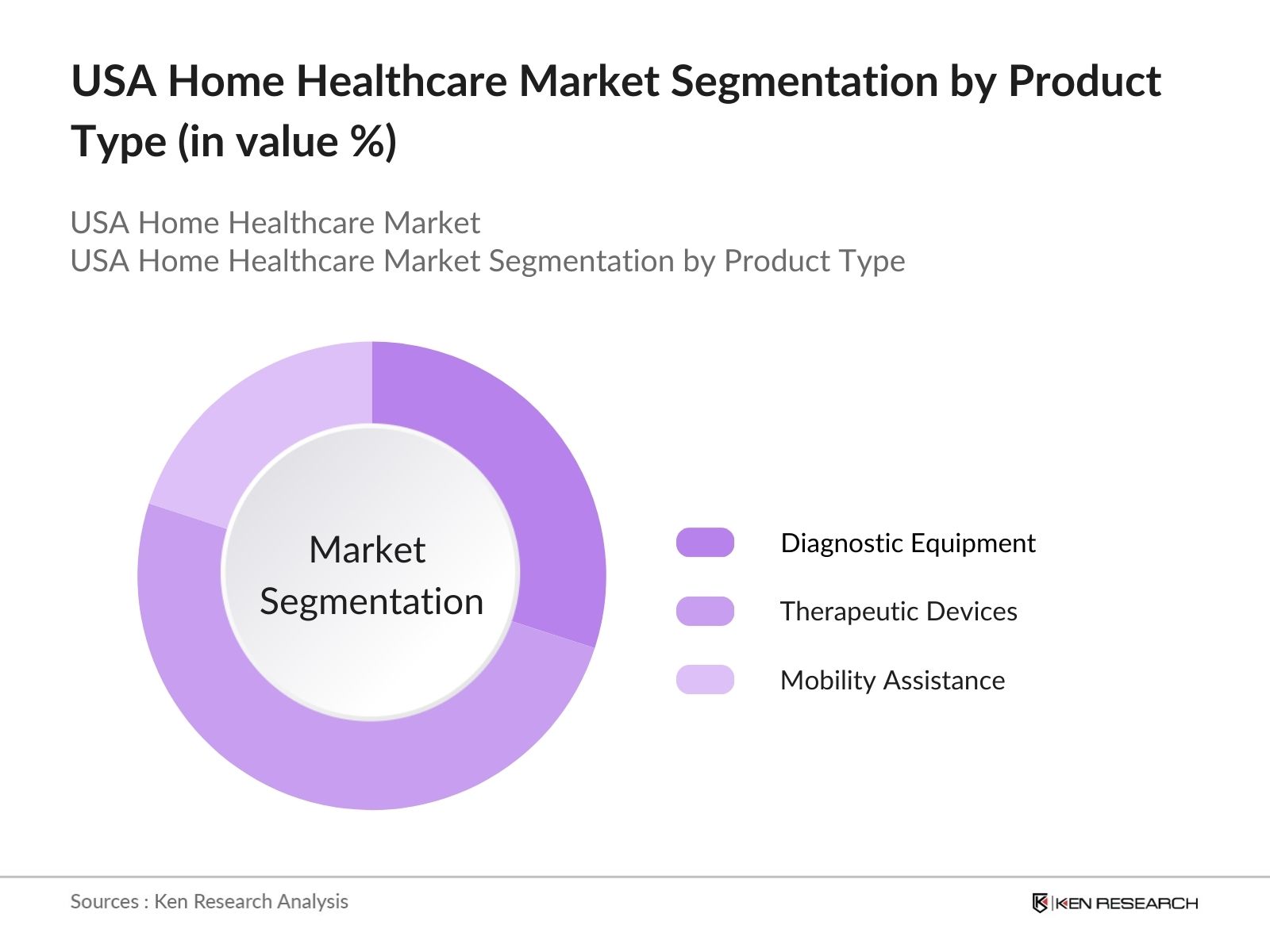
By Product Type: The USA home healthcare market is segmented by product type into diagnostic equipment, therapeutic devices, and mobility assistance. Recently, therapeutic devices have dominated the product type segmentation, mainly due to their increasing use in managing chronic diseases like diabetes, cardiovascular disorders, and respiratory conditions. The growing awareness of personal healthcare management and advancements in portable and user-friendly therapeutic devices has further accelerated their adoption in home settings.
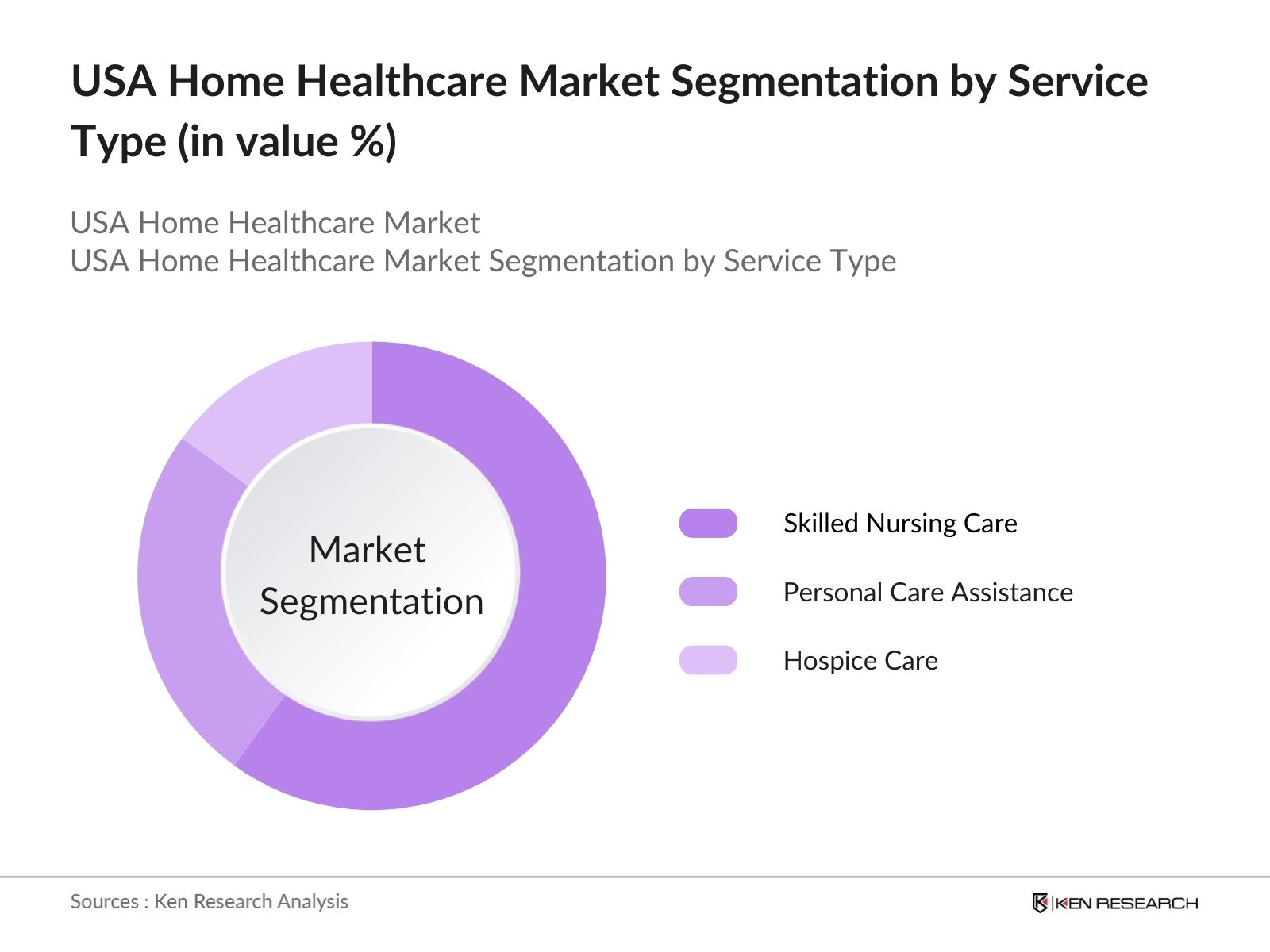
By Service Type: The USA home healthcare market is segmented by service type into skilled nursing care, personal care assistance, and hospice care. Skilled nursing care holds the dominant market share under this segmentation due to the growing number of elderly patients requiring continuous medical supervision for managing chronic conditions. Additionally, skilled nurses are well-trained to offer a range of medical services that make home care more feasible and effective, thus driving the preference for this service type.
USA Home Healthcare Market Competitive Landscape
The USA home healthcare market is characterized by a blend of national and regional players, with a high degree of competition among companies offering a wide range of healthcare services and medical devices. This market is dominated by companies like Amedisys Inc., Kindred Healthcare, and LHC Group Inc., which have extensive networks and service portfolios. These companies strategies include mergers and acquisitions, partnerships, and technology integration to maintain a competitive edge in the market.
|
Company |
Establishment Year |
Headquarters |
Revenue (USD Billion) |
Service Portfolio |
Market Share (%) |
Key Technology Integration |
Customer Base |
Strategic Initiatives |
|
Amedisys Inc. |
1982 |
Baton Rouge, Louisiana |
- |
- |
- |
- |
- |
- |
|
Kindred Healthcare, LLC |
1985 |
Louisville, Kentucky |
- |
- |
- |
- |
- |
- |
|
LHC Group Inc. |
1994 |
Lafayette, Louisiana |
- |
- |
- |
- |
- |
- |
|
Brookdale Senior Living Inc. |
1978 |
Brentwood, Tennessee |
- |
- |
- |
- |
- |
- |
|
Encompass Health Corporation |
1984 |
Birmingham, Alabama |
- |
- |
- |
- |
- |
- |
USA Home Healthcare Market Analysis
Growth Drivers
- Aging Population: The USA is experiencing a significant rise in its elderly population, with nearly 55 million individuals aged 65 and older in 2024, according to the U.S. Census Bureau. The aging population contributes to a growing demand for home healthcare services, as older adults often prefer receiving care at home due to convenience and comfort. Such statistics highlight the increasing reliance on home healthcare in response to aging trends.
- Chronic Disease Prevalence: As of 2024, the Centers for Disease Control and Prevention (CDC) estimates that 129 million Americans are living with at least one chronic disease, including conditions such as heart disease, diabetes, and respiratory diseases. Chronic diseases are a significant burden on the healthcare system and often require long-term management, which has increased the demand for home-based care solutions. With the number of patients requiring regular medical attention growing, home healthcare has become a vital service to provide ongoing care while reducing hospital visits.
- Technological Advancements in Healthcare: Advances in medical technology have transformed home healthcare services, with telemedicine, AI-powered devices, and wearable health monitors playing a significant role. For example, the number of telemedicine visits in the USA surged to over 38 million in 2023. These technologies enable remote patient monitoring, medication management, and virtual consultations, significantly improving the quality of care and reducing hospital admissions. This technological shift is driving greater adoption of home healthcare services in the country.
Challenges
- Insurance Reimbursement Issues: Insurance reimbursement for home healthcare remains a complex issue in the USA. Although Medicare covers some home health services, there are strict eligibility criteria that often limit the scope of services. As of 2024, the Centers for Medicare & Medicaid Services (CMS) has set the30-day standard payment ratefor home health agencies at$2,038.13, which represents a 1.4% increase from the previous year. These reimbursement challenges create financial barriers for individuals seeking comprehensive home care services, thereby slowing market growth.
- Regulatory Hurdles: Home healthcare providers must navigate a complex regulatory landscape in the USA, including federal and state-level requirements. In 2024, healthcare companies continue to face challenges complying with Medicare Conditions of Participation (CoPs) and Home Health Value-Based Purchasing models. Regulatory compliance costs for home healthcare providers can be significant, impacting their ability to scale operations and invest in advanced healthcare technologies.
USA Home Healthcare Future Market Outlook
Over the next five years, the USA home healthcare market is expected to exhibit significant growth, driven by continuous advancements in medical technology, increased adoption of telemedicine, and a growing aging population. The demand for home-based care will further be bolstered by the increasing costs of hospital-based treatment and the preference for more convenient and personalized healthcare solutions. Innovations in remote patient monitoring and AI-driven devices will play a key role in transforming the home healthcare market landscape.
Market Opportunities
- Telemedicine Integration: Telemedicine has become an integral part of home healthcare services in the USA, with over 38 million telehealth visits recorded in 2023. This growing trend presents a significant opportunity for expanding home-based care, especially for patients with limited mobility or those in rural areas. As telemedicine services become more widely adopted, home healthcare providers can offer virtual consultations, remote monitoring, and digital health solutions, thus increasing patient access to care.
- Expansion into Rural Areas: Approximately 46 million Americans live in rural areas, where access to healthcare facilities is often limited. The U.S. Health Resources and Services Administration (HRSA) has identified a critical shortage of healthcare providers in rural areas, creating an opportunity for home healthcare services to expand in these regions. Mobile health units and telehealth services can bridge the gap, providing patients in underserved areas with the medical care they need. As a result, rural areas present a lucrative growth opportunity for home healthcare providers.
Scope of the Report
|
Segment |
Sub-Segments |
|
Product Type |
Diagnostic Equipment |
|
Therapeutic Devices |
|
|
Mobility Assistance |
|
|
Service Type |
Skilled Nursing Care |
|
Personal Care Assistance |
|
|
Hospice Care |
|
|
Application |
Chronic Illness Management |
|
Post-Surgical Recovery |
|
|
Palliative Care |
|
|
End-User |
Elderly Population |
|
Pediatric Patients |
|
|
Disabled Individuals |
|
|
Region |
Northeast |
|
Midwest |
|
|
South |
|
|
West |
Products
Key Target Audience
Medical Device Manufacturers
Home Healthcare Service Providers
Health Insurance Companies
Telemedicine Providers
Technology Companies (AI and IoT solutions)
Investors and Venture Capitalist Firms
Government and Regulatory Bodies (CMS, FDA)
Companies
Major Players
Amedisys Inc.
Kindred Healthcare, LLC
LHC Group Inc.
Brookdale Senior Living Inc.
Encompass Health Corporation
BrightStar Care
Interim HealthCare Inc.
AccentCare, Inc.
BAYADA Home Health Care
Comfort Keepers
Addus HomeCare Corporation
HCA Healthcare Inc.
Visiting Angels
Home Instead
VITAS Healthcare
Table of Contents
1. USA Home Healthcare Market Overview
1.1 Definition and Scope
1.2 Market Taxonomy
1.3 Market Growth Rate
1.4 Market Segmentation Overview
2. USA Home Healthcare Market Size (In USD Bn)
2.1 Historical Market Size
2.2 Year-On-Year Growth Analysis
2.3 Key Market Developments and Milestones
3. USA Home Healthcare Market Analysis
3.1 Growth Drivers
3.1.1 Aging Population
3.1.2 Chronic Disease Prevalence
3.1.3 Increasing Preference for Home Care
3.1.4 Technological Advancements in Healthcare
3.2 Market Challenges
3.2.1 Insurance Reimbursement Issues
3.2.2 Lack of Skilled Workforce
3.2.3 Regulatory Hurdles
3.2.4 High Costs of Healthcare Devices
3.3 Opportunities
3.3.1 Telemedicine Integration
3.3.2 AI-Powered Monitoring Devices
3.3.3 Expansion into Rural Areas
3.3.4 Government Support for Home-Based Care
3.4 Trends
3.4.1 Rise in Remote Patient Monitoring
3.4.2 AI and IoT Integration in Healthcare
3.4.3 Increased Use of Wearable Devices
3.4.4 Personalized Healthcare Solutions
3.5 Government Regulations
3.5.1 Medicare and Medicaid Policies
3.5.2 HIPAA Compliance
3.5.3 FDA Regulations on Home Healthcare Devices
3.5.4 Licensing Requirements
3.5.5 State-Level Regulations
3.6 SWOT Analysis
3.7 Stakeholder Ecosystem
3.8 Porters Five Forces Analysis
3.9 Competitive Landscape
4. USA Home Healthcare Market Segmentation
4.1 By Product Type (In Value %)
4.1.1 Diagnostic Equipment
4.1.2 Therapeutic Devices
4.1.3 Mobility Assistance
4.2 By Service Type (In Value %)
4.2.1 Skilled Nursing Care
4.2.2 Personal Care Assistance
4.2.3 Hospice Care
4.3 By Application (In Value %)
4.3.1 Chronic Illness Management
4.3.2 Post-Surgical Recovery
4.3.3 Palliative Care
4.4 By End-User (In Value %)
4.4.1 Elderly Population
4.4.2 Pediatric Patients
4.4.3 Disabled Individuals
4.5 By Region (In Value %)
4.5.1 Northeast
4.5.2 Midwest
4.5.3 South
4.5.4 West
5. USA Home Healthcare Market Competitive Analysis
5.1 Detailed Profiles of Major Companies
5.1.1 Amedisys Inc.
5.1.2 LHC Group Inc.
5.1.3 Kindred Healthcare, LLC
5.1.4 Brookdale Senior Living Inc.
5.1.5 Encompass Health Corporation
5.1.6 BrightStar Care
5.1.7 Interim HealthCare Inc.
5.1.8 AccentCare, Inc.
5.1.9 BAYADA Home Health Care
5.1.10 Comfort Keepers
5.1.11 Addus HomeCare Corporation
5.1.12 HCA Healthcare Inc.
5.1.13 Visiting Angels
5.1.14 Home Instead
5.1.15 VITAS Healthcare
5.2 Cross Comparison Parameters
5.2.1 Market Share
5.2.2 Annual Revenue
5.2.3 Service Portfolio
5.2.4 Customer Base
5.2.5 Technology Adoption
5.2.6 Regional Presence
5.2.7 Employee Count
5.2.8 Strategic Initiatives
5.3 Market Share Analysis
5.4 Strategic Initiatives
5.5 Investment Analysis
5.6 R&D Expenditure
5.7 Product Innovation and Launches
5.8 Expansion Strategies
6. USA Home Healthcare Market Regulatory Framework
6.1 Medicare and Medicaid Policies
6.2 HIPAA Compliance
6.3 FDA Regulations for Medical Devices
6.4 Licensing Requirements
6.5 State-Level Regulations
7. USA Home Healthcare Future Market Size (In USD Bn)
7.1 Future Market Size Projections
7.2 Key Factors Driving Future Market Growth
8. USA Home Healthcare Future Market Segmentation
8.1 By Product Type (In Value %)
8.2 By Service Type (In Value %)
8.3 By Application (In Value %)
8.4 By End-User (In Value %)
8.5 By Region (In Value %)
9. USA Home Healthcare Market Analysts Recommendations
9.1 TAM/SAM/SOM Analysis
9.2 Customer Segmentation and Targeting
9.3 Key Marketing Strategies
9.4 Expansion into Emerging Areas
9.5 White Space Opportunities
Disclaimer
Contact Us
Research Methodology
Step 1: Identification of Key Variables
The initial phase involves creating a comprehensive map of key stakeholders within the USA home healthcare market. This includes an extensive desk research phase, utilizing secondary data sources such as company reports and government publications to gather relevant market information. The primary objective is to identify and define the critical variables influencing the market, such as aging demographics, healthcare policies, and technological advancements.
Step 2: Market Analysis and Construction
In this phase, historical data on the USA home healthcare market is compiled, focusing on key metrics such as market penetration, service demand, and revenue generation. Additionally, data related to service quality and patient satisfaction is analyzed to provide a comprehensive view of the market landscape.
Step 3: Hypothesis Validation and Expert Consultation
We develop market hypotheses, which are then validated through structured interviews with industry experts, including representatives from leading home healthcare companies. These consultations provide operational and financial insights that are crucial for refining market data and ensuring accuracy.
Step 4: Research Synthesis and Final Output
In the final phase, detailed interviews with home healthcare providers help to validate the findings. These insights are integrated with data gathered using a bottom-up approach, resulting in a detailed and accurate market report for the USA home healthcare market.
Frequently Asked Questions
01. How big is the USA home healthcare market?
The USA home healthcare market is valued at USD 172 billion, driven by an aging population, increased demand for cost-effective care solutions, and advancements in telehealth and AI-driven healthcare devices.
02. What are the challenges in the USA home healthcare market?
Challenges include reimbursement issues from insurance providers, a shortage of skilled workforce, and the regulatory complexity associated with home-based medical devices and services.
03. Who are the major players in the USA home healthcare market?
Key players include Amedisys Inc., Kindred Healthcare, LHC Group Inc., Brookdale Senior Living Inc., and Encompass Health Corporation. These companies dominate due to their extensive networks, technological integration, and service diversity.
04. What are the growth drivers of the USA home healthcare market?
The market is propelled by factors such as the aging population, increased prevalence of chronic illnesses, and advancements in AI and telehealth technologies, which make home care more efficient and accessible.
Why Buy From Us?

What makes us stand out is that our consultants follows Robust, Refine and Result (RRR) methodology. i.e. Robust for clear definitions, approaches and sanity checking, Refine for differentiating respondents facts and opinions and Result for presenting data with story

We have set a benchmark in the industry by offering our clients with syndicated and customized market research reports featuring coverage of entire market as well as meticulous research and analyst insights.

While we don't replace traditional research, we flip the method upside down. Our dual approach of Top Bottom & Bottom Top ensures quality deliverable by not just verifying company fundamentals but also looking at the sector and macroeconomic factors.

With one step in the future, our research team constantly tries to show you the bigger picture. We help with some of the tough questions you may encounter along the way: How is the industry positioned? Best marketing channel? KPI's of competitors? By aligning every element, we help maximize success.

Our report gives you instant access to the answers and sources that other companies might choose to hide. We elaborate each steps of research methodology we have used and showcase you the sample size to earn your trust.

If you need any support, we are here! We pride ourselves on universe strength, data quality, and quick, friendly, and professional service.