















USA Hotel Market Outlook to 2030
Region:North America
Author(s):Shubham Kashyap
Product Code:KROD1379
June 2025
90
About the Report
USA Hotel Market Overview
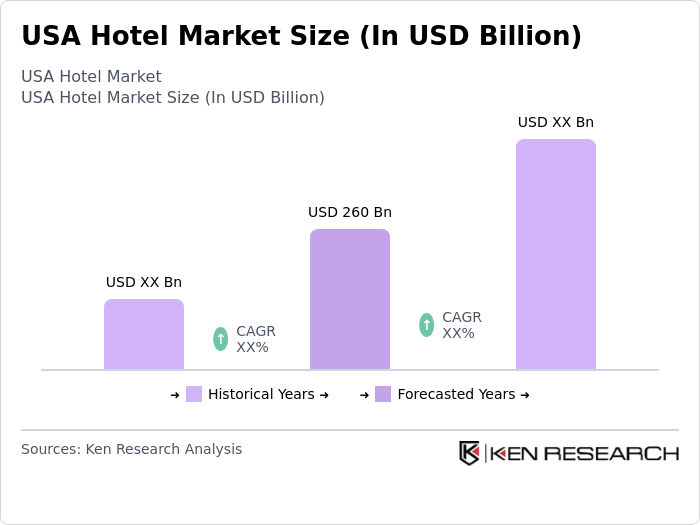
- The USA Hotel Market was valued at USD 260 billion, based on a five-year historical analysis. This growth is primarily driven by increasing domestic and international travel, a rise in disposable income, and a growing preference for experiential travel among consumers. The market has seen a significant rebound post-pandemic, with a surge in leisure and business travel contributing to its expansion.
- Key cities dominating the market include New York, Las Vegas, and Los Angeles. These cities attract millions of tourists annually due to their iconic attractions, vibrant nightlife, and extensive business opportunities. The concentration of major events, conventions, and entertainment options in these urban centers further solidifies their position as leading destinations in the hotel market.
- In 2025, Marriott added approximately 12,200 net rooms in Q1, expanding its worldwide pipeline to about 3,800 properties with over 587,000 rooms. The company lowered its full-year RevPAR growth outlook due to economic uncertainties but raised its net rooms growth forecast to nearly 5%, boosted by the planned acquisition of the citizenM brand. Marriott continues focusing on conversions and international expansion, reflecting confidence in long-term travel demand despite short-term market volatility.
USA Hotel Market Segmentation
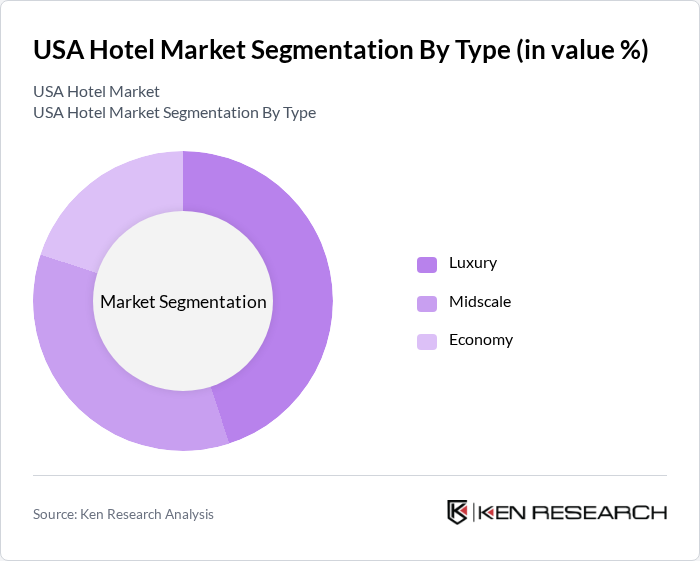
By Type: The hotel market is primarily segmented into luxury, midscale, and economy hotels. Among these, the luxury segment dominates the market due to the increasing demand for high-end accommodations that offer personalized services and unique experiences. Consumers are increasingly willing to spend on premium services, which has led to a rise in luxury hotel developments, particularly in major urban centers and tourist hotspots. The midscale and economy segments also show robust growth, catering to budget-conscious travelers and families seeking value for money.
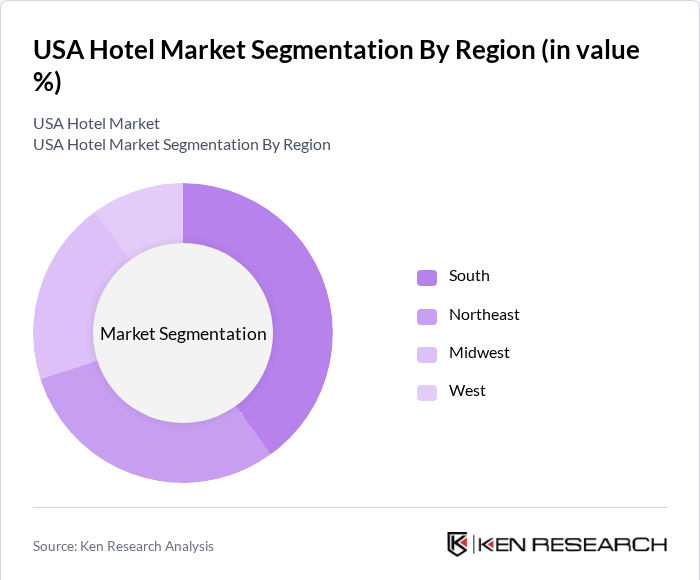
By Region: The hotel market is segmented into Northeast, Midwest, South, and West regions. The South region holds the largest market share, driven by its warm climate, numerous tourist attractions, and a strong presence of business hubs. Cities like Orlando and Miami attract millions of visitors each year, contributing to the region's dominance. The Northeast follows closely, with cities like New York and Boston being major draws for both leisure and business travelers. The Midwest and West regions also contribute significantly, with a growing number of hotels catering to diverse traveler needs.
USA Hotel Market Competitive Landscape
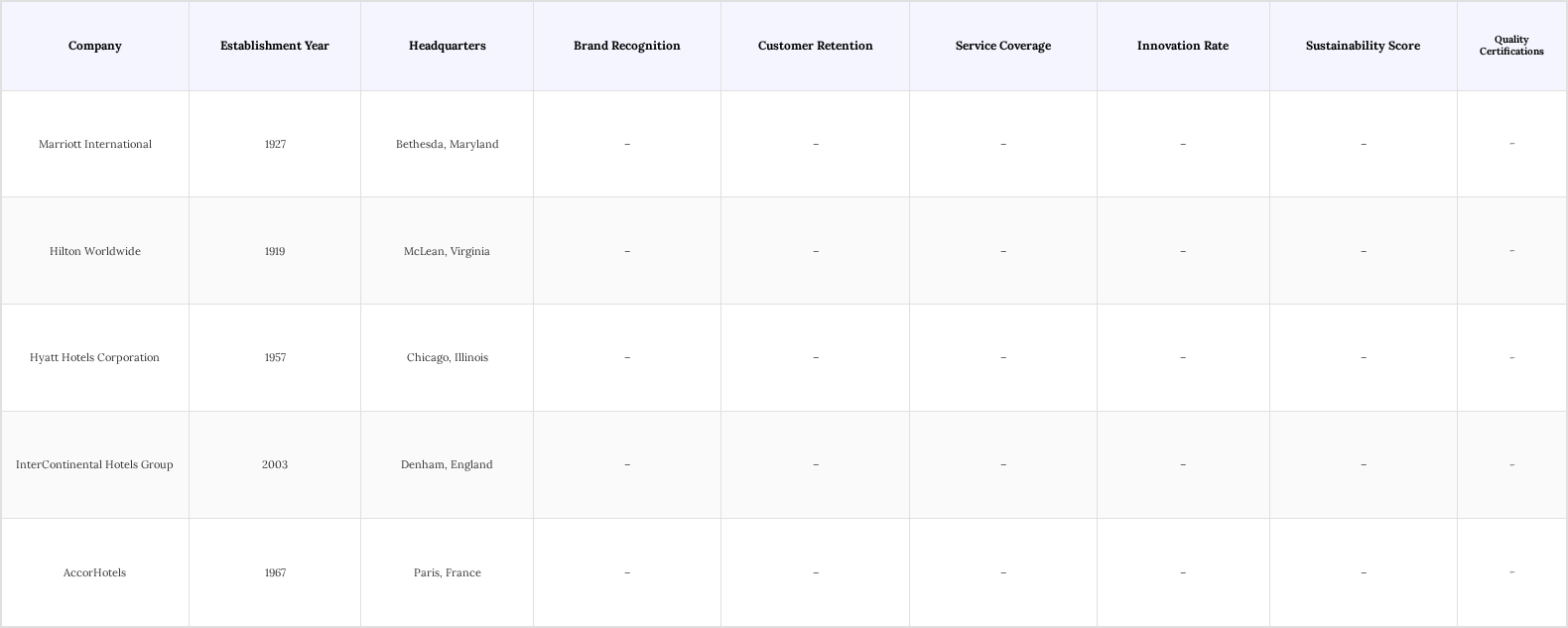
The USA Hotel Market is characterized by intense competition among various players, including both international chains and local establishments. Major companies such as Marriott International, Hilton Worldwide, and Hyatt Hotels Corporation dominate the landscape, leveraging their extensive brand recognition and loyalty programs to attract customers. The market is also witnessing the emergence of boutique hotels that cater to niche markets, enhancing the competitive dynamics.
USA Hotel Market Industry Analysis
Growth Drivers
- Increasing Domestic and International Travel: The increase in domestic travel, with Americans taking over 1.1 billion trips in 2024, and a 5% rise in international visitors to about 79 million, are key drivers behind higher hotel occupancy rates in the U.S. This surge supports steady revenue growth despite some softness in occupancy, as hotels raise average daily rates to balance demand. Luxury and urban hotels benefit most, fueled by strong leisure and group travel, while overall occupancy is nearing pre-pandemic levels but still slightly below 2019 peaks due to increased supply and shifting travel patterns.
- Rising Disposable Income and Consumer Spending: According to the U.S. Bureau of Economic Analysis, disposable personal income is projected to increase by approximately $400 billion to $500 billion in 2024, leading to increased consumer spending on travel and hospitality. This trend is particularly evident among millennials and Gen Z, who prioritize experiences over material goods. As disposable income rises, hotel bookings are anticipated to increase, enhancing overall market growth and profitability.
- Expansion of Online Booking Platforms: The proliferation of online travel agencies (OTAs) has transformed the hotel booking landscape. In 2024, it is estimated that 70% of hotel bookings will occur through digital platforms, according to Statista. This shift not only simplifies the booking process for consumers but also allows hotels to reach a broader audience, ultimately increasing occupancy rates and revenue. Enhanced digital marketing strategies further support this growth driver.
Market Challenges
- Economic Uncertainty and Market Volatility: The USA hotel market faces challenges from economic fluctuations, with the IMF projecting significant GDP growth in 2024, which may not be sufficient to sustain robust travel demand. Inflationary pressures, particularly in fuel and food prices, can deter discretionary spending on travel. This economic uncertainty may lead to reduced hotel occupancy rates and lower revenue per available room (RevPAR), impacting overall market stability.
- Competition from Alternative Lodging Options: The rise of platforms like Airbnb has intensified competition within the hotel sector. In 2024, it is estimated that alternative lodging will capture a significant portion of the total accommodation market share. This shift poses a significant challenge for traditional hotels, which must adapt by enhancing their value propositions, such as offering unique experiences and personalized services to retain market share and attract guests.
USA Hotel Market Future Outlook
The USA hotel market is poised for a dynamic future, driven by evolving consumer preferences and technological advancements. As travelers increasingly seek personalized experiences, hotels will need to invest in innovative services and amenities. Additionally, the integration of smart technology in operations will enhance guest satisfaction and operational efficiency. Sustainability will also play a crucial role, with eco-friendly practices becoming a key differentiator in attracting environmentally conscious travelers, ensuring long-term growth and competitiveness in the market.
Market Opportunities
- Growth in Sustainable and Eco-friendly Hotels: The demand for sustainable accommodations is rising, with majority of travelers indicating a preference for eco-friendly options. This trend presents a significant opportunity for hotels to differentiate themselves by adopting green practices, such as energy-efficient systems and waste reduction initiatives, which can enhance brand loyalty and attract a growing segment of environmentally conscious consumers.
- Technological Advancements in Guest Experience: The integration of advanced technologies, such as AI-driven customer service and mobile check-in systems, is transforming the guest experience. In 2024, hotels that invest in these technologies can expect to see a remarkable increase in customer satisfaction scores. This presents an opportunity for hotels to enhance operational efficiency and create memorable experiences that drive repeat business and positive reviews.
Scope of the Report
| By Type |
Luxury Mid-scale Economy |
| By Region |
Northheast Midwest South West |
| By Customer Segment |
Business Travelers Leisure Travelers Group Travelers |
| By Booking Channel |
Online Travel Agencies (OTAs) Direct Booking Travel Agents |
| By Hotel Size |
Small Hotels Medium Hotels Large Hotels |
Products
Key Target Audience
Investors and Venture Capitalist Firms
Government and Regulatory Bodies (e.g., U.S. Department of Commerce, U.S. Travel Association)
Hotel Management Companies
Real Estate Investment Trusts (REITs)
Tourism Boards and Destination Marketing Organizations
Hospitality Technology Providers
Construction and Development Firms
Insurance Companies and Risk Management Firms
Companies
Players Mentioned in the Report:
Marriott International
Hilton Worldwide
Hyatt Hotels Corporation
InterContinental Hotels Group
AccorHotels
DreamStay Hospitality
Urban Oasis Hotels
Horizon Inn Group
Luxe Retreats Inc.
NextGen Lodging Solutions
Table of Contents
1. USA Hotel Market Overview
1.1. Definition and Scope
1.2. Market Taxonomy
1.3. Market Growth Rate
1.4. Market Segmentation Overview
2. USA Hotel Market Size (In USD Bn)
2.1. Historical Market Size
2.2. Year-On-Year Growth Analysis
2.3. Key Market Developments and Milestones
3. USA Hotel Market Analysis
3.1. Growth Drivers
3.1.1. Increasing Domestic and International Travel
3.1.2. Rising Disposable Income and Consumer Spending
3.1.3. Expansion of Online Booking Platforms
3.2. Market Challenges
3.2.1. Economic Uncertainty and Market Volatility
3.2.2. Competition from Alternative Lodging Options
3.2.3. Labor Shortages and Rising Operational Costs
3.3. Opportunities
3.3.1. Growth in Sustainable and Eco-friendly Hotels
3.3.2. Technological Advancements in Guest Experience
3.3.3. Expansion into Emerging Markets and Regions
3.4. Trends
3.4.1. Increasing Demand for Personalized Guest Experiences
3.4.2. Integration of Smart Technology in Hotel Operations
3.4.3. Focus on Health and Safety Protocols Post-Pandemic
3.5. Government Regulation
3.5.1. Compliance with Health and Safety Standards
3.5.2. Zoning Laws and Land Use Regulations
3.5.3. Environmental Regulations and Sustainability Initiatives
3.5.4. Labor Laws and Employee Rights Regulations
3.6. SWOT Analysis
3.7. Stake Ecosystem
3.8. Porter’s Five Forces
3.9. Competition Ecosystem
4. USA Hotel Market Segmentation
4.1. By Type
4.1.1. Luxury
4.1.2. Mid-scale
4.1.3. Economy
4.2. By Region
4.2.1. Northeast
4.2.2. Midwest
4.2.3. South
4.2.4. West
4.3. By Customer Segment
4.3.1. Business Travelers
4.3.2. Leisure Travelers
4.3.3. Group Travelers
4.4. By Booking Channel
4.4.1. Online Travel Agencies (OTAs)
4.4.2. Direct Booking
4.4.3. Travel Agents
4.5. By Hotel Size
4.5.1. Small Hotels
4.5.2. Medium Hotels
4.5.3. Large Hotels
5. USA Hotel Market Competitive Analysis
5.1. Detailed Profiles of Major Companies
5.1.1. Marriott International
5.1.2. Hilton Worldwide
5.1.3. Hyatt Hotels Corporation
5.1.4. InterContinental Hotels Group
5.1.5. AccorHotels
5.1.6. DreamStay Hospitality
5.1.7. Urban Oasis Hotels
5.1.8. Horizon Inn Group
5.1.9. Luxe Retreats Inc.
5.1.10. NextGen Lodging Solutions
5.2. Cross Comparison Parameters
5.2.1. Average Daily Rate (ADR)
5.2.2. Revenue Per Available Room (RevPAR)
5.2.3. Occupancy Rate
5.2.4. Customer Satisfaction Index
5.2.5. Market Share by Segment
5.2.6. Brand Recognition and Loyalty Metrics
5.2.7. Online Reputation Score
5.2.8. Employee Turnover Rate
6. USA Hotel Market Regulatory Framework
6.1. Environmental Standards
6.2. Compliance Requirements
6.3. Certification Processes
7. USA Hotel Market Future Market Size (In USD Bn)
7.1. Future Market Size Projections
7.2. Key Factors Driving Future Market Growth
8. USA Hotel Market Future Market Segmentation
8.1. By Type
8.1.1. Luxury
8.1.2. Mid-scale
8.1.3. Economy
8.2. By Region
8.2.1. Northeast
8.2.2. Midwest
8.2.3. South
8.2.4. West
8.3. By Customer Segment
8.3.1. Business Travelers
8.3.2. Leisure Travelers
8.3.3. Group Travelers
8.4. By Booking Channel
8.4.1. Online Travel Agencies (OTAs)
8.4.2. Direct Booking
8.4.3. Travel Agents
8.5. By Hotel Size
8.5.1. Small Hotels
8.5.2. Medium Hotels
8.5.3. Large Hotels
9. USA Hotel Market Analysts’ Recommendations
9.1. TAM/SAM/SOM Analysis
9.2. Customer Cohort Analysis
9.3. Marketing Initiatives
9.4. White Space Opportunity Analysis
Research Methodology
Step 1: Identification of Key Variables
The initial phase involves constructing a comprehensive framework that identifies all significant stakeholders in the USA Hotel Market. This step relies on extensive desk research, utilizing a mix of secondary data sources and proprietary databases to gather vital industry-level information. The primary goal is to pinpoint and define the essential variables that drive market dynamics.
Step 2: Market Analysis and Construction
In this phase, we will gather and analyze historical data related to the USA Hotel Market. This includes evaluating market penetration rates, the ratio of hotels to travelers, and the resulting revenue generation. Additionally, an assessment of service quality metrics will be performed to ensure the reliability and accuracy of the revenue projections.
Step 3: Hypothesis Validation and Expert Consultation
Market hypotheses will be formulated and validated through structured interviews with industry experts from various sectors within the hotel industry. These consultations will yield critical operational and financial insights directly from practitioners, which will be essential for refining and confirming the market data.
Step 4: Research Synthesis and Final Output
The final phase involves engaging with multiple hotel operators to gather in-depth insights into market segments, performance metrics, consumer preferences, and other relevant factors. This engagement will help verify and enhance the data obtained from the bottom-up approach, ensuring a thorough, accurate, and validated analysis of the USA Hotel Market.
Frequently Asked Questions
01. How big is the USA Hotel Market?
The USA Hotel Market is valued at USD 260 billion, driven by factors such as increasing demand, technological advancements, and supportive government initiatives.
02. What are the key challenges in the USA Hotel Market?
Key challenges in the USA Hotel Market include intense competition, regulatory complexities, and infrastructure limitations affecting market dynamics.
03. Who are the major players in the USA Hotel Market?
Major players in the USA Hotel Market include Marriott International, Hilton Worldwide, Hyatt Hotels Corporation, InterContinental Hotels Group, AccorHotels, among others.
04. What are the growth drivers for the USA Hotel Market?
The primary growth drivers for the USA Hotel Market are increasing consumer demand, favorable policies, innovation, and substantial investment inflows.
Why Buy From Us?

What makes us stand out is that our consultants follows Robust, Refine and Result (RRR) methodology. i.e. Robust for clear definitions, approaches and sanity checking, Refine for differentiating respondents facts and opinions and Result for presenting data with story

We have set a benchmark in the industry by offering our clients with syndicated and customized market research reports featuring coverage of entire market as well as meticulous research and analyst insights.

While we don't replace traditional research, we flip the method upside down. Our dual approach of Top Bottom & Bottom Top ensures quality deliverable by not just verifying company fundamentals but also looking at the sector and macroeconomic factors.

With one step in the future, our research team constantly tries to show you the bigger picture. We help with some of the tough questions you may encounter along the way: How is the industry positioned? Best marketing channel? KPI's of competitors? By aligning every element, we help maximize success.

Our report gives you instant access to the answers and sources that other companies might choose to hide. We elaborate each steps of research methodology we have used and showcase you the sample size to earn your trust.

If you need any support, we are here! We pride ourselves on universe strength, data quality, and quick, friendly, and professional service.