
USA HVAC Market Outlook to 2030
Region:United States
Author(s):Shubham Kashyap
Product Code:KROD3457
Region:United States
Author(s):Shubham Kashyap
Product Code:KROD3457
October 2024
85
The USA HVAC market is highly competitive, with a strong presence of both domestic and international players. Key companies such as Carrier, Trane Technologies, Lennox International, and Johnson Controls dominate the market, focusing on innovation, sustainability initiatives, and energy efficiency to meet the growing demand for advanced HVAC systems.
|
Company Name |
Establishment Year |
Headquarters |
No. of Employees |
Revenue (USD Billion) |
Key Products |
Sustainability Initiatives |
Technology Investments |
|
Carrier |
1915 |
Palm Beach Gardens, FL |
- |
- |
- |
- |
- |
|
Trane Technologies |
1885 |
Davidson, NC |
- |
- |
- |
- |
- |
|
Lennox International |
1895 |
Richardson, TX |
- |
- |
- |
- |
- |
|
Johnson Controls |
1885 |
Cork, Ireland |
- |
- |
- |
- |
- |
The USA HVAC market is expected to witness continued growth, driven by rising demand for energy-efficient systems, technological advancements, and increasing commercial construction activities. As the government pushes for greener infrastructure and energy-efficient building practices, the HVAC industry will likely see increased investment in R&D for smart, IoT-enabled HVAC systems that optimize energy consumption. The adoption of smart thermostats, air quality monitoring systems, and advanced air filtration technologies is expected to accelerate, providing a boost to the market.
|
By HVAC System |
Heating (Furnaces, Boilers) Ventilation (Air Handlers, Exhaust) Air Conditioning (Split Systems, etc.) |
|
By End-User |
Residential Commercial (Offices, Hospitals, etc.) Industrial (Manufacturing, Warehouses) |
|
By Technology |
Smart HVAC Systems VRF Systems Geothermal Heat Pumps |
|
By Component |
Compressors Condensers Evaporators Controls and Sensors |
|
By Region |
North East South West |
1.1. Definition and Scope
1.2. Market Taxonomy
1.3. Market Segmentation Overview
1.4. Market Growth Rate
2.1. Historical Market Size
2.2. Year-On-Year Growth Analysis
2.3. Key Market Developments and Milestones
3.1. Growth Drivers (Energy Efficiency Mandates, Smart HVAC Adoption, Urbanization Trends)
3.1.1. Rising Energy Efficiency Standards
3.1.2. Adoption of Smart HVAC Systems
3.1.3. Growing Urban Population and Commercial Buildings
3.1.4. Government Energy Initiatives and Rebates
3.2. Market Challenges (High Initial Costs, Skilled Labor Shortage)
3.2.1. High Costs of Energy-Efficient HVAC Systems
3.2.2. Shortage of Skilled HVAC Technicians
3.2.3. Compliance with Environmental Regulations
3.2.4. Volatile Raw Material Prices
3.3. Opportunities (Green Building Certifications, Retrofitting Projects)
3.3.1. Opportunities in Green Building Certifications
3.3.2. Growth in HVAC Retrofitting for Older Buildings
3.3.3. Expansion of HVAC Applications in Smart Cities
3.3.4. Increasing Demand for HVAC Systems in Data Centers
3.4. Trends (IoT Integration, Smart Thermostats)
3.4.1. Integration of IoT in HVAC Systems
3.4.2. Increased Use of Smart Thermostats
3.4.3. Demand for Indoor Air Quality Monitoring Systems
3.4.4. Rising Interest in Renewable Energy-Powered HVAC Systems
3.5. Government Regulation (Energy Star, LEED Certifications)
3.5.1. U.S. Department of Energy Efficiency Standards
3.5.2. EPA HVAC Guidelines
3.5.3. HVAC System Recycling Regulations
3.5.4. Incentives for Green HVAC Technologies
3.6. SWOT Analysis
3.7. Stakeholder Ecosystem
3.8. Porter’s Five Forces
3.9. Competition Ecosystem
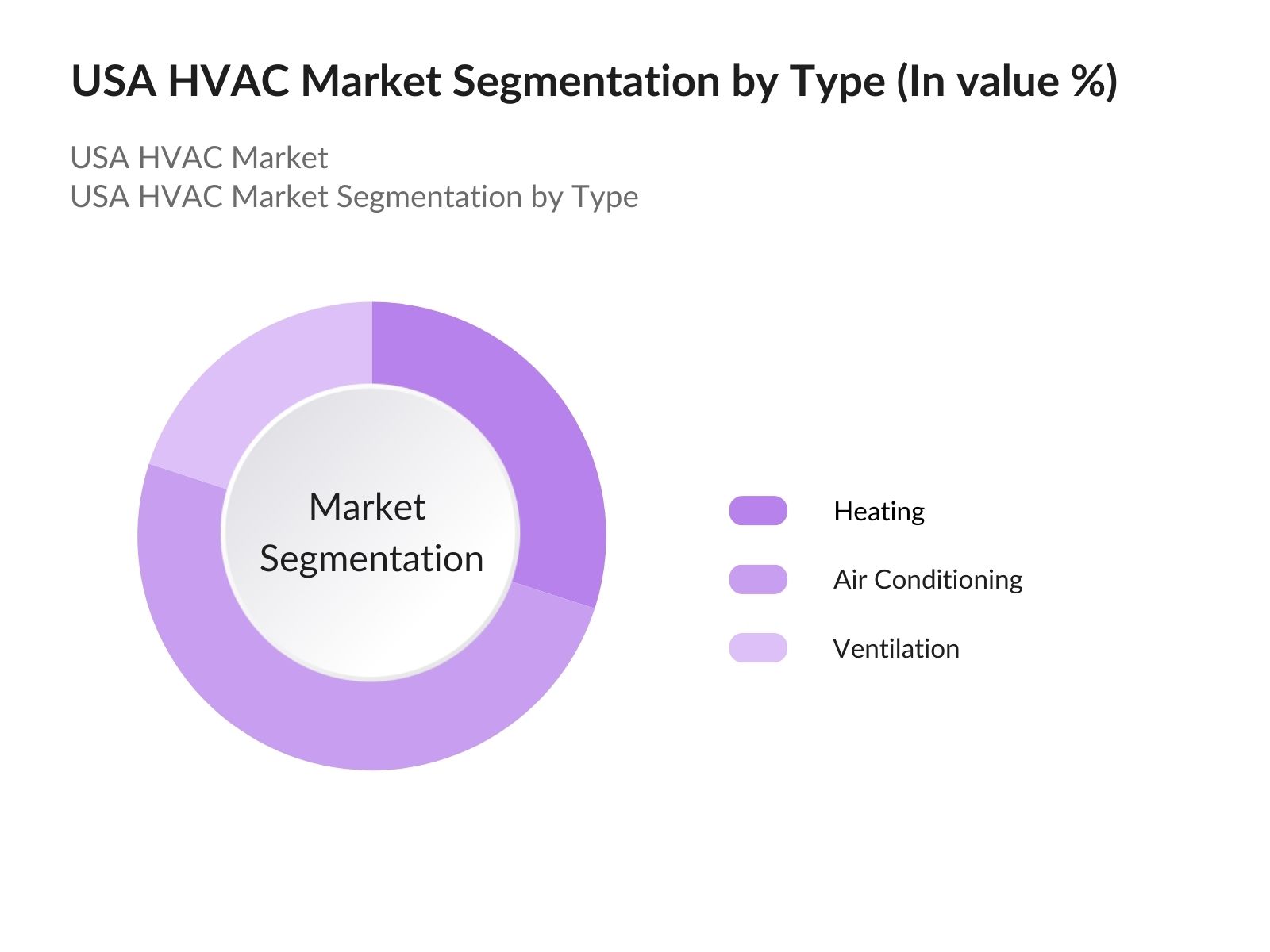
4.1. By Type of HVAC System (In Value %)
4.1.1. Heating (Furnaces, Boilers)
4.1.2. Ventilation (Air Handlers, Exhaust Systems)
4.1.3. Air Conditioning (Split Systems, Packaged Units)
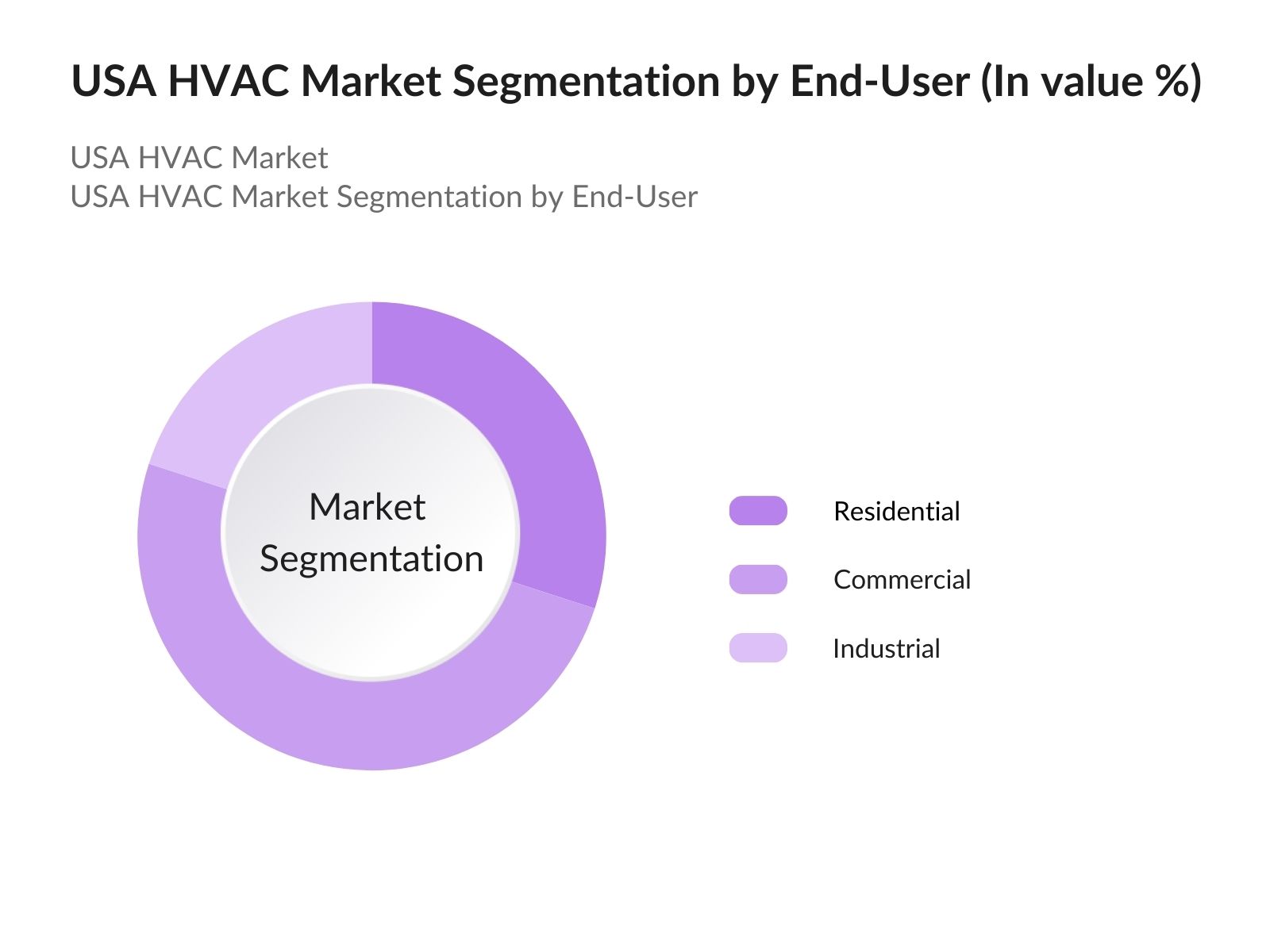
4.2. By End-Use Industry (In Value %)
4.2.1. Residential
4.2.2. Commercial (Offices, Shopping Malls, Hospitals)
4.2.3. Industrial (Manufacturing Plants, Warehouses)
4.3. By Technology (In Value %)
4.3.1. Smart HVAC Systems
4.3.2. Variable Refrigerant Flow (VRF) Systems
4.3.3. Geothermal Heat Pumps
4.3.4. Traditional HVAC Systems
4.4. By Region (In Value %)
4.4.1. North
4.4.2. West
4.4.3. South
4.4.4. East
4.5. By Component Type (In Value %)
4.5.1. Compressors
4.5.2. Condensers
4.5.3. Evaporators
4.5.4. Controls and Sensors
5.1. Detailed Profiles of Major Companies (In Value, Revenue, Employees, Sustainability Initiatives)
5.1.1. Carrier
5.1.2. Trane Technologies
5.1.3. Lennox International
5.1.4. Johnson Controls
5.1.5. Rheem Manufacturing
5.1.6. Daikin Industries
5.1.7. Mitsubishi Electric
5.1.8. Bosch Thermotechnology
5.1.9. Honeywell International
5.1.10. LG Electronics
5.1.11. Goodman Manufacturing
5.1.12. Nortek Global HVAC
5.1.13. Fujitsu General
5.1.14. Emerson Electric
5.1.15. Samsung HVAC
5.2. Cross Comparison Parameters (No. of Employees, Headquarters, Revenue, Technology Adoption, Green Initiatives, Market Share, Product Portfolio, R&D Spending)
5.3. Market Share Analysis
5.4. Strategic Initiatives
5.5. Mergers and Acquisitions
5.6. Investment Analysis
5.7. Venture Capital Funding
5.8. Private Equity Investments
6.1. Energy Efficiency Certification Standards
6.2. Compliance with Environmental Regulations
6.3. HVAC System Installation and Safety Certifications
7.1. Future Market Size Projections
7.2. Key Factors Driving Future Market Growth
8.1. TAM/SAM/SOM Analysis
8.2. Customer Cohort Analysis
8.3. White Space Opportunity Analysis
8.4. Market Penetration Strategies
The research process begins with identifying the key variables influencing the USA HVAC market. This is achieved through comprehensive desk research, including data from proprietary databases and secondary sources. The primary aim is to identify market drivers, challenges, and trends.
In this step, historical data is gathered to analyze market penetration, revenue generation, and the overall performance of the HVAC market. This includes an assessment of product types, end-use industries, and regional demand to create a reliable market overview.
Industry hypotheses are developed and validated through in-depth consultations with HVAC industry experts. These interviews provide direct insights into market dynamics, operational performance, and financial considerations, further enhancing the accuracy of the market estimates.
The final phase involves synthesizing all research inputs, including primary data from industry experts and secondary data from reputable sources. This ensures a comprehensive and validated analysis of the HVAC market, providing an accurate portrayal of the current landscape and outlook.
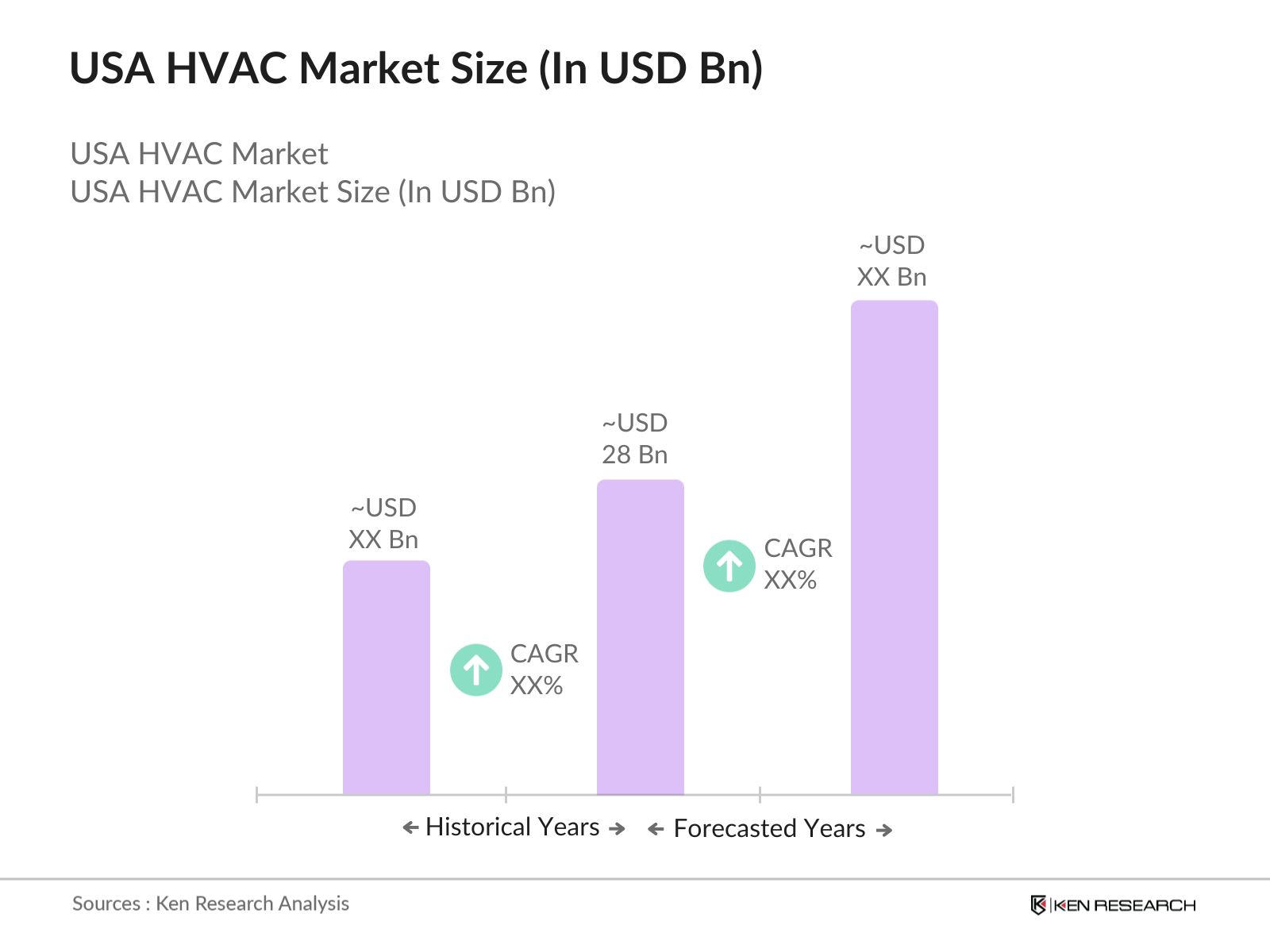
The USA HVAC market is valued at USD 28 billion, driven by increasing demand for energy-efficient systems and smart HVAC technologies across residential, commercial, and industrial sectors.
Challenges in the USA HVAC market include the high initial cost of energy-efficient HVAC systems, a shortage of skilled technicians, and fluctuating raw material prices. Compliance with environmental regulations also adds to the complexity of the market.
Key players in the USA HVAC market include Carrier, Trane Technologies, Lennox International, Johnson Controls, and Rheem Manufacturing. These companies dominate the market due to their extensive product offerings, focus on innovation, and commitment to sustainability.
The USA HVAC market is driven by the rising demand for energy-efficient systems, advancements in IoT-enabled HVAC solutions, and increasing investments in commercial and residential construction projects.

What makes us stand out is that our consultants follows Robust, Refine and Result (RRR) methodology. i.e. Robust for clear definitions, approaches and sanity checking, Refine for differentiating respondents facts and opinions and Result for presenting data with story

We have set a benchmark in the industry by offering our clients with syndicated and customized market research reports featuring coverage of entire market as well as meticulous research and analyst insights.

While we don't replace traditional research, we flip the method upside down. Our dual approach of Top Bottom & Bottom Top ensures quality deliverable by not just verifying company fundamentals but also looking at the sector and macroeconomic factors.

With one step in the future, our research team constantly tries to show you the bigger picture. We help with some of the tough questions you may encounter along the way: How is the industry positioned? Best marketing channel? KPI's of competitors? By aligning every element, we help maximize success.

Our report gives you instant access to the answers and sources that other companies might choose to hide. We elaborate each steps of research methodology we have used and showcase you the sample size to earn your trust.

If you need any support, we are here! We pride ourselves on universe strength, data quality, and quick, friendly, and professional service.