















USA HVAC Systems Market Outlook to 2030
Region:North America
Author(s):Naman Rohilla
Product Code:KROD2402
November 2024
100
About the Report
USA HVAC Systems Market Overview
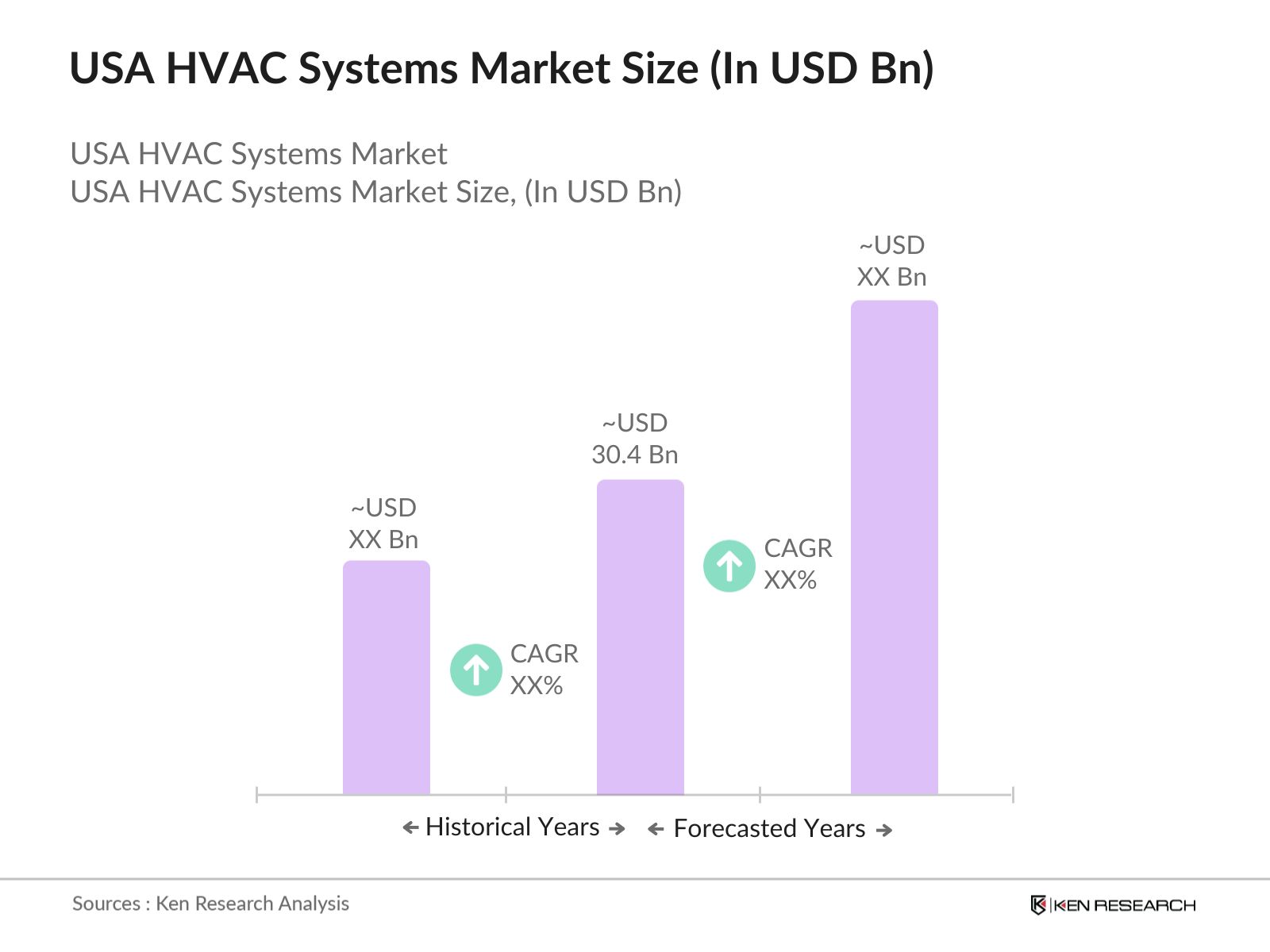
- The USA HVAC (Heating, Ventilation, and Air Conditioning) systems market was valued at USD 30.4 billion in 2023. This growth is driven by increasing demand for energy-efficient HVAC solutions, rising commercial and residential construction activities, and government regulations aimed at reducing carbon emissions through sustainable building technologies.
- Key players in the USA HVAC systems market include Carrier Global Corporation, Daikin Industries Ltd., Trane Technologies PLC, Johnson Controls International PLC, and Lennox International Inc. These companies have a strong presence in the US, leveraging the demand for advanced HVAC technologies and energy-efficient products to meet environmental regulations and consumer preferences.
- Carrier Global Corporation has completed its acquisition of Viessmann Climate Solutions, forming a new $1.5 billion entity with a 12,000-strong workforce. The combined company aims to lead the global market in intelligent climate and energy solutions.
- New York City emerged as the leading region in the USA HVAC systems market, driven by its high population density, extensive commercial real estate developments, and demand for energy-efficient building systems in line with local regulations aimed at reducing carbon footprints.
USA HVAC Systems Market Segmentation
The USA HVAC Systems Market is segmented by system type, application, and region.
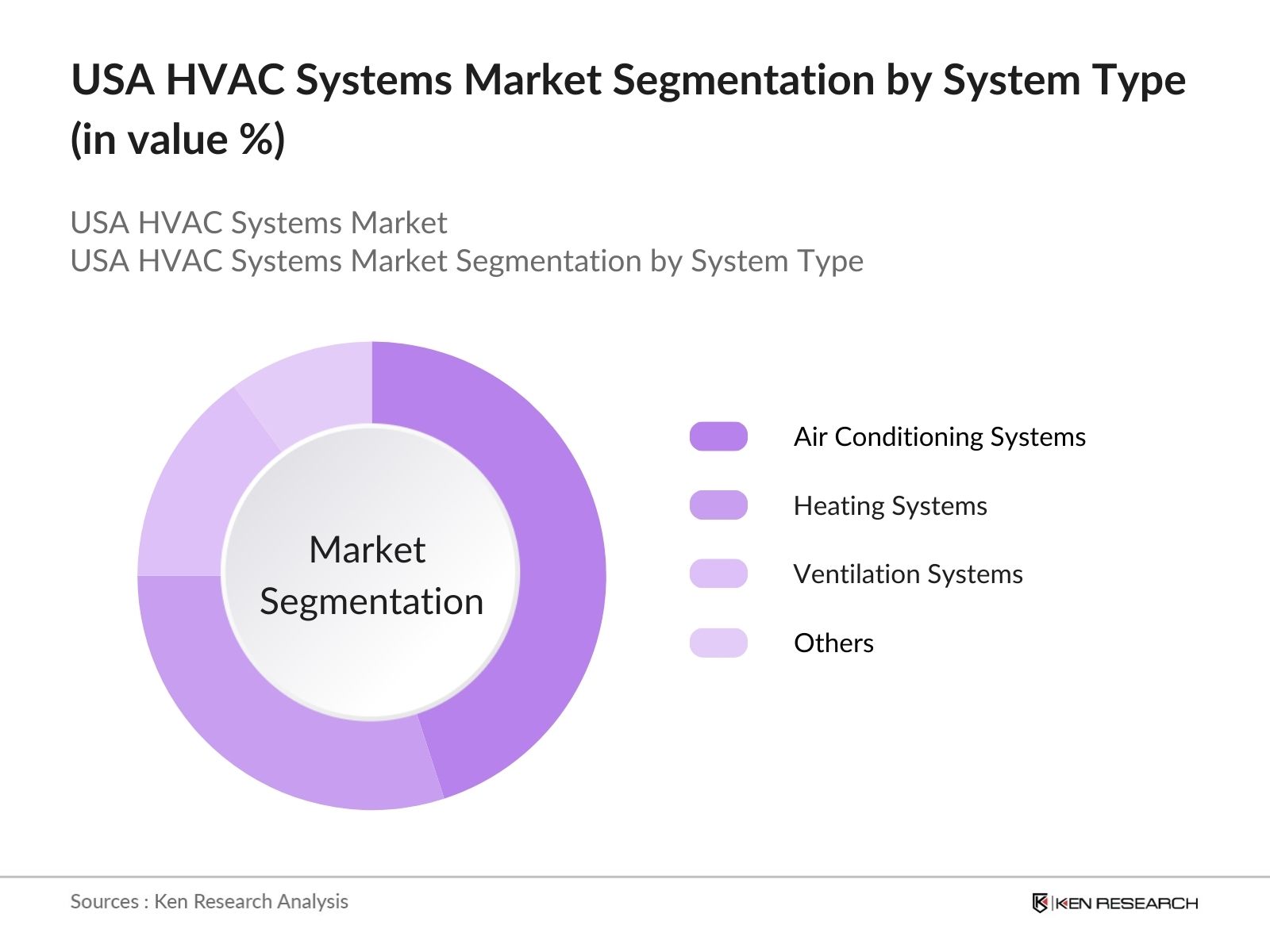
- By System Type: The market is segmented into heating systems, ventilation systems, air conditioning systems, and others (air purifiers, humidifiers). Air conditioning systems dominated the market due to their extensive use in both commercial and residential buildings.
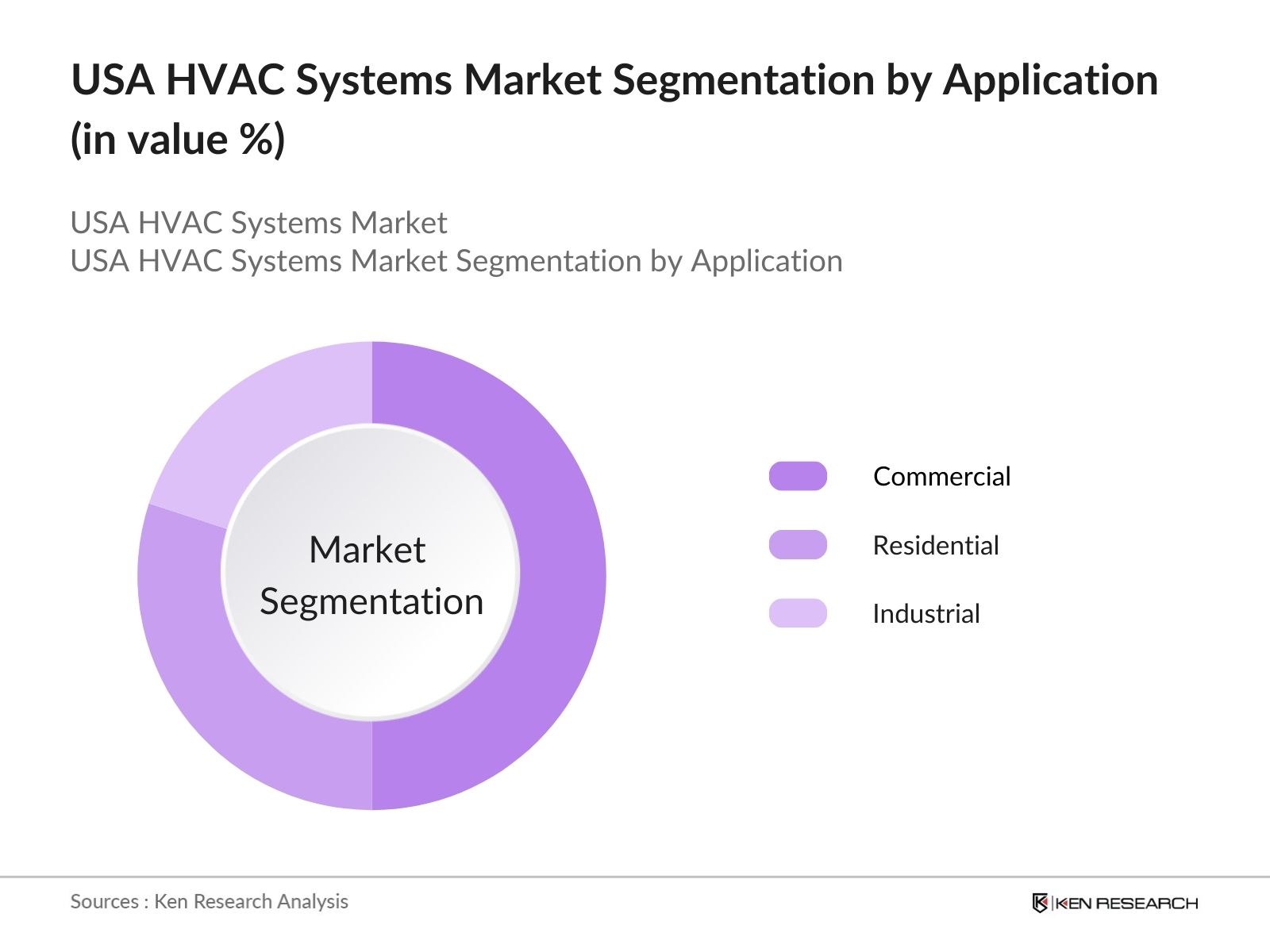
- By Application: The market is segmented by application into residential, commercial, and industrial sectors. The commercial sector held the largest market share due to the demand for efficient HVAC solutions in office buildings, shopping malls, and hotels.
- By Region: The market is segmented by region into North, South, East, and West. The North region led the market, driven by the region's cold winters, which increase demand for efficient heating solutions, and stringent energy regulations that promote the adoption of energy-efficient systems.
USA HVAC Systems Market Competitive Landscape
|
Company Name |
Establishment Year |
Headquarters |
|
Carrier Global Corporation |
1915 |
Palm Beach Gardens, Florida, USA |
|
Daikin Industries Ltd. |
1924 |
Osaka, Japan |
|
Trane Technologies PLC |
1913 |
Dublin, Ireland |
|
Johnson Controls International PLC |
1885 |
Cork, Ireland |
|
Lennox International Inc. |
1895 |
Richardson, Texas, USA |
- Johnson Controls International PLC: Johnson Controls International (JCI) has agreed to sell its residential and light-commercial HVAC business to Bosch for $8.1 billion, with JCI receiving around $6.7 billion. The deal, expected to close in about 12 months, will streamline JCI's focus on commercial solutions, especially in data centers.
- Daikin Industries Ltd.: Daikin Applied plans to invest $300 million in a new energy-efficient manufacturing facility in Minnesota, aimed at supporting sustainable data center growth in North America. This facility will create over 500 jobs and enhance production capacity by 50% to meet rising demand for cooling solutions.
USA HVAC Systems Market Analysis
USA HVAC Systems Market Growth Drivers:
- Energy Efficiency Regulations: The U.S. Department of Energy's new standards mandate a minimum SEER of 14 for residential systems in the northern U.S. and 15 in the southern U.S., promoting energy-efficient HVAC adoption and potentially saving households $2.5 billion to $12.2 billion on energy bills over 30 years.
- Rising Construction Activities: Around 76 million U.S. homes use central air conditioning, with 11% utilizing heat pumps. As urbanization and smart city initiatives grow, the demand for HVAC systems in new commercial construction is expected to rise substantially, enhancing indoor comfort and energy efficiency.
- Technological Advancements: Smart HVAC technologies, including IoT integration, enable energy savings of up to 30%. Enhanced efficiency ratings like SEER and EER, with values ranging from 20-28 and 12-16 respectively, support better energy management and lower operational costs, driving market growth.
USA HVAC Systems Market Challenges:
- High Initial Cost: Advanced HVAC technologies can start at $5,000, with high-efficiency systems costing up to $22,000 when factoring in installation and additional features. This substantial upfront investment can deter small businesses and homeowners from adopting these systems despite their long-term energy savings potential.
- Complex Installation Requirements: Installation of advanced HVAC systems often requires specialized skills, leading to higher costs. Professional installation can add 30-50% to the total project cost, as it involves complex tasks like ductwork modification and compliance with building codes, necessitating skilled technicians.
USA HVAC Systems Market Government Initiatives:
- Energy Policy Act (EPACT): The Energy Policy Act (EPACT) encourages energy-efficient building solutions, including HVAC systems, by offering tax credits and financial incentives. This initiative promotes energy-efficient technologies, potentially saving U.S. buildings about $80 billion annually on energy bills if energy use is reduced by 20%.
- DOE Building Technologies Office (BTO): The DOE's Building Technologies Office (BTO) supports research and development for innovative HVAC technologies aimed at reducing energy consumption. The BTO has announced $80 million in funding for projects that enhance energy productivity in buildings, targeting a 30% reduction in energy intensity by 2030.
USA HVAC Systems Market Future Market Outlook
The USA HVAC systems market is expected to grow over the next five years, driven by the increasing focus on energy-efficient and sustainable building technologies. The market is projected to witness higher adoption of smart HVAC solutions, AI-enabled systems, and green HVAC technologies as environmental regulations tighten.
Future Market Trends:
- Increased Focus on Energy Efficiency: In the coming years, the focus on energy efficiency in HVAC systems is expected to intensify as manufacturers prioritize reducing carbon footprints. With growing regulatory requirements and consumer demand for eco-friendly solutions, HVAC companies will increasingly develop energy-efficient systems to meet these expectations.
- Increased Use of Renewable Energy Sources: In the coming years, the HVAC market is expected to see an increased integration of renewable energy sources, such as solar and geothermal systems. This shift will drive demand for HVAC systems that utilize these sustainable energy sources, aligning with global efforts to reduce carbon emissions and enhance energy efficiency.
Scope of the Report
|
By System Type |
Air Conditioning Systems Heating Systems Ventilation Systems Others (Air Purifiers, Humidifiers) |
|
By Application |
Commercial Residential Industrial |
|
By Region |
North South East West |
Products
Key Target Audience Organizations and Entities Who Can Benefit by Subscribing This Report:
Government and Regulatory Bodies
Banks and Financial Institutes
Investors and Venture Capitalists
HVAC System Manufacturers
Construction and Building Management Firms
Utility Companies
Design and Engineering Firms
Time Period Captured in the Report
Historical Period: 2018-2023
Base Year: 2023
Forecast Period: 2023-2028
Companies
Players Mentioned in the Report:
Carrier Global Corporation
Daikin Industries Ltd.
Trane Technologies PLC
Johnson Controls International PLC
Lennox International Inc.
Rheem Manufacturing Company
Goodman Manufacturing Company
Mitsubishi Electric Corporation
York International Corporation
Bosch Thermotechnology Corp.
American Standard Heating & Air Conditioning
Fujitsu General Limited
Coleman Heating and Air Conditioning
Nordyne Inc.
Heatcraft Refrigeration Products LLC
Table of Contents
1. USA HVAC Systems Market Overview
1.1 Definition and Scope of the USA HVAC Systems Market
1.2 Market Taxonomy (System Type, Application, Region)
1.3 Market Growth Rate and Trends
1.4 Market Drivers (Energy Efficiency, Construction Growth, Government Regulations)
1.5 Market Restraints (High Initial Costs, Complex Installations)
2. USA HVAC Systems Market Size (in USD Billion)
2.1 Historical Market Size Analysis (2018-2023)
2.2 Year-on-Year Growth Analysis
2.3 Forecast Market Size and Growth Projections (2023-2028)
2.4 Key Market Milestones and Developments
3. USA HVAC Systems Market Analysis
3.1 Growth Drivers
3.1.1 Energy Efficiency Regulations
3.1.2 Rising Commercial and Residential Construction
3.1.3 Technological Advancements (Smart HVAC, IoT Integration)
3.1.4 Increasing Adoption of Sustainable Building Solutions
3.2 Market Challenges
3.2.1 High Initial Costs of Energy-Efficient Systems
3.2.2 Complex Installation and Specialized Skill Requirements
3.2.3 Slow Adoption of Advanced Technologies in Smaller Businesses
3.2.4 Regulatory and Compliance Hurdles
3.3 Opportunities
3.3.1 Growth of Smart HVAC Solutions
3.3.2 Expansion in Underpenetrated Regions
3.3.3 Increased Use of Renewable Energy Sources (Solar, Geothermal)
3.3.4 Collaboration with Construction Firms on Sustainable Projects
3.4 Market Trends
3.4.1 Integration of AI-Enabled Systems
3.4.2 Increased Focus on Green Building Technologies
3.4.3 Adoption of IoT-Based HVAC Monitoring
3.4.4 Demand for Energy-Efficient HVAC Systems in New Constructions
4. USA HVAC Systems Market Segmentation
4.1 By System Type (in Value %)
4.1.1 Air Conditioning Systems
4.1.2 Heating Systems
4.1.3 Ventilation Systems
4.1.4 Others (Air Purifiers, Humidifiers)
4.2 By Application (in Value %)
4.2.1 Commercial
4.2.2 Residential
4.2.3 Industrial
4.3 By Region (in Value %)
4.3.1 North
4.3.2 South
4.3.3 East
4.3.4 West
5. USA HVAC Systems Competitive Landscape
5.1 Competitive Market Share Analysis
5.2 Company Profiles
5.2.1 Carrier Global Corporation (Established 1915, Headquarters: Florida, USA)
5.2.2 Daikin Industries Ltd. (Established 1924, Headquarters: Osaka, Japan)
5.2.3 Trane Technologies PLC (Established 1913, Headquarters: Dublin, Ireland)
5.2.4 Johnson Controls International PLC (Established 1885, Headquarters: Cork, Ireland)
5.2.5 Lennox International Inc. (Established 1895, Headquarters: Texas, USA)
5.2.6 Rheem Manufacturing Company (Established 1925, Headquarters: Atlanta, USA)
5.2.7 Mitsubishi Electric Corporation (Established 1921, Headquarters: Tokyo, Japan)
5.2.8 York International Corporation (Established 1874, Headquarters: Wisconsin, USA)
5.2.9 Bosch Thermotechnology Corp. (Established 1886, Headquarters: Germany)
5.2.10 American Standard Heating & Air Conditioning (Established 1929, Headquarters: Texas, USA)
5.2.11 Fujitsu General Limited (Established 1936, Headquarters: Kanagawa, Japan)
5.2.12 Coleman Heating and Air Conditioning (Established 1900, Headquarters: Kansas, USA)
5.2.13 Nordyne Inc. (Established 1919, Headquarters: Missouri, USA)
5.2.14 Heatcraft Refrigeration Products LLC (Established 1929, Headquarters: Georgia, USA)
6. USA HVAC Systems Market Government Regulations and Initiatives
6.1 U.S. Department of Energy Efficiency Standards (SEER, EER Requirements)
6.2 Energy Policy Act (EPACT) Tax Incentives for Energy-Efficient Solutions
6.3 DOEs Building Technologies Office (BTO) R&D Support for HVAC Innovation
6.4 Regional Energy Efficiency Guidelines and Compliance Requirements
7. USA HVAC Systems Market Future Outlook and Segmentation
7.1 Market Segmentation by System Type (2023-2028)
7.2 Market Segmentation by Application (2023-2028)
7.3 Market Segmentation by Region (2023-2028)
7.4 Future Market Trends (Increased Focus on Energy Efficiency, Use of Renewable Energy)
8. USA HVAC Systems Market Technological Advancements
8.1 Smart HVAC Solutions and IoT Integration
8.2 AI and Predictive Maintenance in HVAC Systems
8.3 Renewable Energy Integration (Solar, Geothermal)
8.4 Technological Impact on Energy Efficiency and Cost Savings
9. USA HVAC Systems Market Investment and Funding Landscape
9.1 Key Investments in HVAC Technology Innovations
9.2 Mergers and Acquisitions in the USA HVAC Market
9.3 Government Grants and Subsidies for Energy-Efficient HVAC Solutions
9.4 Private Equity and Venture Capital Funding in HVAC Companies
10. USA HVAC Systems Market SWOT Analysis
10.1 Strengths (Advanced Technology Adoption, Strong Market Players)
10.2 Weaknesses (High Costs, Complex Installations)
10.3 Opportunities (Expansion in Smart Cities, Renewable Energy Integration)
10.4 Threats (Regulatory Hurdles, Competition from Low-Cost Alternatives)
11. USA HVAC Systems Market Analysts Recommendations
11.1 Strategic Market Entry and Expansion Opportunities
11.2 Potential Collaborations with Construction Firms
11.3 Innovative Product Development Opportunities (Green HVAC Solutions)
11.4 Market Positioning Strategies for Key Players
Disclaimer Contact UsResearch Methodology
Step: 1 Identifying Key Variables
Ecosystem creation for all the major entities and referring to multiple secondary and proprietary databases to perform desk research around the market to collate market-level information.
Step: 2 Market Building
Collating statistics on the USA HVAC Systems market over the years and analyzing the penetration of products as well as the ratio of suppliers to compute the revenue generated for the market. We will also review product quality statistics to ensure accuracy behind the data points shared.
Step: 3 Validating and Finalizing
Building market hypotheses and conducting CATIs with market experts from different companies to validate statistics and seek operational and financial information from company representatives.
Step: 4 Research Output
Our research team approaches multiple HVAC system manufacturers, energy experts, and regulatory bodies to understand product segments, sales trends, consumer preferences, and other parameters. This approach supports us in validating the statistics derived from the bottom-up approach of these HVAC system manufacturers, energy experts, and regulatory bodies.
Frequently Asked Questions
01. How big is the USA HVAC Systems Market?
The USA HVAC Systems Market was valued at USD 30.4 billion in 2023. It is expected to witness strong growth, driven by energy-efficient regulations, construction projects, and the adoption of smart HVAC technologies.
02. Who are the major players in the USA HVAC Systems market?
Major players in the USA HVAC Systems Market include BASF SE, Kemira Oyj, Ecolab Inc., SUEZ Water Technologies, and Veolia Water Technologies. These companies play a crucial role in shaping the market by providing innovative and sustainable solutions for water treatment.
03. What are the growth drivers of the USA HVAC Systems market?
The USA HVAC Systems Market is driven by rising construction activities, stringent energy-efficiency regulations, and demand for smart HVAC technologies. Government initiatives promoting eco-friendly building solutions further support the market's growth.
04. What are the USA HVAC Systems market challenges?
Challenges in the USA HVAC Systems Market include high initial costs of energy-efficient systems, complex installation requirements, and slow adoption of advanced technologies in smaller businesses, impacting market penetration and operational costs.
Why Buy From Us?

What makes us stand out is that our consultants follows Robust, Refine and Result (RRR) methodology. i.e. Robust for clear definitions, approaches and sanity checking, Refine for differentiating respondents facts and opinions and Result for presenting data with story

We have set a benchmark in the industry by offering our clients with syndicated and customized market research reports featuring coverage of entire market as well as meticulous research and analyst insights.

While we don't replace traditional research, we flip the method upside down. Our dual approach of Top Bottom & Bottom Top ensures quality deliverable by not just verifying company fundamentals but also looking at the sector and macroeconomic factors.

With one step in the future, our research team constantly tries to show you the bigger picture. We help with some of the tough questions you may encounter along the way: How is the industry positioned? Best marketing channel? KPI's of competitors? By aligning every element, we help maximize success.

Our report gives you instant access to the answers and sources that other companies might choose to hide. We elaborate each steps of research methodology we have used and showcase you the sample size to earn your trust.

If you need any support, we are here! We pride ourselves on universe strength, data quality, and quick, friendly, and professional service.