















USA Hydrocolloid Dressings Market Outlook to 2030
Region:North America
Author(s):Shreya Garg
Product Code:KROD8178
December 2024
95
About the Report
USA Hydrocolloid Dressings Market Overview
- The USA Hydrocolloid Dressings Market is valued at USD 490 million, driven by increasing demand for wound care solutions amid a rise in chronic conditions such as diabetes and pressure ulcers. The market is supported by advancements in adhesive technologies, which improve product effectiveness and patient comfort. The rising geriatric population and the expansion of home healthcare services further contribute to the markets growth as individuals increasingly seek solutions that offer both ease of use and long-lasting protection.
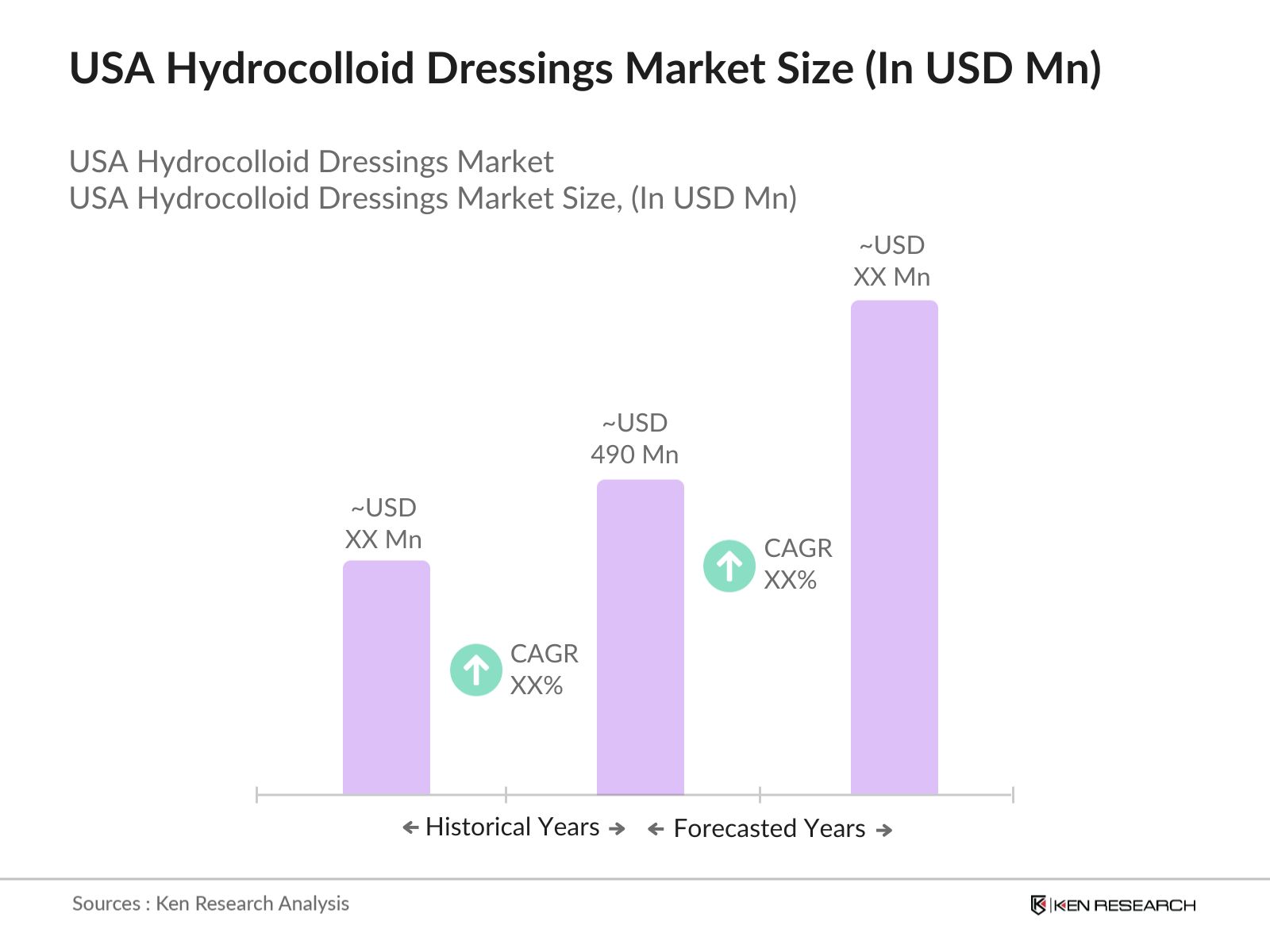
- Within the USA, cities with advanced healthcare infrastructure, like New York, Los Angeles, and Chicago, dominate the hydrocolloid dressings market. The dominance of these regions can be attributed to the high concentration of hospitals, clinics, and healthcare centers, as well as a large population base with access to quality healthcare. Additionally, the prevalence of chronic wounds is more significant in these metropolitan areas, boosting the demand for effective wound care products.
- Hydrocolloid dressings in the U.S. are regulated as medical devices by the FDA, with stringent compliance requirements to ensure safety and efficacy. As of 2023, the FDA has implemented rigorous standards for manufacturing and labeling, ensuring that only products meeting these high standards reach healthcare facilities. This regulatory framework ensures that patients receive quality and consistent wound care solutions.
USA Hydrocolloid Dressings Market Segmentation
By Product Type: The Market is segmented by product type into Standard Hydrocolloid Dressings, Thin Hydrocolloid Dressings, Border Hydrocolloid Dressings, Composite Hydrocolloid Dressings, and Extra-Thin Hydrocolloid Dressings. Recently, Standard Hydrocolloid Dressings have secured a dominant market share under the product type segmentation. This is primarily due to their versatility in treating various types of wounds, from minor injuries to chronic ulcers, and their widespread adoption in healthcare settings. These dressings provide effective moisture control and protection, making them a preferred choice among healthcare providers and patients alike. 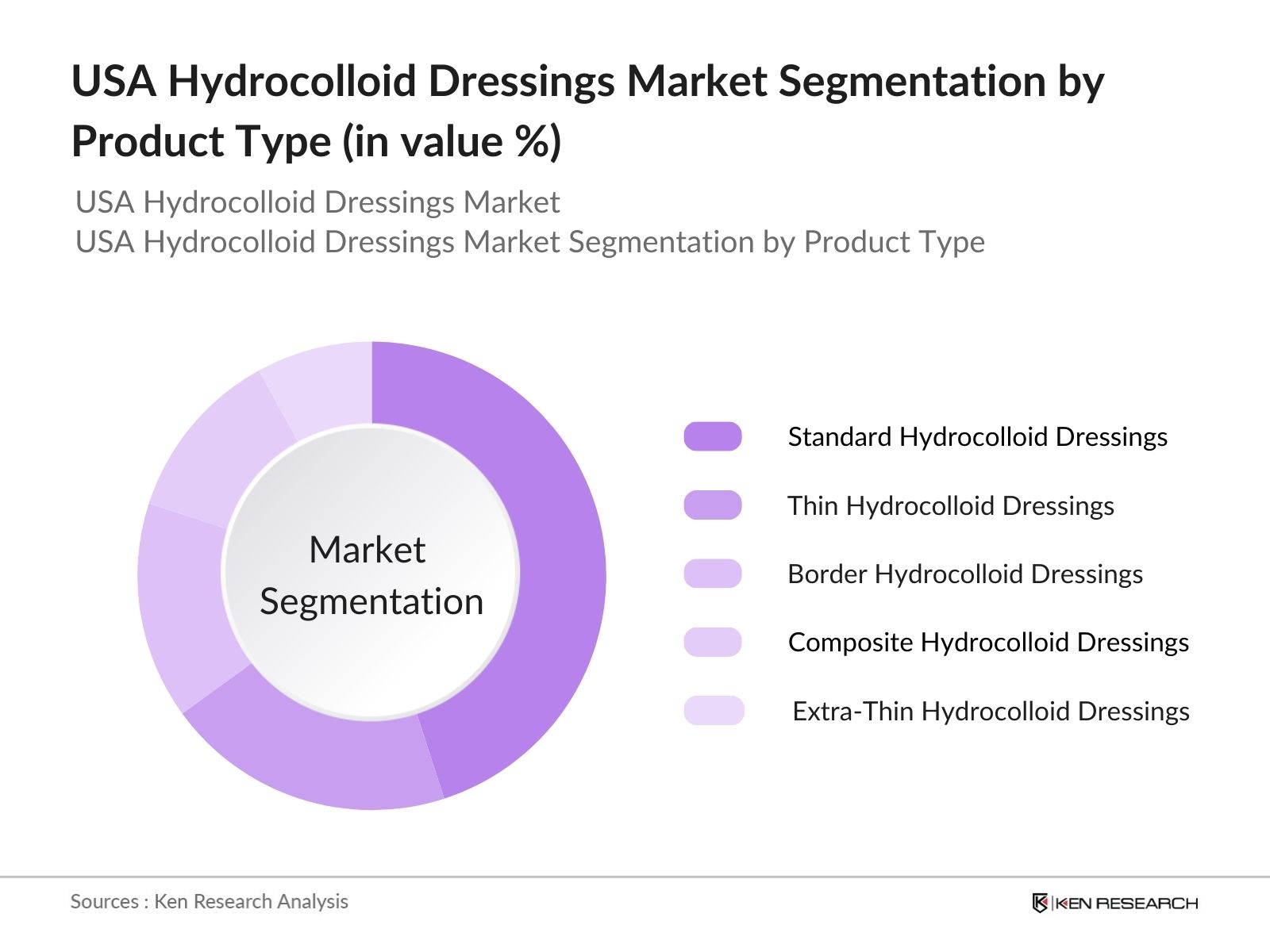
By Application: The market is also segmented by application, including Acute Wounds, Chronic Wounds, Post-Operative Wounds, Burns, and Diabetic Foot Ulcers. In this segmentation, Chronic Wounds stand out with the largest market share, primarily due to the prevalence of long-term conditions like diabetes and pressure ulcers. Chronic wound care requires consistent and effective management, with hydrocolloid dressings providing essential moisture retention and wound protection that accelerates the healing process, making them invaluable in treating chronic wounds. 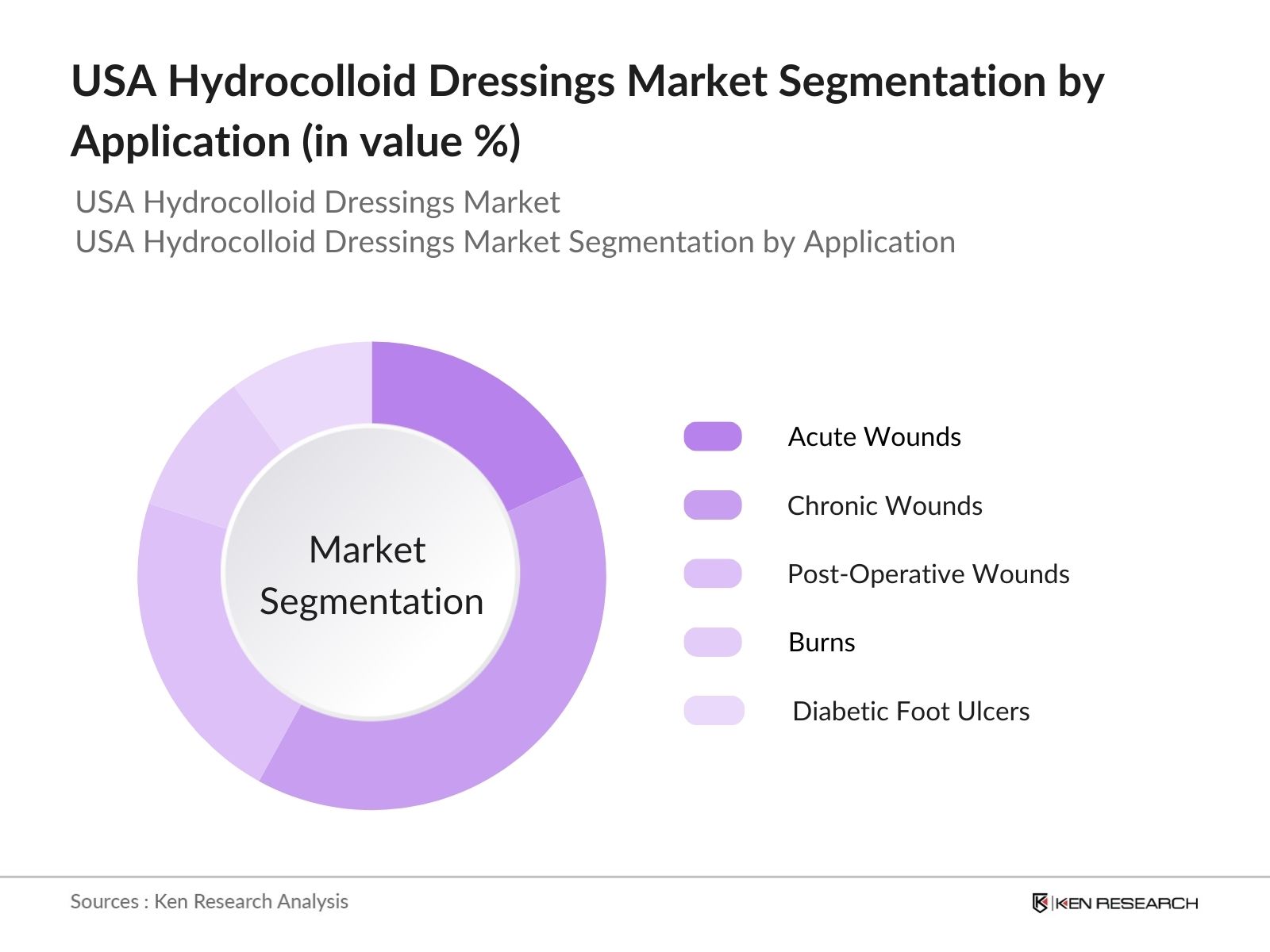
USA Hydrocolloid Dressings Market Competitive Landscape
The USA Hydrocolloid Dressings Market is shaped by the competitive presence of global leaders and niche players with substantial product innovations and established distribution networks. Major players like Smith & Nephew, ConvaTec Group, and Coloplast A/S maintain a stronghold through continual research and development, aimed at improving product performance and patient outcomes.
|
Company |
Establishment Year |
Headquarters |
Revenue (USD Mn) |
Product Portfolio Size |
R&D Investment (USD Mn) |
Regulatory Compliance |
Customer Satisfaction Index |
|
Smith & Nephew |
1856 |
London, UK |
|||||
|
ConvaTec Group |
1978 |
Reading, UK |
|||||
|
Coloplast A/S |
1957 |
Humlebk, Denmark |
|||||
|
3M Healthcare |
1902 |
St. Paul, USA |
|||||
|
Medline Industries |
1966 |
Northfield, USA |
USA Hydrocolloid Dressings Industry Analysis
Growth Drivers
- Increased Adoption in Chronic Wound Care: The USA has seen a notable rise in chronic wound care needs due to conditions like diabetes and venous leg ulcers, directly impacting demand for hydrocolloid dressings. In 2023, the CDC reported over 37 million individuals living with diabetes in the U.S., with a significant portion at risk for chronic wounds and ulcers. Hydrocolloid dressings offer essential moisture retention, ideal for slow-healing wounds prevalent in diabetic and elderly populations. Their protective capabilities reduce infection risks, reinforcing their adoption in wound management protocols across healthcare facilities.
- Rising Geriatric Population: The aging U.S. population, which reached approximately 55 million individuals aged 65 and older in 2023, creates increased demand for hydrocolloid dressings for wound care due to age-related skin vulnerabilities. As per the U.S. Census Bureau, this demographic growth fuels the need for high-quality wound management solutions, as elderly skin is more susceptible to pressure ulcers and chronic wounds, often requiring advanced, moisture-retentive dressings to facilitate healing. This upward trend reinforces hydrocolloid dressing as a core component in elder care.
- Expanding Home Healthcare Services: Home healthcare services, which employed over 1.7 million workers in the U.S. in 2023, continue to expand, driving the need for user-friendly wound care products like hydrocolloid dressings. These dressings offer ease of application and minimize dressing frequency, aligning with home healthcares goals of efficient and effective care. Home healthcare has become essential in managing patients with limited mobility or chronic conditions who rely on accessible, manageable solutions in wound care.
Market Challenges
- High Cost of Advanced Hydrocolloid Dressings: Despite their benefits, advanced hydrocolloid dressings are costly, with prices often exceeding standard wound care products. A 2023 Medicare report highlighted that hydrocolloid dressings might represent an economic barrier for healthcare providers and patients, especially in cases requiring long-term usage. These costs limit accessibility for underinsured individuals, impacting equitable wound care. The price sensitivity in healthcare budgets, especially within public facilities, influences the adoption rates of hydrocolloid dressing in wound management.
- Limited Reimbursement Coverage: Insurance coverage for hydrocolloid dressings remains inconsistent, creating a significant challenge. A 2023 report from the Centers for Medicare and Medicaid Services (CMS) shows that reimbursement policies vary, with coverage often limited to specific wound types, leaving patients with other conditions to cover costs out-of-pocket. This restricts usage to insured or fully reimbursed cases, impacting the widespread adoption of hydrocolloid dressings in clinical and home healthcare settings.
USA Hydrocolloid Dressings Market Future Outlook
Over the upcoming years, the USA Hydrocolloid Dressings Market is poised for considerable growth, driven by ongoing innovations in wound care technology and increased awareness about wound management among healthcare professionals. The rising prevalence of chronic conditions and the expansion of the geriatric population will continue to underpin the demand for high-performance dressings. This growth trajectory is further supported by healthcare providers focus on enhanced patient outcomes through advanced wound care solutions.
Future Market Opportunities
- Growing Demand for Self-Adhesive and Transparent Dressings: Self-adhesive and transparent hydrocolloid dressings have gained traction, particularly in ambulatory care and self-care at home. A 2023 FDA report indicated that transparent dressing types, enabling wound monitoring without frequent removal, are in demand due to their practical application in home and ambulatory settings. These dressings meet the need for minimal handling and are well-suited for both minor and chronic wound management, supporting growth in the home healthcare sector.
- Expanding Applications in Diabetic Ulcers and Pressure Sores: With diabetes prevalence impacting 37 million Americans, as noted by the CDC in 2023, hydrocolloid dressings are increasingly applied for managing diabetic ulcers and pressure sores. These dressings offer moisture retention and infection protection essential for chronic wound management. Their use in hospitals and home care for chronic wound care in diabetic patients presents a growing opportunity in managing the rising number of diabetic and bedridden patients.
Scope of the Report
|
By Product Type |
Standard Thin Border Composite Extra-Thin |
|
By Application |
Acute Wounds Chronic Wounds Post-Operative Burns Diabetic Ulcers |
|
By End-User |
Hospitals Home Healthcare Long-Term Care Ambulatory Centers Wound Care Clinics |
|
By Distribution Channel |
Direct Tenders Pharmacies Online Retail Retail Pharmacies Distributors |
|
By Region |
Northeast Midwest South West |
Products
Key Target Audience
Investor and Venture Capitalist Firms
Government and Regulatory Bodies (e.g., FDA, Centers for Medicare and Medicaid Services)
Healthcare Providers (e.g., hospitals, wound care clinics)
Wound Care Product Manufacturers
Banks and Financial Institutes
Pharmaceutical Distributors
Home Healthcare Service Providers
Geriatric Care Facilities
Insurance Providers and Payers
Companies
Major Players
Smith & Nephew
ConvaTec Group
Coloplast A/S
3M Healthcare
Medline Industries
Integra LifeSciences
Molnlycke Health Care
Acelity L.P.
B. Braun Melsungen AG
Paul Hartmann AG
Lohmann & Rauscher
Hollister Incorporated
Derma Sciences Inc.
Advanced Medical Solutions Group
Cardinal Health
Table of Contents
1. USA Hydrocolloid Dressings Market Overview
1.1. Definition and Scope
1.2. Market Taxonomy
1.3. Market Penetration (By End-Use Sector)
1.4. Market Segmentation Overview
2. USA Hydrocolloid Dressings Market Size (In USD Mn)
2.1. Historical Market Size
2.2. Year-On-Year Growth Analysis
2.3. Key Market Developments and Innovations
2.4. Price Point Analysis (By Product Type)
3. USA Hydrocolloid Dressings Market Dynamics
3.1. Growth Drivers
3.1.1. Increased Adoption in Chronic Wound Care
3.1.2. Rising Geriatric Population
3.1.3. Expanding Home Healthcare Services
3.1.4. Technological Advancements in Dressing Materials
3.2. Market Challenges
3.2.1. High Cost of Advanced Hydrocolloid Dressings
3.2.2. Limited Reimbursement Coverage
3.2.3. Availability of Alternative Wound Care Products
3.3. Opportunities
3.3.1. Growing Demand for Self-Adhesive and Transparent Dressings
3.3.2. Expanding Applications in Diabetic Ulcers and Pressure Sores
3.3.3. Opportunities in Ambulatory Care and Clinics
3.4. Trends
3.4.1. Sustainability and Biodegradable Dressing Solutions
3.4.2. Enhanced Adhesive Formulations
3.4.3. Customizable and Patient-Specific Dressings
3.5. Government Regulation
3.5.1. FDA Compliance for Medical Devices
3.5.2. Clinical Trial and Efficacy Standards
3.5.3. Medicare and Medicaid Guidelines
3.5.4. Import and Export Regulations
4. USA Hydrocolloid Dressings Market Segmentation
4.1. By Product Type (In Value %)
4.1.1. Standard Hydrocolloid Dressings
4.1.2. Thin Hydrocolloid Dressings
4.1.3. Border Hydrocolloid Dressings
4.1.4. Composite Hydrocolloid Dressings
4.1.5. Extra-Thin Hydrocolloid Dressings
4.2. By Application (In Value %)
4.2.1. Acute Wounds
4.2.2. Chronic Wounds
4.2.3. Post-Operative Wounds
4.2.4. Burns
4.2.5. Diabetic Foot Ulcers
4.3. By End-User (In Value %)
4.3.1. Hospitals and Clinics
4.3.2. Home Healthcare
4.3.3. Long-Term Care Facilities
4.3.4. Ambulatory Surgical Centers
4.3.5. Specialty Wound Care Clinics
4.4. By Distribution Channel (In Value %)
4.4.1. Direct Tenders
4.4.2. Pharmacies
4.4.3. Online Retail
4.4.4. Retail Pharmacies
4.4.5. Distributors
4.5. By Region (In Value %)
4.5.1. Northeast
4.5.2. Midwest
4.5.3. South
4.5.4. West
5. USA Hydrocolloid Dressings Market Competitive Analysis
5.1. Detailed Profiles of Major Companies
5.1.1. Smith & Nephew
5.1.2. ConvaTec Group
5.1.3. Coloplast A/S
5.1.4. 3M Healthcare
5.1.5. Cardinal Health
5.1.6. Medline Industries
5.1.7. Integra LifeSciences
5.1.8. Molnlycke Health Care
5.1.9. Acelity L.P.
5.1.10. B. Braun Melsungen AG
5.1.11. Paul Hartmann AG
5.1.12. Lohmann & Rauscher
5.1.13. Hollister Incorporated
5.1.14. Derma Sciences Inc.
5.1.15. Advanced Medical Solutions Group
5.2. Cross Comparison Parameters (Revenue, Product Portfolio, Technological Innovation, Market Reach, Regulatory Compliance, Manufacturing Facilities, R&D Investment, Customer Satisfaction Index)
5.3. Market Share Analysis
5.4. Strategic Initiatives
5.5. Mergers and Acquisitions
5.6. Investment Analysis
5.7. Venture Capital Funding
5.8. Government Grants
5.9. Private Equity Investments
6. USA Hydrocolloid Dressings Market Regulatory Framework
6.1. FDA Approval Process
6.2. Environmental Compliance Standards
6.3. Import Tariff and Tax Regulations
6.4. Patient Safety and Efficacy Standards
7. USA Hydrocolloid Dressings Future Market Size (In USD Mn)
7.1. Market Size Projections
7.2. Factors Contributing to Future Growth
8. USA Hydrocolloid Dressings Future Market Segmentation
8.1. By Product Type
8.2. By Application
8.3. By End-User
8.4. By Distribution Channel
8.5. By Region
9. USA Hydrocolloid Dressings Market Analysts Recommendations
9.1. TAM/SAM/SOM Analysis
9.2. Customer Cohort Analysis
9.3. Marketing and Sales Initiatives
9.4. White Space Opportunity Analysis
Disclaimer Contact UsResearch Methodology
Step 1: Identification of Key Variables
In the initial stage, an ecosystem map of all critical stakeholders within the USA Hydrocolloid Dressings Market was constructed. This included extensive desk research to gather in-depth industry data, focusing on identifying variables influencing market trends.
Step 2: Market Analysis and Construction
The analysis involved compiling historical data, assessing distribution channels, and measuring product penetration within the healthcare sector. This step ensured accuracy in estimating revenue generation and market dynamics.
Step 3: Hypothesis Validation and Expert Consultation
Industry experts were consulted through computer-assisted telephone interviews (CATIs) to validate market hypotheses. These discussions provided operational insights directly from key players, enriching the market analysis with firsthand data.
Step 4: Research Synthesis and Final Output
Direct engagements with healthcare providers and wound care product manufacturers were conducted, capturing detailed insights into product segments, sales performance, and consumer preferences. This validated data formed a comprehensive basis for the final market report.
Frequently Asked Questions
01 How big is the USA Hydrocolloid Dressings Market?
The USA Hydrocolloid Dressings Market is valued at USD 490 million, driven by factors such as rising demand for chronic wound care solutions and advancements in dressing materials.
02 What challenges does the USA Hydrocolloid Dressings Market face?
Challenges in the USA Hydrocolloid Dressings Market include the high costs of advanced dressing materials, limited reimbursement options, and competition from alternative wound care products.
03 Who are the major players in the USA Hydrocolloid Dressings Market?
Key players in the USA Hydrocolloid Dressings Market include Smith & Nephew, ConvaTec Group, Coloplast A/S, 3M Healthcare, and Medline Industries, dominating due to their product innovation and distribution networks.
04 What are the growth drivers of the USA Hydrocolloid Dressings Market?
Growth in the USA Hydrocolloid Dressings Market is fueled by increasing cases of chronic wounds, technological advancements in dressings, and the expansion of home healthcare services.
05 What types of hydrocolloid dressings are available in the USA market?
The USA Hydrocolloid Dressings Market offers several types, including standard, thin, border, composite, and extra-thin hydrocolloid dressings, catering to various wound care needs and preferences.
Why Buy From Us?

What makes us stand out is that our consultants follows Robust, Refine and Result (RRR) methodology. i.e. Robust for clear definitions, approaches and sanity checking, Refine for differentiating respondents facts and opinions and Result for presenting data with story

We have set a benchmark in the industry by offering our clients with syndicated and customized market research reports featuring coverage of entire market as well as meticulous research and analyst insights.

While we don't replace traditional research, we flip the method upside down. Our dual approach of Top Bottom & Bottom Top ensures quality deliverable by not just verifying company fundamentals but also looking at the sector and macroeconomic factors.

With one step in the future, our research team constantly tries to show you the bigger picture. We help with some of the tough questions you may encounter along the way: How is the industry positioned? Best marketing channel? KPI's of competitors? By aligning every element, we help maximize success.

Our report gives you instant access to the answers and sources that other companies might choose to hide. We elaborate each steps of research methodology we have used and showcase you the sample size to earn your trust.

If you need any support, we are here! We pride ourselves on universe strength, data quality, and quick, friendly, and professional service.