
USA Identity and Access Management Market Outlook
Region:Mexico
Author(s):Shambhavi
Product Code:KROD4325
Region:Mexico
Author(s):Shambhavi
Product Code:KROD4325
December 2024
85
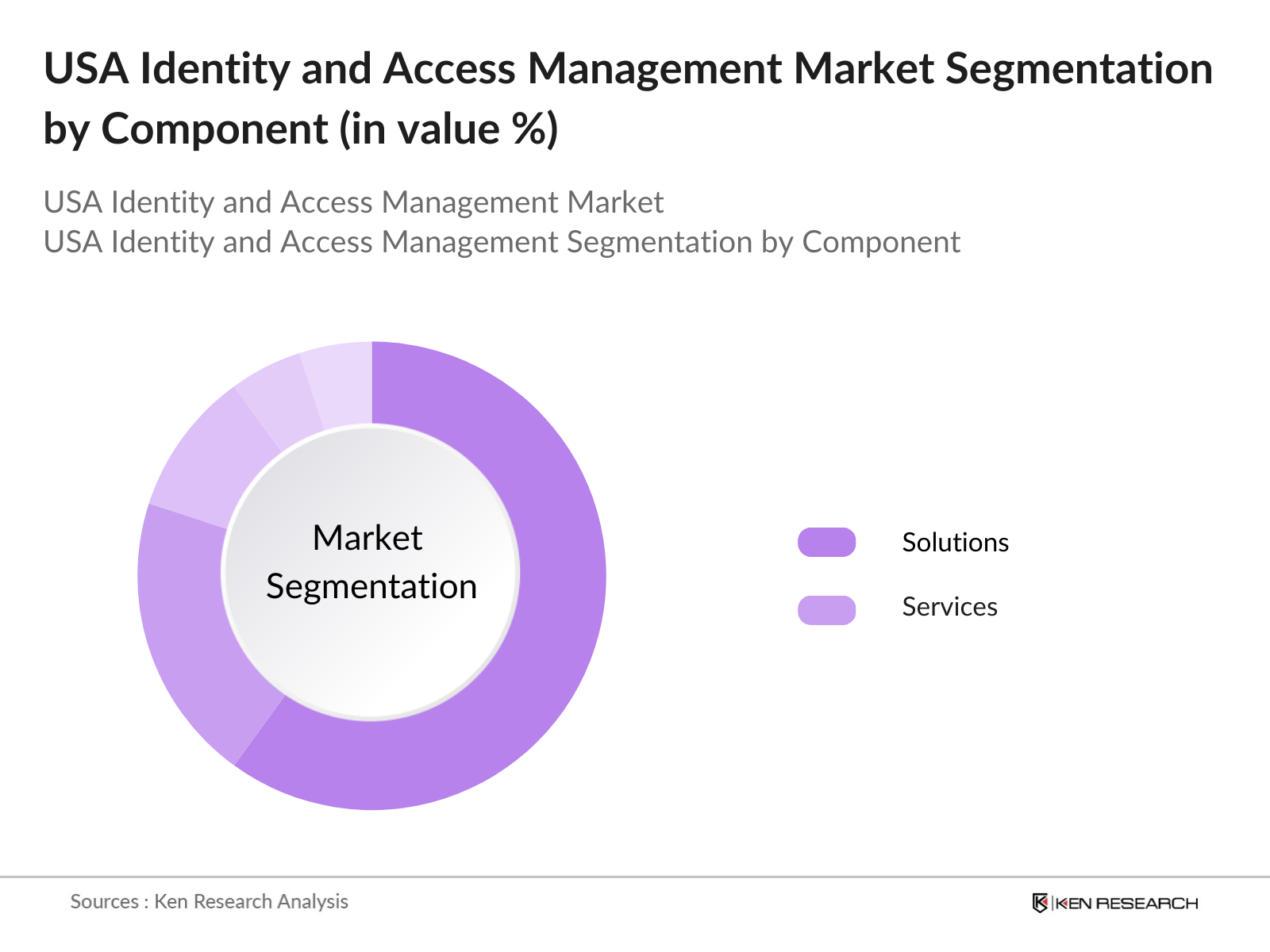
By Component: The U.S. IAM market is segmented by component into solutions and services. Within this segmentation, solutions hold a prominent market share due to the necessity for multifaceted IAM tools such as single sign-on (SSO), multi-factor authentication (MFA), and user provisioning. Companies across various sectors rely on these solutions to secure access across cloud and on-premise systems, ensuring compliance with stringent data security standards. SSO, in particular, has gained traction as it simplifies user access management while reducing administrative overheads, making it an indispensable tool in large enterprises.
By Deployment Mode: The IAM market is also segmented by deployment mode, comprising on-premise and cloud-based solutions. Cloud-based IAM solutions dominate this segment due to the flexibility and scalability they offer, which aligns with the increased adoption of cloud applications across industries. Businesses are progressively moving toward cloud environments to facilitate remote work and digital transformation initiatives, further driving the demand for cloud-based IAM. This shift toward cloud adoption is reinforced by the cost-efficiency and ease of integration that cloud IAM solutions offer, making them the preferred choice among U.S. enterprises.

The U.S. IAM market is led by a mix of global and domestic players, focusing on comprehensive IAM solutions to address diverse security challenges. Key players have continued to invest in innovation and advanced IAM technologies to differentiate in this competitive market.
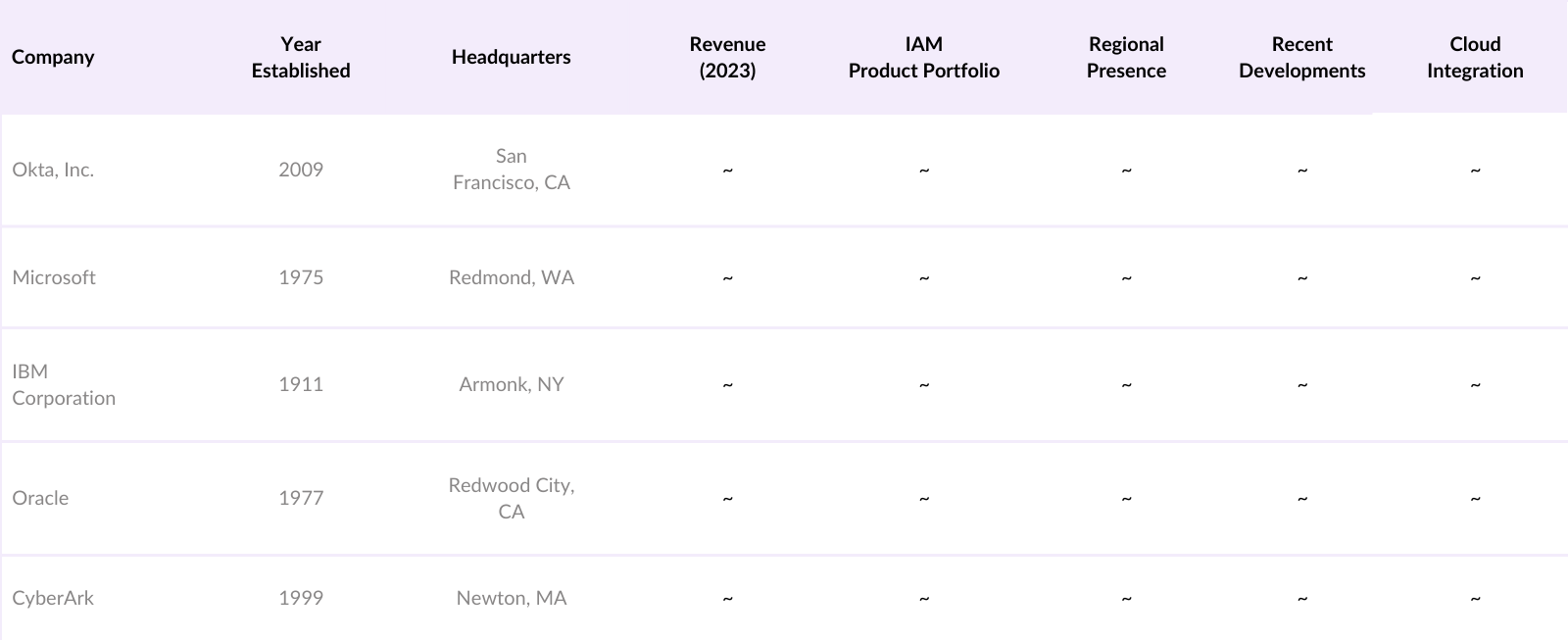
The competitive landscape reflects a consolidation where a few major players dominate, driven by advancements in IAM solutions and the integration of AI for enhanced identity verification.
The U.S. IAM market is expected to experience sustained growth over the coming years, fueled by increasing digital adoption and stringent regulatory compliance demands. As more companies transition to cloud-based infrastructures, the role of IAM solutions in ensuring secure access management across dispersed environments will be pivotal. Emerging technologies such as AI and machine learning are anticipated to play a central role in automating and enhancing IAM functionalities, particularly in fraud detection and behavioral analytics.
|
Solution Type |
Single Sign-On (SSO) Multi-Factor Authentication (MFA) Identity Governance and Administration (IGA) Privileged Access Management (PAM) Directory Services |
|
Deployment Model |
Cloud-Based On-Premises Hybrid |
|
Organization Size |
Small and Medium Enterprises (SMEs) Large Enterprises |
|
Industry |
BFSI Healthcare IT and Telecom Retail Government |
|
Region |
North West South East |
1.1. Definition and Scope
1.2. Market Taxonomy
1.3. Market Growth Rate
1.4. Market Segmentation Overview
2.1. Historical Market Size
2.2. Year-On-Year Growth Analysis
2.3. Key Market Developments and Milestones
3.1. Growth Drivers [Adoption Rate, Cloud Integration, Cybersecurity Demand, Regulatory Compliance]
3.1.1. Increasing Cybersecurity Threats
3.1.2. Expansion of Cloud Services
3.1.3. Stringent Data Protection Regulations
3.1.4. Growing Remote Workforce
3.2. Market Challenges [Integration Complexity, High Implementation Costs, Skill Shortages]
3.2.1. Integration with Legacy Systems
3.2.2. Budget Constraints
3.2.3. Limited Skilled Professionals
3.3. Opportunities [Technological Advancements, AI Integration, IoT Expansion]
3.3.1. Adoption of AI and Machine Learning
3.3.2. Expansion into IoT Devices
3.3.3. Enhanced Mobile Security Solutions
3.4. Trends [Zero Trust Architecture, Biometrics, Multi-Factor Authentication]
3.4.1. Zero Trust Security Models
3.4.2. Increased Use of Biometric Authentication
3.4.3. Adoption of Multi-Factor Authentication
3.5. Government Regulation [FISMA, GDPR Compliance, CCPA]
3.5.1. Federal Information Security Management Act (FISMA)
3.5.2. General Data Protection Regulation (GDPR) Compliance
3.5.3. California Consumer Privacy Act (CCPA)
3.5.4. National Institute of Standards and Technology (NIST) Guidelines
3.6. SWOT Analysis
3.7. Stakeholder Ecosystem
3.8. Porters Five Forces
3.9. Competition Ecosystem
4.1. By Solution Type (In Value %)
4.1.1. Single Sign-On (SSO)
4.1.2. Multi-Factor Authentication (MFA)
4.1.3. Identity Governance and Administration (IGA)
4.1.4. Privileged Access Management (PAM)
4.1.5. Directory Services
4.2. By Deployment Model (In Value %)
4.2.1. Cloud-Based
4.2.2. On-Premises
4.2.3. Hybrid
4.3. By Organization Size (In Value %)
4.3.1. Small and Medium Enterprises (SMEs)
4.3.2. Large Enterprises
4.4. By Industry (In Value %)
4.4.1. BFSI
4.4.2. Healthcare
4.4.3. IT and Telecom
4.4.4. Retail
4.4.5. Government
4.5. By Region (In Value %)
4.5.1. North
4.5.2. West
4.5.3. South
4.5.4. East
5.1. Detailed Profiles of Major Companies
5.1.1. Microsoft Corporation
5.1.2. IBM Corporation
5.1.3. Okta, Inc.
5.1.4. Ping Identity
5.1.5. Oracle Corporation
5.1.6. CyberArk Software Ltd.
5.1.7. SailPoint Technologies Holdings, Inc.
5.1.8. RSA Security LLC
5.1.9. ForgeRock, Inc.
5.1.10. OneLogin, Inc.
5.1.11. Centrify Corporation
5.1.12. Auth0, Inc.
5.1.13. Duo Security (Cisco)
5.1.14. Thales Group
5.1.15. Hitachi ID Systems
5.2. Cross Comparison Parameters [Number of Employees, Headquarters, Inception Year, Revenue, Product Portfolio, Market Share, R&D Investment, Geographic Presence]
5.3. Market Share Analysis
5.4. Strategic Initiatives
5.5. Mergers and Acquisitions
5.6. Investment Analysis
5.7. Venture Capital Funding
5.8. Government Grants
5.9. Private Equity Investments
6.1. Data Protection Laws
6.2. Compliance Requirements
6.3. Certification Processes
7.1. Future Market Size Projections
7.2. Key Factors Driving Future Market Growth
8.1. By Solution Type (In Value %)
8.1.1. Single Sign-On (SSO)
8.1.2. Multi-Factor Authentication (MFA)
8.1.3. Identity Governance and Administration (IGA)
8.1.4. Privileged Access Management (PAM)
8.1.5. Directory Services
8.2. By Deployment Model (In Value %)
8.2.1. Cloud-Based
8.2.2. On-Premises
8.2.3. Hybrid
8.3. By Organization Size (In Value %)
8.3.1. Small and Medium Enterprises (SMEs)
8.3.2. Large Enterprises
8.4. By Industry (In Value %)
8.4.1. BFSI
8.4.2. Healthcare
8.4.3. IT and Telecom
8.4.4. Retail
8.4.5. Government
8.5. By Region (In Value %)
8.5.1. Northeast
8.5.2. Midwest
8.5.3. South
8.5.4. West
9.1. TAM/SAM/SOM Analysis
9.2. Customer Cohort Analysis
9.3. Marketing Initiatives
9.4. White Space Opportunity Analysis
Disclaimer Contact UsIn this initial phase, an ecosystem map covering all major players in the U.S. IAM market is created. Extensive desk research using secondary databases enables the identification of critical variables impacting IAM market dynamics.
This phase involves analyzing historical data to assess market penetration and evaluate sector-wise adoption rates. The assessment includes a review of industry growth trends and service provider ratios.
Developed hypotheses are validated through computer-assisted telephone interviews with industry professionals. These consultations yield insights directly from operational managers and sector specialists.
The synthesis phase includes direct engagement with IAM solution providers to verify and complement initial data findings, ensuring a comprehensive and validated analysis of the U.S. IAM market.
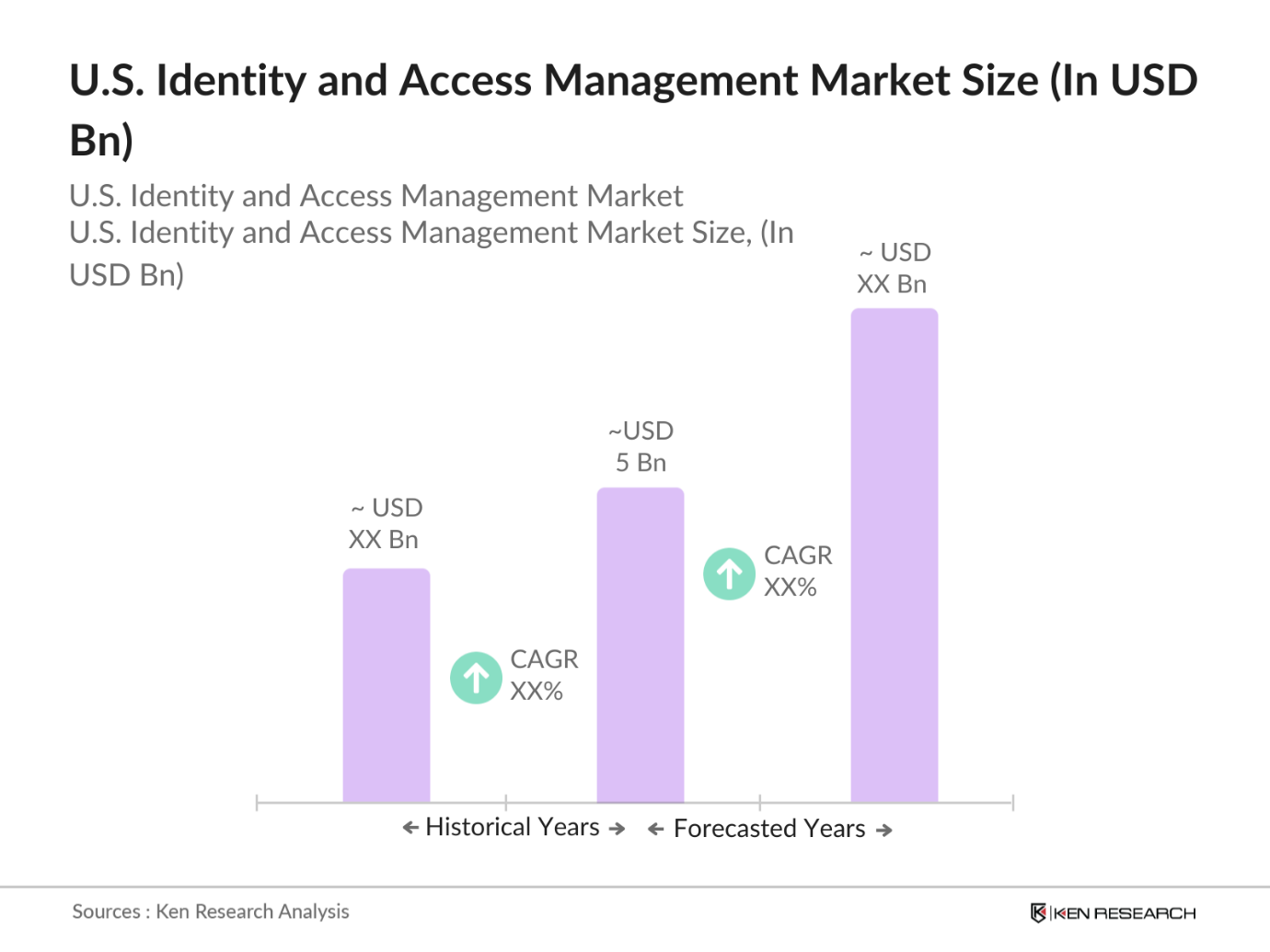
The U.S. Identity and Access Management market is valued at USD 12.8 billion, driven by heightened cybersecurity requirements and the increasing adoption of cloud-based solutions across industries.
Key challenges include high implementation costs and integration complexities with existing infrastructure, as well as the need for continuous updates to keep pace with emerging cyber threats.
The IAM market is led by prominent players like Okta, Microsoft, IBM, and CyberArk, who dominate through advanced security solutions and a strong emphasis on cloud-based IAM offerings.
Growth is primarily driven by regulatory requirements for data protection, increased adoption of remote work, and advancements in IAM technology that enhance security protocols.

What makes us stand out is that our consultants follows Robust, Refine and Result (RRR) methodology. i.e. Robust for clear definitions, approaches and sanity checking, Refine for differentiating respondents facts and opinions and Result for presenting data with story

We have set a benchmark in the industry by offering our clients with syndicated and customized market research reports featuring coverage of entire market as well as meticulous research and analyst insights.

While we don't replace traditional research, we flip the method upside down. Our dual approach of Top Bottom & Bottom Top ensures quality deliverable by not just verifying company fundamentals but also looking at the sector and macroeconomic factors.

With one step in the future, our research team constantly tries to show you the bigger picture. We help with some of the tough questions you may encounter along the way: How is the industry positioned? Best marketing channel? KPI's of competitors? By aligning every element, we help maximize success.

Our report gives you instant access to the answers and sources that other companies might choose to hide. We elaborate each steps of research methodology we have used and showcase you the sample size to earn your trust.

If you need any support, we are here! We pride ourselves on universe strength, data quality, and quick, friendly, and professional service.