















USA Injection Molding Machine Market Outlook to 2030
Region:North America
Author(s):Yogita Sahu
Product Code:KROD4328
October 2024
83
About the Report
USA Injection Molding Machine Market Overview
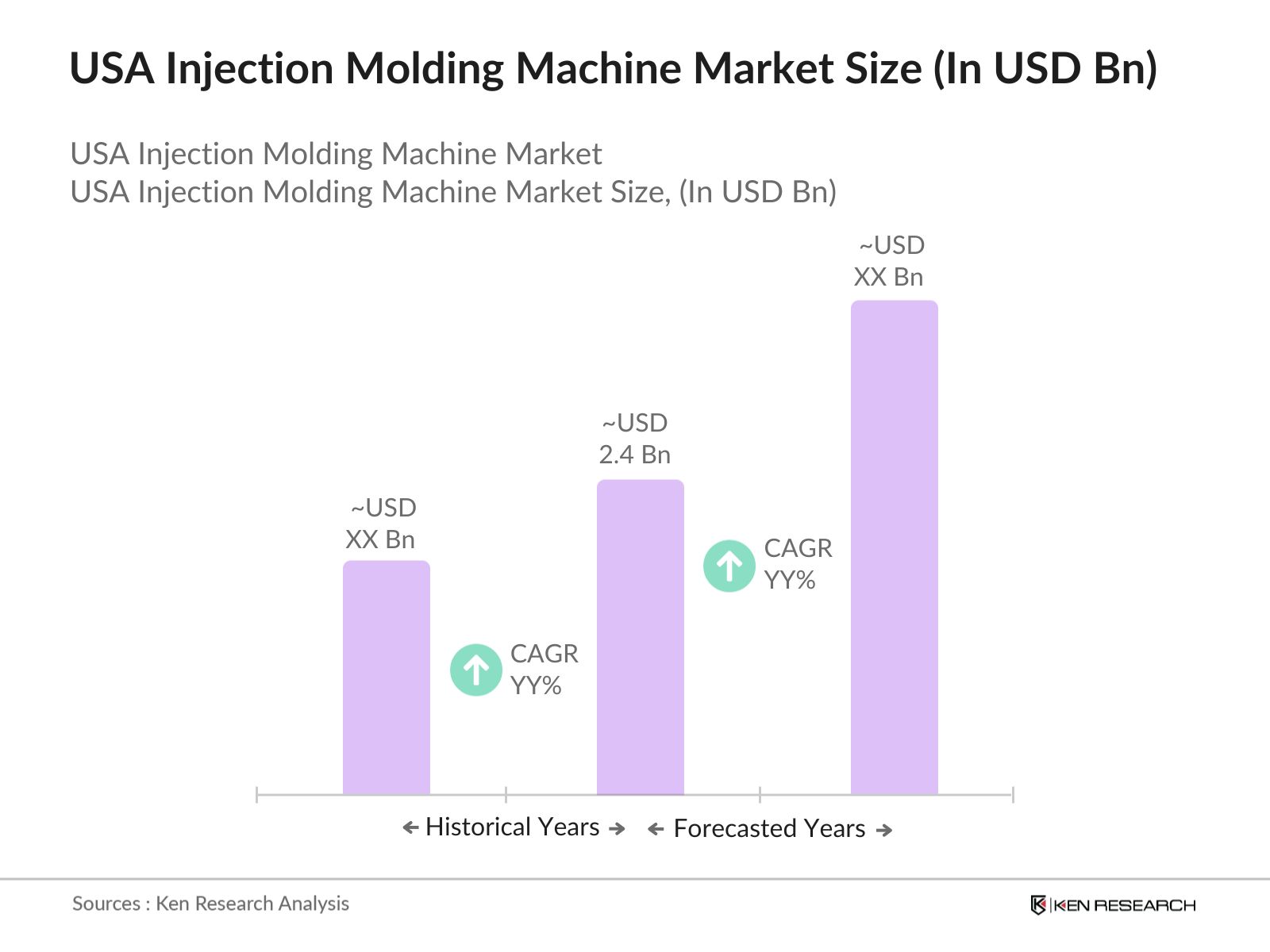
- The USA Injection Molding Machine market is valued at USD 2.4 billion, based on a five-year historical analysis. The market is driven by increasing demand from the automotive and packaging industries, which are expanding due to technological advancements and the need for high-precision components. Rising consumer demand for lightweight, durable, and high-quality plastic parts across several industries, such as electronics and consumer goods, further drives this market.
- The dominant regions in the market are the Midwest and Southern USA. The Midwest is known for its robust automotive and manufacturing industries, while the Southern USA dominates due to the presence of several large-scale packaging and medical device manufacturers. These regions have a strong industrial base and advanced infrastructure, making them key players in the market.
- In 2023, the U.S. Department of Energy continued its Advanced Manufacturing Office (AMO) program, which provides financial incentives for manufacturers to adopt energy-efficient technologies, including electric injection molding machines. The program aims to reduce industrial energy use by 15% by 2030 and offers tax credits and subsidies to companies that invest in energy-efficient equipment.
USA Injection Molding Machine Market Segmentation
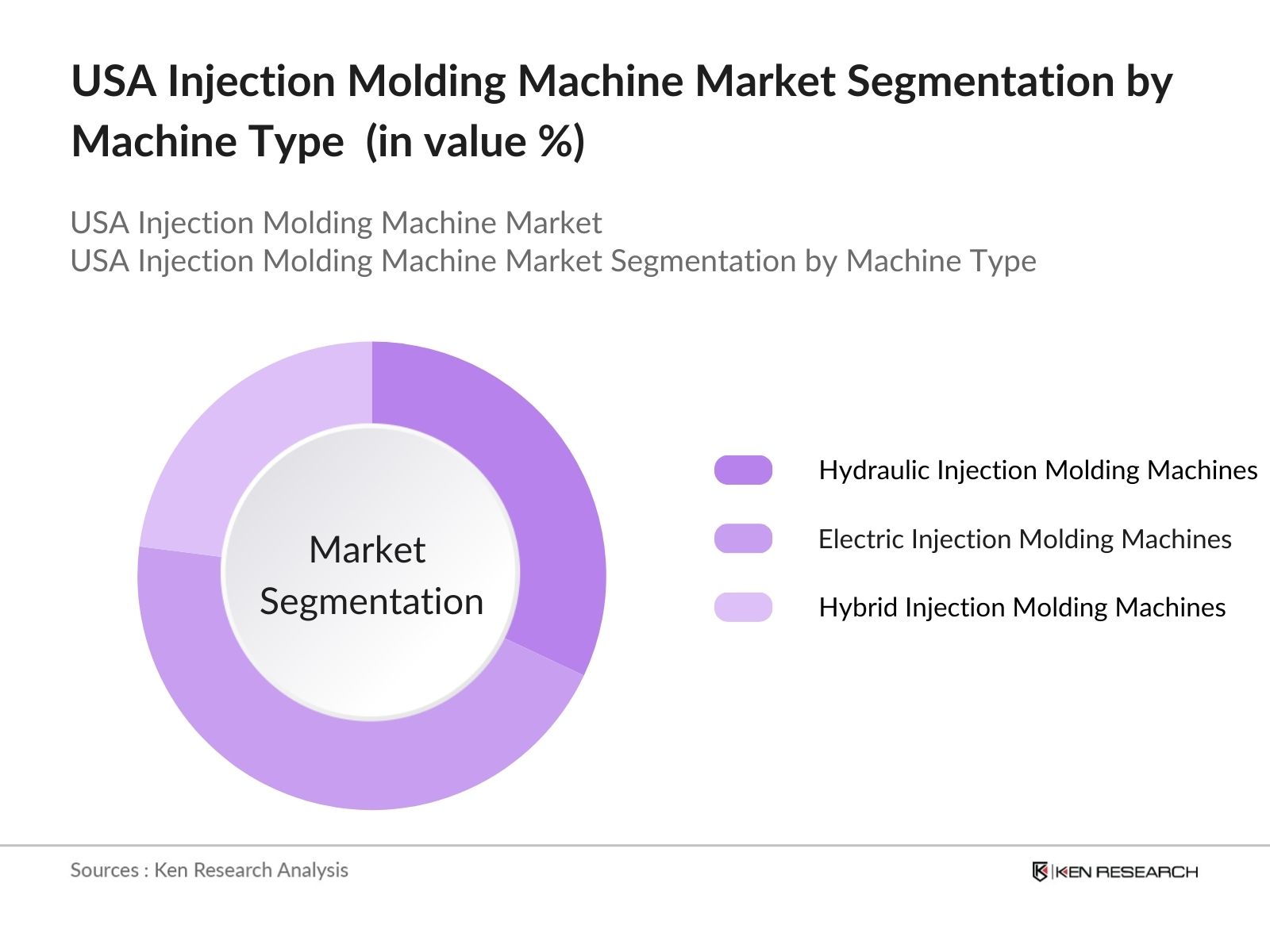
By Machine Type: The market is segmented by machine type into hydraulic injection molding machines, electric injection molding machines, and hybrid injection molding machines. Electric injection molding machines currently dominate the market share due to their energy efficiency and higher precision compared to traditional hydraulic systems. Companies are shifting towards electric machines as they provide better process control, faster cycle times, and reduced energy consumption.
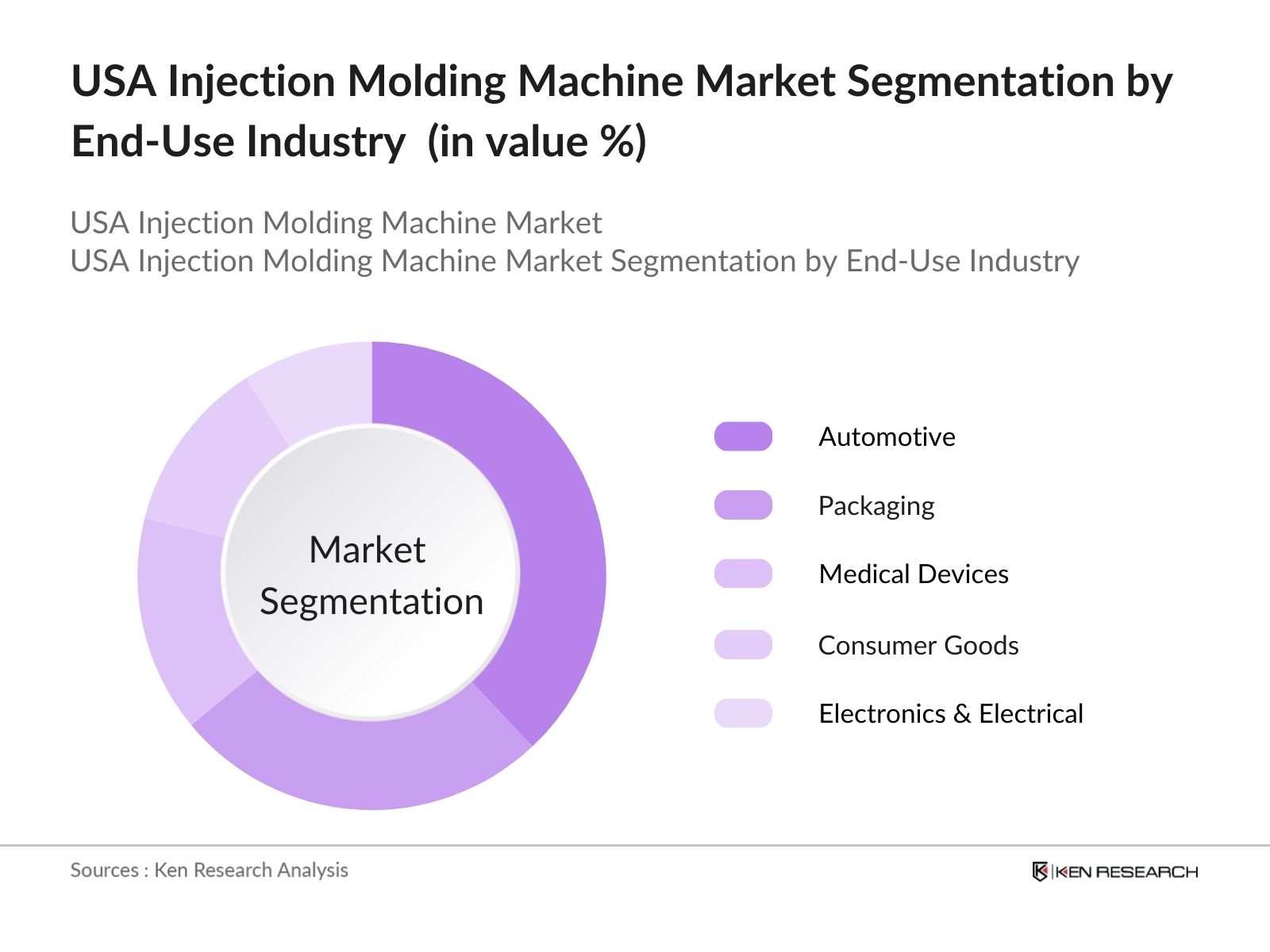
By End-Use Industry: The market is also segmented by end-use industry into automotive, packaging, medical devices, consumer goods, and electronics & electrical. The automotive industry holds the largest market share in this segment due to the rising demand for lightweight components and complex plastic parts in vehicle manufacturing. The need for energy-efficient vehicles and the transition towards electric vehicles (EVs) have further driven the demand for injection molding machines in this industry, as plastic parts play a critical role in reducing vehicle weight and improving fuel efficiency.
USA Injection Molding Machine Market Competitive Landscape
The market is dominated by a few global and domestic players. These companies offer a wide range of injection molding solutions and have market presence through strategic partnerships, technological innovations, and mergers and acquisitions. The market is highly competitive, with players focusing on automation and advanced machine technologies to differentiate themselves.
|
Company Name |
Establishment Year |
Headquarters |
Market Penetration |
Technological Innovation |
Global Presence |
Product Range |
Partnerships |
Revenue (USD Bn) |
|
Arburg GmbH & Co. KG |
1923 |
Germany |
||||||
|
Milacron Holdings Corp. |
1884 |
USA |
||||||
|
Husky Injection Molding |
1953 |
Canada |
||||||
|
Engel Austria GmbH |
1945 |
Austria |
||||||
|
Sumitomo Heavy Industries |
1888 |
Japan |
USA Injection Molding Machine Market Analysis
Market Growth Drivers
- Expansion of Automotive Manufacturing: The U.S. automotive industry heavily relies on injection molding technology for manufacturing lightweight plastic components, which improves fuel efficiency and vehicle design. In 2023, the U.S. automotive industry produced over 9 million vehicles, according to the U.S. Department of Transportation, and the injection molding market saw significant demand for both interior and exterior parts. As automakers focus on electric vehicles, the need for specialized plastic parts is expected to increase, further driving the market.
- Packaging Industry Growth: The U.S. packaging sector, particularly in food and beverage, has driven demand for injection molding machines due to the increasing need for plastic containers, bottles, and packaging solutions. In 2022, the U.S. packaging industry produced plastic bottles, and injection molding technology is crucial for meeting this volume. The rise of e-commerce, has also spurred growth in packaging, increasing the demand for high-efficiency injection molding machines.
- Medical Devices Manufacturing Expansion: The demand for injection-molded medical devices and equipment has surged in the U.S. due to increased healthcare needs and advanced medical technologies. In 2022, the U.S. medical device manufacturing sector with injection molding being central to producing components like syringes, vials, and surgical instruments. The rise in chronic diseases and an aging population is further driving the need for specialized medical equipment, propelling the growth of the market.
Market Challenges
- High Energy Consumption: Injection molding machines, particularly hydraulic models, are known for their high energy consumption. In 2023, the U.S. manufacturing sector consumed over 8 quadrillion British thermal units (BTUs) of energy, with a significant portion used by energy-intensive machinery such as injection molding machines. Rising energy costs, particularly in states like California and Texas, have made energy-efficient machines a necessity, yet many small manufacturers struggle to afford these upgrades.
- Supply Chain Disruptions: The U.S. injection molding industry has been impacted by supply chain disruptions, particularly in the procurement of raw materials like plastic resins and machinery parts. In 2022, supply chain issues caused delays for over 40,000 U.S. manufacturers, leading to production backlogs in industries reliant on injection molding, such as automotive and consumer goods. The shortage of raw materials, coupled with increasing transportation costs, continues to hinder the smooth functioning of the injection molding market.
USA Injection Molding Machine Market Future Outlook
Over the next five years, the USA injection molding machine industry is expected to experience growth. This expansion is driven by the increasing demand for lightweight materials in the automotive sector, advancements in machine technology, and growing adoption of automation in manufacturing processes.
Future Market Opportunities
- Expansion of Bioplastic Applications: The market will see a growing emphasis on producing bioplastic components, particularly in sectors like automotive, packaging, and healthcare. By 2028, the number of U.S. manufacturers using injection molding machines for bioplastics is expected to double, driven by government incentives and consumer demand for sustainable products. This will lead to more investments in machines capable of processing biodegradable materials.
- Integration of Smart Manufacturing Technologies: The future of the U.S. injection molding industry will be shaped by smart manufacturing technologies, including IoT-enabled systems and predictive maintenance. By 2027, it is estimated that nearly 60% of injection molding machines in the U.S. will be connected to IoT platforms, allowing manufacturers to optimize machine performance and reduce downtime through predictive analytics.
Scope of the Report
|
Machine Type |
Hydraulic Injection Molding Machines |
|
Electric Injection Molding Machines |
|
|
Hybrid Injection Molding Machines |
|
|
End-Use Industry |
Automotive |
|
Packaging |
|
|
Medical Devices |
|
|
Consumer Goods |
|
|
Electronics and Electrical |
|
|
Material Type |
Plastic (Polyethylene, Polypropylene, ABS, etc.) |
|
Rubber |
|
|
Metal |
|
|
Clamping Force |
0-200 Tons |
|
201-500 Tons |
|
|
Above 500 Tons |
|
|
Region |
North |
|
East |
|
|
South |
|
|
West |
Products
Key Target Audience Organizations and Entities Who Can Benefit by Subscribing This Report:
Injection Molding Machine Manufacturers
Automotive Component Manufacturers
Packaging Industry Players
Medical Device Manufacturers
Electronics and Electrical Product Manufacturers
Investments and Venture Capitalist Firms
Government and Regulatory Bodies (EPA, Department of Energy)
Companies
Players Mentioned in the Report:
Arburg GmbH & Co. KG
Milacron Holdings Corp.
Husky Injection Molding Systems Ltd.
Engel Austria GmbH
Sumitomo Heavy Industries Ltd.
JSW Plastics Machinery Inc.
Nissei Plastic Industrial Co. Ltd.
KraussMaffei Group
Wittmann Battenfeld GmbH
Negri Bossi S.p.A.
Sodick Co. Ltd.
Fu Chun Shin Machinery Manufacture Co. Ltd.
Shibaura Machine Co. Ltd.
Chen Hsong Holdings Limited
Toyo Machinery & Metal Co. Ltd.
Table of Contents
1. USA Injection Molding Machine Market Overview
1.1. Definition and Scope
1.2. Market Taxonomy
1.3. Market Growth Rate
1.4. Market Segmentation Overview
2. USA Injection Molding Machine Market Size (In USD Bn)
2.1. Historical Market Size
2.2. Year-On-Year Growth Analysis
2.3. Key Market Developments and Milestones
3. USA Injection Molding Machine Market Analysis
3.1. Growth Drivers
3.1.1. Automotive Industry Demand
3.1.2. Packaging Industry Expansion
3.1.3. Medical Device Manufacturing Growth
3.1.4. Technological Advancements in Machinery
3.2. Market Challenges
3.2.1. High Initial Investment Costs
3.2.2. Raw Material Price Volatility
3.2.3. Environmental Concerns
3.2.4. Energy Consumption Concerns
3.3. Opportunities
3.3.1. Development of Electric and Hybrid Injection Molding Machines
3.3.2. Customization and Flexibility in Machine Operations
3.3.3. Growing Demand for Sustainable Manufacturing Solutions
3.3.4. Adoption of Industry 4.0 Technologies
3.4. Trends
3.4.1. Increased Use of Automation and Robotics
3.4.2. Shift Toward Electric Machines Over Hydraulic Systems
3.4.3. Integration with Digital Platforms for Monitoring and Control
3.4.4. Focus on Lightweight Materials for Injection Molding
3.5. Government Regulations
3.5.1. Energy Efficiency Regulations
3.5.2. Plastic Waste Management and Recycling Policies
3.5.3. Compliance with Safety and Environmental Standards
3.5.4. Trade Tariffs and Import/Export Policies
3.6. SWOT Analysis
3.7. Stakeholder Ecosystem
3.8. Porters Five Forces Analysis
3.9. Competitive Landscape and Market Positioning
4. USA Injection Molding Machine Market Segmentation
4.1. By Machine Type (In Value %)
4.1.1. Hydraulic Injection Molding Machines
4.1.2. Electric Injection Molding Machines
4.1.3. Hybrid Injection Molding Machines
4.2. By End-Use Industry (In Value %)
4.2.1. Automotive
4.2.2. Packaging
4.2.3. Medical Devices
4.2.4. Consumer Goods
4.2.5. Electronics and Electrical
4.3. By Material Type (In Value %)
4.3.1. Plastic (Polyethylene, Polypropylene, ABS, etc.)
4.3.2. Rubber
4.3.3. Metal
4.4. By Clamping Force (In Value %)
4.4.1. 0-200 Tons
4.4.2. 201-500 Tons
4.4.3. Above 500 Tons
4.5. By Region (In Value %)
4.5.1. North
4.5.2. East
4.5.3. West
4.5.4. South
5. USA Injection Molding Machine Market Competitive Analysis
5.1. Detailed Profiles of Major Competitors
5.1.1. Arburg GmbH & Co. KG
5.1.2. Milacron Holdings Corp.
5.1.3. Husky Injection Molding Systems Ltd.
5.1.4. Engel Austria GmbH
5.1.5. Sumitomo Heavy Industries Ltd.
5.1.6. JSW Plastics Machinery Inc.
5.1.7. Toyo Machinery & Metal Co. Ltd.
5.1.8. Nissei Plastic Industrial Co. Ltd.
5.1.9. KraussMaffei Group
5.1.10. Wittmann Battenfeld GmbH
5.1.11. Negri Bossi S.p.A.
5.1.12. Sodick Co. Ltd.
5.1.13. Fu Chun Shin Machinery Manufacture Co. Ltd.
5.1.14. Shibaura Machine Co. Ltd.
5.1.15. Chen Hsong Holdings Limited
5.2. Cross Comparison Parameters (No. of Employees, Headquarters, Revenue, Market Share, Product Range, Technological Advancements, Regional Presence, Strategic Partnerships)
5.3. Market Share Analysis
5.4. Strategic Initiatives
5.5. Mergers and Acquisitions
5.6. Investment Analysis
5.7. Venture Capital Funding
5.8. Government Grants
5.9. Private Equity Investments
6. USA Injection Molding Machine Market Regulatory Framework
6.1. Compliance with Environmental Standards
6.2. Energy Efficiency and Safety Regulations
6.3. Plastics and Rubber Industry Guidelines
6.4. Import/Export Compliance
7. USA Injection Molding Machine Future Market Size (In USD Bn)
7.1. Future Market Size Projections
7.2. Key Factors Driving Future Market Growth
8. USA Injection Molding Machine Future Market Segmentation
8.1. By Machine Type (In Value %)
8.2. By End-Use Industry (In Value %)
8.3. By Material Type (In Value %)
8.4. By Clamping Force (In Value %)
8.5. By Region (In Value %)
9. USA Injection Molding Machine Market Analysts Recommendations
9.1. TAM/SAM/SOM Analysis
9.2. Customer Cohort Analysis
9.3. Strategic Marketing Initiatives
9.4. White Space Opportunity Analysis
Research Methodology
Step 1: Identification of Key Variables
In the first stage, we constructed a comprehensive market map identifying all key stakeholders, including manufacturers, suppliers, and end-users within the USA injection molding machine market. This step relied on extensive desk research and data collection from proprietary databases to identify key factors driving market dynamics.
Step 2: Market Analysis and Construction
This phase involved the collection and analysis of historical market data, including machine production, distribution, and consumption patterns. Key performance indicators such as market penetration and demand-supply ratios were examined to generate accurate revenue projections.
Step 3: Hypothesis Validation and Expert Consultation
Our market hypotheses were validated through consultations with industry experts. We conducted interviews with senior professionals from top injection molding machine manufacturers to gather insights on current and future market trends, challenges, and opportunities.
Step 4: Research Synthesis and Final Output
Finally, we synthesized the research findings, integrating both quantitative data and qualitative insights to produce a comprehensive market report. The report is based on a rigorous bottom-up approach, ensuring that the analysis is accurate and representative of market conditions.
Frequently Asked Questions
01. How big is the USA Injection Molding Machine Market?
The USA injection molding machine market is valued at USD 2.4 billion, driven by the growing demand in the automotive and packaging industries.
02. What are the challenges in the USA Injection Molding Machine Market?
Key challenges in the USA injection molding machine market include high initial costs of machines, fluctuations in raw material prices, and environmental concerns related to plastic waste management.
03. Who are the major players in the USA Injection Molding Machine Market?
Top players in the USA injection molding machine market include Arburg GmbH & Co. KG, Milacron Holdings Corp., Husky Injection Molding Systems Ltd., Engel Austria GmbH, and Sumitomo Heavy Industries Ltd.
04. What are the growth drivers of the USA Injection Molding Machine Market?
The USA injection molding machine market is propelled by advancements in machine technologies, growing demand for lightweight materials in automotive manufacturing, and the rise of automation in production processes.
05. How is the future of the USA Injection Molding Machine Market expected to unfold?
The USA injection molding machine market is expected to grow over the next five years, driven by increased adoption of electric machines, automation, and sustainable manufacturing solutions.
Why Buy From Us?

What makes us stand out is that our consultants follows Robust, Refine and Result (RRR) methodology. i.e. Robust for clear definitions, approaches and sanity checking, Refine for differentiating respondents facts and opinions and Result for presenting data with story

We have set a benchmark in the industry by offering our clients with syndicated and customized market research reports featuring coverage of entire market as well as meticulous research and analyst insights.

While we don't replace traditional research, we flip the method upside down. Our dual approach of Top Bottom & Bottom Top ensures quality deliverable by not just verifying company fundamentals but also looking at the sector and macroeconomic factors.

With one step in the future, our research team constantly tries to show you the bigger picture. We help with some of the tough questions you may encounter along the way: How is the industry positioned? Best marketing channel? KPI's of competitors? By aligning every element, we help maximize success.

Our report gives you instant access to the answers and sources that other companies might choose to hide. We elaborate each steps of research methodology we have used and showcase you the sample size to earn your trust.

If you need any support, we are here! We pride ourselves on universe strength, data quality, and quick, friendly, and professional service.