
USA Insect Repellent Market Outlook to 2030
Region:North America
Author(s):Shubham Kashyap
Product Code:KROD8498
December 2024
85
About the Report
USA Insect Repellent Market Overview
- The USA insect repellent market is valued at USD 315 million, driven by increased awareness of vector-borne diseases and a rise in outdoor recreational activities. Consumer preferences for personal safety and the adoption of eco-friendly repellents further fuel this demand. In response, manufacturers are focusing on innovative formulations and convenient applications, such as sprays, lotions, and wearable patches. These factors, combined with rising disposable incomes, position the USA as a significant contributor to the global insect repellent market.
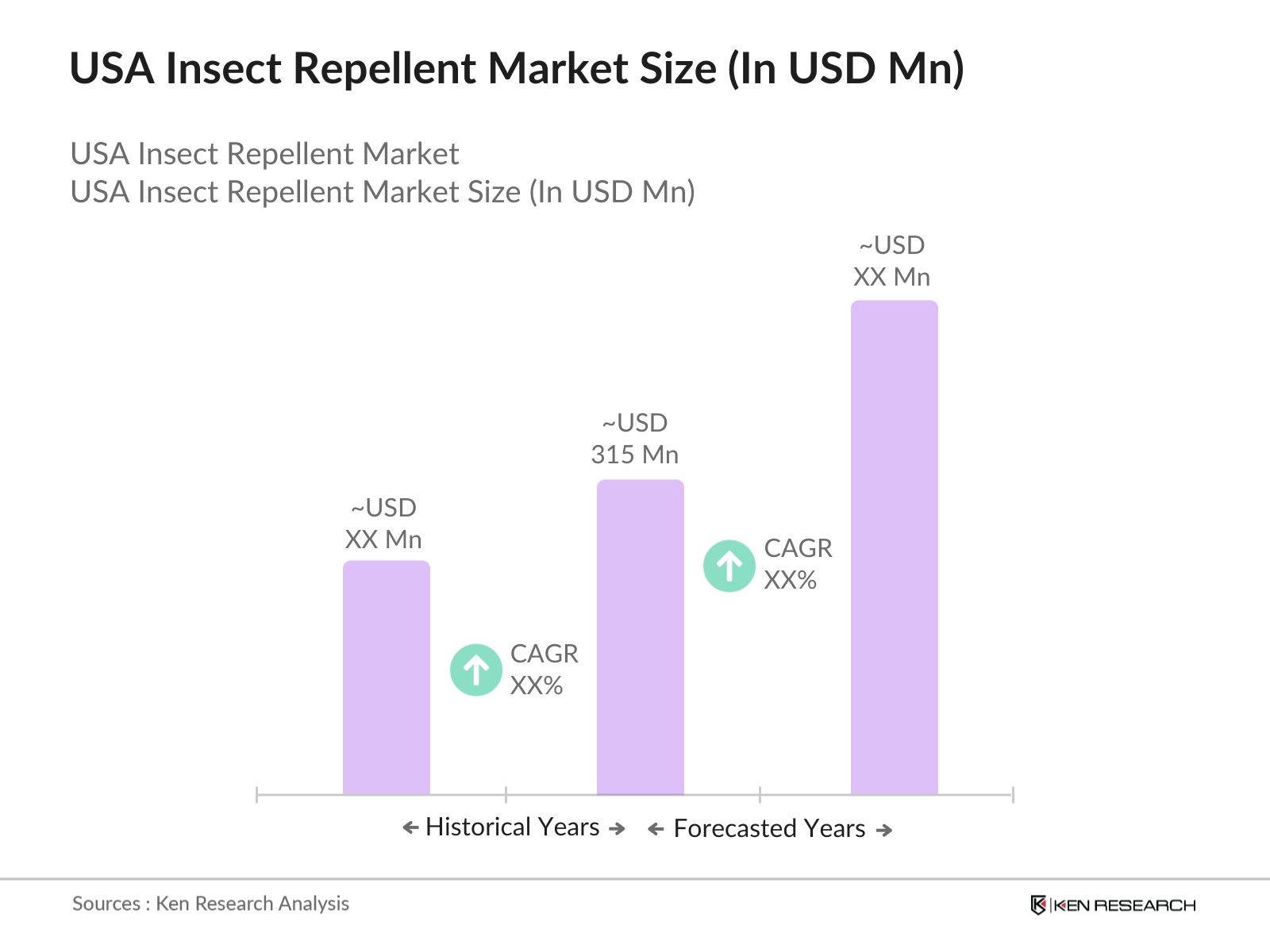
- Major demand centers for insect repellents in the USA include cities like Miami, New York, and Los Angeles. Miamis tropical climate and high mosquito activity make insect repellents essential for residents and tourists alike. New Yorks dense population and outdoor summer activities drive demand, while Los Angeles sees a steady market due to year-round outdoor recreational spaces. These cities also have a strong retail network, making repellents easily accessible, thereby bolstering their status as primary markets.
- The U.S. Food and Drug Administration (FDA) oversees the approval of active ingredients used in repellent products. In 2023, the FDA evaluated applications for alternative ingredients like oil of lemon eucalyptus, used in several natural formulations. The FDA approval process ensures that all active ingredients meet safety and efficacy standards, reinforcing consumer confidence and supporting the growth of the natural repellent segment.
USA Insect Repellent Market Segmentation
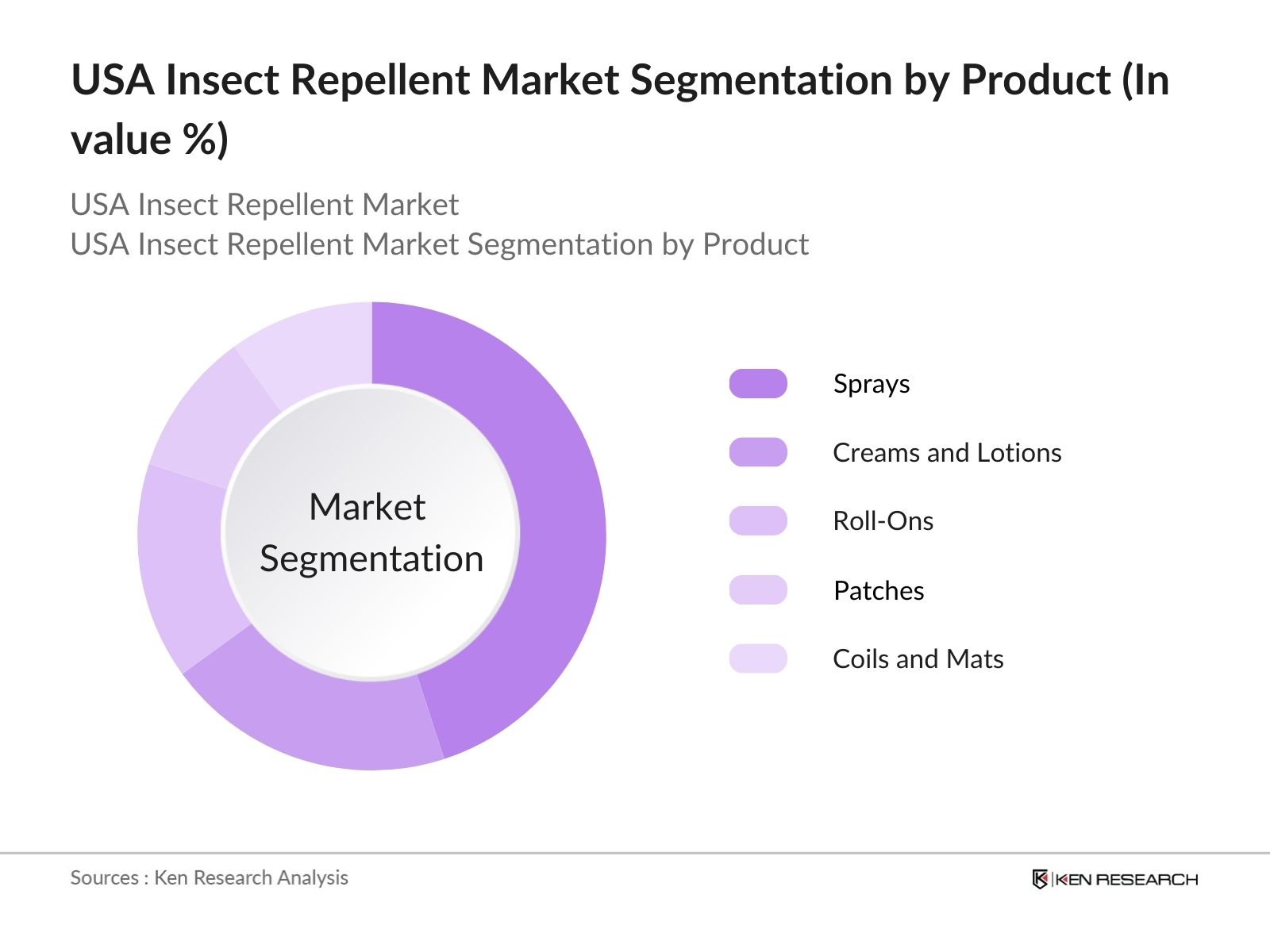
- By Product Type: The market is segmented by product type into sprays, creams and lotions, roll-ons, patches, and coils and mats. Recently, sprays hold a dominant market share within this segmentation. This dominance is attributed to their ease of application, availability in various formulations, and effectiveness in both indoor and outdoor environments. Popular brands provide a range of options catering to consumers preference for quick-acting and long-lasting protection, making sprays a top choice in this category.
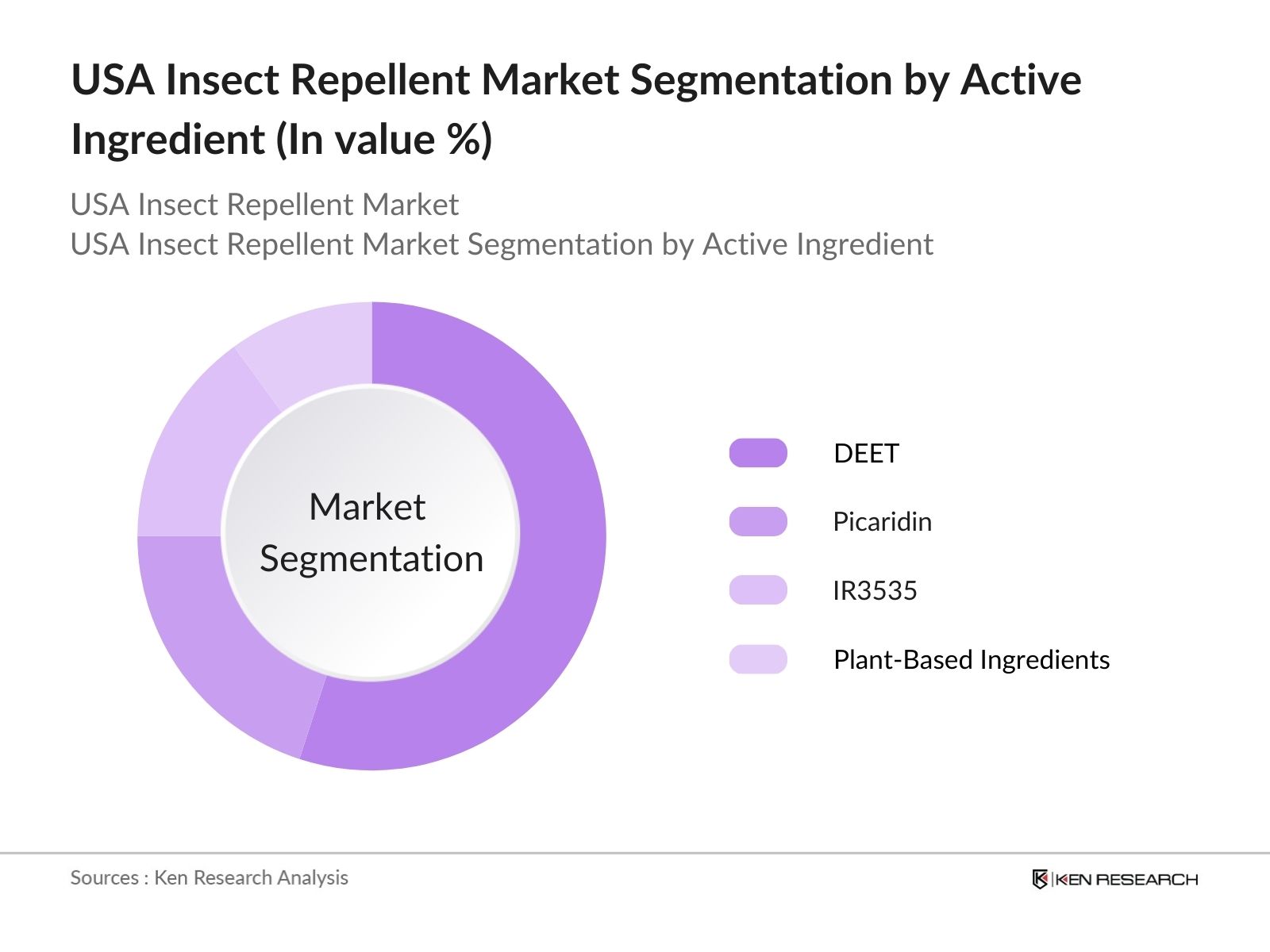
- By Active Ingredient: The market is segmented by active ingredient, including DEET, Picaridin, IR3535, and plant-based ingredients like Oil of Lemon Eucalyptus and Citronella. DEET-based repellents currently lead the market due to their proven efficacy in repelling a broad spectrum of insects and their long-lasting protection. The strong support from health agencies and extensive research on DEETs safety have reinforced its popularity, making it a preferred choice for consumers seeking reliable protection.
USA Insect Repellent Market Competitive Landscape
The USA insect repellent market is highly competitive, with major companies continuously innovating to meet consumer demands for efficacy, safety, and convenience. Key players leverage diverse product portfolios, robust distribution networks, and sustainable practices to secure market share. 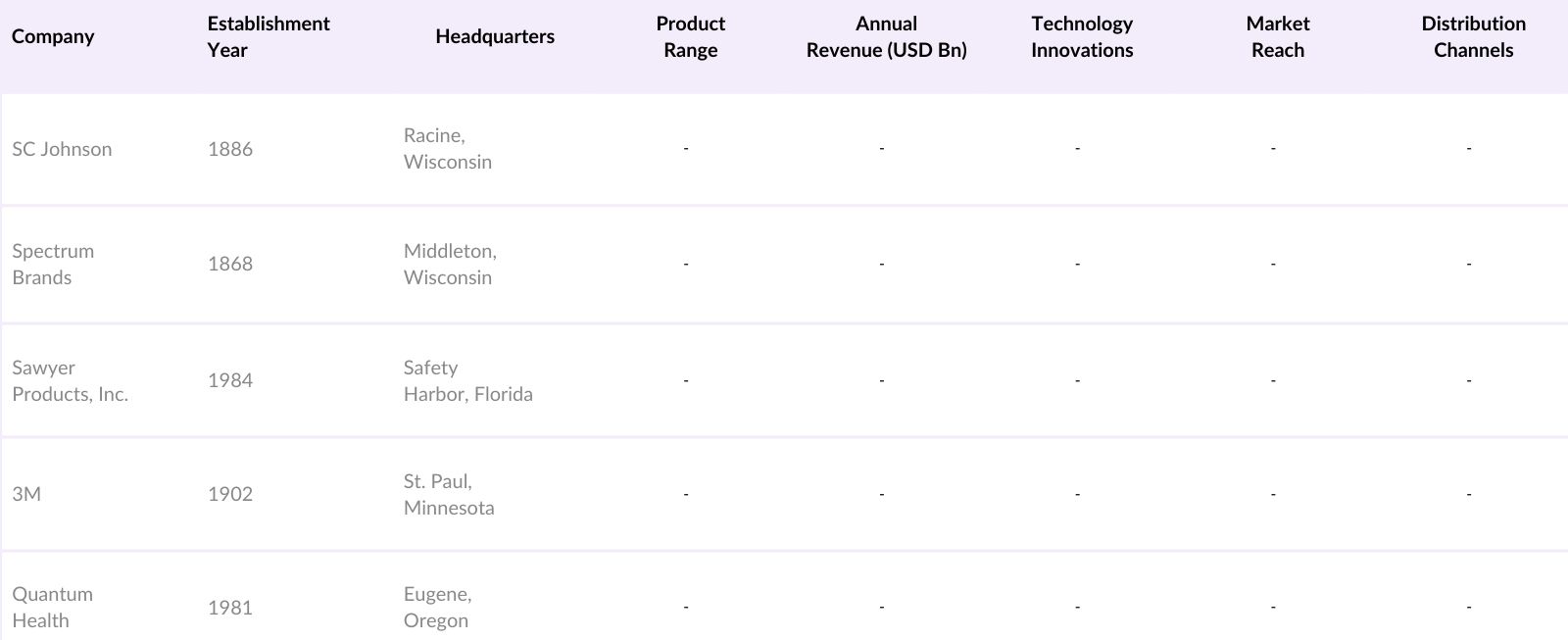
USA Insect Repellent Market Analysis
Growth Drivers
- Increase in Vector-Borne Diseases: Vector-borne diseases, such as Lyme disease and West Nile virus, have been rising in the United States, leading to an increased demand for insect repellents. The CDC reported over 642,602 cases of vector-borne illnesses in between 2004-2016, primarily tick-borne diseases. This surge in disease incidence is attributed to factors like climate change, which affects the geographic range of disease-carrying insects. With CDC projections indicating further spread of vector habitats, the need for repellents is anticipated to be sustained in high-demand areas across the U.S.
- Rising Consumer Awareness: Increased consumer awareness regarding insect-borne diseases has led to more preventive measures, including the use of insect repellents. According to the National Center for Health Statistics, the number of adults aware of Lyme disease risks grew substantially between 2021 and 2023, influenced by media coverage and public health campaigns. This awareness is higher in states with greater incidences of diseases like Lyme and West Nile, encouraging local governments to support educational programs about repellent use, significantly impacting demand.
- Government Health Initiatives: The U.S. government has implemented several initiatives to combat vector-borne diseases, indirectly supporting the insect repellent market. The CDC allocated over USD 9.2 billion in 2023 to programs aimed at disease prevention through protective measures, including repellent distribution in high-risk areas. Additionally, partnerships with state health departments aim to improve accessibility to repellents in public spaces like parks, particularly in warmer regions where insect exposure is higher. This support has bolstered public adoption of repellents
Challenges
- Regulatory Compliance and Safety Standards: Strict U.S. regulatory standards, particularly by the Environmental Protection Agency (EPA), have imposed challenges for manufacturers. Compliance with EPA regulations for active ingredients and safety testing can increase production timelines and costs. In 2023, the EPA introduced additional guidelines for labeling and testing to ensure consumer safety, impacting smaller manufacturers unable to meet these standards. Adherence to these protocols is essential but poses a hurdle for new product development and market entry for smaller companies.
- Seasonal Demand Fluctuations: The demand for insect repellents in the U.S. market is seasonal, peaking in warmer months and declining in colder seasons. According to the National Retail Federation, majority of annual repellent sales occur between May and September. These fluctuations create inventory management challenges for retailers and impact cash flow for manufacturers, especially those relying heavily on domestic sales. The seasonality of sales necessitates specific inventory planning strategies to manage demand surges and declines
USA Insect Repellent Market Future Outlook
The USA insect repellent market is poised for growth, driven by continuous innovation in product formulations and the rising trend toward eco-friendly solutions. Companies are increasingly adopting natural ingredients and sustainable packaging in response to consumer demand for environmentally conscious products. The market outlook remains strong, supported by the increasing adoption of repellents in urban areas and the growth of digital retailing.
Future Market Opportunities
- Innovation in Eco-Friendly Products: Eco-friendly insect repellents present significant growth opportunities as consumer preferences shift toward sustainable products. The U.S. EPA reported a substantial increase in green repellent product registrations in 2023 compared to 2022, indicating strong market entry potential. Innovations include biodegradable packaging and plant-based active ingredients, appealing to environmentally conscious consumers. This trend aligns with broader market shifts towards sustainable goods, positioning eco-friendly repellents as a growing segment within the broader insect repellent market.
- Expansion into High-Risk Regions: Targeting high-risk regions presents a valuable opportunity for repellent manufacturers. States like Florida, Texas, and California reported higher cases of mosquito-borne diseases in 2023, with Florida alone accounting for thousands of cases of West Nile virus. Repellent companies expanding distribution channels and local partnerships in these regions can tap into the demand generated by heightened health risks. Additionally, collaborations with local health departments enhance accessibility and provide significant exposure for new and established brands.
Scope of the Report
|
By Product Type |
Sprays, Creams and Lotions Roll-Ons, Patches Coils and Mats |
|
By Active Ingredient |
DEET Picaridin IR3535 Plant-Based Ingredients (Oil of Lemon Eucalyptus, Citronella) |
|
By End-Use |
Residential Commercial Outdoor Recreation Military and Government |
|
By Distribution Channel |
Retail Stores Online Platforms Pharmacies Specialty Stores |
|
By Region |
Northeast Midwest South West |
Products
Key Target Audience
Insect Repellent Manufacturers
Investors and Venture Capitalist Firms
Banks and Financial Institutions
Government and Regulatory Bodies (U.S. Environmental Protection Agency, CDC)
Retailers and Distributors
Outdoor Recreation Companies
Healthcare Providers
Public Health Organizations
Companies
Players Mentioned in the Report
SC Johnson
Spectrum Brands
Sawyer Products, Inc.
3M
Quantum Health
Godrej Consumer Products
Henkel AG & Co. KGaA
DuPont
Coleman Company
Reckitt Benckiser Group
Avon Products, Inc.
ExOfficio LLC
BASF SE
Johnson & Johnson
Coghlans Ltd.
Table of Contents
1. USA Insect Repellent Market Overview
1.1. Definition and Scope
1.2. Market Taxonomy
1.3. Market Growth Rate
1.4. Market Segmentation Overview
2. USA Insect Repellent Market Size (In USD Million)
2.1. Historical Market Size
2.2. Year-On-Year Growth Analysis
2.3. Key Market Developments and Milestones
3. USA Insect Repellent Market Analysis
3.1. Growth Drivers
3.1.1. Increase in Vector-Borne Diseases
3.1.2. Rising Consumer Awareness
3.1.3. Government Health Initiatives
3.1.4. Advancements in Product Formulations
3.2. Market Challenges
3.2.1. Regulatory Compliance and Safety Standards
3.2.2. Seasonal Demand Fluctuations
3.2.3. Competition with Natural Alternatives
3.3. Opportunities
3.3.1. Innovation in Eco-Friendly Products
3.3.2. Expansion into High-Risk Regions
3.3.3. Partnerships with Health Organizations
3.4. Trends
3.4.1. Demand for Natural Ingredients
3.4.2. Rise of Wearable Repellents
3.4.3. Growing Online Sales Channels
3.5. Government Regulation
3.5.1. U.S. Environmental Protection Agency (EPA) Regulations
3.5.2. FDA Approvals for Active Ingredients
3.5.3. Labeling and Packaging Standards
3.5.4. Import and Export Controls
3.6. SWOT Analysis
3.7. Stakeholder Ecosystem
3.8. Porters Five Forces Analysis
3.9. Competition Ecosystem
4. USA Insect Repellent Market Segmentation
4.1. By Product Type (In Value %)
4.1.1. Sprays
4.1.2. Creams and Lotions
4.1.3. Roll-Ons
4.1.4. Patches
4.1.5. Coils and Mats
4.2. By Active Ingredient (In Value %)
4.2.1. DEET
4.2.2. Picaridin
4.2.3. IR3535
4.2.4. Plant-Based Ingredients (e.g., Oil of Lemon Eucalyptus, Citronella)
4.3. By End-Use (In Value %)
4.3.1. Residential
4.3.2. Commercial
4.3.3. Outdoor Recreation
4.3.4. Military and Government
4.4. By Distribution Channel (In Value %)
4.4.1. Retail Stores
4.4.2. Online Platforms
4.4.3. Pharmacies
4.4.4. Specialty Stores
4.5. By Region (In Value %)
4.5.1. Northeast
4.5.2. Midwest
4.5.3. South
4.5.4. West
5. USA Insect Repellent Market Competitive Analysis
5.1. Detailed Profiles of Major Companies
5.1.1. SC Johnson
5.1.2. Spectrum Brands
5.1.3. Sawyer Products, Inc.
5.1.4. Godrej Consumer Products
5.1.5. Henkel AG & Co. KGaA
5.1.6. Reckitt Benckiser Group
5.1.7. 3M
5.1.8. Coghlans Ltd.
5.1.9. Quantum Health
5.1.10. Johnson & Johnson
5.1.11. DuPont
5.1.12. Coleman Company
5.1.13. ExOfficio LLC
5.1.14. BASF SE
5.1.15. Avon Products, Inc.
5.2. Cross Comparison Parameters (Revenue, R&D Investment, Regional Presence, Market Share, Product Portfolio, Partnerships, Recent Innovations, Marketing Spend)
5.3. Market Share Analysis
5.4. Strategic Initiatives
5.5. Mergers and Acquisitions
5.6. Investment Analysis
5.7. Venture Capital Funding
5.8. Government Grants
5.9. Private Equity Investments
6. USA Insect Repellent Market Regulatory Framework
6.1. Environmental Standards
6.2. Compliance Requirements
6.3. Certification Processes
7. USA Insect Repellent Future Market Size (In USD Million)
7.1. Future Market Size Projections
7.2. Key Factors Driving Future Market Growth
8. USA Insect Repellent Market Segmentation
8.1. By Product Type (In Value %)
8.2. By Active Ingredient (In Value %)
8.3. By End-Use (In Value %)
8.4. By Distribution Channel (In Value %)
8.5. By Region (In Value %)
9. USA Insect Repellent Market Analysts Recommendations
8.1. TAM/SAM/SOM Analysis
8.2. Customer Cohort Analysis
8.3. Marketing Initiatives
8.4. White Space Opportunity Analysis
Disclaimer Contact UsResearch Methodology
Step 1: Identification of Key Variables
The initial phase involves mapping the USA insect repellent market ecosystem, identifying key stakeholders, and collecting extensive secondary data. Major factors influencing market dynamics, such as consumer trends and regulatory requirements, are defined and analyzed.
Step 2: Market Analysis and Construction
Historical and current data for insect repellents, including market penetration and revenue, are compiled to form a comprehensive market analysis. This step involves evaluating key performance metrics to ensure accuracy in market size estimations and segmentation.
Step 3: Hypothesis Validation and Expert Consultation
Key assumptions are validated through expert consultations and interviews with professionals from the insect repellent industry. These insights provide valuable perspectives on operational challenges and opportunities, enabling accurate market forecasting.
Step 4: Research Synthesis and Final Output
This phase combines findings from both quantitative and qualitative analyses. The synthesis of all data points, supported by expert input, is used to finalize the report, ensuring a well-rounded view of the market landscape and future outlook.
Frequently Asked Questions
01. How big is the USA Insect Repellent Market?
The USA insect repellent market is valued at USD 315 million, driven by increased awareness of health risks associated with vector-borne diseases and rising outdoor activity.
02. What are the challenges in the USA Insect Repellent Market?
Challenges in the USA insect repellent market include regulatory compliance for safety standards and rising production costs, particularly for imported raw materials, impacting overall pricing.
03. Who are the major players in the USA Insect Repellent Market?
Key players in the USA insect repellent market include SC Johnson, Spectrum Brands, Sawyer Products, 3M, and Quantum Health, all of which offer diverse product portfolios to cater to varied consumer needs.
04. What drives growth in the USA Insect Repellent Market?
USA insect repellent market growth is driven by consumer demand for effective repellents, the popularity of eco-friendly products, and increased awareness of insect-borne health risks.
Why Buy From Us?

What makes us stand out is that our consultants follows Robust, Refine and Result (RRR) methodology. i.e. Robust for clear definitions, approaches and sanity checking, Refine for differentiating respondents facts and opinions and Result for presenting data with story

We have set a benchmark in the industry by offering our clients with syndicated and customized market research reports featuring coverage of entire market as well as meticulous research and analyst insights.

While we don't replace traditional research, we flip the method upside down. Our dual approach of Top Bottom & Bottom Top ensures quality deliverable by not just verifying company fundamentals but also looking at the sector and macroeconomic factors.

With one step in the future, our research team constantly tries to show you the bigger picture. We help with some of the tough questions you may encounter along the way: How is the industry positioned? Best marketing channel? KPI's of competitors? By aligning every element, we help maximize success.

Our report gives you instant access to the answers and sources that other companies might choose to hide. We elaborate each steps of research methodology we have used and showcase you the sample size to earn your trust.

If you need any support, we are here! We pride ourselves on universe strength, data quality, and quick, friendly, and professional service.