















USA Interior Designers Market Outlook to 2030
Region:North America
Author(s):Yogita Sahu
Product Code:KROD3835
October 2024
99
About the Report
USA Interior Designers Market Overview
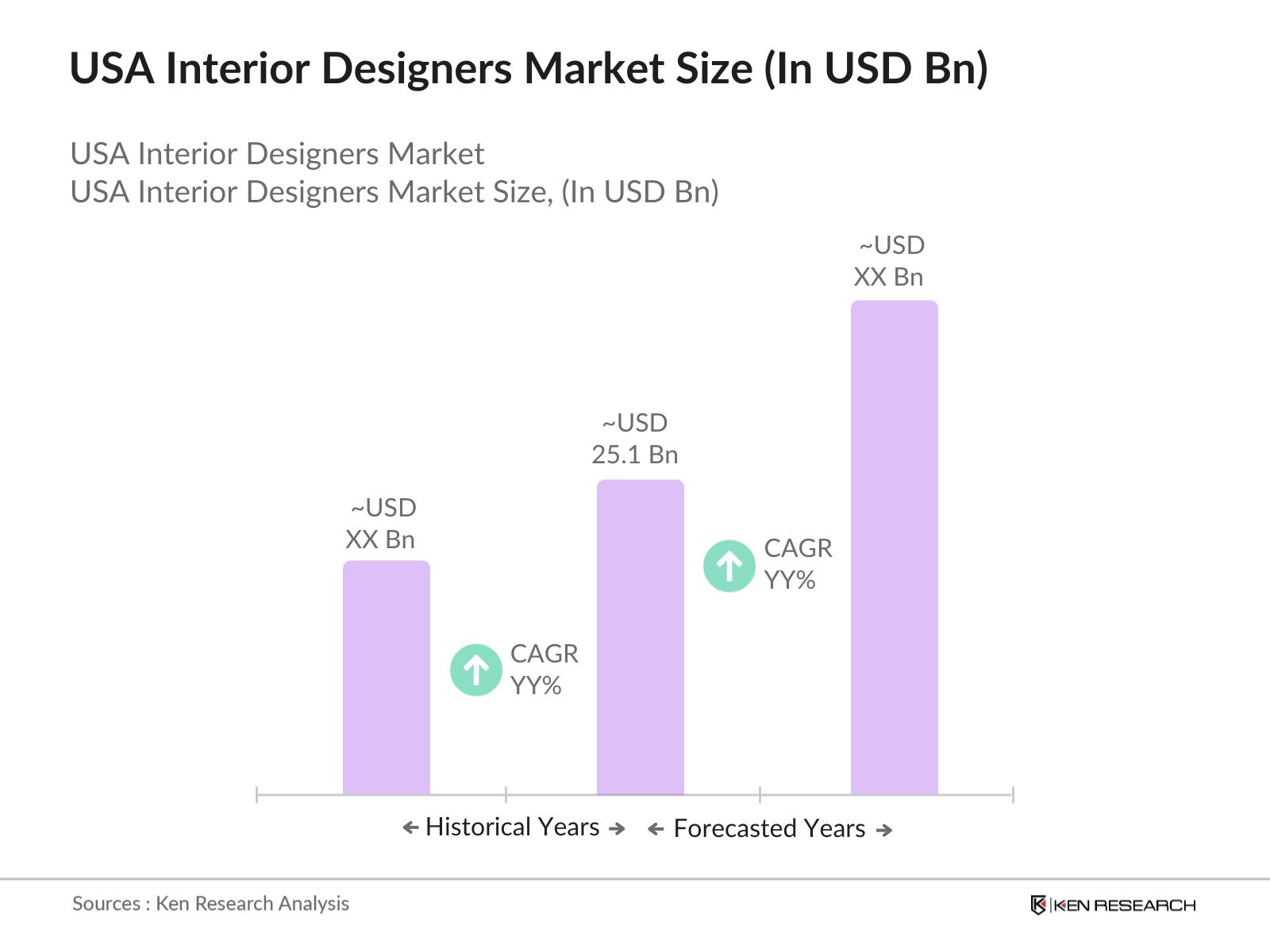
- The USA interior designers market is valued at USD 25.1 billion, based on a five-year historical analysis. This market is driven by increasing demand for personalized living spaces, with clients investing in unique designs that cater to their lifestyle preferences. Factors such as the rise in real estate developments, especially in urban regions, and the growing popularity of sustainable and eco-friendly designs further contribute to the markets growth.
- The market is dominated by cities like New York, Los Angeles, and Chicago due to their thriving real estate markets, affluent populations, and a strong presence of design-conscious consumers. These cities also serve as cultural and business hubs, attracting international clients and businesses that invest heavily in commercial spaces such as office interiors, hospitality, and retail. Their dominance is further cemented by the presence of top design schools, fostering a steady stream of talent in these regions.
- TheResidential Renovation Initiativeoffers homeowners tax incentives to enhance energy efficiency. From 2023 to 2032, homeowners can claim a30% tax crediton qualifying upgrades, with an annual limit of$1,200, potentially saving up to$12,000over ten years. Additionally, theMultigenerational Home Renovation Tax Creditallows up to$7,500for creating self-contained units for seniors or disabled adults.
USA Interior Designers Market Segmentation
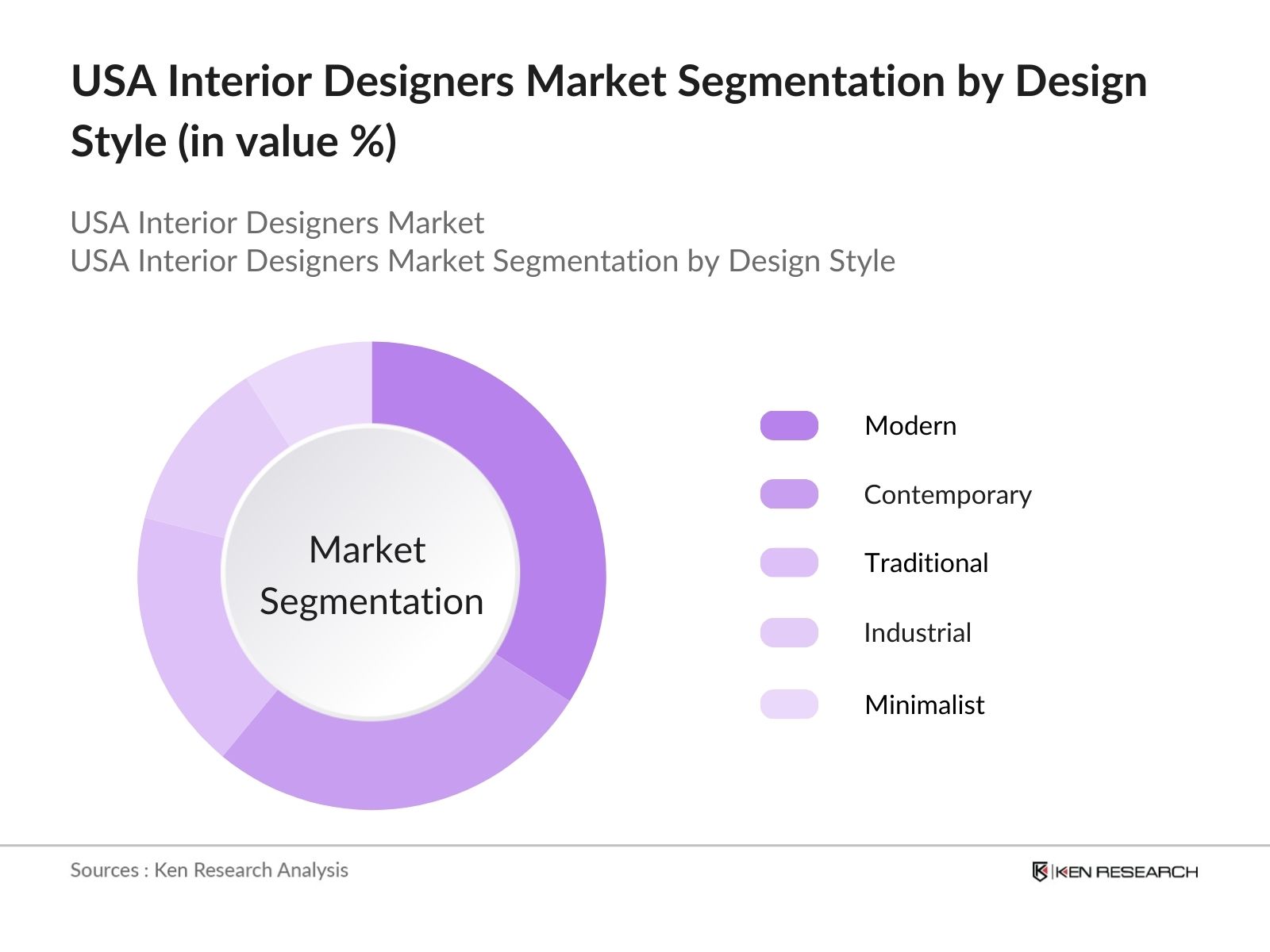
By Design Style: The market is segmented by design style into modern, contemporary, traditional, industrial, and minimalist designs. Modern design continues to dominate due to its clean lines, functionality, and broad appeal to homeowners and commercial clients alike. This style blends well with various other trends like open-concept living and the integration of smart home technology, making it a popular choice for renovations and new developments. High demand for modern design can also be attributed to its alignment with sustainable and energy-efficient solutions, which are growing in popularity.
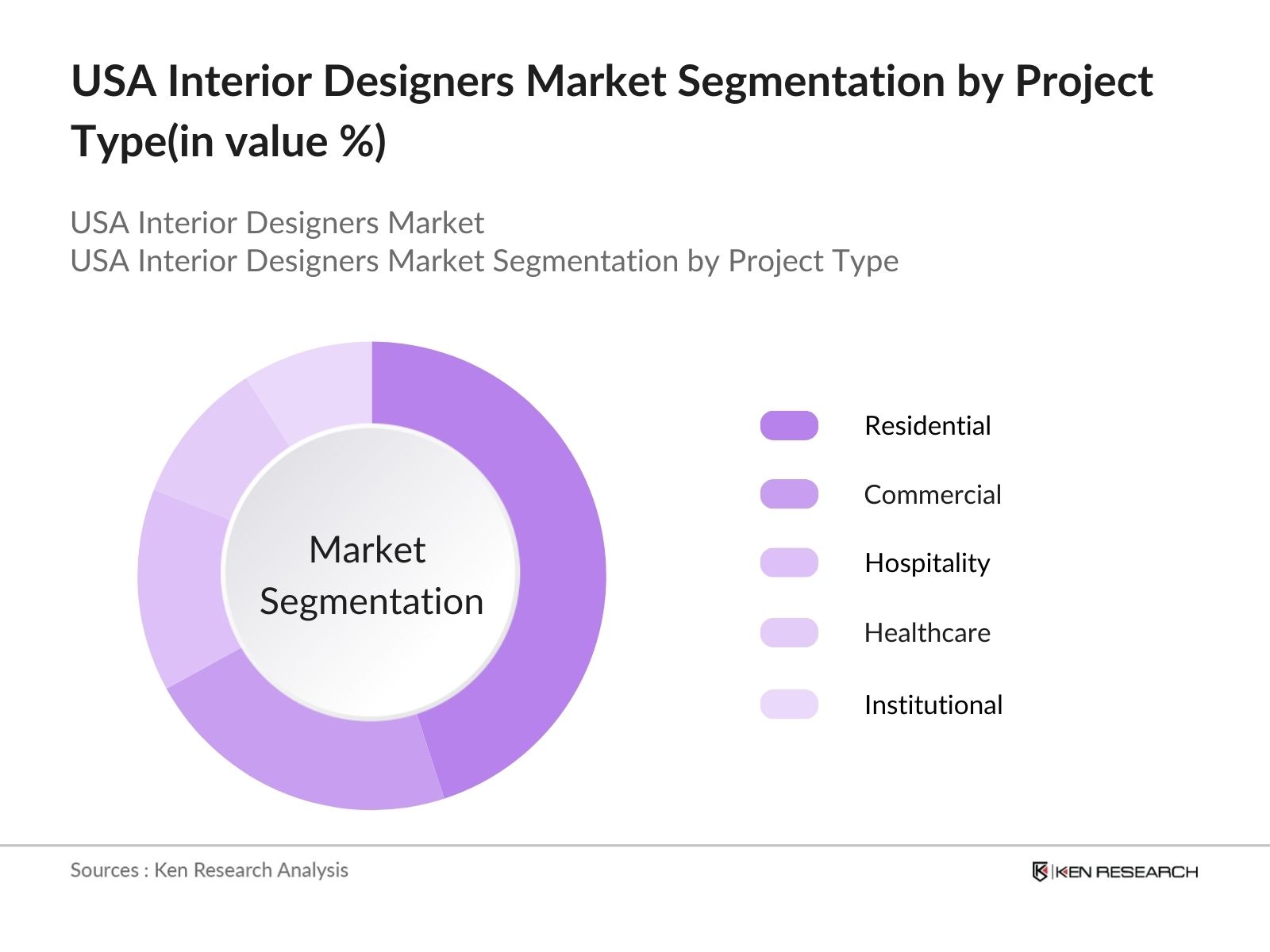
By Project Type: The market is also segmented by project type into residential, commercial, hospitality, healthcare, and institutional. Residential projects dominate due to the rise in home improvement activities and a growing preference for personalized living environments. With the impact of remote work, more homeowners are investing in creating functional yet aesthetically pleasing home offices, which has driven a portion of the residential interior design demand. The market for residential projects is further supported by the increasing trend of multi-family housing developments and renovations.
USA Interior Designers Market Competitive Landscape
The market is dominated by a few key players with a strong regional and national presence. These companies not only offer full-service design solutions but also lead the way in integrating sustainable practices, technological innovation, and trendsetting designs. The market is highly fragmented, with both large firms and individual designers competing for projects across different sectors.
|
Company Name |
Establishment Year |
Headquarters |
Number of Employees |
Signature Projects |
Design Focus |
Sustainability Practices |
Awards |
Revenue |
Client Base |
|
Gensler |
1965 |
San Francisco, CA |
|||||||
|
Perkins&Will |
1935 |
Chicago, IL |
|||||||
|
HOK |
1955 |
St. Louis, MO |
|||||||
|
IA Interior Architects |
1984 |
New York, NY |
|||||||
|
NBBJ |
1943 |
Seattle, WA |
USA Interior Designers Market Analysis
Market Growth Drivers
- Rising Demand for Home Renovations: In 2024, the demand for home renovations surged due to post-pandemic lifestyle changes. Around 4.5 million homes underwent remodeling projects, with homeowners spending over $420 billion collectively on renovations. This demand is pushing interior designers to cater to more personalized and specialized design services for these projects, driving growth in the market. The U.S. Department of Housing and Urban Development reported that remodeling permits for 2023 exceeded 2.9 million, creating opportunities for the interior design industry to expand their services.
- Growth in Luxury Real Estate Market: The luxury real estate market has grown in recent years, with over 150,000 luxury homes purchased in 2023, creating an influx of demand for high-end interior design services. Interior designers specializing in luxury materials and customization have seen opportunities. This has translated into contracts exceeding $50 million for some high-end design firms across major cities like New York, Los Angeles, and Miami.
- Commercial Real Estate Development: The U.S. commercial real estate sector is projected to grow steadily, with over 700,000 commercial construction projects active in 2024, leading to a greater need for professional interior design services. The surge in the development of hotels, offices, and retail spaces, especially in urban centers, is providing lucrative opportunities for interior designers to shape the interiors of these commercial spaces.
Market Challenges
- Supply Chain Disruptions in Furniture and Dcor: In 2024, delays in the supply of imported furniture, fabrics, and dcor materials due to global shipping bottlenecks affected interior design timelines. Designers faced increased project costs, as shipping delays caused a 30-40% increase in material acquisition time, forcing them to adjust project schedules and client expectations.
- Sustainability Regulations: Stricter sustainability standards in 2024 have required designers to source eco-friendly and certified materials, increasing the complexity and costs of projects. The U.S. Green Building Council mandates that commercial buildings adhere to specific LEED certifications, requiring designers to carefully select materials, increasing project budgets by at least 15-20%.
USA Interior Designers Market Future Outlook
Over the next five years, the USA interior designers industry is expected to experience robust growth driven by an increasing emphasis on sustainable design, evolving consumer preferences for personalized living spaces, and the integration of smart technologies into homes and commercial properties. The demand for remote workspaces, wellness-centric designs, and eco-friendly materials is expected to further shape the landscape of interior design in the country.
Future Market Opportunities
- Sustainability as a Core Design Element: Sustainability will continue to be a driver for the interior design market, with 4,000+ commercial properties adopting eco-friendly interiors by 2029. This shift will be driven by stricter government regulations and increased demand for sustainable designs in corporate and retail spaces.
- Growth in Aging Population-Centric Design: By 2029, the U.S. will have over 72 million people aged 65 and older, prompting a demand for interior design services focused on accessibility and comfort for the elderly. This demographic will drive the redesign of over 500,000 homes to incorporate features like wider doorways, walk-in showers, and non-slip flooring, creating a niche market for designers specializing in senior-friendly interiors.
Scope of the Report
|
Design Style |
Modern |
|
Contemporary |
|
|
Traditional |
|
|
Industrial |
|
|
Minimalist |
|
|
Project Type |
Residential |
|
Commercial |
|
|
Hospitality |
|
|
Healthcare |
|
|
Institutional |
|
|
End-User |
Homeowners |
|
Corporations |
|
|
Real Estate Developers |
|
|
Hospitality Chains |
|
|
Government Institutions |
|
|
Service Type |
Full-Service Design |
|
Consulting |
|
|
Space Planning |
|
|
Project Management |
|
|
Furniture Procurement |
|
|
Region |
North |
|
East |
|
|
West |
|
|
South |
Products
Key Target Audience Organizations and Entities Who Can Benefit by Subscribing This Report:
Commercial Property Owners
Government and Regulatory Bodies (U.S. Department of Housing and Urban Development)
Furniture Manufacturers
Investment and Venture Capitalist Firms
Banks and Financial Institutions
Private Equity Firms
Companies
Players Mentioned in the Report:
Gensler
Perkins&Will
HOK
IA Interior Architects
NBBJ
CallisonRTKL
Nelson Worldwide
Stantec
SmithGroup
CannonDesign
Studio O+A
DLR Group
Gresham Smith
ZGF Architects
HBA
Table of Contents
1. USA Interior Designers Market Overview
1.1. Definition and Scope
1.2. Market Taxonomy
1.3. Key Industry Trends
1.4. Market Segmentation Overview (Design Style, Project Type, End-User, Service Type, Region)
2. USA Interior Designers Market Size (In USD Bn)
2.1. Historical Market Size
2.2. Year-On-Year Growth Analysis
2.3. Key Market Developments and Milestones
3. USA Interior Designers Market Analysis
3.1. Growth Drivers
3.1.1. Increasing Demand for Sustainable Design Solutions (Sustainability Practices)
3.1.2. Growth in Real Estate Market (Housing & Commercial Developments)
3.1.3. Consumer Preferences Shifting Toward Personalized Interiors (Customization Trends)
3.1.4. Influence of Social Media and Home Improvement Shows (Media Influence)
3.2. Market Challenges
3.2.1. Volatility in Raw Material Prices (Material Sourcing)
3.2.2. Shortage of Skilled Labor (Workforce)
3.2.3. Increasing Competition Among Freelancers and Established Firms (Competitive Landscape)
3.3. Opportunities
3.3.1. Adoption of Smart Homes and Automation (Technology Integration)
3.3.2. Growing Popularity of Eco-Friendly Designs (Green Design Solutions)
3.3.3. Expanding Demand for Commercial Interior Design Projects (Commercial Sector Growth)
3.4. Trends
3.4.1. Rise of Remote Interior Design Consultations (Digital Transformation)
3.4.2. Increasing Focus on Wellness-Centric Designs (Health & Wellness Trends)
3.4.3. Usage of Virtual Reality (VR) and Augmented Reality (AR) in Design (Tech Tools for Visualization)
3.5. Government Regulations
3.5.1. Building Codes and Compliance Requirements (Regulatory Compliance)
3.5.2. Sustainability Standards (Green Building Certifications)
3.5.3. Licensing Requirements for Interior Designers (Professional Certifications)
3.6. SWOT Analysis
3.7. Stake Ecosystem
3.8. Porters Five Forces
3.9. Competition Ecosystem
4. USA Interior Designers Market Segmentation
4.1. By Design Style (In Value %)
4.1.1. Modern
4.1.2. Contemporary
4.1.3. Traditional
4.1.4. Industrial
4.1.5. Minimalist
4.2. By Project Type (In Value %)
4.2.1. Residential
4.2.2. Commercial
4.2.3. Hospitality
4.2.4. Healthcare
4.2.5. Institutional
4.3. By End-User (In Value %)
4.3.1. Homeowners
4.3.2. Corporations
4.3.3. Real Estate Developers
4.3.4. Hospitality Chains
4.3.5. Government Institutions
4.4. By Service Type (In Value %)
4.4.1. Full-Service Design
4.4.2. Consulting
4.4.3. Space Planning
4.4.4. Project Management
4.4.5. Furniture Procurement
4.5. By Region (In Value %)
4.5.1. North
4.5.2. East
4.5.3. West
4.5.4. South
5. USA Interior Designers Market Competitive Analysis
5.1. Detailed Profiles of Major Companies
5.1.1. Gensler
5.1.2. Perkins&Will
5.1.3. HOK
5.1.4. HBA
5.1.5. IA Interior Architects
5.1.6. CallisonRTKL
5.1.7. NBBJ
5.1.8. Nelson Worldwide
5.1.9. Stantec
5.1.10. SmithGroup
5.1.11. CannonDesign
5.1.12. Studio O+A
5.1.13. DLR Group
5.1.14. Gresham Smith
5.1.15. ZGF Architects
5.2. Cross Comparison Parameters (Number of Employees, Inception Year, Revenue, Geographic Presence, Design Style, Signature Projects, Awards, Client Base)
5.3. Market Share Analysis
5.4. Strategic Initiatives
5.5. Mergers and Acquisitions
5.6. Investment Analysis
5.7. Government Grants and Funding
5.8. Private Equity and Venture Capital Investments
6. USA Interior Designers Market Regulatory Framework
6.1. Professional Licensing and Certification Requirements
6.2. Building Code Compliance
6.3. Environmental Sustainability Certifications
7. USA Interior Designers Future Market Size (In USD Bn)
7.1. Future Market Size Projections
7.2. Key Factors Driving Future Market Growth
8. USA Interior Designers Future Market Segmentation
8.1. By Design Style (In Value %)
8.2. By Project Type (In Value %)
8.3. By End-User (In Value %)
8.4. By Service Type (In Value %)
8.5. By Region (In Value %)
9. USA Interior Designers Market Analysts Recommendations
9.1. TAM/SAM/SOM Analysis
9.2. Customer Cohort Analysis
9.3. Marketing and Branding Initiatives
9.4. White Space Opportunity Analysis
Research Methodology
Step 1: Identification of Key Variables
This phase involves mapping out the ecosystem of the USA interior designers market, which includes identifying stakeholders such as real estate developers, furniture manufacturers, and designers. Extensive desk research is conducted, utilizing secondary data sources like government reports and industry publications, along with proprietary databases to identify key variables like design trends, demand drivers, and market growth factors.
Step 2: Market Analysis and Construction
In this step, we analyze historical market data, focusing on key metrics such as market penetration, design project cycles, and revenue generation in various design sectors. This phase involves statistical analysis of past project success rates and consumer demand trends, ensuring that the market outlook is based on reliable, industry-backed figures.
Step 3: Hypothesis Validation and Expert Consultation
To validate the market hypotheses, consultations are held with industry experts, including senior interior designers and project managers from top firms. This validation step also includes computer-assisted telephone interviews (CATIs) with stakeholders to gain insights into real-world applications of design trends and the challenges faced by the industry.
Step 4: Research Synthesis and Final Output
In the final phase, we engage directly with interior design firms and suppliers to cross-verify data collected through secondary sources. This step ensures a comprehensive and accurate report that aligns with industry realities and forecasts, providing actionable insights for business professionals.
Frequently Asked Questions
01. How big is the USA Interior Designers Market?
The USA interior designers market is valued at USD 25.1 billion, with steady growth driven by increasing demand for personalized and sustainable design solutions.
02. What are the challenges in the USA Interior Designers Market?
Challenges in this USA interior designers market include fluctuating raw material costs, labor shortages, and growing competition from freelance designers and smaller firms offering more flexible services.
03. Who are the major players in the USA Interior Designers Market?
Key players in the USA interior designers market include Gensler, Perkins&Will, HOK, IA Interior Architects, and NBBJ, all known for their innovative designs and large-scale projects.
04. What are the growth drivers of the USA Interior Designers Market?
Growth in the USA interior designers market is driven by the increasing demand for eco-friendly and wellness-oriented designs, advancements in digital design tools, and a booming real estate market in urban centers.
05. What trends are shaping the USA Interior Designers Market?
Key trends in the USA interior designers market include the rise of remote design consultations, the integration of smart home technologies, and a growing focus on sustainable, health-centric living environments.
Why Buy From Us?

What makes us stand out is that our consultants follows Robust, Refine and Result (RRR) methodology. i.e. Robust for clear definitions, approaches and sanity checking, Refine for differentiating respondents facts and opinions and Result for presenting data with story

We have set a benchmark in the industry by offering our clients with syndicated and customized market research reports featuring coverage of entire market as well as meticulous research and analyst insights.

While we don't replace traditional research, we flip the method upside down. Our dual approach of Top Bottom & Bottom Top ensures quality deliverable by not just verifying company fundamentals but also looking at the sector and macroeconomic factors.

With one step in the future, our research team constantly tries to show you the bigger picture. We help with some of the tough questions you may encounter along the way: How is the industry positioned? Best marketing channel? KPI's of competitors? By aligning every element, we help maximize success.

Our report gives you instant access to the answers and sources that other companies might choose to hide. We elaborate each steps of research methodology we have used and showcase you the sample size to earn your trust.

If you need any support, we are here! We pride ourselves on universe strength, data quality, and quick, friendly, and professional service.