
USA Kombucha Market Outlook to 2030
Region:North America
Author(s):Meenakshi Bisht
Product Code:KROD1296
December 2024
98
About the Report
USA Kombucha Market Overview
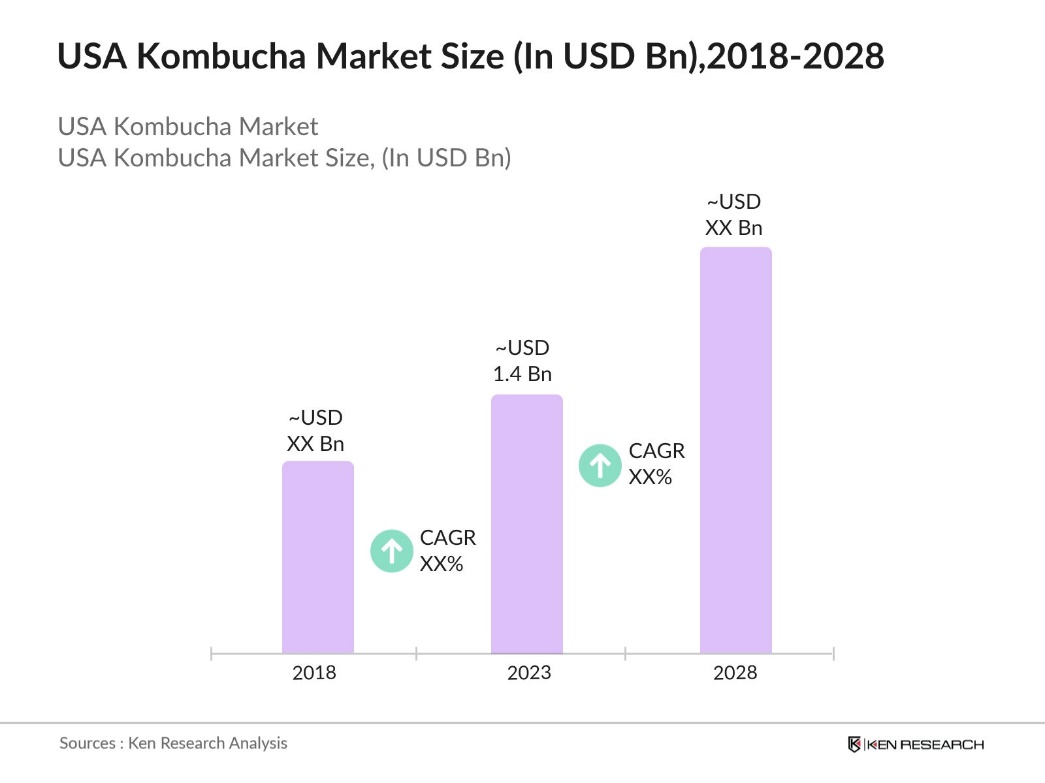
- The USA Kombucha Market was valued at USD 1.4 billion in 2023. The growth of the market is primarily driven by increasing consumer awareness about the health benefits of kombucha, such as its probiotic content and detoxification properties. The rising trend towards natural and organic beverages, coupled with the growing demand for functional drinks, has further fueled the market's expansion. Consumers' preference for low-sugar alternatives to traditional soft drinks has also contributed to the market's robust growth.
- This market is dominated by several key players, including GTs Living Foods, KeVita (a subsidiary of PepsiCo), Health-Ade Kombucha, Brew Dr. Kombucha, and Humm Kombucha. These companies have established strong brand recognition and are actively expanding their product lines to cater to the diverse preferences of health-conscious consumers. Their strategic partnerships, product innovations, and effective marketing campaigns have solidified their positions in the competitive landscape.
- In 2023, Health-Ade Kombucha has introduced a new line of 11.5 oz "take-anywhere" cans in four popular flavors: Pink Lady Apple, Ginger Lemon, Passion Fruit-Tangerine, and Pomegranate. This development is aimed at increasing convenience for consumers, offering a more portable and recyclable option compared to the traditional 16 oz glass bottles. These canned kombuchas will be available nationwide in key retailers like Sprouts, Whole Foods Market, and Walmart, as well as online. The initiative responds to consumer demand for smaller, more convenient serving sizes
- California stands as the leading state in this market in 2023. The states dominance can be attributed to its strong health-conscious consumer base, the presence of major kombucha producers, and the widespread availability of organic and natural products. Additionally, Californias thriving health and wellness culture has fostered a favorable environment for kombucha brands, enabling them to grow and capture significant market share.
USA Kombucha Market Segmentation
The market is segmented into different factors like by product type, by distribution channel and region.
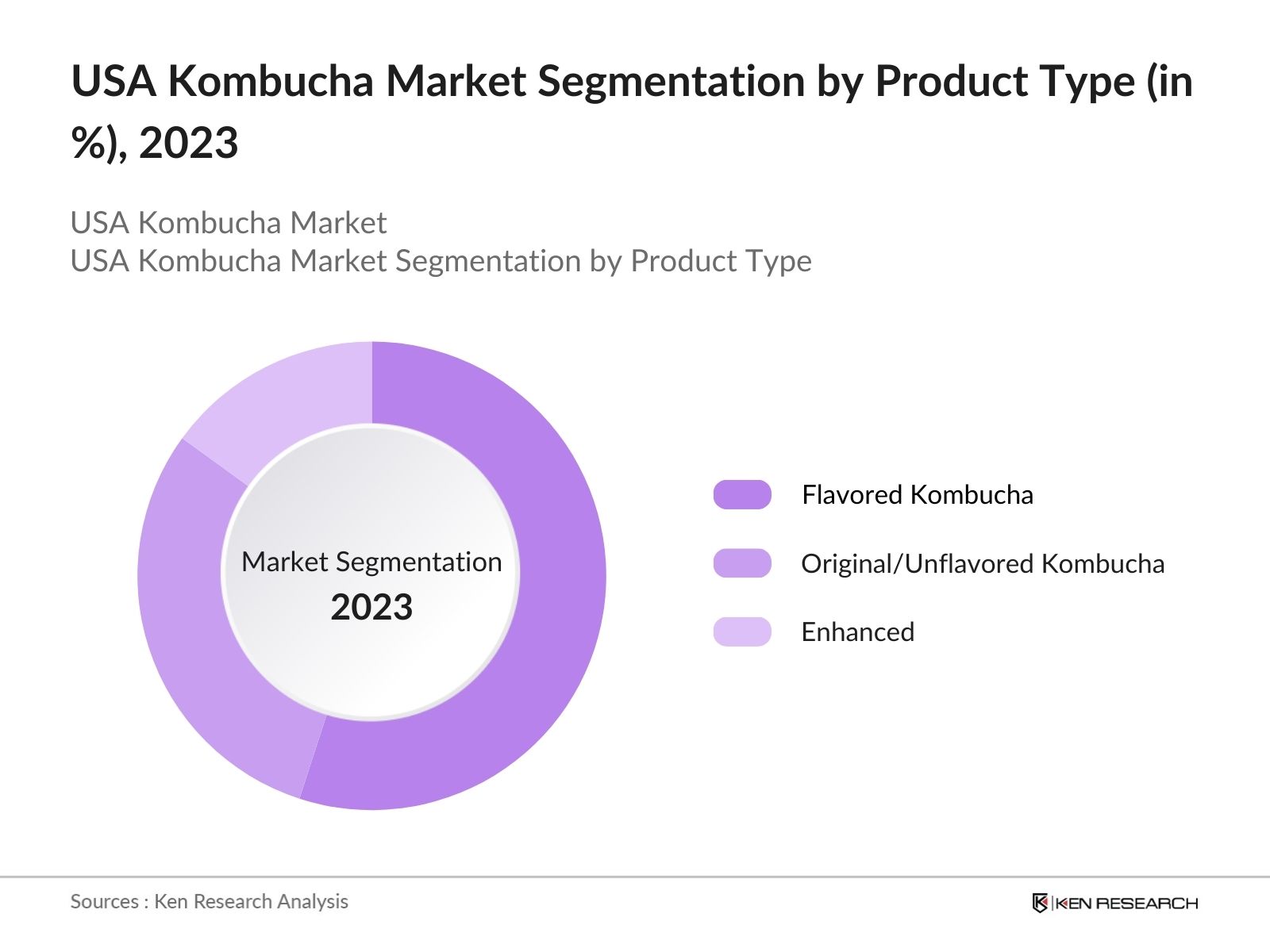
By Product Type: The market is segmented by product type into flavored kombucha, original/unflavored kombucha, and enhanced kombucha (fortified with additional ingredients like vitamins and minerals). In 2023, flavored kombucha held a dominant market share due to its wide appeal across various demographics, particularly younger consumers. The continuous innovation in flavor profiles, such as exotic fruits, herbs, and spices, has attracted a diverse consumer base, making this sub-segment the largest within the product type category.
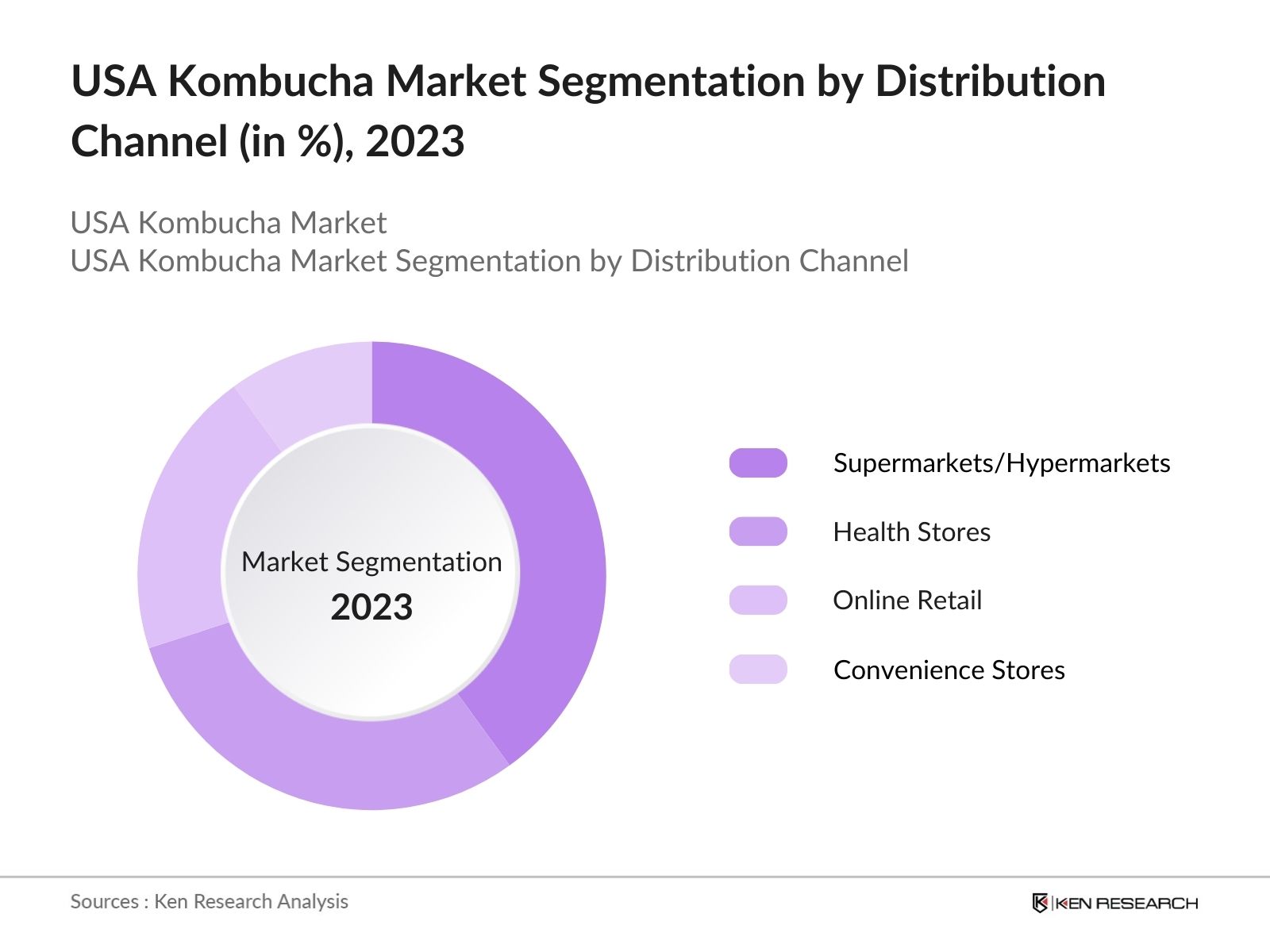
By Distribution Channel: The market is segmented by distribution channel into supermarkets /hypermarkets, health stores, online retail, and convenience stores. In 2023, Supermarkets/ hypermarkets dominated the market due to the widespread availability and extensive shelf space dedicated to kombucha, making it accessible to a larger audience. Moreover, supermarkets often run promotions and discounts, encouraging consumers to try and regularly purchase kombucha.
By Region: The market is segmented by region into north, south, east, and west. In 2023, the West region was dominating the market, driven by the large health-conscious population, a favorable regulatory environment for organic products, and the presence of key kombucha manufacturers. The Wests strong culture of innovation in health and wellness products has also contributed to its leading position in the market.
USA Kombucha Market Competitive Landscape
|
Company Name |
Establishment Year |
Headquarters |
|---|---|---|
|
GTs Living Foods |
1995 |
Los Angeles, CA |
|
Health-Ade Kombucha |
2012 |
Torrance, CA |
|
KeVita |
2009 |
Oxnard, CA |
|
Humm Kombucha |
2009 |
Bend, OR |
|
Brew Dr. Kombucha |
2008 |
Portland, OR |
- Brew Dr. Kombucha: In January 2024, Brew Dr. launched a new low-sugar probiotic seltzer called Sipjoy to tap into the increasing consumer demand for gut-health-focused beverages with lower sugar content. Initially released in the Pacific Northwest in late 2023, Sipjoy is now being rolled out nationwide at Sprouts Farmers Market. This new product aligns with the companys core strengths in fermented tea and probiotic offerings, while responding to market research indicating a significant consumer shift toward low-sugar and artificial sweetener-free options.
- GTs Living Foods: In February 2022, GT's Living Foods announced the launch of a new flavor addition to its renowned Synergy raw kombucha brand. This new flavor complements the brand's existing portfolio, which already boasts an array of flavors including Watermelon Wonder, Tangerine Dream, Guava Goddess, Tantric Turmeric, and Heart Beet.
USA Kombucha Market Analysis
Growth Drivers
- Rising Consumer Demand for Functional Beverages: Consumer demand for functional beverages is a key growth driver in the kombucha market. As reported in 2024, nearly 84% of U.S. consumers are seeking beverages that offer health benefits beyond basic nutrition, such as improved digestion, immunity, and energy. This shift is driving the market for kombucha, which is rich in probiotics and other functional ingredients, aligning with the rising consumer focus on gut health and wellness.
- Innovative Flavors and Convenient Packaging: Consumers today are more adventurous and open to trying innovative flavors, prompting manufacturers to introduce new and exciting options to capture their interest. Popular new flavors include hibiscus lime, lavender, blueberry, and guava, among others. Kombucha is flavored with a variety of spices, herbs, fruits, and juices. For example, Kombrewcha introduced two new flavors, blood orange and mango pineapple, in the U.S. in July 2020. Additionally, the availability of kombucha in cans and bottles, catering to the growing demand for on-the-go convenience, further attracts consumers.
- Expansion of Distribution Channels: The growth of kombucha is fueled by its increased availability across diverse distribution channels. Strategic partnerships between kombucha brands and major retailers have significantly expanded its reach, making it more accessible to a wider range of consumers. This broader distribution network has contributed to a notable rise in kombucha sales, enhancing its market presence.
Challenges
Regulatory Compliance Costs: The considerable challenges with regulatory compliance, especially regarding alcohol content. Recent guidelines have necessitated substantial investments in testing and reformulation processes for manufacturers to meet the new standards. These rising costs place a significant strain on smaller producers, potentially limiting their growth and hindering their ability to expand their market presence effectively. This regulatory pressure can impact their competitive edge and market opportunities.
Competition from Other Functional Beverages: Kombucha, despite its popularity, faces significant competition from other functional beverages such as kefir and probiotic waters. These alternatives are attracting an increasing number of consumers, which challenges kombucha brands to innovate and set their products apart. As these competitors gain traction, kombucha manufacturers are compelled to continuously evolve their offerings and find new ways to maintain their market share and appeal to health-conscious consumers.
Government Initiatives
- USDA Grants Enhance Support for Organic Beverage Producers: In March 2024, the USDA announced $40.5 million in grant awards to support processing and marketing activities for small and mid-sized producers, including those in the organic beverage sector such as kombucha. This initiative is designed to strengthen local and regional food systems, improve supply chain resilience, and expand market access for producers, directly benefiting kombucha manufacturers by providing financial support for scaling production and improving distribution channels.
- EPA Draft Strategy Promotes Sustainable Packaging for Beverages: In 2024, the EPA released a draft strategy aimed at preventing plastic pollution, which includes measures to encourage the use of sustainable packaging in the beverage industry, including kombucha. This initiative is part of a broader effort to reduce plastic waste by promoting recyclable and biodegradable packaging materials. The strategy aims to support manufacturers in transitioning to eco-friendly packaging, aligning with consumer demand for sustainable products and helping reduce the environmental impact of the kombucha market.
USA Kombucha Market Future Outlook
The USA Kombucha Market is projected to grow exponentially by 2028, driven by ongoing consumer trends towards healthy and functional beverages. The market is expected to witness diversification in terms of product offerings, with more players entering the market, increased investment in R&D for flavor innovation, and sustainable packaging solutions. Additionally, as consumer awareness about the health benefits of probiotics continues to rise, kombucha is likely to solidify its position as a mainstream beverage choice.
Future Market Trends
- Growth in E-Commerce and Direct-to-Consumer Sales: By 2028, a substantial transformation as e-commerce and direct-to-consumer (DTC) sales channels become increasingly dominant. With the rise of digitalization, kombucha brands are channeling significant investments into developing robust online platforms and digital marketing strategies. This shift is driven by the convenience and personalized shopping experiences offered by online platforms, which are expected to capture a larger share of kombucha sales. The trend reflects the broader consumer behavior shift towards online shopping for health and wellness products.
- Sustainable Packaging to Become Industry Standard: The move towards sustainable packaging in the kombucha industry is set to become a defining trend, driven by escalating environmental concerns and increasing regulatory pressures. By 2028, the consumers demand more eco-friendly options, kombucha producers are focusing on the adoption of recyclable and biodegradable materials. This shift is not only a response to consumer preferences but also aligns with global sustainability goals. The transition to sustainable packaging is expected to significantly reduce the industrys carbon footprint, promoting a greener, more responsible approach to product packaging in the coming years.
Scope of the Report
|
By Product Type |
Flavored Kombucha Original/Unflavored Kombucha Enhanced Kombucha |
|
By Distribution Channel |
Supermarkets/Hypermarkets Health Stores Online Retail Convenience Stores |
|
By Region |
North South East West |
Products
Key Target Audience Organizations and Entities Who Can Benefit by Subscribing This Report:
Beverage Companies
Health & Wellness Brands
Functional Beverage Distributors
Packaging Companies
Nutritional Supplement Companies
Government Agencies (U.S. Department of Agriculture (USDA), U.S. Food and Drug Administration (FDA))
Investors and VC Firms
Banks & Financial Institutions
Time Period Captured in the Report:
Historical Period: 2018-2023
Base Year: 2023
Forecast Period: 2023-2028
Companies
Players Mentioned in the Report:
GTs Living Foods
Health-Ade Kombucha
KeVita
Humm Kombucha
Brew Dr. Kombucha
Kombucha Wonder Drink
Revive Kombucha
Rowdy Mermaid Kombucha
Unity Vibration Kombucha
Suja Life LLC
The Bu Kombucha
Wild Kombucha
Live Soda Kombucha
Lion Heart Kombucha
Aqua ViTea Kombucha
Table of Contents
1. USA Kombucha Market Overview
1.1. Definition and Scope
1.2. Market Taxonomy
1.3. Market Growth Rate
1.4. Market Segmentation Overview
2. USA Kombucha Market Size (in USD Bn), 2018-2023
2.1. Historical Market Size
2.2. Year-on-Year Growth Analysis
2.3. Key Market Developments and Milestones
3. USA Kombucha Market Analysis
3.1. Growth Drivers
3.1.1. Rising Consumer Demand for Functional Beverages
3.1.2. Innovative Flavors and Convenient Packaging
3.1.3. Expansion of Distribution Channels
3.1.4. Increased Health Awareness
3.2. Challenges
3.2.1. Regulatory Compliance Costs
3.2.2. Competition from Other Functional Beverages
3.2.3. Supply Chain Disruptions
3.2.4. High Production Costs
3.3. Opportunities
3.3.1. Growing Interest in Organic Products
3.3.2. Expansion into New Markets
3.3.3. Innovations in Packaging
3.3.4. Collaborations with Health Experts
3.4. Trends
3.4.1. Growth in E-Commerce and Direct-to-Consumer Sales
3.4.2. Sustainable Packaging to Become Industry Standard
3.4.3. Increased Focus on Low-Sugar Variants
3.4.4. Expansion of Functional Ingredient Offerings
3.5. Government Initiatives
3.5.1. USDA Grants for Organic Beverage Producers
3.5.2. EPA Strategy for Sustainable Packaging
3.5.3. FDA Regulations on Alcohol Content
3.5.4. Small Business Administration (SBA) Support Programs
3.6. SWOT Analysis
3.7. Stake Ecosystem
3.8. Competition Ecosystem
4. USA Kombucha Market Segmentation, 2023
4.1. By Product Type (in Value %)
4.1.1. Flavored Kombucha
4.1.2. Original/Unflavored Kombucha
4.1.3. Enhanced Kombucha
4.2. By Distribution Channel (in Value %)
4.2.1. Supermarkets/Hypermarkets
4.2.2. Health Stores
4.2.3. Online Retail
4.2.4. Convenience Stores
4.3. By Region (in Value %)
4.3.1. North
4.3.2. South
4.3.3. East
4.3.4. West
4.4. By Consumer Age Group (in Value %)
4.4.1. Millennials
4.4.2. Gen Z
4.4.3. Baby Boomers
4.4.4. Gen X
4.5. By Flavor Profile (in Value %)
4.5.1. Fruity
4.5.2. Herbal
4.5.3. Spicy
4.5.4. Mixed Flavors
5. USA Kombucha Market Competitive Landscape
5.1. Market Share Analysis
5.2. Strategic Initiatives
5.3. Mergers and Acquisitions
5.4. Investment Analysis
5.4.1. Venture Capital Funding
5.4.2. Government Grants
5.4.3. Private Equity Investments
6. USA Kombucha Market Regulatory Framework
6.1. Environmental Standards
6.2. Compliance Requirements
6.3. Certification Processes
7. USA Kombucha Market Future Outlook (2023-2028)
7.1. Future Market Size Projections
7.2. Key Factors Driving Future Market Growth
8. USA Kombucha Market Future Segmentation, 2028
8.1. By Product Type (in Value %)
8.2. By Distribution Channel (in Value %)
8.3. By Region (in Value %)
8.4. By Consumer Age Group (in Value %)
8.5. By Flavor Profile (in Value %)
9. USA Kombucha Market Analysts Recommendations
9.1. TAM/SAM/SOM Analysis
9.2. Customer Cohort Analysis
9.3. Marketing Initiatives
9.4. White Space Opportunity Analysis
Disclaimer Contact UsResearch Methodology
Step: 1 Identifying Key Variables:
Ecosystem creation for all the major entities and referring to multiple secondary and proprietary databases to perform desk research around market to collate industry level information.
Step: 2 Market Building:
Collating statistics on USA Kombucha Market over the years, penetration of marketplaces and service providers ratio to compute revenue generated for USA Kombucha Industry. We will also review service quality statistics to understand revenue generated which can ensure accuracy behind the data points shared.
Step: 3 Validating and Finalizing:
Building market hypothesis and conducting CATIs with industry experts belonging to different companies to validate statistics and seek operational and financial information from company representatives.
Step: 4 Research Output:
Our team will approach multiple beverage companies and understand nature of product segments and sales, consumer preference and other parameters, which will support us validate statistics derived through bottom to top approach from beverage companies.
Frequently Asked Questions
01 How big is the USA Kombucha Market?
The USA Kombucha Market was valued at USD 1.4 billion in 2023, driven by increasing consumer awareness about health benefits, demand for functional drinks, and the preference for natural, low-sugar beverages.
02 What are the challenges in the USA Kombucha Market?
Challenges in USA Kombucha Market include regulatory compliance costs, competition from other functional beverages, supply chain disruptions, and the high production costs associated with maintaining organic and sustainable product lines.
03 Who are the major players in the USA Kombucha Market?
Key players in USA Kombucha Market include GTs Living Foods, KeVita (a subsidiary of PepsiCo), Health-Ade Kombucha, Brew Dr. Kombucha, and Humm Kombucha. These companies lead due to their strong brand presence, innovative product lines, and extensive distribution networks.
04 What are the growth drivers of the USA Kombucha Market?
Growth drivers in USA Kombucha Market include the rising demand for functional beverages, consumer interest in innovative flavors and convenient packaging, expansion of distribution channels, and increased health awareness among consumers.
Why Buy From Us?

What makes us stand out is that our consultants follows Robust, Refine and Result (RRR) methodology. i.e. Robust for clear definitions, approaches and sanity checking, Refine for differentiating respondents facts and opinions and Result for presenting data with story

We have set a benchmark in the industry by offering our clients with syndicated and customized market research reports featuring coverage of entire market as well as meticulous research and analyst insights.

While we don't replace traditional research, we flip the method upside down. Our dual approach of Top Bottom & Bottom Top ensures quality deliverable by not just verifying company fundamentals but also looking at the sector and macroeconomic factors.

With one step in the future, our research team constantly tries to show you the bigger picture. We help with some of the tough questions you may encounter along the way: How is the industry positioned? Best marketing channel? KPI's of competitors? By aligning every element, we help maximize success.

Our report gives you instant access to the answers and sources that other companies might choose to hide. We elaborate each steps of research methodology we have used and showcase you the sample size to earn your trust.

If you need any support, we are here! We pride ourselves on universe strength, data quality, and quick, friendly, and professional service.