















USA Lead Acid Battery Market Outlook to 2030
Region:North America
Author(s):Vijay Kumar
Product Code:KROD6033
December 2024
80
About the Report
USA Lead Acid Battery Market Overview
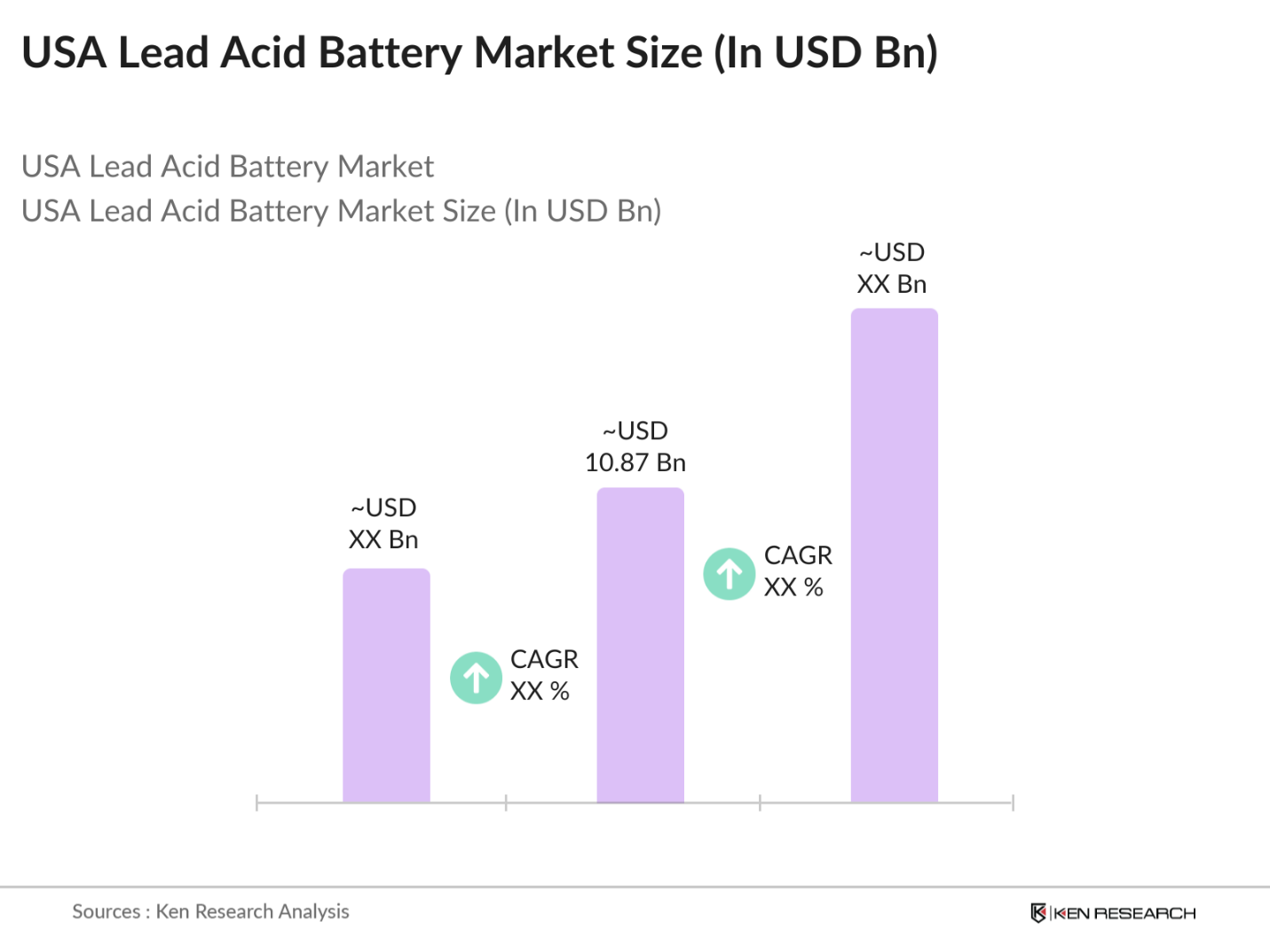
- The USA Lead Acid Battery market is valued at USD 10.87 billion, based on a five-year historical analysis. This market is driven primarily by the increasing demand for reliable energy storage solutions in sectors such as automotive, telecommunications, and industrial applications. The consistent rise in renewable energy projects across the country, which require efficient backup power solutions, is also contributing significantly to the growth of this market. The durability and cost-effectiveness of lead acid batteries continue to be a key factor in their dominance.
- The USA remains a dominant market for lead-acid batteries, particularly in major cities like Detroit, Los Angeles, and Houston, due to the presence of leading automotive manufacturers, large-scale industrial projects, and robust transportation networks. Additionally, these cities are key hubs for the energy and logistics sectors, which contribute to a strong demand for efficient power storage solutions. Furthermore, favorable government policies supporting the expansion of renewable energy and backup power infrastructure further bolster market growth.
- Governments worldwide are implementing stringent recycling programs to manage lead acid battery disposal. In the U.S., the Battery Recycling Act mandates that 100% of lead acid batteries must be recycled, reducing environmental hazards associated with lead waste. The EPA reported that in 2023, over 2.6 million tons of lead acid batteries were recycled in the U.S. alone, underscoring the effectiveness of these regulations in promoting sustainability within the lead acid battery market.
USA Lead Acid Battery Market Segmentation
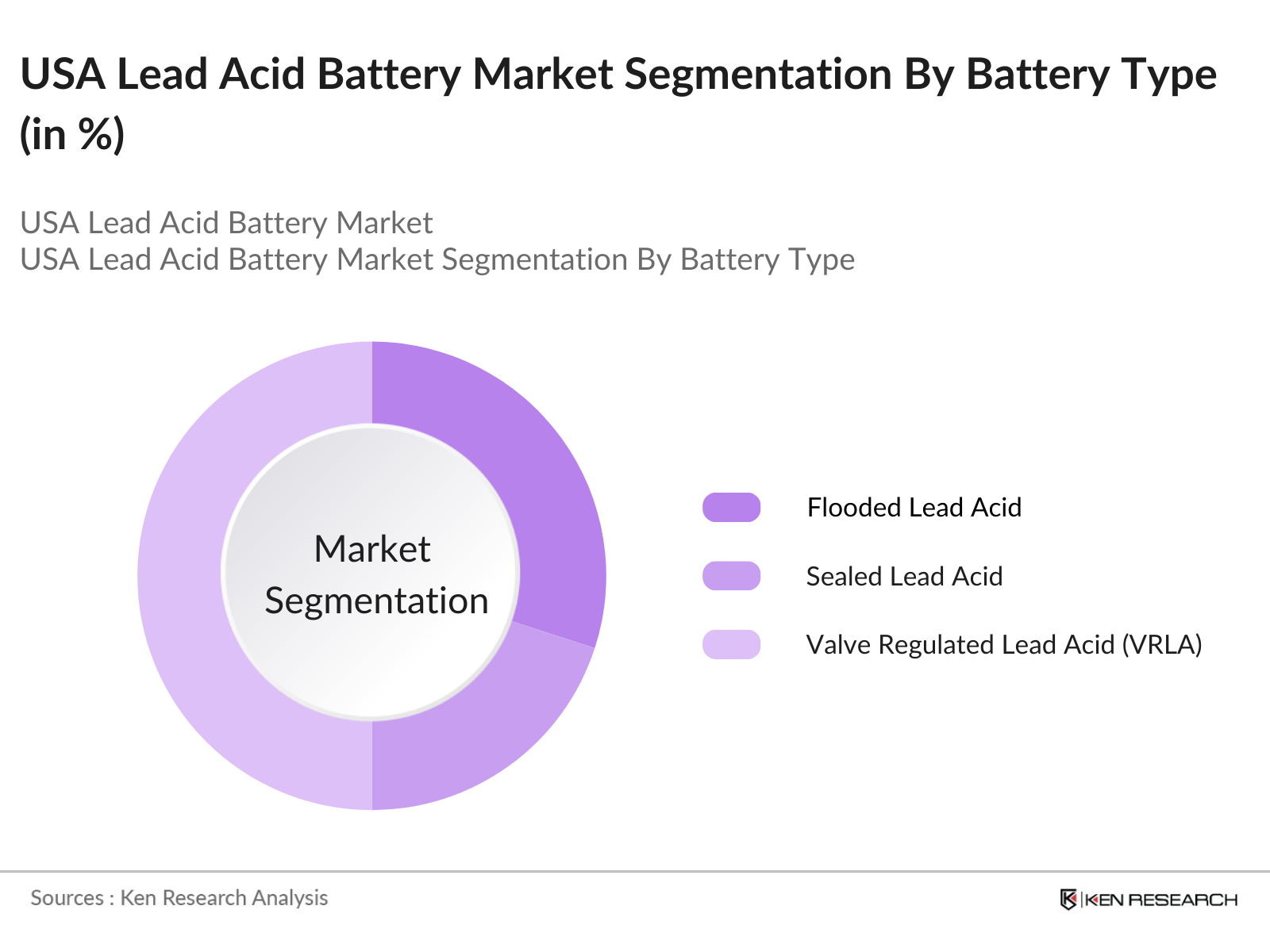
By Battery Type: The market is segmented by battery type into Flooded Lead Acid, Sealed Lead Acid, and Valve Regulated Lead Acid (VRLA). Among these, VRLA batteries dominate the market due to their widespread adoption in backup power applications, data centers, and uninterruptible power supplies (UPS). Their sealed nature eliminates the need for maintenance, making them a cost-effective and low-maintenance option for long-term use, which appeals to industries such as telecommunications and energy storage.
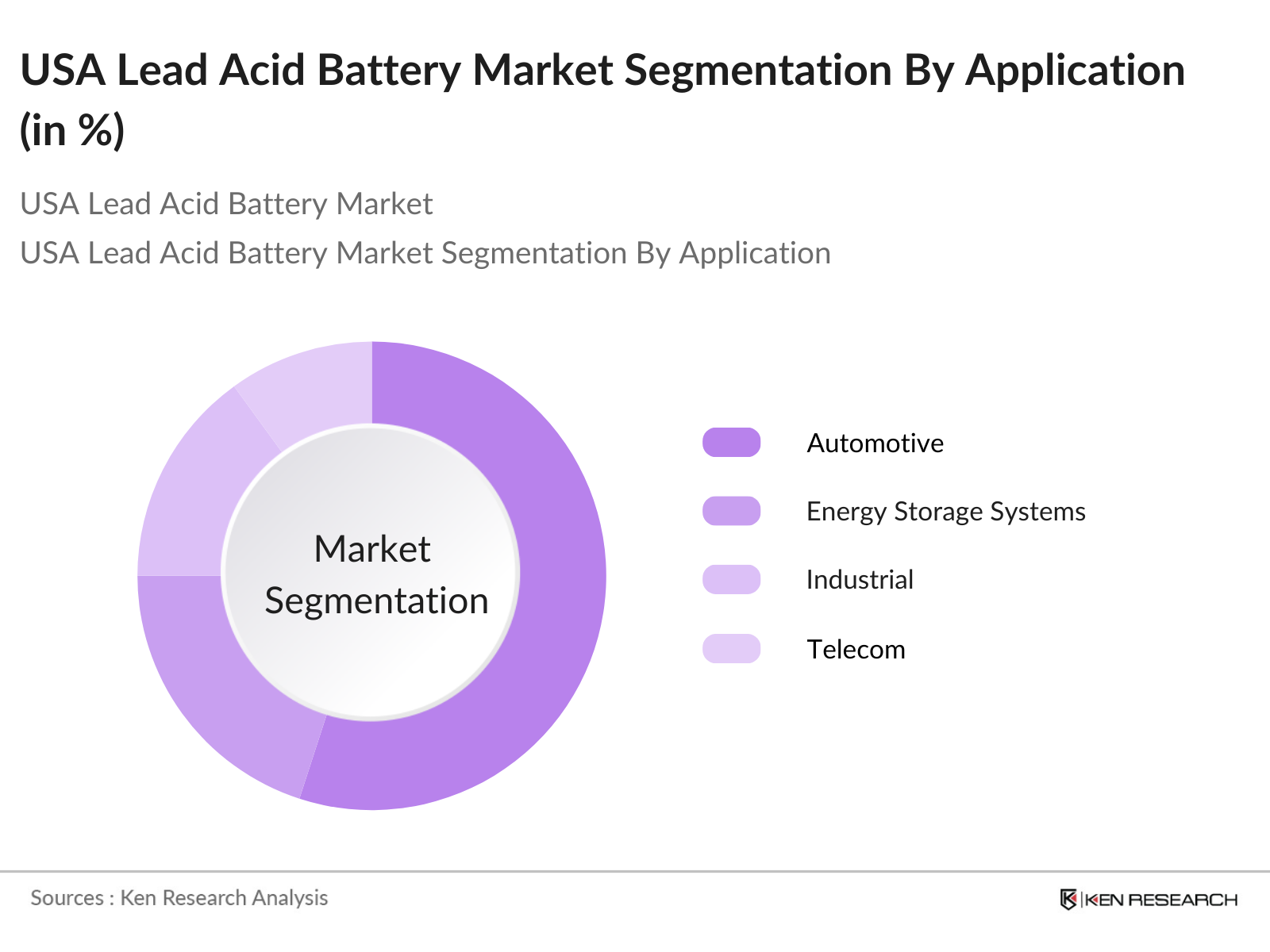
By Application; The market is further segmented by application into Automotive, Energy Storage Systems, Industrial, Telecom, and UPS. The automotive segment holds the largest market share, driven by the continuous growth in vehicle production, both in terms of traditional internal combustion engine vehicles and electric vehicles. With increasing reliance on lead-acid batteries for starting, lighting, and ignition (SLI) applications, this segment remains a critical driver of the market.
USA Lead Acid Battery Market Competitive Landscape
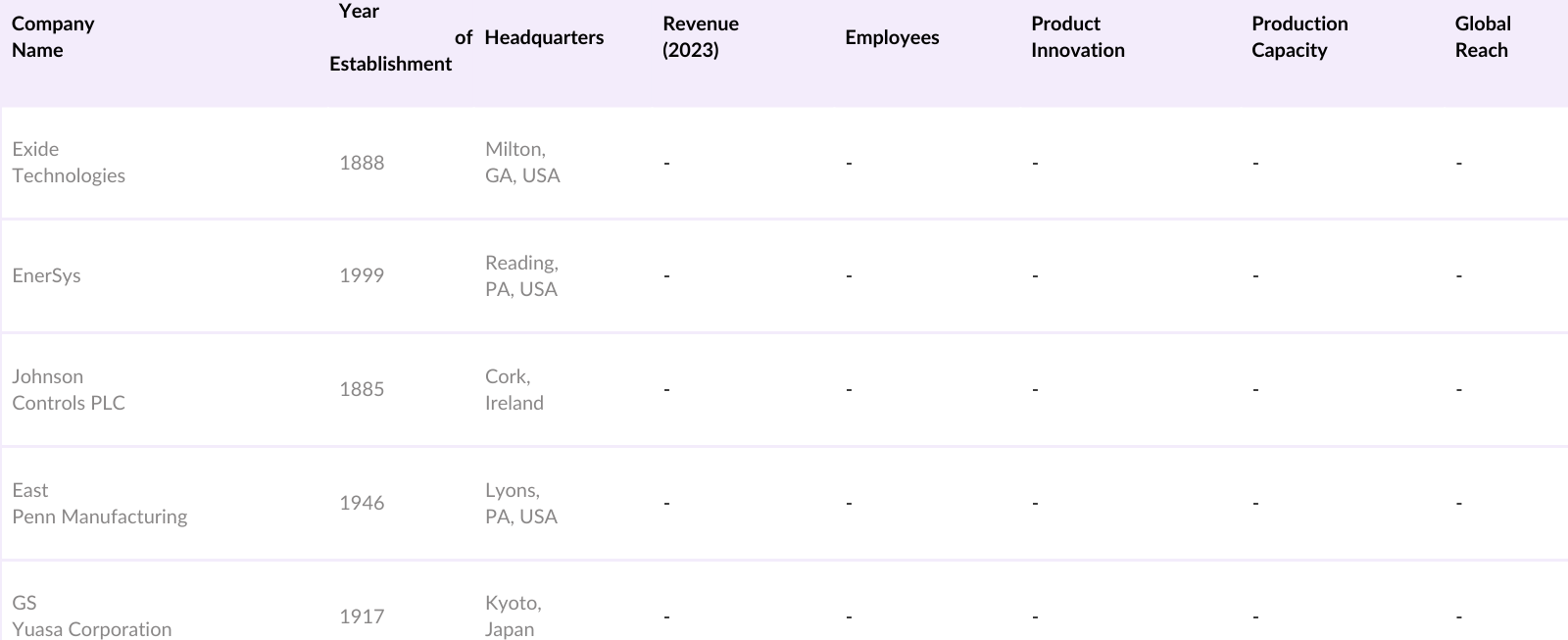
The USA Lead Acid Battery market is dominated by several major players, both local and international. These companies are recognized for their extensive distribution networks, technological innovations, and strong customer base. The competition is characterized by the integration of advanced battery management systems, recycling technologies, and strategic partnerships aimed at expanding market share.
USA Lead Acid Battery Industry Analysis
Growth Drivers
- Increasing Demand for Energy Storage Solutions: The growing need for efficient energy storage solutions is a key driver for the lead acid battery market. As of 2024, the global electricity consumption has exceeded 25,000 TWh, according to the International Energy Agency (IEA). This surge is fueled by the increasing industrial activity and expanding urban infrastructure. Lead acid batteries are widely used for energy storage in off-grid and grid-support systems, especially in rural electrification programs across developing regions like sub-Saharan Africa and Southeast Asia.
- Expansion of Renewable Energy Sources: The expansion of renewable energy installations, which reached 315 GW globally in 2023, has been another major growth driver for the lead acid battery market. According to the International Renewable Energy Agency (IRENA), renewable energy generation is shifting to off-grid solutions and requires reliable storage. Lead acid batteries, known for their cost-efficiency and recyclability, are becoming essential in solar, wind, and hydropower installations to stabilize energy flow.
- Growing Automotive Sector: The lead acid battery remains the standard power source for starting, lighting, and ignition (SLI) applications in automotive vehicles. In 2023, the global production of passenger vehicles stood at 85 million units, with lead acid batteries used in over 95% of these vehicles, according to data from the International Organization of Motor Vehicle Manufacturers (OICA). The automotive sector in the United States alone produced 11.2 million vehicles in 2023, continuing to drive the demand for lead acid batteries for both traditional and hybrid vehicles, further solidifying their market position.
Market Challenges
- Environmental Concerns Related to Lead: Lead acid batteries pose significant environmental challenges due to lead toxicity and improper disposal methods. The World Health Organization (WHO) reports that over 800,000 premature deaths annually are attributed to lead poisoning, with improper battery disposal contributing significantly to this number. Recycling processes exist but are often inadequate in developing countries, where lead acid batteries are a major contributor to soil and water contamination.
- Competition from Lithium-ion Batteries: The lead acid battery market faces competition from lithium-ion batteries, which are lighter, have a higher energy density, and longer lifespan. In 2023, global lithium-ion battery production exceeded 500 GWh, compared to 110 GWh for lead acid batteries, according to Bloomberg New Energy Finance (BNEF). Electric vehicles (EVs), grid storage, and consumer electronics increasingly favor lithium-ion technology due to their superior performance.
USA Lead Acid Battery Market Future Outlook
The USA Lead Acid Battery market is expected to experience steady growth over the next five years, driven by the increasing demand for energy storage solutions, advancements in battery technology, and government policies promoting renewable energy projects. The automotive sector, particularly the EV market, is poised for continued growth, further bolstering demand for lead-acid batteries.
Market Opportunities
- Technological Advancements in Battery Recycling: The lead acid battery recycling rate in developed countries exceeds 95%, according to the U.S. Environmental Protection Agency (EPA). Advanced recycling technologies are being implemented to improve the efficiency of lead recovery, minimize emissions, and reduce environmental impact. New smelting and hydrometallurgical techniques offer nearly complete recovery of lead, reducing the need for raw lead mining.
- Expansion in the Electric Vehicles (EV) Sector: Although lithium-ion batteries dominate the EV market, lead acid batteries continue to play a significant role in hybrid electric vehicles (HEVs) and electric motorcycles. In 2023, 10% of the 100 million motorcycles sold globally were electric, many of which utilize lead acid batteries for auxiliary power. This trend is expected to grow as electric motorcycle adoption continues in emerging markets like Southeast Asia and Africa.
Scope of the Report
|
By Battery Type |
Flooded Lead Acid Sealed Lead Acid VRLA |
|
By Application |
Automotive Energy Storage Industrial Telecom UPS |
|
By Distribution |
Direct Sales Distributors & Dealers Online Channels |
|
By End-User |
Automotive Renewable Energy Telecom Manufacturing Data Centers |
|
By Region |
North-East USA South-East USA Midwest USA Western USA Gulf States |
Products
Key Target Audience
Automotive Manufacturers
Energy Storage Providers
Telecommunication Companies
Data Center Operators
Industrial Manufacturers
Investments and Venture Capitalist Firms
Government and Regulatory Bodies (Environmental Protection Agency, Department of Energy)
Renewable Energy Firms
Companies
Players Mentioned in the Report
Johnson Controls International
Enersys
Exide Technologies
East Penn Manufacturing
Clarios
GS Yuasa Corporation
C&D Technologies Inc.
Crown Battery Manufacturing
NorthStar Battery
Leoch International Technology Limited
Table of Contents
1. USA Lead Acid Battery Market Overview
1.1. Definition and Scope
1.2. Market Taxonomy
1.3. Market Growth Rate
1.4. Market Segmentation Overview
2. USA Lead Acid Battery Market Size (In USD Bn)
2.1. Historical Market Size
2.2. Year-On-Year Growth Analysis
2.3. Key Market Developments and Milestones
3. USA Lead Acid Battery Market Analysis
3.1. Growth Drivers
3.1.1. Increasing Demand for Automotive Batteries (Vehicle Electrification, Fleet Size)
3.1.2. Expansion in Renewable Energy Sector (Energy Storage Demand, Backup Power)
3.1.3. Government Initiatives Promoting Energy Storage (Federal Incentives, State-Level Programs)
3.1.4. Industrial Growth (Manufacturing, Construction, Warehousing Growth)
3.2. Market Challenges
3.2.1. Competition from Alternative Battery Technologies (Lithium-ion, Nickel-based)
3.2.2. Environmental Regulations (Recycling Laws, Lead Emissions Control)
3.2.3. Price Volatility of Lead (Raw Material Pricing)
3.3. Opportunities
3.3.1. Technological Innovations in Lead Recycling (Eco-friendly Processes)
3.3.2. Increased Demand from Uninterruptible Power Supply (Data Centers, Telecommunications)
3.3.3. Growing Electric Vehicle Market (E-Mobility Integration)
3.4. Trends
3.4.1. Shift Toward Sealed Lead Acid (SLA) Batteries (Reduced Maintenance, Higher Efficiency)
3.4.2. Adoption of Smart Battery Monitoring Systems (IoT, Predictive Maintenance)
3.4.3. Expansion of Circular Economy Practices (Recycling and Reuse Initiatives)
3.5. Government Regulation
3.5.1. Battery Recycling Standards (EPA Guidelines, State Mandates)
3.5.2. Energy Storage Regulations (DOE Directives, Grid Integration Policies)
3.5.3. Vehicle Emission Regulations (CAFE Standards, Green Energy Legislation)
3.6. SWOT Analysis
3.7. Stakeholder Ecosystem
3.8. Porters Five Forces Analysis
3.9. Competition Ecosystem
4. USA Lead Acid Battery Market Segmentation
4.1. By Battery Type (In Value %)
4.1.1. Flooded Lead Acid
4.1.2. Sealed Lead Acid
4.1.3. VRLA (Valve Regulated Lead Acid)
4.2. By Application (In Value %)
4.2.1. Automotive (Passenger, Commercial)
4.2.2. Energy Storage Systems (Residential, Commercial, Industrial)
4.2.3. Industrial (Manufacturing, Construction)
4.2.4. Telecom (Backup Power Systems)
4.2.5. UPS (Data Centers, Healthcare, IT)
4.3. By Distribution Channel (In Value %)
4.3.1. Direct Sales
4.3.2. Distributors & Dealers
4.3.3. Online Channels
4.4. By End-User Industry (In Value %)
4.4.1. Automotive
4.4.2. Renewable Energy
4.4.3. Telecommunications
4.4.4. Manufacturing
4.4.5. Data Centers
4.5. By Region (In Value %)
4.5.1. North-East USA
4.5.2. South-East USA
4.5.3. Midwest USA
4.5.4. Western USA
4.5.5. Gulf States
5. USA Lead Acid Battery Market Competitive Analysis
5.1. Detailed Profiles of Major Companies
5.1.1. Johnson Controls International PLC
5.1.2. Enersys
5.1.3. Exide Technologies
5.1.4. GS Yuasa Corporation
5.1.5. East Penn Manufacturing
5.1.6. Clarios
5.1.7. Crown Battery Manufacturing
5.1.8. C&D Technologies Inc.
5.1.9. Trojan Battery Company
5.1.10. Leoch International Technology Limited
5.1.11. Narada Power Source Co., Ltd.
5.1.12. NorthStar Battery
5.1.13. EnerG2 Technologies
5.1.14. Zhejiang Haijiu Battery Co., Ltd.
5.1.15. Hitachi Chemical Company Ltd.
5.2. Cross Comparison Parameters (Market Share, Product Portfolio, Manufacturing Capacity, Lead Recycling Initiatives, Revenue, Employee Strength, Geographical Presence, R&D Investments)
5.3. Market Share Analysis
5.4. Strategic Initiatives
5.5. Mergers And Acquisitions
5.6. Investment Analysis
5.7. Venture Capital Funding
5.8. Government Grants
5.9. Private Equity Investments
6. USA Lead Acid Battery Market Regulatory Framework
6.1. Environmental Standards
6.2. Compliance Requirements
6.3. Certification Processes
6.4. Recycling Regulations
7. USA Lead Acid Battery Future Market Size (In USD Bn)
7.1. Future Market Size Projections
7.2. Key Factors Driving Future Market Growth
8. USA Lead Acid Battery Future Market Segmentation
8.1. By Battery Type (In Value %)
8.2. By Application (In Value %)
8.3. By Distribution Channel (In Value %)
8.4. By End-User Industry (In Value %)
8.5. By Region (In Value %)
9. USA Lead Acid Battery Market Analysts Recommendations
9.1. TAM/SAM/SOM Analysis
9.2. Customer Cohort Analysis
9.3. Marketing Initiatives
9.4. White Space Opportunity Analysis
Research Methodology
Step 1: Identification of Key Variables
This phase involves identifying the major stakeholders in the USA Lead Acid Battery Market. We utilize extensive secondary research from proprietary databases to map out key variables, including market trends, industry drivers, and technology advancements.
Step 2: Market Analysis and Construction
In this phase, we analyze historical data, focusing on market penetration, sales performance, and customer demographics. This step includes assessing lead recycling practices and technological innovation trends within the lead-acid battery segment.
Step 3: Hypothesis Validation and Expert Consultation
Hypotheses based on historical data are validated through consultations with industry experts. These experts provide insights on operational and financial trends, market challenges, and growth opportunities in the lead-acid battery sector.
Step 4: Research Synthesis and Final Output
In the final step, we synthesize the research findings, combining expert insights with quantitative data. This ensures a comprehensive market analysis, which is then translated into actionable insights for business professionals.
Frequently Asked Questions
01. How big is the USA Lead Acid Battery Market?
The USA Lead Acid Battery market is valued at USD 10.87 billion, based on a five-year historical analysis. This market is driven primarily by the increasing demand for reliable energy storage solutions in sectors such as automotive, telecommunications, and industrial applications.
02. What are the challenges in the USA Lead Acid Battery Market?
Challenges include competition from alternative battery technologies like lithium-ion, price volatility in lead, and stringent environmental regulations for battery recycling.
03. Who are the major players in the USA Lead Acid Battery Market?
Key players in the market include Johnson Controls International, Enersys, Exide Technologies, East Penn Manufacturing, and Clarios, all of which dominate through strong distribution networks and innovation in battery technology.
04. What are the growth drivers of the USA Lead Acid Battery Market?
The market is driven by factors such as increasing demand for automotive batteries, rising investments in renewable energy, and expanding energy storage systems.
Why Buy From Us?

What makes us stand out is that our consultants follows Robust, Refine and Result (RRR) methodology. i.e. Robust for clear definitions, approaches and sanity checking, Refine for differentiating respondents facts and opinions and Result for presenting data with story

We have set a benchmark in the industry by offering our clients with syndicated and customized market research reports featuring coverage of entire market as well as meticulous research and analyst insights.

While we don't replace traditional research, we flip the method upside down. Our dual approach of Top Bottom & Bottom Top ensures quality deliverable by not just verifying company fundamentals but also looking at the sector and macroeconomic factors.

With one step in the future, our research team constantly tries to show you the bigger picture. We help with some of the tough questions you may encounter along the way: How is the industry positioned? Best marketing channel? KPI's of competitors? By aligning every element, we help maximize success.

Our report gives you instant access to the answers and sources that other companies might choose to hide. We elaborate each steps of research methodology we have used and showcase you the sample size to earn your trust.

If you need any support, we are here! We pride ourselves on universe strength, data quality, and quick, friendly, and professional service.