
USA Leather Goods Market Outlook to 2030
Region:North America
Author(s):Shambhavi
Product Code:KROD3038
November 2024
81
About the Report
USA Leather Goods Market Overview
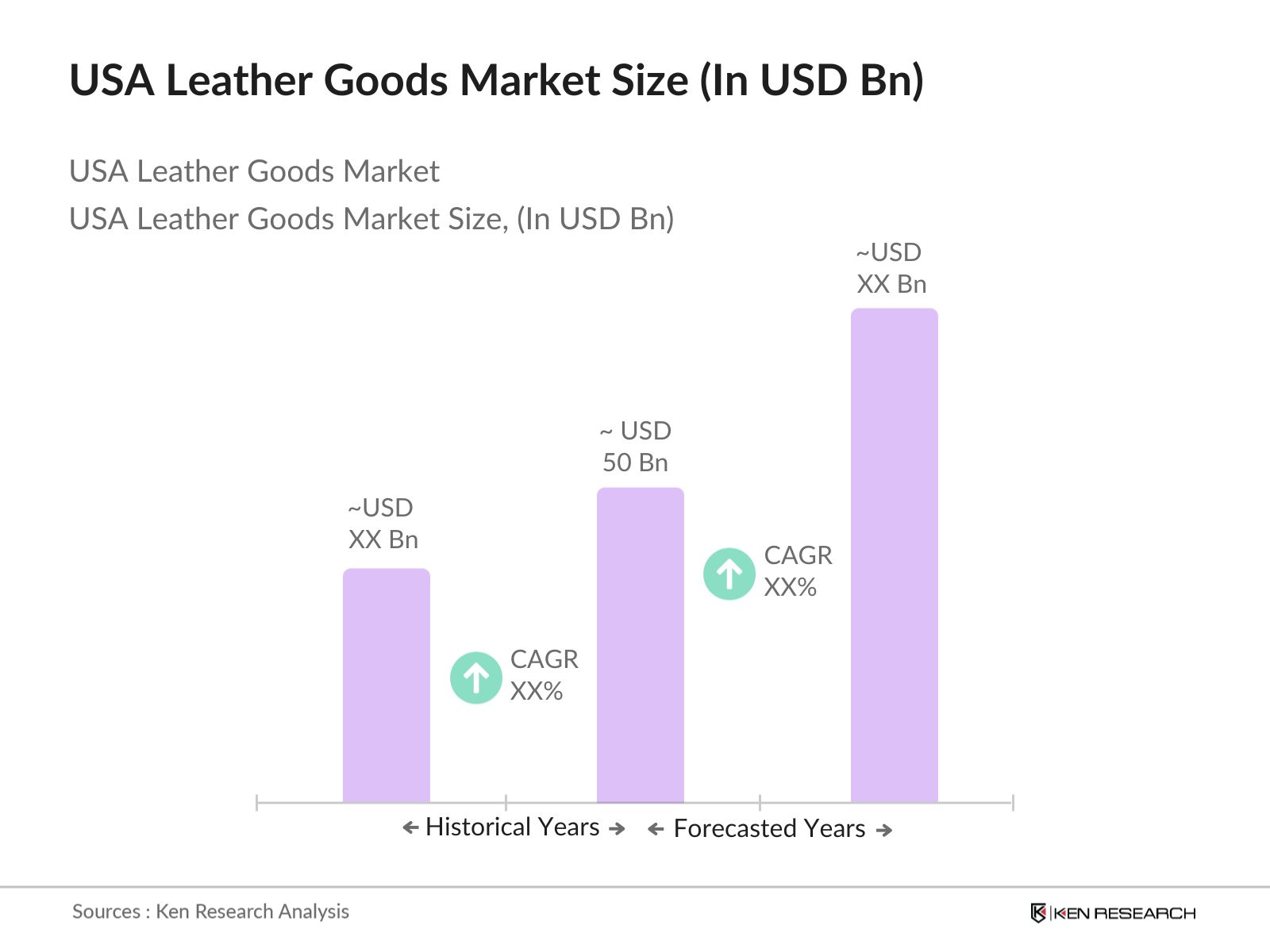
- The USA leather goods market is valued at USD 50 billion, driven primarily by the increasing demand for luxury and premium leather products. Leather handbags, footwear, and accessories remain essential fashion elements, especially among affluent consumers. The market's growth is significantly influenced by the expansion of e-commerce platforms, which provide greater accessibility to leather goods for a wider demographic. Additionally, the focus on high-quality craftsmanship and sustainable leather sourcing contributes to the market's development, as consumers become more conscientious of environmental and ethical standards.
- The market dominance can be observed in metropolitan cities like New York, Los Angeles, and Chicago, where high disposable incomes and a thriving fashion industry drive the demand for leather goods. These cities also host numerous fashion events and exhibitions, further boosting the market. Internationally, the USA remains a strong player in leather goods production and consumption, with robust exports of luxury products to countries such as China and Japan. The domestic production is supported by the presence of major luxury brands and designers who emphasize high-quality leather craftsmanship.
- The U.S. government has implemented stricter guidelines for ethical leather production, emphasizing animal welfare. The Animal Welfare Act (AWA), enforced by the U.S. Department of Agriculture, mandates that leather producers follow humane practices in sourcing raw materials. In 2023, over 1,000 compliance checks were conducted by the USDA to ensure that leather producers adhered to these standards.
USA Leather Goods Market Segmentation
- By Product Type: The USA leather goods market is segmented by product type into footwear, bags & wallets, belts & accessories, apparel & clothing, and home dcor & furniture. Footwear, especially premium and luxury shoes, holds a dominant market share due to the consistent consumer preference for leather in this category. Leather shoes are highly durable, fashionable, and offer premium comfort, making them a popular choice for both formal and casual wear. Brands like Allen Edmonds and Timberland have maintained strong brand loyalty and continuous innovation in leather technology, helping footwear maintain its leading position.

- By Distribution Channel: The USA leather goods market is also segmented by distribution channel into online retail, offline retail (department stores, specialty stores), and direct-to-consumer. Online retail has become the fastest-growing segment, contributing the highest market share. The convenience of e-commerce platforms and the availability of detailed product descriptions, coupled with easy return policies, have fueled the growth of online leather goods purchases. Leading platforms like Amazon, Zappos, and Nordstrom offer a vast selection of leather products, providing consumers with easy access to premium and luxury items.

Competitive Landscape
The USA leather goods market is dominated by several key players that have established themselves through strong brand identity, innovation, and high-quality craftsmanship. This dominance is bolstered by the growing trend of sustainability and ethical leather sourcing, which many of these brands have embraced to maintain consumer loyalty. The competitive landscape is characterized by a mix of domestic and international luxury brands that cater to both high-end and mass-market consumers.
|
Company |
Established |
Headquarters |
Revenue (USD bn) |
Product Lines |
Sustainability Initiatives |
Online Presence |
Brand Loyalty |
Global Reach |
|
Tapestry, Inc. |
1941 |
New York City, NY |
||||||
|
Michael Kors Holdings Ltd. |
1981 |
New York City, NY |
||||||
|
Ralph Lauren Corporation |
1967 |
New York City, NY |
||||||
|
Fossil Group, Inc. |
1984 |
Richardson, TX |
||||||
|
Coach, Inc. |
1941 |
New York City, NY |
USA Leather Goods Market Analysis
Growth Drivers
- Increased Demand for Premium and Luxury Products: The U.S. leather goods market has seen a growing demand for premium and luxury products, driven by the rising disposable income of American consumers. According to the U.S. Bureau of Economic Analysis, in 2023, the average disposable personal income reached $59,000 per household, allowing consumers to invest in high-end leather goods such as designer bags, footwear, and accessories. This trend aligns with a shift in spending patterns towards quality over quantity, especially in urban areas where luxury brands like Louis Vuitton and Gucci continue to dominate retail.
- Rise in Consumer Spending on Fashion and Accessories: Increased consumer expenditure on fashion items is a significant driver for leather goods in the U.S. In 2023, consumer spending on apparel and related goods totaled $483 billion, according to the U.S. Department of Commerce. This rise in discretionary spending has boosted demand for leather accessories, particularly in categories like handbags, wallets, and belts, as fashion-conscious consumers prioritize aesthetic value and brand prestige. This increase in spending correlates with improved labor market conditions and wage growth in major metropolitan areas.
- Growth in E-commerce Platforms (Influence of Online Sales): The expansion of e-commerce has transformed the U.S. leather goods market, with online sales making up a significant portion of total retail revenue. According to the U.S. Census Bureau, e-commerce sales in the U.S. reached $1.03 trillion in 2023, up from $872 billion in 2021. This shift is partly driven by the increasing adoption of digital wallets and flexible payment options, making luxury leather products more accessible to a broader audience. The online platform has also allowed smaller leather brands to gain visibility in the market.
Market Challenges
- High Competition from Synthetic Materials: The U.S. leather goods industry faces stiff competition from synthetic alternatives such as PU and PVC, which offer lower-cost options for fashion-conscious but budget-restricted consumers. According to the U.S. International Trade Commission, synthetic leather imports in 2023 surpassed 400,000 metric tons, highlighting a growing preference for vegan and synthetic materials. These alternatives have gained traction due to their affordability, availability, and increasing consumer focus on animal welfare, presenting a challenge for traditional leather goods manufacturers.
- Regulatory Pressure on Environmental Impact: The environmental impact of leather production has come under increasing scrutiny, with strict regulations on emissions and waste management. In 2023, the U.S. Environmental Protection Agency implemented new guidelines for leather processing plants, aimed at reducing water and air pollution. According to the EPA, the leather industry is responsible for approximately 17% of industrial water waste in the U.S., prompting stricter enforcement of waste disposal standards. The increased cost of compliance with these regulations is a challenge for manufacturers operating in the leather sector.
USA Leather Goods Market Future Outlook
The USA leather goods market is expected to experience consistent growth driven by factors such as the rising demand for sustainable leather products, increasing disposable income, and the growing influence of fashion trends on consumer preferences. As consumers become more environmentally conscious, there will be a noticeable shift towards ethically sourced and manufactured leather goods, with brands incorporating innovative leather alternatives such as vegan leather. Furthermore, the expansion of e-commerce and direct-to-consumer business models will continue to be key growth drivers.
Opportunities
- Expansion of Sustainable and Eco-Friendly Leather Products: There is a growing opportunity for U.S. leather goods manufacturers to expand into eco-friendly leather products, catering to the rising demand for sustainable fashion. The U.S. Green Building Council reported a 25% increase in certifications for environmentally responsible leather processing facilities in 2023. Brands focusing on eco-friendly leather alternatives, such as mushroom leather and lab-grown leather, are attracting investment and consumer attention, creating new avenues for growth in the market. Sustainable certifications are becoming a key differentiator in the competitive leather goods market.
- Increasing Market Penetration in Emerging Markets: U.S. leather goods companies are increasingly exploring opportunities in emerging markets such as Southeast Asia and Africa, where disposable incomes are rising. According to the World Bank, GDP growth in emerging economies, such as Vietnam and Indonesia, averaged 6% in 2023, creating a strong demand for premium leather goods. U.S. brands that expand their presence in these regions can tap into a growing consumer base with a penchant for Western fashion trends and luxury products.
Scope of the Report
|
Segment |
Sub-Segments |
|
Product Type |
Footwear |
|
Bags & Wallets |
|
|
Belts & Accessories |
|
|
Apparel & Clothing |
|
|
Home Décor & Furniture |
|
|
Distribution Channel |
Online Retail |
|
Offline Retail |
|
|
Direct-to-Consumer |
Products
Key Target Audience
Leather Goods Manufacturers
Retailers and Distributors (Amazon, Nordstrom)
Luxury Fashion Brands
Leather Processors and Tanneries
Footwear Manufacturers
Investors and Venture Capitalist Firms
Government and Regulatory Bodies (U.S. Environmental Protection Agency)
Online Retail Platforms
Companies
Major Players in the USA Leather Goods Market
Tapestry, Inc.
Michael Kors Holdings Ltd.
Ralph Lauren Corporation
Fossil Group, Inc.
Coach, Inc.
Levi Strauss & Co.
Timberland LLC
Wilsons Leather
Gucci America, Inc.
Louis Vuitton North America
Prada USA Corp
Samsonite International S.A.
Burberry Group Plc
Kate Spade & Company
VF Corporation
Table of Contents
Research Methodology
Step 1: Identification of Key Variables
The initial phase focuses on mapping the USA Leather Goods Market ecosystem. This involves identifying major stakeholders, such as manufacturers, distributors, and consumers. Extensive desk research using secondary databases and proprietary tools is employed to gather relevant industry-level information.
Step 2: Market Analysis and Construction
This phase involves compiling historical data on market growth, consumer trends, and production volumes. A comprehensive analysis of distribution channels, product segments, and supply chain dynamics is also undertaken to provide an accurate representation of the market's current state.
Step 3: Hypothesis Validation and Expert Consultation
To validate key market assumptions, industry experts are consulted through interviews and surveys. These consultations provide insights into market challenges, opportunities, and emerging trends, ensuring that the report is backed by firsthand industry knowledge.
Step 4: Research Synthesis and Final Output
In the final phase, research findings are synthesized into a cohesive report that includes both qualitative and quantitative analysis. Direct engagement with leading leather goods manufacturers and retailers ensures that the report is accurate, validated, and provides actionable insights.
Frequently Asked Questions
01. How big is the USA Leather Goods Market?
The USA leather goods market is valued at USD 50 billion, driven by high consumer demand for premium leather products such as handbags, footwear, and accessories. The market is supported by growth in e-commerce and sustainability trends.
02. What are the challenges in the USA Leather Goods Market?
The USA leather goods market faces challenges such as increasing competition from synthetic materials, fluctuating raw material prices, and regulatory pressures related to environmental sustainability. Additionally, the market must adapt to shifting consumer preferences towards ethical and sustainable leather production.
03. Who are the major players in the USA Leather Goods Market?
Key players in the USA leather goods market include Tapestry, Inc., Michael Kors Holdings Ltd., Ralph Lauren Corporation, Fossil Group, and Coach, Inc. These companies dominate due to their strong brand presence, extensive product lines, and commitment to sustainable practices.
04. What are the growth drivers of the USA Leather Goods Market?
The USA leather goods market is driven by factors such as rising consumer demand for luxury goods, growing interest in sustainable and ethically produced leather products, and the expanding e-commerce market. Fashion trends and disposable income also contribute to market growth.
Why Buy From Us?

What makes us stand out is that our consultants follows Robust, Refine and Result (RRR) methodology. i.e. Robust for clear definitions, approaches and sanity checking, Refine for differentiating respondents facts and opinions and Result for presenting data with story

We have set a benchmark in the industry by offering our clients with syndicated and customized market research reports featuring coverage of entire market as well as meticulous research and analyst insights.

While we don't replace traditional research, we flip the method upside down. Our dual approach of Top Bottom & Bottom Top ensures quality deliverable by not just verifying company fundamentals but also looking at the sector and macroeconomic factors.

With one step in the future, our research team constantly tries to show you the bigger picture. We help with some of the tough questions you may encounter along the way: How is the industry positioned? Best marketing channel? KPI's of competitors? By aligning every element, we help maximize success.

Our report gives you instant access to the answers and sources that other companies might choose to hide. We elaborate each steps of research methodology we have used and showcase you the sample size to earn your trust.

If you need any support, we are here! We pride ourselves on universe strength, data quality, and quick, friendly, and professional service.