
USA LED Lighting Market Outlook to 2030
Region:United States
Author(s):Vijay Kumar
Product Code:KROD3100
Region:United States
Author(s):Vijay Kumar
Product Code:KROD3100
December 2024
99
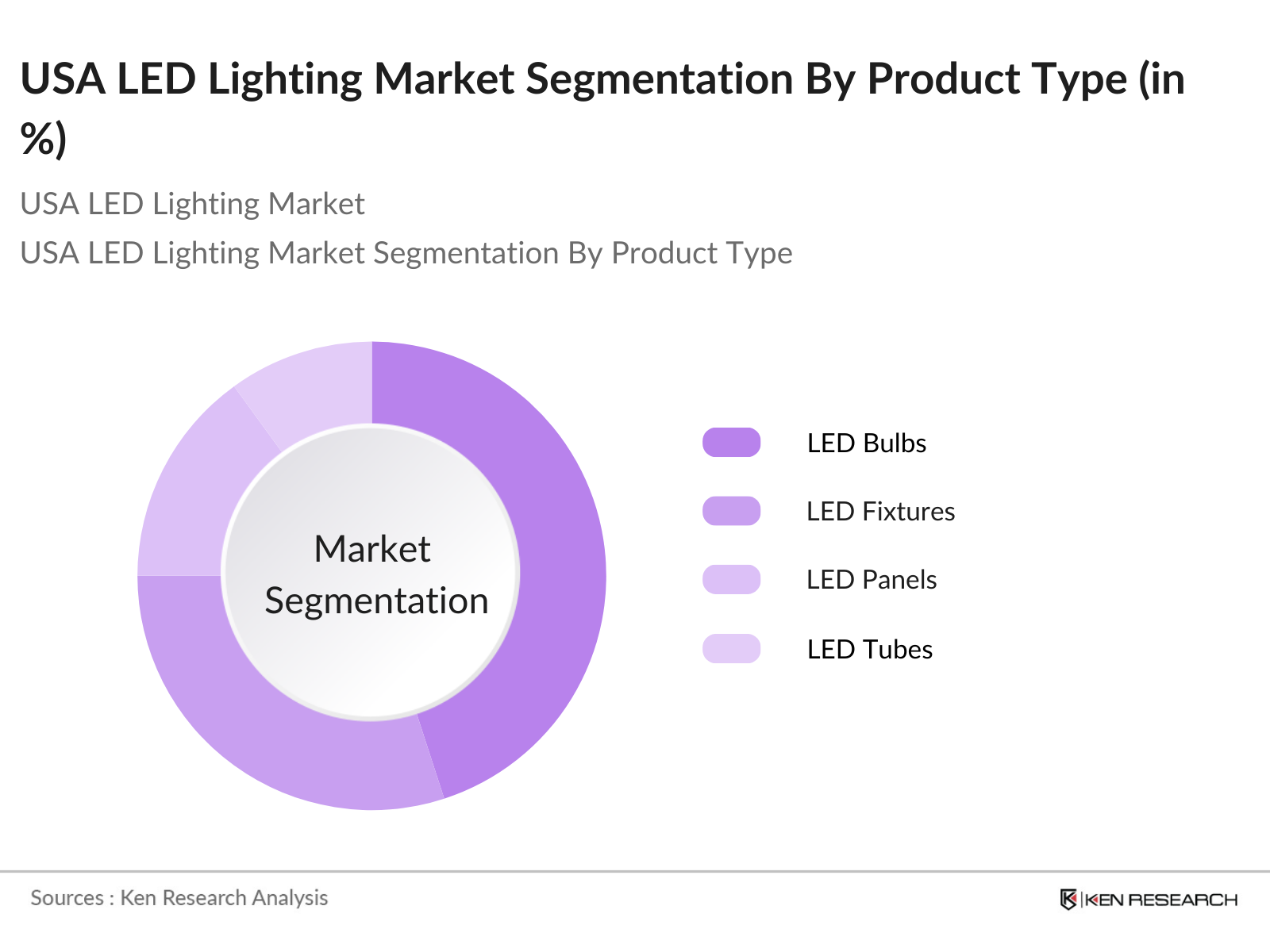
By Product Type: The USA LED Lighting Market is segmented by product type into LED bulbs, LED fixtures, LED panels, and LED tubes. Among these, LED bulbs hold a dominant market share due to their widespread use in both residential and commercial settings. Their cost efficiency, durability, and significant energy-saving potential make them the first choice for consumers looking to replace traditional incandescent and CFL bulbs.
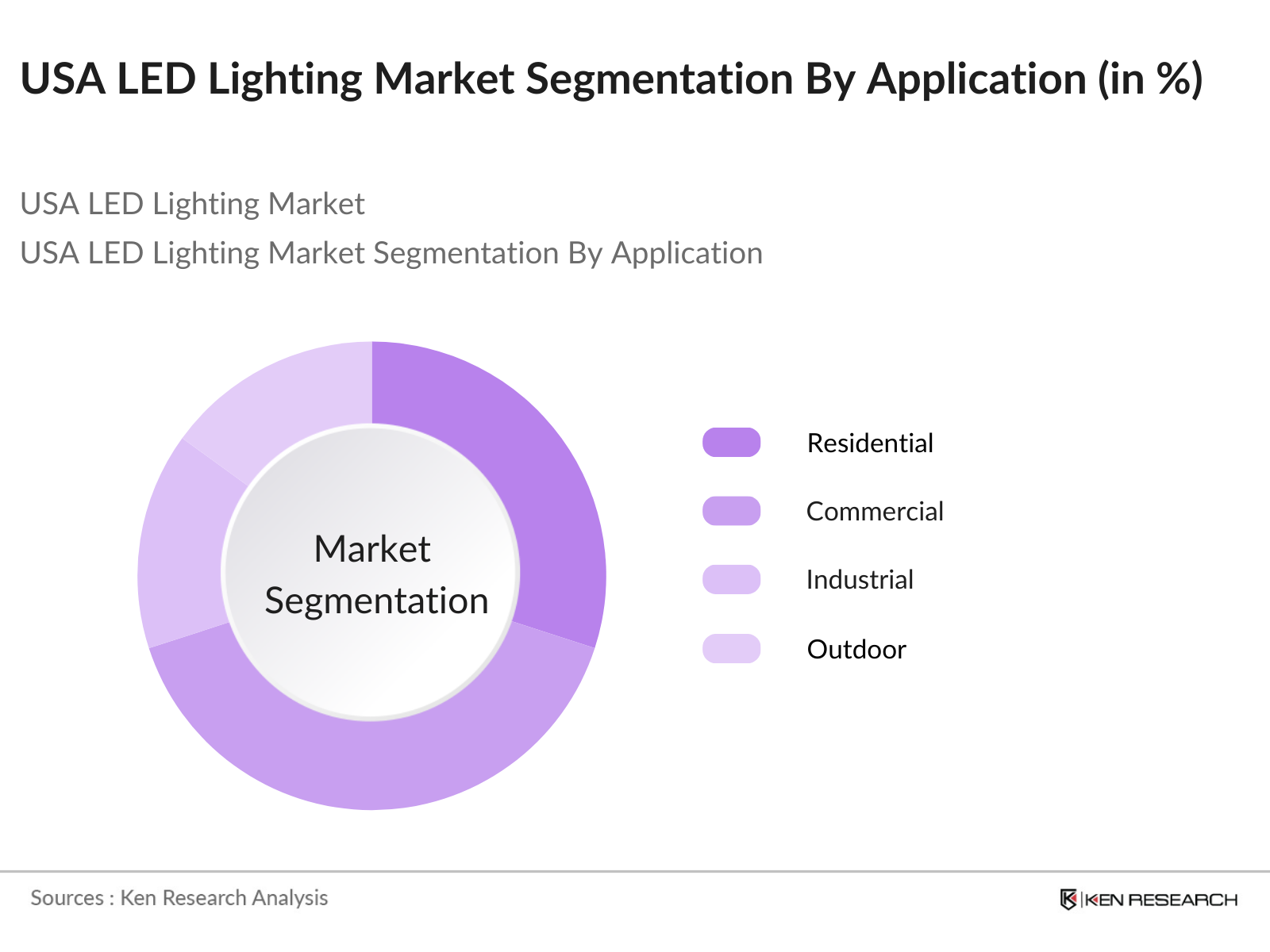
By Application: The market is further segmented by application into residential, commercial, industrial, outdoor, and automotive sectors. The commercial sector dominates the market, primarily due to the growing adoption of LED lighting in office spaces, retail outlets, and public infrastructure. Commercial buildings, driven by the need to cut energy costs and enhance lighting quality, are increasingly opting for smart LED systems that offer long-term energy savings and better operational control.
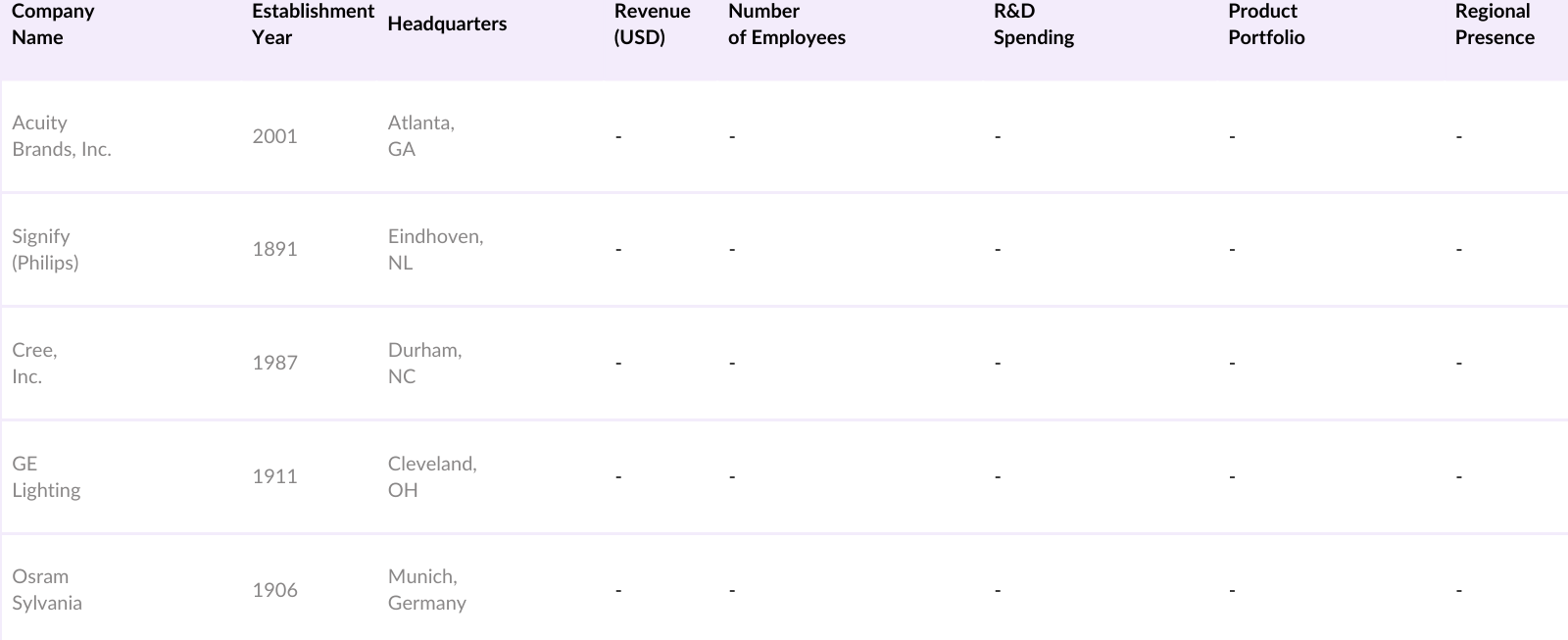
The USA LED Lighting Market is dominated by a mix of domestic and global players who have established strong footholds through product innovation, strategic partnerships, and aggressive marketing efforts. Companies such as Acuity Brands and Signify have a significant presence, offering a broad range of lighting solutions across different verticals. Meanwhile, manufacturers like Cree focus on high-efficiency, high-output LED technology, catering to niche markets such as industrial lighting.
The USA LED Lighting Market is expected to continue its upward trajectory, driven by increasing awareness of energy-efficient solutions, technological advancements in smart lighting systems, and supportive government policies. The ongoing development of smart cities, combined with stringent energy efficiency standards, will further accelerate the demand for LED lighting solutions.
|
By Product Type |
LED Bulbs LED Fixtures LED Panels LED Tubes Others |
|
By Application |
Residential Commercial Industrial Outdoor Automotive |
|
By Distribution Channel |
Online Offline (Retail, Wholesale, Distributors) |
|
By Wattage |
Less than 5W 5W to 10W 10W to 20W 20W to 50W Above 50W |
|
By Region |
Northeast Midwest South West |
1.1. Definition and Scope
1.2. Market Taxonomy
1.3. Market Growth Rate
1.4. Market Segmentation Overview
2.1. Historical Market Size
2.2. Year-On-Year Growth Analysis
2.3. Key Market Developments and Milestones
3.1. Growth Drivers (Energy Efficiency, Eco-Friendliness, Technological Advancements, Decreasing LED Costs)
3.2. Market Challenges (High Initial Investment, Complex Installation Process, Regulatory Barriers)
3.3. Opportunities (Smart LED Lighting Solutions, Integration with IoT, Government Energy Saving Initiatives)
3.4. Trends (Integration with Smart Home Systems, Customization of Lighting for Different Applications, Growth in Demand for LED in Commercial and Industrial Sectors)
3.5. Government Regulation (Energy Star Certifications, Energy Efficiency Standards, Import Tariffs)
3.6. SWOT Analysis
3.7. Stake Ecosystem
3.8. Porters Five Forces
3.9. Competition Ecosystem
4.1. By Product Type (In Value %)
4.1.1. LED Bulbs
4.1.2. LED Fixtures
4.1.3. LED Panels
4.1.4. LED Tubes
4.1.5. Others
4.2. By Application (In Value %)
4.2.1. Residential
4.2.2. Commercial
4.2.3. Industrial
4.2.4. Outdoor
4.2.5. Automotive
4.3. By Distribution Channel (In Value %)
4.3.1. Online
4.3.2. Offline (Retail, Wholesale, Distributors)
4.4. By Wattage (In Value %)
4.4.1. Less than 5W
4.4.2. 5W to 10W
4.4.3. 10W to 20W
4.4.4. 20W to 50W
4.4.5. Above 50W
4.5. By Region (In Value %)
4.5.1. Northeast
4.5.2. Midwest
4.5.3. South
4.5.4. West
5.1 Detailed Profiles of Major Companies
5.1.1. Acuity Brands, Inc.
5.1.2. Signify (Philips Lighting)
5.1.3. Cree, Inc.
5.1.4. GE Lighting (Savant Systems Inc.)
5.1.5. Eaton Corporation
5.1.6. Hubbell Lighting
5.1.7. Lutron Electronics
5.1.8. Leviton Manufacturing
5.1.9. Osram Sylvania
5.1.10. Zumtobel Group
5.1.11. Nichia Corporation
5.1.12. Panasonic Corporation
5.1.13. Samsung LED
5.1.14. Bridgelux, Inc.
5.1.15. Toshiba Lighting
5.2 Cross Comparison Parameters (No. of Employees, Headquarters, Revenue, Market Share, Installed Capacity, Regional Presence, R&D Expenditure, Product Portfolio)
5.3. Market Share Analysis
5.4. Strategic Initiatives
5.5. Mergers And Acquisitions
5.6. Investment Analysis
5.7. Venture Capital Funding
5.8. Government Grants
5.9. Private Equity Investments
6.1. Energy Efficiency Standards
6.2. Compliance Requirements
6.3. Certification Processes (Energy Star, DLC)
7.1. Future Market Size Projections
7.2. Key Factors Driving Future Market Growth
8.1. By Product Type (In Value %)
8.2. By Application (In Value %)
8.3. By Distribution Channel (In Value %)
8.4. By Wattage (In Value %)
8.5. By Region (In Value %)
9.1. TAM/SAM/SOM Analysis
9.2. Customer Cohort Analysis
9.3. Marketing Initiatives
9.4. White Space Opportunity Analysis
Disclaimer Contact UsThe first step involves mapping the entire LED lighting ecosystem, identifying key players, market drivers, and barriers. This process involves in-depth desk research, leveraging proprietary databases and public domain information to gather a comprehensive view of the market's landscape.
At this stage, historical data is analyzed to understand market penetration, adoption trends, and revenue generation within different sub-segments. We also examine the energy savings statistics to assess how LED lighting has reduced electricity consumption across the residential, commercial, and industrial sectors.
Market assumptions are developed and validated through consultations with industry experts and executives from leading LED lighting companies. These consultations provide first-hand insights into operational challenges, consumer behavior, and market dynamics, which help refine market forecasts.
The final stage synthesizes the research findings into actionable insights, cross-verifying data through interactions with market participants. This process ensures that the data presented is both accurate and reflective of real-world market conditions.
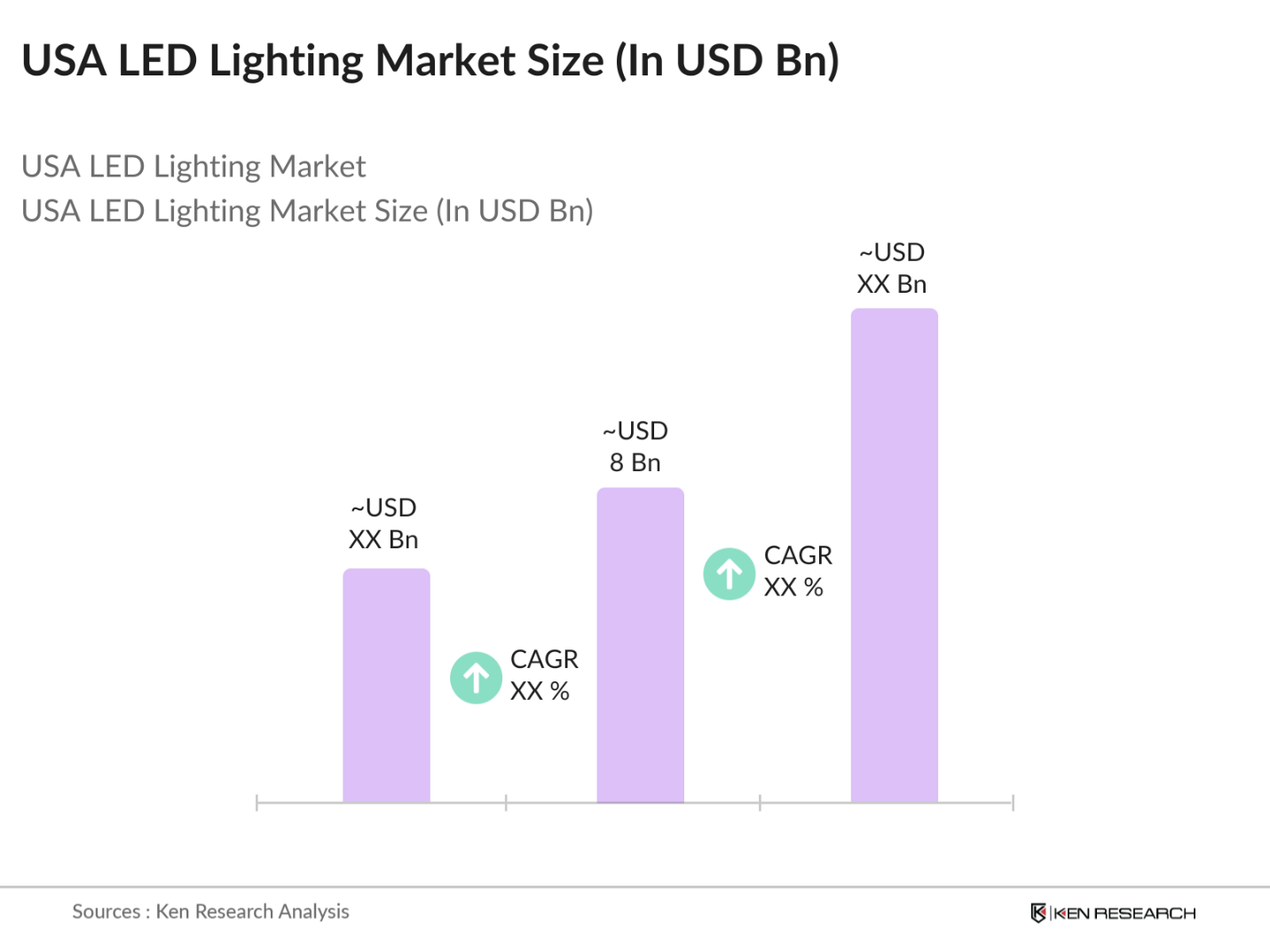
The USA LED Lighting Market is valued at USD 8 billion, driven by energy efficiency demands, government regulations, and rapid adoption in commercial and residential sectors.
The USA LED Lighting Market challenges include high upfront costs, regulatory compliance, and complex installation processes. Despite these barriers, increasing government incentives are helping to mitigate these issues.
The USA LED Lighting Market key players include Acuity Brands, Signify (Philips), Cree, GE Lighting, and Osram Sylvania. These companies dominate the market due to their extensive product portfolios and strong regional presence.
The USA LED Lighting Market key growth drivers include increasing energy efficiency regulations, rising demand for smart lighting solutions, and ongoing infrastructure development in urban areas.

What makes us stand out is that our consultants follows Robust, Refine and Result (RRR) methodology. i.e. Robust for clear definitions, approaches and sanity checking, Refine for differentiating respondents facts and opinions and Result for presenting data with story

We have set a benchmark in the industry by offering our clients with syndicated and customized market research reports featuring coverage of entire market as well as meticulous research and analyst insights.

While we don't replace traditional research, we flip the method upside down. Our dual approach of Top Bottom & Bottom Top ensures quality deliverable by not just verifying company fundamentals but also looking at the sector and macroeconomic factors.

With one step in the future, our research team constantly tries to show you the bigger picture. We help with some of the tough questions you may encounter along the way: How is the industry positioned? Best marketing channel? KPI's of competitors? By aligning every element, we help maximize success.

Our report gives you instant access to the answers and sources that other companies might choose to hide. We elaborate each steps of research methodology we have used and showcase you the sample size to earn your trust.

If you need any support, we are here! We pride ourselves on universe strength, data quality, and quick, friendly, and professional service.