
USA Luxury Yacht Market Outlook to 2030
Region:North America
Author(s):Sanjna Verma
Product Code:KROD2093
December 2024
84
About the Report
USA Luxury Yacht Market Overview
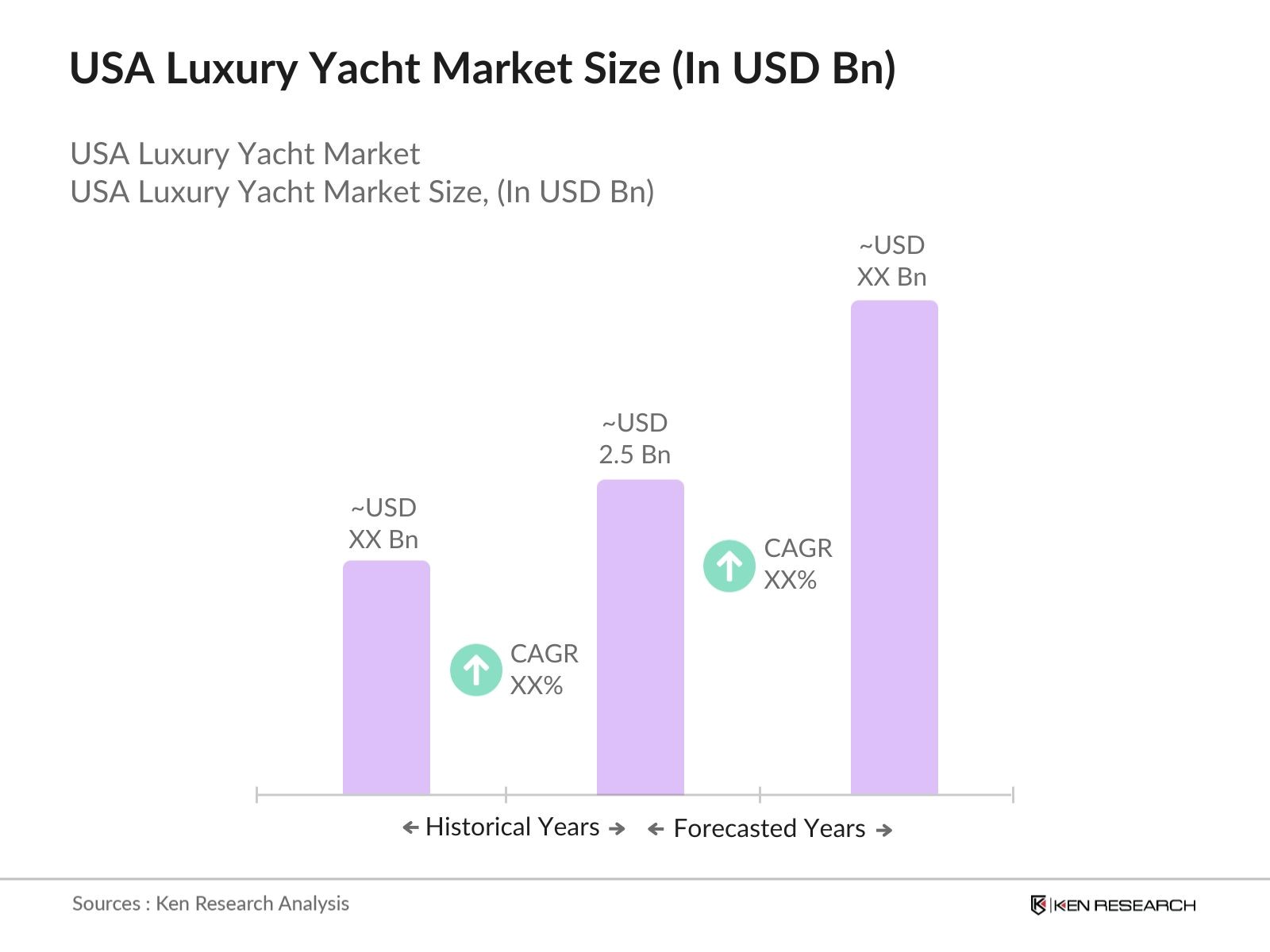
- The USA luxury yacht market is valued at USD 2.5 billion. The market is primarily driven by the increasing number of ultra-high-net-worth individuals (UHNWIs) in the USA, who are the primary consumers of luxury yachts. Demand for custom-built yachts has grown substantially as UHNWIs seek personalized experiences and unique designs. Additionally, technological advancements in yachting systems, such as hybrid engines and advanced automation, are also fueling the growth of the market, making luxury yachts more appealing and easier to manage.
- The USA dominates the global luxury yacht market due to its well-developed infrastructure for luxury tourism, particularly in cities like Miami, Los Angeles, and New York. Miami and Los Angeles serve as major hubs for yacht owners due to their strategic locations, offering easy access to popular destinations like the Caribbean. New York also plays a significant role, with its affluent consumer base and proximity to the Hamptons and other elite vacation spots, making it a leading market for luxury yacht purchases and charters.
- The U.S. Coast Guard enforces safety standards for luxury yachts, focusing on fire safety, life-saving equipment, and crew qualifications. In 2023, the U.S. Coast Guard conducted over 2,500 inspections of luxury yachts, ensuring compliance with safety protocols. These regulations are crucial in maintaining high safety standards within the U.S. luxury yacht market. Yacht owners must equip their vessels with advanced fire suppression systems, life jackets, and emergency communication tools as outlined by the U.S.
USA Luxury Yacht Market Segmentation
By Yacht Type: The USA luxury yacht market is segmented by yacht type into motor yachts, sailing yachts, and expedition yachts. Recently, motor yachts have dominated the market share in the USA due to their greater speed, convenience, and suitability for shorter trips. These yachts are more popular among UHNWIs who prefer luxury and comfort combined with advanced technology like hybrid propulsion systems and smart automation. Brands like Azimut and Sunseeker have cemented their position by offering customizable motor yachts that meet the demand for personalized luxury experiences.

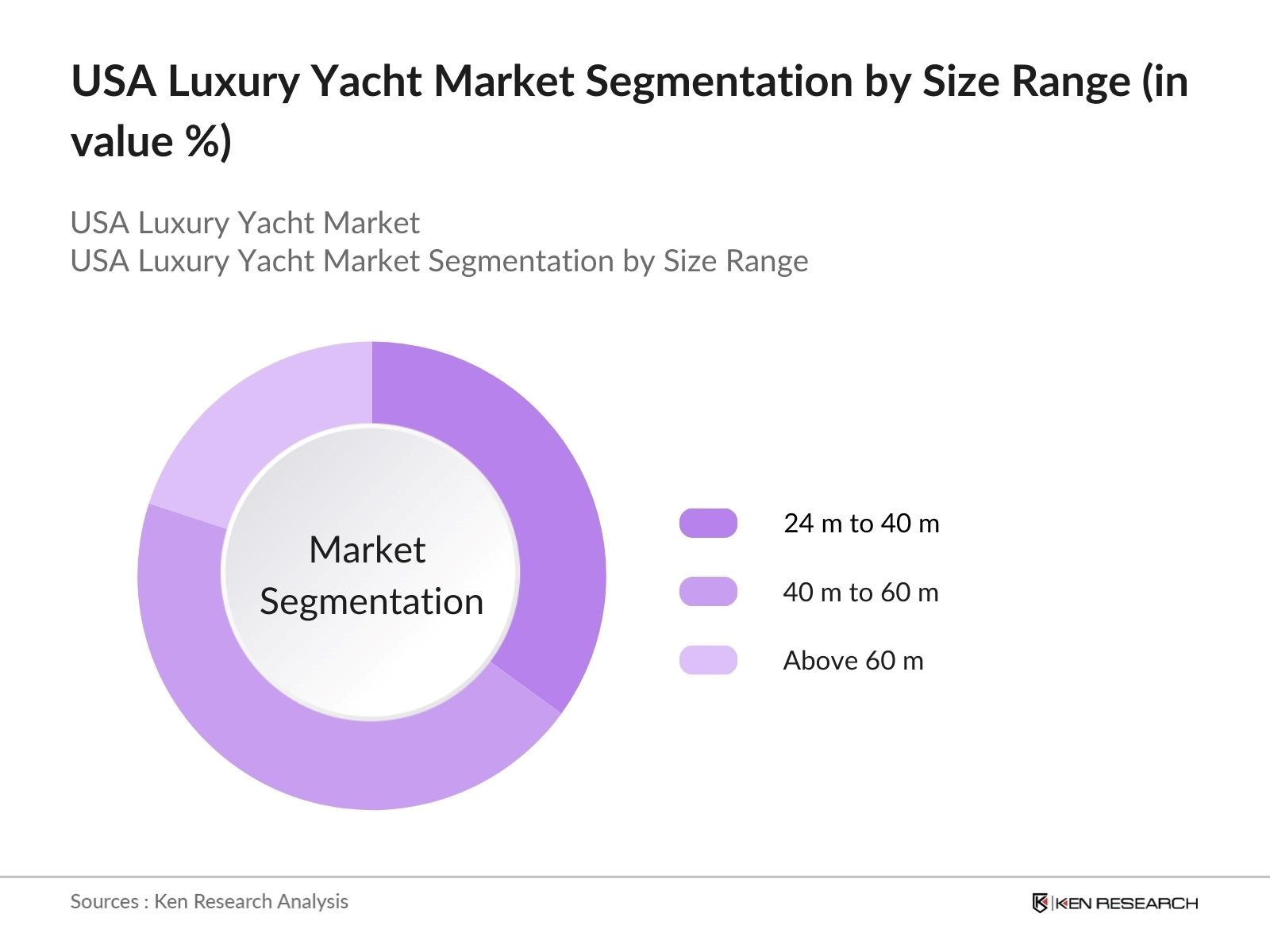
By Size Range: The USA luxury yacht market is further segmented by size into yachts ranging from 24m to 40m, 40m to 60m, and above 60m. Yachts in the 40m to 60m range have a dominant market share in the USA, as they strike a balance between spaciousness and ease of maneuverability, appealing to UHNWIs who prefer a blend of luxury and functionality. These yachts are also better suited for long-range voyages while offering all the modern amenities and technologies like smart home integrations and hybrid engines.
USA Luxury Yacht Market Competitive Landscape
The USA luxury yacht market is dominated by several key players, including both global and local yacht manufacturers. These companies have established strong reputations due to their focus on advanced technology, customizable yachts, and sustainable materials.
The competitive landscape is characterized by the presence of well-established brands like Azimut and Benetti, which have a long-standing history of serving UHNWIs with highly customizable yachts. Lrssen Yachts and Feadship are known for building larger yachts, while companies like Sunseeker focus on more manageable, yet luxurious motor yachts. Gulf Craft has also made significant inroads with eco-friendly designs and innovative propulsion technologies.
|
Company |
Establishment Year |
Headquarters |
Specialty |
Product Range |
Customization Options |
Technology Focus |
Sustainability Focus |
Customer Base |
Market Presence |
|
Azimut Yachts |
1969 |
Italy |
- |
- |
- |
- |
- |
- |
- |
|
Feadship |
1949 |
Netherlands |
- |
- |
- |
- |
- |
- |
- |
|
Benetti Yachts |
1873 |
Italy |
- |
- |
- |
- |
- |
- |
- |
|
Sunseeker International |
1969 |
United Kingdom |
- |
- |
- |
- |
- |
- |
- |
|
Lrssen Yachts |
1875 |
Germany |
- |
- |
- |
- |
- |
- |
- |
USA Luxury Yacht Market Analysis
Growth Drivers
- Increasing Ultra-High Net Worth Individuals: The USA has seen a significant rise in the number of Ultra-High Net Worth Individuals (UHNWIs), directly fueling the luxury yacht market. According to a 2024 World Bank report, the U.S. had approximately 142,000 UHNWIs, each possessing assets worth over USD 50 million. Furthermore, the U.S. Department of Commerce reports a 7.3% increase in discretionary spending by UHNWIs on luxury goods and services, including yachting, highlighting their strong purchasing power.
- Rising Demand for Custom-Built Yachts: Custom-built yachts have seen increased demand in the U.S., driven by affluent individuals seeking unique designs and personalized features. The NMMA has reported a general decrease in new powerboat sales for 2023, estimating a drop of 1% to 3%, which indicates a challenging market environment rather than an increase in luxury yacht commissions. This demand for customization has led to increased revenue for U.S. shipbuilders specializing in bespoke yacht designs.
- Growth of Luxury Tourism: Luxury tourism in the U.S. continues to expand, further driving the luxury yacht market. According to the U.S. Travel Association, in 2023, luxury travel accounted for USD 95 billion in tourism revenue, up from USD 88 billion in 2022. Many UHNWIs prefer yachts for high-end travel experiences, combining exclusive destinations with personalized services onboard. The growth of luxury coastal tourism, particularly in Florida and California, has strengthened the demand for luxury yachts as a primary mode of travel for wealthy tourists.
Market Challenges
- High Initial Acquisition and Maintenance Costs: The high initial acquisition and ongoing maintenance costs remain significant challenges in the U.S. luxury yacht market. According to the U.S. Maritime Administration, the average cost to maintain a 100-foot luxury yacht exceeds USD 1 million annually. These expenses cover crew salaries, dockage, fuel, and insurance. In addition, acquiring a new luxury yacht typically costs upwards of USD 10 million, which creates a financial barrier for even wealthy individuals,
- Regulatory Compliance: Strict environmental and safety regulations also present challenges for the U.S. luxury yacht market. The U.S. Environmental Protection Agency (EPA) mandates stringent pollution controls under the Clean Water Act, requiring yachts to adhere to waste disposal and emission standards. According to the U.S. Coast Guard, compliance with safety standards, including fire suppression systems and life-saving equipment, increases operational complexity and costs.
USA Luxury Yacht Market Future Outlook
Over the next five years, the USA luxury yacht market is expected to witness significant growth, driven by rising disposable incomes among UHNWIs, increased demand for personalized luxury experiences, and advancements in sustainable yachting technologies. The integration of hybrid engines and automation in yacht design is likely to attract more environmentally conscious consumers. Furthermore, the rise in yacht chartering is also expected to contribute to the growth of this market, making luxury yachts accessible to a broader audience.
Market Opportunities
- Technological Advancements in Yachting Systems: Technological advancements present significant opportunities in the U.S. luxury yacht market. The U.S. Department of Energy reported in 2024 that over 40% of newly built yachts feature hybrid engines, which combine diesel and electric power for improved fuel efficiency. Additionally, artificial intelligence (AI) is being integrated into yacht navigation systems, offering enhanced safety and efficiency.
- Expansion into Emerging Markets: The expansion of the U.S. luxury yacht market into emerging markets such as South America and the Middle East offers promising opportunities. According to the U.S. International Trade Administration, exports of luxury yachts to these regions grew by 18% in 2023. The Middle East, particularly the UAE, has shown a marked increase in demand for U.S.-built yachts, driven by rising wealth and favorable maritime regulations. This expansion is expected to drive further growth in yacht manufacturing and related services.
Scope of the Report
|
By Segment |
Sub-segment |
|
By Yacht Type |
Motor Yachts |
|
Sailing Yachts |
|
|
Expedition Yachts |
|
|
By Size Range |
24m to 40m |
|
40m to 60m |
|
|
Above 60m |
|
|
By Material |
Fiberglass |
|
Steel |
|
|
Aluminum |
|
|
By Propulsion System |
Diesel Engines |
|
Hybrid Engines |
|
|
Electric Engines |
|
|
By Region |
West Coast |
|
East Coast |
|
|
Gulf Coast |
|
|
Great Lakes |
Products
Key Target Audience
Yacht Manufacturers
Yacht Designers and Architects
Luxury Tourism Operators
Yacht Brokers and Charter Companies
Yacht Maintenance and Service Providers
Investors and Venture Capitalist Firms
Government and Regulatory Bodies (US Coast Guard, MARPOL)
Companies
Major Players
Azimut Yachts
Feadship
Benetti Yachts
Sunseeker International
Lrssen Yachts
Heesen Yachts
Westport Yachts
Gulf Craft
Oceanco
Christensen Shipyards
Table of Contents
1. USA Luxury Yacht Market Overview
1.1 Definition and Scope
1.2 Market Taxonomy
1.3 Market Growth Rate
1.4 Market Segmentation Overview
2. USA Luxury Yacht Market Size (In USD Bn)
2.1 Historical Market Size
2.2 Year-on-Year Growth Analysis
2.3 Key Market Developments and Milestones
3. USA Luxury Yacht Market Analysis
3.1 Growth Drivers
3.1.1 Increasing Ultra-High Net Worth Individuals (UHNWIs)
3.1.2 Rising Demand for Custom-Built Yachts
3.1.3 Growth of Luxury Tourism
3.1.4 Expansion of Yachting Infrastructure
3.2 Market Challenges
3.2.1 High Initial Acquisition and Maintenance Costs
3.2.2 Regulatory Compliance (Environmental and Safety Standards)
3.2.3 Limited Access to Skilled Labor for Yacht Construction and Maintenance
3.3 Opportunities
3.3.1 Technological Advancements in Yachting Systems (AI, Hybrid Engines)
3.3.2 Yacht Chartering as a Growing Segment
3.3.3 Expansion into Emerging Markets (South America, Middle East)
3.4 Trends
3.4.1 Demand for Sustainable Yachts (Hybrid, Solar-Powered Yachts)
3.4.2 Increasing Focus on Personalization and Customization
3.4.3 Integration of Smart Technologies and Automation
3.5 Regulatory Framework
3.5.1 MARPOL Convention (Pollution Control Standards)
3.5.2 US Coast Guard Regulations (Safety Standards)
3.5.3 IMO Standards on Yacht Design and Construction
3.6 SWOT Analysis
3.7 Stakeholder Ecosystem
3.8 Porters Five Forces
3.9 Competitive Ecosystem
4. USA Luxury Yacht Market Segmentation
4.1 By Yacht Type (In Value %)
4.1.1 Motor Yachts
4.1.2 Sailing Yachts
4.1.3 Expedition Yachts
4.2 By Size Range (In Value %)
4.2.1 24m to 40m
4.2.2 40m to 60m
4.2.3 Above 60m
4.3 By Material (In Value %)
4.3.1 Fiberglass
4.3.2 Steel
4.3.3 Aluminum
4.4 By Propulsion System (In Value %)
4.4.1 Diesel Engines
4.4.2 Hybrid Engines
4.4.3 Electric Engines
4.5 By Region (In Value %)
4.5.1 West Coast
4.5.2 East Coast
4.5.3 Gulf Coast
4.5.4 Great Lakes
5. USA Luxury Yacht Market Competitive Analysis
5.1 Detailed Profiles of Major Companies
5.1.1 Azimut Yachts
5.1.2 Feadship
5.1.3 Benetti Yachts
5.1.4 Sunseeker International
5.1.5 Heesen Yachts
5.1.6 Oceanco
5.1.7 Lrssen Yachts
5.1.8 Gulf Craft
5.1.9 Westport Yachts
5.1.10 Christensen Shipyards
5.1.11 Trinity Yachts
5.1.12 Burger Boat Company
5.1.13 Royal Huisman
5.1.14 Damen Yachting
5.1.15 Sanlorenzo Yachts
5.2 Cross Comparison Parameters (Length of Yacht, Engine Power, Gross Tonnage, Market Presence, Year of Establishment, Revenue, Geographic Footprint, Customization Options)
5.3 Market Share Analysis
5.4 Strategic Initiatives
5.5 Mergers and Acquisitions
5.6 Investment Analysis
5.7 Venture Capital Funding
5.8 Government Grants
5.9 Private Equity Investments
6. USA Luxury Yacht Market Regulatory Framework
6.1 Environmental Regulations
6.2 Safety Standards
6.3 Compliance Requirements for Yacht Owners and Builders
7. USA Luxury Yacht Future Market Size (In USD Bn)
7.1 Future Market Size Projections
7.2 Key Factors Driving Future Market Growth
8. USA Luxury Yacht Future Market Segmentation
8.1 By Yacht Type (In Value %)
8.2 By Size Range (In Value %)
8.3 By Material (In Value %)
8.4 By Propulsion System (In Value %)
8.5 By Region (In Value %)
9. USA Luxury Yacht Market Analysts Recommendations
9.1 TAM/SAM/SOM Analysis
9.2 Customer Cohort Analysis
9.3 Marketing Initiatives
9.4 White Space Opportunity Analysis
Research Methodology
Step 1: Identification of Key Variables
The first step involves mapping the luxury yacht ecosystem in the USA. Comprehensive desk research was conducted using proprietary databases, government publications, and industry reports. This process identified key variables, including yacht size preferences, propulsion system trends, and ownership demographics.
Step 2: Market Analysis and Construction
Historical data related to yacht sales and production were analyzed. Market penetration rates and revenue from yacht sales, charters, and maintenance services were assessed. The analysis further included service quality evaluations from customer reviews and after-sales services.
Step 3: Hypothesis Validation and Expert Consultation
Industry experts, including yacht manufacturers and brokers, were consulted through structured interviews. These consultations helped refine the market data and validate key hypotheses related to consumer preferences, technological advancements, and sustainability trends.
Step 4: Research Synthesis and Final Output
The final phase involved integrating primary and secondary research findings to provide a comprehensive analysis of the USA luxury yacht market. Inputs from various stakeholders, including manufacturers and UHNWIs, were consolidated to ensure the accuracy of market projections.
Frequently Asked Questions
01. How big is the USA Luxury Yacht Market?
The USA luxury yacht market was valued at USD 2.5 billion, driven by an increase in UHNWIs, demand for custom-built yachts, and advancements in yachting technology.
02. What are the challenges in the USA Luxury Yacht Market?
The primary challenges of USA Luxury Yacht Market include high acquisition and maintenance costs, stringent environmental regulations, and a shortage of skilled labor in yacht manufacturing and maintenance sectors.
03. Who are the major players in the USA Luxury Yacht Market?
Key players in USA Luxury Yacht Market include Azimut Yachts, Feadship, Benetti Yachts, Sunseeker International, and Lrssen Yachts. These companies dominate due to their technological advancements, customization options, and strong market presence.
04. What are the growth drivers of the USA Luxury Yacht Market?
The growth of USA Luxury Yacht Market is fueled by the increasing number of UHNWIs, demand for sustainable yachts, and growing interest in yacht chartering. Advancements in automation and hybrid engines are also attracting new customers.
Why Buy From Us?

What makes us stand out is that our consultants follows Robust, Refine and Result (RRR) methodology. i.e. Robust for clear definitions, approaches and sanity checking, Refine for differentiating respondents facts and opinions and Result for presenting data with story

We have set a benchmark in the industry by offering our clients with syndicated and customized market research reports featuring coverage of entire market as well as meticulous research and analyst insights.

While we don't replace traditional research, we flip the method upside down. Our dual approach of Top Bottom & Bottom Top ensures quality deliverable by not just verifying company fundamentals but also looking at the sector and macroeconomic factors.

With one step in the future, our research team constantly tries to show you the bigger picture. We help with some of the tough questions you may encounter along the way: How is the industry positioned? Best marketing channel? KPI's of competitors? By aligning every element, we help maximize success.

Our report gives you instant access to the answers and sources that other companies might choose to hide. We elaborate each steps of research methodology we have used and showcase you the sample size to earn your trust.

If you need any support, we are here! We pride ourselves on universe strength, data quality, and quick, friendly, and professional service.