
USA Manga Market Outlook to 2030
Region:North America
Author(s):Shreya Garg
Product Code:KROD4704
November 2024
86
About the Report
USA Manga Market Overview
- The USA manga market is valued at USD 880 million, based on a five-year historical analysis. This market growth is driven by the increasing popularity of Japanese culture, particularly among younger generations, along with the expansion of digital platforms offering manga content. Over the past few years, the rise of streaming services like Crunchyroll and partnerships with Japanese publishers have also accelerated manga's growth. Physical sales, especially special editions and collectors items, continue to be popular despite the digital shift. These factors collectively contribute to the market's substantial value.
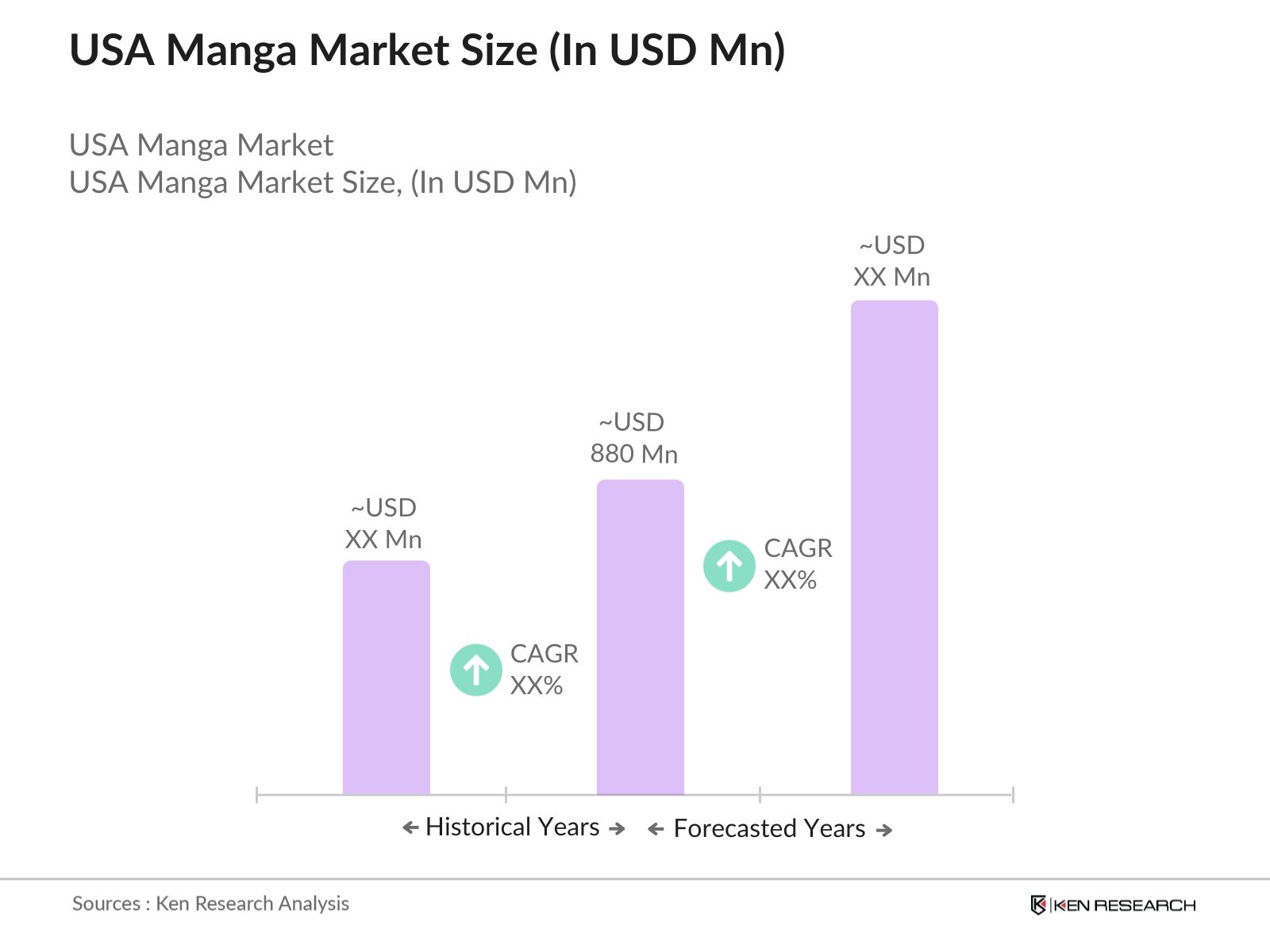
- The USA manga market is dominated by major cities like New York and Los Angeles due to their cultural diversity, higher disposable income, and strong presence of anime and manga conventions. These cities serve as hubs for Japanese pop culture, and their vibrant communities drive demand for physical manga and related merchandise. Additionally, online distribution through digital platforms like Kindle and Webtoon caters to broader audiences, enhancing accessibility in regions without large physical retail presence.
- The U.S. government has strengthened enforcement of intellectual property (IP) laws, particularly with respect to international content. In 2023, the U.S. Patent and Trademark Office implemented stricter measures against copyright infringement, which included increased fines and the shutdown of pirate websites. This has improved protections for manga publishers, ensuring that illegal distribution channels are minimized, and creators rights are upheld. The improved enforcement of IP laws has created a safer environment for legal manga distribution.
USA Manga Market Segmentation
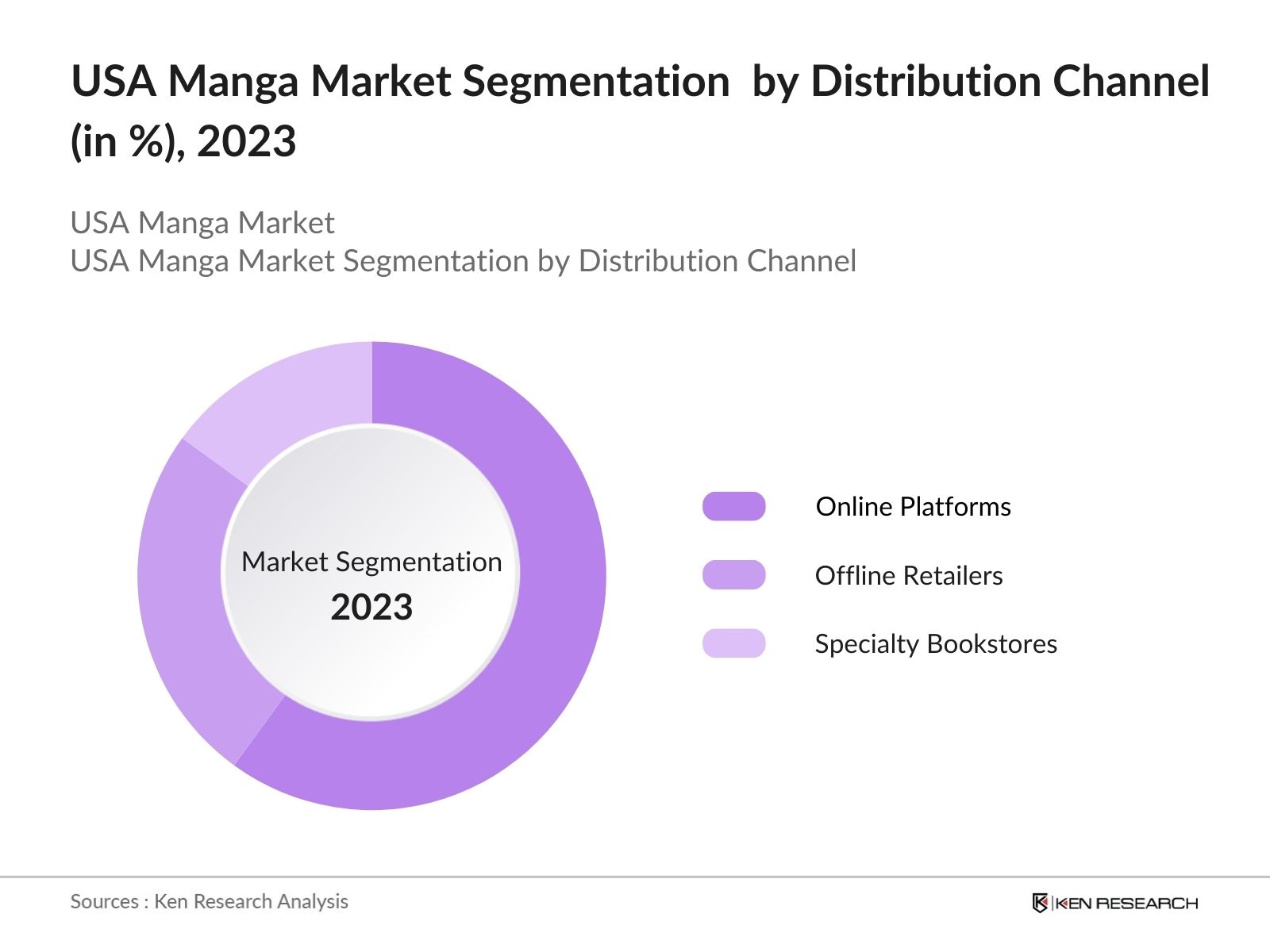
By Distribution Channel: The market is segmented by distribution channel into online platforms, offline retailers, and specialty bookstores. Recently, online platforms held a dominant market share in this segmentation due to their accessibility and convenience. Platforms such as Crunchyroll Manga and Kindle offer a vast range of titles, including exclusive digital releases. These platforms cater to both casual readers and dedicated fans, providing easy access to an extensive manga library without the need for physical storage. The rise of e-commerce and subscription-based services has also contributed to the growth of this segment.
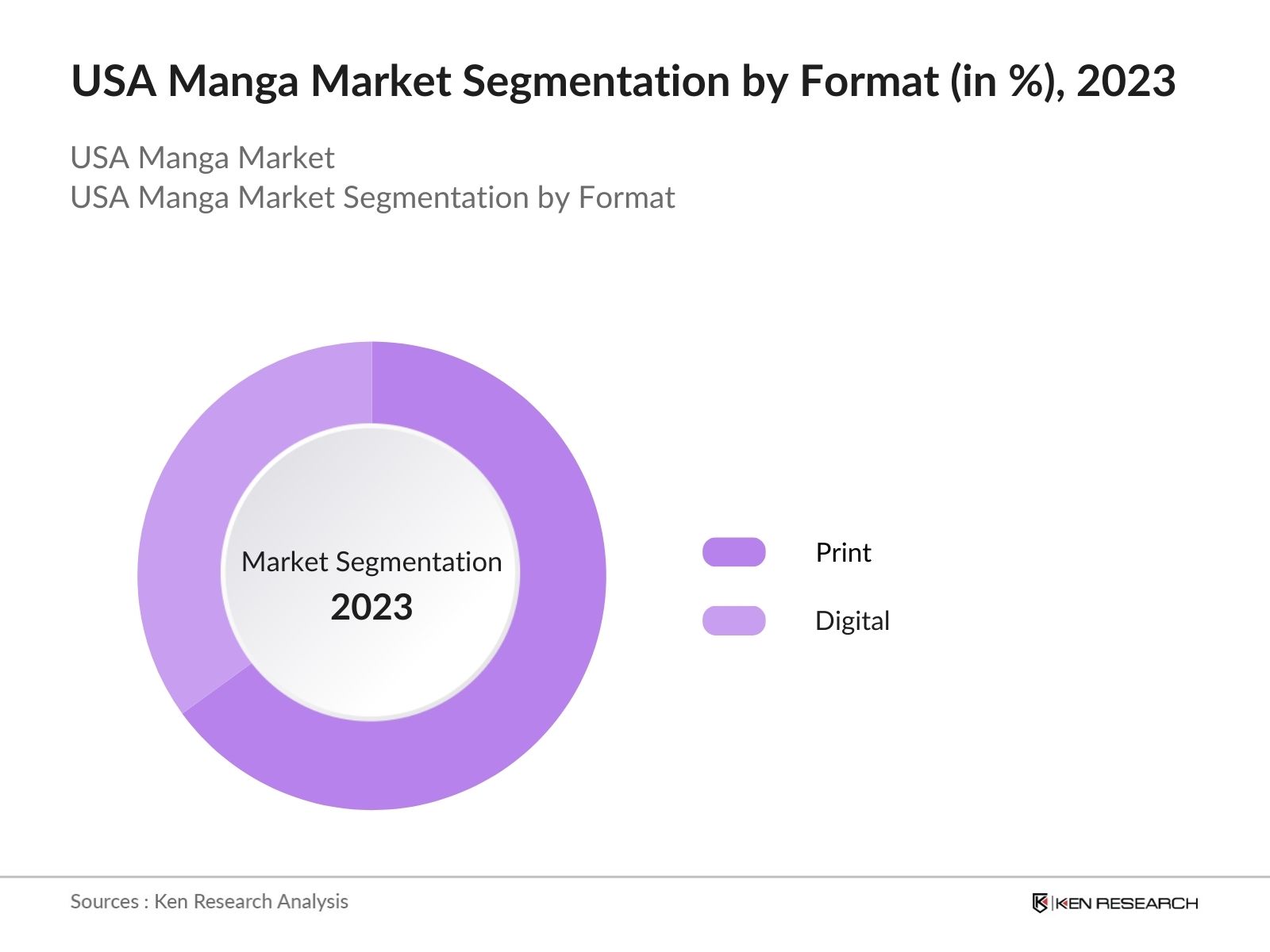
By Format: The market is segmented by format into print and digital. Print format continues to dominate the market due to the enduring popularity of physical collections and special editions. Despite the rise of digital media, many readers prefer owning physical copies for their aesthetic appeal, collectible value, and tactile experience. Special editions, box sets, and rare collector's items further boost the demand for print manga. Additionally, established retail chains and independent bookstores continue to stock print manga, maintaining their stronghold in the market.
USA Manga Market Competitive Landscape
The USA manga market is dominated by a few key players, primarily international publishers and local distributors. Companies such as Viz Media, Kodansha Comics USA, and Yen Press are leading the market, benefiting from their long-standing relationships with Japanese publishers and their ability to localize and distribute popular titles. These companies dominate the market by offering a blend of traditional print and digital formats, allowing them to cater to both physical collectors and digital readers. Moreover, their focus on licensing agreements, merchandising, and partnerships with streaming platforms further strengthens their position.
|
Company |
Establishment Year |
Headquarters |
No. of Titles |
Licensing Partnerships |
Digital Platforms |
Market Share |
Genre Focus |
Revenue |
|---|---|---|---|---|---|---|---|---|
|
Viz Media |
1986 |
San Francisco, CA |
||||||
|
Kodansha Comics USA |
2008 |
New York, NY |
||||||
|
Yen Press |
2006 |
New York, NY |
||||||
|
Seven Seas Entertainment |
2004 |
Los Angeles, CA |
||||||
|
Dark Horse Comics |
1986 |
Milwaukie, OR |
USA Manga Industry Analysis
Growth Drivers
- Rising Popularity of Japanese Culture: The rising popularity of Japanese culture, specifically anime and manga, has driven the demand for manga in the USA. The 2024 cultural export data from the Japanese Ministry of Foreign Affairs shows that Japan's cultural exports, including manga, have seen growth, especially in the U.S. market, which remains the second-largest consumer of Japanese content outside Japan. This is supported by increasing international trade relations between the U.S. and Japan, bolstered by cultural exchange programs that have promoted awareness and consumption of Japanese media.
- Expanding Digital Content Platforms: With the rise of digital platforms like Kindle, Comixology, and specialized manga apps, manga consumption in the U.S. has expanded dramatically. The digital publishing industry in the U.S. grew steadily, with an estimated 100 million people reading digital content as of 2023, according to data from the U.S. Bureau of Labor Statistics. The availability of manga in digital format has reduced reliance on physical imports and helped overcome geographic and cost barriers. This trend has opened the market further for manga as the U.S. digital content platform sector flourishes.
- Increasing Adoption of Manga by Non-Japanese Audiences: The widespread availability of translated manga has led to increased adoption by non-Japanese audiences in the U.S. According to the U.S. Census Bureau, nearly 300 million people had access to internet services by 2023, further facilitating the penetration of Japanese manga to non-Japanese audiences. The accessibility of manga across digital and physical formats has expanded its reach beyond traditional anime and comic fans, appealing to a more diverse demographic within the U.S.
Market Challenges
- High Import Costs: The cost of importing physical manga from Japan has an impact on pricing in the U.S. market. The U.S. imposed tariffs on various goods, including printed media, as part of trade negotiations with Japan. In 2023, these tariffs added an additional cost burden of 10-15% on imported manga volumes. Additionally, the U.S. dollar's fluctuations against the Japanese yen have contributed to price volatility. These costs make it difficult for publishers to maintain affordable pricing for consumers, especially compared to digital formats.
- Piracy and Copyright Issues: Piracy remains a challenge in the U.S. manga market. The U.S. Copyright Office reported that an estimated $1.5 billion is lost annually due to intellectual property theft in the entertainment sector, which includes manga. Manga piracy is particularly rampant in the U.S., with illegal online sites offering free scans of manga volumes. This not only affects sales but also deters legal digital and physical purchases, undermining the profitability of legitimate publishers.
USA Manga Market Future Outlook
Over the next five years, the USA manga market is expected to grow due to several key factors. The continued expansion of digital platforms, increased accessibility to translated works, and a growing fanbase of Japanese pop culture in the West are drivers of this growth. Moreover, technological advancements in digital reading devices and the availability of subscription-based services will further promote digital manga consumption. Additionally, increasing collaborations between Western publishers and Japanese manga creators will enhance the distribution network and provide readers with a broader range of content.
Future Market Opportunities
- Expansion of Digital manga Platforms: The growing adoption of digital manga platforms presents a substantial opportunity for expansion in the U.S. market. In 2023, the number of digital manga subscriptions grew by 15 million, driven by platforms like Manga Plus, Shonen Jump, and Kindle Manga. The expanding reach of these platforms aligns with the increasing trend of e-commerce in the U.S., where online sales surpassed $1 trillion in 2022. The ease of distribution and reduced costs associated with digital formats are likely to strengthen the U.S. manga market's growth.
- Collaborations with Western Publishers: Collaboration between Japanese manga creators and Western publishers are becoming more frequent, providing opportunities for greater market penetration. In 2023, U.S. publishers like Viz Media and Kodansha formed partnerships with local comic book publishers to co-create and distribute hybrid manga-comic series. This cross-cultural collaboration enables the integration of manga into traditional U.S. comic culture, potentially expanding its readership and blending storytelling styles. These partnerships are likely to create more exposure for manga, particularly among non-traditional readers.
Scope of the Report
|
Distribution Channel |
Online Platforms Offline Retailers Specialty Bookstores |
|
Format |
Digital |
|
Genre |
Shonen Shojo Seinen Josei Kodomo |
|
Age Group |
Children Teenagers Adults |
|
Region |
North-East South-East Midwest West Coast |
Products
Key Target Audience
Investors and Venture Capitalist Firms
Government and Regulatory Bodies (US Copyright Office)
Manga Publishers
Digital Streaming Platforms
Retail Bookstores
Collectors and Enthusiasts
Online Retailers
Merchandise Manufacturers
Banks and Financial Institutions
Companies
Major Players
Viz Media
Kodansha Comics USA
Yen Press
Seven Seas Entertainment
Dark Horse Comics
Vertical Inc.
Square Enix Manga
Archie Comics
Crunchyroll Manga
Funimation
Image Comics
Drawn & Quarterly
Digital Manga Publishing
Titan Comics
Shonen Jump
Table of Contents
1. USA Manga Market Overview
1.1. Definition and Scope
1.2. Market Taxonomy
1.3. Market Growth Rate
1.4. Market Segmentation Overview
2. USA Manga Market Size (In USD Mn)
2.1. Historical Market Size
2.2. Year-On-Year Growth Analysis
2.3. Key Market Developments and Milestones
3. USA Manga Market Analysis
3.1. Growth Drivers
3.1.1. Rising Popularity of Japanese Culture
3.1.2. Expanding Digital Content Platforms
3.1.3. Increasing Adoption of Manga by Non-Japanese Audiences
3.1.4. Growth in Localized Translations and Adaptations
3.2. Market Challenges
3.2.1. High Import Costs (Pricing Impact)
3.2.2. Piracy and Copyright Issues
3.2.3. Cultural Barriers to Expansion
3.3. Opportunities
3.3.1. Expansion of Digital Manga Platforms
3.3.2. Collaborations with Western Publishers
3.3.3. Growth in Collectors' Editions and Merchandise
3.4. Trends
3.4.1. Increased Demand for Niche Manga Genres (Genre Popularity)
3.4.2. Rise of Webcomics and Self-Published Manga
3.4.3. Growing Popularity of Manga Conventions (Event Participation)
3.5. Government Regulation
3.5.1. Intellectual Property Laws and Their Enforcement
3.5.2. Trade Tariffs and Import Regulations
3.5.3. Cultural Exchange Programs to Promote Japanese Media
3.6. SWOT Analysis
3.7. Stakeholder Ecosystem
3.8. Porters Five Forces
3.9. Competition Ecosystem
4. USA Manga Market Segmentation
4.1. By Distribution Channel (In Value %)
4.1.1. Online Platforms
4.1.2. Offline Retailers
4.1.3. Specialty Bookstores
4.2. By Format (In Value %)
4.2.1. Print
4.2.2. Digital
4.3. By Genre (In Value %)
4.3.1. Shonen
4.3.2. Shojo
4.3.3. Seinen
4.3.4. Josei
4.3.5. Kodomo
4.4. By Age Group (In Value %)
4.4.1. Children
4.4.2. Teenagers
4.4.3. Adults
4.5. By Region (In Value %)
4.5.1. North-East
4.5.2. South-East
4.5.3. Midwest
4.5.4. West Coast
5. USA Manga Market Competitive Analysis
5.1. Detailed Profiles of Major Companies
5.1.1. Viz Media
5.1.2. Kodansha Comics USA
5.1.3. Yen Press
5.1.4. Dark Horse Comics
5.1.5. Seven Seas Entertainment
5.1.6. Vertical Inc.
5.1.7. Digital Manga Publishing
5.1.8. Shonen Jump
5.1.9. Crunchyroll Manga
5.1.10. Funimation
5.1.11. Image Comics
5.1.12. Square Enix Manga
5.1.13. Titan Comics
5.1.14. Archie Comics
5.1.15. Drawn & Quarterly
5.2. Cross Comparison Parameters
No. of Titles Published
No. of Employees
Headquarters Location
Revenue
Inception Year
Number of Manga Licenses
Digital Platform Presence
Key Genre Focus
5.3. Market Share Analysis
5.4. Strategic Initiatives
5.5. Mergers And Acquisitions
5.6. Investment Analysis
5.7. Venture Capital Funding
5.8. Private Equity Investments
6. USA Manga Market Regulatory Framework
6.1. Content and Censorship Laws
6.2. Copyright Compliance
6.3. Publishing Licensing Agreements
7. USA Manga Future Market Size (In USD Mn)
7.1. Future Market Size Projections
7.2. Key Factors Driving Future Market Growth
8. USA Manga Market Analysts Recommendations
8.1. TAM/SAM/SOM Analysis
8.2. Marketing and Distribution Strategies
8.3. White Space Opportunity Analysis
Research Methodology
Step 1: Identification of Key Variables
The first step involves identifying key variables that influence the USA manga market, such as consumer preferences, digital platform adoption, and licensing partnerships. This is accomplished through extensive desk research, using secondary data and proprietary databases to map out the industry's ecosystem.
Step 2: Market Analysis and Construction
In this step, historical data is gathered and analyzed to assess market growth, distribution trends, and consumer behavior. We analyze factors such as digital penetration rates, the role of conventions, and sales channels (both physical and online) to create a comprehensive market model.
Step 3: Hypothesis Validation and Expert Consultation
Industry experts are consulted through structured interviews to validate market trends, growth drivers, and challenges. These consultations help refine the data and provide insights into upcoming market shifts, technological advancements, and licensing trends.
Step 4: Research Synthesis and Final Output
The final stage involves consolidating all research insights into a detailed report, including data validation through cross-referencing different sources. This synthesis ensures that the analysis is both accurate and actionable for stakeholders in the manga market.
Frequently Asked Questions
01 How big is the USA Manga Market?
The USA manga market is valued at USD 880 million, driven by the increasing popularity of Japanese culture, rising digital platform adoption, and the continued interest in physical manga collections.
02 What are the challenges in the USA Manga Market?
Challenges in the USA manga market include high import costs, intellectual property concerns related to piracy, and cultural barriers to widespread adoption outside major urban centers.
03 Who are the major players in the USA Manga Market?
Key players in the in the USA manga market include Viz Media, Kodansha Comics USA, Yen Press, Seven Seas Entertainment, and Dark Horse Comics. These companies dominate due to their extensive distribution networks, licensing partnerships, and strong presence in both print and digital platforms.
04 What are the growth drivers of the USA Manga Market?
The USA manga market is driven by the increasing interest in Japanese pop culture, expanding digital platforms, and collaborations between Japanese and Western publishers. The growth of conventions and fan events also continues to fuel demand for physical and digital manga.
05 What are the dominant segments in the USA Manga Market?
The print format and online distribution channels dominate the USA manga market due to the enduring popularity of physical copies and the accessibility of digital platforms like Crunchyroll and Kindle in the USA manga market.
Why Buy From Us?

What makes us stand out is that our consultants follows Robust, Refine and Result (RRR) methodology. i.e. Robust for clear definitions, approaches and sanity checking, Refine for differentiating respondents facts and opinions and Result for presenting data with story

We have set a benchmark in the industry by offering our clients with syndicated and customized market research reports featuring coverage of entire market as well as meticulous research and analyst insights.

While we don't replace traditional research, we flip the method upside down. Our dual approach of Top Bottom & Bottom Top ensures quality deliverable by not just verifying company fundamentals but also looking at the sector and macroeconomic factors.

With one step in the future, our research team constantly tries to show you the bigger picture. We help with some of the tough questions you may encounter along the way: How is the industry positioned? Best marketing channel? KPI's of competitors? By aligning every element, we help maximize success.

Our report gives you instant access to the answers and sources that other companies might choose to hide. We elaborate each steps of research methodology we have used and showcase you the sample size to earn your trust.

If you need any support, we are here! We pride ourselves on universe strength, data quality, and quick, friendly, and professional service.