















USA Marine Lubricants Market Outlook to 2030
Region:North America
Author(s):Shubham Kashyap
Product Code:KROD5065
December 2024
99
About the Report
USA Marine Lubricants Market Overview
- The USA marine lubricants market is valued at USD 1.2 billion, primarily driven by the rise in marine trade activities, increasing offshore exploration, and strict environmental regulations for emissions. The market shows steady growth as shipping and maritime sectors seek high performance lubricants to maintain operational efficiency. Key factors such as advanced technology adoption, strategic port locations, and robust distribution networks further stabilize the USA marine lubricants market, making it one of the prominent markets in the global marine lubricants landscape.
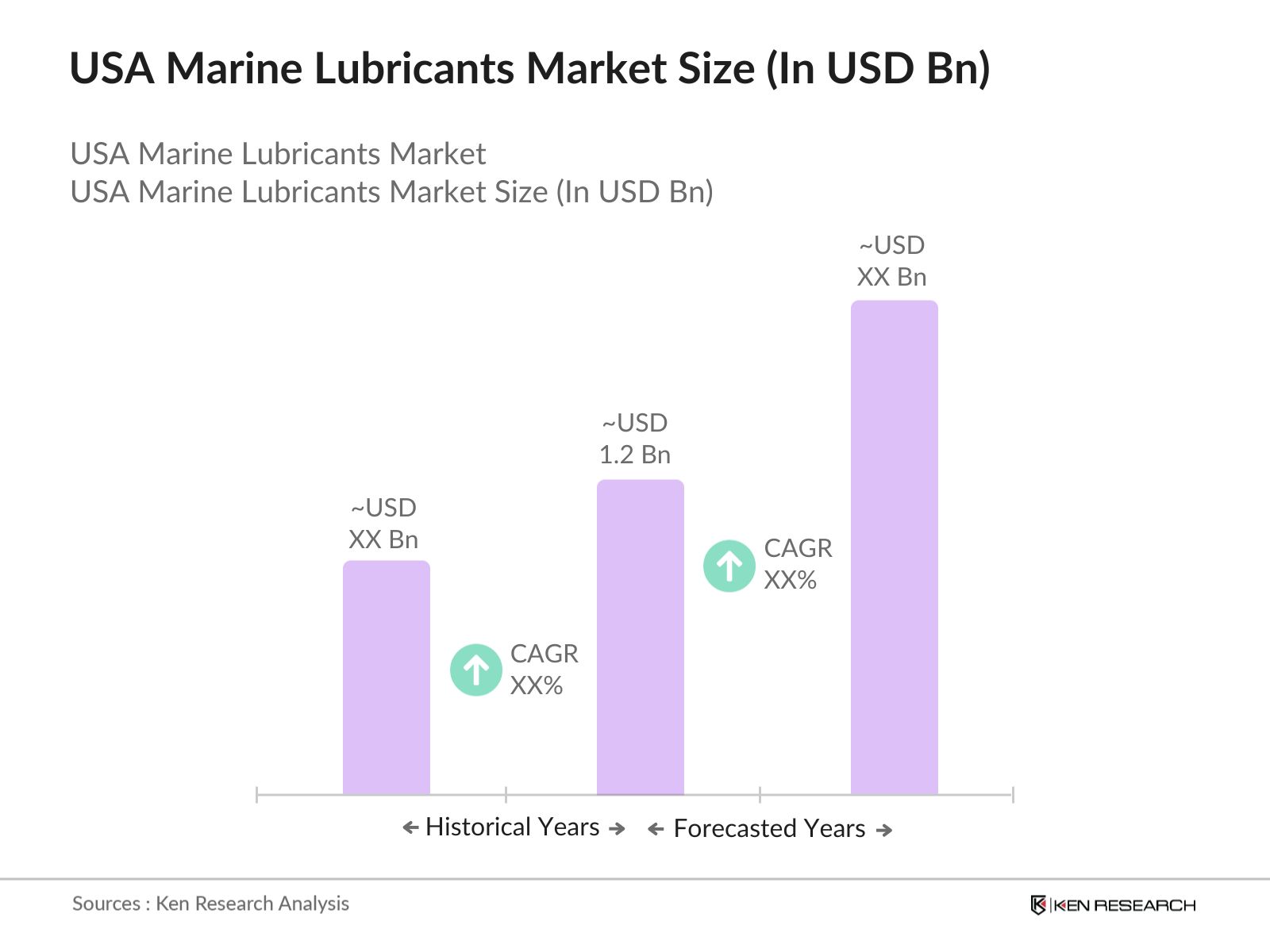
- Major demand centers for marine lubricants in the USA include the Gulf Coast, West Coast, and East Coast regions. Houston, Los Angeles, and Miami play significant roles due to their well established shipping activities and strategic location along key trade routes. Houston dominates due to its high offshore exploration activities, while Los Angeles and Miami cater to international trade needs. These ports drive lubricant demand through continuous vessel operations and the requirement for efficient engine and machinery maintenance.
- The U.S. Environmental Protection Agency (EPA) requires all vessels to limit nitrogen oxide emissions, which has spurred a shift towards advanced lubricants with emissions-reducing properties. In 2024, vessels emitting above EPA standards faced fines totaling USD 95 million, demonstrating the agency's strict enforcement. These regulations underscore the importance of compliance-friendly lubricants that help maritime operators avoid penalties.
USA Marine Lubricants Market Segmentation
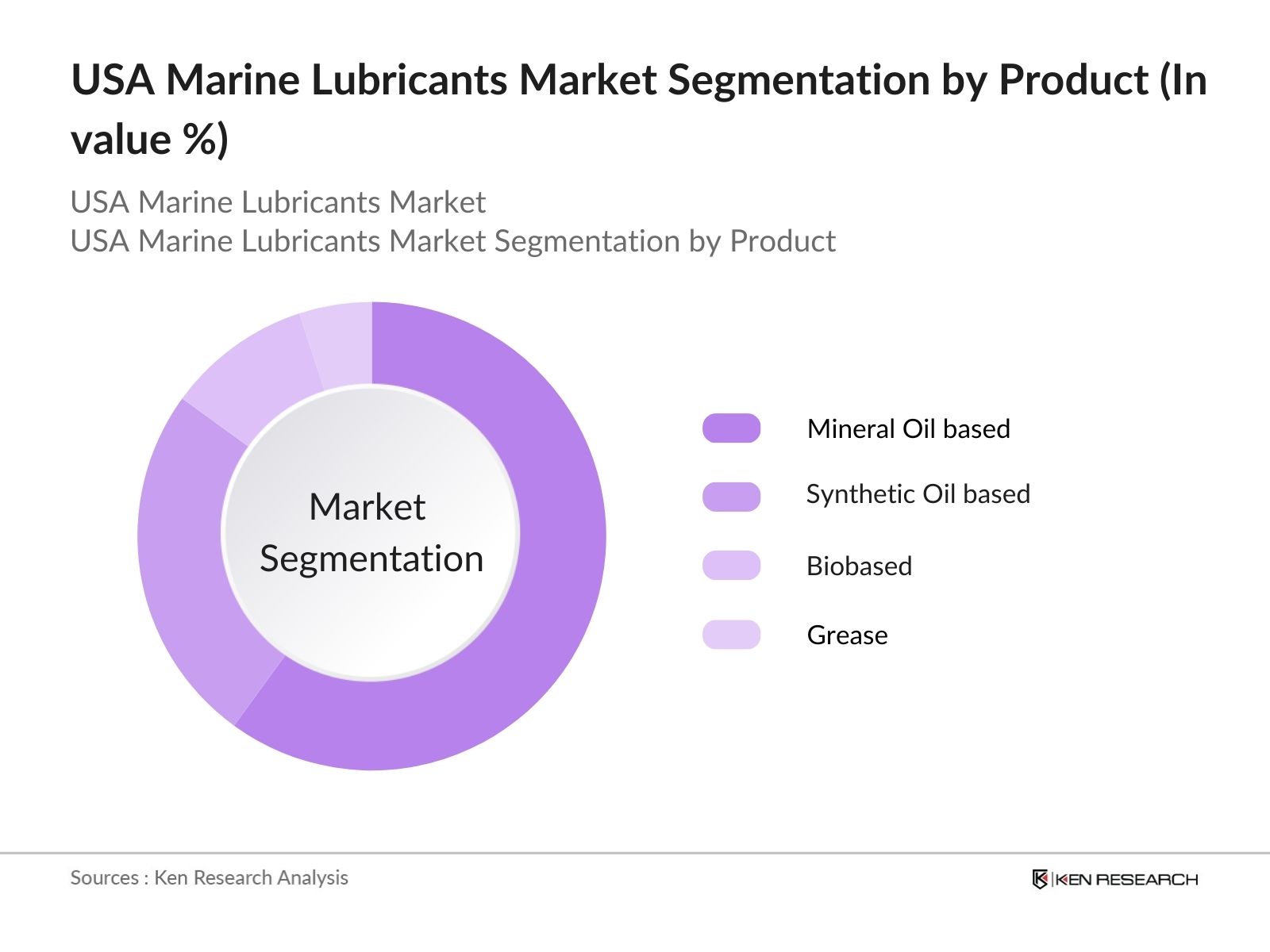
- By Product Type: The market is segmented by product type into mineral oilbased, synthetic oilbased, biobased, and grease. Recently, mineral oilbased lubricants hold a dominant market share due to their established use, costeffectiveness, and compatibility with various marine engines. They meet the functional requirements of most vessels operating in the USAs hightraffic regions. Although synthetic oils offer enhanced performance, their higher costs limit their adoption to specific, highdemand applications within the marine sector.
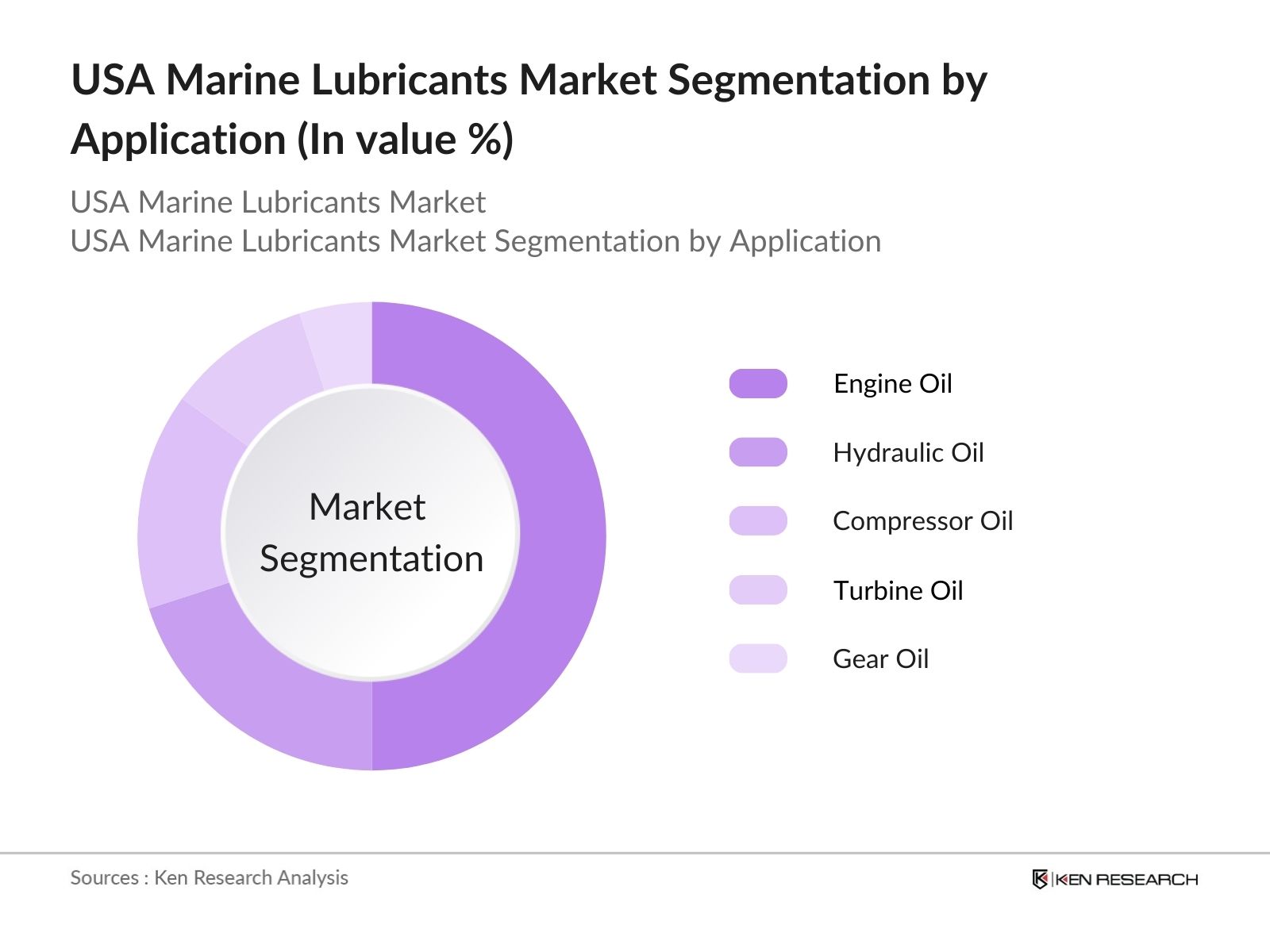
- By Application: The market is segmented by application into engine oil, hydraulic oil, compressor oil, turbine oil, and gear oil. Engine oil holds a significant share, driven by its essential role in marine engine efficiency and longevity. Engine oils are crucial for heavy-duty marine engines operating under high thermal and mechanical stress. Their high demand is due to frequent oil changes required in active vessels, further boosted by regulations mandating performance-based lubricants to optimize fuel efficiency.
USA Marine Lubricants Market Competitive Landscape
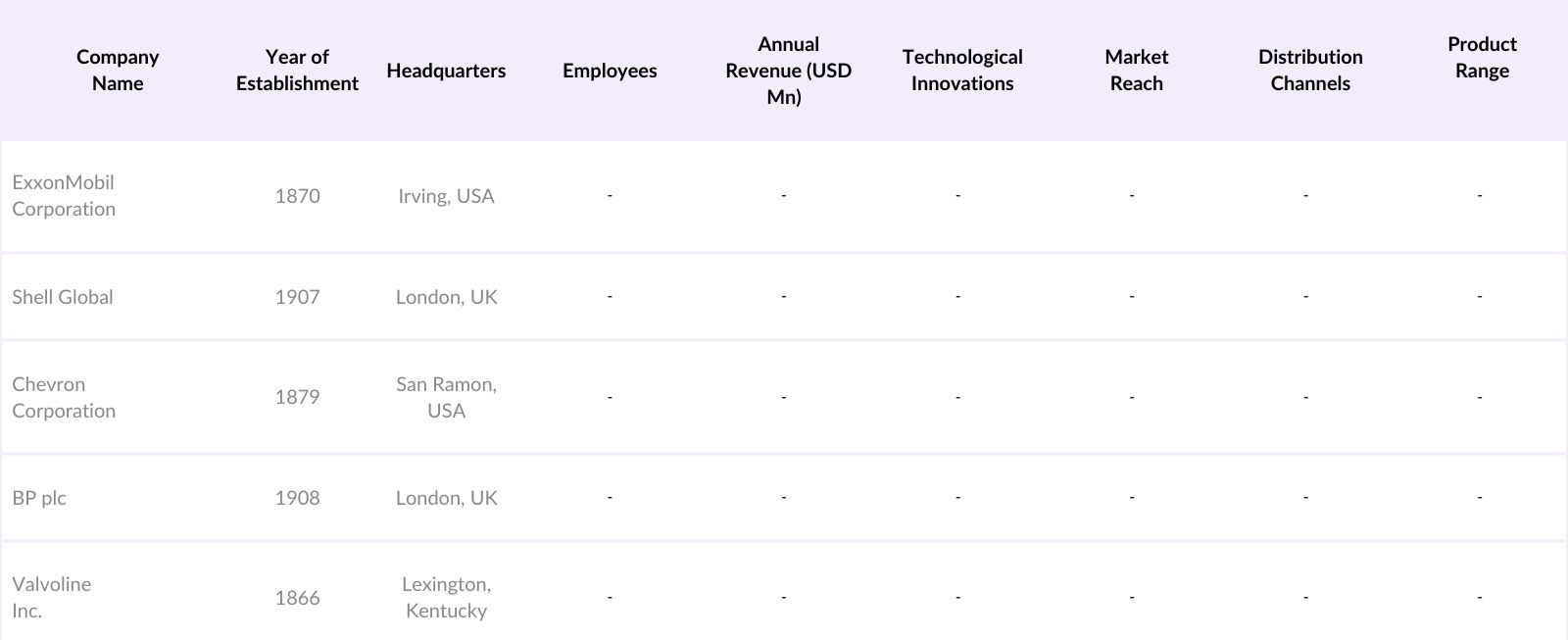
The USA marine lubricants market is dominated by several key players who leverage strong brand recognition, innovative product portfolios, and extensive distribution networks to maintain their market positions. Leading companies such as ExxonMobil and Chevron dominate due to their strategic locationbased distribution and focus on highquality, regulatorycompliant lubricants.
USA Marine Lubricants Market Analysis
Growth Drivers
- Increased Maritime Trade: Marine trade activities in the USA have seen a significant uptick, driven by heightened global demand for goods transported by sea. The U.S. Census Bureau reports that the total volume of trade through U.S. ports reached over 500 million tons in 2023, with an notable average annual increase in cargo handling since 2022. This rise in marine trade has bolstered the demand for marine lubricants, essential for maintaining engine efficiency and reducing maintenance intervals across long-haul shipments. Growing reliance on maritime logistics to support trade underscores the need for durable and advanced lubrication solutions.
- Growth in Offshore Exploration: The USA has accelerated offshore exploration activities, with the Bureau of Ocean Energy Management (BOEM) reporting 1,250 active leases in U.S. federal waters by mid-2024. Increased exploration activity requires robust marine lubricants to ensure efficient and reliable operations under harsh conditions. Offshore drilling platforms, typically in operation 24/7, demand lubricants that support extended equipment performance and minimize downtime. Consequently, the rise in exploration activities is a critical growth driver for the marine lubricants market, particularly for high-durability and corrosion-resistant lubricants tailored to offshore conditions.
- Technological Advancements in Lubricants: Significant advancements in lubricant technology, especially in biobased and synthetic formulations, have expanded the functionality and efficiency of marine lubricants. Companies like ExxonMobil and Shell invest in R&D to produce high performance lubricants that align with environmental regulations and enhance engine efficiency. This innovation-driven approach enables the market to meet stringent performance standards and cater to eco-conscious maritime companies.
Challenges
- High Production Costs: The production of highquality marine lubricants involves significant cost, especially with biobased and synthetic options. These costs directly impact market pricing, making premium lubricants more expensive. Fluctuating raw material costs add to the complexity, impacting profitability and influencing purchasing decisions among shipping companies, especially those with limited budgets.
- Environmental Regulations: Strict environmental regulations compel marine companies to adopt cleaner and more sustainable lubricants, placing pressure on manufacturers to innovate continuously. Compliance with standards such as those from the International Maritime Organization (IMO) increases operational expenses, as companies must invest in lowemission lubricants and other ecofriendly solutions to adhere to evolving environmental mandates.
USA Marine Lubricants Market Future Outlook
The USA marine lubricants market is projected to experience steady growth, bolstered by a strong maritime sector and increased focus on sustainable fuel solutions. The shift towards biobased and synthetic lubricants will likely accelerate as the industry aligns with environmental goals. Ongoing advancements in lubricant technology, combined with rising marine trade and offshore activities, promise a favorable growth trajectory for the market in the coming years. This trend reflects the USA's commitment to maintaining a sustainable and efficient maritime industry.
Future Market Opportunities
- Rising Demand for Bio-based Marine Lubricants: There is an increasing demand for bio-based lubricants in the USA due to a shift towards sustainable practices. According to the Department of Energy (DOE), bio-based lubricants reduce carbon emissions notably compared to traditional lubricants. This growing eco-consciousness, coupled with regulatory support, creates significant opportunities for bio-lubricant manufacturers, who can capitalize on this preference for sustainable options. The adoption of bio-based products also aligns with ongoing efforts to minimize marine pollution.
- Strategic Partnerships and Joint Ventures: The U.S. marine lubricants market has witnessed a surge in partnerships between lubricant manufacturers and shipping companies aimed at fostering innovation and expanding product portfolios. According to the U.S. Chamber of Commerce, these collaborations grew substantially in 2023. By pooling resources, companies can accelerate R&D efforts, reduce production costs, and create tailored products that meet evolving market needs. Such alliances offer a pathway for industry growth, enabling companies to meet demand while enhancing operational efficiencies.
Scope of the Report
|
By Product Type |
Mineral Oil-based |
|
By Application |
Engine Oil |
|
By Marine Vessel Type |
Cargo Vessels |
|
By Sales Channel |
Direct Sales |
|
By Region |
Northeast |
Products
Key Target Audience
Shipping Companies
Marine Lubricant Distributors
Offshore Drilling Companies
Marine Equipment Manufacturers
Ports and Harbor Authorities
Government and Regulatory Bodies (EPA, U.S. Coast Guard)
Investors and Venture Capitalist Firms
Banks and Financial Institutions
Companies
Players Mentioned in the Report
ExxonMobil Corporation
Shell Global
Chevron Corporation
BP plc
Valvoline Inc.
FUCHS Group
TotalEnergies SE
Lukoil Marine Lubricants Ltd.
Indian Oil Corporation Ltd.
Castrol Limited
Gulf Oil Marine Ltd.
JX Nippon Oil & Energy Corporation
Sinopec Lubricant Company
Penrite Oil Company Pty Ltd.
Idemitsu Kosan Co., Ltd.
Table of Contents
USA Marine Lubricants Market Overview
1.1 Definition and Scope
1.2 Market Taxonomy
1.3 Market Dynamics
1.4 Market Segmentation Overview
USA Marine Lubricants Market Size (In USD Mn)
2.1 Historical Market Size Analysis
2.2 Year-on-Year Growth Analysis
2.3 Key Developments and Market Milestones
USA Marine Lubricants Market Analysis
3.1 Growth Drivers
3.1.1 Increasing Marine Trade Activities
3.1.2 Stricter Emission Regulations (Regulatory Changes)
3.1.3 Growth in Offshore Exploration (Exploration Increase)
3.1.4 Technological Advancements in Lubrication (Tech Advancements)
3.2 Market Challenges
3.2.1 High Production Costs
3.2.2 Stringent Environmental Regulations
3.2.3 Availability of Substitutes
3.3 Opportunities
3.3.1 Rising Demand for Bio-based Marine Lubricants (Eco-Friendly Demand)
3.3.2 Strategic Partnerships and Joint Ventures
3.3.3 Expanding Port Capacities and Infrastructure
3.4 Trends
3.4.1 Adoption of High-Performance Synthetic Oils
3.4.2 Increase in R&D for Eco-Friendly Lubricants
3.4.3 Demand for Hybrid Lubricants
3.5 Regulatory Framework
3.5.1 International Maritime Organization (IMO) Standards
3.5.2 EPA Regulations on Marine Emissions
3.5.3 Compliance for Marine Lubricants (Compliance Norms)
3.6 SWOT Analysis
3.7 Porters Five Forces Analysis
3.8 Stakeholder Ecosystem
3.9 Competitive Landscape Overview
USA Marine Lubricants Market Segmentation
4.1 By Product Type (In Value %)
4.1.1 Mineral Oil-based
4.1.2 Synthetic Oil-based
4.1.3 Bio-based
4.1.4 Grease
4.2 By Application (In Value %)
4.2.1 Engine Oil
4.2.2 Hydraulic Oil
4.2.3 Compressor Oil
4.2.4 Turbine Oil
4.2.5 Gear Oil
4.3 By Marine Vessel Type (In Value %)
4.3.1 Cargo Vessels
4.3.2 Tankers
4.3.3 Passenger Ships
4.3.4 Naval Vessels
4.3.5 Offshore Support Vessels
4.4 By Sales Channel (In Value %)
4.4.1 Direct Sales
4.4.2 Distributors
4.4.3 E-commerce
4.5 By Region (In Value %)
4.5.1 Northeast
4.5.2 Midwest
4.5.3 South
4.5.4 West
USA Marine Lubricants Market Competitive Analysis
5.1 Profiles of Major Companies
5.1.1 ExxonMobil Corporation
5.1.2 Shell Global
5.1.3 Chevron Corporation
5.1.4 BP plc
5.1.5 TotalEnergies SE
5.1.6 FUCHS Group
5.1.7 Valvoline Inc.
5.1.8 Sinopec Lubricant Company
5.1.9 Indian Oil Corporation Ltd.
5.1.10 Lukoil Marine Lubricants Ltd.
5.1.11 Castrol Limited
5.1.12 Idemitsu Kosan Co., Ltd.
5.1.13 Gulf Oil Marine Ltd.
5.1.14 JX Nippon Oil & Energy Corporation
5.1.15 Penrite Oil Company Pty Ltd.
5.2 Cross Comparison Parameters (Market Share, Headquarters, Revenue, Product Portfolio, R&D Investment, Distribution Network, Global Presence, No. of Employees)
5.3 Market Share Analysis
5.4 Strategic Initiatives and Partnerships
5.5 Mergers and Acquisitions
5.6 Investment Analysis
5.7 Joint Ventures and Collaborations
5.8 Government Incentives and Subsidies
5.9 Industry Certifications and Standards
USA Marine Lubricants Market Regulatory Landscape
6.1 Environmental Compliance Standards
6.2 IMO Sulphur Cap Regulations
6.3 Safety and Certification Processes
6.4 Quality Assurance Standards for Lubricants
6.5 Labeling and Packaging Regulations
USA Marine Lubricants Future Market Size (In USD Mn)
7.1 Projections of Market Size
7.2 Key Factors Influencing Future Growth
USA Marine Lubricants Future Market Segmentation
8.1 By Product Type (In Value %)
8.2 By Application (In Value %)
8.3 By Marine Vessel Type (In Value %)
8.4 By Sales Channel (In Value %)
8.5 By Region (In Value %)
USA Marine Lubricants Market Analysts Recommendations
9.1 Total Addressable Market (TAM) Analysis
9.2 Customer Segment Analysis
9.3 Marketing and Distribution Strategies
9.4 White Space Opportunities
Disclaimer Contact UsResearch Methodology
Step 1: Identification of Key Variables
The initial phase involves a comprehensive mapping of the USA marine lubricants market, focusing on producers, distributors, and endusers. Extensive desk research, supplemented with secondary data, aids in identifying critical variables influencing market dynamics.
Step 2: Market Analysis and Construction
In this phase, we analyze historical data and trends, covering market penetration rates, sales by application, and usage across vessel types. This allows for the construction of a model that accurately reflects revenue generation in the USA marine lubricants market.
Step 3: Hypothesis Validation and Expert Consultation
Market hypotheses are validated through industry expert consultations, including interviews with marine lubricant manufacturers. Insights from these consultations ensure data reliability and a nuanced understanding of market trends.
Step 4: Research Synthesis and Final Output
The final phase involves a bottomup approach to consolidate segmentlevel revenue and market share data, culminating in a comprehensive analysis of the USA marine lubricants market.
Frequently Asked Questions
01. How big is the USA Marine Lubricants Market?
The USA marine lubricants market is valued at USD 1.2 billion, driven by increased marine trade, offshore activities, and regulatory mandates for emissions control.
02. What are the challenges in the USA Marine Lubricants Market?
Challenges in the USA marine lubricants market include high production costs, stringent environmental regulations, and the increasing demand for sustainable and high performance lubricants.
03. Who are the major players in the USA Marine Lubricants Market?
Key players in the USA marine lubricants market include ExxonMobil, Shell, Chevron, BP, and Valvoline, with each company leveraging advanced technologies and strong distribution networks to maintain their positions.
04. What drives growth in the USA Marine Lubricants Market?
Growth drivers in the USA marine lubricants market include the expansion of marine trade, offshore exploration, and a focus on highperformance lubricants, especially in hightraffic regions like the Gulf and West Coasts.
Why Buy From Us?

What makes us stand out is that our consultants follows Robust, Refine and Result (RRR) methodology. i.e. Robust for clear definitions, approaches and sanity checking, Refine for differentiating respondents facts and opinions and Result for presenting data with story

We have set a benchmark in the industry by offering our clients with syndicated and customized market research reports featuring coverage of entire market as well as meticulous research and analyst insights.

While we don't replace traditional research, we flip the method upside down. Our dual approach of Top Bottom & Bottom Top ensures quality deliverable by not just verifying company fundamentals but also looking at the sector and macroeconomic factors.

With one step in the future, our research team constantly tries to show you the bigger picture. We help with some of the tough questions you may encounter along the way: How is the industry positioned? Best marketing channel? KPI's of competitors? By aligning every element, we help maximize success.

Our report gives you instant access to the answers and sources that other companies might choose to hide. We elaborate each steps of research methodology we have used and showcase you the sample size to earn your trust.

If you need any support, we are here! We pride ourselves on universe strength, data quality, and quick, friendly, and professional service.