
USA Meat Market Outlook to 2030
Region:North America
Author(s):Sanjna Verma
Product Code:KROD10510
November 2024
82
About the Report
USA Meat Market Overview
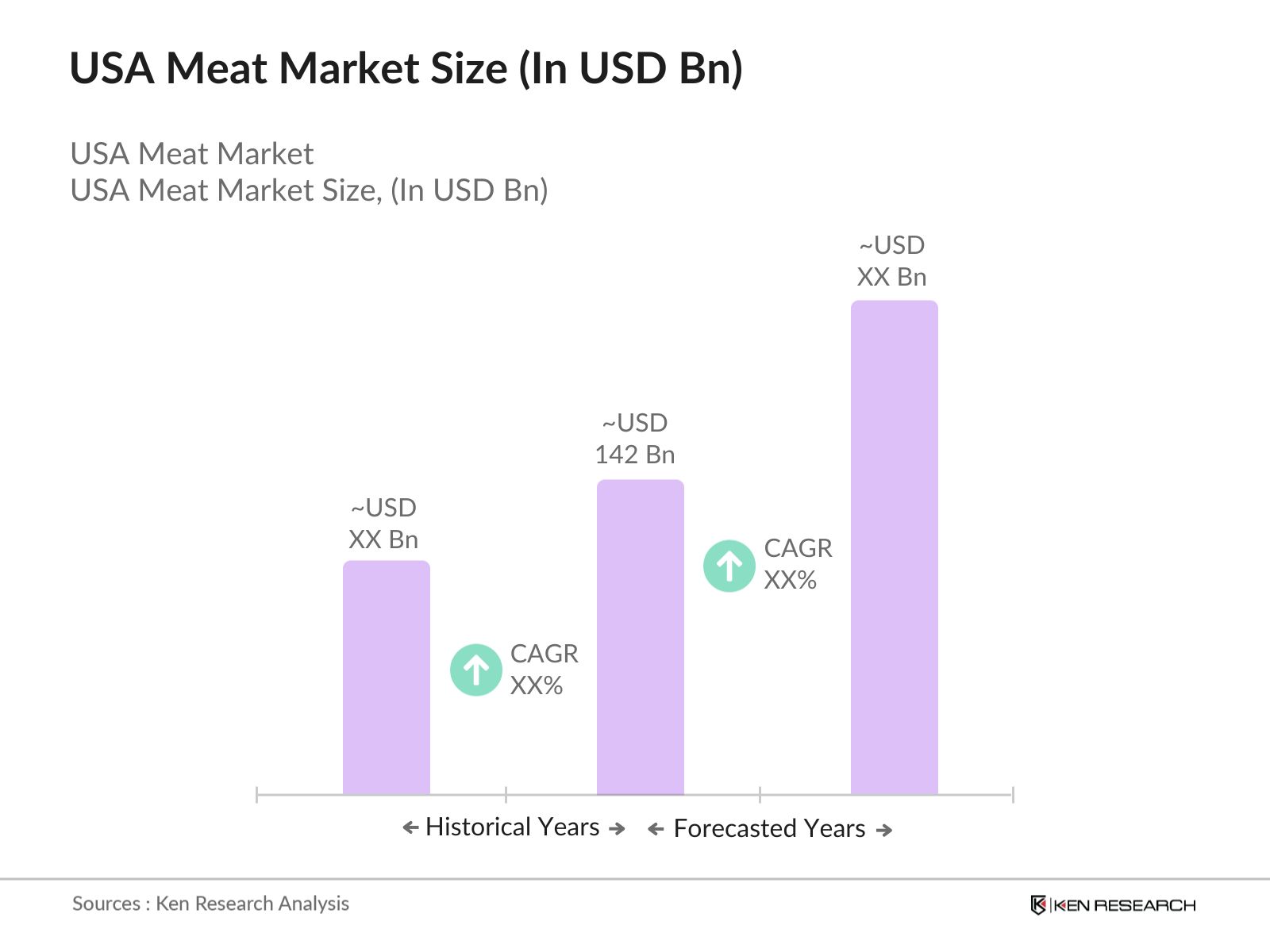
- The USA meat market is valued at USD 142 billion, driven by several factors including a steady rise in meat consumption across the country. The expansion of the meat processing industry, coupled with growing demand for protein-rich diets, has fueled the market. Consumers are showing a preference for premium cuts of meat, grass-fed and organic options, which adds further value to the market.
- The USA meat market is predominantly dominated by Texas, Iowa, and Nebraska, with these states acting as key hubs for meat production due to their extensive livestock farming and large meatpacking operations. These states benefit from a well-established supply chain, highly developed infrastructure, and strong integration between farmers, processors, and distributors. Furthermore, these regions are home to the headquarters of major meat production companies, making them critical to the nation's meat supply.
- The USDA Meat Inspection Act mandates rigorous inspections to ensure the safety and quality of meat products in the U.S. In 2023, more than 3,000 USDA inspectors conducted over 6 million inspections nationwide. These regulations help maintain consumer trust by reducing contamination risks and ensuring that products meet quality standards.
USA Meat Market Segmentation
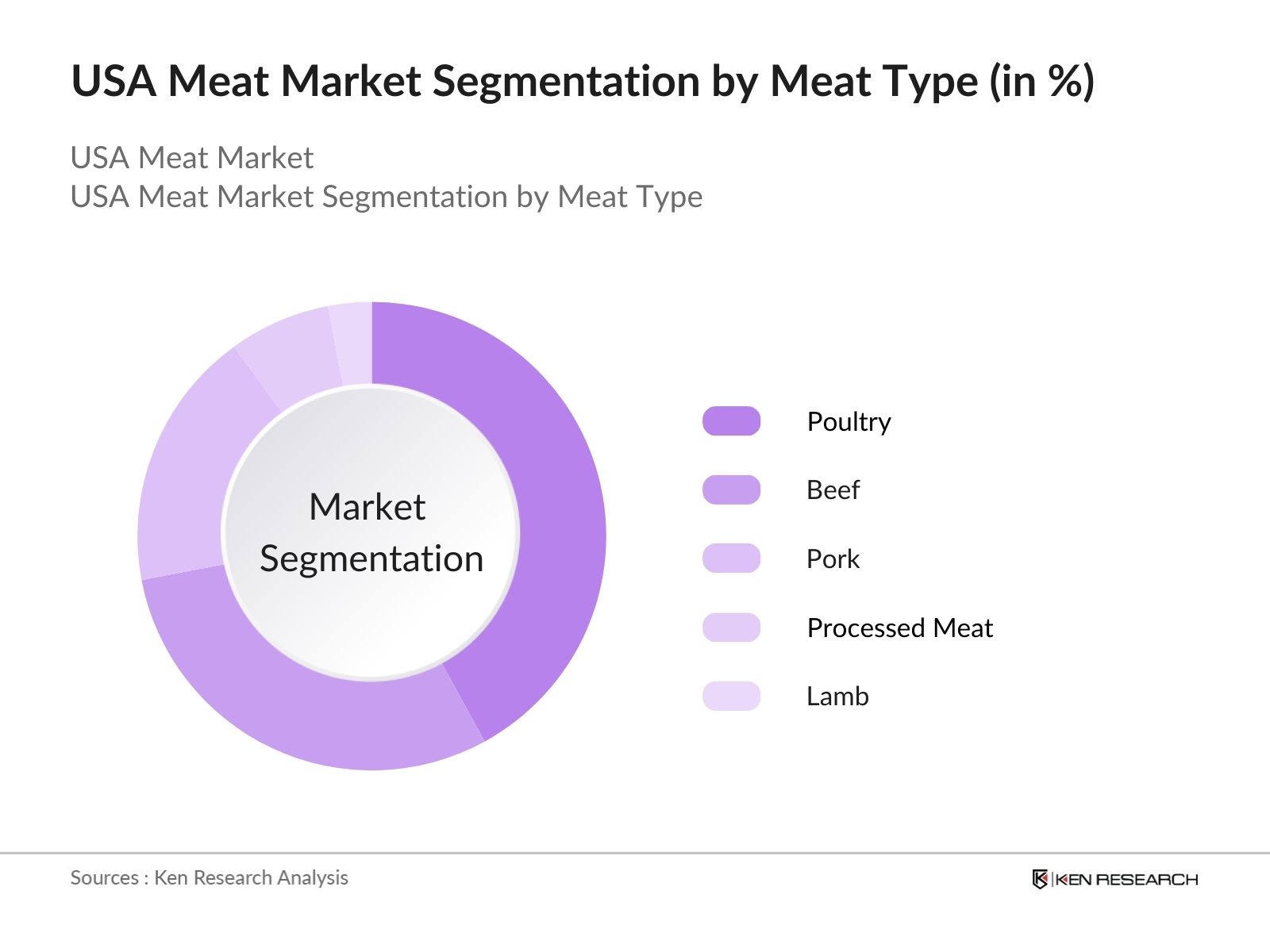
By Meat Type: The USA meat market is segmented by meat type into poultry, beef, pork, lamb, and processed meat. Recently, poultry holds a dominant market share under the segmentation by meat type. Poultry's dominance can be attributed to its affordability, wide acceptance in American diets, and its perceived health benefits compared to red meat. Increasing demand for protein and health-conscious consumers preferring lean meats have significantly boosted poultry sales.
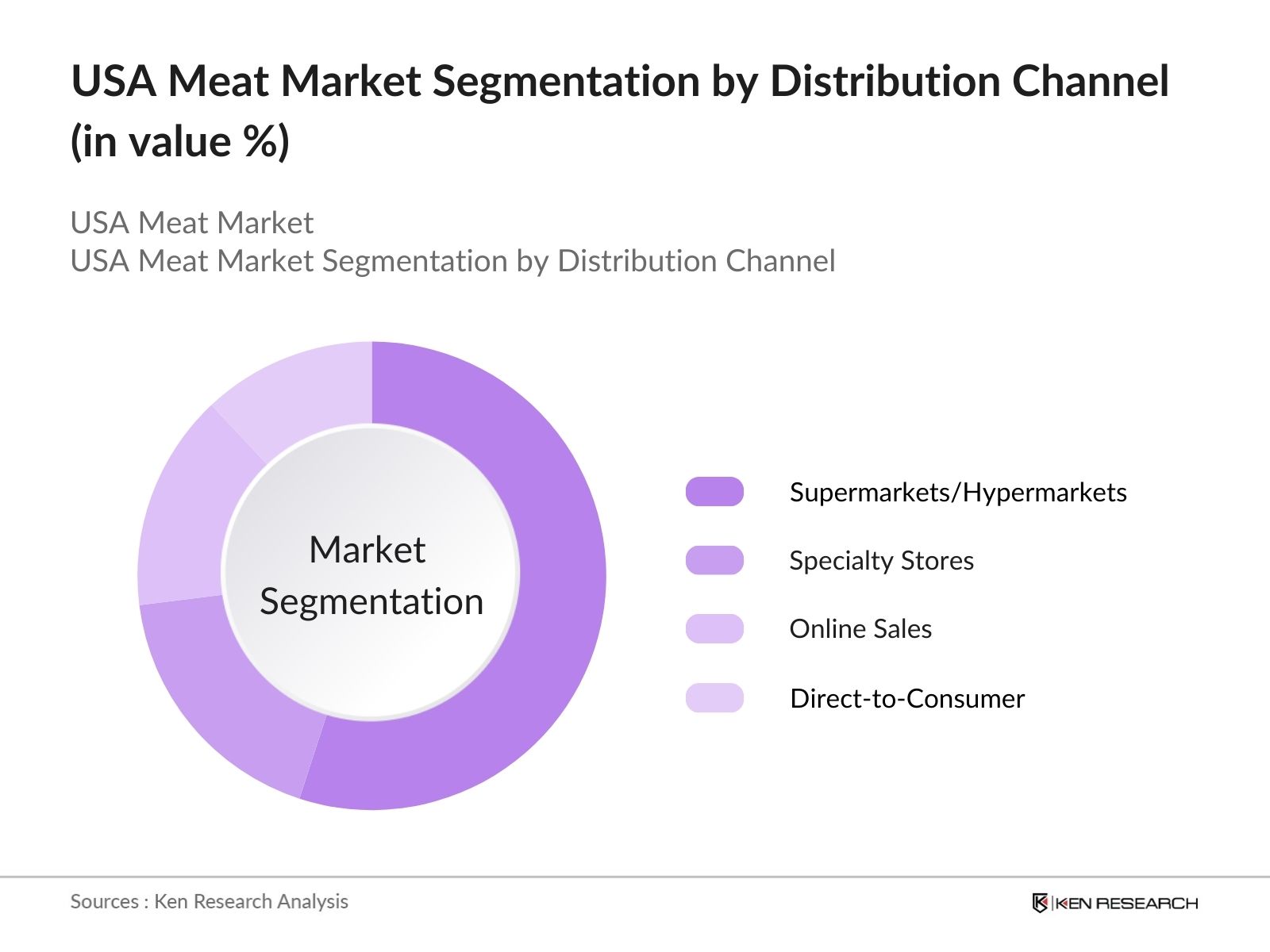
By Distribution Channel: The USA meat market is also segmented by distribution channel into supermarkets and hypermarkets, specialty stores, online sales, and direct-to-consumer channels. Supermarkets and hypermarkets are the dominant channels for meat distribution, largely due to their convenience and the ability to offer a wide variety of meat products under one roof. The large-scale retail environment ensures competitive pricing and high turnover of fresh meat, which appeals to consumers looking for quality and freshness.
USA Meat Market Competitive Landscape
The USA meat market is dominated by a mix of multinational corporations and prominent local players. Companies such as Tyson Foods Inc., JBS USA Holdings Inc., Cargill Meat Solutions Corp., Hormel Foods Corporation, and Smithfield Foods Inc. are leading the market. These companies leverage their extensive supply chains, strategic partnerships, and continuous investments in technology and sustainability initiatives to maintain their competitive edge. The market is largely consolidated, with the top players occupying a significant market share, limiting the room for smaller entrants.
|
Company Name |
Establishment Year |
Headquarters |
Annual Revenue |
Number of Facilities |
Product Range |
Global Presence |
Sustainability Initiatives |
R&D Investments |
Market Share |
|
Tyson Foods Inc. |
1935 |
Springdale, Arkansas |
- |
- |
- |
- |
- |
- |
- |
|
JBS USA Holdings Inc. |
1953 |
Greeley, Colorado |
- |
- |
- |
- |
- |
- |
- |
|
Cargill Meat Solutions Corp. |
1865 |
Wichita, Kansas |
- |
- |
- |
- |
- |
- |
- |
|
Hormel Foods Corporation |
1891 |
Austin, Minnesota |
- |
- |
- |
- |
- |
- |
- |
|
Smithfield Foods Inc. |
1936 |
Smithfield, Virginia |
- |
- |
- |
- |
- |
- |
- |
USA Meat Market Analysis
Growth Drivers
- Rising Meat Consumption: The U.S. meat consumption has been steadily increasing, with per capita meat consumption reaching 224 pounds annually in 2023, driven by consumer demand for beef, pork, and poultry. The National Agricultural Statistics Service (NASS) reported that beef production accounted for 26.7 billion pounds, pork at 27.4 billion pounds, and poultry at 46.8 billion pounds. The increase is attributed to population growth and the higher adoption of protein-rich diets. This demand has put upward pressure on the need for more efficient supply chains to meet the growing domestic consumption.
- Expansion of Meat Processing Industry: The U.S. meat processing industry has expanded in recent years, supported by government incentives and infrastructure improvements. As of 2023, the U.S. Department of Agriculture (USDA) reported over 1,012 federally inspected meat processing plants in the country, with a combined slaughter capacity of 835 million animals annually. The growing domestic and international demand has also led to increased investments in processing technology and labor efficiency to optimize output.
- Increase in Protein-Based Diets: The protein-based diet trend has led to a rise in meat consumption, with 78% of U.S. households including more protein in their diets in 2023. The focus has been on lean meats like chicken and turkey, where consumption rates exceeded 110 pounds per capita. Dietary shifts driven by health-conscious consumers have resulted in stronger demand for such products, contributing to overall market expansion.
Challenges
- Fluctuations in Livestock Prices: Livestock prices in the U.S. meat market have experienced volatility due to supply chain disruptions and fluctuating feed prices. In 2024, the price for live cattle ranged between $140 to $180 per hundredweight, while hog prices fluctuated between $75 to $100 per hundredweight. Feed costs, which make up 60% of the total cost of raising livestock, were a major driver of price changes, impacting both producers and consumers.
- Stringent Regulatory Standards: The U.S. meat industry is subject to stringent regulatory requirements. In 2023, the USDA Food Safety and Inspection Service (FSIS) introduced stricter pathogen reduction standards, including testing requirements for Salmonella and E. coli. These regulations have raised operational costs for meat processors as they work to ensure compliance. Smaller operations, in particular, have faced challenges in adapting to these changes due to the cost of implementing new testing and processing protocols.
USA Meat Market Future Outlook
USA meat market is expected to experience steady growth driven by the increasing consumer demand for premium and organic meat products, innovations in meat processing, and a shift towards more sustainable and ethical meat production practices. Moreover, the market will likely witness continued investments in technology, such as smart packaging and digital supply chain management, enhancing meat product traceability and quality control.
Market Opportunities
- Export Opportunities: The U.S. meat export market has seen significant growth, with exports to Asia-Pacific and Europe accounting for a combined 45% of total U.S. meat exports in 2023. Japan and China remain the largest importers, purchasing over 2 million metric tons of beef and pork. This demand, driven by population growth and rising incomes in these regions, presents substantial export opportunities for U.S. meat producers.
- Technological Innovations in Packaging and Preservation: Technological advancements in meat packaging and preservation have created new opportunities for the U.S. meat industry. Vacuum-sealing technology and modified atmosphere packaging (MAP) have extended the shelf life of fresh and frozen meats, reducing waste by 10-15% as of 2023. Innovations in these areas are expected to meet the growing demand for convenience, particularly in export markets, as it ensures longer transport viability.
Scope of the Report
|
Segment |
Sub-segment |
|
By Meat Type |
Poultry Beef Pork Lamb Processed Meat |
|
By Distribution Channel |
Supermarkets and Hypermarkets Specialty Stores Online Sales Direct to Consumer |
|
By Packaging Type |
Fresh Meat Frozen Meat Processed and Packaged Meat |
|
By End-User |
Household HoReCa Food Processing Industry |
|
By Region |
Northeast Midwest South West |
Products
Key Target Audience
Meat Processing Companies
Foodservice Providers (HoReCa - Hotel, Restaurant, Caf)
Food Processing Equipment Manufacturers
Exporters and Importers of Meat Products
Meat Packaging and Technology Providers
Logistics & Cold Chain Companies
Government and Regulatory Bodies (USDA, FDA)
Investors and Venture Capitalist Firms
Companies
Players Mentioned in the Report
Tyson Foods Inc.
JBS USA Holdings Inc.
Cargill Meat Solutions Corp.
Hormel Foods Corporation
Smithfield Foods Inc.
Perdue Farms
Sanderson Farms
Pilgrims Pride Corporation
Seaboard Foods LLC
National Beef Packing Company
Table of Contents
1. USA Meat Market Overview
1.1 Definition and Scope
1.2 Market Taxonomy
1.3 Market Growth Rate
1.4 Market Segmentation Overview
2. USA Meat Market Size (In USD Mn)
2.1 Historical Market Size
2.2 Year-On-Year Growth Analysis
2.3 Key Market Developments and Milestones
3. USA Meat Market Analysis
3.1 Growth Drivers
3.1.1 Rising Meat Consumption
3.1.2 Expansion of Meat Processing Industry
3.1.3 Increase in Protein-Based Diets
3.1.4 Advancements in Animal Husbandry Practices
3.2 Market Challenges
3.2.1 Fluctuations in Livestock Prices
3.2.2 Stringent Regulatory Standards (USDA Regulations)
3.2.3 Environmental and Ethical Concerns
3.3 Opportunities
3.3.1 Growth in Organic Meat Segment
3.3.2 Export Opportunities (Asia-Pacific, Europe)
3.3.3 Technological Innovations in Packaging and Preservation
3.4 Trends
3.4.1 Plant-Based Meat Alternatives
3.4.2 Digitalization in Meat Supply Chain
3.4.3 Increase in Consumer Awareness on Sustainability
3.5 Government Regulation
3.5.1 USDA Meat Inspection Act
3.5.2 FDA Regulation on Processed Meats
3.5.3 Tariff Regulations on Meat Imports/Exports
3.6 SWOT Analysis
3.7 Stakeholder Ecosystem (Producers, Processors, Distributors, Retailers)
3.8 Porters Five Forces
3.9 Competition Ecosystem
4. USA Meat Market Segmentation
4.1 By Meat Type (In Value %)
4.1.1 Poultry
4.1.2 Beef
4.1.3 Pork
4.1.4 Lamb
4.1.5 Processed Meat
4.2 By Distribution Channel (In Value %)
4.2.1 Supermarkets and Hypermarkets
4.2.2 Specialty Stores
4.2.3 Online Sales
4.2.4 Direct to Consumer
4.3 By Packaging Type (In Value %)
4.3.1 Fresh Meat
4.3.2 Frozen Meat
4.3.3 Processed and Packaged Meat
4.4 By End-User (In Value %)
4.4.1 Household
4.4.2 HoReCa (Hotel, Restaurant, Caf)
4.4.3 Food Processing Industry
4.5 By Region (In Value %)
4.5.1 Northeast
4.5.2 Midwest
4.5.3 South
4.5.4 West
5. USA Meat Market Competitive Analysis
5.1 Detailed Profiles of Major Companies
5.1.1 Tyson Foods Inc.
5.1.2 JBS USA Holdings Inc.
5.1.3 Cargill Meat Solutions Corp.
5.1.4 Hormel Foods Corporation
5.1.5 Smithfield Foods Inc.
5.1.6 Perdue Farms
5.1.7 Sanderson Farms
5.1.8 Pilgrims Pride Corporation
5.1.9 Seaboard Foods LLC
5.1.10 National Beef Packing Company
5.2 Cross Comparison Parameters (Revenue, Market Share, Number of Processing Facilities, Annual Livestock Slaughter Capacity, Global Presence, Sustainability Initiatives, Vertical Integration, M&A Activities)
5.3 Market Share Analysis
5.4 Strategic Initiatives
5.5 Mergers And Acquisitions
5.6 Investment Analysis
5.7 Government Grants
5.8 Private Equity Investments
6. USA Meat Market Regulatory Framework
6.1 USDA Guidelines on Meat Processing and Safety
6.2 FDA Meat and Poultry Labeling Regulations
6.3 Import/Export Tariff Laws
6.4 Animal Welfare Laws
6.5 Organic Certification Standards for Meat Products
7. USA Meat Market Future Market Size (In USD Mn)
7.1 Future Market Size Projections
7.2 Key Factors Driving Future Market Growth
8. USA Meat Market Future Market Segmentation
8.1 By Meat Type (In Value %)
8.2 By Distribution Channel (In Value %)
8.3 By Packaging Type (In Value %)
8.4 By End-User (In Value %)
8.5 By Region (In Value %)
9. USA Meat Market Analysts Recommendations
9.1 TAM/SAM/SOM Analysis
9.2 Consumer Behavior and Demand Trends
9.3 Sustainability and Ethical Meat Sourcing Strategies
9.4 Emerging Market Opportunities
Research Methodology
Step 1: Identification of Key Variables
In the initial phase, we conducted an in-depth mapping of the USA meat market ecosystem, including stakeholders such as meat producers, processors, and distributors. This mapping was based on both secondary and proprietary sources to identify the critical market dynamics and variables.
Step 2: Market Analysis and Construction
Historical data from industry sources was compiled and analyzed to determine the USA meat markets growth trends, market penetration, and revenue generation across different regions and meat types. The quality and reliability of the data were ensured through cross-verification with multiple industry reports.
Step 3: Hypothesis Validation and Expert Consultation
We developed hypotheses based on market data and validated them through consultations with industry experts, including meat processors and distributors. These insights were used to refine and corroborate the market estimates, providing a more accurate and reliable forecast.
Step 4: Research Synthesis and Final Output
Finally, the gathered insights were synthesized to produce a comprehensive report on the USA meat market, incorporating bottom-up market calculations and qualitative data. This ensured the highest level of accuracy and validity in the reports findings.
Frequently Asked Questions
01. How big is the USA Meat Market?
The USA meat market is valued at USD 142 billion, driven by increasing demand for protein-rich diets, technological advancements in meat processing, and a growing preference for organic and premium meat products.
02. What are the challenges in the USA Meat Market?
Key challenges in USA meat market include fluctuating livestock prices, stringent regulatory standards, and rising concerns about environmental sustainability and animal welfare, which are influencing consumer choices and production practices.
03. Who are the major players in the USA Meat Market?
The major players in the USA meat market include Tyson Foods Inc., JBS USA Holdings Inc., Cargill Meat Solutions Corp., Hormel Foods Corporation, and Smithfield Foods Inc. These companies dominate due to their extensive production capabilities and strong supply chain networks.
04. What are the growth drivers of the USA Meat Market?
Growth drivers in USA meat market include a steady rise in meat consumption, the expansion of the meat processing industry, and increasing consumer preference for high-quality protein. Additionally, advancements in packaging and preservation technologies contribute to market growth.
Why Buy From Us?

What makes us stand out is that our consultants follows Robust, Refine and Result (RRR) methodology. i.e. Robust for clear definitions, approaches and sanity checking, Refine for differentiating respondents facts and opinions and Result for presenting data with story

We have set a benchmark in the industry by offering our clients with syndicated and customized market research reports featuring coverage of entire market as well as meticulous research and analyst insights.

While we don't replace traditional research, we flip the method upside down. Our dual approach of Top Bottom & Bottom Top ensures quality deliverable by not just verifying company fundamentals but also looking at the sector and macroeconomic factors.

With one step in the future, our research team constantly tries to show you the bigger picture. We help with some of the tough questions you may encounter along the way: How is the industry positioned? Best marketing channel? KPI's of competitors? By aligning every element, we help maximize success.

Our report gives you instant access to the answers and sources that other companies might choose to hide. We elaborate each steps of research methodology we have used and showcase you the sample size to earn your trust.

If you need any support, we are here! We pride ourselves on universe strength, data quality, and quick, friendly, and professional service.