















USA Menopause Market Outlook to 2030
Region:North America
Author(s):Vijay Kumar
Product Code:KROD10096
November 2024
83
About the Report
USA Menopause Market Overview
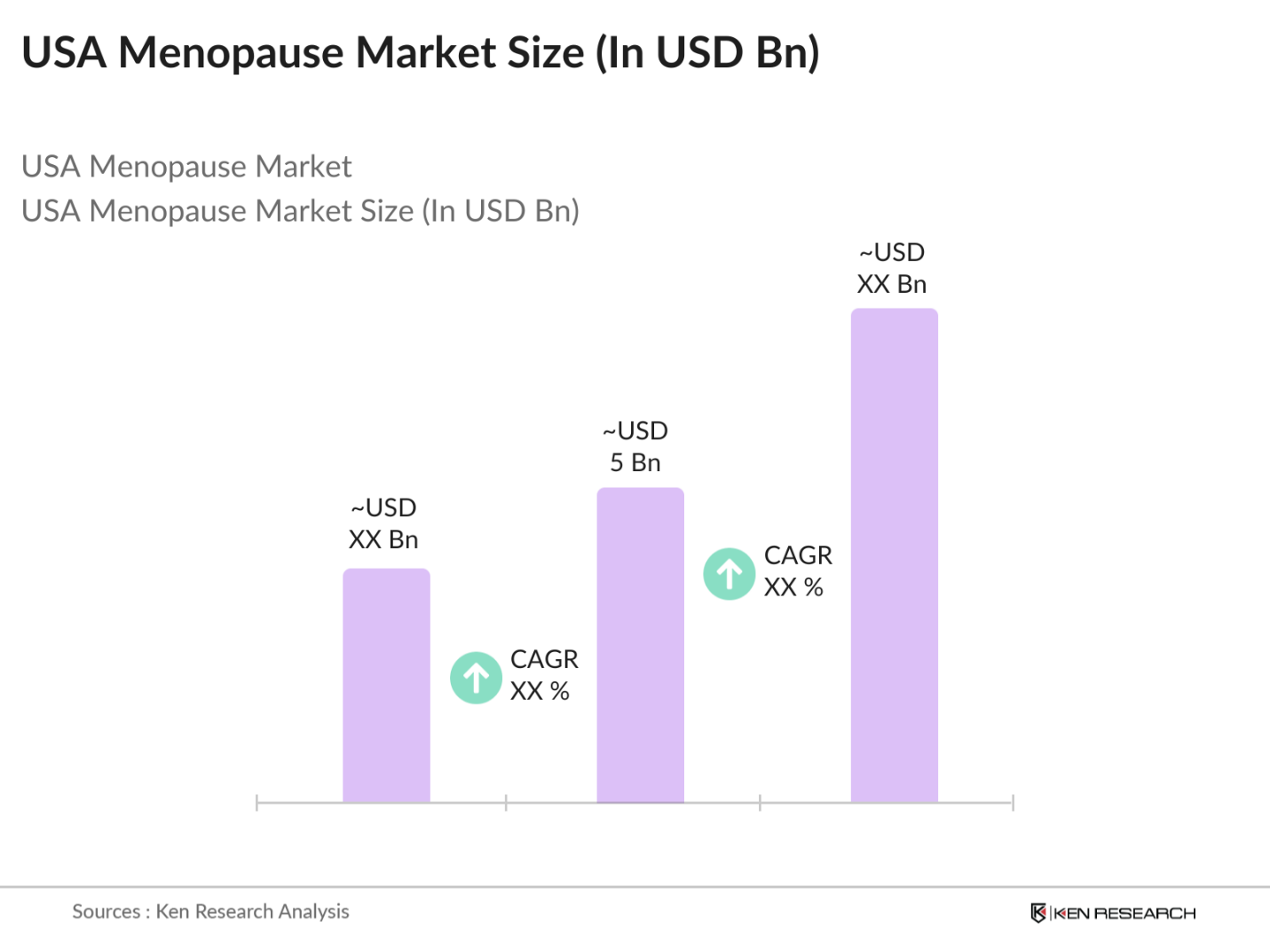
- The USA Menopause Market is valued at USD 5 billion, based on a five-year historical analysis. This market growth is primarily driven by increasing awareness of menopause-related healthcare needs and the availability of diverse treatment options, such as hormone replacement therapy (HRT) and non-hormonal alternatives. With a rising focus on holistic wellness, menopause care is expanding to encompass both symptom management and long-term health solutions, supported by ongoing investments in women's health research and development.
- Dominant regions include California, Texas, and Florida, where higher awareness levels, access to advanced healthcare, and higher spending power fuel market demand. The presence of specialized menopause centers, healthcare professionals trained in menopause management, and strong retail distribution channels support these regions market dominance.
- The FDA has taken a proactive role in establishing safety standards for menopause therapies, including hormone-based and non-hormone treatments. New protocols emphasize patient safety and transparency, ensuring that emerging treatments meet rigorous testing standards before entering the market.
USA Menopause Market Segmentation
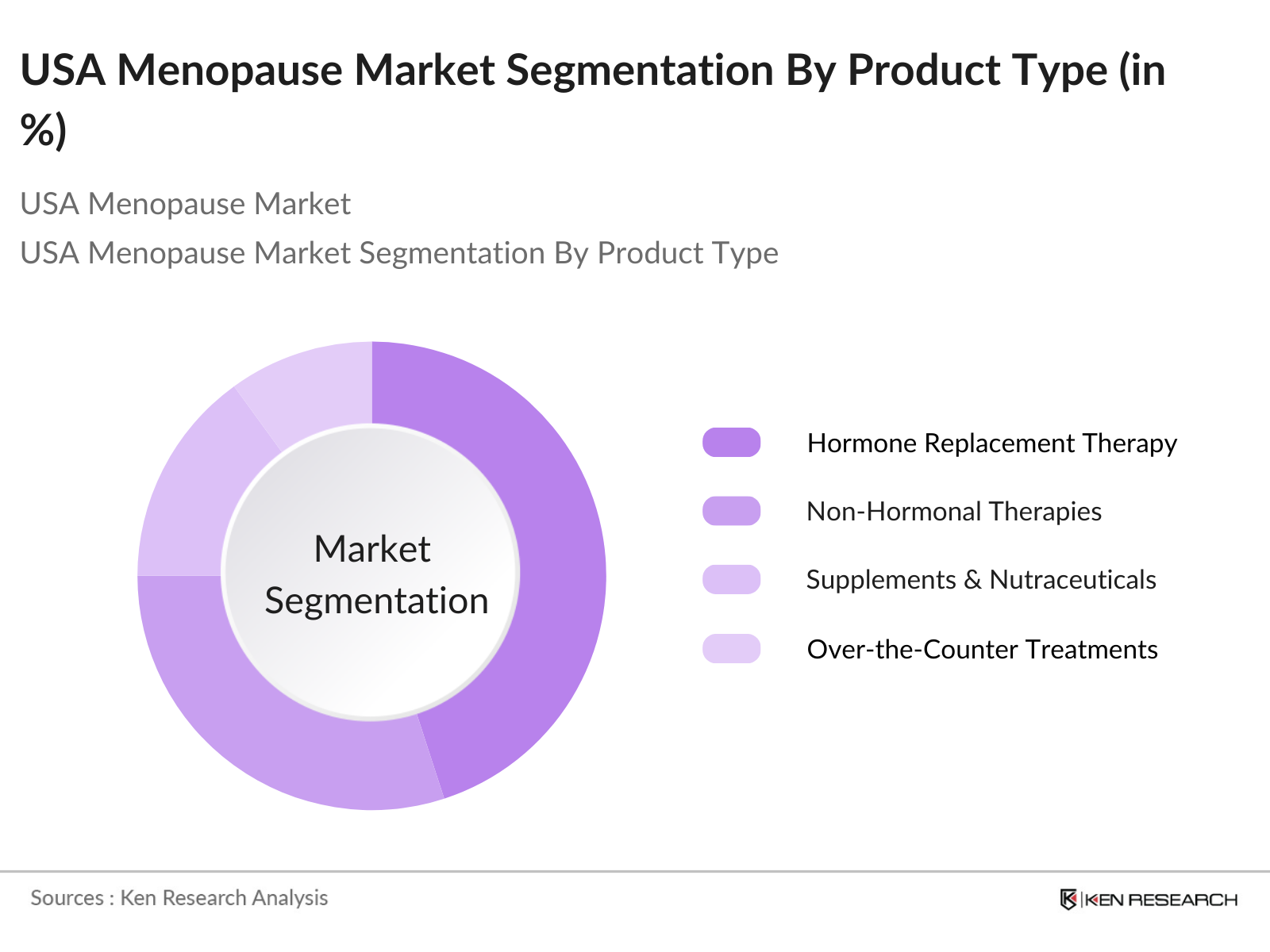
By Product Type: The market is segmented by product type into Hormone Replacement Therapy (HRT), Non-Hormonal Therapies, Supplements & Nutraceuticals, and Over-the-Counter Treatments. Recently, HRT holds a significant market share under the product type segmentation, primarily due to its efficacy in treating severe menopause symptoms. The dominance of HRT is further supported by strong backing from the medical community and increasing consumer awareness.
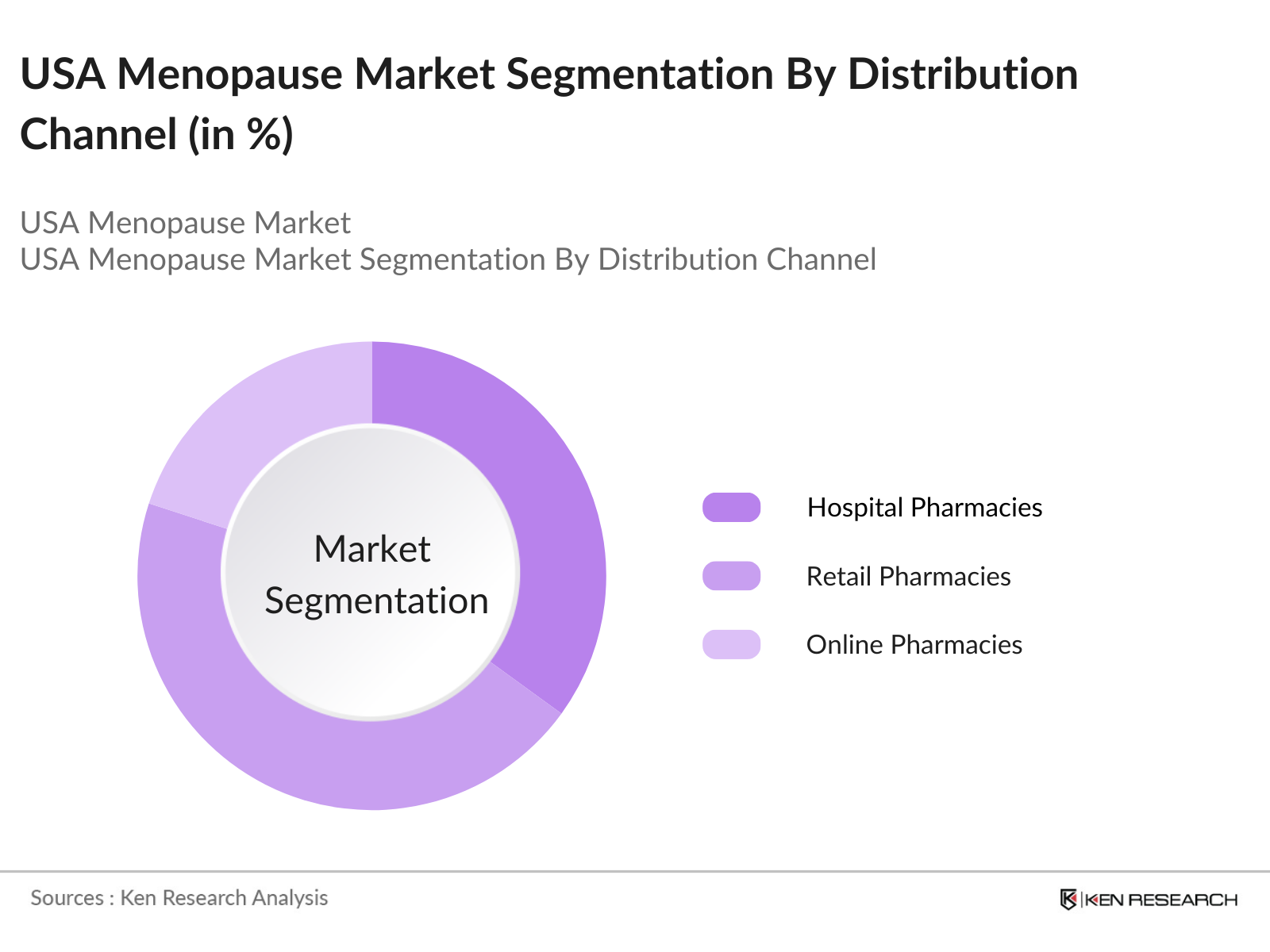
By Distribution Channel: Distribution channels for the USA Menopause Market include Hospital Pharmacies, Retail Pharmacies, and Online Pharmacies. Retail pharmacies currently dominate this segment, largely due to their widespread accessibility and established distribution networks. As menopause-related health issues are increasingly normalized, consumers are turning to familiar and convenient retail options for over-the-counter treatments.
USA Menopause Market Competitive Landscape
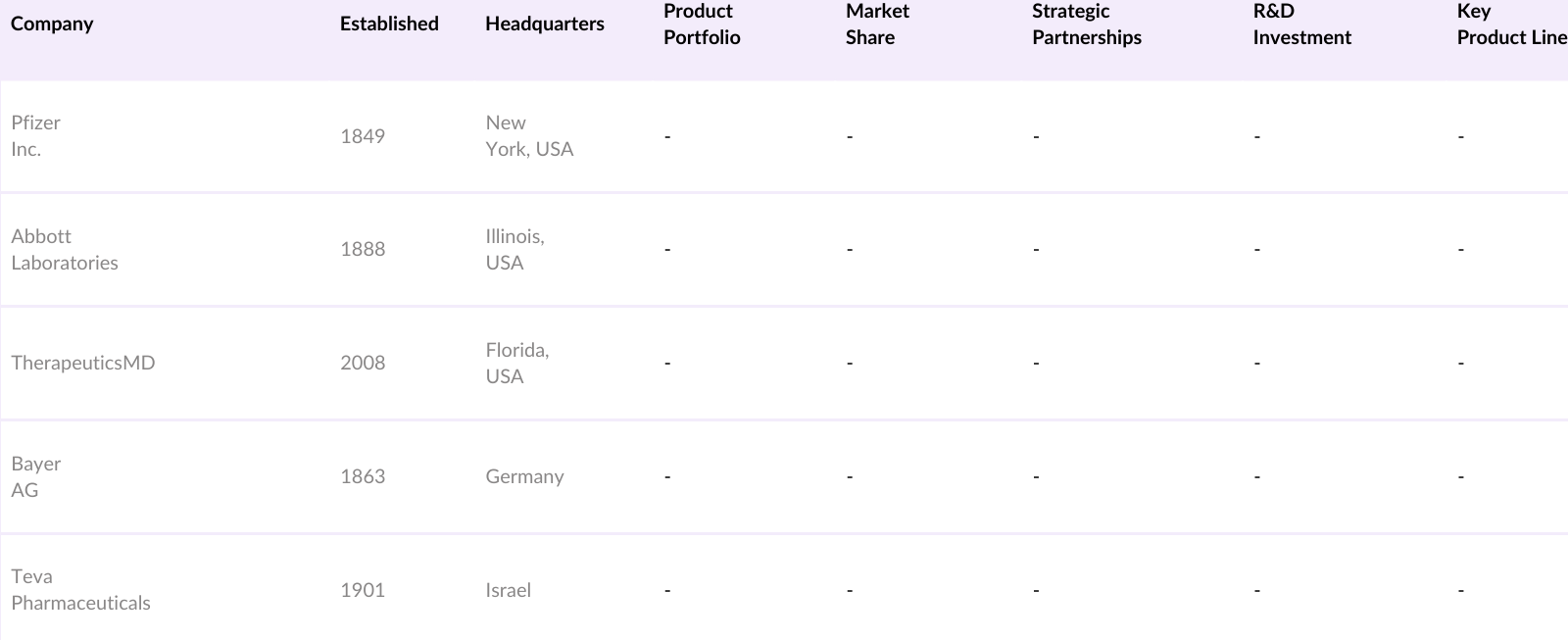
The USA Menopause Market is primarily driven by several key players, including both global and local companies with robust R&D investments and strategic partnerships. Companies such as Pfizer Inc. and Abbott Laboratories lead in HRT and non-hormonal solutions, while new entrants focus on innovative digital health solutions for menopause management.
USA Menopause Industry Analysis
Growth Drivers
- Increasing Awareness of Menopause Health: In the U.S., about 75 million women are currently in perimenopause, menopause, or post-menopause stages, and every day an additional 6,000 women reach menopause. This growing demographic reflects the rising need for awareness around menopause health. Federal initiatives such as the White House Womens Health Research Initiative have pushed for extensive research and awareness campaigns on menopause, encouraging education on symptoms and long-term health implications.
- Rising Adoption of Hormone Replacement Therapy (HRT): With improved understanding of the benefits and risks associated with Hormone Replacement Therapy (HRT), there has been an increase in its adoption among U.S. women. Recent Womens Health Initiative studies highlighted that while HRT may not mitigate chronic disease risks, it is effective for managing severe menopausal symptoms for many women. This recognition has helped normalize its use and influenced healthcare providers to recommend HRT more frequently.
- Growing Investments in Womens Health Research: Governmental commitments such as the proposed $25 million annual funding under the Menopause Research and Equity Act aim to bolster womens health research. This bill seeks to expand NIH support for studying the effects of menopause and perimenopause, fostering innovation in therapeutic options for symptom management.
Market Challenges
- Social Stigmas Surrounding Menopause: Despite increasing awareness, menopause remains a stigmatized topic in U.S. workplaces, impacting the experience of 18 million women aged 55 and older. These demographic forms a significant portion of the workforce, yet workplace accommodations and open discussions about menopause symptoms are rare, leading to negative health impacts and lower productivity.
- High Costs of Specialized Treatment: Specialized treatments, such as HRT and bioidentical therapies, remain costly and are often not covered by insurance. This lack of affordability restricts access, as women who may benefit from comprehensive menopause care find themselves unable to afford these services, a significant barrier for mid- and low-income individuals.
USA Menopause Market Future Outlook
The USA Menopause Market is expected to grow substantially, driven by a greater focus on womens health in both medical and wellness sectors. Enhanced access to menopause-related treatments, new product innovations in HRT and non-hormonal therapies, and increasing acceptance of telehealth solutions are likely to bolster market expansion. With healthcare becoming more inclusive of age- and gender-specific needs, the markets future is marked by promising advancements in accessible and personalized care options.
Market Opportunities
- Development of Non-Hormonal Therapeutics: Given the risks associated with hormone therapies, the demand for non-hormonal options has grown. FDA-backed research initiatives have encouraged the development of alternative therapeutics, such as selective estrogen receptor modulators, providing symptom relief without the side effects linked to HRT, addressing a critical need for safe treatment alternatives.
- Digital Platforms for Symptom Management: Digital health has emerged as a promising solution for menopause management, with platforms offering symptom tracking, telehealth consultations, and personalized treatment plans. The integration of digital tools reflects a shift toward technology-driven healthcare access, particularly benefitting women in rural areas who lack nearby specialized care.
Scope of the Report
|
Product Type |
Hormone Replacement Therapy Non-Hormonal Therapies Supplements & Nutraceuticals Over-the-Counter Treatments |
|
Distribution Channel |
Hospital Pharmacies Retail Pharmacies Online Pharmacies |
|
End-User |
Hospitals and Clinics Specialty Menopause Centers Homecare |
|
Age Group |
45-55 Years 56-65 Years 66 Years and Above |
|
Region |
North-East Mid-West South West |
Products
Key Target Audience
Hospitals and Specialty Menopause Centers
Womens Health Product Manufacturers
Retail Pharmacies
Online Pharmacies and E-commerce Platforms
Medical Device Manufacturers
Government and Regulatory Bodies (e.g., FDA, Department of Health)
Investment and Venture Capitalist Firms
Telemedicine and Digital Health Solution Providers
Companies
Players Mentioned in the Report
Pfizer Inc.
Abbott Laboratories
Bayer AG
Teva Pharmaceuticals
TherapeuticsMD
Mylan N.V.
Amgen Inc.
Johnson & Johnson
Roche Holding AG
Novo Nordisk A/S
Table of Contents
1. USA Menopause Market Overview
1.1 Definition and Scope
1.2 Market Taxonomy
1.3 Market Growth Rate
1.4 Market Segmentation Overview
2. USA Menopause Market Size (In USD Bn)
2.1 Historical Market Size
2.2 Year-On-Year Growth Analysis
2.3 Key Market Developments and Milestones
3. USA Menopause Market Analysis
3.1 Growth Drivers
3.1.1 Increasing Awareness of Menopause Health (Awareness)
3.1.2 Rising Adoption of Hormone Replacement Therapy (Therapies)
3.1.3 Growing Investments in Womens Health Research (Investment & Funding)
3.1.4 Expanding Availability of Over-the-Counter Products (Distribution)
3.2 Market Challenges
3.2.1 Social Stigmas Surrounding Menopause (Social Barriers)
3.2.2 High Costs of Specialized Treatment (Cost Analysis)
3.2.3 Limited Physician Education on Menopause Health (Education & Training)
3.3 Opportunities
3.3.1 Development of Non-Hormonal Therapeutics (Product Innovation)
3.3.2 Digital Platforms for Symptom Management (Tech Integration)
3.3.3 Regional Outreach for Rural Populations (Demographic Reach)
3.4 Trends
3.4.1 Customization in Treatment Options (Personalized Healthcare)
3.4.2 Partnerships with Telehealth Providers (Telemedicine Expansion)
3.4.3 Increased Focus on Holistic Care (Holistic Approach)
3.5 Government Regulations
3.5.1 FDA Approvals and Guidance (Regulatory Approvals)
3.5.2 Insurance Coverage Policies (Coverage Policies)
3.5.3 Advocacy for Menopausal Health Inclusion (Advocacy)
3.6 SWOT Analysis
3.7 Stake Ecosystem
3.8 Porters Five Forces
3.9 Competition Ecosystem
4. USA Menopause Market Segmentation
4.1 By Product Type (In Value %)
4.1.1 Hormone Replacement Therapy
4.1.2 Non-Hormonal Therapies
4.1.3 Supplements & Nutraceuticals
4.1.4 Over-the-Counter Treatments
4.2 By Distribution Channel (In Value %)
4.2.1 Hospital Pharmacies
4.2.2 Retail Pharmacies
4.2.3 Online Pharmacies
4.3 By End-User (In Value %)
4.3.1 Hospitals and Clinics
4.3.2 Specialty Menopause Centers
4.3.3 Homecare
4.4 By Age Group (In Value %)
4.4.1 45-55 Years
4.4.2 56-65 Years
4.4.3 66 Years and Above
4.5 By Region (In Value %)
4.5.1 North-East
4.5.2 Mid-West
4.5.3 South
4.5.4 West
5. USA Menopause Market Competitive Analysis
5.1 Detailed Profiles of Major Companies
5.1.1 Pfizer Inc.
5.1.2 Novartis AG
5.1.3 Abbott Laboratories
5.1.4 Teva Pharmaceuticals
5.1.5 Bayer AG
5.1.6 TherapeuticsMD
5.1.7 Amgen Inc.
5.1.8 Mylan N.V.
5.1.9 Allergan PLC
5.1.10 Novo Nordisk A/S
5.1.11 Johnson & Johnson
5.1.12 Merck & Co., Inc.
5.1.13 Roche Holding AG
5.1.14 Eli Lilly and Company
5.1.15 Sanofi S.A.
5.2 Cross Comparison Parameters (Revenue, Headquarters, Product Portfolio, Market Share, Number of Patents, Growth Strategy, Clinical Trials, Partnerships)
5.3 Market Share Analysis
5.4 Strategic Initiatives
5.5 Mergers And Acquisitions
5.6 Investment Analysis
5.7 Venture Capital Funding
5.8 Government Grants
5.9 Private Equity Investments
6. USA Menopause Market Regulatory Framework
6.1 FDA Guidelines for Menopause-Related Products
6.2 Clinical Trial Compliance Standards
6.3 Reimbursement and Insurance Policies
7. USA Menopause Market Future Market Size (In USD Bn)
7.1 Future Market Size Projections
7.2 Key Factors Driving Future Market Growth
8. USA Menopause Market Future Segmentation
8.1 By Product Type (In Value %)
8.2 By Distribution Channel (In Value %)
8.3 By End-User (In Value %)
8.4 By Age Group (In Value %)
8.5 By Region (In Value %)
9. USA Menopause Market Analysts Recommendations
9.1 TAM/SAM/SOM Analysis
9.2 Customer Cohort Analysis
9.3 Marketing Initiatives
9.4 White Space Opportunity Analysis
Disclaimer Contact UsResearch Methodology
Step 1: Identification of Key Variables
This step begins with mapping out the menopause market ecosystem, identifying major stakeholders and key factors such as treatment adoption rates, regulatory standards, and end-user preferences. Extensive desk research, supported by proprietary databases, is used to collect detailed industry-level information, highlighting core variables influencing market trends.
Step 2: Market Analysis and Construction
Historical data related to menopause healthcare expenditures, distribution channel penetration, and product diversification are analyzed. This phase includes comparing market dynamics across various channels and products to generate accurate revenue forecasts and market sizing insights.
Step 3: Hypothesis Validation and Expert Consultation
Hypotheses are constructed and validated through industry consultations with experienced professionals from the healthcare, pharmaceutical, and digital health sectors. Insights derived from these interviews aid in refining assumptions, ensuring robust and data-backed market estimates.
Step 4: Research Synthesis and Final Output
The final stage involves consolidating insights from primary and secondary research. Findings are then verified through direct communication with manufacturers and suppliers to validate data and further refine projections, ensuring a thorough understanding of the USA Menopause Market landscape.
Frequently Asked Questions
1. How big is the USA Menopause Market?
The USA Menopause Market is valued at USD 5 billion, based on a five-year historical analysis. This market growth is primarily driven by increasing awareness of menopause-related healthcare needs and the availability of diverse treatment options, such as hormone replacement therapy (HRT) and non-hormonal alternatives.
2. What are the challenges in the USA Menopause Market?
Challenges include societal stigmas around menopause, high costs associated with hormone therapies, and limited access to trained menopause specialists across rural areas.
3. Who are the major players in the USA Menopause Market?
Key players in the market include Pfizer Inc., Abbott Laboratories, Bayer AG, Teva Pharmaceuticals, and TherapeuticsMD, leading in product innovation and market expansion.
4. What are the growth drivers of the USA Menopause Market?
Market growth is fueled by increasing consumer awareness, improved healthcare access, and growing investments in womens health research, especially in hormone replacement and non-hormonal solutions.
Why Buy From Us?

What makes us stand out is that our consultants follows Robust, Refine and Result (RRR) methodology. i.e. Robust for clear definitions, approaches and sanity checking, Refine for differentiating respondents facts and opinions and Result for presenting data with story

We have set a benchmark in the industry by offering our clients with syndicated and customized market research reports featuring coverage of entire market as well as meticulous research and analyst insights.

While we don't replace traditional research, we flip the method upside down. Our dual approach of Top Bottom & Bottom Top ensures quality deliverable by not just verifying company fundamentals but also looking at the sector and macroeconomic factors.

With one step in the future, our research team constantly tries to show you the bigger picture. We help with some of the tough questions you may encounter along the way: How is the industry positioned? Best marketing channel? KPI's of competitors? By aligning every element, we help maximize success.

Our report gives you instant access to the answers and sources that other companies might choose to hide. We elaborate each steps of research methodology we have used and showcase you the sample size to earn your trust.

If you need any support, we are here! We pride ourselves on universe strength, data quality, and quick, friendly, and professional service.