
USA Metaverse Gaming Market Outlook to 2030
Region:United States
Author(s):Yogita Sahu
Product Code:KROD6547
Region:United States
Author(s):Yogita Sahu
Product Code:KROD6547
December 2024
98
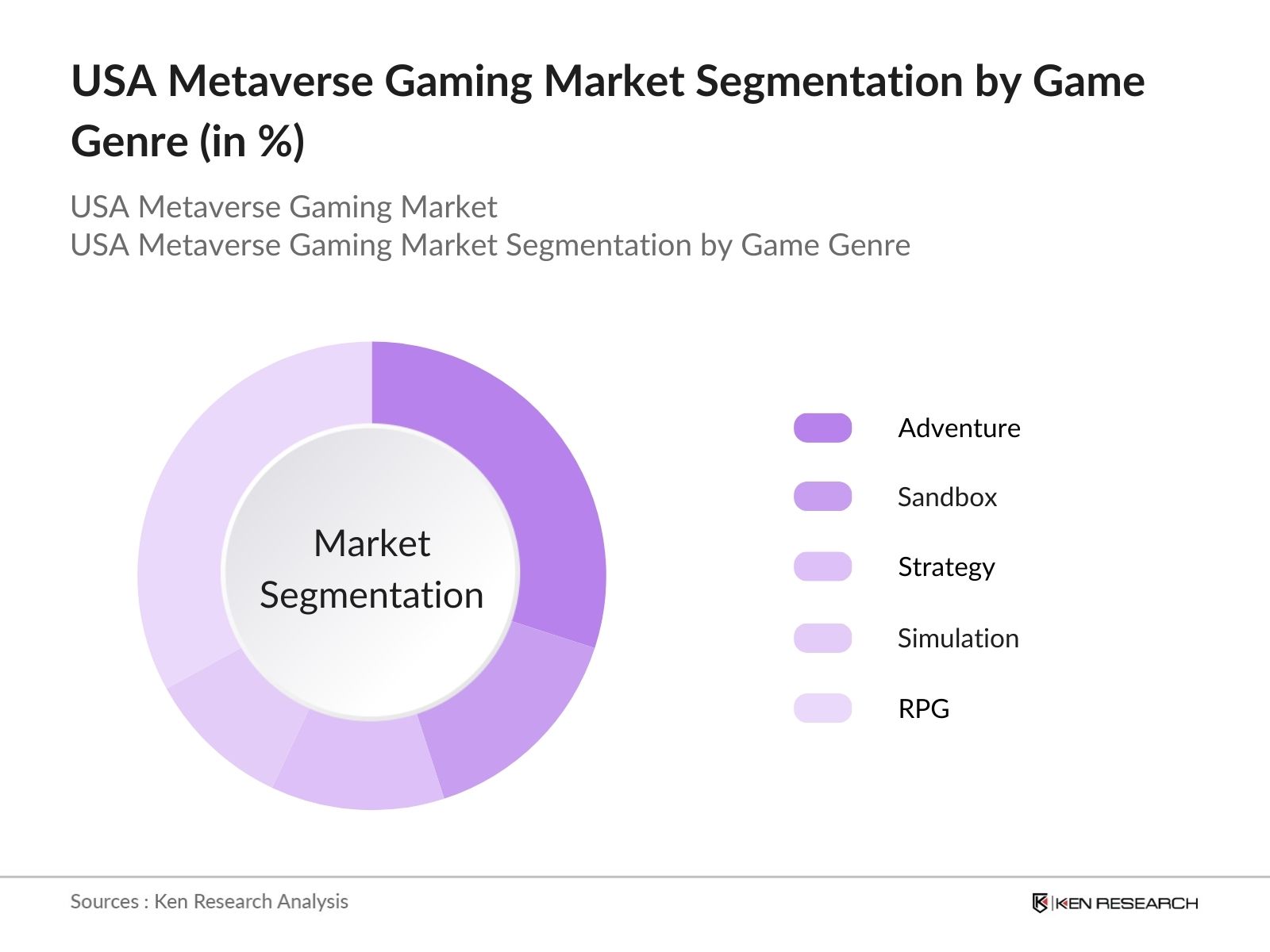
By Game Genre: The market is segmented into Adventure, Sandbox, Strategy, Simulation, and Role-Playing Games (RPGs). Among these, the Adventure genre dominates the market, accounting for over 30% of the market share. This dominance is driven by immersive storytelling and narrative-driven gameplay, allowing players to engage in vast, interactive virtual worlds. Games like Fortnite and Minecraft excel in this segment by offering unparalleled exploration and social interaction.
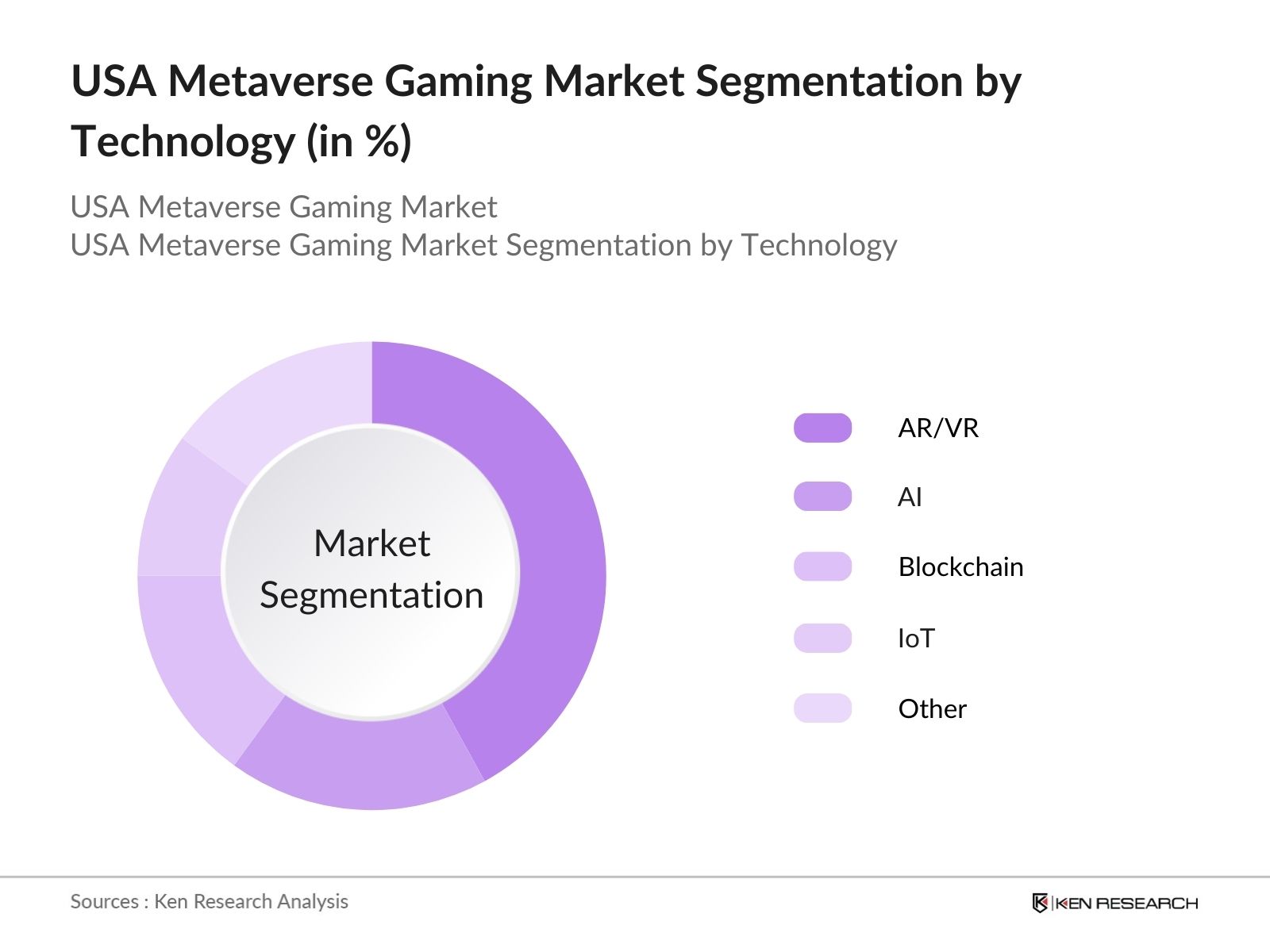
By Technology: The technological backbone of metaverse gaming is primarily supported by Augmented Reality (AR), Virtual Reality (VR), Artificial Intelligence (AI), Blockchain Technology, and IoT. The AR/VR segment dominates this market, holding over 42% of the market share in 2023. This is primarily due to the enhanced ability of these technologies to create immersive social experiences within virtual worlds. AR/VR allows players to interact in real-time with other users in highly detailed environments, fostering a sense of community.
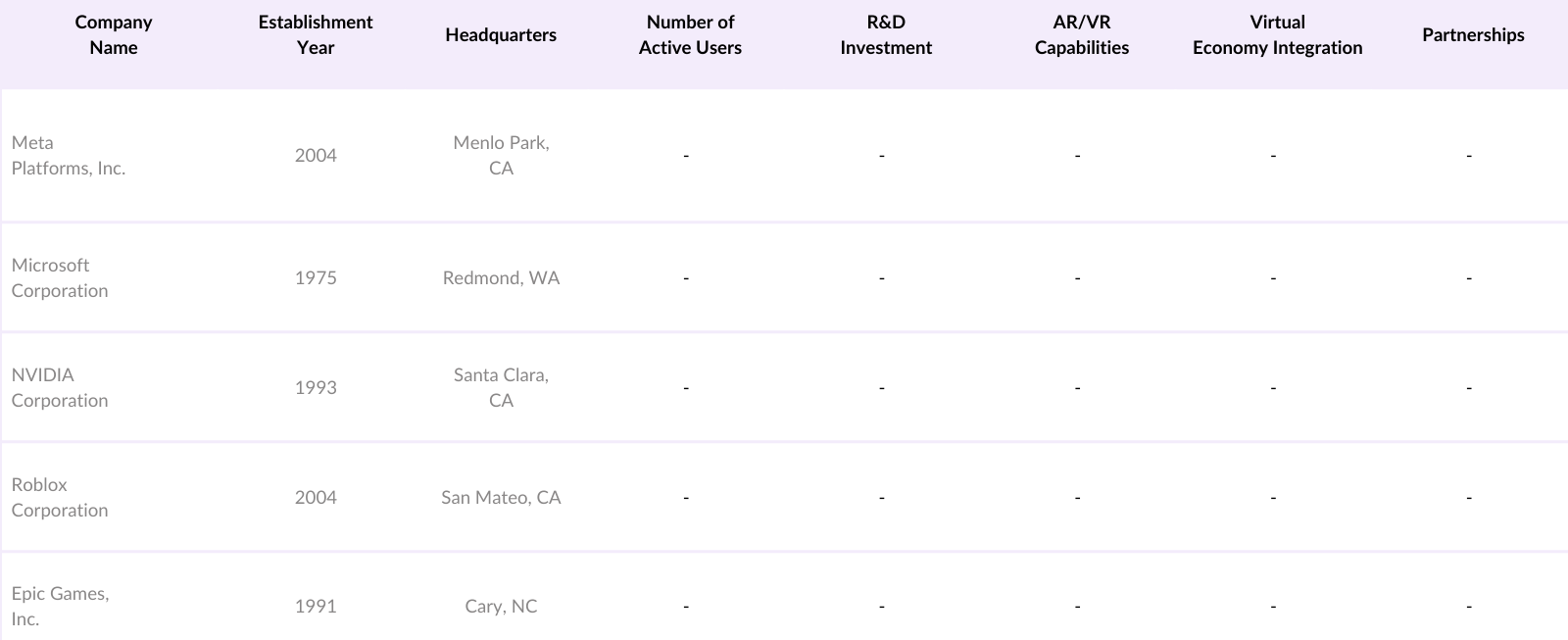
The market is characterized by significant competition, with a mix of established players and emerging start-ups. Meta Platforms Inc., Microsoft, and NVIDIA are among the leading companies, leveraging their extensive R&D capabilities to remain at the forefront of the market.
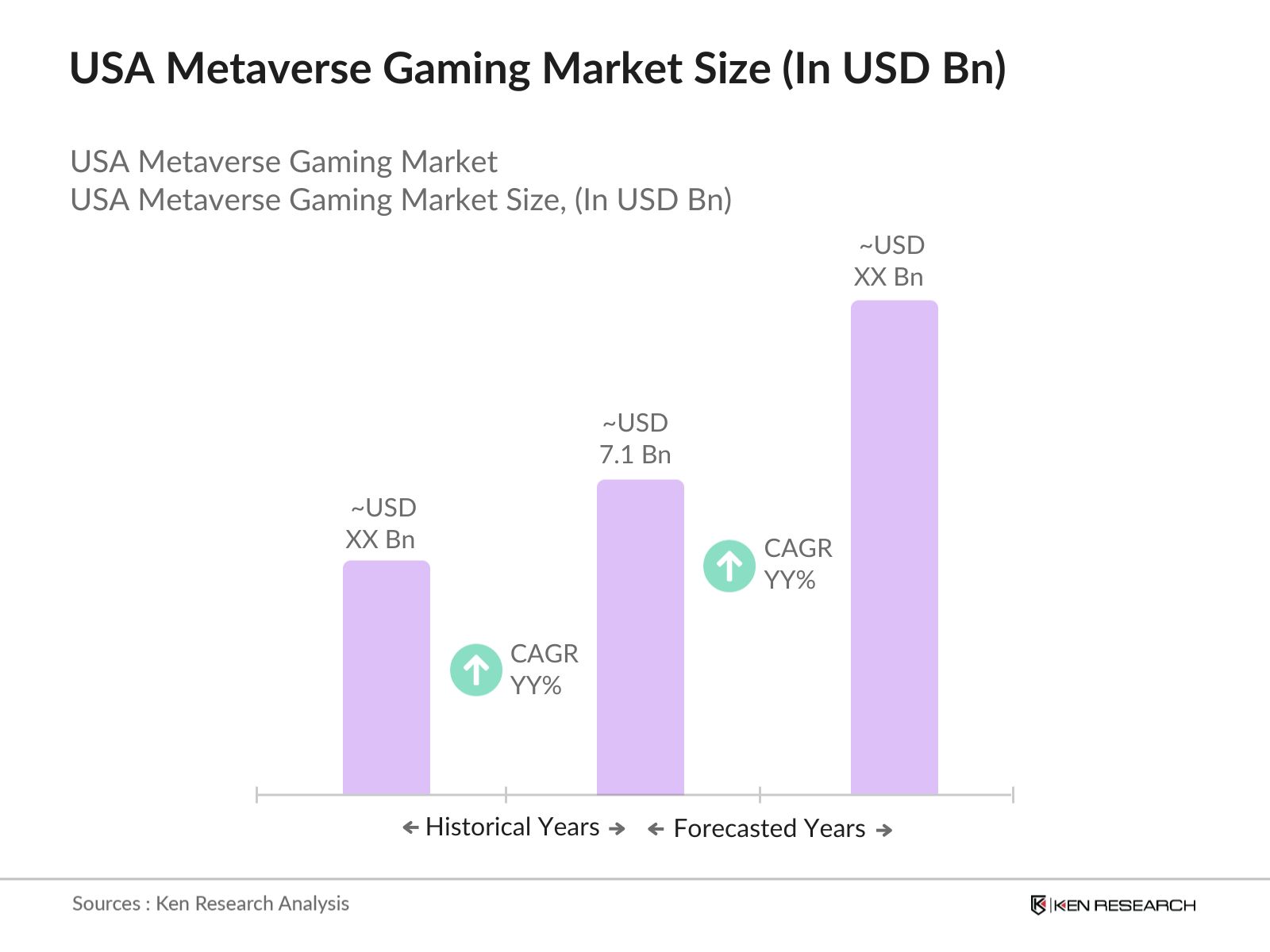
The USA Metaverse Gaming industry is set to witness exponential growth over the next five years, fueled by the ongoing advancements in AR/VR technologies, AI-based immersive gaming solutions, and the rise of blockchain-integrated economies.
|
Game Genre |
Adventure Sandbox Strategy Simulation RPG |
|
Technology |
AR VR AI Blockchain IoT |
|
Hardware |
VR Headsets Wearables Consoles Smartphones Tablets |
|
Software |
Game Engines Digital Avatars Virtual Economy Platforms |
|
Region |
North East West South |
1.1. Definition and Scope
1.2. Market Taxonomy
1.3. Market Growth Rate
1.4. Market Segmentation Overview
2.1. Historical Market Size
2.2. Year-On-Year Growth Analysis
2.3. Key Market Developments and Milestones
3.1. Growth Drivers (Integration of AR/VR, AI Personalization, Blockchain Utilization, NFT-Based Transactions)
3.2. Market Challenges (Regulatory Hurdles, Cybersecurity Concerns, High Hardware Costs, Lack of Standardization)
3.3. Opportunities (Rise of Digital Assets, Virtual Real Estate Expansion, Brand Collaborations in Metaverse, Growing Esports Adoption)
3.4. Trends (Sandbox Worlds, Social Gaming, Digital Fashion, Virtual Concerts)
3.5. Government Regulations (Data Privacy Laws, Digital Asset Management, Gaming Age Restrictions, Regulatory Sandboxes)
3.6. Stake Ecosystem
3.7. SWOT Analysis
3.8. Porters Five Forces Analysis
3.9. Competition Ecosystem
4.1. By Game Genre (In Value %)
Adventure
Sandbox
Strategy
Simulation
Role-Playing (RPG)
4.2. By Technology (In Value %)
Augmented Reality (AR)
Virtual Reality (VR)
Artificial Intelligence (AI)
Blockchain Technology
Internet of Things (IoT)
4.3. By Hardware (In Value %)
VR Headsets
Wearables (NFT Wearables, Haptic Devices)
Gaming Consoles
Smartphones and Tablets
4.4. By Software (In Value %)
Game Engines (Unreal, Unity)
Digital Avatars
Virtual Economy Platforms (In-game Currencies, NFTs)
4.5. By Region (In Value %)
North
East
West
South
5.1. Detailed Profiles of Major Companies
5.1.1. Meta Platforms, Inc.
5.1.2. Microsoft Corporation
5.1.3. NVIDIA Corporation
5.1.4. Roblox Corporation
5.1.5. Epic Games, Inc.
5.1.6. Unity Technologies
5.1.7. Electronic Arts Inc.
5.1.8. Take-Two Interactive Software, Inc.
5.1.9. Tencent Holdings Ltd.
5.1.10. Magic Leap, Inc.
5.1.11. Valve Corporation
5.1.12. Samsung Electronics
5.1.13. Google LLC
5.1.14. Sony Interactive Entertainment
5.1.15. HTC Corporation
5.2. Cross Comparison Parameters (Revenue, Global Presence, Product Innovation, User Engagement, Number of Active Users, Virtual Assets Integration, Strategic Partnerships, R&D Investments)
5.3. Market Share Analysis
5.4. Strategic Initiatives
5.5. Mergers and Acquisitions
5.6. Investment Analysis
5.7. Venture Capital Funding
5.8. Government Grants
5.9. Private Equity Investments
6.1. Data Privacy and Security Regulations
6.2. Blockchain and NFT Legislation
6.3. Compliance Requirements for Virtual Goods
6.4. Certification Processes for AR/VR Devices
7.1. Future Market Size Projections
7.2. Key Factors Driving Future Market Growth
8.1. By Game Genre (In Value %)
8.2. By Technology (In Value %)
8.3. By Hardware (In Value %)
8.4. By Software (In Value %)
8.5. By Region (In Value %)
9.1. TAM/SAM/SOM Analysis
9.2. Customer Cohort Analysis
9.3. Marketing Initiatives
9.4. White Space Opportunity Analysis
This stage involved mapping the entire USA Metaverse Gaming Market ecosystem. Through secondary and proprietary database research, key stakeholders and market drivers were identified. This included major hardware, software, and content providers within the metaverse gaming industry.
The next step involved compiling and analyzing historical data on market penetration, revenue generation, and platform usage. This analysis was supported by a review of the gaming genres, technological integration, and hardware usage within the metaverse market.
In this stage, market hypotheses were validated through interviews with industry experts, including gaming developers and AR/VR technology specialists. Their insights were essential to refining the analysis and ensuring market data accuracy.
In the final phase, we engaged directly with manufacturers and developers to obtain deeper insights into product performance, sales trends, and consumer behavior. This data was synthesized to create a comprehensive analysis of the metaverse gaming ecosystem in the USA.
The USA Metaverse Gaming Market is valued at USD 7.8 billion. This market is expanding due to advancements in AR/VR technologies and increasing consumer demand for immersive virtual experiences.
Challenges in the USA Metaverse Gaming Market include regulatory hurdles, the high cost of hardware (especially AR/VR headsets), and concerns over cybersecurity. Standardization issues within the virtual economy and platform compatibility also pose significant challenges.
Key players in the USA Metaverse Gaming Market include Meta Platforms, Inc., Microsoft, NVIDIA Corporation, Roblox Corporation, and Epic Games, Inc. These companies dominate due to their technological capabilities and large user bases.
The growth in the USA Metaverse Gaming Market is driven by technological advancements in AR/VR, the increasing popularity of open-world and social gaming, and strategic partnerships between tech companies. Additionally, the rise of digital economies and NFT integration is further propelling the market.
Technologies like AR, VR, AI, and blockchain are critical to the metaverse gaming ecosystem. These technologies enable immersive experiences, social interaction, and a functional virtual economy that supports in-game purchases and NFTs.

What makes us stand out is that our consultants follows Robust, Refine and Result (RRR) methodology. i.e. Robust for clear definitions, approaches and sanity checking, Refine for differentiating respondents facts and opinions and Result for presenting data with story

We have set a benchmark in the industry by offering our clients with syndicated and customized market research reports featuring coverage of entire market as well as meticulous research and analyst insights.

While we don't replace traditional research, we flip the method upside down. Our dual approach of Top Bottom & Bottom Top ensures quality deliverable by not just verifying company fundamentals but also looking at the sector and macroeconomic factors.

With one step in the future, our research team constantly tries to show you the bigger picture. We help with some of the tough questions you may encounter along the way: How is the industry positioned? Best marketing channel? KPI's of competitors? By aligning every element, we help maximize success.

Our report gives you instant access to the answers and sources that other companies might choose to hide. We elaborate each steps of research methodology we have used and showcase you the sample size to earn your trust.

If you need any support, we are here! We pride ourselves on universe strength, data quality, and quick, friendly, and professional service.