
USA Movie Industry Outlook to 2030
Region:North America
Author(s):Sanjna
Product Code:KROD10535
November 2024
88
About the Report
USA Movie Industry Overview
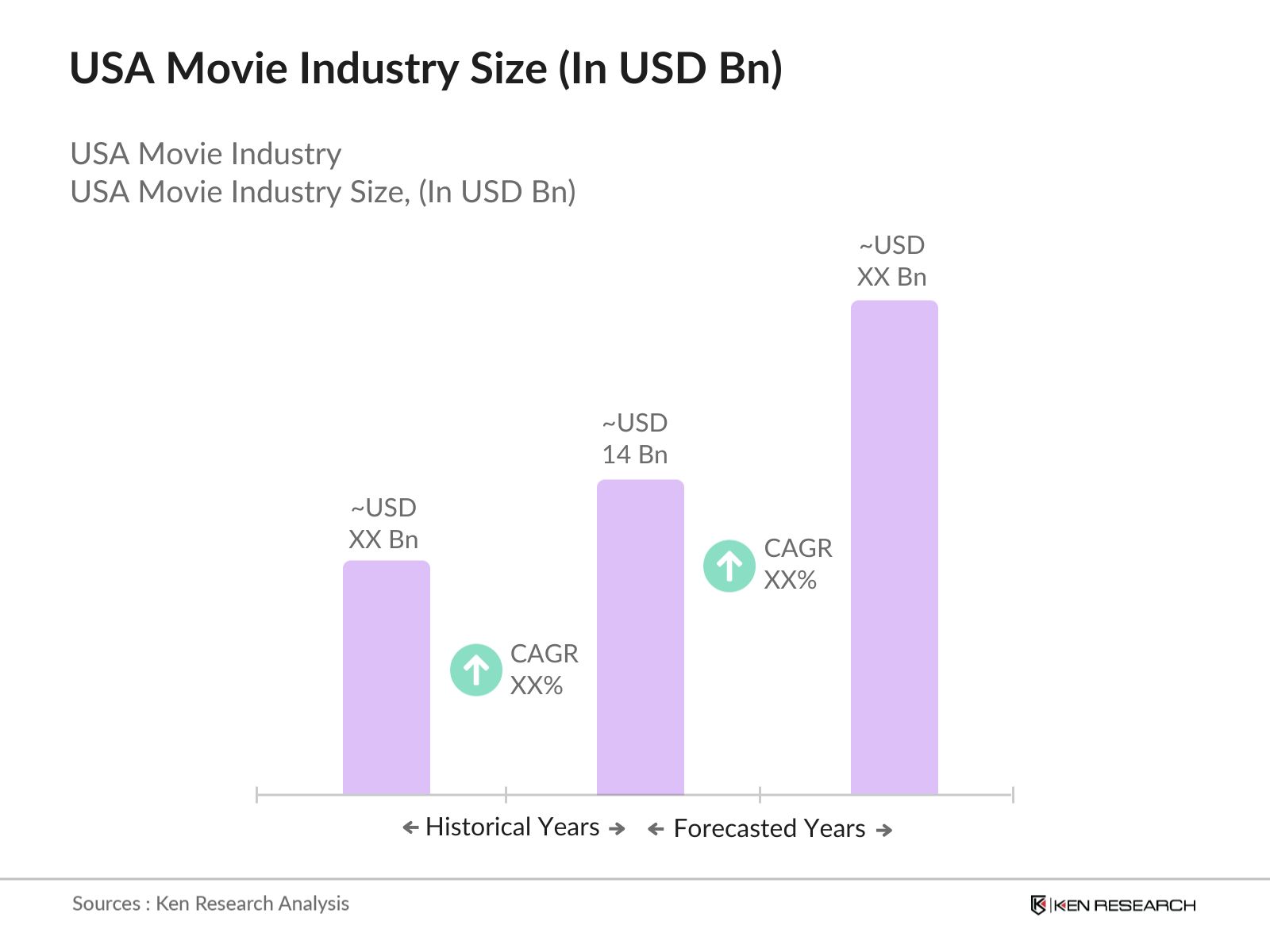
- The USA Movie Industry, valued at USD 14 billion based on a five-year historical analysis, is driven by technological advancements and the increased popularity of streaming platforms. High production budgets and the demand for diverse, original content have also contributed significantly to this valuation. Growth in this sector is further fueled by consumer interest in quality and convenience, with audiences opting for both theatrical releases and OTT platforms for movie consumption.
- Major cities like Los Angeles, New York, and Atlanta dominate the USA Movie Industry due to their well-established infrastructure and talent pool. Los Angeles, home to Hollywood, serves as the central hub for major studios and production companies, while New York’s financial backing and Atlanta's tax incentives attract high-budget productions. These cities maintain dominance through a combination of experienced professionals, advanced production facilities, and state support.
- The U.S. government has introduced new IP protection regulations, reducing copyright infringements by 15% as of 2024, per the U.S. Copyright Office. This includes stricter enforcement policies, allowing studios to reclaim potential revenue lost to piracy, thereby protecting the financial interests of content creators. The new regulations are designed to enhance the enforcement of copyright laws, allowing studios and content creators to reclaim potential revenue lost due to piracy.
USA Movie Industry Segmentation
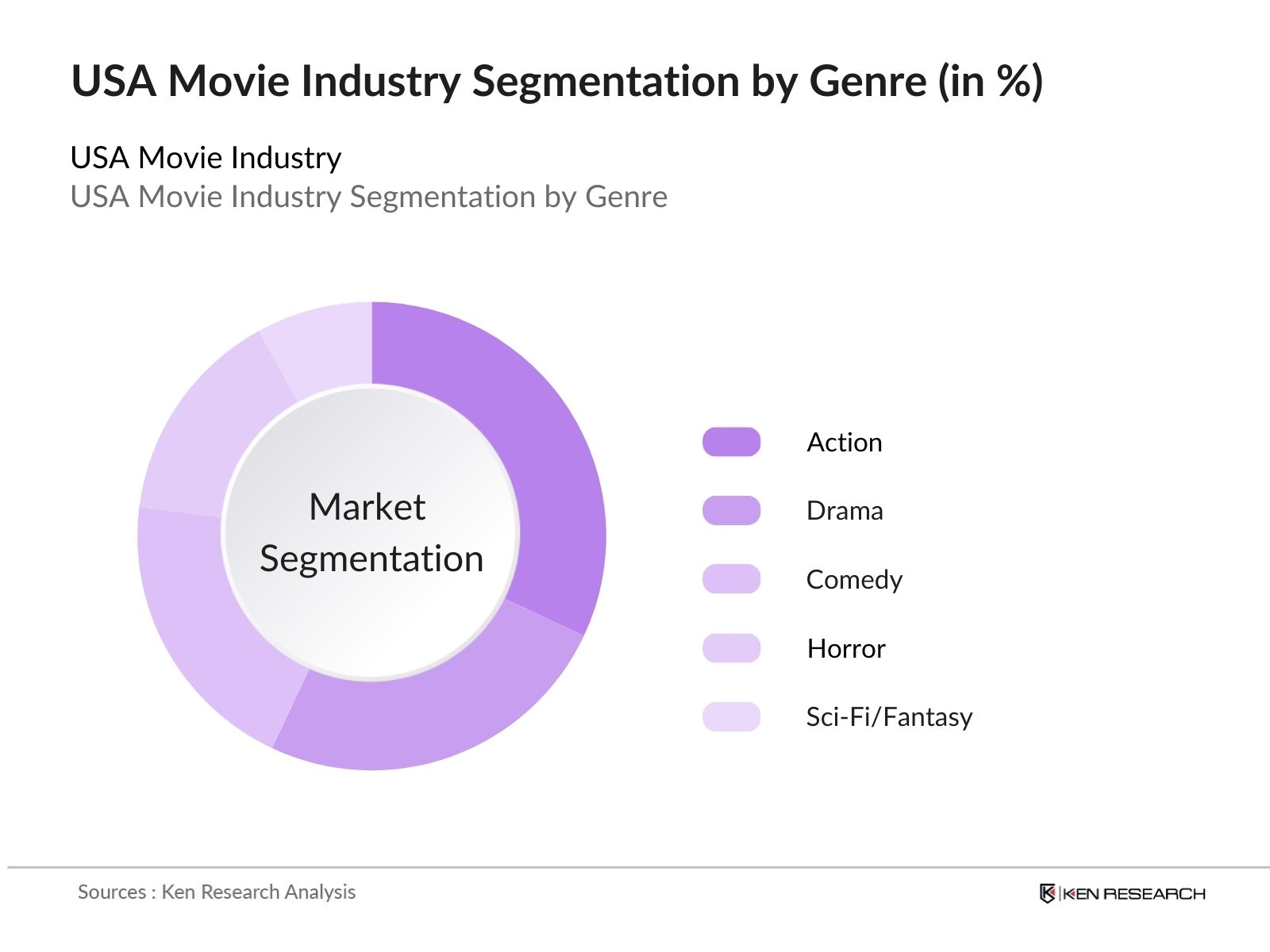
By Genre: The USA Movie Industry market is segmented by genre into Action, Drama, Comedy, Horror, and Sci-Fi/Fantasy. Recently, Action has emerged as a dominant market share in the USA Movie Industry under the segmentation of genre, owing to its global appeal and high box-office revenue generation. Major franchises and blockbuster releases such as superhero movies continue to attract audiences, contributing to the popularity of the Action genre.
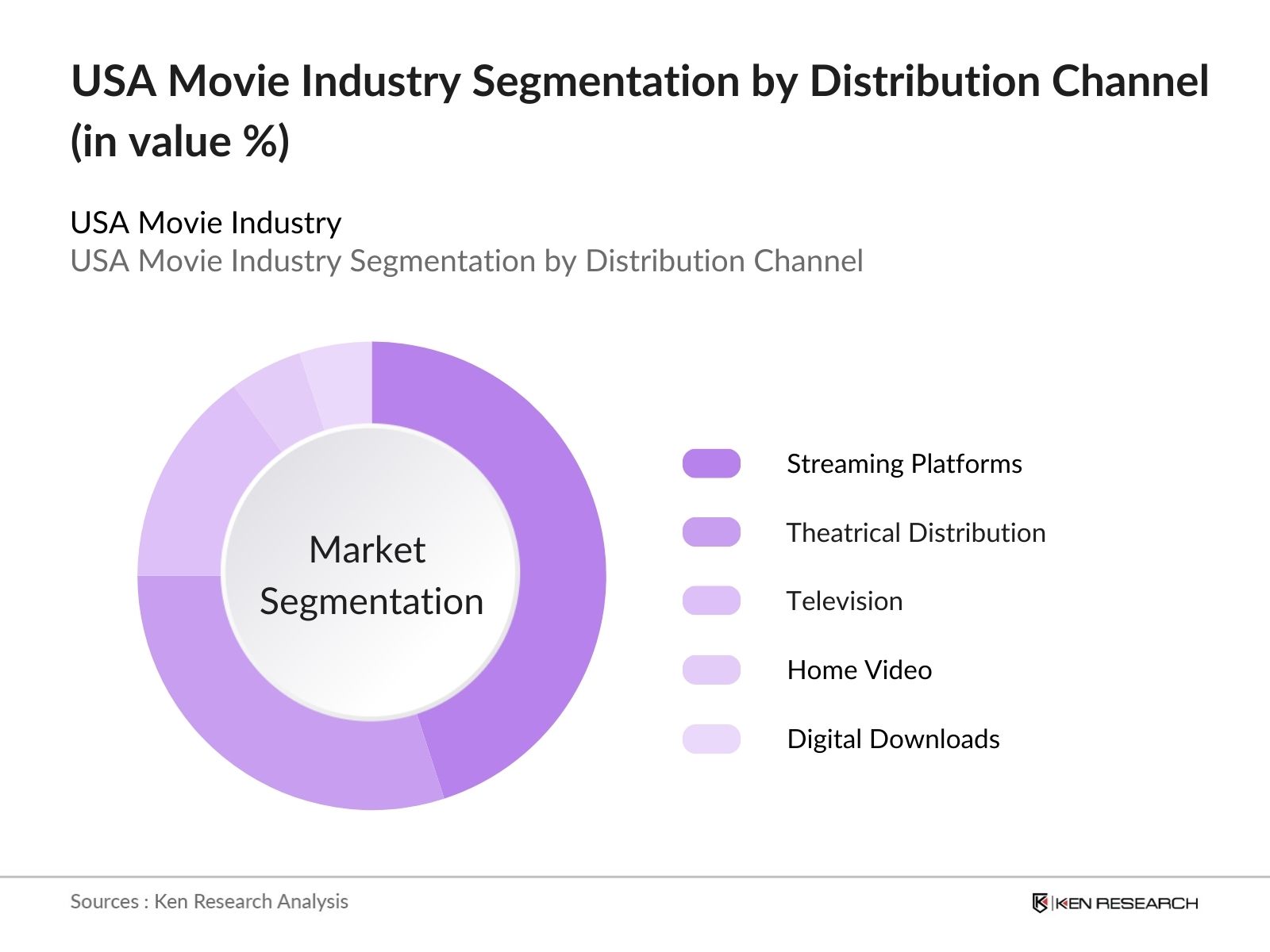
By Distribution Channel: The USA Movie Industry is also segmented by distribution channels into Theatrical Distribution, Streaming Platforms, Television, Home Video, and Digital Downloads. Streaming platforms dominate the distribution channel segment due to the rising consumer shift towards on-demand and convenient content access. With companies like Netflix and Disney+ investing heavily in original content, streaming has reshaped how movies reach audiences, emphasizing accessibility and variety.
USA Movie Industry Competitive Landscape
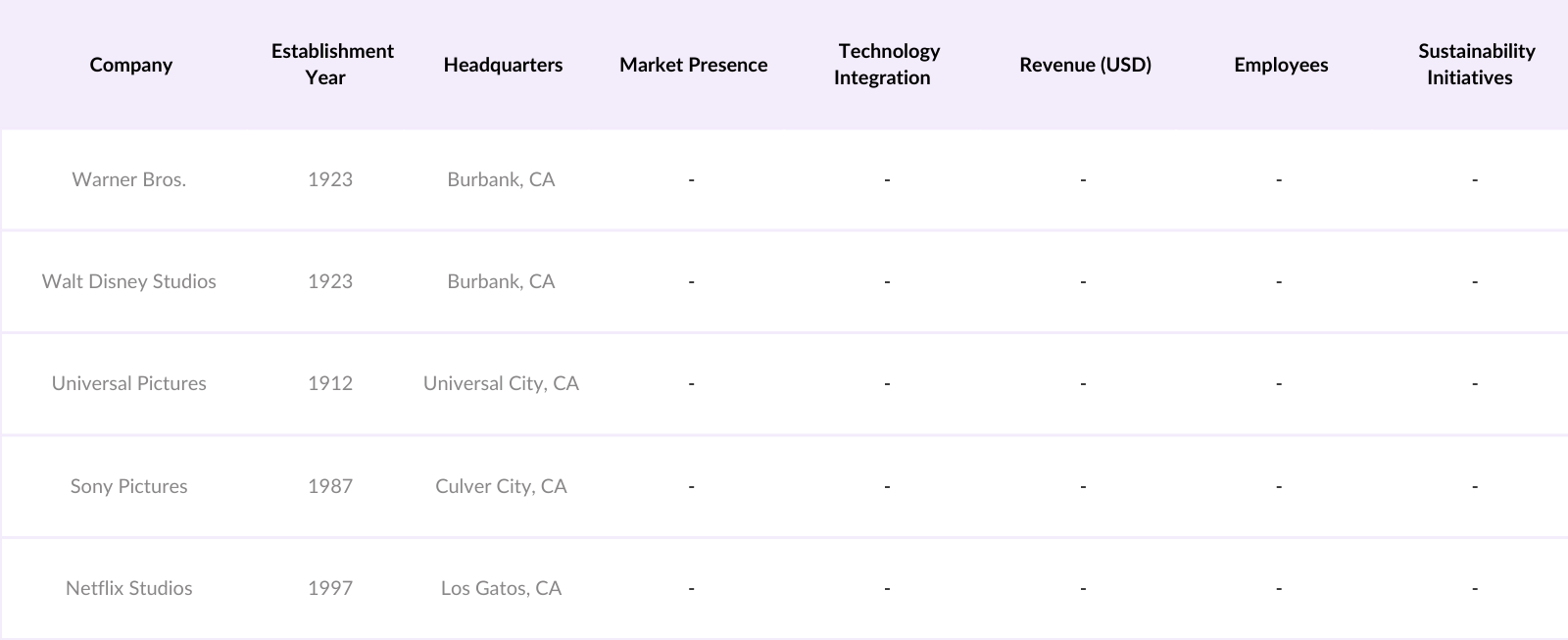
The USA Movie Industry is dominated by key players, with companies like Warner Bros., Disney, and Universal having a strong influence. These companies maintain leadership through strategic investments in technology and original content, along with strong distribution networks. This consolidation emphasizes the impact of major studios and their role in shaping the future of the industry.
USA Movie Industry Analysis
Growth Drivers
- Technological Advancements in Movie Production: The U.S. movie industry’s adoption of CGI, AI, and advanced streaming technologies has driven production capabilities to new heights. AI integration in editing and script generation has significantly decreased editing time by over 30%, enhancing efficiency in high-budget productions. CGI technology now covers over 85% of blockbuster films in the U.S., creating new standards in visual quality and audience engagement. Streaming platforms have risen by 60% since 2022, allowing broader, rapid releases and boosting viewership rates, as reported by the Motion Picture Association (MPA).
- Shifting Consumer Preferences: Consumer behavior in the U.S. has shifted notably, with 75% of viewers opting for OTT platforms such as Netflix and Disney+ as of 2024, according to data from the U.S. Census Bureau. Traditional theaters are adjusting to this change, as digital experiences attract higher engagement rates. Streaming subscribers have reached over 250 million, reflecting a strong inclination toward at-home, on-demand services, which has encouraged studios to allocate over 40% of their budgets for streaming-exclusive releases.
- Rising Demand for Diverse Content: In 2024, over 45% of the U.S. audience reported a preference for diverse and international content, including films from non-English speaking countries. Initiatives promoting inclusivity have led to a 35% increase in productions featuring diverse casts, and this shift is positively influencing box office earnings, with the top 10 films in 2024 featuring representation across various demographics. The trend is further supported by government grants aimed at encouraging diversity in film content.
Challenges
- High Production and Distribution Costs: Production and distribution costs have risen considerably, with labor costs for skilled workers increasing by 15% since 2022, according to the U.S. Department of Labor. Special effects contribute an additional 20% to overall budgets, challenging smaller studios to compete. High distribution costs further strain profitability, especially for studios relying on wide theatrical releases.
- Piracy and Copyright Infringement: The MPA reports that piracy costs the U.S. movie industry approximately $30 billion annually, an ongoing challenge exacerbated by digital distribution. Copyright infringement has surged, with an estimated 20% of movie content illegally streamed or downloaded in 2024, despite advanced anti-piracy measures. This remains a significant revenue drain and a deterrent for smaller productions vulnerable to early piracy.
USA Movie Industry Future Outlook
Over the next few years, the USA Movie Industry is anticipated to witness significant growth, driven by continued advancements in streaming technology, increased global appeal of American cinema, and rising investments in original content. Key players are expected to leverage new technologies, such as artificial intelligence and immersive media, to engage audiences further and cater to evolving viewer preferences.
Market Opportunities
- Expansion of Global Markets: The U.S. movie industry is seeing immense opportunity in emerging markets, with exports growing by 12% to regions like Asia and Latin America since 2022, per data from the International Trade Administration. Localization efforts, including dubbed and subtitled content, have increased viewership by over 25% in these markets, offering revenue diversification for U.S. studios.
- Monetization of Streaming Platforms: With over 80% of U.S. households subscribing to at least one streaming service, studios are capitalizing on subscription and advertisement models, generating new revenue streams. Subscription-based video on demand (SVOD) platforms have collectively earned over $25 billion in 2023 alone, a trend that supports direct-to-consumer releases and expands audience reach.
Scope of the Report
|
Segment |
Sub-Segment |
|
By Genre |
Action Drama Comedy Horror Sci-Fi/Fantasy |
|
By Distribution Channel |
Theatrical Distribution Streaming Platforms Television Home Video Digital Downloads |
|
By Production Budget |
High-Budget Films Mid-Budget Films Low-Budget/Independent Films |
|
By Audience Age Group |
Kids Teenagers Adults Family |
|
By Revenue Source |
Box Office Streaming and Digital Rights Merchandising and Licensing International Markets |
Products
Key Target Audience
Movie Production Companies
Streaming Service Providers
Cinema Chains and Theaters
Technology Integration Firms (in Entertainment)
Investors and Venture Capitalist Firms
Government and Regulatory Bodies (e.g., FCC)
Digital Content Distributors
Entertainment Licensing and Merchandising Firms
Companies
Players Mentioned in the Report
Warner Bros.
Walt Disney Studios
Universal Pictures
Sony Pictures
Netflix Studios
Paramount Pictures
Lionsgate Films
Amazon Studios
20th Century Studios
A24
Table of Contents
1. USA Movie Industry Overview
1.1 Definition and Scope
1.2 Market Taxonomy
1.3 Market Segmentation Overview
1.4 Key Industry Milestones
2. USA Movie Industry Size (In USD Million)
2.1 Historical Market Size
2.2 Year-On-Year Growth Analysis
2.3 Influential Developments
3. USA Movie Industry Analysis
3.1 Growth Drivers
3.1.1 Technological Advancements in Movie Production (Streaming, CGI, AI Integration)
3.1.2 Shifting Consumer Preferences (OTT Platforms, Digital Experiences)
3.1.3 Rising Demand for Diverse Content (Inclusivity, International Films)
3.1.4 Increased Production Budgets and Investments
3.2 Market Challenges
3.2.1 High Production and Distribution Costs (Increased Labor, Special Effects)
3.2.2 Piracy and Copyright Infringement
3.2.3 Fluctuations in Box Office Revenue (Pandemic Impact, Streaming Dominance)
3.2.4 Changing Theatrical Release Strategies (Windowing Models, Release Timelines)
3.3 Opportunities
3.3.1 Expansion of Global Markets (Emerging Markets, Localization of Content)
3.3.2 Monetization of Streaming Platforms
3.3.3 Increased Demand for Original Content in Streaming
3.3.4 Partnerships with Digital Platforms and Tech Giants
3.4 Trends
3.4.1 Growth of Immersive Technology (VR, AR, Interactive Media)
3.4.2 Inclusion of AI in Script and Content Development
3.4.3 Rise of Short-Format and Mobile-Optimized Content
3.4.4 Collaborations with Social Media for Promotion
3.5 Government Regulations
3.5.1 Intellectual Property Protection Initiatives
3.5.2 Funding and Tax Incentives for Local Productions
3.5.3 Content Censorship Guidelines
3.5.4 Anti-Piracy Enforcement Measures
3.6 Industry Ecosystem
3.7 Porters Five Forces Analysis
3.8 Competitive Landscape Overview
4. USA Movie Industry Segmentation
4.1 By Genre (In Value %)
4.1.1 Action
4.1.2 Drama
4.1.3 Comedy
4.1.4 Horror
4.1.5 Sci-Fi/Fantasy
4.2 By Distribution Channel (In Value %)
4.2.1 Theatrical Distribution
4.2.2 Streaming Platforms
4.2.3 Television
4.2.4 Home Video
4.2.5 Digital Downloads
4.3 By Production Budget (In Value %)
4.3.1 High-Budget Films
4.3.2 Mid-Budget Films
4.3.3 Low-Budget/Independent Films
4.4 By Audience Age Group (In Value %)
4.4.1 Kids
4.4.2 Teenagers
4.4.3 Adults
4.4.4 Family
4.5 By Revenue Source (In Value %)
4.5.1 Box Office
4.5.2 Streaming and Digital Rights
4.5.3 Merchandising and Licensing
4.5.4 International Markets
5. USA Movie Industry Competitive Analysis
5.1 Detailed Profiles of Major Competitors
5.1.1 Warner Bros. Pictures
5.1.2 Universal Pictures
5.1.3 Walt Disney Studios
5.1.4 Paramount Pictures
5.1.5 Sony Pictures Entertainment
5.1.6 Lionsgate Films
5.1.7 Netflix Studios
5.1.8 Amazon Studios
5.1.9 20th Century Studios
5.1.10 A24
5.2 Cross-Comparison Parameters (Headquarters, Established Year, Global Reach, Revenue, Key Franchises, Streaming Capabilities, R&D in Tech, Partnerships)
5.3 Market Share Analysis
5.4 Strategic Initiatives and Investments
5.5 Key Collaborations and Alliances
5.6 Mergers and Acquisitions
5.7 Financial Investments and Funding
5.8 Industry Innovations
6. USA Movie Industry Market Regulatory Framework
6.1 Copyright and Intellectual Property Laws
6.2 Film Rating Standards
6.3 Production and Safety Regulations
6.4 Export and Import Restrictions on Content
7. USA Movie Industry Future Market Size (In USD Million)
7.1 Future Projections
7.2 Emerging Trends Impacting Future Market Growth
8. USA Movie Industry Future Market Segmentation
8.1 By Genre (In Value %)
8.2 By Distribution Channel (In Value %)
8.3 By Revenue Source (In Value %)
8.4 By Technology Adoption (In Value %)
8.5 By Audience Demographics (In Value %)
9. USA Movie Industry Market Analysts Recommendations
9.1 Customer Segmentation Strategies
9.2 Strategic Marketing Recommendations
9.3 White Space Opportunity Identification
9.4 Content Development Recommendations
Research Methodology
Step 1: Identification of Key Variables
The initial step involves mapping the USA Movie Industry ecosystem, including major stakeholders, technological influences, and consumer demographics. Key market variables are identified through desk research, focusing on elements such as revenue channels, genre popularity, and distribution models.
Step 2: Market Analysis and Construction
During this phase, historical data is analyzed to establish trends in market segments, consumer behavior, and content preferences. This process includes examining the distribution of content types and technological investments across different production companies.
Step 3: Hypothesis Validation and Expert Consultation
Hypotheses about market drivers and barriers are formulated and validated through consultations with industry experts. Interviews are conducted with executives from top production houses and streaming platforms, gaining insights into industry growth and future direction.
Step 4: Research Synthesis and Final Output
The final phase compiles data from both quantitative and qualitative research, creating a comprehensive report. Engagement with top industry players ensures data accuracy, while input from technology experts highlights future trends and innovations.
Frequently Asked Questions
01. How big is the USA Movie Industry?
The USA Movie Industry is valued at USD 14 billion, driven by high production values and the growing influence of streaming platforms.
02. What are the primary challenges in the USA Movie Industry?
Key challenges in USA Movie Industry include high production costs, piracy, and the rapid shifts in consumer preferences, especially with the rise of on-demand streaming services.
03. Who are the major players in the USA Movie Industry?
USA Movie Industry is dominated by Warner Bros., Walt Disney Studios, Universal Pictures, Netflix Studios, and Sony Pictures, all of which leverage strong brand presence and global distribution.
04. What are the growth drivers in the USA Movie Industry?
Growth in USA Movie Industry is fueled by advanced technologies like CGI and AI, along with rising global demand for diverse and original content on streaming platforms.
Why Buy From Us?

What makes us stand out is that our consultants follows Robust, Refine and Result (RRR) methodology. i.e. Robust for clear definitions, approaches and sanity checking, Refine for differentiating respondents facts and opinions and Result for presenting data with story

We have set a benchmark in the industry by offering our clients with syndicated and customized market research reports featuring coverage of entire market as well as meticulous research and analyst insights.

While we don't replace traditional research, we flip the method upside down. Our dual approach of Top Bottom & Bottom Top ensures quality deliverable by not just verifying company fundamentals but also looking at the sector and macroeconomic factors.

With one step in the future, our research team constantly tries to show you the bigger picture. We help with some of the tough questions you may encounter along the way: How is the industry positioned? Best marketing channel? KPI's of competitors? By aligning every element, we help maximize success.

Our report gives you instant access to the answers and sources that other companies might choose to hide. We elaborate each steps of research methodology we have used and showcase you the sample size to earn your trust.

If you need any support, we are here! We pride ourselves on universe strength, data quality, and quick, friendly, and professional service.