
USA Mutual Funds Market Outlook to 2030
Region:North America
Author(s):Meenakshi Bisht
Product Code:KROD8351
December 2024
95
About the Report
USA Mutual Funds Market Overview
- The USA Mutual Funds Market is valued at USD 32 trillion, based on a five-year historical analysis. This valuation is driven by the increasing adoption of investment products among retail investors and the widespread availability of digital platforms simplifying investment processes. The market has been supported by favorable economic conditions, leading to a steady influx of assets under management (AUM) by major fund managers.
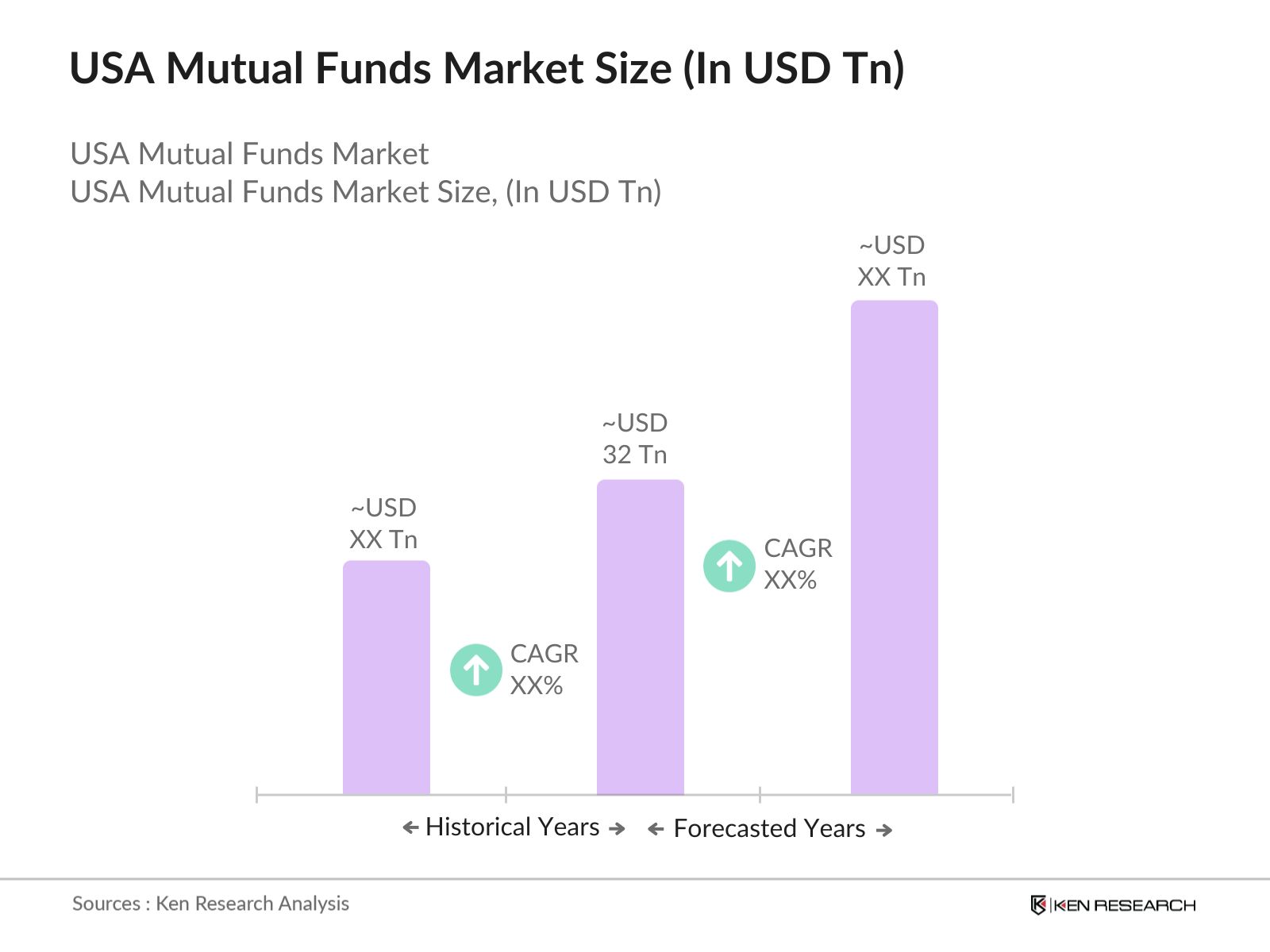
- The market is heavily dominated by financial hubs like New York City, Boston, and San Francisco. These cities serve as headquarters for major asset management firms and have strong networks of institutional investors and financial advisors, which provide access to a wide base of investment opportunities. New York, being the epicenter of financial markets, houses key industry players, making it the strategic hub for fund management activities.
- The U.S. Securities and Exchange Commission (SEC) has strengthened oversight of mutual funds, focusing on risk management and transparency. In fiscal year 2023, the SEC obtained orders for approximately $4.949 billion in financial remedies, which included $1.580 billion in civil penalties and $3.369 billion in disgorgement and prejudgment interest. These regulatory actions underscore the importance of adhering to SEC guidelines for maintaining investor trust and safeguarding the mutual funds market.
USA Mutual Funds Market Segmentation
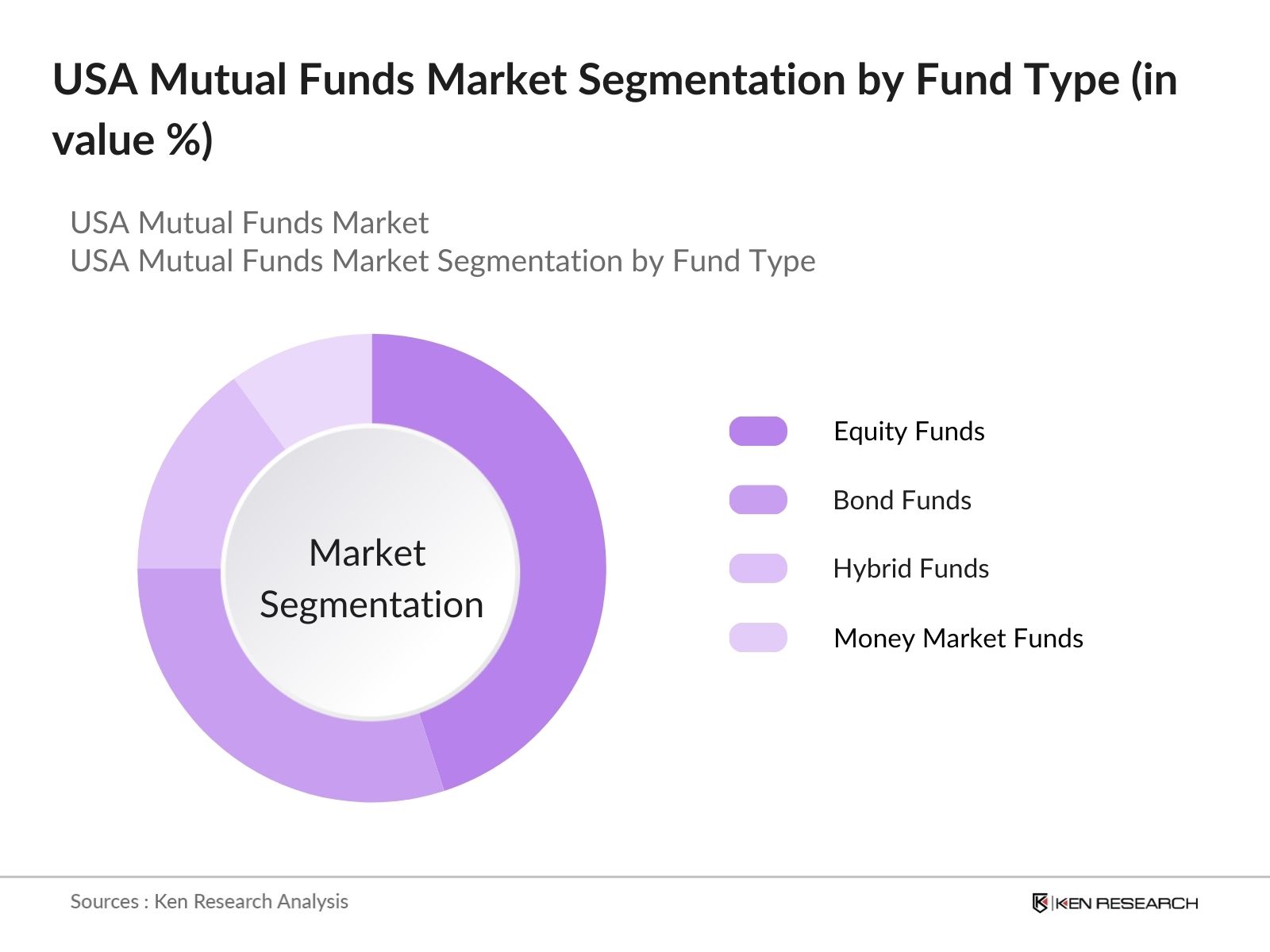
By Fund Type: The USA Mutual Funds market is segmented by fund type into equity funds, bond funds, hybrid funds, and money market funds. Recently, equity funds have a dominant market share under the fund type segmentation due to their higher returns potential and popularity among investors seeking long-term capital appreciation. As stock markets perform strongly, many investors prefer equity funds, which offer a diversified exposure to various sectors. Additionally, equity funds tend to attract younger investors who are more risk-tolerant compared to those choosing fixed-income options.
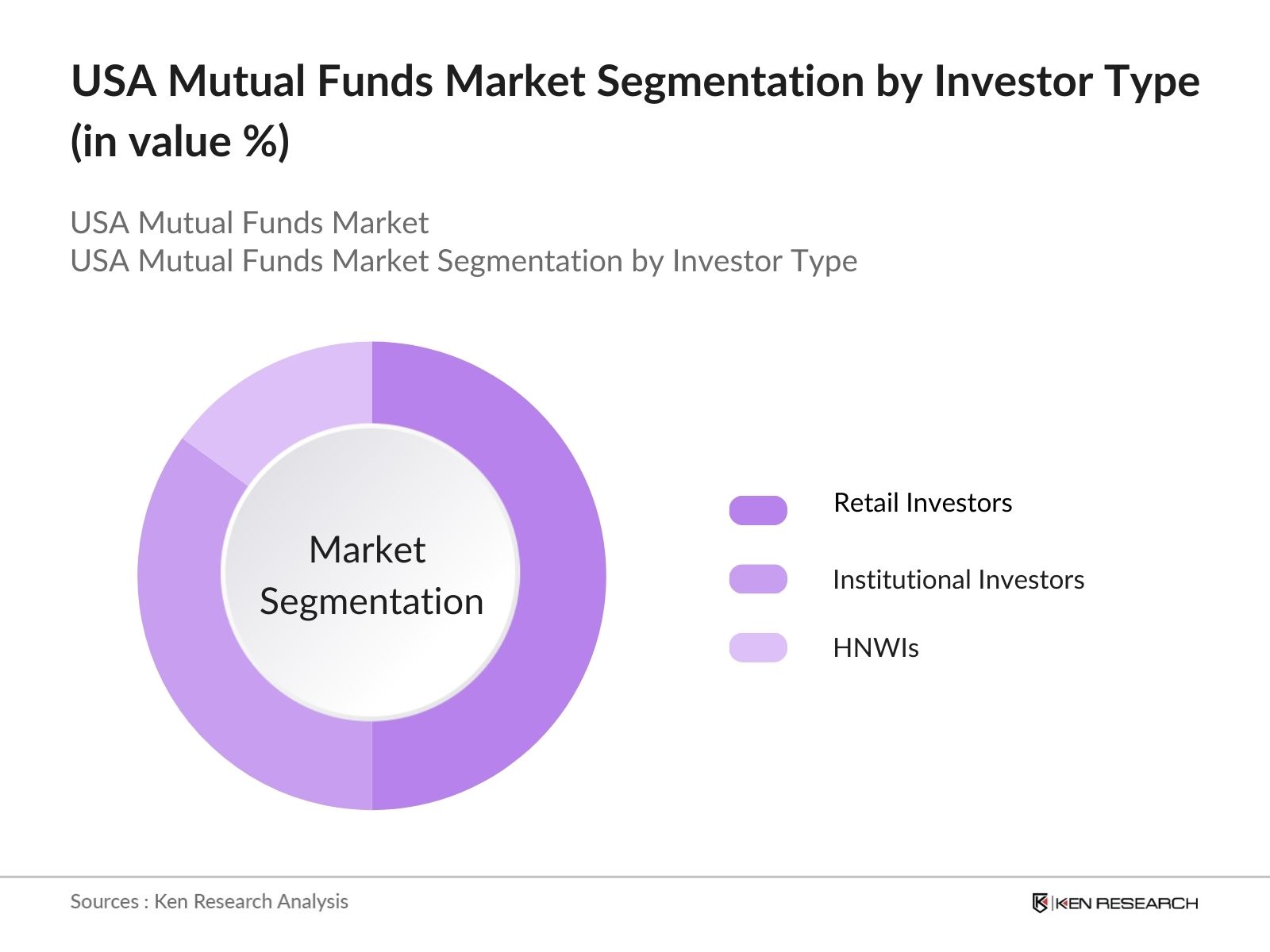
By Investor Type: The USA Mutual Funds market is segmented by investor type into retail investors, institutional investors, and high-net-worth individuals (HNWIs). Retail investors have a leading share in this segment, attributed to the proliferation of online investment platforms and robo-advisors, which have democratized access to mutual funds. The ease of investing through digital channels and the availability of low-cost index funds make mutual funds a preferred choice for individual investors aiming to build long-term wealth.
USA Mutual Funds Market Competitive Landscape
The market is characterized by the presence of several large players that dominate the industry. The market is concentrated among a few key companies that manage substantial portions of the total AUM. These firms leverage their extensive distribution networks, brand recognition, and comprehensive product portfolios to maintain their market positions.
|
Company |
Establishment Year |
Headquarters |
AUM (USD Trillions) |
Number of Funds |
Digital Investment Platforms |
Focus on ESG Funds |
Distribution Channels |
Investment Strategies |
Global Presence |
|
Vanguard Group |
1975 |
Malvern, Pennsylvania |
|||||||
|
BlackRock Inc. |
1988 |
New York, New York |
|||||||
|
Fidelity Investments |
1946 |
Boston, Massachusetts |
|||||||
|
T. Rowe Price |
1937 |
Baltimore, Maryland |
|||||||
|
Charles Schwab |
1971 |
San Francisco, California |
USA Mutual Funds Industry Analysis
Growth Drivers
- Rise in Retail Investors: The rise in retail investors in the USA mutual funds market has significantly impacted the investment landscape. Worldwide demand for regulated long-term funds increased sharply in 2023. Worldwide regulated long-term open-end funds had net sales of $781 billion in 2023. This increase is largely attributed to the growing participation of millennials and Gen Z in the market, driven by easier access to information and low-cost trading platforms.
- Adoption of Digital Investment Platforms: Digital investment platforms have played a crucial role in democratizing access to mutual funds. As of December 2023, a record 139 million demat accounts were reported, with 4.2 million new accounts opened in just that month alone. These platforms provide users with ease of access to a wide array of mutual funds, often with lower transaction fees compared to traditional channels. The proliferation of robo-advisors, such as those offered by banks and investment firms, further supports this shift.
- Increasing Popularity of ESG Funds (Environmental, Social, and Governance): ESG mutual funds are gaining momentum in the U.S. as investors increasingly prioritize sustainability. This trend reflects a growing interest in funds that align with environmental stewardship, social responsibility, and ethical governance. Supportive government policies and incentives for green investments further enhance the appeal of ESG funds, making them a preferred choice for investors looking to balance financial returns with positive societal impact.
Market Challenges
- Market Volatility: The market faces challenges due to market volatility, which can significantly impact investor sentiment and trigger large-scale redemptions, affecting fund liquidity. Fluctuations in the stock market often create uncertainty, leading investors to withdraw their investments during downturns. This volatility is influenced by various macroeconomic factors, including changes in interest rates and global political events, creating a challenging environment for mutual funds to maintain steady performance and manage investment flows.
- Regulatory Compliance Burden (SEC Regulations, Fiduciary Rules): Navigating regulatory requirements presents a challenge for mutual fund managers, with rules around reporting and liquidity management demanding considerable administrative effort. These regulations, designed to protect investors, require detailed disclosures and strict adherence to liquidity standards. Additionally, fiduciary responsibilities compel mutual funds to act in the best interests of investors, adding complexity to fund operations. Such compliance efforts can strain resources, impacting overall profitability while ensuring alignment with regulatory expectations.
USA Mutual Funds Market Future Outlook
The USA Mutual Funds market is anticipated to continue evolving over the next few years, driven by the integration of digital platforms and the increasing adoption of low-cost index funds. This evolution is supported by shifting investor preferences toward ESG (Environmental, Social, and Governance) funds, which align with the values of younger investors. The rise of hybrid and thematic investment options also presents new avenues for growth.
Market Opportunities
- Growth of Hybrid Funds (Asset Allocation Funds): Hybrid funds, which blend equities and fixed-income securities, are becoming increasingly popular in the U.S. market. These funds attract investors seeking balanced risk exposure and diversification, offering a mix of growth potential and stability. They are particularly appealing during periods of economic uncertainty, as they provide a strategic balance that adjusts with changing market conditions. Hybrid funds enable investors to benefit from both the stability of bonds and the growth opportunities in the stock market.
- Expansion of Direct Mutual Fund Platforms: Direct mutual fund platforms, which allow investors to purchase funds without intermediaries, are creating new opportunities for the mutual fund industry. These platforms offer a more transparent and cost-effective way for investors to access various funds, making them particularly attractive to those who value simplicity and control. The trend towards direct sales aligns with the broader shift towards digital financial services, providing investors with easier access and management of their investments through online platforms.
Scope of the Report
|
By Fund Type |
Equity Funds Bond Funds Hybrid Funds Money Market Funds |
|
By Investor Type |
Retail Investors Institutional Investors HNWIs |
|
By Distribution Channel |
Direct Channels (Online Platforms, Robo-Advisors) Indirect Channels (Brokers, Financial Advisors) |
|
By Investment Objective |
Growth Funds Income Funds Balanced Funds Index Funds |
|
By Geography |
Northeast Midwest South West |
Products
Key Target Audience
Digital Investment Platforms (Robo-Advisors)
Asset Management Firms
Fintech Companies
Retirement Planning Firms
Insurance Companies
Government and Regulatory Bodies (Securities and Exchange Commission, Financial Industry Regulatory Authority)
Investors and venture capital Firms
Banks and Financial Institutions
Companies
Players Mentioned in the Report
Vanguard Group
BlackRock Inc.
Fidelity Investments
Charles Schwab
T. Rowe Price
Franklin Templeton
J.P. Morgan Asset Management
Invesco Ltd.
American Funds
State Street Global Advisors
Table of Contents
1. USA Mutual Funds Market Overview
1.1. Definition and Scope
1.2. Market Taxonomy
1.3. Market Dynamics (Market Drivers, Market Restraints, Market Opportunities)
1.4. Market Segmentation Overview
2. USA Mutual Funds Market Size (In USD Trillion)
2.1. Historical Market Size
2.2. Year-On-Year Growth Analysis
2.3. Key Market Developments and Milestones
3. USA Mutual Funds Market Analysis
3.1. Growth Drivers
3.1.1. Rise in Retail Investors
3.1.2. Adoption of Digital Investment Platforms
3.1.3. Increasing Popularity of ESG Funds (Environmental, Social, and Governance)
3.1.4. Tax Benefits of Mutual Fund Investments
3.2. Market Challenges
3.2.1. Market Volatility
3.2.2. Regulatory Compliance Burden (SEC Regulations, Fiduciary Rules)
3.2.3. Fee Compression and Margin Pressure
3.3. Opportunities
3.3.1. Growth of Hybrid Funds (Asset Allocation Funds)
3.3.2. Expansion of Direct Mutual Fund Platforms
3.3.3. Retirement Planning Market (401(k) Plans, IRAs)
3.4. Trends
3.4.1. Rise of Passive Funds (ETFs, Index Funds)
3.4.2. Thematic Investing Trends (Tech, Clean Energy, Healthcare)
3.4.3. Customization of Portfolio Management (Robo-Advisors)
3.5. Government Regulation
3.5.1. SEC Oversight and Compliance
3.5.2. Taxation Laws (Capital Gains Tax, Dividends Taxation)
3.5.3. Regulatory Sandbox for Fintech in Investment
3.5.4. Accredited Investor Definitions
3.6. SWOT Analysis
3.7. Stakeholder Ecosystem (Asset Managers, Distributors, Custodians)
3.8. Porters Five Forces
3.9. Competition Ecosystem
4. USA Mutual Funds Market Segmentation
4.1. By Fund Type (In Value %)
4.1.1. Equity Funds
4.1.2. Bond Funds
4.1.3. Hybrid Funds
4.1.4. Money Market Funds
4.2. By Investor Type (In Value %)
4.2.1. Retail Investors
4.2.2. Institutional Investors
4.2.3. High-Net-Worth Individuals (HNWIs)
4.3. By Distribution Channel (In Value %)
4.3.1. Direct Channels (Online Platforms, Robo-Advisors)
4.3.2. Indirect Channels (Brokers, Financial Advisors)
4.4. By Investment Objective (In Value %)
4.4.1. Growth Funds
4.4.2. Income Funds
4.4.3. Balanced Funds
4.4.4. Index Funds
4.5. By Geography (In Value %)
4.5.1. Northeast
4.5.2. Midwest
4.5.3. South
4.5.4. West
5. USA Mutual Funds Market Competitive Analysis
5.1. Detailed Profiles of Major Companies
5.1.1. Vanguard Group
5.1.2. BlackRock Inc.
5.1.3. Fidelity Investments
5.1.4. Charles Schwab
5.1.5. T. Rowe Price
5.1.6. Franklin Templeton
5.1.7. Invesco Ltd.
5.1.8. J.P. Morgan Asset Management
5.1.9. American Funds
5.1.10. State Street Global Advisors
5.1.11. PIMCO
5.1.12. Morgan Stanley Investment Management
5.1.13. Principal Global Investors
5.1.14. Northern Trust Asset Management
5.1.15. Dimensional Fund Advisors
5.2. Cross Comparison Parameters (AUM, Fund Performance, Fee Structure, Investor Base, Digital Presence, Fund Types, ESG Integration, Market Share)
5.3. Market Share Analysis (By AUM)
5.4. Strategic Initiatives (Partnerships, New Fund Launches, Digital Transformation)
5.5. Mergers and Acquisitions
5.6. Investment Analysis
5.7. Venture Capital and Private Equity Investments in Fintech Platforms
5.8. Mutual Fund Industry Concentration Ratios (Top 5 Firms Share)
6. USA Mutual Funds Market Regulatory Framework
6.1. SEC Regulations (Investment Advisers Act, Investment Company Act)
6.2. Taxation Rules (Capital Gains, Dividends, 401(k) Regulations)
6.3. Mutual Fund Disclosure Requirements (Prospectus, Annual Reports)
7. USA Mutual Funds Future Market Size (In USD Trillion)
7.1. Future Market Size Projections
7.2. Key Factors Driving Future Market Growth (Demographic Shifts, Digital Adoption)
8. USA Mutual Funds Future Market Segmentation
8.1. By Fund Type (In Value %)
8.2. By Investor Type (In Value %)
8.3. By Distribution Channel (In Value %)
8.4. By Investment Objective (In Value %)
8.5. By Geography (In Value %)
9. USA Mutual Funds Market Analysts Recommendations
9.1. TAM/SAM/SOM Analysis
9.2. Customer Cohort Analysis
9.3. Marketing Initiatives (Targeted Campaigns, Digital Outreach)
9.4. White Space Opportunity Analysis
Disclaimer Contact UsResearch Methodology
Step 1: Identification of Key Variables
The initial phase involves mapping the ecosystem of the USA Mutual Funds market, focusing on key stakeholders such as asset managers, distribution channels, and regulatory bodies. This process includes desk research from proprietary databases to identify critical market drivers and restraints influencing the industry.
Step 2: Market Analysis and Construction
In this step, historical data related to AUM growth, investor demographics, and digital investment trends is compiled and analyzed. It includes assessing the market penetration of different fund types and evaluating the role of distribution channels in reaching various investor groups.
Step 3: Hypothesis Validation and Expert Consultation
Market hypotheses are formulated and validated through consultations with industry experts, such as senior managers at asset management firms and financial advisors. These insights provide a deeper understanding of market dynamics, including the impact of regulatory changes and evolving investor preferences.
Step 4: Research Synthesis and Final Output
The final phase synthesizes the data collected through primary and secondary research, combining it with insights from industry interviews. This process ensures a comprehensive analysis of the USA Mutual Funds market, including accurate market size estimates and a nuanced understanding of competitive dynamics.
Frequently Asked Questions
01. How big is the USA Mutual Funds Market?
The USA Mutual Funds Market is valued at USD 32 trillion, driven by growing digital adoption and increased investment through retirement accounts such as 401(k) plans and IRAs.
02. What are the challenges in the USA Mutual Funds Market?
Challenges in USA Mutual Funds Market include market volatility, regulatory compliance burdens, and competition from low-cost ETFs and index funds, which pressure traditional mutual fund managers to reduce fees.
03. Who are the major players in the USA Mutual Funds Market?
Key players in USA Mutual Funds Market include Vanguard Group, BlackRock Inc., Fidelity Investments, T. Rowe Price, and Charles Schwab. Their dominance stems from extensive AUM, diverse fund offerings, and robust distribution networks.
04. What drives the USA Mutual Funds Market?
The USA Mutual Funds Market is driven by factors such as the rise in retail investor participation, the popularity of digital investment platforms, and the focus on ESG funds, catering to the values of younger investors.
Why Buy From Us?

What makes us stand out is that our consultants follows Robust, Refine and Result (RRR) methodology. i.e. Robust for clear definitions, approaches and sanity checking, Refine for differentiating respondents facts and opinions and Result for presenting data with story

We have set a benchmark in the industry by offering our clients with syndicated and customized market research reports featuring coverage of entire market as well as meticulous research and analyst insights.

While we don't replace traditional research, we flip the method upside down. Our dual approach of Top Bottom & Bottom Top ensures quality deliverable by not just verifying company fundamentals but also looking at the sector and macroeconomic factors.

With one step in the future, our research team constantly tries to show you the bigger picture. We help with some of the tough questions you may encounter along the way: How is the industry positioned? Best marketing channel? KPI's of competitors? By aligning every element, we help maximize success.

Our report gives you instant access to the answers and sources that other companies might choose to hide. We elaborate each steps of research methodology we have used and showcase you the sample size to earn your trust.

If you need any support, we are here! We pride ourselves on universe strength, data quality, and quick, friendly, and professional service.