USA Nanosatellite and Microsatellite Market Outlook to 2030

Region:North America

Author(s):Shubham Kashyap

Product Code:KROD11303

Published On

November 2024

Total pages

81

About the Report

USA Nanosatellite and Microsatellite Market Overview

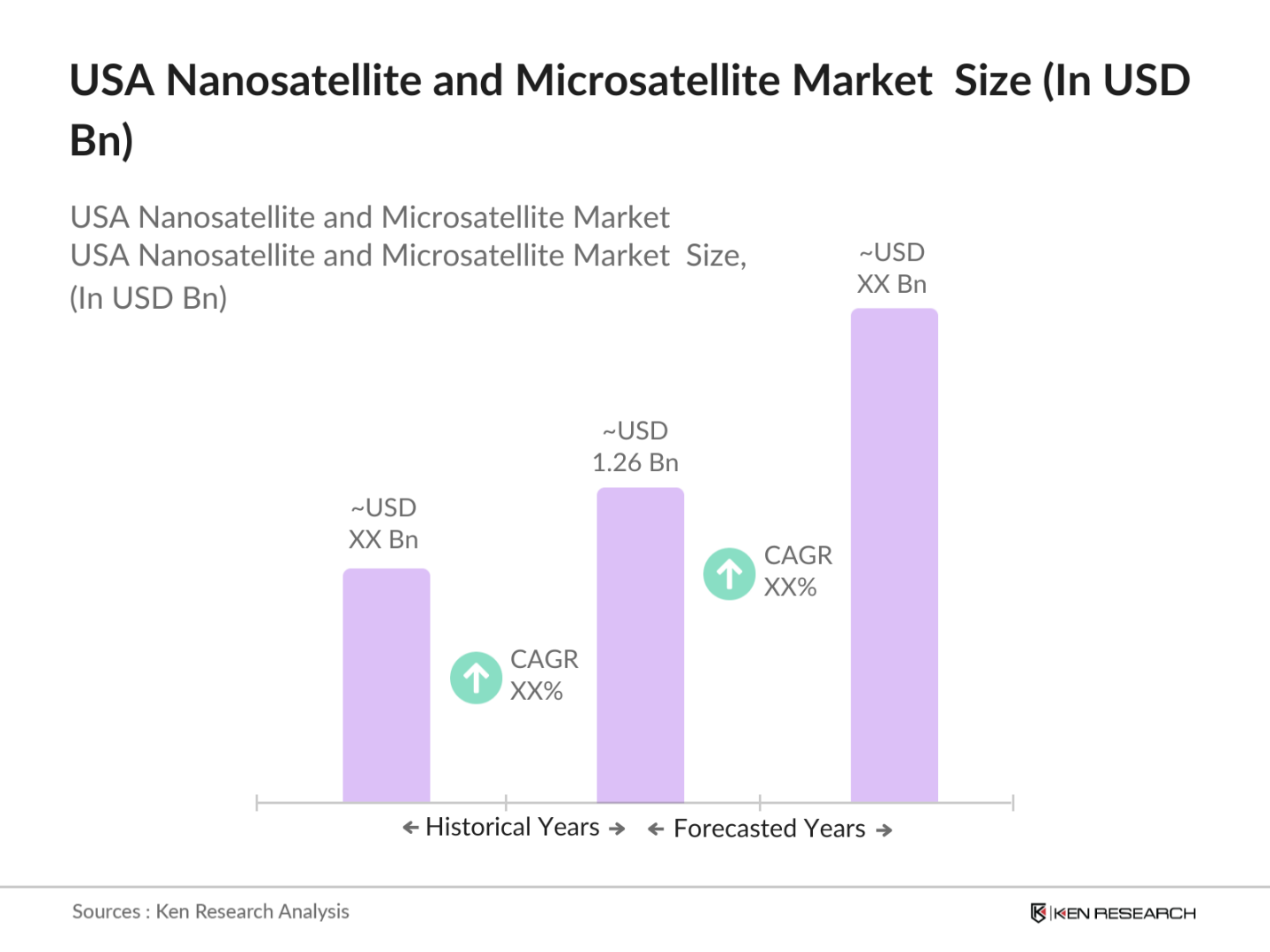
  • The USA nanosatellite and microsatellite market is valued at around USD 1.26 billion, driven by the rising demand for cost-efficient and high-performance satellite solutions across sectors like defense, communication, and Earth observation. The market is further supported by government initiatives such as NASA's CubeSat Launch Initiative and increasing investments in private space missions. The integration of IoT solutions and advancements in miniaturization technology have played a significant role in accelerating market growth. USA Nanosatellite and Microsatellite Market Size
  • Key demand centers for nanosatellites and microsatellites in the USA include technology hubs and aerospace-focused cities like Los Angeles, Houston, and Denver. These cities benefit from established research facilities, skilled talent pools, and proximity to major launch providers. Defense-centric cities like Colorado Springs also contribute to market demand, as government and military projects increasingly rely on nanosatellites for secure communications and surveillance applications.
  • The FCC regulates the licensing of satellite communications to ensure the efficient use of spectrum and to mitigate interference. Small satellite operators must obtain FCC licenses, which involve compliance with specific technical and operational requirements, including orbital debris mitigation strategies.The FCC also mandates detailed frequency coordination and interference analysis to ensure that small satellite operations do not disrupt existing communication systems, emphasizing the need for precise technical compliance during the licensing process.

USA Nanosatellite and Microsatellite Market Segmentation

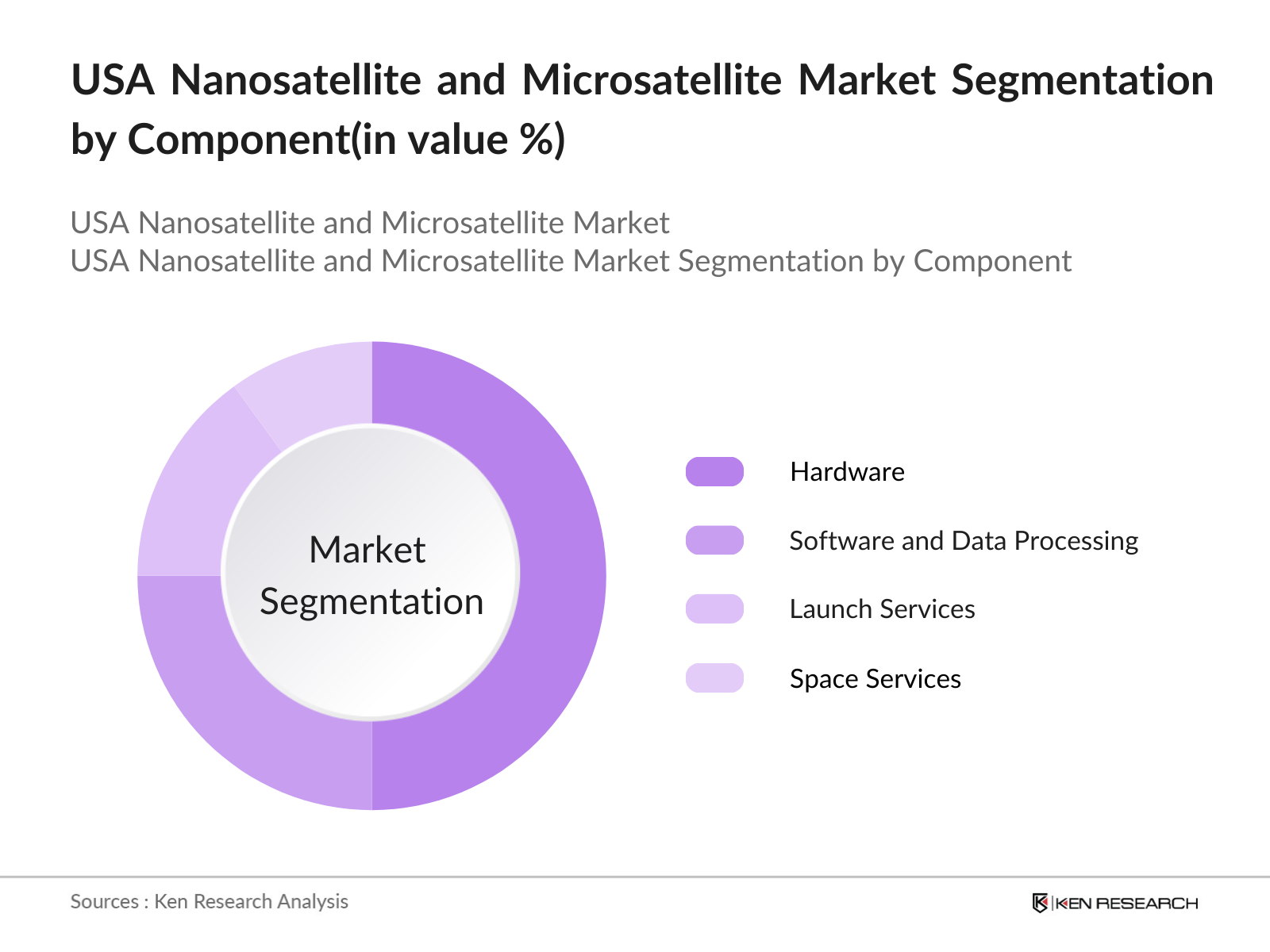
  • By Component: The market is segmented by component into hardware, software and data processing, launch services, and space services. Recently, hardware has captured the dominant market share due to the increasing need for reliable sensors, power systems, and structural components. Companies are focusing on the development of lightweight, durable materials and cost-effective solutions to meet the demand for efficient satellite designs, making hardware a critical segment in the market's growth. USA Nanosatellite and Microsatellite Market Segmentation by component
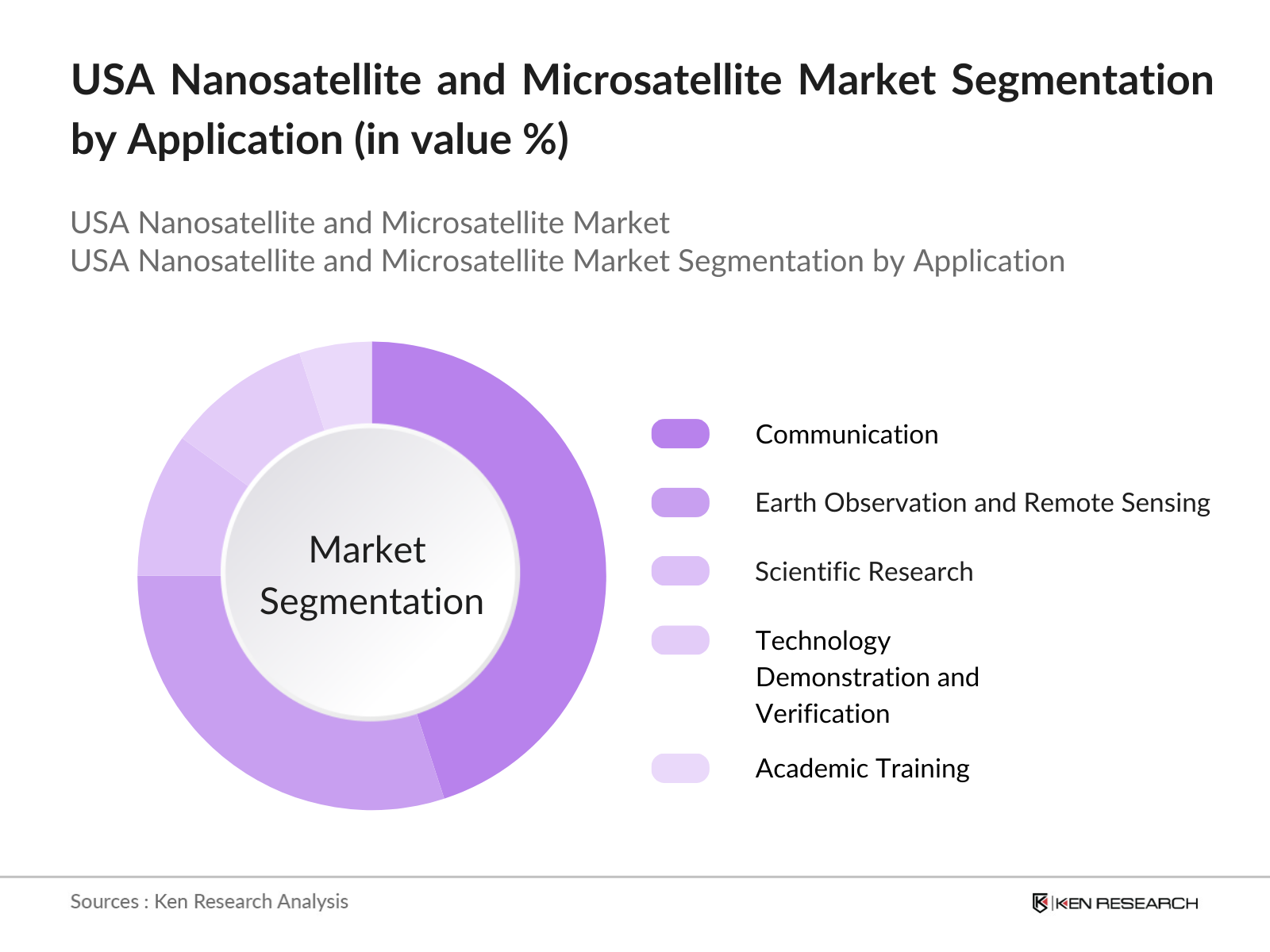
  • By Application: The market is further segmented by application into communication, Earth observation and remote sensing, scientific research, technology demonstration and verification, and academic training. Communication dominates this segmentation due to its crucial role in providing connectivity to underserved regions and enabling satellite-based IoT services. The demand for reliable and cost-effective communication solutions has driven significant adoption in both commercial and governmental sectors. USA Nanosatellite and Microsatellite Market Segmentation by application

USA Nanosatellite and Microsatellite Market Competitive Landscape

The USA nanosatellite and microsatellite market is characterized by a mix of established aerospace companies and innovative startups. Companies like Lockheed Martin, Northrop Grumman, and Planet Labs lead the market due to their robust R&D capabilities, advanced product offerings, and government partnerships. This market dominance reflects their ability to meet both commercial and defense needs while fostering innovation through strategic collaborations.
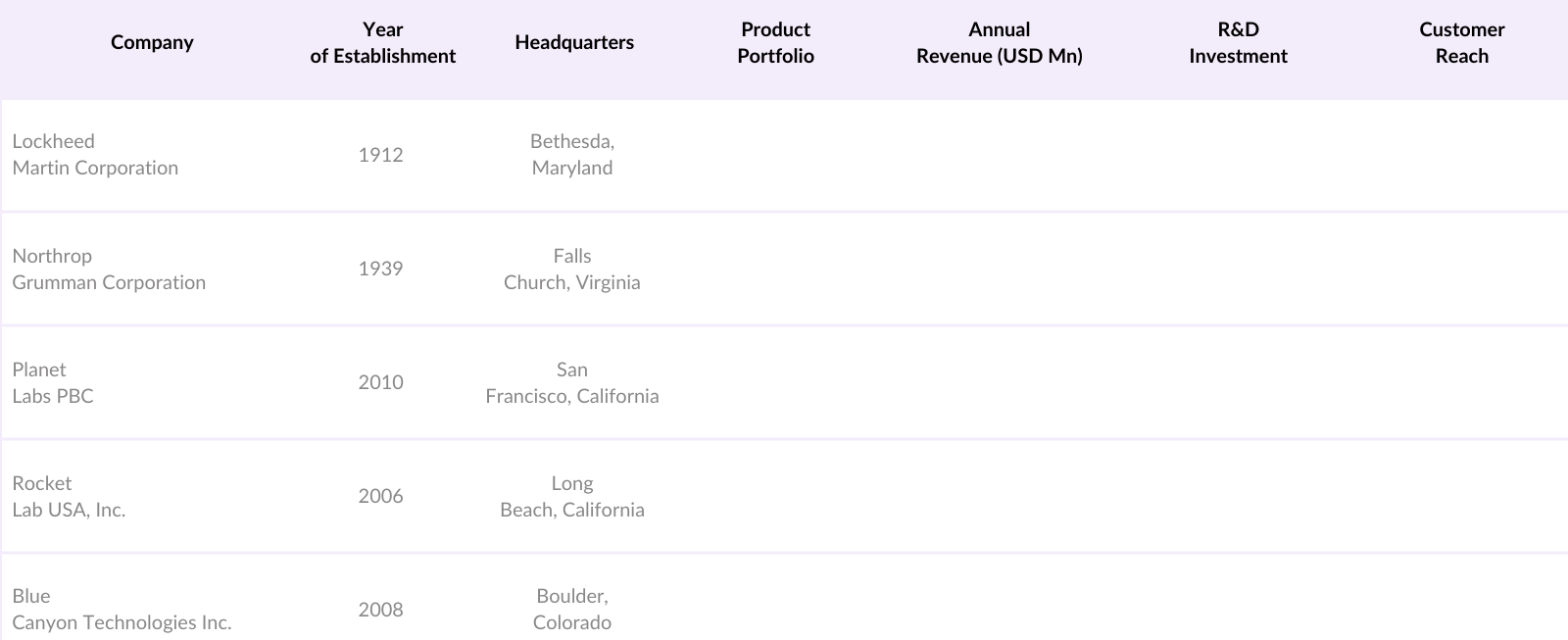
USA Nanosatellite and Microsatellite Market Competitive Landscape

USA Nanosatellite and Microsatellite Market Analysis

Growth Drivers:

  • Advancements in Miniaturization Technology: The development of nanosatellites and microsatellites has been significantly propelled by advancements in miniaturization technology. NASA's Small Spacecraft Technology State-of-the-Art report highlights the increasing capability of small spacecraft, with over 5,681 small spacecraft launched in the past decade, 45% of which had a mass under 200 kg. This trend underscores the industry's ability to pack more functionality into smaller packages, enhancing mission versatility and reducing launch costs.
  • Increasing Demand for Earth Observation: The demand for high-resolution Earth observation data has surged, driven by applications in environmental monitoring, agriculture, and disaster management. NASA's Earth Science Division has been actively deploying small satellites for such purposes, with missions like CYGNSS, which uses a constellation of eight microsatellites to monitor tropical cyclones. These initiatives demonstrate the growing reliance on small satellites for critical Earth observation tasks.
  • Rising Adoption in Communication Services: Small satellites are increasingly being utilized to enhance global communication networks. Companies like SpaceX have launched thousands of small satellites to create low-Earth orbit constellations aimed at providing global broadband internet coverage. This expansion is transforming the telecommunications landscape, offering connectivity solutions to underserved regions and supporting the growing Internet of Things (IoT) ecosystem.

Challenges:

  • Regulatory Barriers: The proliferation of small satellites has introduced regulatory challenges, particularly concerning spectrum allocation and orbital debris management. The Federal Communications Commission (FCC) has implemented stringent licensing requirements to address these issues, which can pose hurdles for new entrants and slow the deployment process for small satellite operators. Additionally, international coordination is required to manage spectrum sharing and prevent conflicts in global satellite operations.
  • Limited Payload Capacities: While small satellites offer cost advantages, their limited size constrains payload capacity, affecting the scope of missions they can undertake. This limitation necessitates ongoing innovation in miniaturization and efficiency to maximize the utility of small satellites within their physical constraints. Furthermore, advancements in modular designs are being explored to optimize the use of available payload space for multi-purpose missions.

USA Nanosatellite and Microsatellite Market Future Outlook

The USA nanosatellite and microsatellite market is poised for substantial growth, fueled by advancements in satellite miniaturization, rising investments in private space ventures, and expanding use cases in sectors like communication and defense. The integration of AI and machine learning for satellite operations and the development of cost-efficient launch systems will further drive the market's evolution. Increasing collaboration between private companies and government agencies will also unlock new opportunities, fostering innovation and growth.

Future Market Opportunities:

  • Expansion of IoT Connectivity: Small satellites are poised to play a crucial role in expanding IoT connectivity, offering global coverage that terrestrial networks cannot achieve. This capability is essential for applications such as remote monitoring and asset tracking, presenting significant growth opportunities for small satellite operators in the IoT sector. Furthermore, their ability to provide real-time data transmission supports critical applications in industries like agriculture, logistics, and environmental monitoring.
  • Technological Innovations in Propulsion Systems: Advancements in propulsion technologies have enhanced the maneuverability and mission lifespan of small satellites. For example, the development of electric propulsion systems allows small satellites to perform complex maneuvers and maintain desired orbits more efficiently, broadening their application potential. Additionally, these innovations contribute to minimizing orbital debris by enabling satellites to deorbit safely at the end of their mission lifecycle.

Scope of the Report

By Component

Hardware
Software and Data Processing
Launch Services
Space Services

By Mass

Nanosatellites (1 kg - 10 kg)
Microsatellites (11 kg - 100 kg)

By Application

Communication
Earth Observation and Remote Sensing
Scientific Research
Technology Demonstration and Verification
Academic Training

By End-Use Sector

Government
Defense and Security
Commercial
Civil
Energy and Infrastructure

By Orbit Type

Low Earth Orbit (LEO)
Medium Earth Orbit (MEO)
Geostationary Orbit (GEO)

Products

Key Target Audience

  • Aerospace and Defense Contractors

  • Satellite Manufacturers

  • Government and Regulatory Bodies (e.g., NASA, FCC, DoD)

  • Launch Service Providers

  • Telecommunications Companies

  • IoT Solution Providers

  • Investors and Venture Capitalist Firms

  • Banks and Financial Institutions

Companies

Players Mentioned in the Report

  1. Lockheed Martin Corporation

  2. Northrop Grumman Corporation

  3. Planet Labs PBC

  4. Rocket Lab USA, Inc.

  5. Blue Canyon Technologies Inc.

  6. Sierra Nevada Corporation

  7. Spire Global Inc.

  8. Tyvak Nano-Satellite Systems Inc.

  9. NanoAvionics

  10. GomSpace Group AB

  11. AAC Clyde Space AB

  12. Innovative Solutions In Space (ISIS)

  13. Surrey Satellite Technology Limited (SSTL)

  14. SpaceQuest Ltd.

  15. Dauria Aerospace

Table of Contents

USA Nanosatellite and Microsatellite Market Overview

Definition and Scope

Market Taxonomy

Market Growth Rate

Market Segmentation Overview

USA Nanosatellite and Microsatellite Market Size (USD Billion)

Historical Market Size

Year-On-Year Growth Analysis

Key Market Developments and Milestones

USA Nanosatellite and Microsatellite Market Analysis

Growth Drivers

Advancements in Miniaturization Technology

Increasing Demand for Earth Observation

Rising Adoption in Communication Services

Government Initiatives and Funding

USA Nanosatellite and Microsatellite Market Challenges

Regulatory Barriers

Limited Payload Capacities

High Development Costs

USA Nanosatellite and Microsatellite Market Opportunities

Expansion of IoT Connectivity

Emergence of Private Space Companies

Technological Innovations in Propulsion Systems

USA Nanosatellite and Microsatellite Market Trends

Deployment of Small Satellite Constellations

Integration with AI and Machine Learning

Increased Use in Scientific Research Missions

USA Nanosatellite and Microsatellite Market Government Regulations

Federal Communications Commission (FCC) Licensing

National Aeronautics and Space Administration (NASA) Policies

Department of Defense (DoD) Space Strategies

SWOT Analysis

Stakeholder Ecosystem

Porter's Five Forces Analysis

Competitive Landscape

USA Nanosatellite and Microsatellite Market Segmentation

By Component (Value %)

Hardware

Software and Data Processing

Launch Services

Space Services

By Mass (Value %)

Nanosatellites (1 kg - 10 kg)

Microsatellites (11 kg - 100 kg)

By Application (Value %)

Communication

Earth Observation and Remote Sensing

Scientific Research

Technology Demonstration and Verification

Academic Training

By End-Use Sector (Value %)

Government

Defense and Security

Commercial

Civil

Energy and Infrastructure

By Orbit Type (Value %)

Low Earth Orbit (LEO)

Medium Earth Orbit (MEO)

Geostationary Orbit (GEO)

USA Nanosatellite and Microsatellite Market Competitive Analysis

Detailed Profiles of Major Companies

Lockheed Martin Corporation

Northrop Grumman Corporation

Planet Labs PBC

Sierra Nevada Corporation

Spire Global Inc.

Rocket Lab USA, Inc.

Blue Canyon Technologies Inc.

Tyvak Nano-Satellite Systems Inc.

NanoAvionics

GomSpace Group AB

Innovative Solutions In Space (ISIS)

AAC Clyde Space AB

Surrey Satellite Technology Limited (SSTL)

SpaceQuest Ltd.

Dauria Aerospace

Cross Comparison Parameters

Number of Employees

Headquarters Location

Year of Establishment

Annual Revenue

Number of Satellites Launched

Key Clients

Market Share

Technological Capabilities

Market Share Analysis

Strategic Initiatives

Mergers and Acquisitions

Investment Analysis

Venture Capital Funding

Government Grants

Private Equity Investments

Regulatory Framework

Spectrum Allocation and Licensing

Export Control Regulations

Space Debris Mitigation Guidelines

Compliance Requirements

Certification Processes

USA Nanosatellite and Microsatellite Future Market Size (USD Billion)

Future Market Size Projections

Key Factors Driving Future Market Growth

USA Nanosatellite and Microsatellite Future Market Segmentation

By Component (Value %)

By Mass (Value %)

By Application (Value %)

By End-Use Sector (Value %)

By Orbit Type (Value %)

USA Nanosatellite and Microsatellite Market Analysts Recommendations

Total Addressable Market (TAM), Serviceable Available Market (SAM), and Serviceable Obtainable Market (SOM) Analysis

Customer Cohort Analysis

Marketing Initiatives

White Space Opportunity Analysis

Disclaimer Contact Us

Research Methodology


Step 1: Identification of Key Variables

The first step involved mapping the ecosystem of the USA nanosatellite and microsatellite market, identifying stakeholders such as manufacturers, service providers, and government bodies. Data was collected from proprietary databases and industry reports to determine critical variables driving market dynamics.

Step 2: Market Analysis and Construction

Historical data was analyzed to understand market penetration trends and revenue generation by major players. This included evaluating service performance and satellite launch frequency to derive actionable insights.

Step 3: Hypothesis Validation and Expert Consultation

The hypotheses were validated through interviews with industry leaders from both government and private organizations. Insights on operational efficiency and technological adoption were gathered to refine data accuracy.

Step 4: Research Synthesis and Final Output

Data from manufacturers and service providers was consolidated to provide a validated analysis of the market. This step ensured a comprehensive understanding of market segmentation, competitive landscape, and future outlook.


Frequently Asked Questions

How big is the USA nanosatellite and microsatellite market?

The USA nanosatellite and microsatellite market is valued at USD 1.26 billion, driven by advancements in miniaturization technology and increased applications across communication and Earth observation sectors.

What are the challenges in the USA nanosatellite and microsatellite market?

Challenges in the USA nanosatellite and microsatellite market include regulatory barriers, high initial costs of development, and payload limitations, which may hinder rapid adoption across all sectors.

Who are the major players in the USA nanosatellite and microsatellite market?

Key players in the USA nanosatellite and microsatellite market include Lockheed Martin Corporation, Northrop Grumman Corporation, Planet Labs PBC, Rocket Lab USA, Inc., and Blue Canyon Technologies Inc., known for their advanced technology and strategic partnerships.

What drives the USA nanosatellite and microsatellite market?

The USA nanosatellite and microsatellite market is driven by increasing demand for low-cost satellite solutions, government funding, and the expansion of IoT applications requiring robust connectivity.

Why Buy From Us?

RRR
Refine Robust Result (RRR) Framework

What makes us stand out is that our consultants follows Robust, Refine and Result (RRR) methodology. i.e. Robust for clear definitions, approaches and sanity checking, Refine for differentiating respondents facts and opinions and Result for presenting data with story

Our Reach Is Unmatched

We have set a benchmark in the industry by offering our clients with syndicated and customized market research reports featuring coverage of entire market as well as meticulous research and analyst insights.

Research
Shifting the Research Paradigm

While we don't replace traditional research, we flip the method upside down. Our dual approach of Top Bottom & Bottom Top ensures quality deliverable by not just verifying company fundamentals but also looking at the sector and macroeconomic factors.

Insite
More Insights-Better Decisions

With one step in the future, our research team constantly tries to show you the bigger picture. We help with some of the tough questions you may encounter along the way: How is the industry positioned? Best marketing channel? KPI's of competitors? By aligning every element, we help maximize success.

Trust
Transparency and Trust

Our report gives you instant access to the answers and sources that other companies might choose to hide. We elaborate each steps of research methodology we have used and showcase you the sample size to earn your trust.

support
Round the Clock Support

If you need any support, we are here! We pride ourselves on universe strength, data quality, and quick, friendly, and professional service.

Why Client Choose Us?

400000+ Reports in repository
150+ Consulting project a year
100+ Analysts
8000+ Client Queries in 2022