
USA Organic Seed Market Outlook to 2030
Region:North America
Author(s):Rajat Galav
Product Code:KROD1206
May 2025
90
About the Report
USA Organic Seed Market Overview
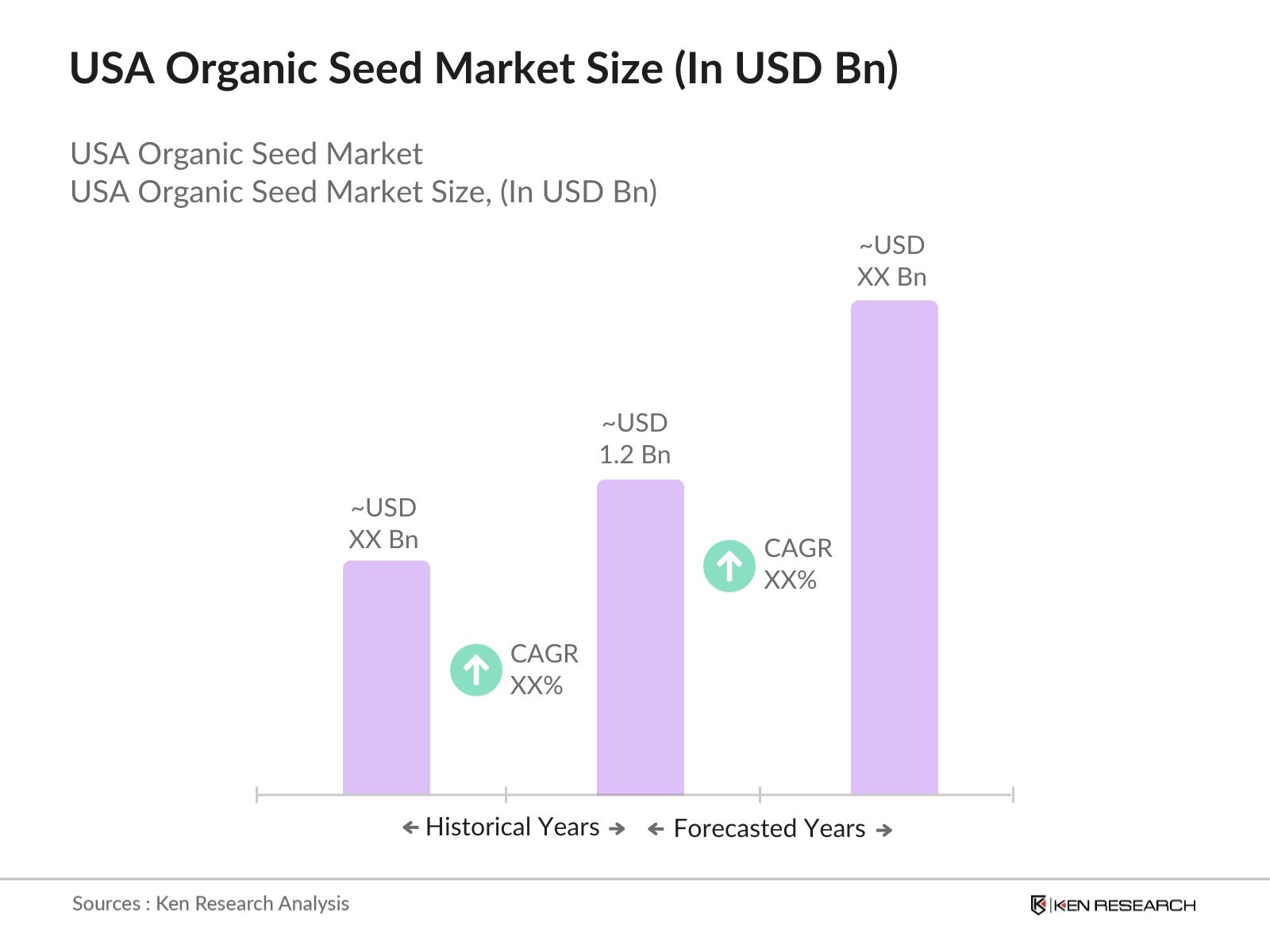
- The USA Organic Seed Market was valued at USD 1.2 billion, based on a five-year historical analysis. This growth is primarily driven by the increasing consumer demand for organic produce, which is fueled by rising health consciousness and environmental concerns. The shift towards sustainable agricultural practices has also contributed to the market's expansion, as more farmers are adopting organic farming methods to meet consumer preferences.
- Key players in this market include California, Oregon, and Washington, which dominate due to their favorable climates and established agricultural infrastructure. These states have a strong presence of organic farms and a supportive regulatory environment that encourages organic farming practices. Additionally, the proximity to major urban markets enhances their ability to supply fresh organic seeds to consumers.
- The USDA’s Strengthening Organic Enforcement (SOE) Final Rule, with implementation in 2024, enhances oversight of organic production, including organic seeds. It mandates stricter inspections, improved traceability, and better certifier training to prevent fraud and ensure product integrity, thereby boosting consumer trust and strengthening the US organic seed market.
USA Organic Seed Market Segmentation
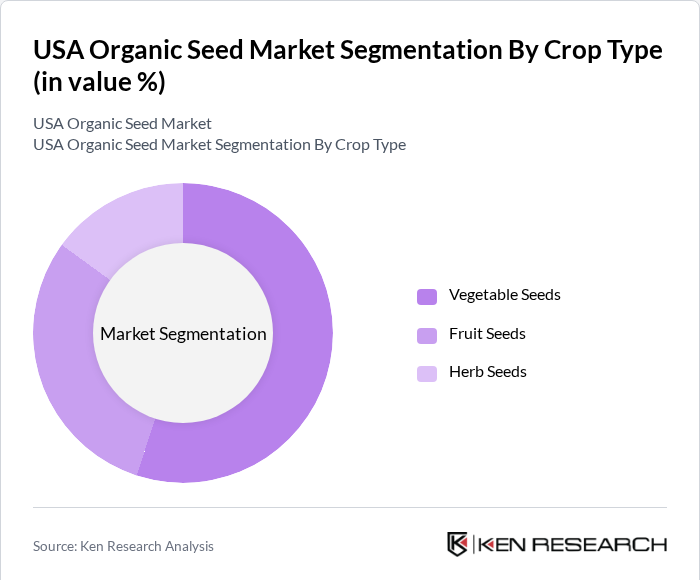
By Crop Type: The organic seed market is primarily segmented into vegetable seeds, fruit seeds, and herb seeds. Among these, vegetable seeds dominate the market due to the increasing consumer preference for organic vegetables, which are perceived as healthier and more nutritious. The trend towards home gardening and urban farming has further fueled the demand for organic vegetable seeds, as consumers seek to grow their own produce. This segment is characterized by a wide variety of offerings, including popular vegetables such as tomatoes, peppers, and leafy greens, which are staples in organic diets.
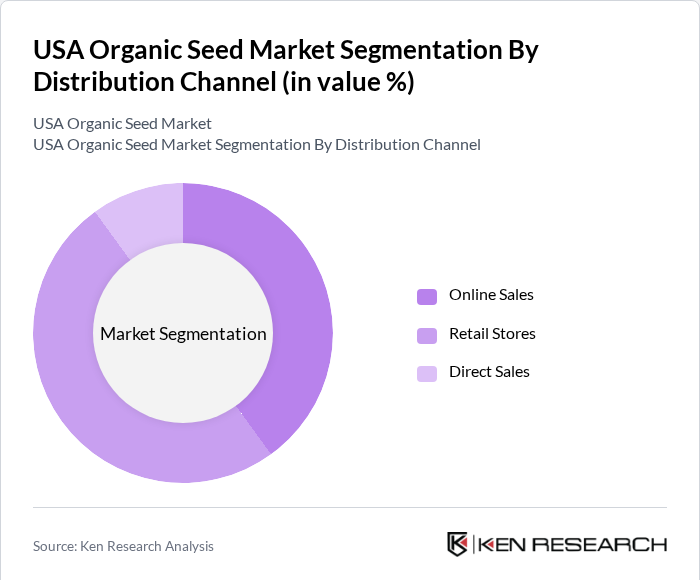
By Distribution Channel: The market is segmented into online sales, retail stores, and direct sales. Online sales are rapidly gaining traction, driven by the convenience of e-commerce and the growing trend of consumers purchasing organic products online. This segment is particularly popular among younger consumers who prefer the ease of shopping from home and the ability to compare products easily. Retail stores, including garden centers and organic food stores, also play a significant role in the distribution of organic seeds, providing consumers with direct access to a variety of organic seed options.
USA Organic Seed Market Competitive Landscape
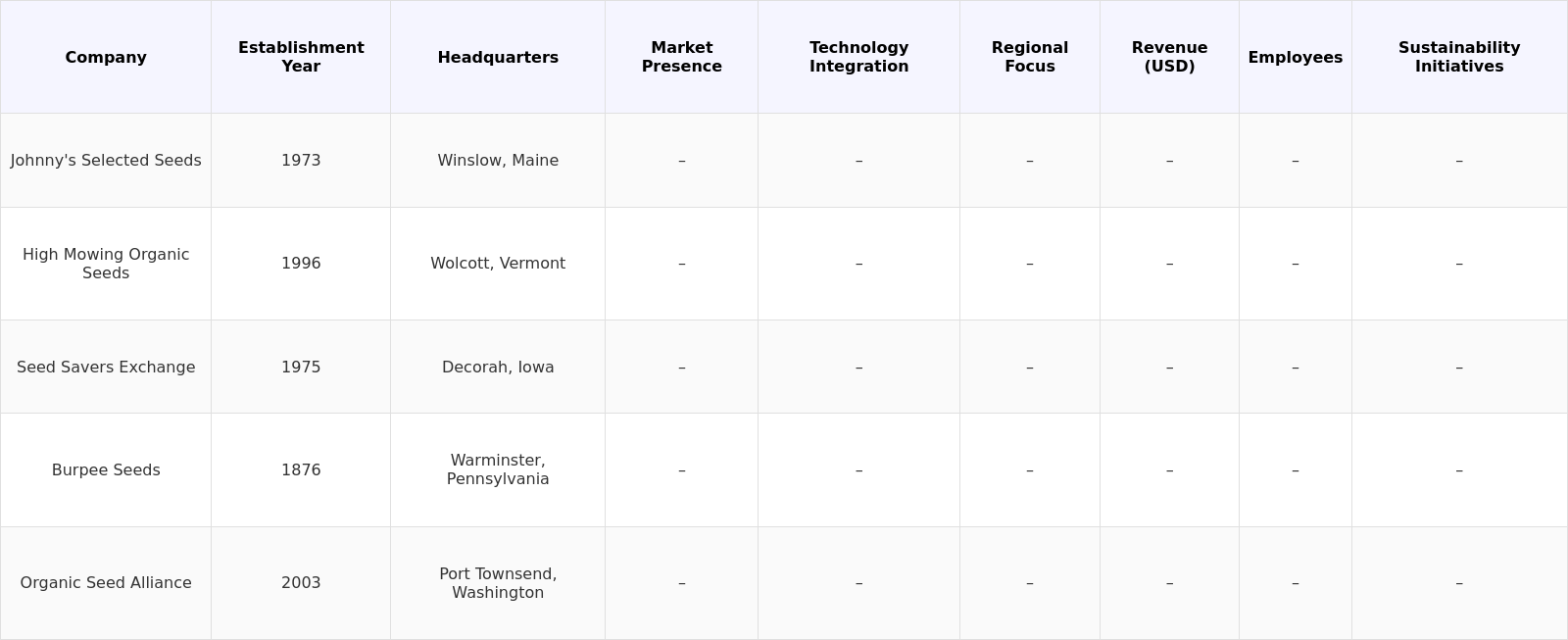
The USA Organic Seed Market is characterized by a competitive landscape dominated by several key players, including both established companies and emerging brands. These companies are focusing on innovation, product diversification, and sustainability initiatives to capture a larger market share. The presence of local and regional players also adds to the competitive dynamics, as they cater to specific consumer preferences and regional agricultural practices.
USA Organic Seed Market Industry Analysis
Growth Drivers
- Increasing Consumer Demand for Organic Products: The organic food market in the USA has seen a significant surge, sales reached USD 62 billion in 2022, according to the Organic Trade Association. This growing consumer preference for organic products is driving demand for organic seeds, as farmers seek to meet the needs of health-conscious consumers. The trend is expected to continue, with the organic food market projected to grow further, thereby increasing the demand for organic seeds as a foundational element of organic farming.
- Government Support for Organic Farming Practices: The USDA’s budget for the National Organic Program (NOP) is approximately USD 23.2 million for FY 2025, supporting organic standards enforcement, including organic seed certification. This financial backing encourages farmers to transition to organic practices, thereby boosting the organic seed market. Additionally, the implementation of programs like the Organic Certification Cost Share Program helps reduce the financial burden on farmers, making organic seed adoption more feasible and attractive.
- Rising Awareness of Sustainable Agriculture: With the global focus on sustainability, the USA has seen a marked increase in initiatives promoting sustainable agricultural practices. The World Bank reports that sustainable agriculture can enhance food security and environmental health. As awareness grows, more farmers are adopting organic methods, which rely heavily on organic seeds. This shift is supported by educational programs and resources aimed at promoting sustainable farming, further driving the organic seed market.
Market Challenges
- High Cost of Organic Seeds Compared to Conventional Seeds: Organic seeds typically cost 60-70% more than their conventional counterparts, which can deter some farmers from making the switch to organic farming. This price disparity is compounded by the fact that organic farming often requires more inputs and labor, making it a less attractive option for cost-sensitive growers. The economic pressures faced by farmers, especially in a fluctuating market, can hinder the growth of the organic seed sector.
- Limited Availability of Certain Organic Seed Varieties: The organic seed market is often constrained by the limited availability of specific seed varieties, which can restrict farmers' choices and hinder crop diversity. According to the USDA, only about 10% of the total seed market is dedicated to organic seeds, leading to challenges in sourcing the right seeds for various crops. This scarcity can result in delays and increased costs for farmers, ultimately impacting their ability to meet market demand.
USA Organic Seed Market Future Outlook
The USA organic seed market is poised for continued growth through 2028, driven by increasing consumer demand for organic products, supportive government policies, and a rising awareness of sustainable agricultural practices. As more farmers transition to organic methods, the demand for organic seeds will likely expand, creating opportunities for innovation and investment in the sector.
Market Opportunities
- Expansion of E-commerce Platforms for Seed Distribution: The rise of e-commerce has transformed the way seeds are sold, with online platforms providing farmers and home gardeners access to a wider variety of organic seeds. This shift is expected to enhance market reach and convenience, allowing consumers to easily find and purchase organic seeds tailored to their needs.
- Growing Interest in Home Gardening and Urban Farming: The COVID-19 pandemic has sparked a renewed interest in home gardening and urban farming, with millions of Americans taking up gardening as a hobby. This trend is expected to continue, driving demand for organic seeds among home gardeners who prioritize sustainability and health. As urban areas become more focused on local food production, the organic seed market stands to benefit significantly.
Scope of the Report
|
By Crop Type |
Vegetable Seeds Fruit Seeds Herb Seeds |
|
By Distribution Channel |
Online Sales Retail Stores Direct Sales |
|
By Region |
Northeast Midwest South West |
|
By End User |
Commercial Growers Home Gardeners |
|
By Seed Type |
Open-Pollinated Seeds Hybrid Seeds Heirloom Seeds |
Products
Key Target Audience
Investors and Venture Capitalist Firms
Government and Regulatory Bodies (e.g., USDA, EPA)
Organic Seed Producers and Farmers
Seed Distributors and Retailers
Organic Certification Organizations
Agri-tech Companies
Food and Beverage Manufacturers
Non-Governmental Organizations (NGOs) focused on Sustainable Agriculture
Companies
Players Mentioned in the Report
Johnny's Selected Seeds
High Mowing Organic Seeds
Seed Savers Exchange
Burpee Seeds
Organic Seed Alliance
Purely Organic Seeds
Green Thumb Heritage Seeds
EcoSeed Innovations
Nature's Bounty Seed Co.
Sustainable Sprout Seeds
Table of Contents
1. USA Organic Seed Market Overview
1.1. Definition and Scope
1.2. Market Taxonomy
1.3. Market Growth Rate
1.4. Market Segmentation Overview
2. USA Organic Seed Market Size (In USD Bn)
2.1. Historical Market Size
2.2. Year-On-Year Growth Analysis
2.3. Key Market Developments and Milestones
3. USA Organic Seed Market Analysis
3.1. Growth Drivers
3.1.1. Increasing Consumer Demand for Organic Products
3.1.2. Government Support for Organic Farming Practices
3.1.3. Rising Awareness of Sustainable Agriculture
3.2. Market Challenges
3.2.1. High Cost of Organic Seeds Compared to Conventional Seeds
3.2.2. Limited Availability of Certain Organic Seed Varieties
3.2.3. Regulatory Compliance and Certification Hurdles
3.3. Opportunities
3.3.1. Expansion of E-commerce Platforms for Seed Distribution
3.3.2. Growing Interest in Home Gardening and Urban Farming
3.3.3. Innovations in Seed Technology and Genetic Research
3.4. Trends
3.4.1. Shift Towards Heirloom and Open-Pollinated Seed Varieties
3.4.2. Increased Collaboration Between Seed Companies and Farmers
3.4.3. Focus on Biodiversity and Crop Resilience
3.5. Government Regulation
3.5.1. Overview of USDA Organic Certification Standards
3.5.2. State-Specific Regulations Impacting Organic Seed Sales
3.5.3. Compliance with Environmental Protection Agency Guidelines
3.5.4. Impact of International Trade Agreements on Organic Seed Imports
3.6. SWOT Analysis
3.7. Stake Ecosystem
3.8. Porter’s Five Forces
3.9. Competition Ecosystem
4. USA Organic Seed Market Segmentation
4.1. By Crop Type
4.1.1. Vegetable Seeds
4.1.2. Fruit Seeds
4.1.3. Herb Seeds
4.2. By Distribution Channel
4.2.1. Online Sales
4.2.2. Retail Stores
4.2.3. Direct Sales
4.3. By Region
4.3.1. Northeast
4.3.2. Midwest
4.3.3. South
4.3.4. West
4.4. By End User
4.4.1. Commercial Growers
4.4.2. Home Gardeners
4.5. By Seed Type
4.5.1. Open-Pollinated Seeds
4.5.2. Hybrid Seeds
4.5.3. Heirloom Seeds
5. USA Organic Seed Market Competitive Analysis
5.1. Detailed Profiles of Major Companies
5.1.1. Johnny's Selected Seeds
5.1.2. High Mowing Organic Seeds
5.1.3. Seed Savers Exchange
5.1.4. Burpee Seeds
5.1.5. Organic Seed Alliance
5.1.6. Purely Organic Seeds
5.1.7. Green Thumb Heritage Seeds
5.1.8. EcoSeed Innovations
5.1.9. Nature's Bounty Seed Co.
5.1.10. Sustainable Sprout Seeds
5.2. Cross Comparison Parameters
5.2.1. Market Share Analysis
5.2.2. Product Portfolio Comparison
5.2.3. Pricing Strategies
5.2.4. Distribution Network Efficiency
5.2.5. Customer Satisfaction Ratings
5.2.6. Innovation and R&D Investment
5.2.7. Brand Reputation and Recognition
5.2.8. Sustainability Practices
6. USA Organic Seed Market Regulatory Framework
6.1. Environmental Standards
6.2. Compliance Requirements
6.3. Certification Processes
7. USA Organic Seed Market Future Market Size (In USD Bn)
7.1. Future Market Size Projections
7.2. Key Factors Driving Future Market Growth
8. USA Organic Seed Market Future Market Segmentation
8.1. By Crop Type
8.1.1. Vegetable Seeds
8.1.2. Fruit Seeds
8.1.3. Herb Seeds
8.2. By Distribution Channel
8.2.1. Online Sales
8.2.2. Retail Stores
8.2.3. Direct Sales
8.3. By Region
8.3.1. Northeast
8.3.2. Midwest
8.3.3. South
8.3.4. West
8.4. By End User
8.4.1. Commercial Growers
8.4.2. Home Gardeners
8.5. By Seed Type
8.5.1. Open-Pollinated Seeds
8.5.2. Hybrid Seeds
8.5.3. Heirloom Seeds
9. USA Organic Seed Market Analysts’ Recommendations
9.1. TAM/SAM/SOM Analysis
9.2. Customer Cohort Analysis
9.3. Marketing Initiatives
9.4. White Space Opportunity Analysis
Research Methodology
Step 1: Identification of Key Variables
The initial phase involves mapping out the key components of the USA Organic Seed Market, including producers, distributors, and consumers. This step relies on extensive desk research, utilizing secondary data sources such as industry reports, academic journals, and market studies to identify the critical variables that impact market trends and dynamics.
Step 2: Market Analysis and Construction
In this phase, we will gather and analyze historical and current data related to the USA Organic Seed Market. This includes evaluating market size, growth rates, and segmentation by product type and region. The analysis will also focus on identifying trends and patterns that can inform future market projections and strategic decisions.
Step 3: Hypothesis Validation and Expert Consultation
Market hypotheses will be formulated and tested through structured interviews with industry experts and stakeholders. These consultations will provide qualitative insights and validate quantitative data, ensuring that the findings reflect real-world conditions and expert opinions on market trends and challenges.
Step 4: Research Synthesis and Final Output
The final phase involves synthesizing all collected data and insights into a cohesive report. This includes cross-referencing findings from various sources and expert consultations to ensure accuracy. The output will provide a comprehensive overview of the USA Organic Seed Market, highlighting key trends, opportunities, and strategic recommendations for stakeholders.
Frequently Asked Questions
01. How big is the USA Organic Seed Market?
The USA Organic Seed Market is valued at USD 1.2 billion, driven by factors such as increasing demand, technological advancements, and supportive government initiatives.
02. What are the key challenges in the USA Organic Seed Market?
Key challenges in the USA Organic Seed Market include intense competition, regulatory complexities, and infrastructure limitations affecting market dynamics.
03. Who are the major players in the USA Organic Seed Market?
Major players in the USA Organic Seed Market include Johnny's Selected Seeds, High Mowing Organic Seeds, Seed Savers Exchange, Burpee Seeds, Organic Seed Alliance, among others.
04. What are the growth drivers for the USA Organic Seed Market?
The primary growth drivers for the USA Organic Seed Market are increasing consumer demand, favorable policies, innovation, and substantial investment inflows.
Why Buy From Us?

What makes us stand out is that our consultants follows Robust, Refine and Result (RRR) methodology. i.e. Robust for clear definitions, approaches and sanity checking, Refine for differentiating respondents facts and opinions and Result for presenting data with story

We have set a benchmark in the industry by offering our clients with syndicated and customized market research reports featuring coverage of entire market as well as meticulous research and analyst insights.

While we don't replace traditional research, we flip the method upside down. Our dual approach of Top Bottom & Bottom Top ensures quality deliverable by not just verifying company fundamentals but also looking at the sector and macroeconomic factors.

With one step in the future, our research team constantly tries to show you the bigger picture. We help with some of the tough questions you may encounter along the way: How is the industry positioned? Best marketing channel? KPI's of competitors? By aligning every element, we help maximize success.

Our report gives you instant access to the answers and sources that other companies might choose to hide. We elaborate each steps of research methodology we have used and showcase you the sample size to earn your trust.

If you need any support, we are here! We pride ourselves on universe strength, data quality, and quick, friendly, and professional service.