USA Pallet Market Outlook to 2030

Region:North America

Author(s):Shubham Kashyap

Product Code:KROD4439

Published On

December 2024

Total pages

89

About the Report

USA Pallet Market Overview

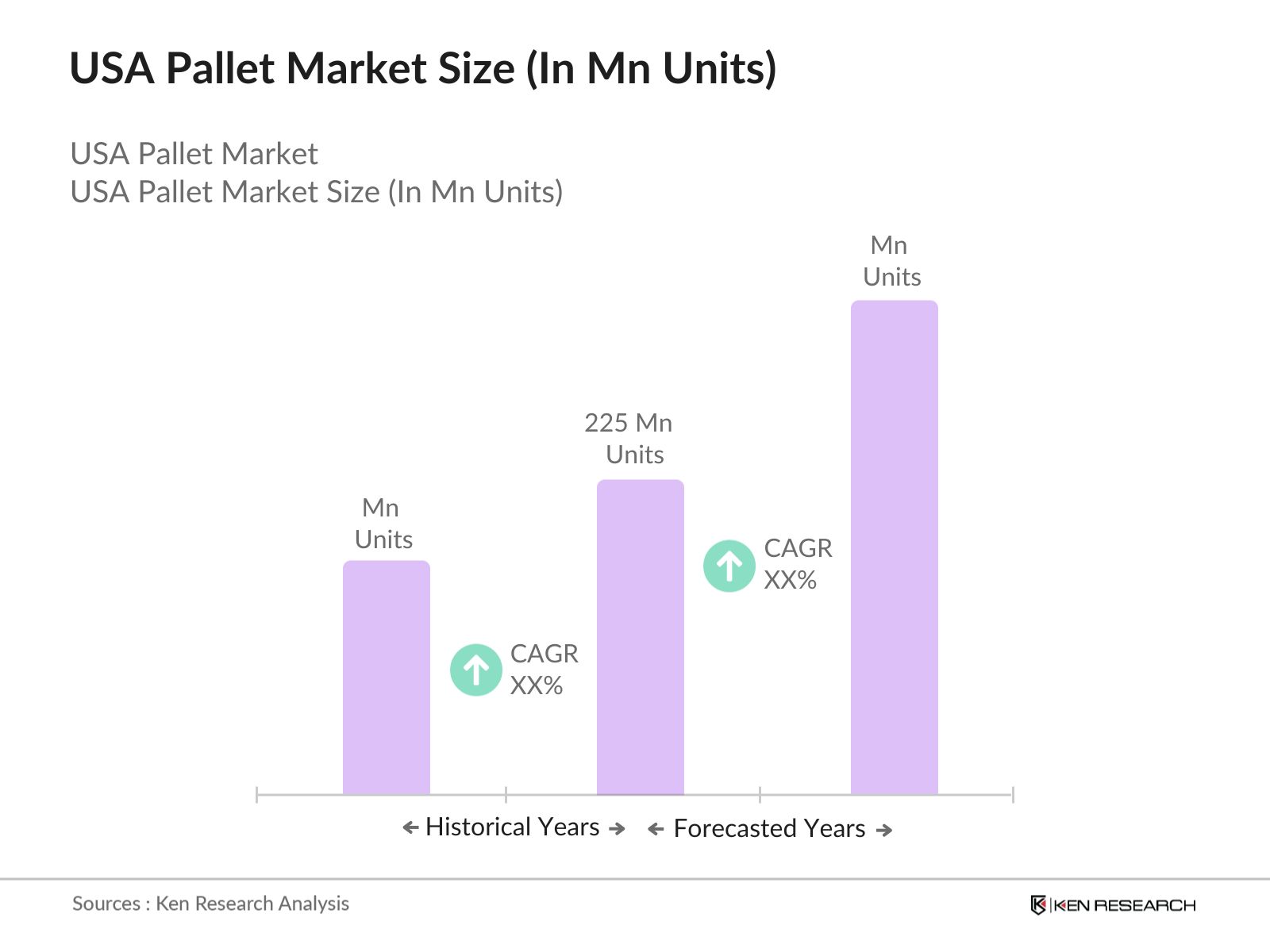
  • The USA pallet market is witnessing substantial growth, currently valued at 225 Mn Units driven by the rising demand in sectors such as manufacturing, logistics, and retail. The market is bolstered by the increasing need for efficient supply chain management and the expansion of e-commerce, which requires robust material handling solutions. Pallets, both wooden and plastic, are vital components in warehouse and logistics operations, helping companies improve load handling, reduce damage during transportation, and streamline operations.

USA Pallet Market Size

  • Dominant regions in the USA pallet market include major industrial cities such as Chicago, Los Angeles, and Houston. These cities dominate due to their strategic importance in logistics and warehousing operations, bolstered by well-established infrastructure, access to ports, and proximity to major consumer markets. Furthermore, these regions host large-scale manufacturing industries and distribution centers, driving demand for pallets to support high-volume operations.
  • The U.S. government has implemented several environmental regulations aimed at reducing the ecological impact of traditional wooden pallets. There is a shift towards more sustainable alternatives, including recycled plastic pallets, to meet the environmental standards set by the Environmental Protection Agency (EPA) and other regulatory bodies. Additionally, initiatives encouraging the circular economy are leading businesses to adopt reusable and recyclable pallet solutions.

USA Pallet Market Segmentation

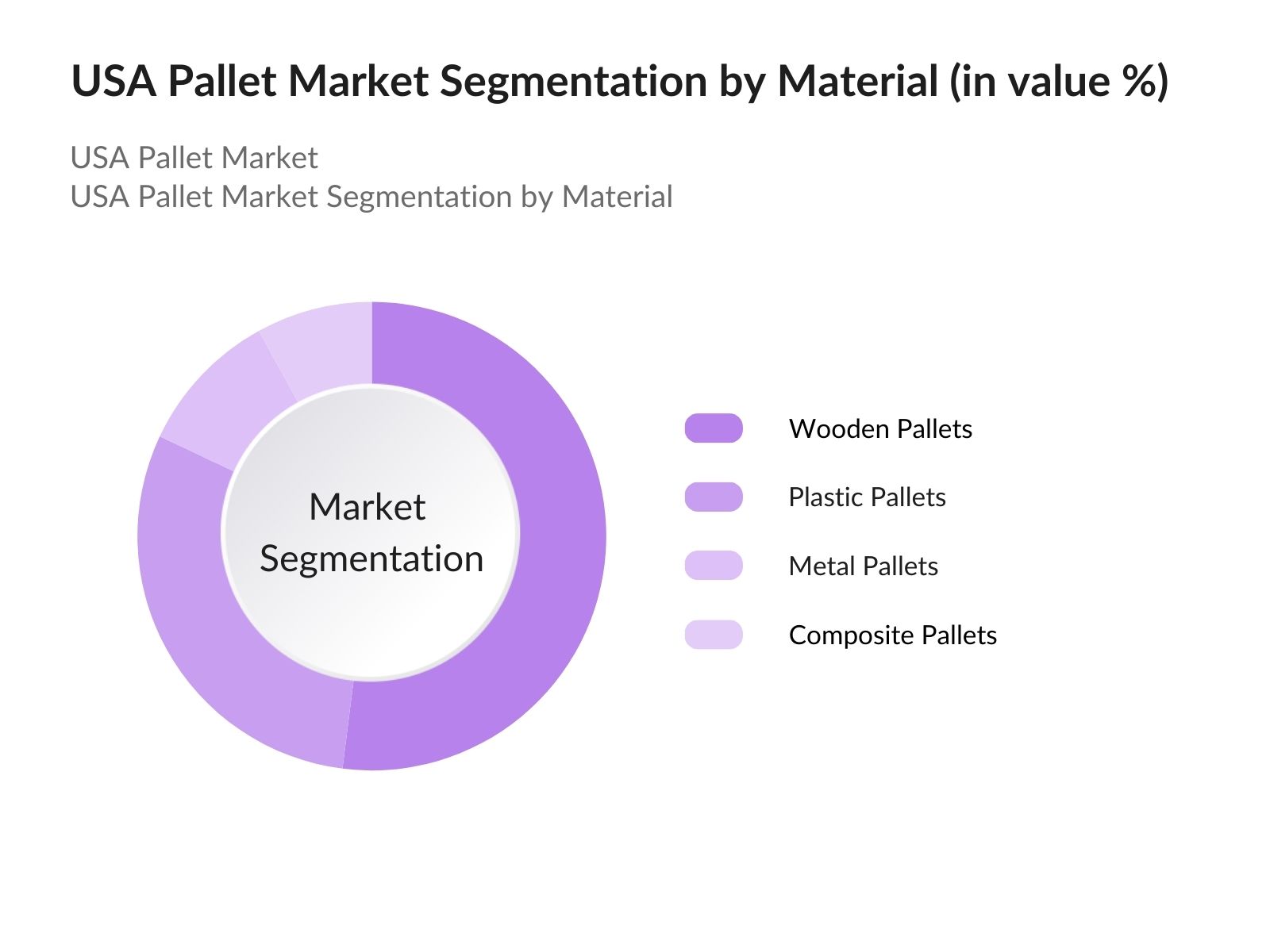
  • By Material: The market is segmented by material type into wooden, plastic, metal, and composite pallets. Wooden pallets dominate the market due to their low cost and widespread availability. They are heavily used in industries like agriculture, food & beverage, and manufacturing. However, plastic pallets are gaining traction due to their durability, reusability, and compliance with hygiene standards, particularly in the pharmaceutical and food industries. Metal and composite pallets, while less common, are favored in industries that require high durability and strength for heavy loads.

USA Pallet Market Segmentation By Material

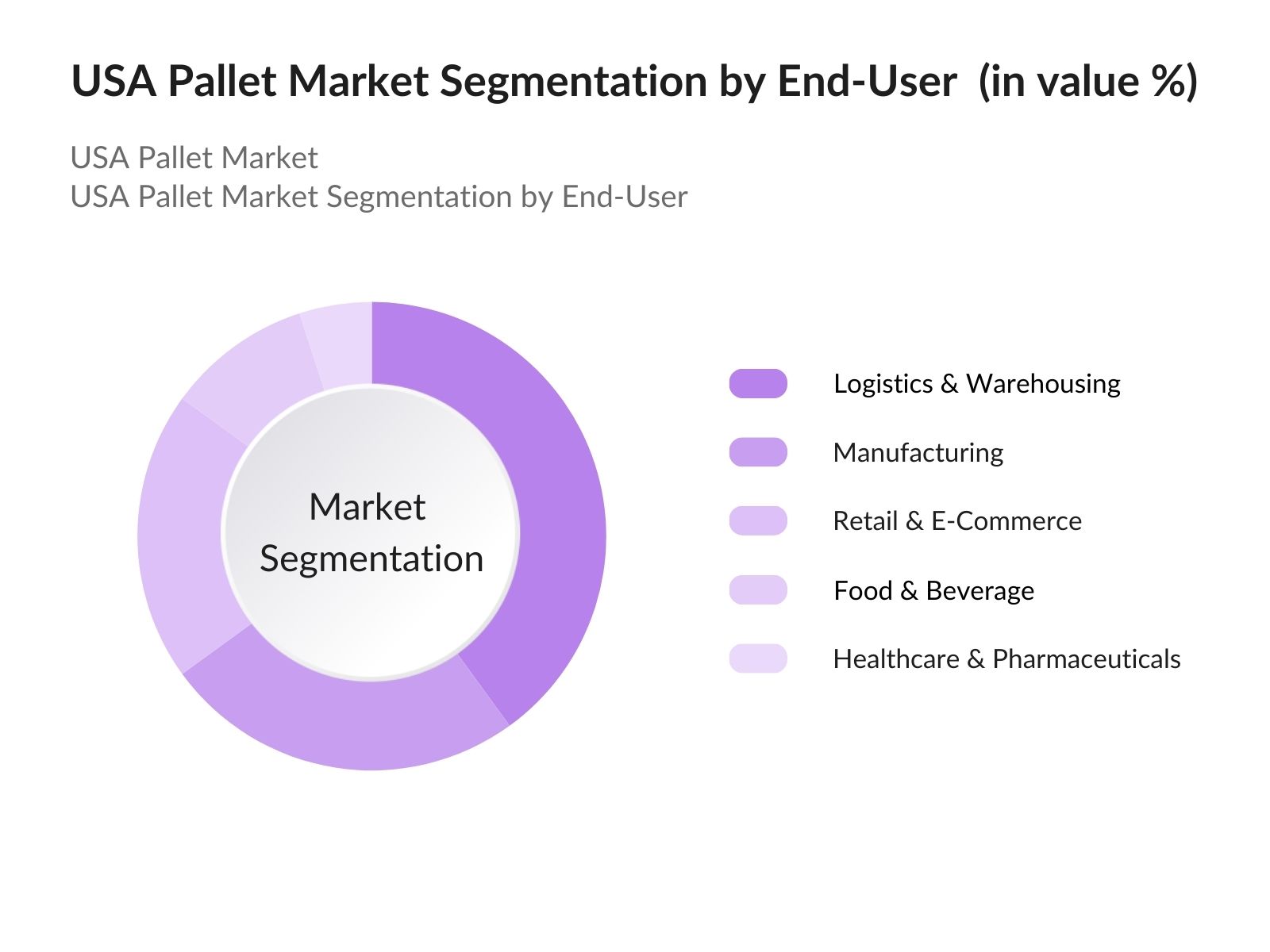
  • By End-User:The market is further segmented by end-use industries, including manufacturing, logistics & warehousing, retail, and food & beverage. The manufacturing sector holds the largest share, driven by the need for efficient materials handling and transportation solutions. Logistics and warehousing industries are increasingly adopting plastic pallets for their lightweight and durable properties. Retailers, especially in e-commerce, are relying on pallets for efficient inventory management and order fulfillment. The food & beverage industry also demands pallets that comply with safety and hygiene standards, contributing to the growing use of plastic and composite pallets.

USA Pallet Market Segmentation By End-user

USA Pallet Market Competitive Landscape

The USA pallet market is highly competitive, with key players across both the wooden and plastic pallet sectors. Leading companies include Brambles Limited, Millwood Inc., and ORBIS Corporation. These companies focus on innovations in pallet design, incorporating features like RFID tracking, as well as enhancing the durability and environmental sustainability of their products. The adoption of reusable pallets is being driven by corporate sustainability goals and governmental regulations aimed at reducing waste.

Company Name

Established

Headquarters

No. of Employees

Revenue (2023)

R&D Investment

No. of Pallets Deployed

Strategic Partners

Brambles Limited

1875

USA


Millwood Inc.

1985

USA


ORBIS Corporation

1848

USA


PalletOne Inc.

2001

USA


iGPS Logistics LLC

2007

USA


USA Pallet Market  Analysis

Growth Drivers:

  • Increased Demand in E-Commerce and Retail: The rapid growth of e-commerce and retail in the USA has dramatically increased the need for pallets in large-scale warehousing operations. As of 2023, U.S. retail e-commerce sales have surpassed USD 1.1 trillion, according to the U.S. Census Bureau. This expansion has significantly increased the demand for pallets in distribution centers. Pallets facilitate efficient loading, unloading, and transportation within vast warehouses, especially as major players like Amazon and Walmart rely on large-scale logistics operations. The increase in warehousing space, which exceeded 10 billion square feet in 2024, further accelerates pallet utilization for improved inventory management and distribution of Automation in Warehousing and Logistics.
  • Adoption of Sustainable and Reusable Solutions: The USA is witnessing a significant shift toward sustainable packaging, including the use of recyclable and reusable pallets. The Environmental Protection Agency (EPA) reported a substantial rise in the use of recyclable materials in packaging and shipping operations by 2024. Pallets made from recycled plastic and composite materials are increasingly replacing traditional wood pallets. Many companies are adopting these environmentally friendly pallets to meet sustainability targets and reduce waste. This shift is also supported by government initiatives like the EPAs Waste Reduction Model (WARM), which encourages businesses to adopt recyclable packaging solutions.
  • Adoption of Automation in Warehousing and Logistics: Automation in warehousing is reshaping logistics in the USA. In 2024, majority of U.S. warehouses have implemented automation technologies such as robotics and automated guided vehicles (AGVs). These systems require standardized pallets to ensure compatibility and seamless operations. The demand for pallets that adhere to specific dimensions and load capacities is rising as businesses invest in advanced logistics technologies. This is evident in the growth of AGVs, with the U.S. warehouse automation market witnessing tremendous growth in 2024, increasing demand for uniform, durable pallets that integrate with automated systems.

Market Challenges:

  • High Costs of Plastic and Metal Pallets: The initial investment cost for plastic and metal pallets poses a significant challenge, especially for small and medium enterprises (SMEs). Plastic and metal pallets are significantly more expensive compared to wooden pallets, making the latter more appealing for cost-conscious SMEs. This cost disparity limits the adoption of more durable and reusable pallet options. As a result, many SMEs continue to rely on wooden pallets due to the financial burden posed by plastic and metal alternatives, despite their potential long-term benefits.
  • Environmental Concerns Related to Wooden Pallets: Wooden pallets, while cost-effective, contribute significantly to deforestation and waste accumulation. Stringent regulations by the U.S. Environmental Protection Agency (EPA) and the U.S. Department of Agriculture (USDA) aim to reduce the negative environmental impacts associated with wooden pallet production. These regulations encourage companies to implement better waste management practices and consider more sustainable alternatives like plastic or metal pallets, which have a lower environmental impact over time.

USA Pallet Market Future Outlook

The USA pallet market is expected to experience robust growth, driven by increased demand across industries such as logistics, manufacturing, and retail. The shift toward sustainable and reusable pallet solutions, combined with the rise of e-commerce, will further accelerate the adoption of plastic and composite pallets. The trend towards automation in material handling will also create new opportunities for the pallet market.

Future Market Opportunities:

  • Rise of Circular Economy and Recycling Initiatives: The rise of the circular economy is presenting significant opportunities for plastic pallet reuse and recycling in the U.S. market. As part of the EPAs National Recycling Strategy, implemented in 2024, the U.S. government is pushing for greater use of recyclable materials in supply chain operations. This includes incentivizing the use of plastic pallets, which can be reused multiple times compared to single-use wooden pallets. Recycling programs are also on the rise, with an increase of over hundreds of new recycling centers across the country by 2024, encouraging the reuse of plastic and composite materials in pallet production.
  • Expansion into New End-Use Industries: The healthcare and pharmaceutical industries in the U.S. are increasingly adopting hygienic plastic pallets to meet stringent health and safety regulations. By 2024, thousands of hospitals and pharmaceutical facilities in the U.S. have switched from traditional wooden pallets to plastic options, which are easier to sanitize and less prone to contamination. These industries require pallets that meet FDA and USDA guidelines for hygiene and safety, further boosting demand for plastic pallets. This expansion into new end-use industries offers significant growth potential for pallet manufacturers.

Scope of the Report

By Material Type

Wooden Pallets

Plastic Pallets

Metal Pallets

Composite Pallets

By End-User

Manufacturing

Logistics & Warehousing

Retail & E-commerce

Food & Beverage

Healthcare & Pharmaceuticals

By Type of Pallet

Block Pallets

Stringer Pallets

Custom Pallets

Double-Faced Pallets

By Pallet Application

Material Handling

Shipping and Distribution

Storage Solutions

Export Compliance

By Region

Northeast

Midwest

South

West

Products

Key Target Audience

  • Pallet Manufacturers

  • Logistics & Warehousing Companies

  • Retail & E-Commerce Firms

  • Food & Beverage Manufacturers

  • Healthcare & Pharmaceutical Companies

  • Investors and Venture Capitalist Firms

  • Government and Regulatory Bodies (EPA, U.S. Customs)

  • Automation & Supply Chain Technology Providers

  • Banks and Financial Institutions

Companies

Major Players Mentioned the Report

  • Brambles Limited

  • ORBIS Corporation

  • Millwood Inc.

  • iGPS Logistics LLC

  • PECO Pallet

  • Rehrig Pacific Company

  • Cabka Group

  • Greystone Logistics

  • Kamps Inc.

  • Litco International

  • Buckhorn Inc.

  • PalletOne Inc.

  • Schoeller Allibert

  • Nashville Pallet Depot

  • Snyder Industries

Table of Contents

01 USA Pallet Market Overview

1.1. Definition and Scope

1.2. Market Taxonomy

1.3. Market Growth Rate

1.4. Market Segmentation Overview

02 USA Pallet Market Size (In USD Bn)

2.1. Historical Market Size

2.2. Year-On-Year Growth Analysis

2.3. Key Market Developments and Milestones

03 USA Pallet Market Analysis

3.1. Growth Drivers

3.1.1. Expansion in E-commerce & Retail (Increased use of pallets in large-scale warehouse operations)

3.1.2. Adoption of Automation in Warehousing and Logistics (Demand for standardized pallets for automated systems)

3.1.3. Shift Towards Sustainable Packaging Solutions (Increased use of recyclable and reusable pallets)

3.1.4. Increased Government Regulations on Environmental Impact (Mandates on sustainable pallet usage)

3.2. Market Challenges

3.2.1. High Initial Cost of Plastic and Metal Pallets (Cost constraints for SMEs)

3.2.2. Environmental Impact of Wooden Pallets (Regulations on deforestation and waste management)

3.2.3. Integration with Legacy Supply Chain Systems (Challenges in adapting new pallets in existing systems)

3.2.4. Limited Adoption of Advanced Pallet Tracking Technologies (Slow penetration of RFID and IoT-enabled pallets)

3.3. Opportunities

3.3.1. Rise of Circular Economy and Recycling Initiatives (Growth in plastic pallet reuse and recycling)

3.3.2. Expansion into New End-Use Industries (Healthcare, Pharmaceuticals adopting hygienic pallets)

3.3.3. Technological Advancements in Pallet Design and Materials (Innovations in composite pallets)

3.3.4. Strategic Partnerships with Supply Chain and Automation Providers (Collaborations for pallet optimization)

3.4. Trends

3.4.1. Growth of RFID-enabled Pallets (Increase in demand for traceable and smart pallets)

3.4.2. Demand for Lighter and More Durable Materials (Plastic and composite pallet innovations)

3.4.3. Focus on Reducing Carbon Footprint (Sustainability measures driving product innovation)

3.4.4. Customization of Pallets for Industry-specific Needs (Tailored pallet designs for logistics and retail)

3.5. Government Regulations

3.5.1. EPA Guidelines on Recycled Pallets (Mandates for recycling wood and plastic materials)

3.5.2. U.S. Customs Regulations on Palletized Goods (Compliance requirements for international shipping)

3.5.3. Forest Stewardship Council (FSC) Certification for Wooden Pallets (Sustainable sourcing requirements)

3.5.4. International Standards for Pallet Size and Dimensions (ISO standards for cross-border shipping)

3.6. SWOT Analysis

3.7. Stakeholder Ecosystem

3.8. Porters Five Forces Analysis

3.9. Competitive Ecosystem

04 USA Pallet Market Segmentation

4.1. By Material Type (In Value %)

4.1.1. Wooden Pallets

4.1.2. Plastic Pallets

4.1.3. Metal Pallets

4.1.4. Composite Pallets

4.2. By End-Use Industry (In Value %)

4.2.1. Manufacturing

4.2.2. Logistics & Warehousing

4.2.3. Retail & E-commerce

4.2.4. Food & Beverage

4.2.5. Healthcare & Pharmaceuticals

4.3. By Type of Pallet (In Value %)

4.3.1. Block Pallets

4.3.2. Stringer Pallets

4.3.3. Custom Pallets

4.3.4. Double-Faced Pallets

4.4. By Region (In Value %)

4.4.1. Northeast

4.4.2. Midwest

4.4.3. South

4.4.4. West

4.5. By Pallet Application (In Value %)

4.5.1. Material Handling

4.5.2. Shipping and Distribution

4.5.3. Storage Solutions

4.5.4. Export Compliance

05 USA Pallet Market Competitive Analysis

5.1. Detailed Profiles of Major Companies

5.1.1. Brambles Limited

5.1.2. Millwood Inc.

5.1.3. ORBIS Corporation

5.1.4. PalletOne Inc.

5.1.5. iGPS Logistics LLC

5.1.6. Buckhorn Inc.

5.1.7. Greystone Logistics

5.1.8. Schoeller Allibert

5.1.9. Litco International

5.1.10. PECO Pallet

5.1.11. Rehrig Pacific Company

5.1.12. Kamps Inc.

5.1.13. Cabka Group

5.1.14. LITCO International

5.1.15. Nashville Pallet Depot

5.2. Cross Comparison Parameters (Material Type, Durability, Weight Capacity, Reusability, Environmental Sustainability, Customization Capabilities, Compliance Certifications, End-Use Industry)

5.3. Market Share Analysis

5.4. Strategic Initiatives

5.5. Mergers and Acquisitions

5.6. Investment Analysis

5.7. Venture Capital Funding

5.8. Government Grants

5.9. Private Equity Investments

06 USA Pallet Market Regulatory Framework

6.1. Environmental Standards

6.2. Compliance Requirements for Palletized Goods (International and Domestic)

6.3. Certification Processes (FSC, ISO)

07 USA Pallet Market Future Size (In USD Bn)

7.1. Future Market Size Projections

7.2. Key Factors Driving Future Market Growth

08 USA Pallet Market Future Segmentation

8.1. By Material Type (In Value %)

8.2. By End-Use Industry (In Value %)

8.3. By Type of Pallet (In Value %)

8.4. By Region (In Value %)

8.5. By Pallet Application (In Value %)

09 USA Pallet Market Analyst's Recommendations

9.1. TAM/SAM/SOM Analysis

9.2. Customer Cohort Analysis

9.3. Marketing Initiatives

9.4. White Space Opportunity Analysis

Disclaimer Contact Us

Research Methodology

Step 1: Identification of Key Variables


In the initial phase, we created an ecosystem map covering all stakeholders within the USA pallet market. This involved extensive desk research to gather industry data from secondary and proprietary databases. The goal was to identify the key variables that drive the market, including sustainability, supply chain efficiency, and material innovations.

Step 2: Market Analysis and Construction


Historical data was compiled and analyzed for the USA pallet market, focusing on key metrics such as pallet materials, usage across industries, and revenue generation. In this phase, we evaluated the ratio of wooden to plastic pallets and assessed their role in different end-use industries.

Step 3: Hypothesis Validation and Expert Consultation


Market hypotheses were validated through consultations with industry experts via computer-assisted telephone interviews (CATIs). These experts provided insights into operational challenges, financial performance, and consumer preferences, which were essential for validating our market estimates.

Step 4: Research Synthesis and Final Output


In the final phase, we engaged directly with major pallet manufacturers to acquire in-depth insights into sales performance, product innovation, and sustainability efforts. This information was synthesized to provide a comprehensive, validated analysis of the USA pallet market.

Frequently Asked Questions

01. How big is the USA Pallet Market?

The USA pallet market was valued at 225 Mn Units, driven by increasing demand across industries such as logistics, e-commerce, and retail.

02. What are the challenges in the USA Pallet Market?

Key challenges in the USA pallet market include high initial costs of plastic and metal pallets, environmental concerns related to wooden pallets, and the integration of pallets into automated supply chain systems.

03. Who are the major players in the USA Pallet Market?

Major players in the USA pallet market include Brambles Limited, ORBIS Corporation, Millwood Inc., iGPS Logistics LLC, and PECO Pallet, among others.

04. What are the growth drivers of the USA Pallet Market?

Growth drivers in the USA pallet market include the expansion of e-commerce, increased automation in warehouses, and the shift towards sustainable pallet materials such as recycled plastic.

Why Buy From Us?

RRR
Refine Robust Result (RRR) Framework

What makes us stand out is that our consultants follows Robust, Refine and Result (RRR) methodology. i.e. Robust for clear definitions, approaches and sanity checking, Refine for differentiating respondents facts and opinions and Result for presenting data with story

Our Reach Is Unmatched

We have set a benchmark in the industry by offering our clients with syndicated and customized market research reports featuring coverage of entire market as well as meticulous research and analyst insights.

Research
Shifting the Research Paradigm

While we don't replace traditional research, we flip the method upside down. Our dual approach of Top Bottom & Bottom Top ensures quality deliverable by not just verifying company fundamentals but also looking at the sector and macroeconomic factors.

Insite
More Insights-Better Decisions

With one step in the future, our research team constantly tries to show you the bigger picture. We help with some of the tough questions you may encounter along the way: How is the industry positioned? Best marketing channel? KPI's of competitors? By aligning every element, we help maximize success.

Trust
Transparency and Trust

Our report gives you instant access to the answers and sources that other companies might choose to hide. We elaborate each steps of research methodology we have used and showcase you the sample size to earn your trust.

support
Round the Clock Support

If you need any support, we are here! We pride ourselves on universe strength, data quality, and quick, friendly, and professional service.

Why Client Choose Us?

400000+ Reports in repository
150+ Consulting project a year
100+ Analysts
8000+ Client Queries in 2022