
USA Pea Protein Market Outlook to 2030
Region:North America
Author(s):Shubham Kashyap
Product Code:KROD3053
November 2024
83
About the Report
USA Pea Protein Market Overview
- The USA Pea Protein Market is valued at USD 485 million, based on a five-year historical analysis supported by growing consumer interest in plant-based diets, an increasing shift towards sustainable protein sources, and a rise in food and beverage innovations. The market is experiencing rapid growth due to heightened awareness of the health benefits of pea protein, including its role in muscle growth, weight management, and cardiovascular health. Additionally, its application across diverse product categories, such as protein supplements, meat substitutes, and dairy alternatives, is expanding significantly.
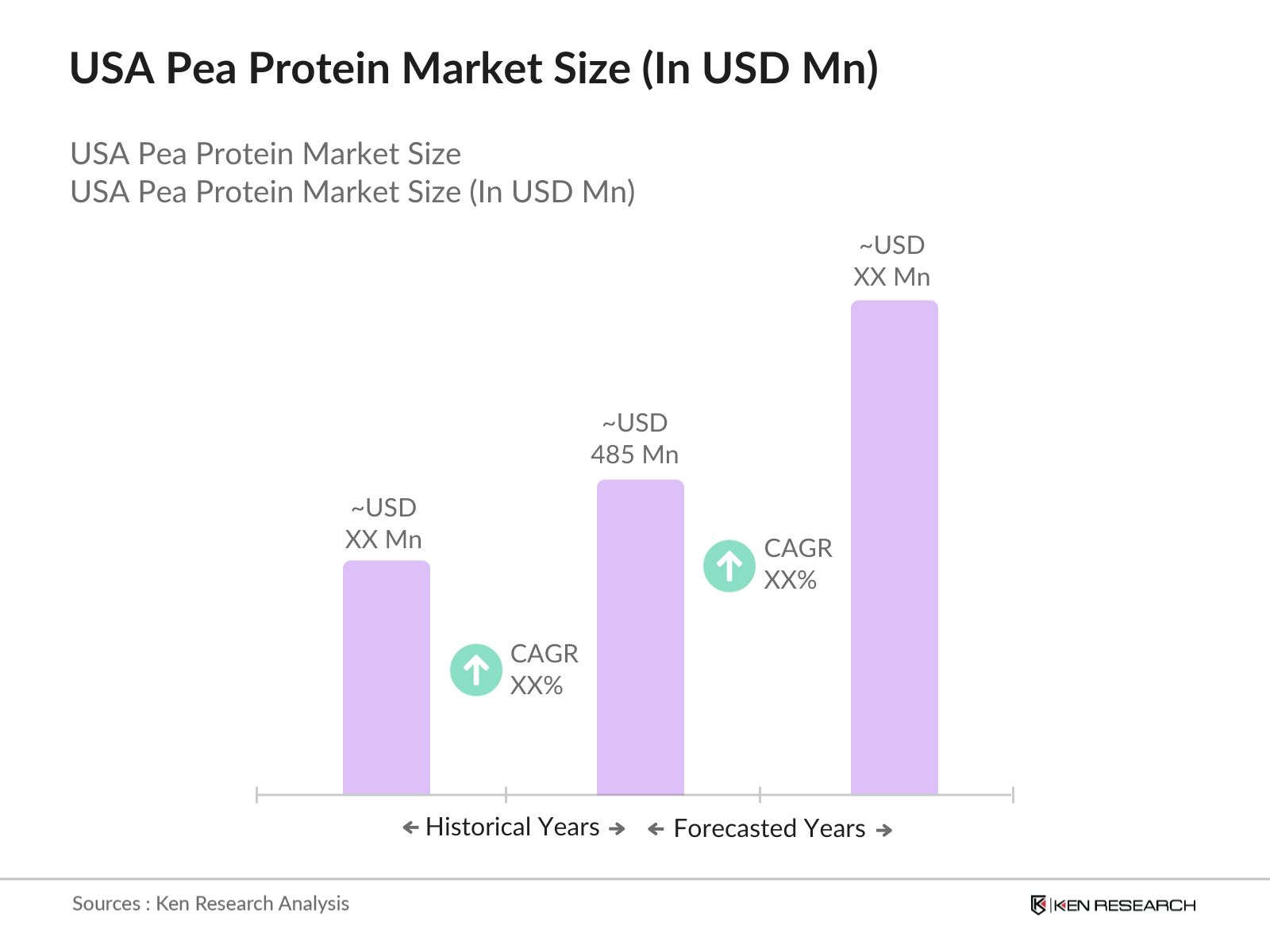
- Major cities such as New York, Los Angeles, and Chicago are at the forefront of the pea protein market expansion, driven by the increasing adoption of vegan diets, a rising focus on fitness and wellness, and high demand for clean-label products. In rural areas, the demand for sustainable and locally sourced plant-based protein options is driving growth as more consumers become health-conscious and environmentally aware.
- The U.S. Food and Drug Administration (FDA) plays a key regulatory role, ensuring the safety and quality of pea protein products. Recent regulatory updates, including approvals for novel uses of pea protein in food formulations and dietary supplements, are helping to foster market growth. The FDAs guidelines around clean-label and allergen-free claims are also providing a favorable environment for market expansion.
USA Pea Protein Market Segmentation
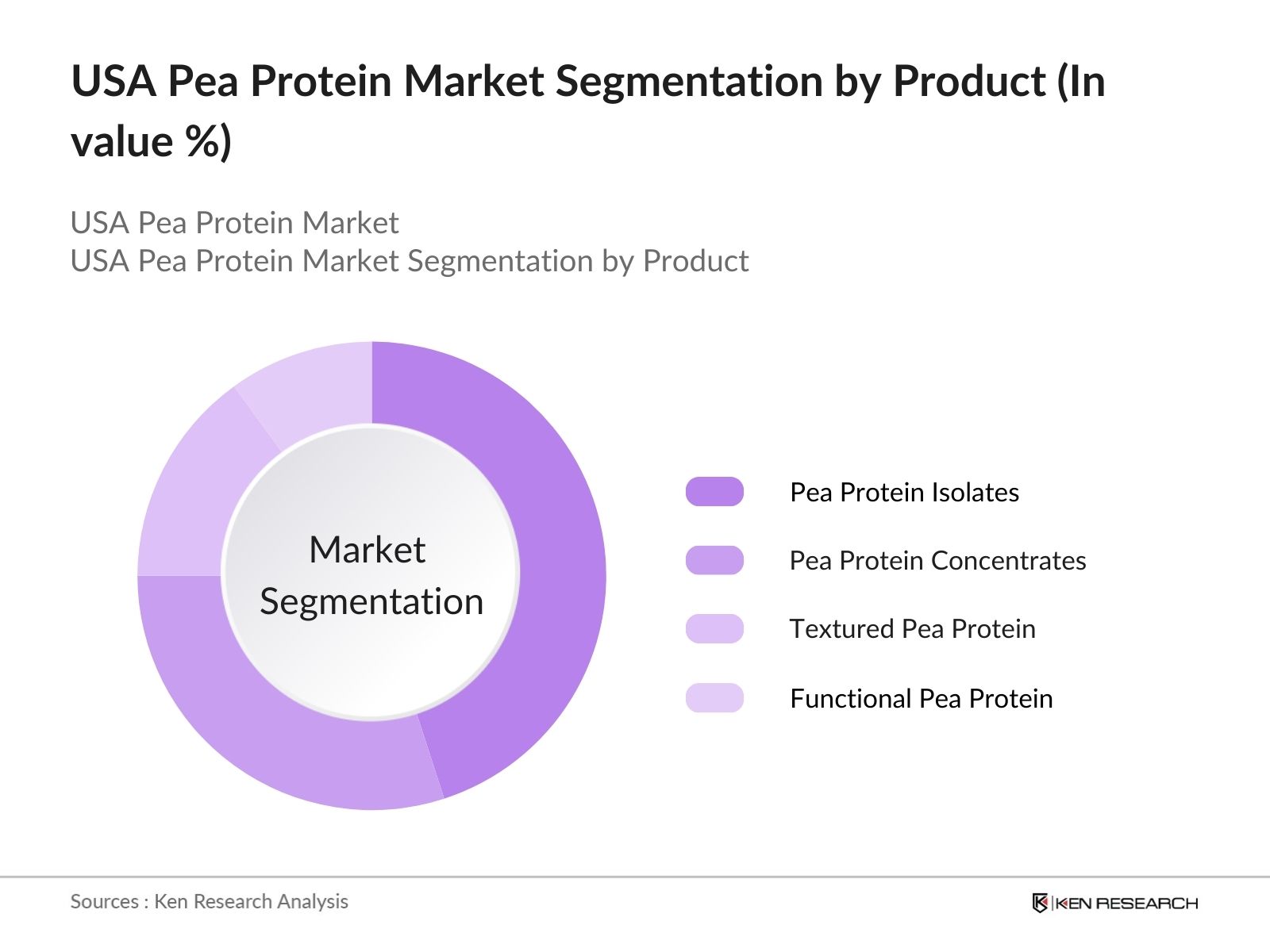
- By Product Type: The market is segmented by product type into isolates, concentrates, and textured pea protein. Isolates dominate the segment due to their high protein content and extensive use in protein supplements and beverages. Concentrates are gaining traction in the bakery and snack food industries, while textured pea protein is increasingly being used in meat substitutes, offering a cost-effective and nutritious alternative to soy and other plant proteins.
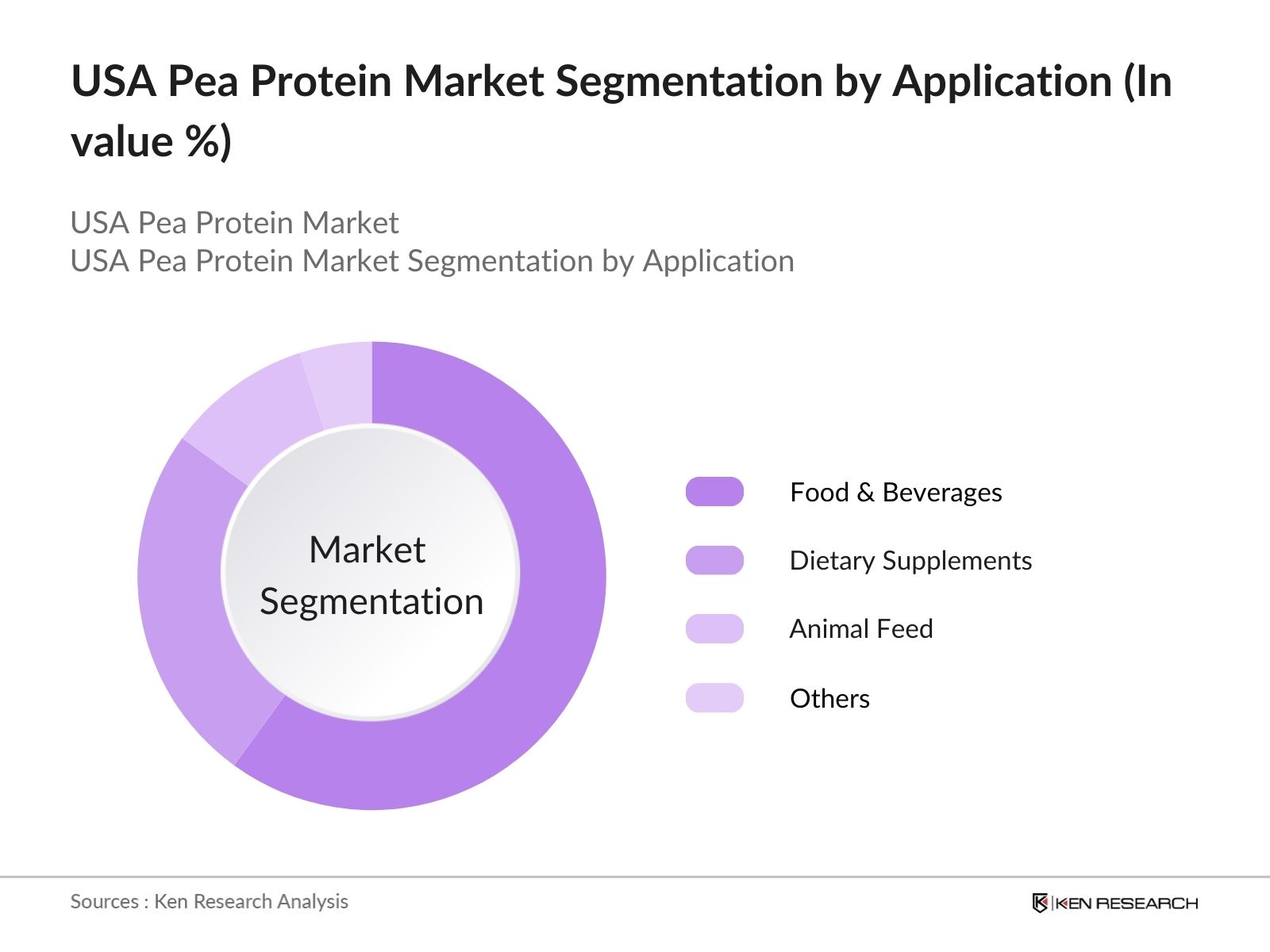
- By Application: The market is segmented by application into food & beverages, dietary supplements, animal feed, and others. The food & beverage sector leads the market due to the high demand for plant-based alternatives in dairy and meat products. Dietary supplements are another rapidly growing segment, fueled by the increasing number of consumers seeking clean and sustainable protein sources. Animal feed is a smaller but emerging segment, driven by the need for protein-rich feed alternatives in livestock production.
 s
s
USA Pea Protein Market Competitive Landscape
The USA Pea Protein market is highly competitive, with several key players focusing on product innovation, strategic partnerships, and expanding production capacities to meet growing demand. Leading companies include Roquette Frres, Cargill Inc., Axiom Foods, Ingredion Incorporated, and Glanbia Nutritionals. These companies are actively investing in research and development to improve the quality, taste, and functionality of pea protein in various food applications.
|
Company Name |
Establishment Year |
Headquarters |
No. of Employees |
Revenue (USD) |
Key Products |
R&D Investments |
Geographical Reach |
Partnerships |
|
Roquette Frres |
1933 |
Lestrem, France |
||||||
|
Cargill Inc. |
1865 |
Minneapolis, MN |
||||||
|
Axiom Foods |
2005 |
Los Angeles, CA |
||||||
|
Ingredion Incorporated |
1906 |
Westchester, IL |
||||||
|
Glanbia Nutritionals |
1964 |
Kilkenny, Ireland |
USA Pea Protein Industry Analysis
Growth Drivers
- Rise in Plant-Based Diets: The rise in plant-based diets has seen a significant increase in the United States, fueled by health-conscious consumers and environmental concerns. According to the United States Department of Agriculture (USDA), over 9.7 million Americans now follow plant-based diets, seeking alternatives like pea protein. The USDA highlights that dietary shifts toward plant-based options have contributed to lower per capita meat consumption in recent years. Pea protein's appeal as a non-GMO, gluten-free, and allergen-friendly alternative has spurred its demand in various food products, from meat substitutes to smoothies.
- Increased Demand for Sustainable Protein Sources: Pea protein stands out as a sustainable protein source in the growing movement toward environmentally friendly food production. According to the Food and Agriculture Organization (FAO), conventional livestock farming contributes nearly 14.5% of global greenhouse gas emissions, leading consumers and industries to seek greener protein alternatives. Pea farming requires significantly less water and land than animal-based protein sources, and these sustainability factors drive its popularity in the USA as a viable alternative.
- Food & Beverage Industry Innovation: The food and beverage sector is driving innovations in plant-based protein products, particularly pea protein, by incorporating it into novel food formats such as protein bars, snacks, and dairy alternatives. The USDA reports that more than 5,000 new plant-based food products were launched in the U.S. between 2022-2024, with pea protein being a key ingredient. Major food companies are integrating pea protein into ready-to-eat meals and functional beverages, attracting consumers interested in healthier, plant-based diets.
Market Challenges
- High Production Costs: Pea protein production costs are notably higher compared to other plant-based proteins, largely due to the intensive processing requirements. The extraction and purification processes necessary to isolate pea protein are complex, which adds to its overall cost. These high production costs pose a challenge for manufacturers looking to compete with more established plant-based proteins like soy and wheat. The intensive resource and time demand involved in pea protein extraction make it a less economical option, especially for companies aiming to scale production or offer affordable pricing to consumers.
- Limited Consumer Awareness of Pea Protein Benefits: Despite the growing interest in plant-based diets, consumer awareness about the specific benefits of pea protein remains limited in the U.S. market. Many people, especially older generations, are less familiar with alternative proteins like pea protein, which restricts its wider adoption. Although pea protein offers health advantages such as being high in amino acids and hypoallergenic, more efforts are needed to educate consumers about these benefits. Without sufficient awareness, pea protein struggles to gain the same traction as other plant-based proteins.
USA Pea Protein Market Future Outlook
The USA Pea Protein Market is expected to experience strong growth over the next five years, driven by increasing consumer preference for plant-based diets, innovations in food technology, and the growing vegan and vegetarian population. Advancements in processing techniques to enhance the taste, texture, and functionality of pea protein will create new opportunities in the food and beverage sector. Sustainability initiatives will also drive demand as companies seek to reduce their environmental footprint by sourcing sustainable protein ingredients.
Future Market Opportunities
- Incorporation in Meat Substitutes and Dairy Alternatives: The incorporation of pea protein into meat substitutes and dairy alternatives is a growing trend, driven by the rise of plant-based eating habits in the U.S. The USDA reported that in 2022, sales of plant-based meat substitutes grew by USD 1.4 billion, with pea protein being a key ingredient in products like burgers, sausages, and milk alternatives. Major food companies are leveraging pea proteins texture and nutritional properties to develop meat-free and dairy-free products that appeal to flexitarians and vegans.
- Functional Foods and Ready-to-Drink Products: Pea protein is increasingly being incorporated into functional foods and ready-to-drink (RTD) products, addressing consumer demand for convenient and nutritious options. According to the USDA, functional foods and beverages, including those containing plant-based proteins like pea protein, generated sales worth billion in 2023. RTD beverages such as protein shakes are incorporating pea protein for its nutritional benefits, appealing to health-conscious consumers looking for plant-based alternatives in their on-the-go lifestyles.
Scope of the Report
|
By Product Type |
Pea Protein Isolates Pea Protein Concentrates Textured Pea Protei Functional Pea Protein |
|
By Application |
Food & Beverages Dietary Supplements Animal Feed Others |
|
By Form |
Dry Pea Protein Liquid Pea Protein |
|
By End-User |
Food Processors Retailers Food Service |
|
By Distribution Channel |
Online Supermarkets/Hypermarkets Specialty Stores Others |
Products
Key Target Audience
Pea Protein Manufacturers
Food & Beverage Companies
Dietary Supplement Producers
Vegan & Plant-Based Product Manufacturers
Retailers & Supermarket Chains
Animal Feed Companies
Investment & Venture Capitalist Firms
Government & Regulatory Bodies (FDA, USDA)
Banks and Financial Institutions
Companies
Major Players Mentioned in the Report
Roquette Frres
Cargill Inc.
Axiom Foods
Ingredion Incorporated
Glanbia Nutritionals
Puris Foods
Cosucra Groupe Warcoing
Emsland Group
Shandong Jianyuan Group
AGT Foods
Beyond Meat
Amway
NutriPea
The Scoular Company
Burcon NutraScience Corporation
Table of Contents
1. USA Pea Protein Market Overview
1.1. Definition and Scope
1.2. Market Taxonomy (Pea Protein Isolates, Concentrates, Textured Pea Protein, Functional Proteins)
1.3. Market Growth Rate (CAGR, Revenue in USD)
1.4. Market Segmentation Overview (By Product Type, By Application, By End-User, By Form, By Distribution Channel)
2. USA Pea Protein Market Size (In USD Bn)
2.1. Historical Market Size (Analysis of Pea Protein Market for the past 5 years)
2.2. Year-On-Year Growth Analysis (Growth Trends & Key Metrics)
2.3. Key Market Developments and Milestones (Mergers, Acquisitions, Innovations)
3. USA Pea Protein Market Analysis
3.1. Growth Drivers
3.1.1. Rise in Plant-Based Diets
3.1.2. Increased Demand for Sustainable Protein Sources
3.1.3. Food & Beverage Industry Innovation
3.1.4. Consumer Health Awareness
3.2. Market Challenges
3.2.1. High Production Costs
3.2.2. Limited Consumer Awareness of Pea Protein Benefits
3.2.3. Competition with Other Plant-Based Proteins
3.2.4. Supply Chain Issues for Pea Farming
3.3. Opportunities
3.3.1. Expansion into Sports Nutrition
3.3.2. Rising Use in Pet Food
3.3.3. Increasing Investment in Sustainable Agriculture
3.3.4. Development of Organic Pea Protein
3.4. Trends
3.4.1. Incorporation in Meat Substitutes and Dairy Alternatives
3.4.2. Functional Foods and Ready-to-Drink Products
3.4.3. Clean Label Products
3.5. Government Regulation
3.5.1. FDA Approvals for Novel Uses
3.5.2. Sustainability Guidelines
3.5.3. Labeling Regulations
3.6. SWOT Analysis
3.7. Stake Ecosystem
3.7.1. Ingredient Suppliers
3.7.2. Food Manufacturers
3.7.3. Retailers
3.8. Porters Five Forces
3.9. Competition Ecosystem (Competitors by Product Innovation, Brand Positioning, Geographical Expansion)
4. USA Pea Protein Market Segmentation
4.1. By Product Type (In Value %)
4.1.1. Pea Protein Isolates
4.1.2. Pea Protein Concentrates
4.1.3. Textured Pea Protein
4.1.4. Functional Pea Protein
4.2. By Application (In Value %)
4.2.1. Food & Beverages
4.2.2. Dietary Supplements
4.2.3. Animal Feed
4.2.4. Others
4.3. By Form (In Value %)
4.3.1. Dry Pea Protein
4.3.2. Liquid Pea Protein
4.4. By End-User (In Value %)
4.4.1. Food Processors
4.4.2. Retailers
4.4.3. Food Service
4.5. By Distribution Channel (In Value %)
4.5.1. Online
4.5.2. Supermarkets/Hypermarkets
4.5.3. Specialty Stores
4.5.4. Others
5. USA Pea Protein Market Competitive Analysis
5.1 Detailed Profiles of Major Companies
5.1.1. Roquette Frres
5.1.2. Cargill Inc.
5.1.3. Axiom Foods
5.1.4. Ingredion Incorporated
5.1.5. Glanbia Nutritionals
5.1.6. Burcon NutraScience Corporation
5.1.7. Puris Foods
5.1.8. Cosucra Groupe Warcoing
5.1.9. Emsland Group
5.1.10. Shandong Jianyuan Group
5.1.11. AGT Foods
5.1.12. The Scoular Company
5.1.13. NutriPea
5.1.14. Beyond Meat
5.1.15. Amway
5.2 Cross Comparison Parameters (No. of Employees, Headquarters, Inception Year, Revenue, Key Products, R&D Investments, Geographical Reach, Partnerships)
5.3 Market Share Analysis
5.4 Strategic Initiatives
5.5 Mergers And Acquisitions
5.6 Investment Analysis
5.7 Venture Capital Funding
5.8 Government Grants
5.9 Private Equity Investments
6. USA Pea Protein Market Regulatory Framework
6.1 FDA Guidelines (Product Approvals, Labeling Requirements)
6.2 Sustainability Standards (Environmental Regulations for Pea Farming)
6.3 Compliance Requirements (Clean Label and Allergen-Free Claims)
7. USA Pea Protein Market Future Size (In USD Bn)
7.1 Future Market Size Projections
7.2 Key Factors Driving Future Market Growth (Sustainability, Consumer Preferences, Industry Innovation)
8. USA Pea Protein Market Future Segmentation
8.1 By Product Type (In Value %)
8.2 By Application (In Value %)
8.3 By Form (In Value %)
8.4 By End-User (In Value %)
8.5 By Distribution Channel (In Value %)
9. USA Pea Protein Market Analysts Recommendations
9.1 TAM/SAM/SOM Analysis
9.2 Customer Cohort Analysis
9.3 Marketing Initiatives
9.4 White Space Opportunity Analysis
Research Methodology
Step 1: Identification of Key Variables
The initial phase involves constructing an ecosystem map of the USA Pea Protein market, focusing on the primary stakeholders, including producers, distributors, and end-users. This process entails comprehensive desk research using both secondary sources and proprietary databases to gather key industry-level information.
Step 2: Market Analysis and Construction
In this phase, historical data on market size, consumption patterns, and production capacities is collected. The data is analyzed to construct a reliable model that estimates market growth. This includes factors such as consumer preferences, production trends, and market penetration rates.
Step 3: Hypothesis Validation and Expert Consultation
We develop market hypotheses based on initial findings and validate them through expert consultations, including interviews with key players in the market such as pea protein producers and food manufacturers. These insights are vital in refining market estimates and projections.
Step 4: Research Synthesis and Final Output
The final step involves synthesizing data from multiple sources, including industry reports, expert interviews, and internal databases, to deliver a validated and comprehensive analysis of the USA Pea Protein market. This process ensures accuracy and reliability of the market projections.
Frequently Asked Questions
01. How big is the USA Pea Protein Market?
The USA Pea Protein market is valued at USD 485 million in 2023, driven by the rising demand for plant-based diets, innovations in food applications, and consumer health trends.
02. What are the challenges in the USA Pea Protein Market?
Key challenges in the USA Pea Protein market include high production costs compared to other plant proteins like soy, limited consumer awareness of pea protein benefits, and supply chain constraints in sourcing pea crops.
03. Who are the major players in the USA Pea Protein Market?
Major players in the USA Pea Protein market include Roquette Frres, Cargill Inc., Axiom Foods, Ingredion Incorporated, and Glanbia Nutritionals. These companies lead through innovation, strategic partnerships, and global reach.
04. What are the growth drivers of the USA Pea Protein Market?
The USA Pea Protein market Growth is fueled by increasing consumer interest in plant-based foods, advancements in food and beverage innovation, and the rising trend of sustainable and allergen-free protein sources.
Why Buy From Us?

What makes us stand out is that our consultants follows Robust, Refine and Result (RRR) methodology. i.e. Robust for clear definitions, approaches and sanity checking, Refine for differentiating respondents facts and opinions and Result for presenting data with story

We have set a benchmark in the industry by offering our clients with syndicated and customized market research reports featuring coverage of entire market as well as meticulous research and analyst insights.

While we don't replace traditional research, we flip the method upside down. Our dual approach of Top Bottom & Bottom Top ensures quality deliverable by not just verifying company fundamentals but also looking at the sector and macroeconomic factors.

With one step in the future, our research team constantly tries to show you the bigger picture. We help with some of the tough questions you may encounter along the way: How is the industry positioned? Best marketing channel? KPI's of competitors? By aligning every element, we help maximize success.

Our report gives you instant access to the answers and sources that other companies might choose to hide. We elaborate each steps of research methodology we have used and showcase you the sample size to earn your trust.

If you need any support, we are here! We pride ourselves on universe strength, data quality, and quick, friendly, and professional service.