
USA Personal Care Products Market Outlook to 2030
Region:United States
Author(s):Shambhavi
Product Code:KROD6394
Region:United States
Author(s):Shambhavi
Product Code:KROD6394
December 2024
80
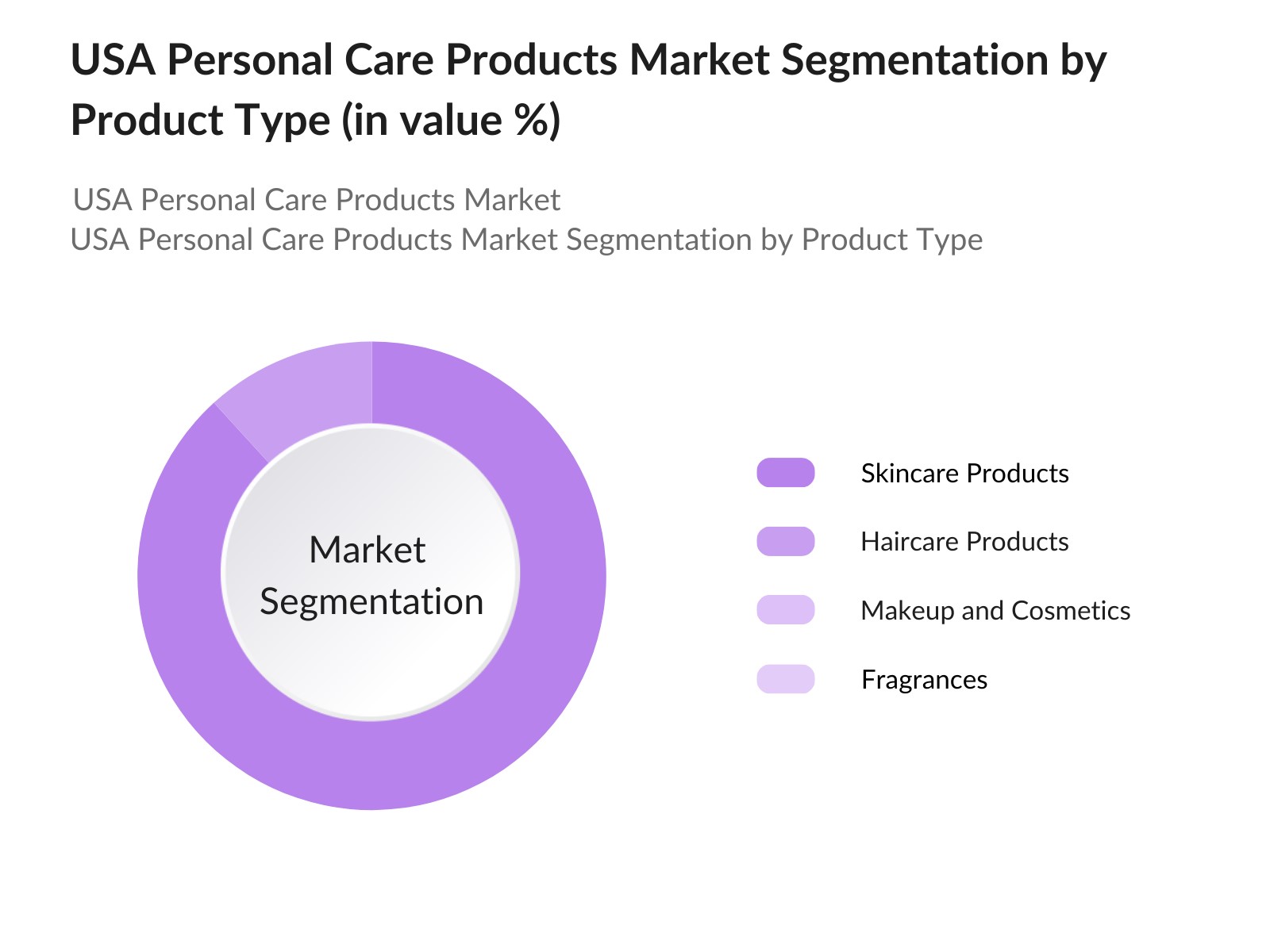
By Product Type: The USA Personal Care Products Market is segmented by product type into skincare, haircare, makeup and cosmetics, and fragrances. Recently, skincare products have maintained a dominant market share under the product type segmentation, driven by the increasing awareness of skincare routines and the prioritization of health-oriented products. The rise of anti-aging and natural skincare products, combined with growing environmental consciousness, supports the significant presence of skincare in the market.
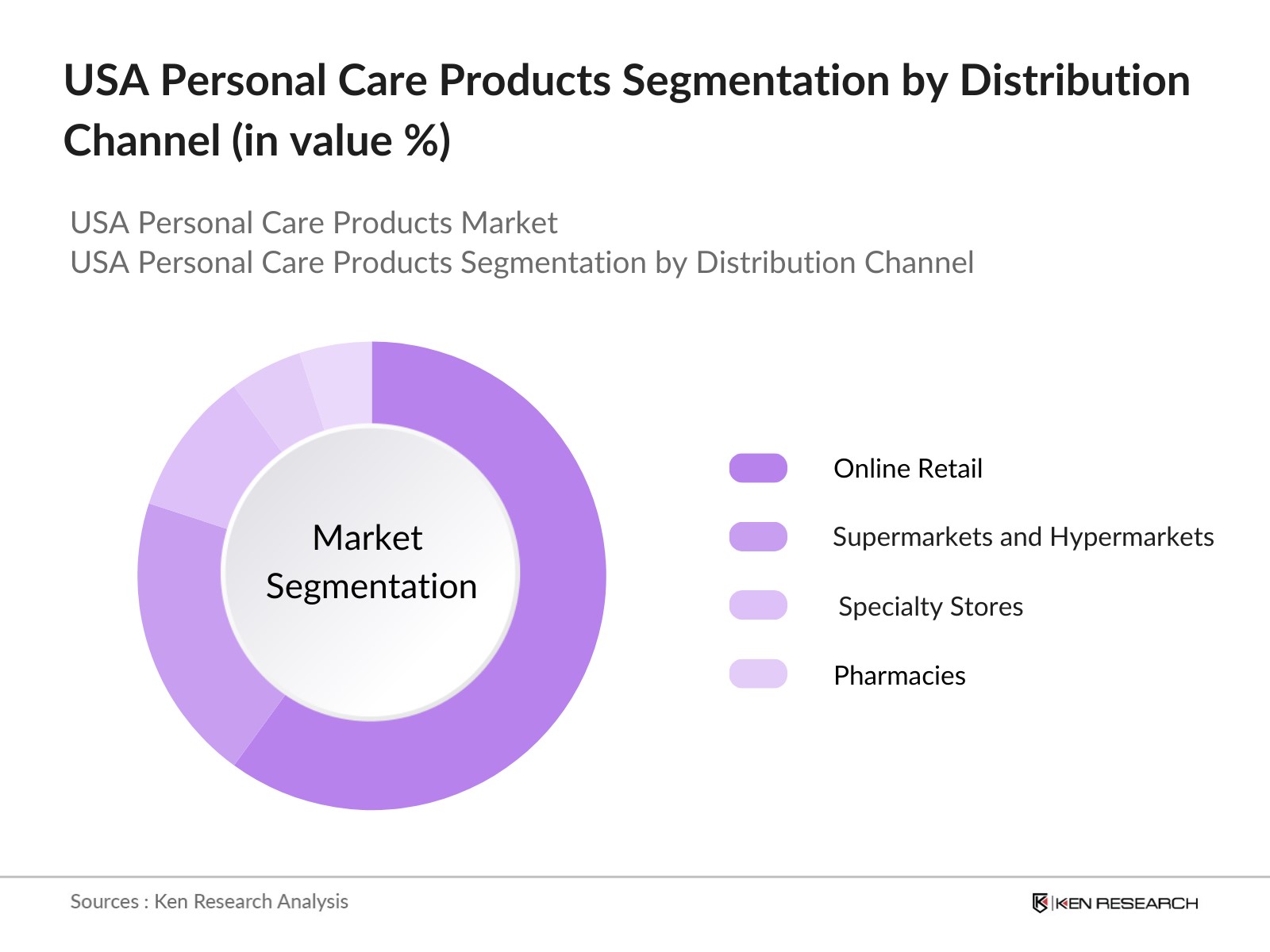
 By Distribution Channel: The USA Personal Care Products Market is segmented by distribution channels into online retail, supermarkets and hypermarkets, specialty stores, and pharmacies. Online retail channels have emerged as dominant, supported by the convenience of home delivery and a greater range of product choices. The increasing role of influencer marketing and the growing preference for personalized product recommendations have spurred consumer purchases online, especially among younger demographics.
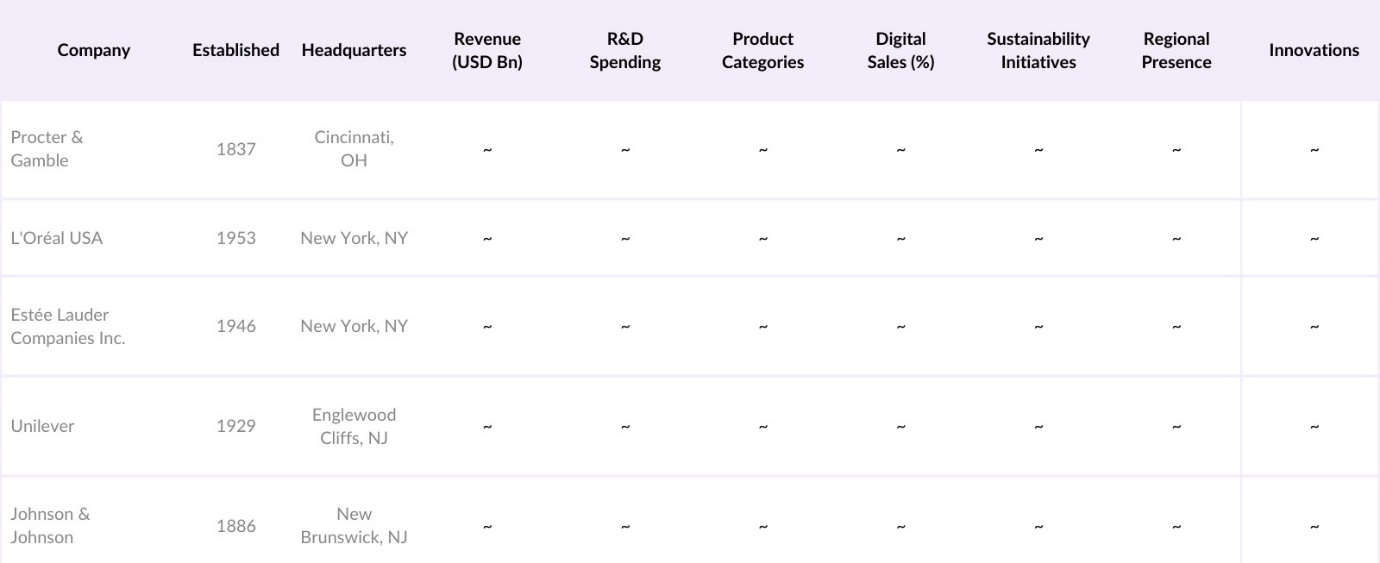
The USA Personal Care Products Market is dominated by established players with strong brand presence, innovative product development, and extensive distribution channels. Key industry leaders leverage advanced R&D capabilities and comprehensive sustainability programs, which resonate with environmentally conscious consumers. These players also lead in market innovations, frequently introducing new product lines aligned with current beauty and health trends.
The USA Personal Care Products Market is set to witness strong growth, driven by advancements in product formulations, particularly in the realm of organic, clean, and sustainable offerings. Rising demand for natural products among conscious consumers and the growing influence of digital shopping channels is likely to bolster the market. Innovations in packaging and increased focus on personalized skincare solutions further create opportunities for growth, as companies continue to invest in R&D and tap into the growing market for conscious beauty.
|
Segment |
Sub-segments |
|
Product Type |
Skincare Products Haircare Products Fragrances and Deodorants Makeup and Cosmetics Oral Care Products |
|
Distribution Channel |
Online Retail Supermarkets and Hypermarkets Specialty Stores Pharmacies and Drug Stores |
|
Gender |
Male Female Unisex |
|
Age Group |
Teenagers Adults Seniors |
|
Price Range |
Premium Mid-range Mass Market |
Players mentioned in the report
1.1. Definition and Scope
1.2. Market Taxonomy
1.3. Market Growth Rate
1.4. Market Segmentation Overview
2.1. Historical Market Size
2.2. Year-On-Year Growth Analysis
2.3. Key Market Developments and Milestones
3.1. Growth Drivers
3.1.1. Consumer Awareness of Ingredients
3.1.2. Rise in Disposable Income
3.1.3. Expansion of E-commerce Channels
3.1.4. Increasing Demand for Clean Beauty
3.2. Market Challenges
3.2.1. Regulatory Hurdles
3.2.2. High R&D Costs
3.2.3. Intense Brand Competition
3.3. Opportunities
3.3.1. Growth in Male Grooming Segment
3.3.2. Technological Advancements in Packaging
3.3.3. Emergence of Subscription-based Models
3.4. Trends
3.4.1. Shift to Sustainable Packaging
3.4.2. Popularity of Anti-pollution Products
3.4.3. Demand for Personalized Skincare
3.5. Government Regulations
3.5.1. FDA Compliance for Ingredients
3.5.2. Organic Certification Standards
3.5.3. Ban on Specific Chemicals
3.6. SWOT Analysis
3.7. Stakeholder Ecosystem
3.8. Porters Five Forces Analysis
3.9. Competitive Landscape
4.1. By Product Type (In Value %)
4.1.1. Skincare Products
4.1.2. Haircare Products
4.1.3. Fragrances and Deodorants
4.1.4. Makeup and Cosmetics
4.1.5. Oral Care Products
4.2. By Distribution Channel (In Value %)
4.2.1. Online Retail
4.2.2. Supermarkets and Hypermarkets
4.2.3. Specialty Stores
4.2.4. Pharmacies and Drug Stores
4.3. By Gender (In Value %)
4.3.1. Male
4.3.2. Female
4.3.3. Unisex
4.4. By Age Group (In Value %)
4.4.1. Teenagers
4.4.2. Adults
4.4.3. Seniors
4.5. By Price Range (In Value %)
4.5.1. Premium
4.5.2. Mid-range
4.5.3. Mass Market
5.1. Detailed Profiles of Major Companies
5.1.1. Procter & Gamble
5.1.2. Unilever
5.1.3. Este Lauder Companies Inc.
5.1.4. Johnson & Johnson
5.1.5. L'Oral USA
5.1.6. Colgate-Palmolive
5.1.7. Coty Inc.
5.1.8. Revlon Inc.
5.1.9. Shiseido Americas
5.1.10. Beiersdorf
5.1.11. Henkel Corporation
5.1.12. Kao Corporation
5.1.13. Mary Kay Inc.
5.1.14. Avon Products
5.1.15. Burts Bees
5.2. Cross Comparison Parameters (Revenue, Number of Products, Market Share, Product Innovation Rate, Sustainability Initiatives, Customer Loyalty, Regional Presence, R&D Expenditure)
5.3. Market Share Analysis
5.4. Strategic Initiatives
5.5. Mergers and Acquisitions
5.6. Investment Analysis
5.7. Venture Capital Funding
5.8. Government Grants
5.9. Private Equity Investments
6.1. Ingredient Safety Regulations
6.2. Labeling and Packaging Compliance
6.3. Certification Processes
7.1. Future Market Size Projections
7.2. Key Factors Driving Future Market Growth
8.1. TAM/SAM/SOM Analysis
8.2. Customer Cohort Analysis
8.3. Marketing Initiatives
8.4. White Space Opportunity Analysis
Disclaimer Contact Us
An ecosystem map was constructed encompassing all significant stakeholders within the USA Personal Care Products Market. Extensive desk research using a mix of secondary and proprietary databases provided comprehensive industry-level insights, helping define key variables influencing the market.
This phase involved a detailed analysis of historical data, focusing on penetration rates, distribution channel dynamics, and consumer buying behavior. Additional insights on revenue generation and product performance were also gathered to ensure data reliability and comprehensiveness.
Industry hypotheses were developed and validated through consultations with industry experts using computer-assisted telephone interviews (CATIs). These experts offered direct insights from various companies, refining the market estimates and providing operational insights.
Final engagement with manufacturers was conducted to collect detailed data on product segments, consumer preferences, and sales performance. This engagement verified and complemented data from the bottom-up approach, ensuring accuracy in the market analysis of the USA Personal Care Products Market.
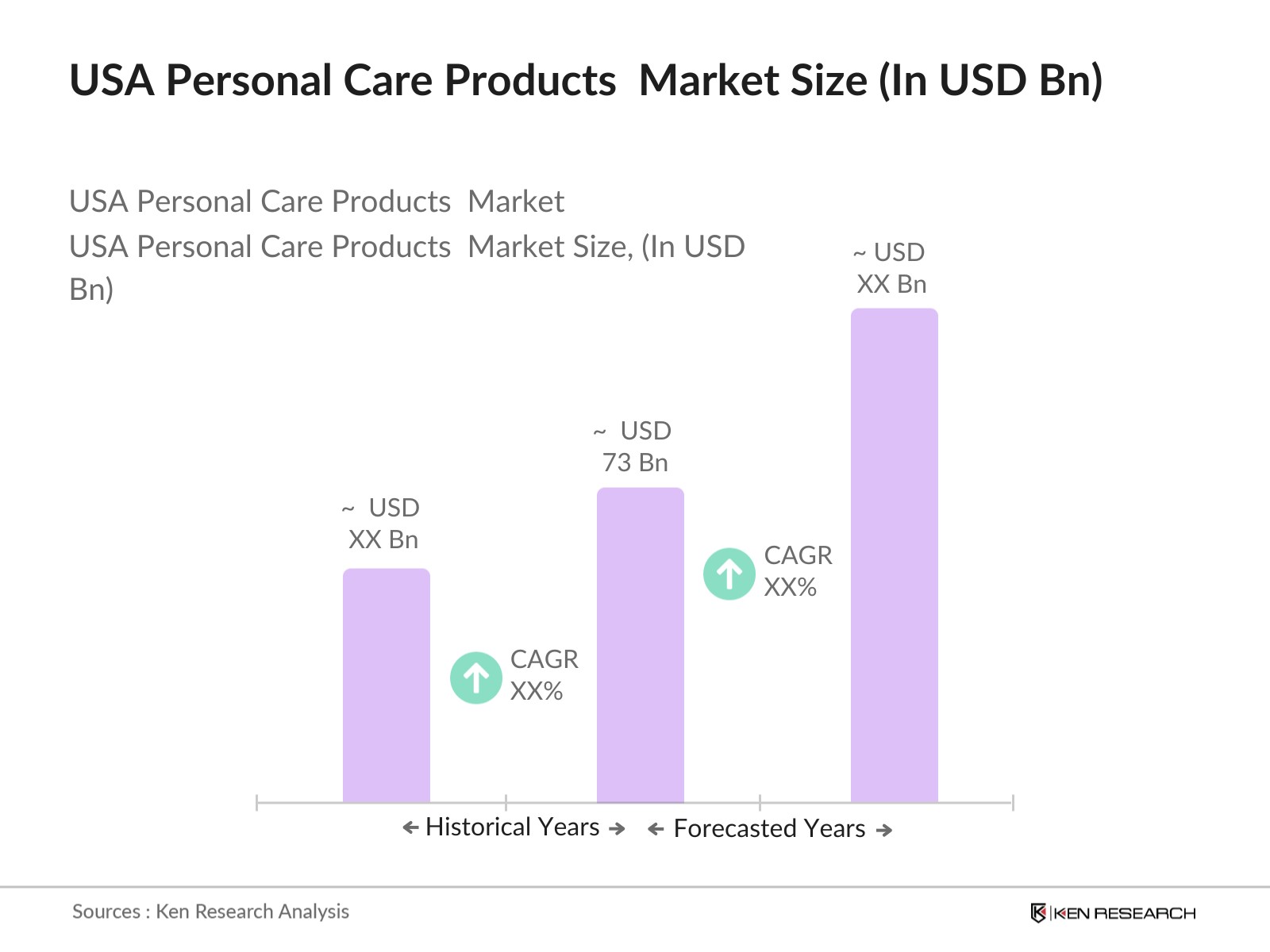
The USA Personal Care Products Market is valued at USD 73 Billion, driven by rising consumer awareness about wellness and grooming, combined with increasing influence from social media.
Key growth drivers include consumer preference for natural and organic ingredients, growing e-commerce influence, and heightened awareness about health and wellness.
Leading players include Procter & Gamble, Unilever, Este Lauder Companies, Johnson & Johnson, and L'Oral USA, recognized for their innovation and extensive market reach.
Challenges include high competition among established brands, regulatory compliance hurdles, and the growing demand for sustainable practices within the industry.

What makes us stand out is that our consultants follows Robust, Refine and Result (RRR) methodology. i.e. Robust for clear definitions, approaches and sanity checking, Refine for differentiating respondents facts and opinions and Result for presenting data with story

We have set a benchmark in the industry by offering our clients with syndicated and customized market research reports featuring coverage of entire market as well as meticulous research and analyst insights.

While we don't replace traditional research, we flip the method upside down. Our dual approach of Top Bottom & Bottom Top ensures quality deliverable by not just verifying company fundamentals but also looking at the sector and macroeconomic factors.

With one step in the future, our research team constantly tries to show you the bigger picture. We help with some of the tough questions you may encounter along the way: How is the industry positioned? Best marketing channel? KPI's of competitors? By aligning every element, we help maximize success.

Our report gives you instant access to the answers and sources that other companies might choose to hide. We elaborate each steps of research methodology we have used and showcase you the sample size to earn your trust.

If you need any support, we are here! We pride ourselves on universe strength, data quality, and quick, friendly, and professional service.