















USA Personalized Nutrition and Supplements Market Outlook to 2030
Region:North America
Author(s):Vijay Kumar
Product Code:KROD6397
November 2024
98
About the Report
USA Personalized Nutrition and Supplements Market Overview
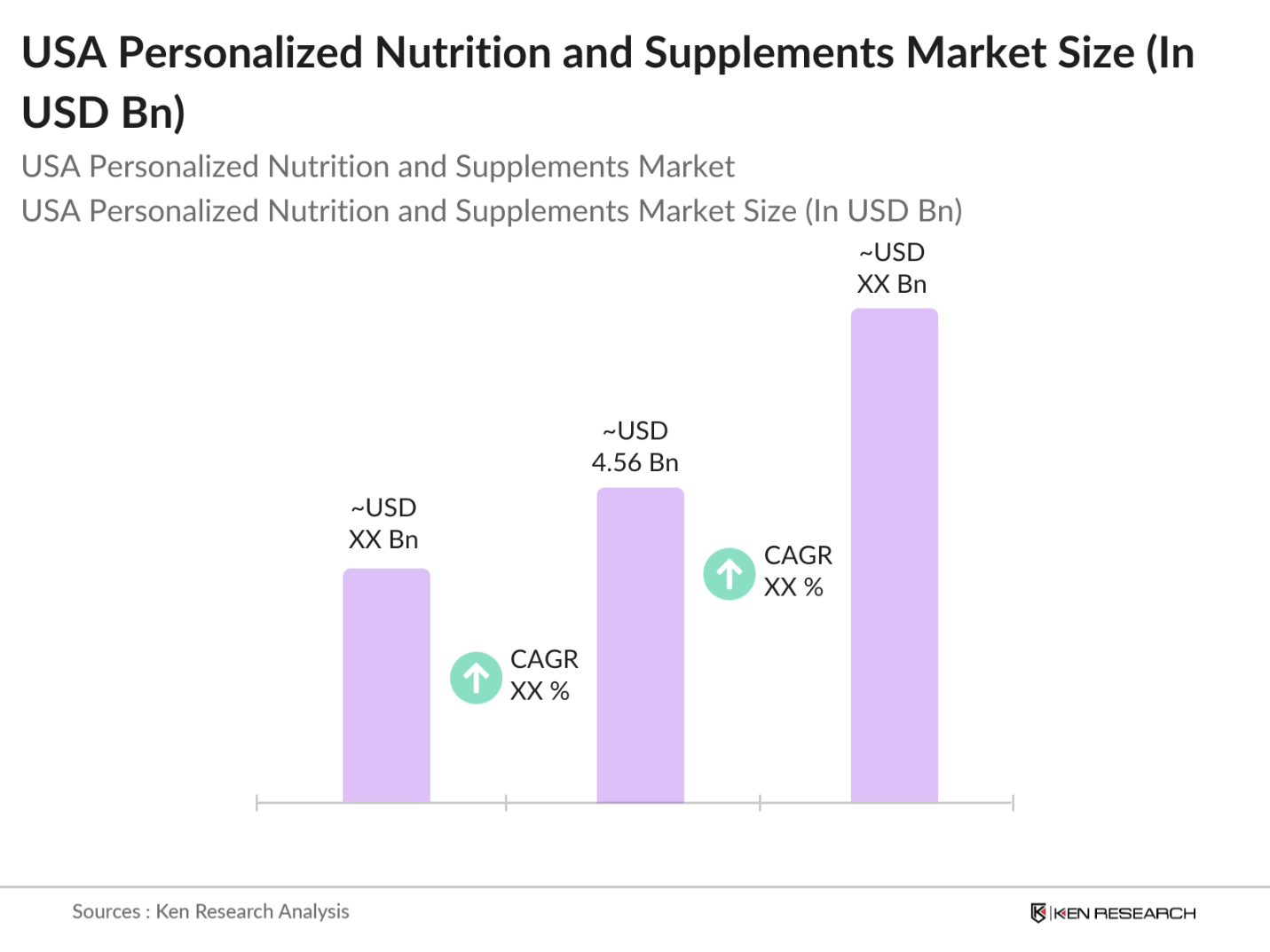
- The USA Personalized Nutrition and Supplements market is valued at USD 4.56 billion, based on a five-year historical analysis. This market is driven primarily by advancements in biotechnology, particularly in nutrigenomics, and increasing consumer awareness about personalized health solutions. With rising demand for tailored nutrition plans and supplements that cater to individual genetic profiles, the market has seen significant growth. Additionally, the growing integration of AI-driven diagnostics and digital health platforms is further fueling the adoption of personalized supplements across various consumer segments.
- In the USA, dominant cities contributing to the market's prominence include New York, Los Angeles, and Chicago. These cities lead due to high disposable incomes, a health-conscious urban population, and access to advanced healthcare infrastructure. Additionally, the West Coast, especially California, is known for its innovation in biotechnology and wellness trends, fueling the adoption of personalized supplements. The concentration of leading biotech firms in these regions further strengthens their dominance in the market.
- The U.S. FDA plays a critical role in regulating dietary supplements, particularly in the personalized nutrition market. As of 2024, the FDA strictly monitors the health claims made by supplement companies, ensuring that they adhere to the Dietary Supplement Health and Education Act (DSHEA). Violations related to unsubstantiated health claims can result in significant fines and product recalls. This regulatory environment adds complexity for companies but also ensures consumer protection, creating a more trustworthy market for personalized nutrition products.
USA Personalized Nutrition and Supplements Market Segmentation
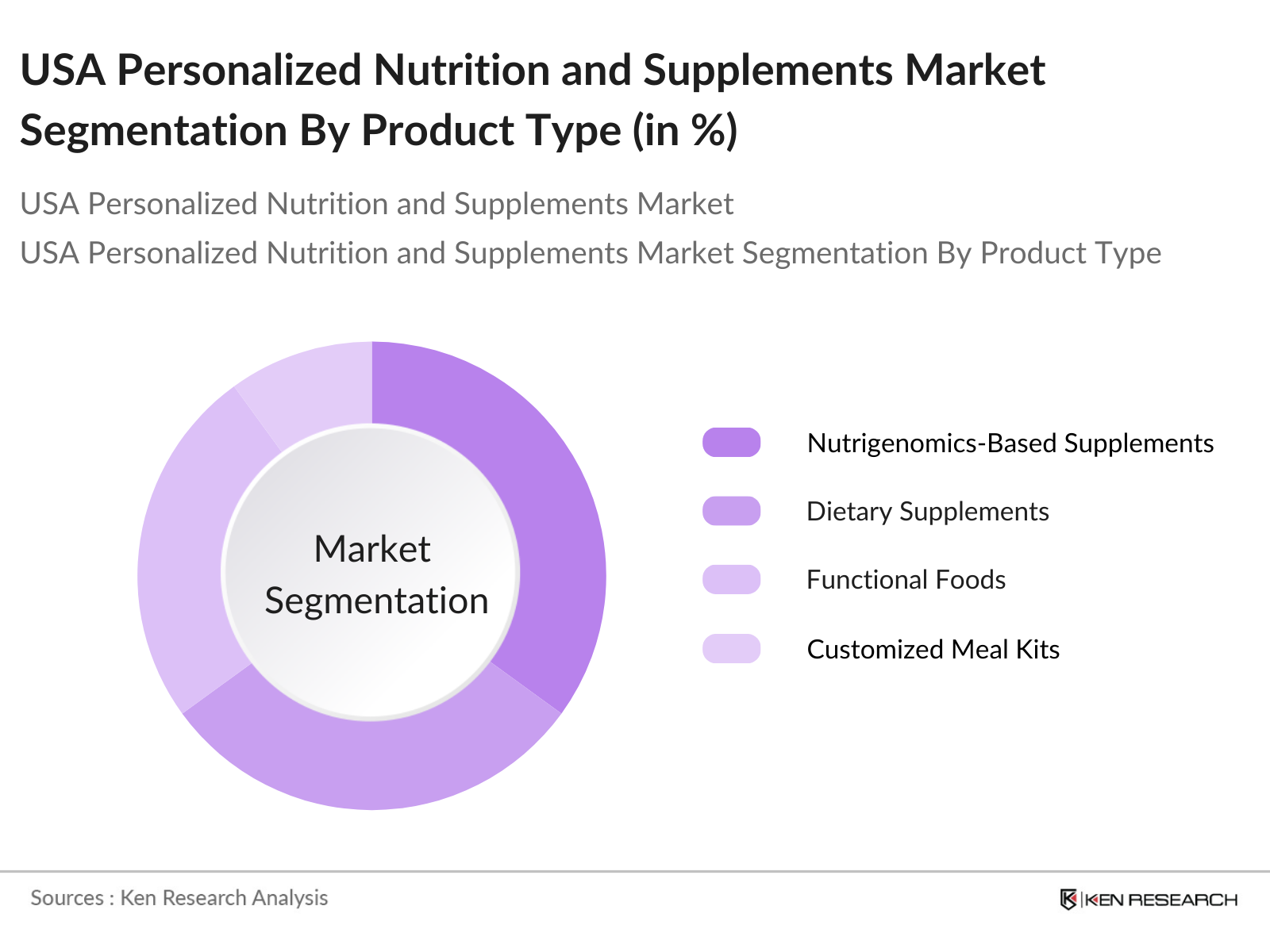
By Product Type: The USA personalized nutrition and supplements market is segmented by product type into dietary supplements, functional foods, nutrigenomics-based supplements, and customized meal kits. Nutrigenomics-based supplements have a dominant market share in this segment due to their ability to offer personalized nutrition based on individual genetic makeup. Companies in this space use advanced genetic testing to identify the most suitable dietary supplements, leading to highly tailored products that enhance efficacy and customer satisfaction.
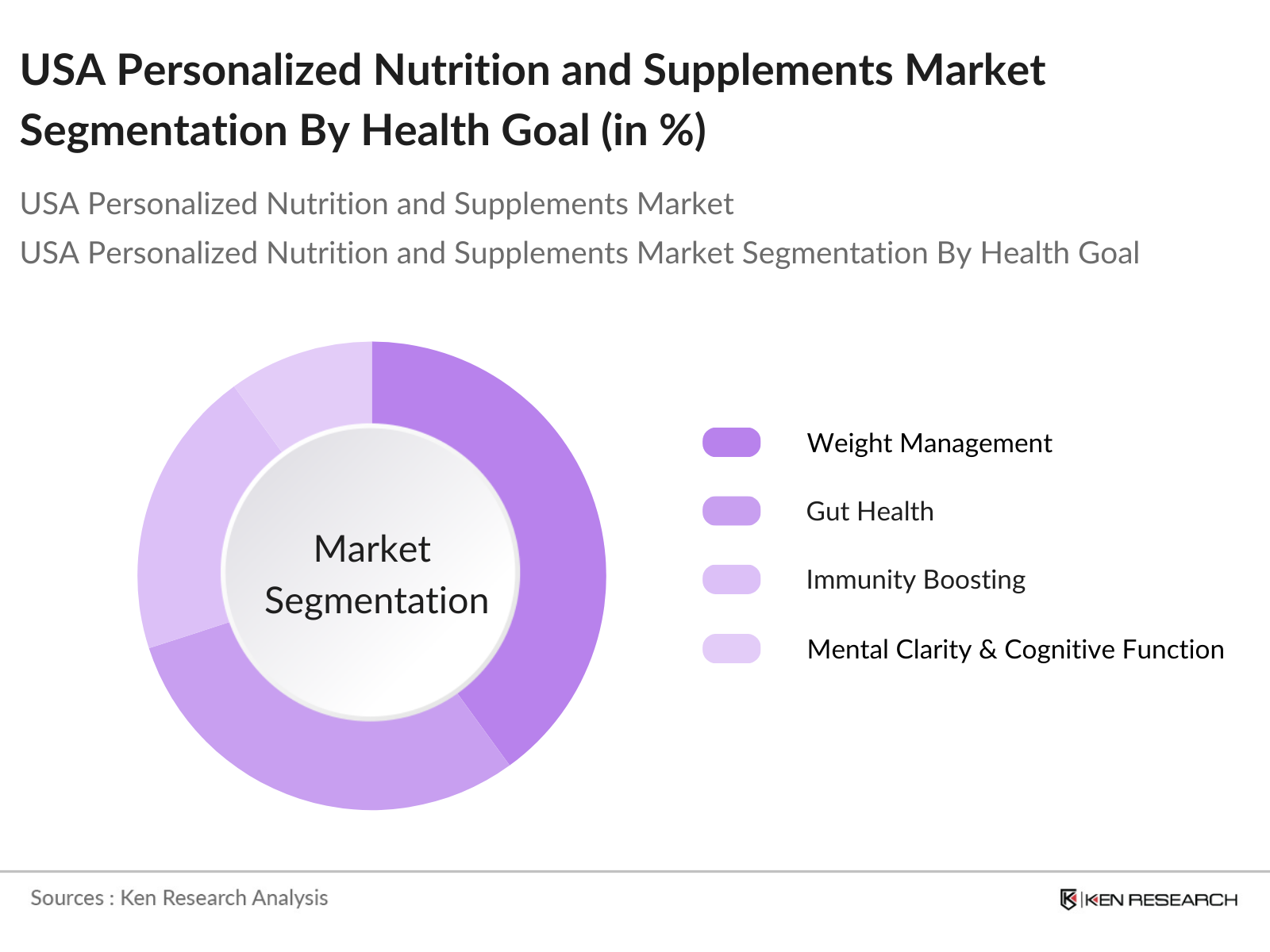
By Health Goal: The market is also segmented by health goals, which include weight management, gut health, immunity boosting, and mental clarity and cognitive function. Weight management dominates this segment due to rising obesity rates and increasing awareness of health risks associated with being overweight. The demand for customized solutions aimed at achieving long-term weight loss results, paired with scientific nutrition, is a driving force behind this segment's growth.
USA Personalized Nutrition and Supplements Market Competitive Landscape
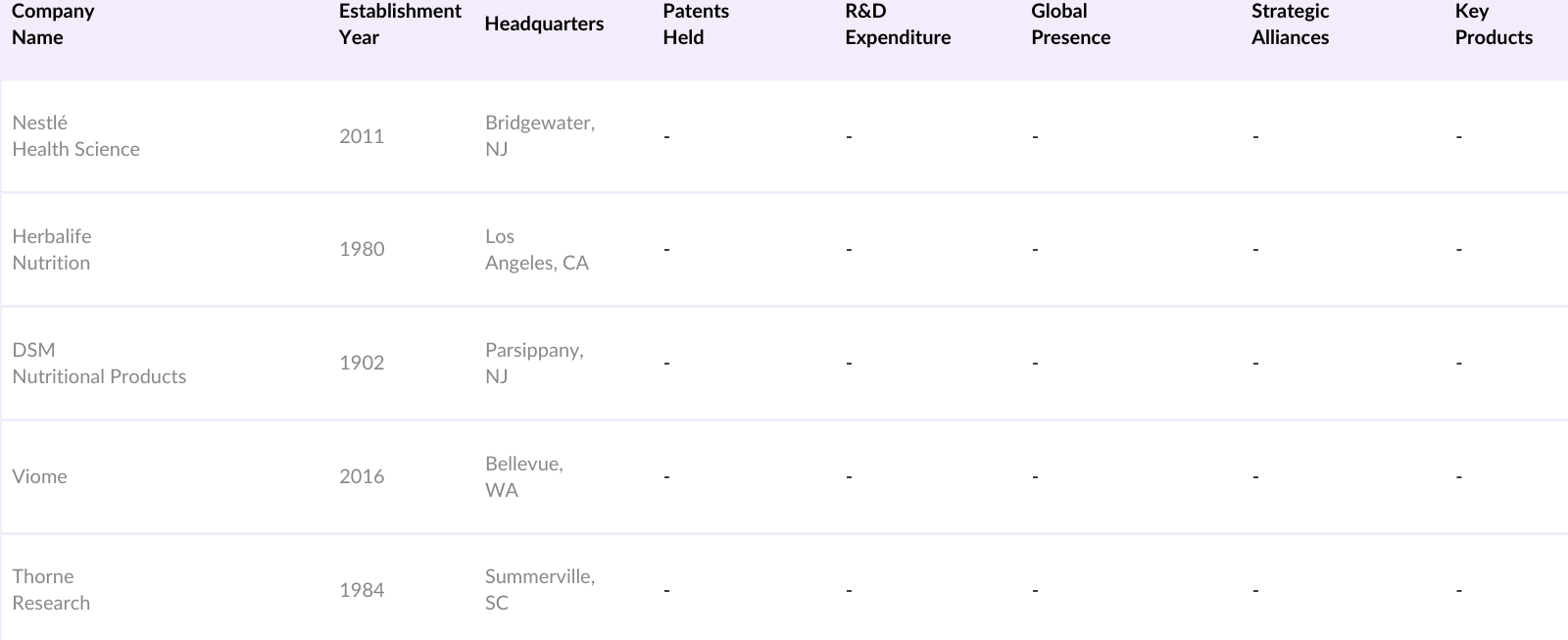
The USA personalized nutrition and supplements market is dominated by a few key players that have established their presence through innovation, acquisitions, and strategic partnerships. Companies are investing heavily in research and development, focusing on integrating advanced technologies such as AI, genetic testing, and digital health platforms into their offerings. This consolidation highlights the influence of these market leaders in shaping the future of personalized nutrition in the USA.
USA Personalized Nutrition and Supplements Industry Analysis
Growth Drivers
- Rising consumer demand for personalized health solutions: The demand for personalized health solutions in the U.S. is driven by consumers seeking tailored approaches to nutrition. Over 65 million Americans suffer from digestive health issues, which has increased the need for customized dietary plans. The Centers for Disease Control and Prevention (CDC) notes that chronic conditions like diabetes and heart disease are prevalent, pushing consumers toward tailored nutritional support.
- Increasing disposable incomes: Rising disposable incomes in the U.S. are contributing significantly to the growth of the personalized nutrition market. According to the Bureau of Economic Analysis, the personal income of Americans increased by $1.02 trillion in the first quarter of 2024 compared to 2023, which provides more financial flexibility for consumers to invest in personalized health products and services. This economic shift is enabling middle- and upper-income households to purchase premium, tailored nutrition solutions, driving market expansion.
- Advances in genomics and biotechnology: Genomics and biotechnology are revolutionizing personalized nutrition, with genetic testing becoming more affordable and accessible. As of 2024, over 38 million consumers have used genetic testing for various health-related insights, including nutrition. Genomics companies are partnering with supplement brands to provide tailored supplements based on DNA profiles. This progress is making customized dietary recommendations more precise and expanding the market for nutrition solutions that align with consumers unique genetic makeup.
Market Challenges
- Regulatory complexities (FDA guidelines, GMP compliance): Navigating regulatory frameworks remains a challenge for the personalized nutrition market in the U.S. The FDA imposes stringent guidelines on dietary supplements, and companies must ensure compliance with Current Good Manufacturing Practices (CGMP). As of 2024, the FDA flagged over 20% of supplement manufacturers for non-compliance, reflecting the complexities in meeting regulatory standards.
- High research and development costs: The cost of research and development (R&D) in personalized nutrition is substantial due to the need for advanced technology and clinical trials. In 2023, biotech companies in the U.S. invested over $15 billion in R&D for nutritional genomics and personalized supplements, according to the U.S. Department of Commerce. These high upfront costs are a barrier for new entrants and can delay product innovations. However, established companies continue to invest in R&D to stay competitive in this evolving market.
USA Personalized Nutrition and Supplements Market Future Outlook
Over the next five years, the USA personalized nutrition and supplements market is expected to show significant growth, driven by the continuous advancements in biotechnology, increasing adoption of personalized health solutions, and growing consumer demand for nutrition plans tailored to individual genetic and lifestyle factors. Additionally, the rise of AI-driven diagnostics and e-commerce platforms offering direct-to-consumer supplements will further accelerate market growth.
Market Opportunities
- Expansion in online retail and e-commerce platforms: The personalized nutrition market is benefiting from the growth of e-commerce, with more than 260 million Americans shopping online in 2024. Digital platforms such as Amazon and specialized health websites have made it easier for consumers to access personalized supplements and nutrition plans. This expansion in online retail presents a significant opportunity for companies to reach a broader audience.
- Growth of telemedicine and at-home health assessments: The rise of telemedicine is creating new opportunities in the personalized nutrition market. In 2024, approximately 40% of U.S. adults used telemedicine services, and many platforms now offer at-home health assessments that can be integrated with personalized nutrition plans. This trend is driving demand for at-home DNA testing kits and nutrition assessments that help consumers make informed dietary choices based on real-time health data.
Scope of the Report
|
By Product Type |
Dietary Supplements Functional Foods Nutrigenomics-Based Supplements Customized Meal Kits |
|
By Target Consumer Group |
Adults Athletes Pregnant Women Elderly Population |
|
By Health Goal |
Weight Management Gut Health Immunity Boosting Mental Clarity & Cognitive Function |
|
By Distribution Channel |
Online Platforms Pharmacies & Drug Stores Supermarkets & Hypermarkets Direct-to-Consumer (DTC) |
|
By Region |
North East South Midwest West |
Products
Key Target Audience
Healthcare Providers
Biotechnology Companies
Nutrigenomics Labs
Retail Pharmacies
Government and Regulatory Bodies (e.g., FDA, USDA)
Investment and Venture Capitalist Firms
Telemedicine and Digital Health Platforms
E-commerce and Online Retailers
Companies
Players Mentioned in the Report
Nestl Health Science
Herbalife Nutrition
DSM Nutritional Products
Viome
Thorne Research
Persona Nutrition (Nestl)
Care/of
Nutrigenomix
Biohm Health
DNAfit Life Sciences
Table of Contents
1. USA Personalized Nutrition and Supplements Market Overview
1.1. Definition and Scope
1.2. Market Taxonomy
1.3. Market Growth Rate
1.4. Market Segmentation Overview
2. USA Personalized Nutrition and Supplements Market Size (In USD Bn)
2.1. Historical Market Size
2.2. Year-On-Year Growth Analysis
2.3. Key Market Developments and Milestones
3. USA Personalized Nutrition and Supplements Market Analysis
3.1. Growth Drivers
3.1.1. Rising consumer demand for personalized health solutions
3.1.2. Increasing disposable incomes
3.1.3. Advances in genomics and biotechnology
3.1.4. Growth in digital health platforms and AI-driven nutrition
3.2. Market Challenges
3.2.1. Regulatory complexities (FDA guidelines, GMP compliance)
3.2.2. High research and development costs
3.2.3. Lack of consumer awareness about personalized nutrition
3.3. Opportunities
3.3.1. Expansion in online retail and e-commerce platforms
3.3.2. Growth of telemedicine and at-home health assessments
3.3.3. Collaborations between biotech companies and supplement brands
3.4. Trends
3.4.1. Increased adoption of DNA-based nutrition plans
3.4.2. Proliferation of plant-based personalized supplements
3.4.3. Integration of wearable tech for nutrition monitoring
3.5. Regulatory Landscape
3.5.1. FDA regulations on supplements and health claims
3.5.2. Labeling requirements (ingredient transparency, dosage)
3.5.3. International trade regulations (import/export)
3.6. SWOT Analysis
3.7. Stakeholder Ecosystem (Healthcare providers, nutrigenomics labs, digital platforms)
3.8. Porters Five Forces Analysis
3.9. Competitive Landscape Overview
4. USA Personalized Nutrition and Supplements Market Segmentation
4.1. By Product Type (In Value %)
4.1.1. Dietary Supplements
4.1.2. Functional Foods
4.1.3. Nutrigenomics-Based Supplements
4.1.4. Customized Meal Kits
4.2. By Target Consumer Group (In Value %)
4.2.1. Adults
4.2.2. Athletes
4.2.3. Pregnant Women
4.2.4. Elderly Population
4.3. By Health Goal (In Value %)
4.3.1. Weight Management
4.3.2. Gut Health
4.3.3. Immunity Boosting
4.3.4. Mental Clarity and Cognitive Function
4.4. By Distribution Channel (In Value %)
4.4.1. Online Platforms
4.4.2. Pharmacies and Drug Stores
4.4.3. Supermarkets and Hypermarkets
4.4.4. Direct-to-Consumer (DTC) Brands
4.5. By Region (In Value %)
4.5.1. North East
4.5.2. South
4.5.3. Midwest
4.5.4. West
5. USA Personalized Nutrition and Supplements Market Competitive Analysis
5.1. Detailed Profiles of Major Companies
5.1.1. Nestl Health Science
5.1.2. Herbalife Nutrition
5.1.3. Amway
5.1.4. DSM Nutritional Products
5.1.5. Viome
5.1.6. Thorne Research
5.1.7. Persona Nutrition (Nestl)
5.1.8. Care/of
5.1.9. Nutrigenomix
5.1.10. Biohm Health
5.1.11. DNAfit Life Sciences
5.1.12. Nutritional Genomics
5.1.13. InsideTracker
5.1.14. Onnit Labs
5.1.15. Genopalate
5.2. Cross Comparison Parameters (Market Cap, Revenue, Number of Patents, Product Portfolio, R&D Spend, Consumer Base, Global Presence, Strategic Alliances)
5.3. Market Share Analysis
5.4. Strategic Initiatives
5.5. Mergers and Acquisitions
5.6. Investment and Funding Analysis
5.7. Private Equity and Venture Capital Funding
5.8. Partnerships and Collaborations
6. USA Personalized Nutrition and Supplements Market Regulatory Framework
6.1. FDA Guidelines on Personalized Supplements
6.2. Compliance with GMP Standards
6.3. Labeling and Marketing Regulations
6.4. Regulatory Pathways for Novel Ingredients
7. USA Personalized Nutrition and Supplements Future Market Size (In USD Bn)
7.1. Future Market Size Projections
7.2. Key Factors Driving Future Market Growth
8. USA Personalized Nutrition and Supplements Future Market Segmentation
8.1. By Product Type (In Value %)
8.2. By Target Consumer Group (In Value %)
8.3. By Health Goal (In Value %)
8.4. By Distribution Channel (In Value %)
8.5. By Region (In Value %)
9. USA Personalized Nutrition and Supplements Market Analysts Recommendations
9.1. TAM/SAM/SOM Analysis
9.2. Customer Segment Insights
9.3. Marketing Strategies
9.4. Untapped Opportunities in Emerging Consumer Segments
Research Methodology
Step 1: Identification of Key Variables
The first phase of the research focuses on identifying critical variables influencing the personalized nutrition and supplements market, such as technological advancements, consumer health trends, and regulatory guidelines. This process involves a comprehensive review of secondary sources, including industry databases, government publications, and market reports.
Step 2: Market Analysis and Construction
This phase involves analyzing historical data and constructing a market model that forecasts growth trajectories based on current trends. The analysis includes revenue figures from key market players, product innovation, and sales performance across various channels such as online platforms, retail, and direct-to-consumer models.
Step 3: Hypothesis Validation and Expert Consultation
We validated the market assumptions through expert consultations with industry professionals, including product managers and CEOs from leading companies in the personalized nutrition space. These interviews provided insights into market dynamics, consumer preferences, and emerging trends.
Step 4: Research Synthesis and Final Output
The final step involves synthesizing the data into a coherent analysis. This includes a bottom-up approach for revenue forecasts, market segmentation, and competitive landscape assessments to ensure a comprehensive and accurate portrayal of the USA personalized nutrition and supplements market.
Frequently Asked Questions
1. How big is the USA Personalized Nutrition and Supplements Market?
The USA Personalized Nutrition and Supplements market is valued at USD 4.56 billion, based on a five-year historical analysis. This market is driven primarily by advancements in biotechnology, particularly in nutrigenomics, and increasing consumer awareness about personalized health solutions.
2. What are the challenges in the USA Personalized Nutrition and Supplements Market?
Key challenges include high R&D costs, regulatory hurdles regarding health claims and labeling, and the need for greater consumer education about personalized health solutions.
3. Who are the major players in the USA Personalized Nutrition and Supplements Market?
Leading players include Nestl Health Science, Herbalife Nutrition, DSM Nutritional Products, Viome, and Thorne Research. These companies dominate the market due to their focus on innovation and strategic partnerships.
4. What are the growth drivers of the USA Personalized Nutrition and Supplements Market?
Growth is driven by advancements in nutrigenomics, the increasing prevalence of chronic diseases, the rise of AI-powered health diagnostics, and growing consumer awareness about the benefits of personalized nutrition.
Why Buy From Us?

What makes us stand out is that our consultants follows Robust, Refine and Result (RRR) methodology. i.e. Robust for clear definitions, approaches and sanity checking, Refine for differentiating respondents facts and opinions and Result for presenting data with story

We have set a benchmark in the industry by offering our clients with syndicated and customized market research reports featuring coverage of entire market as well as meticulous research and analyst insights.

While we don't replace traditional research, we flip the method upside down. Our dual approach of Top Bottom & Bottom Top ensures quality deliverable by not just verifying company fundamentals but also looking at the sector and macroeconomic factors.

With one step in the future, our research team constantly tries to show you the bigger picture. We help with some of the tough questions you may encounter along the way: How is the industry positioned? Best marketing channel? KPI's of competitors? By aligning every element, we help maximize success.

Our report gives you instant access to the answers and sources that other companies might choose to hide. We elaborate each steps of research methodology we have used and showcase you the sample size to earn your trust.

If you need any support, we are here! We pride ourselves on universe strength, data quality, and quick, friendly, and professional service.